
Admin

21 Jul, 2026
Bantu Holomisa's keynote address at the Defence Industry Lekgotla
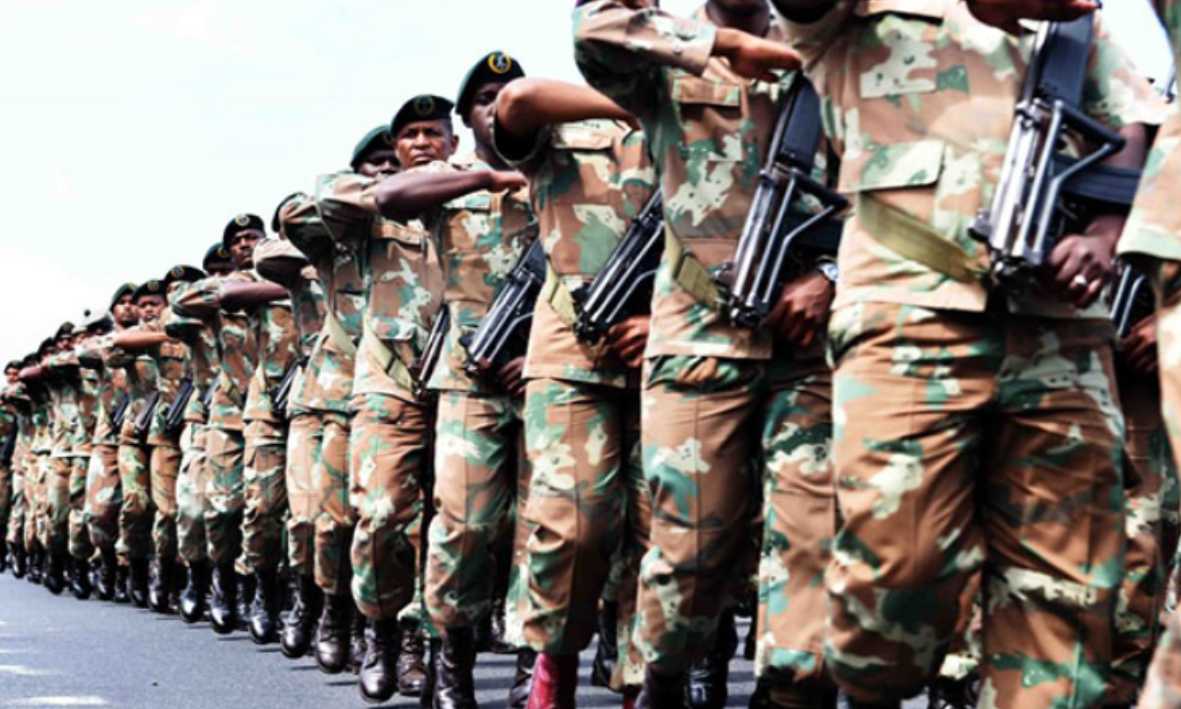
Keynote address by Deputy Minister of Defence and Military Veterans, Maj. Gen. (Ret) Bantu Holomisa, MP at the Defence Industry Lekgotla – 21 July 2026 Ministry of Defence and Military Veterans of the Republic of South Africa Programme Director; Honourable Minister of Defence and Military Veterans; Members of the Executive; Members of Parliament; Chief of the South African National Defence Force; Chiefs of Service and Divisions; Representatives of the defence industry; Representatives of Armscor, Denel, the CSIR and other research and development institutions; Representatives of the private sector, organised business, academia and labour; Distinguished guests; Ladies and gentlemen; Good morning. The purpose of this session of the Defence Industry Lekgotla is not simply to speak about the defence industry. It is to ask a more fundamental question: What must we do, together, to ensure that South Africa retains a capable, sustainable and sovereign defence capability in an environment of limited public resources and rapidly changing security threats? My assignment today is simple, but the consequences of how we approach it are significant: I have been tasked with speaking about Public-Private Partnerships and, more importantly, how we can move from discussion to practical implementation. Let us begin with honesty. We know many of the challenges confronting the Department of Defence and the defence industry. We know that there are significant infrastructure backlogs. We know that many military facilities require rehabilitation, modernisation and maintenance. We know that the Department has significant requirements in relation to prime mission equipment and the sustainability of existing capabilities. We know that there are challenges relating to military housing, health facilities, logistics infrastructure and other support systems. We know that our defence industry faces challenges relating to demand, funding, skills, research and development, industrial sustainability and access to markets. These challenges are not new. We have spoken about them for many years. The 2015 Defence Review already warned that inadequate levels of defence spending had placed the defence force and the local defence industry under severe pressure. More recently, Parliament has again highlighted the serious funding constraints facing the Department of Defence. For the 2026/27 financial year, the Department has been allocated approximately R57.6 billion, while Parliament has continued to emphasise the need for a sustainable funding model for defence. The reality is that the Department has substantial responsibilities, but the resources available to meet all those responsibilities are limited. We cannot pretend otherwise. The question before us is therefore not whether the problems exist. The Department cannot simply assume that every infrastructure backlog, every equipment requirement and every modernisation project will be fully funded through additional allocations from the National Treasury. That is not a realistic assumption. At the same time, we cannot accept the gradual deterioration of strategic defence capabilities as inevitable. We cannot allow our military bases to deteriorate indefinitely. We cannot allow our personnel to live in conditions that undermine their dignity and morale. We cannot allow critical infrastructure and equipment to reach a point where the cost of replacement becomes greater than the cost of timely intervention. We must therefore consider additional and innovative ways of mobilising capital and expertise. The timing of this conference is great because Cabinet has approved the Journey to Greatness, meaning the Defence Budget will look different and be in line with the instruction of the President that the Defence defunding must be arrested and the defence budget should grow to a favourable 1.5% of the GDP. This is where I believe the discussion on Public-Private Partnerships becomes important. 1. PPPs as a strategic instrument Let me be clear. When I speak about Public-Private Partnerships, I am not speaking about selling off the assets of the Department of Defence. I am not speaking about selling military land to the highest bidder. I am not speaking about compromising national security. I am speaking about using a lawful, transparent and carefully structured instrument to mobilise private capital and expertise in areas where this can assist the State to deliver infrastructure and services more efficiently. South Africa's PPP framework exists precisely because government recognises that the private sector can, under appropriate conditions, contribute capital, expertise, innovation and long-term operational capacity to public infrastructure projects. 2. Defence land as a strategic asset One of the important advantages of the defence portfolio is that the State possesses significant land and other strategic assets. The National Defence White Paper has previously recorded that the SANDF controls approximately 500 000 hectares of state-owned land, while also emphasising the need for the cost-effective utilisation and rationalisation of military land. This land is not simply a commercial asset. It is a strategic national asset. There may be opportunities for carefully structured partnerships in which the State retains ownership and control while private partners provide capital, construction expertise, technology or operational capacity. This could include, subject to proper feasibility studies and all applicable legal and security requirements: • Military housing; • Health and hospital infrastructure; • Logistics and maintenance facilities; • Training and support infrastructure; • Modernisation of selected military bases; and • Other infrastructure required to support the SANDF. The question is not whether we should commercialise the defence estate. The question is whether we can use our existing assets more intelligently to support the defence mission. 3. Military housing and the dignity of the soldier Let us consider the question of military housing. A soldier who serves the Republic should not be expected to live indefinitely in conditions that undermine his or her dignity. In some instances, military personnel live far from their formations or in informal settlements because suitable accommodation is not available. This is not only a housing issue. It is a military readiness issue. It affects morale, discipline, operational availability and the relationship between a soldier and the institution they serve. We must therefore explore whether partnerships with credible property developers, financial institutions and institutional investors can assist in addressing the military housing backlog. The model could be structured in such a way that the State provides access to appropriate land, while a private or institutional partner provides capital and development capacity. The State could then make structured payments over an agreed period, subject to a properly designed contract and demonstrated value for money. This is not a proposal to give away defence land. It is a proposal to investigate whether the land already owned by the State can help us secure the infrastructure required by the defence force. 4. A military city for the future We must also think beyond individual projects. In Pretoria, for example, various defence-related functions and institutions are spread across different locations, while the State incurs substantial expenditure on rented office accommodation. We should ask ourselves whether there is a better long-term model. Can we consolidate appropriate defence functions? Can we make better use of defence-owned land? Can we create a modern, integrated military precinct that brings together appropriate military, administrative, training, housing and support functions? I am not suggesting that every military function should be placed in one location. Nor am I suggesting that security considerations can be ignored. But we should at least investigate the feasibility of a modern military city or integrated defence precinct where appropriate. Such a project could be designed around modern principles of planning, sustainability, technology and efficiency. We now have access to advanced design technologies, including artificial intelligence-enabled tools, that can assist with planning and modelling. The objective should be to develop infrastructure that is fit for purpose, cost-effective and appropriate for the needs of a modern defence force. 5. The role of institutional investors We should also engage seriously with institutional investors. The Public Investment Corporation, for example, manages substantial institutional capital and has established experience in property and unlisted investments. However, it has also suffered significant losses in the past on certain unlisted investments involving billions of rands in pensioners’ money. Its property investment activities include development and investment in sectors such as office, industrial, specialised property and student accommodation. This raises an important question. Can the Department of Defence, together with the relevant government departments and agencies, engage institutional investors to explore carefully structured, long-term infrastructure investment opportunities? The principle is straightforward. A credible investor provides capital for a project. The project is constructed and maintained according to agreed standards. The State obtains the required infrastructure and service. The investor receives an agreed return over an agreed period. At the end of the agreed arrangement, the asset may return to the State in accordance with the terms of the contract. But let me emphasise: No such arrangement should be entered into merely because money is available. Every proposal must be tested against: • National security requirements; • Value for money; • Affordability; • Long-term fiscal implications; • Ownership and control; • Procurement law; • Security legislation; • Risk allocation; • Local industrial participation; and • The broader national interest. 6. Border security Where border infrastructure requires substantial investment in fencing, surveillance, sensors, communications and other capabilities, can we identify innovative models that allow the State to obtain the required capability more quickly and cost-effectively? 7. The navy and the defence industry The South African Navy requires a sustainable maritime infrastructure and industrial ecosystem. Where facilities require modernisation, including naval support infrastructure, we must ask whether there are credible partners who can bring capital, technical expertise and industrial capability into the equation. Such partnerships must, of course, protect the strategic interests of the Republic. 8. Prime mission equipment The discussion must also extend to prime mission equipment. The defence force cannot be effective without sustainable and modern capabilities across the land, air, maritime and other domains. But the acquisition of equipment cannot be separated from questions of affordability, maintenance, life-cycle costs, technology transfer and local industrial capability. One gets worried that should the SANDF get a deployment outside of our borders after our SAMIDRC withdrawal, would we have equipment that is in line with the mission requirements? The role of the defence industry must therefore extend beyond simply supplying equipment. We need to ask: • Can we improve maintenance, repair and overhaul capability? • Can we extend the life of existing platforms where appropriate? • Can we develop local manufacturing and technology capabilities? • Can we improve the sustainability of equipment already in service? • Can we use partnerships to develop new capabilities where this is strategically and economically viable? The role of institutions such as Armscor, the CSIR, Denel and the broader defence industry is critical in this regard. The CSIR already has capabilities across aerospace, landward sciences, command and control, cybersecurity, integrated security, radar, electronic warfare and other areas of defence research and technology. That is how we build a sustainable defence industrial ecosystem. 9. Youth, skills and technology I agree with the previous speakers, the future of defence is increasingly shaped by artificial intelligence, cybersecurity, autonomous systems, advanced manufacturing, robotics and other emerging technologies. These are already transforming military capability, and South Africa must ensure that it does not fall behind. We must therefore invest in our young people and create pathways from schools and universities into research, industry and the defence sector. My engagements with countries including Pakistan, India, Türkiye, the United Kingdom, France and Ethiopia have reinforced one lesson: countries that take defence seriously invest in their youth, technology and research. Institutions such as the CSIR, universities, Armscor, Denel and industry must work together to develop the skills, research and innovation required to build a sustainable and competitive South African defence industry. 10. International partnerships International partnerships must also be used to advance South Africa’s transformation objectives, particularly through meaningful Broad-Based Black Economic Empowerment. We must ensure that partnerships create opportunities for South African companies, especially emerging black-owned enterprises and young entrepreneurs, to gain access to markets, technology, mentorship, skills development and practical experience in the defence industry. Our young people must not remain spectators while major international companies participate in South Africa’s defence economy. Through properly structured partnerships and BBBEE commitments, young South Africans must be given opportunities to enter the defence value chain, develop their businesses, gain exposure to international standards and build the experience required to become future manufacturers, innovators and exporters. 11. A new approach to partnership I believe we need a new approach. We must move away from thinking about the defence industry only in terms of annual procurement. We must think in terms of long-term capability. We must move away from isolated projects. We must think in terms of integrated systems. We must move away from the assumption that every challenge can only be solved through a larger allocation from the fiscus. We must ask what can be achieved through better planning, better partnerships, better use of existing assets and more innovative financing models. But I must also emphasise that partnerships must not become an excuse for the State to abdicate its responsibilities. 12. The way forward I would therefore like to propose that this Lekgotla should not end with a list of challenges. We already know many of the challenges. South Africa already has a policy framework for Public-Private Partnerships, including the framework issued by National Treasury. The Department of Defence also has a dedicated team which has been familiarising themselves with the National Treasury’s PPP Policies, comprised of Mr Lebelo of the Defence Secretariat and the incoming Chief of Staff, General Xundu, which will engage the various formations of the SANDF, including the Army, Air Force, Navy and SAMHS, to identify priority areas requiring partnership. We must develop a clear menu of these requirements, aligned with the National Treasury framework, and present it to the defence industry so that potential investors can identify where they can contribute. The objective is to move from broad discussions to specific, structured and implementable opportunities. The Honourable Minister has made it clear that we must move with urgency and ensure that this Lekgotla does not become another talk shop. Following this engagement, the defence leadership must convene a focused roundtable to finalise priority areas so that, when industry approaches us, we are ready to direct them towards clear and well-defined opportunities. That said, it would be in our best interests for us to develop a practical partnership roadmap. This roadmap should identify: First, the major infrastructure and capability backlogs that require urgent attention. Second, which of these areas are suitable for PPP or other partnership models. Third, what role should be played by the Department of Defence, the Department of Public Works and Infrastructure, Armscor, Denel, the defence industry, institutional investors, research institutions and other stakeholders. Fourth, what regulatory and policy interventions may be required. Fifth, how we protect national security and sovereign capabilities. Sixth, how we ensure local industrial participation, skills development, youth opportunities and technology transfer. And finally: What can be implemented, and by when? I would like to see the development of a practical PPP Action Plan that moves beyond general statements and identifies actual projects, potential partners, funding models, risks, responsibilities and timelines. The Department of Defence is not going anywhere. The SANDF is not going anywhere. As long as South Africa exists as a sovereign state, it will require a defence capability. This means that defence is, by its very nature, a long-term investment. The question is whether we will continue to respond to our needs only when the crisis has already emerged, or whether we will develop a long-term model that allows us to plan, invest, modernise and sustain our defence capabilities. To avoid this from being a talk shop, I am requesting that my Colleagues in Parliament, the Portfolio Committee and the Joint Standing Committee on Defence to ensure that this PPP discussion becomes a standing agenda in all their meetings. This will help monitor implementation. I thank you.
Admin
27 Jun, 2026
Bantu Holomisa Keynote address at 6th National Congress
Keynote Address by Maj. Gen. (Ret.) Bantu Holomisa, MP, President of the United Democratic Movement at the 6th National Congress and Launch of the 2026 Local Government Elections Manifesto - Absa Stadium, East London on 27 June 2026 • Deputy President of the UDM, Nqabayomzi Kwankwa; • Members of the National Executive Committee; • Provincial and Regional Leadership; • Delegates of the Sixth National Congress; • Representatives of civil society, traditional leaders, religious formations and organised labour; • Invited guests; • Members of the media; • Fellow South Africans; • Comrades and friends, 1. Introduction Allow me first to express my sincere gratitude to the delegates of the United Democratic Movement (UDM), our members throughout the country, our supporters, and the general public who have sustained this organisation with their resources, commitment and sacrifices over many years. The UDM did not arrive here because we had the biggest budget. We did not arrive here because we enjoyed access to state resources. We arrived here because ordinary South Africans believed in the values upon which this movement was founded and continued to support us even during the most difficult times. There were those who wrote our political obituary from the very beginning. There were those who predicted that the UDM would disappear after one election, after one leadership contest, after one political challenge or another. Yet here we are today, convening our Sixth National Congress and preparing to celebrate thirty years of existence in September 2027. The fact that we are still here is not an accident. For all this, we extend our appreciation to the National Office Bearers and staff for organising this National Congress, notwithstanding all the challenges we encountered. We also appreciate the volunteers, staff, ABSA Stadium Management, and service providers who have worked tirelessly behind the scenes to ensure that this gathering is a success. Your contribution is noted and valued. Anyone who has followed the history of the UDM and cared to read about our journey will know that our strength has always been our consistency. • Consistency in our messaging. • Consistency in our values. • Consistency in our presence amongst the people. • Consistency in making ourselves available and accountable to South Africans regardless of whether there was an election around the corner or not. We are one party that should be proud of its contribution to South Africa's democracy and proud of the victories we have achieved over the years. It was the UDM that consistently promoted the ethics of good governance long before it became fashionable to speak about corruption. It was the UDM that campaigned relentlessly against floor crossing until it was removed from our statute books. It was the UDM that fought for legislation regulating political party funding. It was the UDM that secured a landmark Constitutional Court victory on the secret ballot matter. Against all odds, it was the UDM that exposed the misuse of workers' pension funds through the Government Employees Pension Fund and the Public Investment Corporation, and many other ongoing battles. These were not popular battles. They were not easy battles. Yet they were necessary battles because they were in the interests of the people of South Africa. The UDM has never confined itself to parliamentary debates and press statements. When disaster struck our people, we were there. During the 2025 floods and disasters in the Eastern Cape, we were on the ground assisting affected communities in Mthatha, Butterworth and surrounding areas where 95 lives were tragically lost. While others were counting statistics, we were helping communities. While others were compiling reports, we were delivering practical assistance. In KwaTshezi near Coffee Bay, we assisted in constructing a bridge that has restored access to Zithulele Hospital and enabled communities to cross safely. To this day, communities continue to wait for permanent intervention from government despite countless promises and assessments. That is the difference between politics as a profession and politics as a calling. The UDM has always believed that leadership requires action. Betting on a wicket of anti-corruption was once regarded as political suicide. It contributed to my own departure from the African National Congress (ANC) because many people did not want to hear uncomfortable truths. Today it is gratifying to see that, what was once dismissed has now been confirmed repeatedly through official investigations and commissions. Those who did not understand the campaign against corruption at the time eventually came forward and reported corrupt activities. Those reports led to the findings of former Public Protector, Advocate Thuli Madonsela. They led to the State Capture Commission. They led to the UDM-sponsored Mpati Commission. They led to the current Madlanga Commission which has taken the nation by storm. It is evident, without a shed of doubt, that corruption has spread its tentacles to state institutions, including the Department of Defence where I serve as Deputy Minister as you have witnessed. Today various allegations and investigations involving senior law enforcement structures continue to reinforce concerns that many of us raised years ago. South Africans have reached their own conclusions. That is why in 2024 voters made a historic decision. They decided that South Africa should no longer be governed through the dominance of a single political party. They opted for a coalition arrangement. They effectively instructed political parties to work together. That is why we now have a Government of National Unity. The voters were saying that political parties must work together to address corruption, unemployment, crime and poor governance. By the look of things, coalition politics are here to stay. We must develop a political culture where coalition governments are stable, accountable and focused on service delivery. At national, provincial and local level, coalition governance must be refined because it is increasingly becoming the future of governance in South Africa. Fellow delegates, I am addressing you today at a time where serious questions are being raised about the activities of some Members of the Executive. For instance, many people will ask you, the members of the UDM what happened to the case of former Minister of Defence who was charged for corruption and many other high-profile individuals. The public will further ask you what our position is regarding the impeachment process involving the President, where the Constitutional Court brought the matter back to Parliament for further processing. Our position remains unchanged. The UDM supports the establishment of the Section 89 Impeachment Committee and believes that Constitutional processes must be allowed to run their course. There has been no shift from what we said during the debate on the report of the Independent Panel chaired by Judge Sandile Ngcobo. We maintain that the President, together with all those implicated in the matter, must make use of the opportunity to present their side of the story before the committee. The purpose of the process is to establish the facts, uphold accountability and strengthen our Constitutional democracy. As the UDM, we have always maintained that no individual is above accountability and that Constitutional mechanisms must be respected and allowed to function without fear or favour. Fellow delegates, Once this Congress has elected its leadership, our focus must immediately shift to the 2026 Local Government Elections and the road to 2029. We expect to come out of this National Congress with a dynamic leadership team that reflects a balance between experienced leaders and young people, who will together drive the growth, renewal and strengthening of the party going forward. The new leadership, because of the evident growth of the UDM, will have to hit the ground running by improving coordination and communication within the structures. They must also strive to promote unity, and to see it that the UDM reaches all the corners of South Africa. We have consistently argued that South Africa has entered a new political era. The days of one-party dominance are behind us. The responsibility of the UDM is not merely to participate in this reality, but to shape it. Our structures must emerge from this Congress united, focused and ready for the task ahead. It is going to be important to nominate Councillors who will understand the role they are to play in municipalities in service of our people. Equally, we must strive to depoliticise the government administration. Every branch, region and province must work towards growing the UDM so that it has a stronger voice in the Government of National Unity and a bigger presence in Parliament after 2029. No party can say with certainty who will provide leadership to South Africa after President Cyril Ramaphosa has finished his term. The political landscape is changing, and the UDM must position itself to play a far greater role in influencing the future of our country. Our mission remains unchanged. We must continue to champion ethics, good governance and accountability. There is no one in this country who can doubt the role we are playing in that front. The UDM must be at the forefront of ensuring that those implicated in corruption are charged, that adverse findings by the Auditor-General (AGSA) are acted upon, and that public institutions serve the people rather than politicians. Too often AGSA reports expose the same failures year after year, yet little is done. That culture of impunity must come to an end. As we grow, we must remain clear about the type of partnerships we are prepared to enter. We must work with parties that serve the people, not those that seek to protect politicians caught with their fingers in the till. Our loyalty must always be to the people of South Africa. Mawubuye uMzantsi Afrika esiwuthandayo emaseleni, mawubuye! The evidence emerging from inquiries such as the Madlanga Commission, the collapse of state-owned enterprises, and the corruption repeatedly exposed in the media all point to the same problem: years of ignored warnings, ignored Auditor-General findings and a lack of consequence management. The UDM must continue to be the voice that asks difficult questions, demands accountability and fights for clean governance. That is the role we have played for nearly three decades, and it is the role we must play with even greater determination as we build towards 2026 and 2029. 2. The challenges confronting South Africa Fellow South Africans, As we gather here today, South Africa continues to face serious challenges. At the forefront are unemployment, crime, porous borders, weak immigration systems, unemployment, a stagnant economy and corruption. These challenges continue to undermine confidence in our democracy and deny millions of South Africans opportunities to improve their lives. We must also have an honest discussion about immigration management and national security. The Deputy President of the UDM, the Nqabayomzi Kwankwa, has already outlined the position of the UDM in Parliament, and he was both eloquent and unambiguous in doing so. My role here is simply to add further context and depth to that position. Many of the immigration problems we face today did not arise by accident. There were individuals and networks who positioned themselves to benefit from a weak immigration system and porous borders. South Africans will recall the history of Dyambu Holdings, a company established through ANC Women's League structures and was awarded an exclusive contract relating to the detention and deportation of illegal immigrants through Lindela. That company was later acquired by BOSASA, whose role in the looting of state resources has been extensively documented. The lines between political influence, government contracts and private enrichment became increasingly blurred. When South Africans ask how we arrived at a situation where Home Affairs is under such pressure, where border management has been compromised and where questions are being asked about the integrity of documentation systems, they are entitled to examine this history fully. The state's failure over many years to exercise effective control over its borders did not only create governance challenges; it also created opportunities for those who sought to profit from dysfunction. It is difficult to escape the conclusion that some people saw immigration management not as a national security responsibility, but as a business opportunity, hence we find ourselves sitting with porous borders. For many years South Africa did not maintain an appropriate balance between social expenditure and investment in national security institutions. While enormous resources were directed towards social support programmes, many strategic institutions responsible for securing the country gradually experienced declining capacity. The consequences are now visible. o Border management challenges have increased. o Criminal syndicates have exploited weaknesses in the system. o Drug trafficking networks have become more sophisticated. o Human trafficking syndicates continue to operate. o Counterfeit goods continue to enter the country. Communities are increasingly concerned about illegal migration, undocumented persons and the impact these challenges have on public services, employment opportunities and community safety. These concerns are not new. South Africans have been raising these issues for years. Unfortunately, many of these concerns were ignored until they reached crisis proportions. Today government is spending millions combating drug syndicates, tracing undocumented persons and addressing problems that should have been confronted much earlier. What South Africans want now is not arguments about who raised these concerns first. They want solutions. The security cluster must therefore become a national priority. The lesson for us today is simple. We must fix the system. We must strengthen border management, restore integrity at Home Affairs, eliminate corruption wherever it exists, and ensure that immigration policy serves the interests of the country and the rule of law. This is not about hostility towards anyone. It is about ensuring that South Africa has an immigration system that is lawful, fair, efficient and properly administered. If, as is now being alleged through investigations by the SIU, there were officials within Home Affairs who fraudulently issued identity documents, permits and other official records, then South Africans deserve answers. We need to know which documents were issued lawfully and which were obtained through fraud and corruption. We need to know who benefited, who authorised it, and what corrective measures will be taken. South Africans have a right to confidence in the integrity of the country's documentation systems. Restoring that confidence must be a national priority. Home Affairs, Department of International Relations and Cooperation (DIRCO), South African Police Service (SAPS), State Security and Defence must intensify their working relations to stabilise the situation. We may have to engage the African Union and the United Nations and ask for understanding and patience as South Africa undertakes the difficult task of restoring order to systems that have been neglected for many years. As a result of this neglect, South Africa is still fighting grey listings from international rating agencies, a phenomenon that continues to affect the lives of many South Africans daily. One of the major concerns highlighted by these agencies is the high level of corruption, South Africa's suspected use as a conduit for illicit activities, the prevalence of money laundering, weaknesses in visa and immigration processes, and a range of other governance and security-related challenges. In the same vein, we may need to strengthen dialogue with the Southern African Development Community (SADC) region to ensure a coordinated and cooperative approach to migration management, including joint frameworks and mechanisms to address cross-border movement in a structured and lawful manner. The government of South Africa, together with civil society and other stakeholders, should seriously consider a temporary moratorium of between six and twelve months to clean up an immigration system that has been plagued by challenges for decades. During this period, district-level immigration verification committees, chaired by district magistrates and comprising members of the security cluster and relevant government departments, should be established to determine who is in the country, under what status, and whether the documentation they possess is valid. Given the allegations of fraud and corruption that continue to emerge, South Africa can no longer rely solely on existing Home Affairs databases without verification. These committees should establish clear timeframes for permit holders and other documented foreign nationals to verify the authenticity of their documentation, with a view to identifying and removing fraudulent records from the system. This exercise must be lawful, fair and non-discriminatory. It must have no colour, no nationality and no political agenda. Those who are lawfully in South Africa should have nothing to fear; the objective is simply to restore integrity to the system and ensure that the rule of law prevails. When South Africa calls for the implementation of its laws, particularly on matters relating to illegal immigration, that should not automatically be interpreted as xenophobia. Every sovereign state has a responsibility to uphold its laws and protect its national interests. We ask for understanding from those who are quick to label South Africans when legitimate concerns are raised. South Africa requires breathing space to address challenges that have accumulated over decades. National security must remain a priority. At the same time, we call upon all migrants who are legally in South Africa to cooperate with authorities as government undertakes the necessary work of restoring integrity to the system. We remain a peaceful nation. We remain committed to human dignity. But we must also restore confidence in the rule of law. 3. What has gone wrong in our municipalities? Fellow South Africans, Wherever one travels in South Africa today, whether in villages, townships, suburbs, informal settlements or rural communities, the signs of municipal decline are impossible to ignore. People are living with dry taps while billions are allocated for water infrastructure. Sewage flows through streets and into rivers while municipalities speak of plans and strategies. Roads remain unrepaired for years while communities are told to be patient. Streetlights do not work. Refuse remains uncollected. Parks and public facilities are neglected. Billing systems are broken. Municipal debt continues to grow while service delivery continues to decline. The people of South Africa are asking a simple question: where is the money going? The truth is that municipalities have not failed because communities are impossible to serve. They have failed because the basic principles of governance have been abandoned. Too many municipalities have become centres of patronage rather than centres of service delivery. Political loyalty has been rewarded ahead of competence. Public funds have been diverted away from the needs of communities. Infrastructure has been neglected until it collapses completely. Audit findings have been ignored. Corruption has gone unpunished. Councillors have disappeared from communities and resurfaced only when elections approach. The result is that ordinary residents are paying more and receiving less. Businesses are struggling to survive because municipalities cannot provide reliable services. Young people are trapped in communities where there are few opportunities and little economic activity. Poor households are expected to pay for services that often do not work. This is not what local government was intended to be. Municipalities exist to serve communities. They exist to maintain infrastructure, provide services, create conditions for economic growth, protect public resources and improve the quality of life of residents. The UDM therefore says enough is enough. Local government must return to its core purpose. That is why today we are launching a manifesto that is practical, realistic and rooted in the daily experiences of South Africans. 4. The UDM's 12 pillars for local government that works Our manifesto is built around twelve pillars that together provide a comprehensive programme for rebuilding municipalities and restoring public confidence in local government. 1) The first pillar is Reliable Basic Services and Maintenance because no municipality can succeed if residents do not have reliable access to water, sanitation, electricity, roads, refuse removal and functioning public infrastructure. 2) The second pillar is Clean Governance and Financial Discipline because corruption, maladministration and wasteful expenditure are stealing resources that should be improving the lives of our people. 3) The third pillar is Fair Tariffs, Responsible Revenue and Protection of Indigent Households because municipalities must collect revenue fairly while protecting vulnerable households and ensuring residents receive value for money. 4) The fourth pillar is Local Economic Development, Opportunity and Dignity because municipalities must become engines of growth that support small businesses, cooperatives, informal traders, township enterprises and local job creation. 5) The fifth pillar is Housing, Land Use and Integrated Human Settlements because people deserve housing developments that are planned properly, connected to services and linked to economic opportunity. 6) The sixth pillar is Rural Revitalisation and Urban Renewal because rural villages, townships, towns and cities face different challenges and require targeted interventions. 7) The seventh pillar is Safe, Liveable and Climate-Resilient Communities because communities cannot thrive in environments characterised by crime, neglect, environmental degradation and poor disaster preparedness. 8) The eighth pillar is Public Health, Clean Communities and Environmental Health because clean water, functioning sanitation, refuse removal and environmental management are fundamental to human dignity. 9) The ninth pillar is Youth, Sport, Culture and Social Development because young people deserve opportunities to develop their talents, access facilities and participate in community life. 10) The tenth pillar is Participatory Democracy and Accountable Councillors because communities must be partners in governance and councillors must remain visible, accessible and accountable. 11) The eleventh pillar is Traditional Leaders and Community Governance because development works best when municipalities and traditional leadership structures cooperate in the interests of communities. 12) The twelfth pillar is Responsible Coalitions and Cooperative Governance because coalition politics is now a reality in South Africa and must be guided by principles, stability and service delivery rather than political opportunism. These are not theoretical pillars. They are practical commitments designed to address the daily realities faced by South Africans. 5. The UDM's approach to local government Underlying these twelve pillars are six simple principles. 1) Basic services must be reliable. 2) Public money must be protected. 3) Councillors and officials must be accountable. 4) Communities must be treated as partners. 5) Municipalities must be stable, ethical and capable. 6) Councillors must provide oversight and must never interfere in procurement or administration. This last principle deserves special emphasis. One of the greatest contributors to municipal collapse has been the blurring of lines between politics and administration. A councillor is not a municipal manager. A councillor is not a procurement officer. A councillor is not a tender adjudicator. The role of councillors is to represent communities, monitor implementation, exercise oversight and ensure accountability. The role of administrators is to manage municipal affairs professionally and in accordance with the law. Once politicians begin deciding who gets contracts, who gets appointed and who benefits from municipal resources, service delivery becomes secondary and communities suffer. The UDM will defend the professionalisation of local government because competent municipalities deliver services and incompetent municipalities create crises. The details of this manifesto are in the conference packs which we have distributed. Those who wish to read this manifesto may alternatively make use of our website, www.udm.org.za and this information first-hand. 6. What this election is really about The 2026 Local Government Elections are not about politicians. They are not about positions. They are not about political slogans. They are about daily life. They are about whether water comes out of the tap. Whether refuse is collected. Whether roads are maintained. Whether communities are safe. Whether public money is protected. Whether councillors are visible. Whether young people can find opportunities. Whether municipalities work. The UDM does not promise miracles. We promise ethical leadership. We promise accountability. We promise practical solutions. We promise to place communities before politics. Our message is clear. South Africa has had enough of excuses. It is time for municipalities that work. It is time for competent administration. It is time for clean governance. It is time for councillors who serve the people. It is time for local government that is consistent in-service delivery, present in communities and accountable to residents. That is the UDM offer. That is the UDM manifesto. 7. A call to the people of South Africa As we conclude this National Congress and launch our 2026 Local Government Elections Manifesto, we make a clear appeal to the people of South Africa. We ask you to judge us not by words, but by our work. We ask you to judge us not by promises, but by delivery. We ask you to judge us not by political rhetoric, but by our presence in your communities. We are ready to restore dignity to local government. We are ready to rebuild municipalities that work for the people. From Khayelitsha to Phuthaditjhaba, Let us move forward together. Let us build stronger communities. Let us restore trust in governance. Let us renew hope in our democracy. And let us ensure that local government becomes once again what it was meant to be: a system of service, dignity and development for all. Phantsi ngamasela Phatsi! Phantsi ngo hlohlesakhe Phantsi! Phambili nge nkonzo Phambili! Phambili ngesikhokhelo esithembekileyo Phambili! I thank you.
Admin
27 Apr, 2026
Bantu Holomisa on Freedom Day 2026
Check against delivery Speech by the President of the United Democratic Movement and Deputy Minister of Defence and Military Veterans, Maj. Gen. (Ret.) Bantu Holomisa at the UDM Qonce (King William’s Town) Rally 27 April 2026 Fellow South Africans, Leaders of our communities, Members of the United Democratic Movement, And to our new members who have made a conscious decision to walk this journey with us. I greet you all on this historic and meaningful day. Today, as we gather here in Qonce, we do so on the occasion of Freedom Day, a day that represents one of the greatest turning points in the history of our country. On this day, 30 years ago, millions of South Africans stood in long queues under the sun, united not by language, not by tribe, not by political party, but by a shared hope. A hope for freedom. A hope for dignity. A hope for a better life. It was the culmination of generations of struggle. A struggle carried by heroes and heroines. A struggle carried by the unknown and the ordinary. A struggle carried by those who paid the ultimate price so that we may stand here today and call ourselves free. But today, as we commemorate Freedom Day, we must do more than celebrate. We must reflect. We must ask ourselves, as a nation, whether we have honoured that freedom or whether we have played with it. Because the truth, fellow South Africans, is uncomfortable. We have, in many ways, played with our freedom. We inherited a country full of possibility. We inherited institutions designed to serve the people. We inherited a democratic system meant to uplift all. But instead of building on that foundation with discipline and integrity, we allowed corruption to creep in. We allowed greed to replace service. We allowed the state to be weakened. We allowed communities, especially rural communities like those we are visiting in iMidushane, to be forgotten. Freedom became something we celebrate once a year instead of something we protect every day. And today we are confronted with painful realities. Young people with qualifications but no opportunities. Families living without basic services. Crime that robs communities of peace. A widening gap between the rich and the poor. A state that too often fails the very people it was meant to serve. This is not what Freedom Day was meant to deliver. This is not what our people voted for. But fellow South Africans, this is not the end of the story. Today is not only about reflection. It is also about renewal. And that is why your presence here today matters. To those who are joining the United Democratic Movement, you are not just joining a political party. You are joining a movement born out of principle. A movement that refused to compromise on integrity. A movement that has, from its formation, stood firm against corruption, against abuse of power, and against the betrayal of the South African people. The United Democratic Movement was not built on convenience. It was built on conviction. Conviction that leadership must be accountable. Conviction that government must serve the people. Conviction that freedom must translate into real change in people’s lives. And today, more than ever, that conviction is needed. To our new members, you are joining at a critical time in our country’s history. A time when South Africans are beginning to question. A time when South Africans are beginning to demand better. A time when South Africans are no longer willing to accept excuses. In 2024, the voters of this country sent a clear and unmistakable message. They said never again will they put all their eggs in one basket. They rejected the idea that one party alone can carry the hopes of an entire nation without accountability. They chose balance. They chose oversight. They chose to open a new chapter in our democracy. As the UDM, we approach a historic milestone. Next year, we celebrate 30 years of our existence. For three decades, we have contributed immensely to the project of democracy in South Africa. We have been a consistent voice for accountability, a defender of constitutional values, and a watchdog against corruption and abuse of power. We are not approaching this anniversary as a ceremonial event, but as a moment of strategic repositioning. In September next year, we will use our 30th anniversary as a launching pad for our 2029 manifesto. We are clear that the practice of issuing manifestos just three months before elections may suit parties with deep pockets and access to resources, but we are not that kind of party and we will not follow that strategy. We will hit the ground running. We will engage communities early, build our programme from the ground up, and ensure that by the time we reach 2029, the people of South Africa already know what the UDM stands for, what it plans to do, and how it will change their lives. You are joining a generation that must correct the mistakes of the past 30 years. Because the next 30 years cannot be a repetition of the last. We cannot continue to play with freedom. We must work with it. We must rebuild the culture of accountability. We must restore the dignity of public service. We must prioritise development, especially in rural areas. We must create real economic opportunities for our people. And we must do so with urgency. As the UDM, we are clear. Freedom must mean something tangible. It must mean jobs for the unemployed. Safety in our communities. Functioning schools and clinics. Roads, water, and infrastructure in every village. Respect for traditional leadership and local governance. Opportunities for young people to build and not to beg. We cannot speak about freedom while our people are still trapped in poverty. We cannot celebrate freedom while our youth are trapped in unemployment. We cannot honour freedom while corruption continues to steal from the future. That is why we say the time for playing is over. The time for rebuilding has begun. To the people of Qonce, to the people of the Eastern Cape, this province has given so much to the struggle for freedom. It has produced leaders. It has produced thinkers. It has produced resilience. Now it must also produce renewal. And that renewal starts with you. It starts with the choices you make. It starts with the leadership you support. It starts with your willingness to stand up and say we deserve better. As the UDM, we are not here to make empty promises. We are here to build a new culture of governance. A culture rooted in discipline, integrity, accountability, and service to the people. That is the freedom we must now fight for. Not freedom from oppression, but freedom from dysfunction. Not freedom from laws, but freedom from corruption and inequality. Let this Freedom Day mark a turning point. Let it be remembered not just as a celebration of what was achieved, but as a commitment to what must still be done. To our new members, welcome to the struggle of rebuilding South Africa. Welcome to the responsibility of protecting our freedom. Welcome to the United Democratic Movement. Together, let us ensure that future generations will not say we played with freedom, but that we honoured it, protected it, and used it to build a better South Africa for all. I thank you.
Admin
16 Mar, 2026
Remarks by the President of the United Democratic Movement and Deputy Minister of Defence and Military Veterans, Maj. Gen. (Ret.) Bantu Holomisa at the Courtesy Meeting with USA Ambassador to South Africa, H.E. L Brent Bozell III
Check against delivery Remarks by the President of the United Democratic Movement and Deputy Minister of Defence and Military Veterans, Maj. Gen. (Ret.) Bantu Holomisa at the Courtesy Meeting with USA Ambassador to South Africa, H.E. L Brent Bozell III Your Excellency, On behalf of the United Democratic Movement, allow me to begin by expressing our sincere appreciation for the invitation to this engagement. We have also taken note of the consultations you have been undertaking with a range of stakeholders across South Africa, including political parties and civil society. These engagements are important in developing a deeper understanding of the lay of the land in our country, and we commend you for taking the time to listen and engage broadly. You arrive in South Africa at a time when relations between our two countries are experiencing a measure of strain. Yet it is precisely during such moments that dialogue becomes even more important. South Africans were taken aback by accusations of genocide and uncompensated land grabs, all purportedly carried out by our government, which spread widely within the international community. As you embark on this programme of engaging with South Africans, you have the advantage of directly verifying the authenticity of these allegations. In that regard, we wish to acknowledge and thank the South African delegation that continues to engage constructively with the United States on key matters of mutual interest, particularly the discussions around the African Growth and Opportunity Act. These engagements, led by our Minister of Trade, Industry and Competition, the Honourable Parks Tau, are vital for maintaining strong economic cooperation between our nations. The United Democratic Movement encourages such bilateral discussions and constructive dialogue. The relationship between the United States and South Africa has historically been a strong one, grounded in shared values and mutual respect. Indeed, the United States played an important role in the global effort to bring an end to apartheid. Through sanctions and engagement in international forums, including the United Nations, the international community, with the United States as a key actor, stood alongside the people of South Africa in the struggle for freedom. In 1994, South Africa emerged from a painful history marked by racism and division. Yet, through the leadership of figures such as President Nelson Mandela and Oliver Tambo, and through negotiations with the then National Party government, our country chose a peaceful resolution to conflict. That decision spared our nation and many others the tragedy of further bloodshed. On a personal note, I had the opportunity to witness the role played by lawmakers in the United States during the late 1980’s. In 1988, I visited the Transkei Government offices on Eye Street, where arrangements were made for engagements with American lawmakers and institutions. I had the privilege of addressing several institutions and meeting with senators and members of Congress. These engagements helped to build bridges of understanding at a critical time in our history. Later, in 1992, I accompanied President Mandela when we addressed the United Nations Security Council on the need to send violence monitors to South Africa, and again in 1993 when discussions were underway regarding the lifting of sanctions against South Africa. Following these developments, the United States quickly became one of South Africa’s major trading partners, opening many opportunities for cooperation, particularly in areas such as education, environmental management, and technology. It is therefore our sincere wish that these relations continue to be strengthened. Where there may be challenges or misunderstandings between our countries, we believe they should be addressed frankly and without delay. One possible way to strengthen relations could be to revive or reimagine structured bilateral mechanisms of a scale and depth in a similar scale to the Al-Gore–Mbeki Binational Commission. I had the privilege of participating in that process, and it proved highly effective in addressing outstanding issues between our countries. Through its various subcommittees, matters could be thoroughly examined and resolved, while both Presidents and their respective cabinets remained fully informed of progress. Turning briefly to international developments, the ongoing conflict in the Middle East remains a matter of deep concern. The UDM does not see a sustainable solution to the conflict between Israel and Palestine other than through dialogue and negotiations around the table. In this regard, we believe that countries such as South Africa and the United States can play an important role in encouraging peaceful engagement between the leadership of Israel, Palestine, and the broader Middle East. The UDM believes that the way people from conflict-affected nations live together in South Africa and the United States offers a compelling lesson for the world: despite coming from countries at war, roughly 4% of South Africa’s population are migrants from dozens of regions, who coexist peacefully, trade, and engage in shared economic activity. This daily interaction in markets, businesses, and communities demonstrates that with dignity, dialogue, and opportunity, peaceful coexistence is achievable, providing a practical example that could guide international efforts to broker peace and foster dialogue between parties in conflict. South Africa’s own experience demonstrates that people with deep historical divisions can find ways to coexist peacefully and work together as economic partners. This is a model that can offer hope to many parts of the world. President Mandela once initiated efforts to bring Jewish and Palestinian leaders together for dialogue, and although those efforts were not sustained, the principle behind them remains valuable. Any agreements that emerge from sincere dialogue can serve as examples for the broader international community. The continuation of the conflict in the Middle East has far-reaching consequences beyond the region itself. Its economic and humanitarian impacts are being felt globally, particularly by developing economies such as ours. The reality is that many of our citizens are still striving to achieve full economic empowerment. For this reason, we believe there are also opportunities for deeper cooperation between the United States and South Africa in supporting inclusive economic growth. We would encourage further partnerships between American and South African businesses as we collectively pursue the vision articulated by President Mandela, a world that is more equal, more just, and more free. All parties engaged in the current conflict must commit decisively to a ceasefire and pursue a durable, negotiated solution that safeguards civilian lives, restores peace, and lays the foundation for lasting stability and reconciliation. Ambassador, we thank you once again for this engagement and look forward to a constructive and fruitful discussion. I thank you.
Admin
04 Mar, 2026
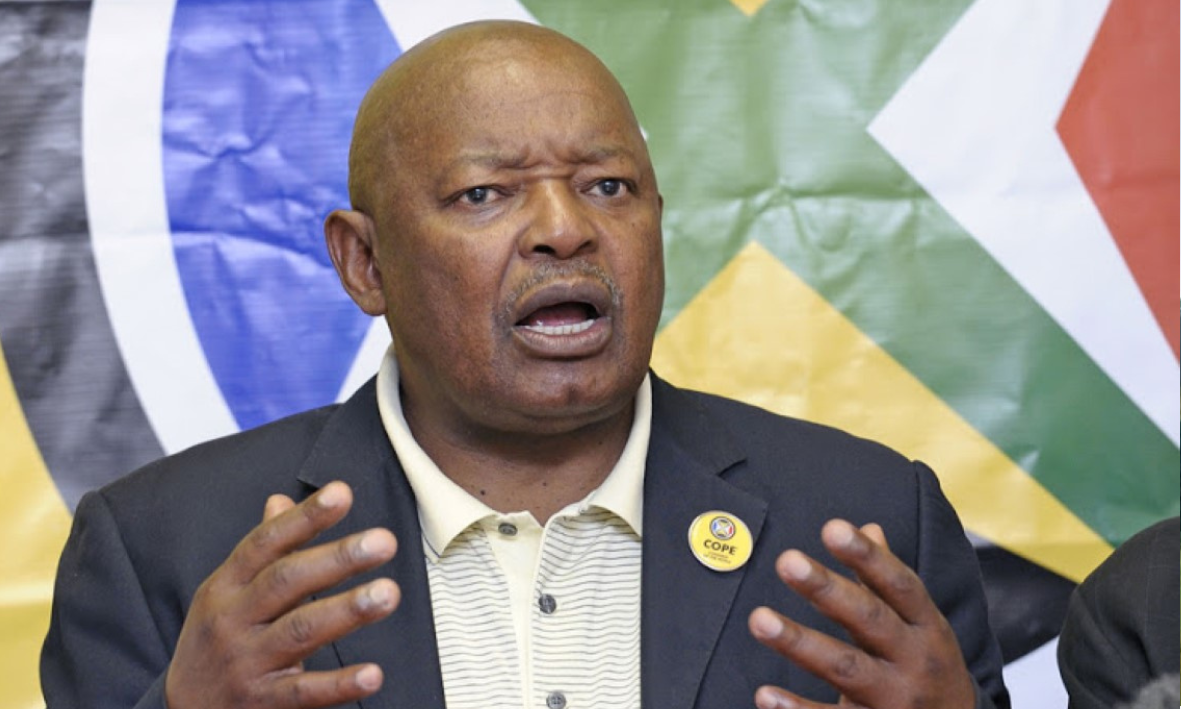
The UDM and President Holomisa mourns the passing of Ntate Mosiuoa Lekota
Statement by President of the United Democratic Movement, Deputy Minister Bantu Holomisa, MP I have received with deep sadness the news of the passing of Ntate Mosiuoa Lekota, a veteran of our liberation struggle and a steadfast servant of the people of South Africa. His life mirrors the difficult but determined journey of our nation towards freedom and democracy. In the period leading to our democratic breakthrough in 1994, Ntate Lekota played a significant leadership role within the liberation movement, particularly through his involvement in the United Democratic Front. Following the advent of democracy in 1994, he served as Premier of the Free State, helping to stabilise governance structures in a newly liberated South Africa. Of course, Lekota later had differences with the African National Congress (ANC). I recall when he remarked that he had “served the divorce papers” to the ANC. When he left the ANC, the Congress of the People (COPE) was formed, which was welcomed news to those of us on the opposition benches. At the time I observed that the advantage of COPE was that it was comprised of people who understood the history and passage of the struggle. Their contribution in Parliament would therefore be significant, as they would remind South Africans that the project of the struggle had been hijacked by unscrupulous elements within the ruling party. Indeed, the commissions of inquiry that followed later confirmed many of those concerns. Throughout his political life, Mosiuoa Lekota remained a firm believer in constitutionalism, accountability and open democratic discourse. On behalf of the United Democratic Movement, I extend our sincere condolences to Ntate Lekota’s family, his friends and his comrades. May they find strength and comfort during this difficult time. May his soul rest in peace.
Admin
02 Mar, 2026
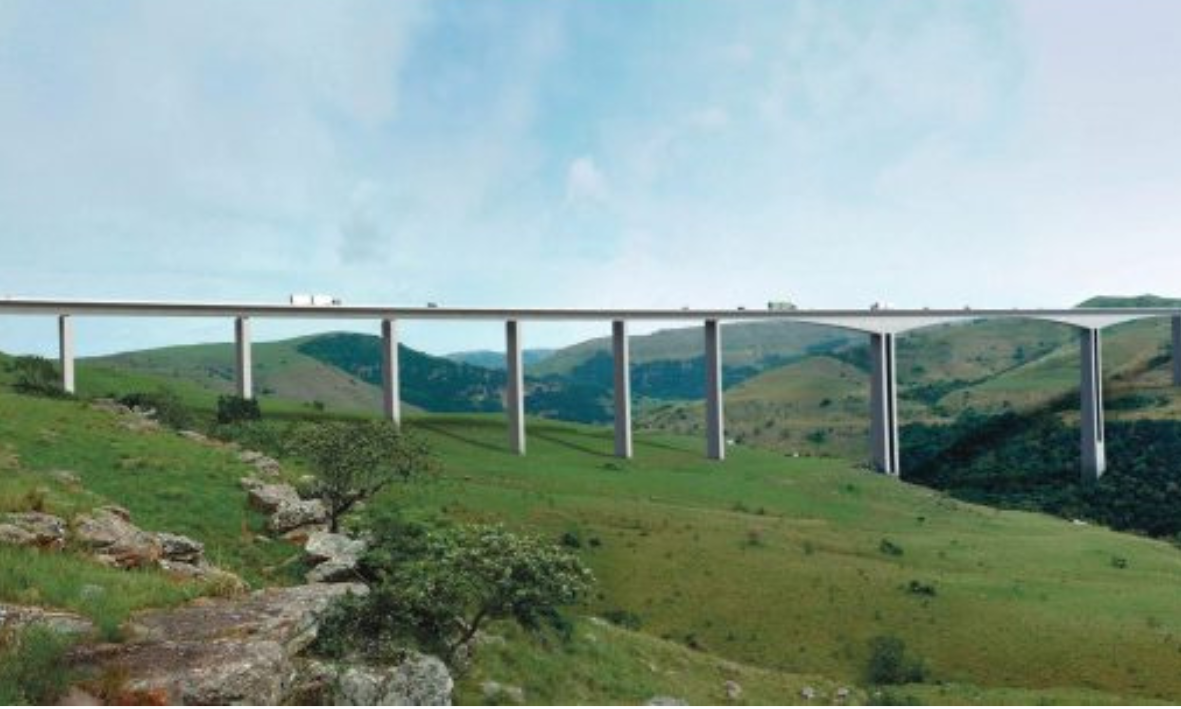
Parliamentary submission on Mtentu River Bridge procurement irregularities
Mr Songezo Zibi, MP Chairperson: Standing Committee on Public Accounts Parliament of the Republic of South Africa Cape Town 8000 Mr Chairperson Formal Parliamentary submission on identified procurement, governance and contractual irregularities relating to subcontract adjudication and awards under the Mtentu River Bridge project (N2 Wild Coast Toll Road) 1. Introduction 1.1. I address this correspondence in the broader interest of constitutional governance, public financial accountability, and the protection of public resources. 1.2. This letter constitutes a formal parliamentary submission to the Standing Committee on Public Accounts (SCOPA), placing on record a series of material, systemic and recurring irregularities identified in the adjudication and award of subcontract packages under the Mtentu River Bridge Project, forming part of the N2 Wild Coast Toll Road Programme. 1.3. The purpose of this submission is not merely to catalogue administrative shortcomings, but to alert Parliament to substantive deviations from lawful procurement practice, which, if left unexamined, may give rise to irregular expenditure, contractual disputes, audit qualifications, and erosion of public trust in State-funded infrastructure delivery. 2. Strategic and policy context of the project 2.1. The Mtentu River Bridge Project is one of the most significant infrastructure investments undertaken by the State in the Eastern Cape, both in scale and symbolic importance. It is intended not only to enhance national logistics connectivity, but also to stimulate inclusive economic development, local enterprise participation, and community empowerment in historically marginalised areas. 2.2. The project is implemented under South African National Roads Agency SOC Limited (SANRAL) Contract No. N.002-201-2023/1C through a Main Contractor Joint Venture. As such, all procurement activities associated with the project are conducted within the public finance environment, notwithstanding subcontracting arrangements. 2.3. Accordingly, the entire procurement chain is governed by: 2.3.1. Section 217 of the Constitution of the Republic of South Africa. 2.3.2. The Public Finance Management Act, 1999 (PFMA). 2.3.3. Treasury Regulations issued in terms of the PFMA. 2.3.4. National Treasury Supply Chain Management prescripts. 2.3.5. Auditor-General of South Africa (AGSA) audit standards relating to irregular, fruitless and wasteful expenditure. 2.4. It is against this framework that the matters raised herein must be assessed. 3. Basis and methodology of review 3.1. This submission arises from a careful, document-by-document scrutiny of official procurement records generated by the implementing agents. The review focused on: 3.1.1. Consistency of application of mandatory requirements. 3.1.2. Alignment between advertised evaluation criteria and final decisions. 3.1.3. Integrity of price, preference and scoring processes. 3.1.4. Contractual certainty and enforceability. 3.1.5. Internal controls relating to bid submission, correction and acceptance. 3.2. The following documents form the factual foundation of this submission and are attached as annexures: 3.2.1. Adjudication Report: Subcontract Package 2 - Bulala Access Road. 3.2.2. Adjudication Report: Subcontract Package 5 - Crushing and Screening of Aggregates. 3.2.3. Appointment Letter: Subcontract Package 5 - Sourcing of Wearing Course Materials from State-Owned Borrow Pits. 4. Detailed account of identified irregularities 4.1. Selective and inconsistent enforcement of mandatory requirements: 4.1.1. A central and recurring concern across the reviewed packages is the uneven application of mandatory compliance requirements. 4.1.2. In Subcontract Package 2, a bidder was disqualified on the basis of a procedural defect relating to clarification briefing attendance documentation, which was characterised in the adjudication report as fraudulent. The disqualification was immediate and final. 4.1.3. By contrast, in Subcontract Package 5, a bidder who failed to submit a mandatory statutory requirement, specifically a valid Department of Mineral Resources (DMR) mining permit, was nonetheless deemed compliant and recommended for award. 4.1.4. Mandatory requirements, by definition, are not discretionary. Their selective enforcement constitutes a breach of the principles of fairness, equity, transparency and competitiveness, and is inconsistent with Treasury Regulations governing supply chain management. 4.2. Deviation from advertised evaluation criteria after final scoring: 4.2.1. In Subcontract Package 5 (crushing and screening), the adjudication process applied a 90/10 price and preference scoring system, as prescribed in the tender documentation. 4.2.2. The highest-scoring bidder under this system was subsequently excluded after completion of the scoring process, based on concerns relating to operational capacity and prior performance on other projects. 4.2.3. While capacity and performance considerations may be relevant, they were not disclosed as pre-qualification criteria or evaluation factors in the Request for Quotation. Their introduction after scoring constitutes a material deviation from the rules of the competition as advertised to bidders. 4.2.4. This practice undermines the legality and defensibility of the adjudication outcome and exposes the process to review under administrative law principles. 4.3. Post-adjudication negotiation of prices 4.3.1. The adjudication documentation further records an explicit intention by the main contractor to negotiate further rate reductions with the recommended bidder after the adjudication process had concluded. 4.3.2. Post-adjudication price negotiations compromise the integrity of competitive procurement. They alter outcomes outside the transparent scoring framework, disadvantage other bidders, and undermine price certainty. 4.3.3. Such practices are incompatible with PFMA requirements and raise the risk of irregular expenditure. 4.4. Conditional appointment presented as a concluded award 4.4.1. The appointment letter issued in respect of Subcontract Package 5 records a stated contract value and anticipates immediate commencement of works. However, it simultaneously makes the appointment subject to multiple unresolved conditions, including: 4.4.1.1. Agreement on rates. 4.4.1.2. Finalisation of borrow pit locations. 4.4.1.3. Laboratory testing and approvals. 4.4.1.4. Engineer’s instructions. 4.4.1.5. Execution of a formal subcontract agreement. 4.4.2. This creates a situation where a document styled as an appointment lacks the legal certainty of a concluded contract yet purports to trigger performance obligations. 4.4.3. Such ambiguity exposes the State to contractual disputes, audit findings, and the risk that expenditure incurred may later be classified as irregular. 4.5. Internal contradictions regarding commencement of works 4.5.1. The same appointment letter states that commencement shall be immediate upon signature, while also indicating that commencement is contingent upon technical approvals and preparatory works. 4.5.2. These positions are mutually inconsistent and render the commencement provisions legally unclear and operationally impractical. 4.6. Weaknesses in bid control and arithmetic governance 4.6.1. Across the reviewed packages, several control deficiencies are evident: 4.6.1.1. Significant arithmetic corrections applied to bids without documented bidder acceptance. 4.6.1.2. Submission of outdated, duplicate or incomplete bills of quantities by multiple bidders. 4.6.1.3. Lack of evidence of robust bid submission screening prior to opening 4.6.1.4. These weaknesses point to systemic deficiencies in bid management and internal control, increasing the risk of dispute, error, and audit qualification. 5. Cumulative PFMA and AGSA risk implications 5.1. Individually, each of the issues outlined above raises concern. Taken cumulatively, they point to systemic governance weaknesses that fall squarely within the oversight mandate of SCOPA. 5.2. The risks include: 5.2.1. Non-compliance with the PFMA and Treasury Regulations, 5.2.2. Exposure to irregular, fruitless and wasteful expenditure, 5.2.3. Breakdown of internal control and accountability mechanisms, 5.2.4. Legal vulnerability of adjudication and award decisions, 5.2.5. Undermining of developmental and community-based procurement objectives, 5.2.6. These are precisely the categories of risk that Parliament and the AGSA are constitutionally mandated to interrogate. 6. Request for parliamentary oversight intervention 6.1. In light of the seriousness, scale and systemic nature of the concerns raised, I respectfully request that SCOPA: 6.1.1. Calls upon SANRAL and the relevant implementing agents to account in detail for the adjudication and award processes. 6.1.2. Examines whether the identified practices comply with PFMA, Treasury Regulations and supply chain management prescripts. 6.1.3. Considers referral of the matter to the AGSA for further investigation or special audit attention. 6.1.4. Recommends appropriate corrective, remedial and consequence-management measures. 7. Annexure index 7.1. The following annexures accompany this submission: 7.1.1. Annexure A: Adjudication Report - Subcontract Package 2 (Bulala Access Road). 7.1.2. Annexure B: Adjudication Report - Subcontract Package 5 (Crushing and Screening of Aggregates). 7.1.3. Annexure C: Appointment Letter - Subcontract Package 5 (Wearing Course Materials / Borrow Pits). 8. Conclusion 8.1. The matters raised in this submission are substantive, factual, and grounded in official documentation. They are not advanced lightly, nor for any purpose other than to uphold constitutional governance, lawful procurement, and responsible stewardship of public funds. 8.2. I trust that SCOPA will give this submission the thorough and deliberate consideration it warrants in the execution of its oversight mandate. Yours sincerely Maj Gen (Ret) BH Holomisa President of the United Democratic Movement Deputy Minister of Defence and Military Veterans For information: Office of the SANRAL CEO Chief Executive Officer Information Officer
Admin
10 Nov, 2025
Report back: R3.5 trillion at risk: the Public Investment Corporation’s governance collapse in the Lanseria Airport Holdings deal and other governance issues
Mr Nqabayomzi Kwankwa, MP UDM Deputy President and Leader in Parliament PO Box 15 Cape Town 8000 and Ms Thandi Nontenja, MP UDM National Treasurer and Chief Whip in the National Assembly Member of the Standing Committee on Public Accounts PO Box 15 Cape Town 8000 Dear Mr Kwankwa and Ms Nontenja Report back: R3.5 trillion at risk: the Public Investment Corporation’s governance collapse in the Lanseria Airport Holdings deal and other governance issues 1. I hereby request that you prepare the United Democratic Movement’s (UDM) parliamentary operations to address the issues outlined in this letter, with particular focus on the Party’s participation in the Standing Committee on Public Accounts (SCOPA) and the Standing Committee on Finance, and to begin gathering relevant information. I have already instructed Attorney Eric Mabuza of Mabuza Attorneys to obtain key information from Mr Patrick Dlamini, Chief Executive Officer of the Public Investment Corporation (PIC), as reflected in the attached correspondence. 2. On 29 October 2025, the UDM addressed a detailed letter to the President of the Republic, Mr Cyril Ramaphosa, and the SCOPA Chairperson, Mr Songezo Zibi, MP, under the subject “R3.5 trillion at risk: the Public Investment Corporation’s governance collapse demands action.” In that correspondence, I highlighted the grave risks posed by a series of recent and questionable transactions undertaken by the PIC, which endanger more than R3.5 trillion in pensioners’ funds, alongside widespread governance, ethical, and oversight failures within the institution. As you are aware, the UDM has already proposed several urgent interventions in that letter to address these systemic failures. 3. On 5 November 2025, the PIC Corporate Affairs Division, in the name of the PIC Board Chairperson and Deputy Minister of Finance, Dr David Masondo, issued a statement appeared designed to undermine the UDM’s position. 4. As a matter of interest, Deputy Minister Masondo contacted me, on the same day, personally after the statement was issued, distancing himself from its content and expressing concern about the manner in which the PIC had treated me. It appears that the statement was drafted within the PIC as a deliberate smokescreen and an attempt to deflect public attention from the Lanseria Airport Holdings deal by going on the offensive. Yet, in doing so, the PIC conceded that “…a legal review on the arbitration proceedings is underway…,” which only reinforces the view that where there is smoke, there is indeed fire. Why attack the UDM and me personally instead of providing a substantive response to each of the issues we raised in our letter of 29 October 2025? 5. On 8 November 2025, I again wrote to President Ramaphosa and SCOPA Chairperson Songezo Zibi, specifically concerning: 5.1. A letter from Werksmans Attorneys to Mabotja Attorneys titled: “PUBLIC INVESTMENT CORPORATION SOC LIMITED // ACAPULCO TRADE AND INVEST 164(RF) (PTY) LTD” dated 6 November 2025 and 5.2. Mabotja Attorneys’ response to the above entitled.: “LANSERIA AND RELATED MATTERS” of 7 November 2025. 5.3. In its correspondence, Werksmans Attorneys, acting on behalf of the PIC, wrote to Mabotja Attorneys, who represent Acapulco Trade and Invest 164 (Pty) Ltd, concerning the aftermath of an arbitration award in favour of Acapulco dated 17 September 2025, amounting to R411 282 264.44. The letter indicates that the PIC intends to review or challenge the award and has requested that the funds already deposited in Mabotja Attorneys’ trust account be frozen pending the outcome of that review. 5.4. In reply, Mabotja Attorneys issued a strongly worded and defensive response aimed at discrediting Werksmans Attorneys’ letter on behalf of the PIC and portraying Acapulco as the aggrieved party. The exchange highlights growing tension between Acapulco, Mr Patrick Dlamini, and Harith General Partners and its founder, Mr Tshepo Mahloele, who appears to be a key figure at the centre of the dispute. 6. What prompted Mr Dlamini to act so suddenly? Was it his own initiative, or did the PIC Board finally intervene in a last-minute attempt to salvage what remains of the institution’s credibility and reputation? 7. There appears to be a significant fallout between the PIC and Acapulco Trade and Invest 164 (Pty) Ltd, the BEE partner in the Lanseria Airport Holdings deal. Despite Acapulco having defaulted on a R333 million loan, which grew to approximately R600 million with interest, the PIC nevertheless proceeded to pay just over R411 million to Acapulco after an arbitration process upheld a contested valuation conducted by Crowe, a so-called external valuer. This payout has reportedly angered the PIC Board, which has since moved to freeze the funds and is said to be considering legal action. These developments point to growing internal discord within the PIC and raise serious concerns about a potential governance collapse within the institution. Why did the Mr Dlamini and his executive team approve this transaction in the first place if they are now raising alarm after the fact? 8. Mr Dlamini’s professional history continues to raise serious governance concerns. In Mabotja Attorneys’ letter of 7 November 2025, it is alleged that he has maintained a close personal and professional relationship with Mr Mahloele and Harith General Partners, including attending a celebratory gathering at Mr Mahloele’s Bryanston home shortly after his appointment as PIC CEO. This allegation adds to a pattern first documented during his tenure as CEO of the Development Bank of Southern Africa, when serious accusations of mismanagement, maladministration and possible corruption the UDM brought to the attention of SCOPA in October 2020. At that time, concerns were raised about his association with Mr Mahloele and Harith, particularly around the Poseidon funding matter and other questionable transactions that appeared to benefit politically connected entities. Now, as head of the PIC, the same allegations of conflict of interest, irregular investment decisions and weak governance have resurfaced, most notably in the Lanseria Airport Holdings and FlySafair dealings involving Harith-linked interests. This recurring pattern points to an entrenched network of influence between public finance institutions and private business interests that requires urgent and independent investigation. 9. In its letter of 29 October 2025, the UDM made two key recommendations: 9.1. That SCOPA convene urgent public hearings with the PIC Board, the Chief Executive Officer, and the Government Employees Pension Fund (GEPF) to account for ongoing governance failures, ethical breaches, and poor investment decisions. 9.2. That the Auditor-General and the Special Investigating Unit (SIU) conduct a forensic audit of the Isibaya Fund and the Unlisted Investments Division, with a particular focus on politically connected transactions, loss-making projects, and compliance with the recommendations of the Mpati Commission. The Lanseria transaction, which was initiated in 2013, must be included in the scope of investigation as this appears to be where the shenanigans first began. Questions remain about the servicing of the loan through dividends. Were any ever declared by the Government Employees Pension Fund, the PIC, Acapulco, or Harith General Partners? 10. Equally concerning is the reported involvement of Harith General Partners in raising funds to acquire a stake in FlySafair. It is important to recall that the UDM previously intervened to stop the South African Airways (SAA) transaction after informing President Ramaphosa and then Minister of Public Enterprises Pravin Gordhan, following Gordhan’s 11 June 2021 announcement that the Takatso Consortium, led in part by Harith General Partners owned by Mr Tshepo Mahloele, had been selected as the preferred bidder to acquire a 51% stake in SAA for R51. 11. A further and deeply troubling conflict of interest arises from the fact that Mr Dlamini previously served as Chairperson of the Lanseria Airport Holdings Board while simultaneously holding senior public office. According to the Companies and Intellectual Property Commission (CIPC) website, he still remains listed as a Non-Executive Director of Lanseria Holdings (K2012204048), Lanseria Airport 1993 (M1993004101), Lanseria Airport Investments (M2002025907) and Lanseria International Airport (M1991001749). His continued association with these entities, which have direct financial dealings with the PIC, raises serious questions about the independence and propriety of decisions taken under his leadership. This dual involvement suggests that Mr Dlamini may have had access to privileged information regarding the airport’s operations and valuation, both before and after the disputed PIC investment. When considered alongside the issues raised in Mabotja Attorneys’ letter concerning his relationship with Harith General Partners and its founder, Mr Tshepo Mahloele, this overlap of roles points to a possible conflict of interest that warrants urgent scrutiny by the relevant oversight bodies. Now, the same players appear to be seeking to use public funds for private investment ventures. We have not forgotten the Mpati Commission’s damning findings against these entities. 12. The Auditor-General, acting under the auspices of SCOPA, remains the only credible authority capable of conducting a comprehensive review of the Lanseria deal and related transactions, given that public money is once again at stake. 13. The UDM should maintain its position that safeguarding public pension funds is a matter of national importance. It is imperative that decisive intervention takes place to ensure the PIC is never exploited as a vehicle for political patronage, and that the more than R3 trillion in assets under its management are administered with the highest levels of integrity, professionalism, and accountability. Yours sincerely Deputy Minister Bantu Holomisa, MP President of the United Democratic Movement Copied to: • Mr Matamela Cyril Ramaphosa – President of the Republic of South Africa • Mr Enoch Godongwana, MP - Minister of Finance • Dr David Masondo, MP - Deputy Minister of Finance and Chairperson of the Board of the Public Investment Corporation • Ms Thoko Didiza, MP - Speaker of the National Assembly of South Africa • Mr Songezo Zibi, MP - Chairperson of the Standing Committee on Public Accounts • Dr Mkhacani Maswanganyi, MP - Chairperson of the Standing Committee on Finance • Mr Patrick Dlamini - Chief Executive Officer, Public Investment Corporation • Mr Musa Mabesa - Principal Executive Officer, Government Employees Pension Fund • Ms Tsakani Maluleke - Auditor-General of South Africa • Adv Andy Mothibi - Head of the Special Investigating Unit • Mr Eric Mabuza – Mabuza Attorneys

Admin
30 Oct, 2025
Formal clarification and representation in respect of the Lanseria Holdings (PTY) Ltd transaction
Mr KG Mabotja Mabotja Attorneys 189 Lunnon Road Hillcrest Office Park Barbet Place Hillcrest Pretoria 0083 Dear Sir Formal clarification and representation in respect of the Lanseria Holdings (PTY) Ltd transaction 1. I note your client’s position; however, the explanations provided raise several further questions that require documentary verification before any of the assertions can be accepted at face value. 2. You state that the valuation in question was performed by an independent audit firm and a professional property valuer jointly appointed by the Public Investment Corporation (PIC) and Acapulco. Please confirm whether the external audit firm and the property valuer were selected from the Public Investment Corporation’s panel of accredited external valuers, and, if so, provide documentary evidence of their accreditation and appointment process. The independence of the valuer is a material consideration, as valuations of this nature are vulnerable to manipulation if not conducted by duly accredited professionals who have undergone an approved appointment process by the PIC. Kindly also provide: 2.1. The full valuation report and supporting schedules; 2.2. The name of the audit firm and confirmation of whether it is one of the recognised Big Four or Five audit firms (Deloitte, PwC, EY, KPMG, or BDO). 2.3. As you will appreciate, financial institutions and institutional investors typically rely on the work of internationally recognised audit and valuation firms to ensure independence and credibility. The integrity of the valuation process depends on this standard. 3. It has been noted that the Government Employees Pension Fund (GEPF) continues to hold the same Lanseria asset at an impaired value, despite the revaluation you reference. 3.1. How does your client explain this discrepancy? 3.2. Are you suggesting that the GEPF valuation is incorrect? 3.3. If not, please clarify how two entities, both ultimately representing the same shareholder interest, can hold materially divergent valuations for the same asset. 4. If the valuation truly reflected a higher fair value, why did neither the PIC nor your client initiate a market sale of the asset to test and realise that value? 4.1. A sale to a bona fide third party would have provided the only objective confirmation of the claimed valuation and would have allowed the repayment of the outstanding loan from real, realised proceeds. 4.2. The decision to effect payments without such a sale raises legitimate questions about potential collusion between PIC representatives and BEE partners, to the detriment of the GEPF and the pensioners whose funds are at risk. 5. You confirm that repayment of the loan was linked to dividend flows. Once those dividends failed to materialise, the loan should have been declared in default and the PIC should have executed against the security, in this case, the shares held by Acapulco, until recovery was completed. 5.1. On what basis, therefore, were payments made to Acapulco before any such sale took place? 5.2. Please provide documentation or correspondence showing the PIC’s authorisation for these payments. 6. In light of your client’s assurance that all valuations, arbitration records, and transaction documents are available for inspection, I hereby formally request copies of these documents for review. Kindly provide the complete valuation report, arbitration award, loan and shareholder agreements, and any other records relevant to the Lanseria Holdings transaction. These documents are essential to substantiate your client’s representations and to enable informed oversight and accountability in the public interest. 7. Would you kindly direct future correspondence to my attorney, Mr Eric Mabuza, at Mabuza Attorneys at Eric@mabuzas.co.za. Yours sincerely Deputy Minister Bantu Holomisa, MP President of the United Democratic Movement Copied to: Mr Eric Mabuza, Mabuza Attorneys

Admin
29 Oct, 2025
R3.5 trillion at risk: the Public Investment Corporation’s governance collapse demands action
Mr MC Ramaphosa President of the Republic of South Africa Private Bag X1000 Pretoria 0001 and Mr Songezo Zibi, MP Chairperson of the Standing Committee on Public Accounts PO Box 15 Cape Town 8000 Dear Mister President and Chairperson Zibi R3.5 trillion at risk: the Public Investment Corporation’s governance collapse demands action 1. I had the privilege of attending the extended Cabinet Lekgotla at the end of September 2025, where you, Mr President, emphasised that the fight against corruption and the looting of state resources would be a top priority for the Government of National Unity. You further noted that the current climate of corruption and mismanagement has severely undermined investor confidence, and that this situation must be decisively addressed. 2. The Judicial Commission of Inquiry into Allegations of Impropriety at the Public Investment Corporation (PIC) (‘the Mpati Commission’) was established by you, Mr President, in October 2018 to investigate allegations of corruption, maladministration, and governance failures at the PIC, Africa’s largest asset manager, overseeing pension and social funds exceeding R2 trillion at the time (now over R3.5 trillion). 3. Amongst others, the Mpati Commission in 2020 exposed the PIC as a politically captured institution plagued by poor governance, weak accountability, and corruption, particularly within its unlisted investment portfolio (Isibaya Fund). Its recommendations aimed to restore transparency and fiduciary responsibility, but implementation has been slow and inconsistent. 4. Instead, what the United Democratic Movement (UDM) presents hereunder is a stark picture of continued looting, mismanagement, and administrative bungling from top to bottom at the PIC and its Isibaya Fund since the conclusion of the Mpati Commission, a situation of enormous proportions that rivals the State Capture scandal itself. This does not require another commission of inquiry. Rather, the UDM sets out below a series of concrete proposals for decisive action to stop the rot in its tracks through innovative solutions, strengthened parliamentary oversight, and firm law enforcement intervention. 5. The Lanseria Airport Holdings case 5.1. This presents what appears to be brazen looting of PIC funds, arguably worse than anything uncovered by the Mpati Commission. Around 2013, Harith General Partners, a group of BEE partners, and the Government Employees Pension Fund (GEPF) invested in Lanseria Airport. The BEE partner, Acapulco Trade and Invest, was fully funded by the PIC with a loan of about R350 million, to be repaid from future dividends. More than a decade later, the loan remains unpaid and has ballooned to over R600 million, leaving the investment deeply underwater. Instead of writing it off, the PIC and its BEE partner conjured a revaluation, declaring the asset suddenly worth R1 billion. 5.2. The PIC then took over the BEE partner’s shares as security and astonishingly concluded that it now owed the BEE partner R400 million. In other words, a failed investment was transformed on paper into a profit for the debtor, creating R400 million of value out of thin air. From a debt of R600 million with no repayment capacity, the BEE partner miraculously walked away with a R400 million windfall (the BEE shareholders got their share this month and they are allegedly fighting over the loot). This may be one of the most blatant acts of looting in PIC history, rivalling the excesses of the Dr Dan Matjila era. 5.3. To make matters worse, the GEPF itself already holds an impaired stake in Lanseria Holdings. This means the PIC will either have to immediately write off the shares it took over or get the GEPF to revalue the shares to avoid scrutiny. You cannot hold same shares on the same balance sheet at different valuations. 6. The “New Karan Beef” and FlySafair deals 6.1. In 2019, the PIC was forced to halt its planned investment in Karan Beef after a whistleblower exposed alleged price inflation that pushed the valuation to R5.2 billion. Despite prior approval, the deal was never implemented following the Mpati Commission’s intervention. 6.2. Now, a similar pattern appears to be emerging with FlySafair. The airline is seeking local investors after regulatory rulings on ownership, and it is alleged that a consortium is attempting to acquire it with PIC funding at an inflated valuation of about R7.9 billion; nearly double the estimated fair value. If executed, the transaction could result in massive value destruction, mirroring what would have happened with Karan Beef. 6.3. While FlySafair is a strong airline, it is certainly not worth more than R3.9 billion. The airline industry remains highly volatile, and history shows that even leading carriers can collapse within years. Yet again, just as in the Lanseria Airport and other controversial transactions, Harith General Partners (linked to Mr Tshepo Mahloele) appears to be involved. This deal is currently being hotly debated within the financial services sector. No approvals yet. Just like Karan Beef, there is a push to extract billions from the PIC, and as always write-offs will follow soon afterwards. 7. The latest scandals in the public domain 7.1. The latest developments at the PIC reveal a deepening power struggle within the institution, exposing how political factionalism continues to undermine its governance. 7.2. The suspension of Chief Investment Officer Kabelo Rikhotso in early October 2025, officially framed as part of a misconduct investigation, has reportedly triggered internal tensions between rival camps competing for control of the corporation’s investment machinery . According to insider accounts, the battle is not merely administrative but linked to political influence over access to capital and deal-flow. The episode underscores a worrying pattern: instead of operating as an independent and professionally managed custodian of more than R3.5 trillion in public servants’ pension assets, the PIC has again become a stage for self enrichment. This climate of uncertainty and factional interference threatens both investor confidence and the fiduciary security of millions of pensioners who depend on the integrity of the institution. 7.3. In July 2025, the Thabiso Moshikara scandal reignited concerns about governance at the PIC. Moshikara, acting head of the PIC’s Unlisted Investments division, was accused of demanding a R3 million bribe from businessman Ralebala Mampeule, whose company Levoca 804 had received R693 million in PIC funding to buy a stake in Metrofibre Network. Mr Mampeule claimed that after the investment soured, Mr Moshikara allegedly threatened to cut off funding unless he paid the bribe, leading to a criminal investigation for extortion and Mr Moshikara’s suspension in October 2025. The case, which erupted in the same period as other senior-level suspensions, has deepened divisions within the PIC and underscores how the Isibaya Fund, long criticised by the Mpati Commission for weak oversight and political interference, remains a focal point of instability in an institution managing over R3.5 trillion in public funds. 8. Investment losses and governance problems: the Daybreak Foods case 8.1. Daybreak Foods, once presented as a flagship black-empowerment investment, has become one of the most visible symbols of the PIC’s governance and oversight failures. Despite repeated warnings from the Mpati Commission about weaknesses in the unlisted portfolio, the PIC has continued to pour money into the struggling poultry company. In July 2025, the PIC injected a further R150 million into Daybreak, bringing its total exposure this year to about R400 million and total investment since 2015 to approximately R1.7 billion. The company entered business rescue in May 2025, following years of losses, poor governance, and operational mismanagement. The PIC’s decision to provide additional funding to a failing enterprise under these circumstances underscores the absence of effective oversight, proper risk assessment, and consequence management within its unlisted investments. 8.2. Observers note that, while the PIC claims to have implemented the Mpati Commission’s recommendations, its continued support of non-performing and poorly governed entities such as Daybreak Foods demonstrates that the underlying accountability mechanisms remain weak, opaque, and easily influenced. 9. Even after the Mpati Commission, corruption within the PIC appears deeply entrenched. The institution is increasingly viewed as ground zero for corruption in South Africa, with billions of rand lost through reckless investments and outright misconduct. The PIC manages over R3.5 trillion in pension funds on behalf of public servants, yet the scale of governance and oversight remains alarmingly weak. 10. The current PIC board appears unfit for purpose 10.1. Compared to boards of other major financial-sector entities, including even struggling state-owned enterprises like Eskom, the contrast is stark. It is deeply concerning that a fund managing R3.5 trillion in pensioners’ savings operates under such a fragile governance structure. This persistent instability raises serious questions: is it the result of oversight failures, or a deliberate design to enable political capture rather than protect public assets? 10.2. It is alleged that the board is struggling to constitute key subcommittees, such as the audit committee, due to a lack of people with the minimum required qualifications, i.e. chartered accountant expertise. 10.3. Furthermore, the board lacks sufficient investment experience to form a credible investment committee. At present, there is reportedly no one with appropriate investment credentials serving on the board. Of particular concern is the Minister of Finance’s recent appointment of the wrong individual, one Mr Maseko, to the board. This bizarre error raises further questions: was it a genuine mistake, or was the Minister misled into making the appointment? Either scenario reflects poorly on the integrity and diligence of the appointment process. 11. Involvement of the banks 11.1. Some of the top South African banks have been involved in advising the PIC to participate in many transactions that exposes the PIC to reckless investment dealing, while at the same time participating in the more secured portion of the deals. These top banks need to be held accountable for their role in value destruction. They hide behind the so-called Chinese Walls. There is one bank that has been more prominent in the deals involving the PIC/GEPF. Both as an advisor and a participant in the more secured portion. 12. Investigation into the government pensions Regarding the matter of the former SATBVC pensioners, which I raised during the State of the Nation Address debate on 14 February 2023, I wish to reiterate my concern that no progress has been made. At the time, you, Mr President, directed the Minister of Finance, Mr Enoch Godongwana, to establish a team to investigate the pension entitlements of civil servants from the former SATBVC states. You further tasked the Deputy President, as head of the task team on the benefits of military veterans, to provide you with a report on this matter. To date, however, no such report has been produced, and the affected pensioners continue to wait in uncertainty. 13. The Isibaya Fund remains the epicentre of corruption within the PIC. Despite the Mpati Commission’s warnings, little has changed. This unlisted investment portfolio continues to operate with weak oversight, opaque decision-making, and politically connected deal flows. It functions as a pot of money selectively accessed by a privileged few, often without proper risk assessment, leaving the PIC exposed to massive losses. The loss ratios are unacceptable by any commercial or development finance standard. 14. The credit loss ratios of over 39% is purely criminal, no credible institution will allow such level of brazen looting in the name of empowerment. Ultimately, the State and South African public are the real losers given that PIC is guaranteed by the National Treasury. The scale of looting rivals the Gupta’s State Capture, the amount at risk is over R170 billion. The sophistication of the financial engineering and contracts are used to hide the brazen looting. Many people hardly understand deal structuring. South Africa needs to know that something worse than the State Capture continues to thrive at the PIC. 15. Given these persistent failures, it is time to ask difficult questions: Why should the Isibaya Fund remain under the PIC’s control at all? A more sensible approach would be to transfer its developmental and impact investment mandate to institutions better equipped for that purpose, such as the Development Bank of Southern Africa (DBSA) or the Industrial Development Corporation (IDC), where project evaluation, governance, and sectoral expertise are stronger. The PIC’s role could then be limited to allocating funds under DBSA or IDC supervision, or outsourcing mandates to independent professional managers with clear risk controls and accountability mechanisms. The looting will continue as long as the fund remains under the PIC. The instability will never stop; and no commission can fix that. 16. Isibaya Fund at R175 billion (at 5% of total AUM 3.5 trillion) can be transformative for South Africa if applied prudently for development purpose as defined in the mandate. Currently the fund is yielding negative returns. Based on the above number and high credit loss ratios, up to R70 billion is provided for ultimate write offs; clear wastage, with minimal development impact except narrow enrichment of a select few. 17. Working at Isibaya or the PIC has, regrettably, become increasingly viewed as career suicide. What should have been an exceptional training ground for Black investment talent, a place to hone technical, ethical, and leadership capabilities, has instead become a graveyard for many promising careers. It is virtually impossible to attract top talent with the reputation that the Fund has; the inability to attract top talent makes it difficult to do good investments. 18. The United Democratic Movement herewith recommends that: 18.1. SCOPA convenes urgent public hearings with the PIC Board, the Chief Executive Officer, and the Government Employees Pension Fund to account for ongoing governance failures, ethical breaches, and poor investment decisions. 18.2. The Auditor-General and the Special Investigating Unit to conduct a forensic audit of the Isibaya Fund and the Unlisted Investments Division, focusing on politically connected deals, loss-making projects, and compliance with the Mpati Commission’s recommendations. 18.3. National Treasury to review the composition, competence, and independence of the current PIC Board, with a view to strengthening governance and reducing political interference. 18.4. The Minister of Finance to present to Parliament a status report on the implementation of the Mpati Commission’s findings and recommendations, indicating which reforms have been completed, delayed, or abandoned. 18.5. The Minister of Finance commission a feasibility study on the transfer of the PIC’s developmental and impact investment mandate to institutions such as the DBSA or the IDC and report the findings to Parliament within a defined timeframe. 18.6. All deals under the Isibaya Fund should be reported on their website on a quarterly basis, showing the full details of the transaction, with no exception. Confidentiality cannot trump the transparency required for public funds. Current disclosure is not sufficient at all. Full amount disbursed should be shown, valuations, beneficiaries, impairments, original investment amount and all settlements. Parties not comfortable with disclosure should seek funding from commercial banks. 18.7. Dealmakers at the PIC/Isibaya Fund should be paid based on economic return performance, not disbursement of funds. Once funds are disbursed, the dealmakers do not have “skin in the game”. That should stop. With current return profile (i.e. negative returns), no bonuses should be paid irrespective of funds disbursed, just like in any commercial fund. 18.8. It is imperative that the Isibaya Fund be placed under immediate moratorium to facilitate its transition to a more credible and professionally managed platform, such as the DBSA, the IDC, or an independent third-party investment manager with robust governance frameworks and proven expertise. This decisive action will help stabilise the PIC by eliminating avenues for exploitative and politically motivated investments. 19. The United Democratic Movement believes that the protection of public pension funds is a matter of national importance. Intervention is essential to ensure that the PIC is not used as a vehicle for political patronage and that the R3 trillion in assets it holds are managed with the highest standards of integrity, professionalism, and accountability. Yours sincerely Deputy Minister Bantu Holomisa, MP President of the United Democratic Movement Copied to: • Mr Enoch Godongwana, MP - Minister of Finance • Dr David Masondo, MP - Deputy Minister of Finance and Chairperson of the Board of the Public Investment Corporation • Ms Thoko Didiza, MP - Speaker of the National Assembly of South Africa • Mr Patrick Dlamini - Chief Executive Officer, Public Investment Corporation • Mr Musa Mabesa - Principal Executive Officer, Government Employees Pension Fund • Ms Tsakani Maluleke - Auditor-General of South Africa • Adv Andy Mothibi - Head of the Special Investigating Unit
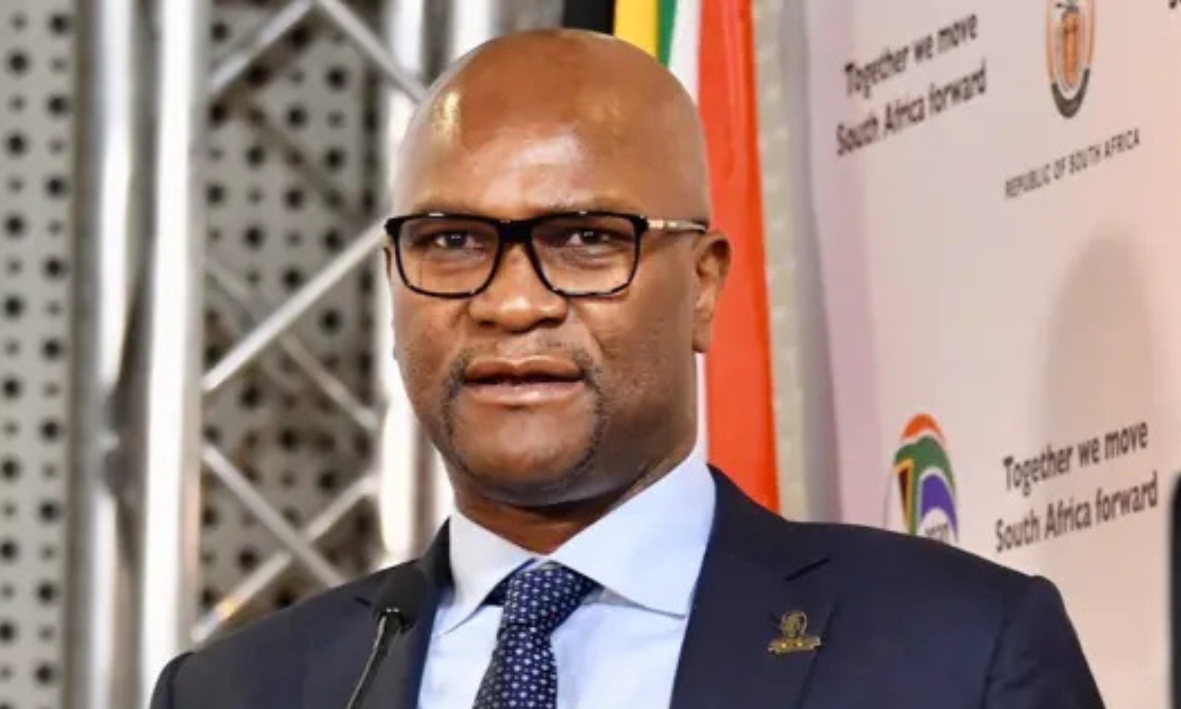
Admin
30 Sep, 2025
Bantu Holomisa on the passing of Ambassador Nathi Mthethwa
Statement by President of the United Democratic Movement, Deputy Minister Bantu Holomisa, MP I am deeply saddened by the passing of His Excellency, Ambassador Nathi Mthethwa, and I extend my heartfelt condolences to his family, friends, and colleagues. Ambassador Mthethwa served our nation with distinction, demonstrating unwavering dedication to advancing South Africa’s diplomatic and strategic interests. His professionalism, wisdom, and commitment earned him the respect and admiration of colleagues and international partners alike. During my recent visit to the French Republic for the IHEDN Forum on the African Continent (FICA) and related bilateral defence engagements in June 2025, Ambassador Mthethwa, through the Embassy, provided vital logistical support, mobility arrangements, and a comprehensive briefing to our delegation prior to departure. His guidance and insights were invaluable in ensuring that our engagements were well-prepared, strategically aligned, and impactful in representing South Africa’s interests. The meticulous support he provided, including coordinating transportation, scheduling, and access to key stakeholders, significantly contributed to the success of our working visit to France, making the trip smooth, effective, and productive. One thing Ambassador Mthethwa always never forgot to mention whenever we were in the same room, to audiences who cared to listen, is that he received his early military training under the supervision of the Transkei Defence Force officers, where he completed a special military training course in Port St. Johns for ANC liberation movement operatives during the struggle. That formative period helped shape his disciplined approach to service and his deep understanding of strategic defence matters. This early experience informed the wisdom, perspective, and professionalism he later brought to his distinguished diplomatic career. The United Democratic Movement mourns the loss of a devoted public servant and a true patriot. Ambassador Mthethwa’s contributions to strengthening South Africa’s bilateral relations and advancing defence diplomacy will leave a lasting legacy. I extend my prayers and deepest sympathies to his family, loved ones, and colleagues. South Africa has lost a remarkable diplomat and a servant of the people. May his soul rest in eternal peace.
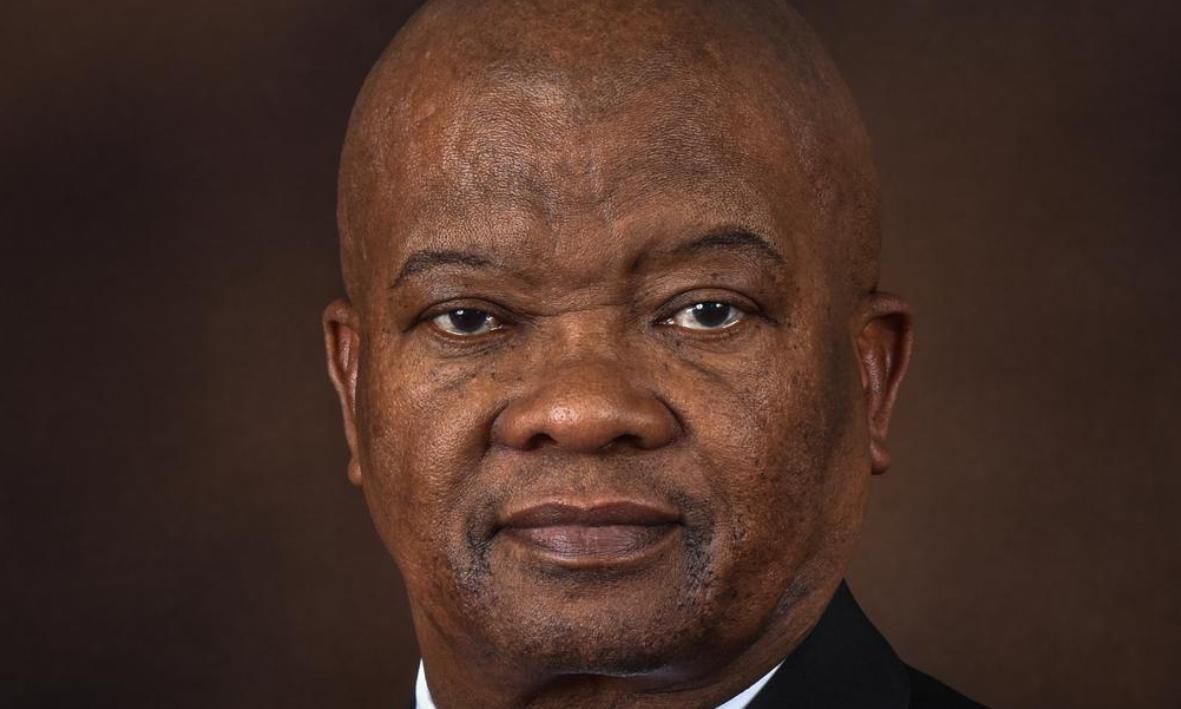
Admin
24 Jun, 2025
Year-in-review report on my role as Deputy Minister of Defence and Military Veterans within the Government of National Unity
Honourable Nqabayomzi Kwankwa, MP Parliament Leader of the United Democratic Movement (UDM) Parliament of the Republic of South Africa Cape Town Dear Honourable Kwankwa, Year-in-review report on my role as Deputy Minister of Defence and Military Veterans within the Government of National Unity I trust this letter finds you in good health and high resolve. BACKGROUND AND PURPOSE Since my appointment as Deputy Minister of Defence and Military Veterans in July 2024, I have had the privilege of engaging meaningfully with various parliamentary structures, state institutions, and formations within the South African National Defence Force (SANDF), as well as in certain instances, alongside the Minister - as evidently drawn in a summative table below, there was no space to breathe. These engagements have highlighted both the strengths and the structural weaknesses within our broader governance ecosystem. Most of the issues identified are of a legacy nature. The Auditor-General’s report has been instrumental in guiding the new Ministry, the Joint Standing Committee on Defence, and the Portfolio Committee on Defence, providing critical insight into the terrain we are expected to navigate. It is clear that the Department of Defence did not escape the effects of state capture. The ongoing SIU investigations initiated through proclamations signed by the President and the fact that the former Minister is still before the courts highlight the depth of the challenges we face. These realities point to a protracted process of restoring the integrity and capacity of the SANDF, a task further complicated by years of chronic underfunding. Another matter that garnered considerable public and institutional attention was the Democratic Republic of Congo (DRC) debacle, which placed the Department of Defence under intense scrutiny. This incident raised serious concerns about the overall capacity, preparedness, and logistical readiness of the SANDF to effectively carry out its continental peacekeeping and combat obligations. It further brought into question the adequacy of our planning processes, resource allocation, and strategic command structures in high-risk deployments. The DRC episode served as a stark reminder of the urgent need to review and strengthen our defence capabilities, particularly in the context of multinational operations under the auspices of SADC or the African Union. Adding to the ongoing concerns is the increasing impact of climate change, which continues to present new and evolving threats to our country’s security and humanitarian stability. This changing climate landscape is testing the capacity of the SANDF to respond swiftly and effectively, particularly in the deployment of rescue equipment and disaster relief operations. A case in point is the devastating floods in the Eastern Cape, which tragically claimed the lives of at least 92 people, though the final death toll is yet to be confirmed. Despite the scale of the disaster, only one Oryx helicopter was deployed for rescue and relief efforts days after the disaster had occurred, highlighting the severe limitations in our aerial response capabilities during emergencies. This highlights the urgent need to improve SANDF’s disaster response readiness in alignment with the growing frequency and intensity of climate-related events. The purpose of this letter is twofold: To provide you, as Parliamentary Leader of the United Democratic Movement (UDM), with a concise reflection on the nature of oversight and executive engagement I have undertaken since assuming office; and To urge, in the strongest terms, the reactivation and intensification of Parliament’s role in holding the Executive accountable on several unresolved matters of national importance, especially those the UDM has historically championed. It is my belief that the UDM’s principled, consistent, and people-centred voice must now take a more assertive role in ensuring that findings, commissions, and legislative frameworks lead to real consequences and reform. SUMMARY OF ALL ENGAGEMENTS This Meetings Summary Table outlines the scope of my official engagements over the reporting period. It serves as a record of the work I have undertaken in the execution of my duties as Deputy Minister of Defence and Military Veterans. The engagements span parliamentary responsibilities, oversight of the Department and the SANDF, Cabinet cluster coordination, and international cooperation. I have always believed that public office must be anchored in accountability and purpose-driven action. Each meeting reflected in this table represents a deliberate effort to advance the priorities of our defence mandate, strengthen operational efficiency, and respond to the needs of our servicemen and women, veterans, and broader society. Whether meeting with international partners, military leadership, parliamentary committees, or community stakeholders, my focus has remained on upholding the integrity of the portfolio and ensuring that decisions are informed, inclusive, and responsive to our evolving national and global context. This table is therefore more than a schedule - it is a transparent demonstration of the work done, the responsibilities carried, and the trust placed in my office to serve with diligence, consistency, and impact. Meeting Type / Category Total Meeting Count Summary Description Department of Defence (DoD) related meetings 63 Strategic meetings with Armscor, Denel, Defence Secretariat, AG compliance briefings, logistics planning, HR and CMIS oversight, force design sessions, budget alignment talks, and NCACC duties. SANDF Service Formations 42 Operational visits and reviews at SA Army HQ, Navy HQ, AFB Waterkloof, Military Police, Defence Intelligence, SAMHS, Logistics HQ, CMIS, and SF Brigade; command parades and capability briefings. Joint Standing Committee on Defence (JSCD) 12 Defence oversight briefings, acquisition performance reviews, and coordination with Treasury and Armscor. Portfolio Committee on Defence & MV 58 Parliamentary meetings focused on oversight of military veterans, departmental annual reports, and policy matters. Cabinet & Cluster Meetings 33 Engagements in JCPS and ICTS Cabinet Clusters, Deputy Ministers forums, Cabinet Lekgotla, executive caucuses, and inter-cluster alignments. International & Diplomatic Engagements 51 Bilateral engagements with Turkey, Italy, Pakistan, Spain, China, Cuba, India, the US, Japan, France, Russia, and multilateral meetings including BRICS, Ethiopia, AU Peace & Security Council sessions, arms control dialogues, the Thabo Mbeki Foundation dialogue on peace and security, various conferences on peace and security, and embassy briefings. Countries Visited on Bilateral Missions 6 Ethiopia, India, Pakistan, Cuba, Japan, and France. Community / Civic Engagements 19 Veteran forums, traditional leadership sessions, Youth Day, Women’s events, rural civic visits, and local councillor engagements. MILITARY DIPLOMACY AND STRATEGIC BILATERAL ENGAGEMENTS Over the course of this reporting period, I have placed a strong emphasis on advancing South Africa’s military diplomacy through a series of targeted bilateral and multilateral engagements. These efforts are aimed at deepening defence cooperation, strengthening strategic partnerships, and safeguarding our national interests in a dynamic and often volatile global environment. In meetings with representatives of foreign governments, military attachés, and international defence institutions, I have consistently advocated for the expansion of opportunities for our officers to attend foreign staff courses and specialised military training programmes. Building the intellectual and leadership capacity of the SANDF remains a top priority, and external training partnerships are central to that goal. Furthermore, I have worked to promote the interests of South Africa’s defence industry, calling for increased collaboration in manufacturing, technology transfer, and procurement opportunities. By encouraging reciprocal engagement between our state-owned and private defence entities and their international counterparts, we have opened new avenues for innovation and market access. These engagements have not been ceremonial. In some instances, we have used quiet diplomacy to de-escalate tensions, clarify miscommunications, and avert diplomatic fallout that could have had far-reaching implications for our defence posture and foreign relations. I remain committed to ensuring that every interaction, whether at a reception, conference, or strategic roundtable, serves the broader purpose of peace, preparedness, and prosperity for our nation and the region. IMPLEMENTATION OF THE 2015 DEFENCE REVIEW In terms of the FY2023/24 Ministerial Priorities as agreed to with the President on 18 July 2023, the Minister of Defence and Military Veterans was set the target of “Conducting an Evaluation of the Defence Review 2015 and Action Plan” for completion by 31 October 2024. The Department completed the draft documents in fulfilment of both the FY2023/24 Ministerial Priorities, as well as the subsequent direction as was given by the President during a bilateral engagement on 24 January 2024. The above- mentioned work-in-progress was formally submitted to the Presidency before the said 31 October 2024 deadline. PROCESS UNDERTAKEN The work-in-progress includes (inter alia): A concise PESTEL(M) Analysis of the Strategic Environment at the Global, Continental, Regional and National (GCRN) Dimensions. A Draft Defence Capstone Policy Concept for the Republic of South Africa. A Draft Military Capstone Strategizing Concept for the Defence and Protection of the Republic of South Africa. A Draft South African Military Strategy, Force Design and Force Structure for the period 2025 – 2055. The Journey to Greatness (Long Term Planning Intent). It was envisaged that a planned series of engagements and consultations would be pursued with the President and other critical stakeholders under the direction of the Minister before such work is formally tabled in Cabinet and in Parliament. Consequently, the South African National Security Council (SANSC) has directed the South African National Security Secretariat (SANSS) to develop a Report on the Reviewing of the Defence Review 2015 and the considerations for “investing in a sustainable modern Defence Force”. An initial engagement took place with the SANSS on 17 March 2025, where it was decided that a one-day workshop between the Department and the SANSS would be planned for the near future. This second engagement took place on Friday 13 June 2025. The work was well received and positive support was expressed in terms of the 1.5% of GDP Defence Funding Target as set by the President. The SANSS subsequently resolved to establish a small team of DGs (including the DG of the National Treasury) to engage on the fiscal strategy for attaining the goal as set by the President. Once endorsed by the National Treasury and the Ministry of Finance, this matter will proceed to the National Security Council and possibly Cabinet for further endorsement. Furthermore, the Minister will also be engaging with the Speaker and the Chairs of Parliamentary Committees on modalities for engagement with the relevant oversight bodies, so as to add value to this important work. The Department of Defence met the deadline as it was set by the Presidency. However, the Department cannot issue copies of the documents in question to the Portfolio Committee, or any structure beyond those explicitly identified for initial consultation, until a formal directive or clearance is received from the President. The decision on whether these documents may be distributed to oversight bodies rests with the Presidency, and the Department remains bound by that process. OVERSIGHT ROLE IN THE NATIONAL CONVENTIONAL ARMS CONTROL COMMITTEE (NCACC) As part of our collective responsibilities in the National Conventional Arms Control Committee (NCACC), we have actively contributed to the clearing of a significant backlog of arms control applications and export permits. Regular sittings of the Committee have ensured that due process is followed while maintaining the momentum necessary to support South Africa’s defence trade and associated industries. The backlog, which had affected operational timelines and contract fulfilment, has been systematically addressed except in instances where further verification or end-user clarity is still required. Our approach has balanced national security interests with economic imperatives, ensuring that compliant transactions are processed without unnecessary delay. Importantly, this work has direct fiscal implications. Every approved permit contributes to sustaining the country’s defence manufacturing base, securing jobs, and increasing state revenue. The NCACC therefore functions not only as a regulatory mechanism but also as a strategic enabler of industrial and economic resilience. We remain convinced that if the recovery and growth plans presented by Denel and Armscor are implemented with urgency and alignment, these state-owned entities can be repositioned toward institutional ascendancy. Through coordinated support and policy certainty, we can restore their role as vital components of South Africa’s defence capability and global competitiveness. ENGAGEMENTS WITH DEFENCE INDUSTRY STAKEHOLDERS Recent engagements with stakeholders across the defence industry were held as part of ongoing efforts to advance the implementation of public-private partnership (PPP) resolutions adopted during previous national platforms. These interactions served both as progress reviews and as strategic exchanges aimed at deepening cooperation in critical capability areas, including artillery systems, weapons testing, and industrial modernisation. The engagements also reaffirmed a shared commitment to leveraging the local defence industry as a cornerstone of national security and economic growth. A central focus of these engagements was the increasing interest, both domestically and internationally, in concluding memoranda of understanding (MoUs) with South African partners. These MoUs are expected to strengthen collaboration in advanced defence manufacturing and testing, helping position South Africa as a serious global player in next-generation defence systems. Discussions also centred on developing a coherent industry roll-out strategy that aligns local capabilities with global demand, enables technology transfer, and revitalises underutilised infrastructure for defence innovation. Stakeholders noted some progress since the last formal conference, but also expressed concern over regulatory delays, particularly those related to the issuing of permits by oversight bodies. These delays have disrupted momentum on several priority projects, thereby limiting the speed and scale of PPP execution. On a positive note, regulatory engagements with National Treasury have yielded revised guidelines, effective June 2025, that provide broader space for PPPs in areas such as prime mission equipment maintenance and upgrades. Concurrent consultations with the SANDF are also underway to ensure that industry proposals respond directly to operational requirements. One of the most significant recommendations arising from these discussions is the proposal to establish a dedicated PPP Directorate within the Department of Defence. This unit would serve as the central coordinating body for all PPP-related initiatives, reporting directly to senior leadership and working closely with oversight structures such as the Council on Defence and SANDF command. Stakeholders further recommended that the scope of PPPs be expanded beyond weapons systems to include strategic infrastructure development such as military hospitals, new bases, and the rehabilitation of command and logistics centres, thereby enabling comprehensive capability renewal. These engagements concluded with a unified commitment to intensify coordination between government, the defence force, state-owned entities, and industry partners. The focus going forward is to finalise a practical implementation roadmap for PPPs, remove regulatory bottlenecks, and institutionalise a mechanism to drive delivery on key resolutions. Stakeholders reiterated their readiness to support the Department’s efforts in positioning the local defence industry as a strategic, responsive, and globally competitive contributor to national development and security imperatives. ISSUES FACED BY MILITARY VETERANS One of the critical departments currently facing significant challenges is the Department of Military Veterans (DMV), particularly with regard to the prolonged delays in filling vacant posts. In response, we have convened a series of strategic sessions aimed at resolving these longstanding issues. These efforts have included the development of structured data management procedures, the compilation of a comprehensive implementation plan, and the establishment of a reliable and up-to-date veterans database. Through these targeted interventions, we are confident that tangible progress will be achieved, ensuring improved service delivery and greater satisfaction for military veterans across the country. Furthermore, we are working in close collaboration with the Presidential Task Team (PTT) to accelerate the resolution of the pressing issues identified above. This partnership is anchored in a shared commitment to restoring dignity and improving the quality of life for military veterans. The PTT serves as a vital coordinating mechanism, bringing together various stakeholders across government to ensure alignment, expedite decision-making, and remove bureaucratic obstacles. PARLIAMENTARY ENGAGEMENTS TO DATE In adherence to the principles of transparency and executive accountability, I have participated in a wide range of key engagements since assuming office, as reflected in the Meetings Summary Table above. These include: Portfolio Committee on Defence and Military Veterans – Regular attendance and formal submissions on matters affecting strategic capability, force readiness, and the well-being of military veterans, including oversight on departmental performance and policy execution. Joint Standing Committee on Defence – Active participation in joint oversight sessions, with specific focus on defence budget alignment, acquisition oversight, interdepartmental coordination, and strengthening the operational posture of the South African National Defence Force. Parliamentary Budget Votes and Debates – Participation in defence-related budget vote debates, including presenting key departmental priorities, defending expenditure patterns, and outlining performance targets in support of the Vote 23 allocation. Questions and Answers in Parliament – Engagements in plenary sessions involving questions to the President and Deputy President, as well as oral and written responses to parliamentary queries related to peace and security, military procurement, international cooperation, and veterans’ affairs. The nature of these engagements has not only reinforced the importance of parliamentary oversight but has also highlighted the urgent need for meaningful and enforceable accountability across all arms of the state. These engagements reveal systemic weaknesses, recurring audit disclaimers, and a dangerous normalisation of underperformance in service delivery and defence operations. In this context, the United Democratic Movement must position itself at the forefront of revitalising Parliament’s role. We must not only build on previous oversight work, but also be uncompromising in demanding implementation, consequence management, and institutional reform. Whether dealing with state-owned entities, public funds, or post-commission reform, the UDM must lead efforts to restore ethical and effective governance. ENGAGEMENTS WITH SANDF SERVICE FORMATIONS AND DEFENCE INDUSTRY ENTITIES In line with my executive responsibilities and the constitutional duty to ensure responsive governance, we have conducted a series of structured engagements with the South African National Defence Force (SANDF) and its associated defence industry institutions. These engagements have been instrumental in mapping the operational posture, resource gaps, institutional dysfunctions, and potential areas of reform within the defence ecosystem. Within the SANDF, we have exercised oversight on the following service formations and divisions: South African Army South African Air Force South African Navy South African Military Health Service (SAMHS) Military Police Division Logistics Division Human Resources Division Military Intelligence Division, among others. Each of these components performs a critical function in safeguarding the territorial integrity, sovereignty, and national interests of the Republic. However, these briefings have revealed a pattern of declining capacity, exacerbated by chronic underfunding, outdated equipment, infrastructure backlogs, and skills attrition. ENGAGEMENTS WITH THE DEFENCE INDUSTRY: DENEL AND ARMSCOR In addition to these military briefings, we have participated in oversight and strategic discussions with the two most significant players in our domestic defence industrial base - Denel and Armscor. These engagements have been instrumental in reaffirming the defence function not as an expense, but as a constitutional guarantee of sovereignty, stability, and peacekeeping in the region. However, without strategic intervention by Parliament, the SANDF risks organisational stagnation. The effectiveness of Parliament has been ambiguous for some time, with many struggling to comprehend that portfolio committees, particularly those overseeing Defence, have been raising alarms over a continued decline, yet the resolutions have largely amounted to little more than talk shops over the years. Every week, we report to the portfolio committees on these issues, but when it comes to Parliament’s role in capacitating these committees and ensuring the protection of our country, tangible support has been lacking. Even when in 2023 the President issued a directive to increase defence funding from 0.57% to 1.5% of the Gross Domestic Product (GDP), subsequent Cabinet meetings reduced these urgent calls to mere rhetoric, and the National Treasury failed to allocate the necessary funds. Parliament and the Government of National Unity must establish a structured, accountable process to implement resolutions, especially those related to Defence and oversight bodies such as SCOPA. PARLIAMENT’S OVERSIGHT MANDATE: LEGISLATIVE AND CONSTITUTIONAL FRAMEWORK Parliament’s oversight function is grounded in our democratic Constitution and further supported by key legislation that empowers Members of Parliament to act decisively: Section 55(2) of the Constitution mandates the National Assembly to “provide for mechanisms to ensure that all executive organs of state in the national sphere of government are accountable to it”; Section 92(2) and (3) of the Constitution holds Cabinet members individually and collectively accountable to Parliament; Rules of the National Assembly empower committees to summon any person to provide evidence, produce documents, or account for their actions; The Financial Management of Parliament and Provincial Legislatures Act (Act 10 of 2009) and the Money Bills Amendment Procedure and Related Matters Act (Act 9 of 2009) outline Parliament’s role in fiscal scrutiny and resource allocation oversight. This framework makes it clear: Parliament is not a passive observer. It is a constitutional watchdog with the authority and duty to demand accountability, transparency, and implementation. URGENT NATIONAL PRIORITIES DEMANDING PARLIAMENTARY ACTION Considering the background outlined above, I respectfully urge you to deploy the full weight of your office and the UDM’s parliamentary caucus to intensify oversight and push for finality on the following critical matters: Implementation of the Zondo Commission Findings The State Capture Commission unveiled an architecture of corruption that compromised state institutions and undermined public trust. Yet, implementation of its findings remains inconsistent and slow. The UDM, through Parliamentary procedures must: Demand detailed progress reports from the Presidency and the NPA; Ensure asset recovery is expedited and transparent; Create a dedicated oversight structure within Parliament to track implementation and prevent institutional regression; Introduce reforms to seal procurement loopholes and reinforce the independence of law enforcement bodies. Champion and expedite the enactment of legislation that enshrines the Commission’s rulings into law, effectively safeguarding the state from future attempts of corruption in any form. Public Investment Corporation (PIC) Accountability The Mpati Commission laid bare the mismanagement and undue influence within the PIC, risking public servants’ pensions. The UDM, through Parliamentary procedures must: Demand a detailed and public implementation report from Treasury and the PIC; Reinforce transparency in investment decisions; Re-evaluate laws governing the PIC to insulate it from political and commercial abuse. State Response to Ex-Mineworkers The UDM has long championed justice for ex-mineworkers, many of whom continue to suffer from occupational illnesses without compensation. Despite acknowledgment from former President Mbeki, implementation remains weak. The UDM, through Parliamentary procedures must: Pursue diligent follow-up on all correspondence directed to the Presidency and the Department of Labour during the tenure of former Minister Thulas Nxesi, wherein the UDM formally submitted numerous letters concerning this matter. Demand a policy framework with timelines and budget allocations for redress; Establish an interdepartmental task team to coordinate response efforts; Oversee enforcement of legal rulings and settlement payouts to affected mineworkers and their families. Land Reform and Restitution Delays The backlog in land claims, particularly post-1998 claims, continues to disenfranchise communities. The UDM, through Parliamentary procedures must: Demand a revised, time-bound implementation plan from the Commission on Restitution of Land Rights; Introduce clearer legislative frameworks for expediting land restitution and tenure security. Collapse of Provincial Health Systems and NHI Readiness While the National Health Insurance (NHI) Bill signals intent for universal healthcare, existing infrastructure and corruption in the provincial health systems raise serious concerns where many are destitute. The UDM, through Parliamentary procedures must: Demand provincial audits on hospital infrastructure and medical staffing; Scrutinise funding flows in aim to prevent tender manipulation; Insist on a phased, measurable NHI roll-out plan with clear reporting mechanisms to Parliament. The other issue is the pension of the South Africa Transkei Bophuthatswana Venda Ciskei (SATBVC) states , President Ramaphosa during the State of the Nation Address (SoNA) instructed the minister of Finance to address the matter, but Treasury once more ignored this call, however, we managed to bring it back to Parliament and are simply asking him to monitor the progress of the finalisation of this enquiry and address the concerns of these pensioners. The other pressing matter is that which relates to the remuneration of the herdsman (iiBhodi). Numerous engagements with the Presidency, National Treasury, and COGTA had been initiated by the UDM in the 6th administration, and it my plea that your office further escalates the matter to ensure that there is action in as far as this issue concerned. Youth Unemployment and Skills Mismatch The UDM, through Parliamentary procedures must also confront the unacceptably high rate of youth unemployment, now surpassing 60% in some areas. Despite billions spent on education and skills development, graduates remain locked out of the economy. The UDM should demand: Full audits of SETAs and the National Skills Fund; Reforms linking training programmes directly to identified economic sectors; State procurement policies that prioritise youth-owned enterprises and cooperatives. CONCLUSION This report serves as a summative reflection on the engagements, responsibilities, and strategic interventions undertaken over the reporting period. It captures not only the scope of work executed in alignment with my portfolio duties, but also reflects the broader institutional and policy challenges we continue to confront as public representatives. The insights and data provided herein are intended to inform, support, and empower the critical oversight role played by your office and by Parliament more broadly. Honourable Kwankwa, we are at a historical juncture. Public confidence in democratic institutions is eroding. The gap between policy and implementation continues to widen. It is in this context that the UDM’s voice and leadership in Parliament must grow louder and more decisive. I remain committed to providing assistance wherever possible, fully appreciating the established reporting protocols given my deployment within the Executive. Nonetheless, I wish to emphasise with conviction that when these critical matters are brought forth by your esteemed office, they are far more likely to gain the necessary traction, visibility, and momentum. This will significantly amplify the many voices we represent in Parliament and ensure that our concerns receive the urgent attention they deserve. We must insist on accountability, demand justice for the forgotten, and champion ethical governance as a pillar of transformation. Through your leadership, Parliament must become a place where reports are not only tabled, but implemented; where corruption is not only debated, but punished; and where vulnerable communities are not only heard, but served. With a thorough understanding of the dynamics within the Government of National Unity (GNU), I intend to formally raise these concerns at the forthcoming Bosberaad of GNU leaders, convened as per the President’s suggestion in response to the recent budgetary challenges and the discontent expressed by other political parties regarding aspects of the decision-making process. It is particularly notable that the African National Congress (ANC) and the Democratic Alliance (DA) are, in posture, seen to be undermining other parties and excluding them in all decision-making processes. The aim of this Bosberaad is to view the priority areas that need alignment and rethinking. Please be assured of my continued cooperation and support in pursuit of this collective national duty. Yours sincerely, Maj. Gen. (Ret.) BH Holomisa President of the United Democratic Movement Deputy Minister of Defence & Military Veterans
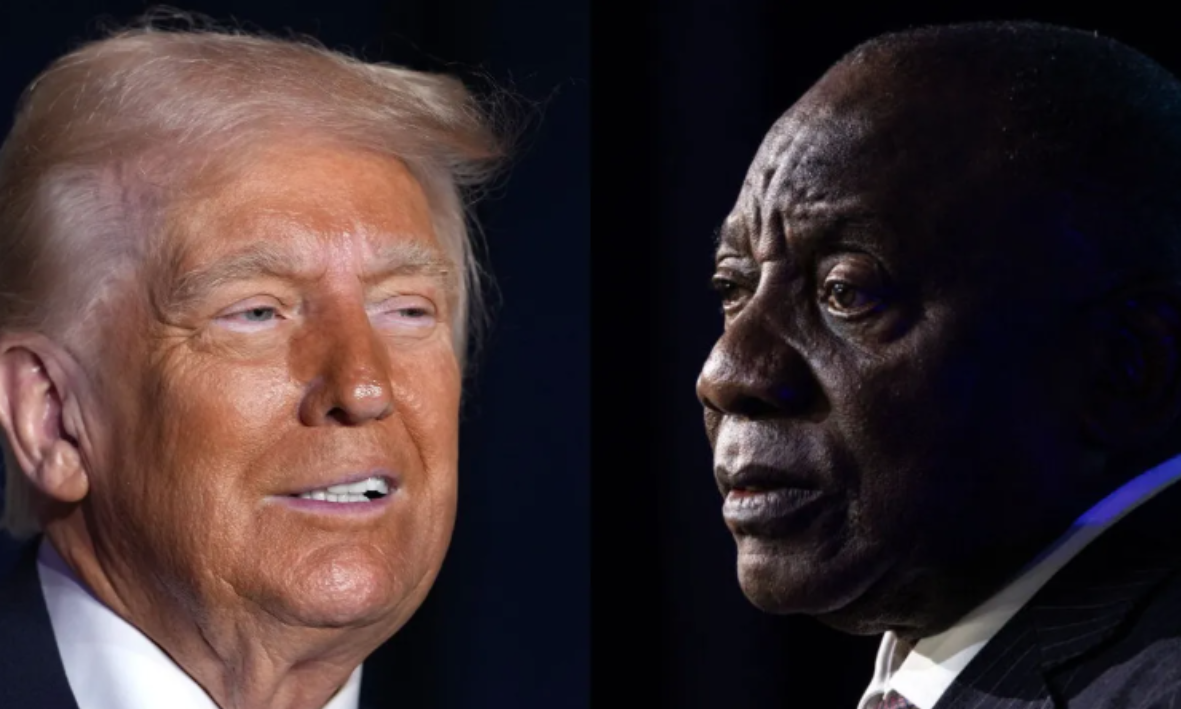
Admin
16 May, 2025
Statement by Bantu Holomisa on President Ramaphosa’s visit to the United States
Statement by Deputy Minister Bantu Holomisa, MP President of the United Democratic Movement As President Cyril Ramaphosa prepares for an important diplomatic engagement with the leadership of the United States, we take this opportunity to reflect on the recent tensions that have emerged between our two nations. These tensions have largely been attributed to unsubstantiated allegations of genocide and land being taken without compensation, among others, against certain communities within South Africa. I remember it as though it was just yesterday when I accompanied President Mandela and President Thabo Mbeki to the United States in October 1993, where President Mandela made a powerful appeal to the international community during his address to the United Nations General Assembly, calling for the lifting of sanctions against South Africa. That call was heeded by the global community, opening the door for South Africa’s reintegration into the global economy. Today, countries like China and the United States stand as South Africa’s largest trading partners. This economic relationship was significantly facilitated by the work of the Binational Commission, which enabled many companies and institutions to strengthen trade and cooperation between the two nations. To ensure a credible and forward-looking path, we call for the resumption of a Binational Commission on the same scale and structure as the historic Al Gore/Thabo Mbeki Binational Commission. This mechanism played a significant role in enhancing mutual trust, policy alignment and coordinated development efforts. A renewed Binational Commission can serve as a meaningful platform to address the current misunderstandings and to create space for practical cooperation. It is in the interest of both countries, and indeed the international community, that these concerns be approached in a constructive and solution-oriented manner. This meeting should not become an arena for blame or division. Rather, it should serve as a platform for shared understanding and cooperative action. Such a commission should include dedicated sub-committees on the Economy, Security, Education and Environment, where both governments can regularly engage on key strategic priorities. This structure would also allow for in-depth discussions on areas of concern and opportunities for collaboration, ensuring that all sectors of society benefit from the outcomes. Importantly, the work of this commission should not occur in isolation. Both Parliaments must be kept informed of its progress, ensuring transparency, accountability and alignment with national interests. Parliamentary oversight will also help institutionalise the work of the commission beyond political cycles. In addition to this, the departments responsible for trade and economic development, namely the South African Department of Trade, Industry and Competition and the United States Department of Commerce, should work closely to identify high-potential sectors and unlock investment opportunities in areas such as energy, agriculture, technology and manufacturing. We must remain conscious that unresolved tensions and negative narratives, if left unaddressed, can erode investor confidence and economic stability. It is therefore essential that diplomacy, cooperation and mutual respect guide our engagements. The weather predictions are promising, setting the stage for what is expected to be a remarkable day on the course. We trust that these two esteemed golfers, each distinguished in their own right and united by a deep love for the sport, will tee off with great enthusiasm and sportsmanship. As they take their first swings, the world watches with keen anticipation, hoping not only for a day of excellent golf, but also for a celebration of talent, passion, and the enduring spirit of the game as well as mutual national interests. Once again, this reminds me of the day when President Mandela, President Thabo Mbeki, Mr Mahlangu of KwaNdebele and I travelled to the United Nations Security Council to make a compelling case for the endorsement of the Organisation of African Unity (OAU), now the African Union, to send monitors to observe and help manage the escalating violence in South Africa. In his characteristic foresight and diplomacy, President Mandela engaged then-President George HW Bush even before the meeting to secure the support of the United States. That request was accepted, and as a result, the lives of many black South Africans were saved through timely intervention. These moments in history remind us of the enduring importance of leadership, partnership, and unity of purpose. This visit carries with it that same spirit of global engagement, shared values, and a collective hope for a more just and peaceful future.
Admin
19 Oct, 2020
Minister Nzimande’s high-handed interference in appointment of Unisa vice-chancellor
Dear Mr President MINISTER NZIMANDE’S HIGH-HANDED INTERFERENCE IN APPOINTMENT OF VICE-CHANCELLOR OF THE UNIVERSITY OF SOUTH AFRICA 1. Minister of Higher Education, Science and Technology Dr Blade Nzimande’s interference in the departmental processes and administration of the Department of Higher Education and Training (DHET), and that of the Sector Education and Training Authorities, have been reported to your office several times. 2. Seemingly Minister Nzimande’s ambitions do not stop there as he has set his sights on South Africa’s largest university, the University of South Africa (Unisa), in that he is directly interfering with the appointment of its vice-chancellor. 3. Sources indicate that Minister Nzimande had met with the Unisa council where he raised concern about three main issues: 3.1. The high number of students who yearly, directly enrol from high school at Unisa, a distance-learning institution, and the attending problems when these students agitate for National Student Financial Aid Scheme (NSFAS) sponsorship and they expect the same kind of support as students at contact-learning institutions. 3.2. High failure rate. 3.3. Implication of the cost of new technologies on the operations of the university. 4. At this meeting, the Minister indicated that there was a need to review Unisa considering the aforementioned challenges. He also indicated that it would be the right time for the review as the term of office of the vice-chancellor would be coming to an end. The common understanding was that the process of appointing a new vice-chancellor would be delayed until the review was completed. 5. At a later stage, the Minister specifically stated that it was the council’s prerogative to appoint the vice-chancellor and that his interactions with the university’s governing bodies should not be misconstrued as interference on his part. What an odd thing to be pointing out, if that was not in fact exactly what he was doing. 6. The Ministerial Task Team that had been made responsible for the Unisa review, started in mid-July 2020 and it would be logical, that the outcome of the review would dictate who should be appointed to implement the review recommendations i.e. in terms of the needed qualifications, experience, skills, etc. This echoes the initial expectation that the vice-chancellor would be only appointed after the review, yet the process of the appointment is being forged ahead with, with the interference of the Minister. 7. Apparently out of the five candidates that had been shortlisted earlier this year, two had withdrawn and there were those in the university establishment that thought the net should be cast wider. However, on 13 October 2020, the council chairperson and a ministerial advisor had apparently announced that they had identified a preferred candidate and that there would be no need to identify more candidates. I understand that interviews were conducted on the 14th, and the earmarked candidate was in fact recommended. 8. It is said that the preferred candidate has raised concern amongst the Unisa management and staff as there is doubt about this person’s experience and qualifications and, also, that there are many South Africans who should be considered for appointment. 9. Unisa’s council is to convene on 21 October 2020 and is expected to rubberstamp the palace decree. It is also clear that a selection committee had only been put in place to satisfy the policy requirements and it served no actual purpose as the decision on who was to be appointed as Unisa’s vice-chancellor was a fait de accompli. 10. However, Unisa’s council will be tested on Wednesday, to see whether they will endorse a woefully dysfunctional process that was spearheaded by a person who is not even a civil servant. The involvement of the Minister’s ‘industrial envoy’, Mr Nqaba Nqandela, who is masquerading as a DHET representative, definitively compromises Minister Nzimande’s promise that he would not interfere in the vice-chancellor’s appointment. Who mandated Mr Nqandela to poke his nose into Unisa’s affairs? 11. We recommend that you ask Unisa’s council, the outgoing vice-chancellor, as well as the Ministerial Task Team to brief you on the need for the review, its progress, as well as the entire process around appointment of the vice-chancellor. 12. By implication, one would expect that Unisa’s council would postpone the consideration of this item on its agenda, on Wednesday, and that it would not endorse appointment of the parachuted-in candidate, until they have satisfied themselves that the minister’s involvement has not compromised prescribed processes and appointment policies. 13. Mr President, although we have written to your office many times, Minister Nzimande continues to use his briefcase lackeys to intimidate all and sundry in the higher education establishment and this must stop. Yours sincerely Mr Bantu Holomisa, MP President of the United Democratic Movement
Admin
15 Oct, 2020
Allegations of political interference by Minister Nzimande in CHIETA CEO appointment
Dear Mr President Allegations of political interference by Minister Nzimande in CHIETA CEO appointment 1. I have previously raised with you the alleged interference of the political head of the Department of Higher Education and Training (DHET), the Minister of Higher Education, Science and Technology, Dr Blade Nzimande, in that department’s administration and also in the management of the Sector Education and Training Authorities (SETAs). 2. Yesterday, the Chemical Industries Education and Training Authority (CHIETA) announced the appointment of Mr Yershen Pillay as its Chief Executive Officer. 3. Mr Pillay is a former Young Communist League chairperson and, according to our source, is a personal confidant of Minister Nzimande. In fact, in the communication to staff, announcing Mr Pillay’s appointment, Ms Wezi Khoza (Chairperson of the CHIETA Accounting Authority) flaunted that he works in the Minister’s office as Director Stakeholder Management. 4. To provide further information and context, I remind you of my 10 September 2020-letter regarding the Minister’s reward scheme for party cronies, where his direct involvement is alleged in the creation of five DHET posts for which no logic or justification were provided in terms of the Public Service Regulations. Allegedly, these posts were not advertised; nor was there an appointment committee; nor were competency assessments conducted and no vetting or checking of qualifications were undertaken. 5. Mr Pillay was one of those lucky communists and received a whopping salary of just over R88,000 per month in the 2019/20 financial year. So, whilst business at the DHET is run like the Wild Wild West, Mr Pillay has been rewarded a second time, this time with a SETA CEO-ship. 6. Seen against the backdrop of the past allegations made around Dr Nzimande’s seeming empire building, Mr Pillay’s appointment is clearly another block in that structure, and one wonders at the goal. 7. Actions speak louder than words and no matter what Minister Nzimande says, he does not appear to be building a robust, merit-based higher education management system that works in service of South Africa for the long-term. 8. With due respect Sir, the lack of response from your office to the various matters I have raised relating to Minister Nzimande resembles ostrich politics. I therefore hope that you will break your silence on this topic with a definitive stance. 9. The United Democratic Movement will however in the meantime and in good faith persist in raising issues of national importance with you, in line with your cause to rid government of corruption. Yours sincerely Mr Bantu Holomisa, MP President of the United Democratic Movement
Admin
10 Sep, 2020
DHET: further allegations of Minister Nzimande’s political interference: appointment of SACP cronies
Dear President Ramaphosa DEPARTMENT OF HIGHER EDUCATION AND TRAINING: FURTHER ALLEGATIONS OF MINISTER NZIMANDE’S POLITICAL INTERFERENCE: APPOINTMENT OF PARTY CRONIES 1. I refer to my letters of 24 and 31 August 2020 regarding allegations of interference of the political head of the Department of Higher Education and Training (DHET), the Minister of Higher Education, Science and Technology, Dr Blade Nzimande, in departmental processes and administration, as well as the undermining of the senior departmental accounting officers. 2. Minister Nzimande’s alleged direct interference in procurement processes, such as what apparently happened with the National Student Financial Aid Scheme (NSFAS) laptop tender, clearly has disastrous consequences. This much vaunted project has flopped; everyone sits with egg on their faces and our students are left right where they started, without learning devices. NSFAS’s feeble attempt to mitigate the damage, effectively blaming a total of 150 bidders for “getting it wrong”, is almost laughable. 3. It has now come to my attention that Minister Nzimande was allegedly directly involved in twelve DHET appointments in the 2019/20 financial year that were not made in line with Public Service Regulations (PSR) and/or the Public Finance Management Act (PFMA) 1 of 1999. 4. The salaries of these twelve allegedly irregularly appointed individuals cost the taxpayer around R9,7 million a year, but once you consider the allegation that the majority of them are South African Communist Party comrades of the Minister, their appointments take another flavour and one can see why the regulations were seemingly so grossly flouted. 5. It is alleged that, in March 2020, five employees additional to the DHET establishment were appointed, but that there were no logic or justification for the creation of these posts in terms of Section 57(2) of the PSR. Apparently, the posts were not even advertised. I also understand that there was no appointment committee and no competency assessments were conducted as required by Section 67(1). Lastly, there were allegedly no vetting or checking of qualifications in terms of Section 57(3). These appointments are: 6. Another alleged appointment where the Minister had a hand in, is that of a 12-month contract of a Deputy Director-General Planning, Policy and Training, whilst this post already existed in the department establishment and it was vacant. The story with this appointment is the same as with the previous five; none of the PSR prescriptions were adhered to. 7. Two staff members were allegedly headhunted, whilst this is only allowed in terms of the DHET Recruitment and Selection Policy under certain circumstances as described in Section 2.1.6. For some reasons, apparently known only to the Minister, they were both headhunted after only one failed advertisement and the process was not conducted by a recruitment agency. Also, apparently, no verification of their qualifications has been done; they are: 8. The last four instances where the Minister apparently had a hand in are listed below, and as I understand it, there is no evidence on file, that indicates that their qualifications/studies and employment verifications were performed prior to their appointment as is required by Section 67(9a) of the PSR. 9. Much as the blustering rationalisations and irritable explanations come from the Minister, no amount of spin-doctoring can camouflage the dysfunction within the DHET, the Sector Education and Training Authorities (SETAs) and NSFAS. 10. Given the information that you have, I am interested to know what actions you have taken, or plan to take, to address these serious allegations against Minister Nzimande? Have you, at all, considered the United Democratic Movement’s call to suspend him? If not, why not? 11. Lastly, in the interest of setting the record straight, I also refer you to Minister Nzimande’s use of a ministerial briefing to strike at me and his use of a manipulative lie when he said I have an interest in doing business with his department. I wonder how he justifies conscientiously executing his oath of office if a lie is so easily told using a government platform. I wish to place on record that I am not the businessman he disparaged me to be, and that I have no interests, nor have I ever had, in any companies that do business with government and/or any of its entities. I have, in an effort to clear this up with the Honourable Minister, gone to the extent of offering to engage him on this topic on any live radio or television platform of his choice, but the response from his corner has, thus far, been mute. Yours sincerely Mr Bantu Holomisa, MP President of the United Democratic Movement
Admin
31 Aug, 2020
PSETA: Minister Nzimande’s alleged manipulation and political interference in the appointments of the board, chairperson and CEO
Dear Mr President PSETA: MINISTER NZIMANDE’S ALLEGED MANIPULATION AND POLITICAL INTERFERENCE IN THE APPOINTMENTS OF THE BOARD, CHAIRPERSON AND CEO 1. I refer to my letter to you, dated 24 August 2020, regarding the alleged direct interference of the political head of the Department of Higher Education and Training (DHET), the Minister of Higher Education, Science and Technology, Dr Blade Nzimande, in that department’s administration. Although I have not received a formal acknowledgement of receipt, the Presidency’s automated stock-email response, indicates that you are in receipt thereof. 2. I would like to bring to your attention further information I received pertaining to the Minister’s conduct, in what appears to be interference and manipulation of the administrative process leading to the appointment of the board and chairperson of the Public Service Sector Education and Training Authority (PSETA) as well as the chief executive officer (CEO). 3. Appointment of PSETA board 3.1. The fact that Minister Nzimande twice advertised, at the end of 2019 and the beginning of 2020, the call for appointments to the Sector Education and Training Authority (SETA) boards is a fact. His unexplained reasoning for doing so is, however, open to criticism for several reasons. 3.2. Regarding the 2019-round, I am told that the PSETA employed a selection process that considered merit, continuity, and the requirements of stakeholder representation. Its recommendations were forwarded to the DHET for approval. Yet, it is alleged that the Minister did not make appointments for reasons known only to him, but rather directed for the process to be re-opened. This came as a surprise to PSETA, as I suspect other SETAs, since they had already gone through their long-used process with which they are familiar. 3.3. It must be noted that PSETA apparently did not receive any new nominations during the second round of a request for nominations. This meant that recommendations made to the Minister in 2019 were relevant for appointment. It must be noted that a nomination of a certain Mr Thulani Tshefuta was apparently received during the initial nominations for board appointment but was rejected as he did not meet the requirements. The relevance of this specific allegation will become apparent later in this letter and the Minister must explain this phenomenon. 3.4. PSETA recommended a full roster of six names allocated to organised labour representatives, yet the Minister for some odd reason, appointed five, one of whom did not receive an appointment letter, thus leaving the two existing vacancies. The Minister, again without explaining himself, only made two of PSETA’s recommended reappointments. 3.5. There are two persons, namely Mr Lewis Nzimande (community organisations’ representative) and Ms Linda Dube (organised employers’ representative), who the Minister has seemingly unilaterally appointed. PSETA apparently has no records, such as curriculum vitae and the background check, ordinarily undertaken by Managed Integrity Evaluation (MIE), on file. These documents are crucial for audit purposes. 3.6. The directive by the Minister for re-advertisement without providing reasons and the subsequent appointment of board members who were not recommended nor nominated through PSETA processes is indicative of an abuse of power and manipulation of a regulated process by Minister Nzimande. 3.7. The critical question here is, was this entire exercise merely an attempt to satisfy compliance, whilst the Minister had his own agenda? 3.8. Furthermore, the Minister’s “double advertising” imposed time pressures, which resulted in the newly appointed board being unprepared and they allegedly fell prey to the CEO, Ms Bontle Lerumo, causing them to make decisions before they received a hand-over report and induction, and before they could familiarise themselves with the organisation and previous board resolutions. This is a dangerous set of circumstances, but when one considers the allegation that Ms Lerumo is a confederate of the Minister and Mr Mabuza Ngubane (the Director SETA Performance Management whom I referred to in my previous letter), matters take a shadier turn. 4. Appointment of PSETA chairperson 4.1. Regulation 14(2) of the “Standard Constitution of SETA regulations associated with the Skills Development Act 26 of 2011” was amended in 2017, ironically by Minister Nzimande himself, to allow for SETA board chairpersons to serve two terms of office. 4.2. The motivation had been to ensure continuity and organisational stability. I therefore suspect that all the SETAs were stunned when the Minister directed the advertising of the chairpersonships in late 2019. For reasons known only to the Minister this call was reopened in early 2020. 4.3. The Minister, in essence, unilaterally limited the former PSETA chairperson’s service to one term, this despite the spirit of the aforementioned amendment. I however found it extremely disturbing that the Minister, also for reasons known only to him, decided to appoint Mr Thulani Tshefuta (to whom I referred in Paragraph 3.3) as PSETA board chairperson. It is surprising that he emerged as the chairperson of the board when he did not meet the requirements for the board. 5. Appointment of PSETA CEO 5.1. As I understand it, the appointment of CEOs is in line with the SETAs’ five-year licencing period and that the SETAs’ executive committees and boards (assisted by corporate services) take responsibility for this process. Ms Lerumo’s contract ended on 31 March 2020 but, to ensure smooth transition, she must serve until 30 September. 5.2. This NQF Level 9 post was advertised in two Sunday newspapers and on PSETA’s website, but shortly thereafter the advert was recalled and re-placed (this time only on the website) with an erratum specifically lowering the level of academic qualifications. Why on earth was this done, if not to accommodate a certain applicant? 5.3. Shortlisting evidently took place and, Ms Lerumo, whom I hear does not possess an NQF Level 9 qualification, was amongst the top three performers recommended to the Minister possibly due to the new board’s inexperience and some irregular influence. 5.4. There is already an indication that the Minister refused the top candidate, because he did not know him/her. The initial list of recommended candidates is available, and should the appointment not be done according to this recommended list and Ms Lerumo is appointed, the Minister must be held accountable for flaunting the process in favour of his alleged collaborator. 5.5. It would also mean that the top candidate was discriminated against, because of the Minister’s personal preferences, and that the entire process is legally contestable in terms of our labour legislation. As a matter of fact, given the Minister’s reputation, there could be a wholesale legal action where these SETA CEO appointments are concerned. If the new PSETA board is confident that the process was fair and transparent, they should confidently supply you with all the relevant documentation. 6. Mr President, Minister Nzimande seems to be running DHET and the SETAs from his briefcase and in light of all the nauseating allegations against him that have risen of late, it is incumbent upon you and cabinet to intervene in the appointments of the SETA boards, chairpersons and CEO until the veracity of these allegations are established by your office. 7. This entire set of circumstances demonstrates Minister Nzimande’s seeming lack of duty of care as an executive authority in managing public resources and ensuring efficient public service. He appears to have demonstrated a high level of disregard for public service regulations, not acting in the interest of the public good and is not fit to be a minister and it is your responsibility to sort this out. Yours sincerely Mr Bantu Holomisa, MP President of the United Democratic Movement
Admin
21 Aug, 2020
UDM helps 72 tenants threatened with legal action by Eastern Cape Public Works
Honourable Premier Mabuyane IMMORAL EVICTIONS: MISTREATMENT OF ORDINARY SOUTH AFRICANS BY THE EASTERN CAPE DEPARTMENT OF PUBLIC WORKS WHICH ADMINISTERS PROPERTIES IN WHICH THEY RESIDE (MTHATHA) 1. I was recently approached by a anxious group of persons who have organised themselves under the banner of the Democratic Housing Tenants Association (DHTA) which consists of 72 tenants, all of whom reside in properties, in Mthatha, administered by the Eastern Cape Department of Public Works and Infrastructure (DPWI) and the Eastern Cape Development Corporation (ECDC). 2. I understand that many of the aforementioned tenants have occupied these properties for a minimum of ten years, and up to 35 years in some cases. It is alleged that, since 1994, these buildings have not been maintained by the DPWI/ECDC, aside from the repairs the tenants had done at their own expense. By all accounts this seems to be true. 3. Numerous meetings with the DPWI, as far back as 2001, have apparently taken place where discussions were held regarding the opportunity for the tenants to purchase the houses they have been occupying (and paying rent for) for so many years. Seemingly, despite various DPWI commitments, none of the problems were addressed. 4. I have been informed that discussions around the purchasing of these properties with your special advisor, Mr Zandisile Qupe, on 30 June 2019, who undertook to find speedy resolution to the matter, was for naught as these tenants out of the blue received notices of motion of eviction proceedings in early July 2020. Worse still is that this unnecessary and unconscionable legal action is happening at a time of so much insecurity and fear due to the Coronavirus pandemic. 5. DHTA requested a meeting with your Public Works MEC, Mr Babalo Madikizela, which took place on 25 June 2020. Apparently, although departmental officials had rightfully been present, for some inexplicable reason, the African National Congress (ANC) OR Tambo Regional Secretary and members of the ANC Youth League, were also in attendance and the objections to their presence were ignored. Apparently, no resolution had been found at the end of that meeting and Public Works MEC Madikizela had also instructed the departmental officials to engage with DHTA within two weeks of that meeting, which has to date not occurred. 6. This story is rife with allegations of years’ long mistreatment of South Africans at the hand of the Eastern Cape government, whilst this community did their utmost to find a mutually beneficial recourse in the matter. The fact that it now also seems to be laced with politics is totally unacceptable and should be investigated. 7. I therefore now propose that you immediately involve the national Department of Public Works in the matter to assure some degree of impartiality and lack of prejudice towards ordinary South Africans in a time where their lives are already adversely impacted by the Covid-19 pandemic. 8. I attach the letter I received from the complainants for your assistance and I look forward to your speedy response, as this is an urgent matter due to the threat of legal action. Yours sincerely Mr Bantu Holomisa, MP President of the United Democratic Movement Copied to: Minister of Public Works and Infrastructure, Ms P De Lille The Democratic Housing Tenants Association
Admin
22 Jul, 2020
A farewell to Andrew Mlangeni
I first met struggle stalwart, Andrew Mlangeni in 1989, when we welcomed him and his colleagues, in Mthatha (then Umtata), after their recent release from jail. Thereafter we saw each other at other functions and meetings at Shell House. But one meeting I will never forget occurred in 1990, in Enkululekweni in Umtata, when Ahmed Kathrada, Nelson Mandela, Govan Mbeki, Raymond Mhlaba, Wilton Mkwayi, Elias Motsoaledi, John ‘Joe’ Nkadimeng, Walter Sisulu and OR Tambo met with Generals Matanzima, Mgwebi and I to discuss the so-called black-on-black violence. We were extremely impressed with their thinking and their line of questioning. One thing we agreed upon was that the plan was clear that De Klerk’s government wanted to discredit these leaders who did not have the tools necessary to defend themselves. The Andrew Mlangeni I knew was very humble and it always made an impression on me that he decided to stay in his original home in Soweto. When we played golf together with him and he beat us, I always jokingly asked him why he played so well as there was no golf course on Robben Island for him to have practiced and that this must be investigated. I last saw uTata uMlangeni earlier this month to present him with a gift for his birthday and wish him well, little did I know it would be the last time we would see each other. To his family, and particular his son Sello, his friends, and the African National Congress, our deepest condolences. He will live on in our memories. May his soul rest in peace. Issued by: Mr Bantu Holomisa, MP UDM President

Admin
18 Jul, 2020
What would Madiba do? #StopTheDegeneration
There are remarkable lessons to be learnt from the life of Nelson Rolihlahla Mandela, the man who managed to unite South Africans from all walks of life after having wasted away in prison for 27 years. His amazing lack of bitterness, cynicism and hostility at this personal injustice astounds to this day. We must understand that, by the time he walked this earth as a free man, the socio-economic conditions for the majority of South Africans were in dire straits and there was, and unfortunately still is after 26 years, a need to address the backlogs and imbalances of the past. We must also remind ourselves that, militarily speaking, there was no winner of a war between black and white. Our leaders soberly decided to negotiate a bloodless transition into a free South Africa and our journey to promote the quality of life for all South Africans had only then started. The Constitution, which Madiba played an integral role in crafting, does not mince words in terms of government’s obligation to ensure that all South African’s rights are protected and honoured. But, the results, so far, are embarrassing and the governing party has failed at designing implementable and sustainable policies that address these inherited socio-economic imbalances, or the set of challenges we have faced these recent years. Instead its policies and management style are laced with corruption, tribalism, nepotism and racism. It also has become a handy, knee-jerk excuse to blame apartheid for the governing party’s every failure. How could apartheid have caused their corruption and scandals, such as the Arms Deal, Sarafina 2, Transnet, Prasa, VBS, relationships with the Gupta family, the Eastern Cape “ambulance scooters” and the millions of Rands syphoned through municipalities, like with the recent OR Tambo water and sanitation projects? Apartheid, really? What the governing party does not seem to realise is that South Africa is in serious trouble with its lack of programmes to integrate South Africans and to address the existing socio-economic imbalances. A classic example of this is our government’s response to the Covid-19 pandemic, where South Africa has been caught off guard in terms of our infrastructure capacity and human resources. We have lost the plot and I cannot help to think: What would Madiba do? The spirit of reconciliation is a lesson he taught by example. How to listen to each other; to acknowledge the dignity and views of the person on the other side of an argument. Madiba also taught us to find common cause despite our differences, but we seem to have forgotten this lesson. Madiba would have been disappointed at what we have allowed ourselves to become. He would probably have told us on his Twitter account, that, #ColouredLivesMatter, #IndianLivesMatter, #WhiteLivesMatter, #BlackLivesMatter and ultimately, that #AllLivesMatter and that #AllSouthAfricansMatter. We have a lot of work to do to get back on track and achieve social-cohesion as South Africans. So, how would Madiba have counselled us? He would surely have pleaded with us to show respect to our fellow South African, no matter our colour, tribe, race, sexual persuasion, religious belief, physical inability, age and gender. We must constantly remind ourselves to stay the course and do what is right. We have many common causes, which, at the very least, is that we are all patriotic and love South Africa. Let us harness our rich diversity to address the challenges of our economy, education, health, and safety and security, etc. Let us honour what Madiba and his peers (who were black, white, coloured and Indian) fought for and transform South Africa into a united and winning nation. Let us, every year, as a birthday gift for Nelson Mandela, engage each other with an #AllSouthAfricansMatter attitude, especially when we disagree. Issued by: Mr Bantu Holomisa, MP UDM President
Admin
17 Jul, 2020
Complaints of alleged racism, nepotism and corruption at the NPA, Bantu Holomisa writes to Shamila Batohi
Advocate Shamila Batohi National Director of Public Prosecutions Private Bag X752 Pretoria 0001 Dear Advocate Batohi Being sent from pillar to post: serious staff frustrations within the National Prosecuting Authority of South Africa in the Eastern Cape, Kwazulu-Natal, and Western Cape offices in particular 1. I was recently approached by a group of concerned prosecutors who work mainly in the Eastern Cape, KwaZulu-Natal and Western Cape offices of the National Prosecuting Authority of South Africa (NPA), though I understand the frustrations they brought to my attention prevail in other provinces. They have petitioned my assistance in their plight to be heard as their frustrations are festering into resentment and anger. 2. I read with interest your comments during your “listening tour/staff engagement” at the start of this year and in particular the results of a staff survey where you listed, lack of promotion, no career growth, high staff vacancies, low staff morale, and budgetary constraints as some of the complaints that staff had registered. The complaints now on my desk echo this list to a great extent. 3. From my reading of the group of concerned prosecutors’ complaints, the aforementioned matters are particularly true for prosecutors who work in rural South Africa and who depend on greater resources to get about and do their jobs. 4. However, the group of concerned prosecutors have additional complaints to those already mentioned and have made allegations of nepotism and racism. The persistence of claims of racism in the NPA over the years is worrying and clearly the solution has not yet been found. 5. I have been made to understand that the NPA has appointed a person to investigate the allegations of racism and nepotism within the organisation, but that this investigator is either too busy to attend to new complaints and/or refuses to accept such. I am interested to know what this investigator’s scope of operation is and whether it is true that some complaints are not being accepted and/or attended to and if so, why. 6. Amongst the worst of the claims made by the group of concerned prosecutors are that there are several people in senior positions within the NPA’s provincial structures who have been tainted by allegations of corruption and, whilst complaints have been lodged against them, nothing has seemingly been done to address those complaints. 7. I also refer you to your memo dated 13 December 2019, but signed on 6 January 2020, wherein the group of concerned prosecutors’ appeals for intervention was shot down, as their union had not yet been recognised by the Public Sector Coordinating Bargaining Council to represent employees in the public service. Even though this might be technically and legally correct, I find it disconcerting that you would rely on a pure technicality to, for all intents and purposes, seemingly ignore what might be serious problems within your organisation. 8. I believe what frustrates this group of concerned prosecutors the most is their feeling that their emails and letters to you, as well as meetings with you, have been for naught. They feel that they have not been properly heard nor have any of their complaints been addressed, for whatever reason, and that they are now being victimised by NPA middle management for speaking out. 9. I have also noted that your office had, in the media in late January 2020, indicated that you would be looking into the concerned prosecutors’ complaints, but judging from their contact with me, you have not yet done so. 10. I would be grateful if you would take me into your confidence regarding your views on the matters I have raised above, the plans you have made and actions you have taken to address the complaints on your desk and the progress, if any, that you have made thus far. 11. I hope to hear from you soon. Yours sincerely Mr Bantu Holomisa, MP UDM President
Admin
09 Jul, 2020
Call on the IEC to host a meeting for political parties to debate South Africa’s democratic ideals, electoral reform and the impact of Covid-19 on elections
Mr Glen Mashinini Chair of the Electoral Commission Private Bag X112 Centurion 0046 Dear Mr Mashinini Call on the IEC to host a meeting for political parties to debate South Africa’s democratic ideals, electoral reform and the impact of Covid-19 on elections 1. The United Democratic Movement (UDM) has had in-depth internal discussions around two critical matters that have already impacted on, and will still impact, the way that South Africa practices democracy and runs elections. One is of course the Constitutional Court’s judgment that the Electoral Act 73 of 1998 (‘the Electoral Act’) is unconstitutional in so far as it requires candidates to contest national and provincial elections only as members of political parties and, the other, the impact that Covid-19 is having, and will have, on future elections. 2. We have also noted the opinions of some political parties on electoral reform, as well as that of the Independent Electoral Commission (IEC), expressed in the media. 3. One such item is the notion of combining national, provincial and local government elections, especially given the impact of the Covid-19 pandemic on the IEC’s preparations for the 2021 Local Government Elections and what an election would look like – in a little more than a year from now – with the uncertainty around our continued journey with the Coronavirus. Combining our elections will require constitutional changes and the practicality of somehow altering the five-year election cycles to achieve synchronicity, and the impact it will have on democracy, must be carefully considered. 4. The UDM has long been of the view that changes to our electoral system is indeed needed and the opportunity has presented itself, no matter how it was precipitated, to have earnest debate around public representatives’ accountability to the electorate and whether South Africa’s purely proportional system is the right tool to ensure that. 5. But to our minds, the most important change necessary is the need to have voters directly elect their president of the country, as is the case in many established democracies across the globe. The UDM believes that South Africa’s president should be directly elected by her people, and be held accountable to them, instead of the around 3,000 delegates at a party congress choosing a party president to be foisted onto an entire nation. 6. It is necessary to have a structured debate around these issues and it is imperative that we, as political parties, must formally engage as primary stakeholders of the IEC and South Africa’s democratic processes. 7. Given the complexities of the matters on the table, we must start the debate now in order to (if there is consensus that changes to our electoral systems are necessary and will achieve greater democracy) amend the Constitution, the Electoral Act and the Municipal Electoral Act 27 of 2000 and the attending regulations. 8. The UDM therefore calls on the Electoral Commission to urgently host a formal debate, maybe in a virtual hybrid format, where political parties can officially table their policies on the matter of electoral reform so that we can chart the way forward. Time is of the essence. Yours sincerely Mr Bantu Holomisa, MP UDM President Copied to the leaders of all political parties and the people of South Africa