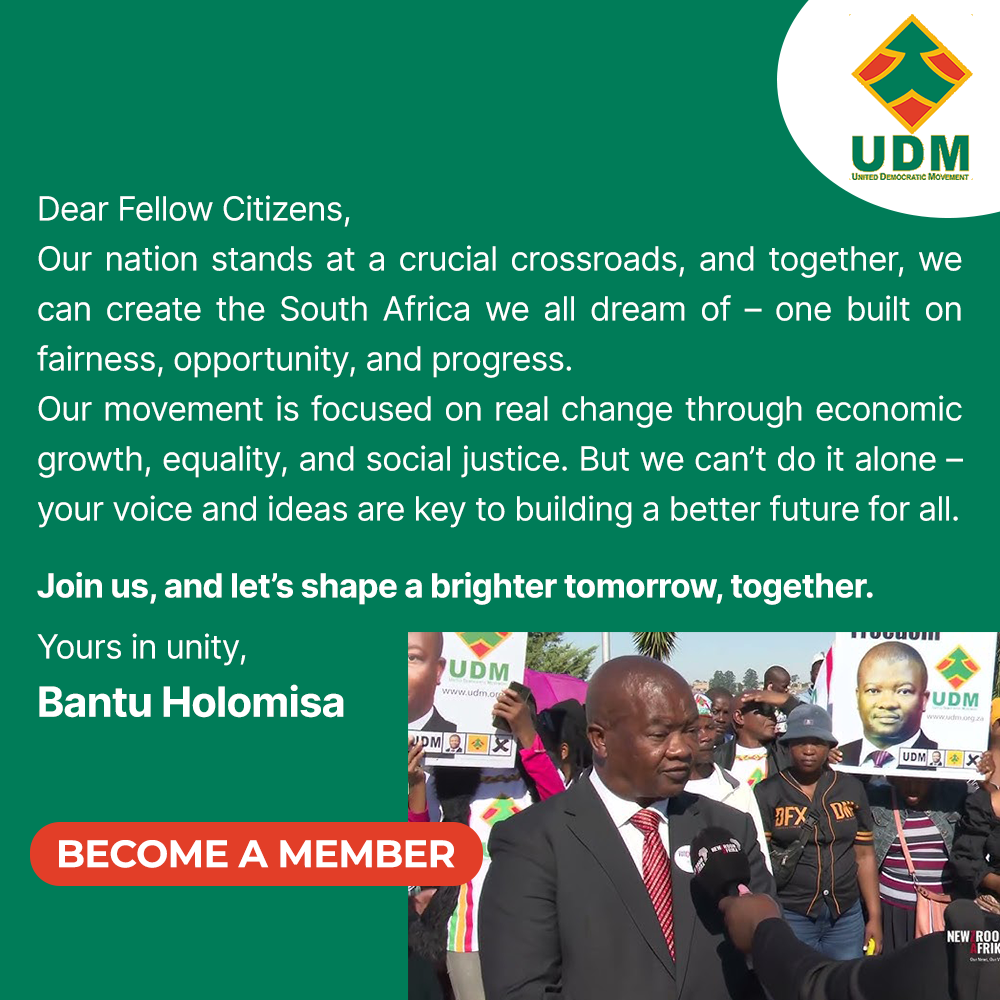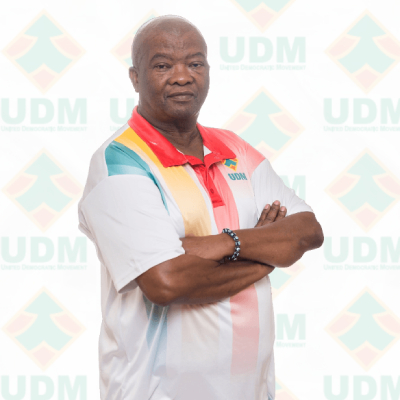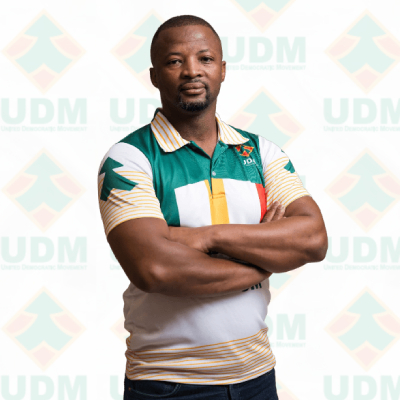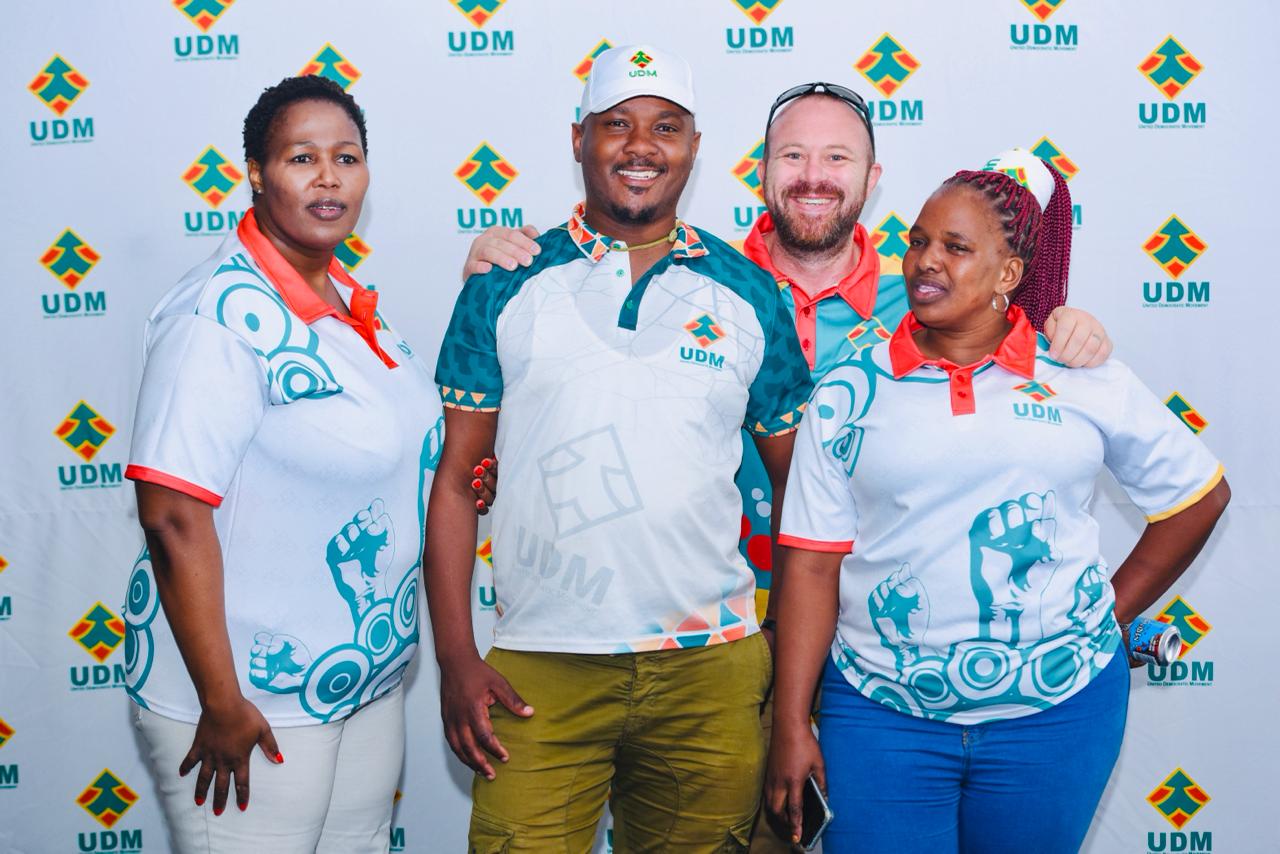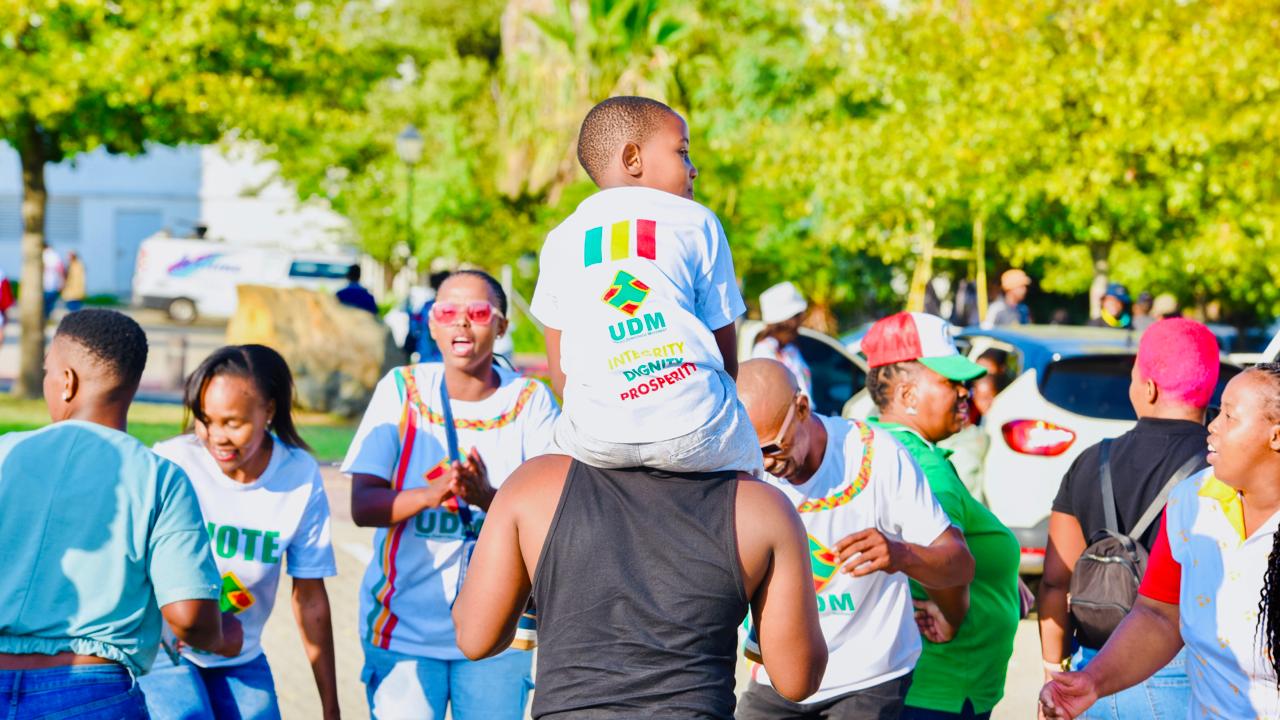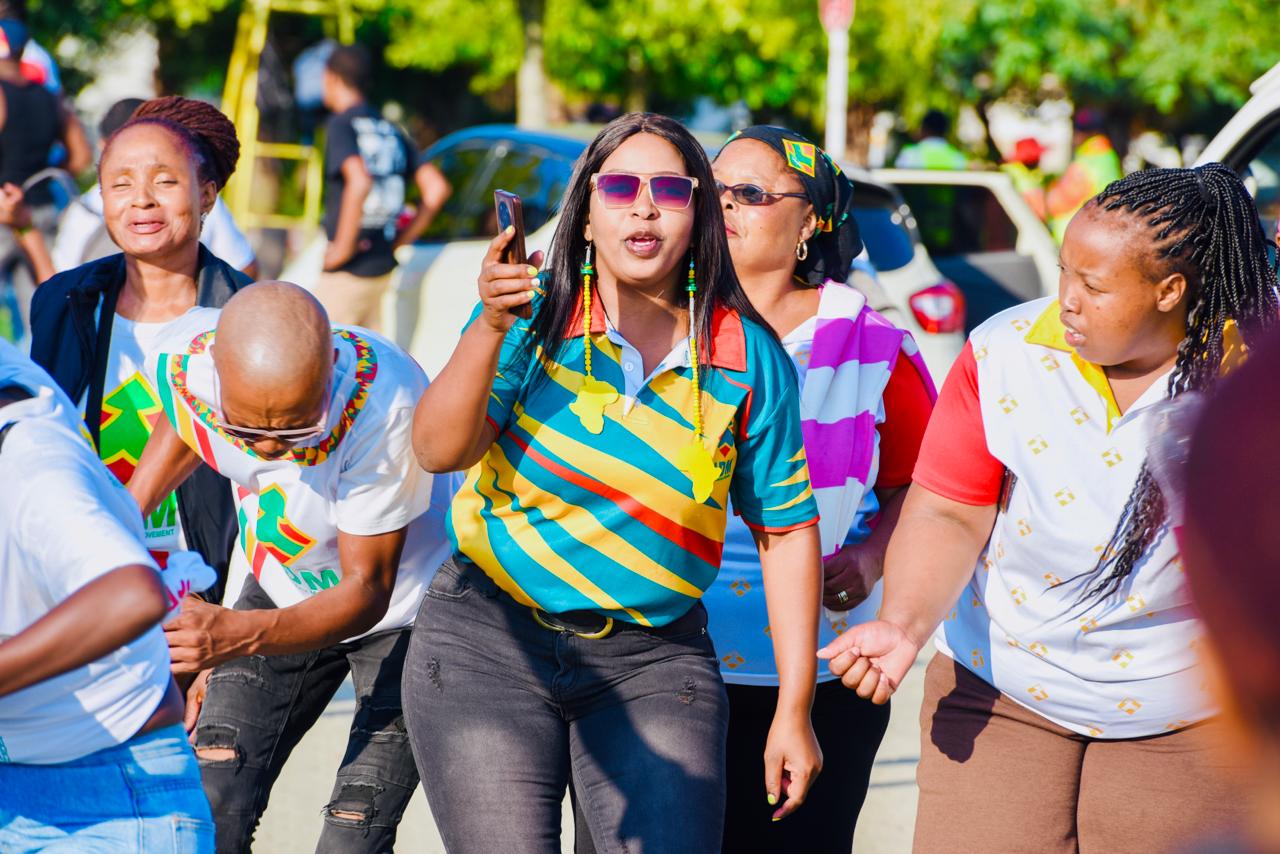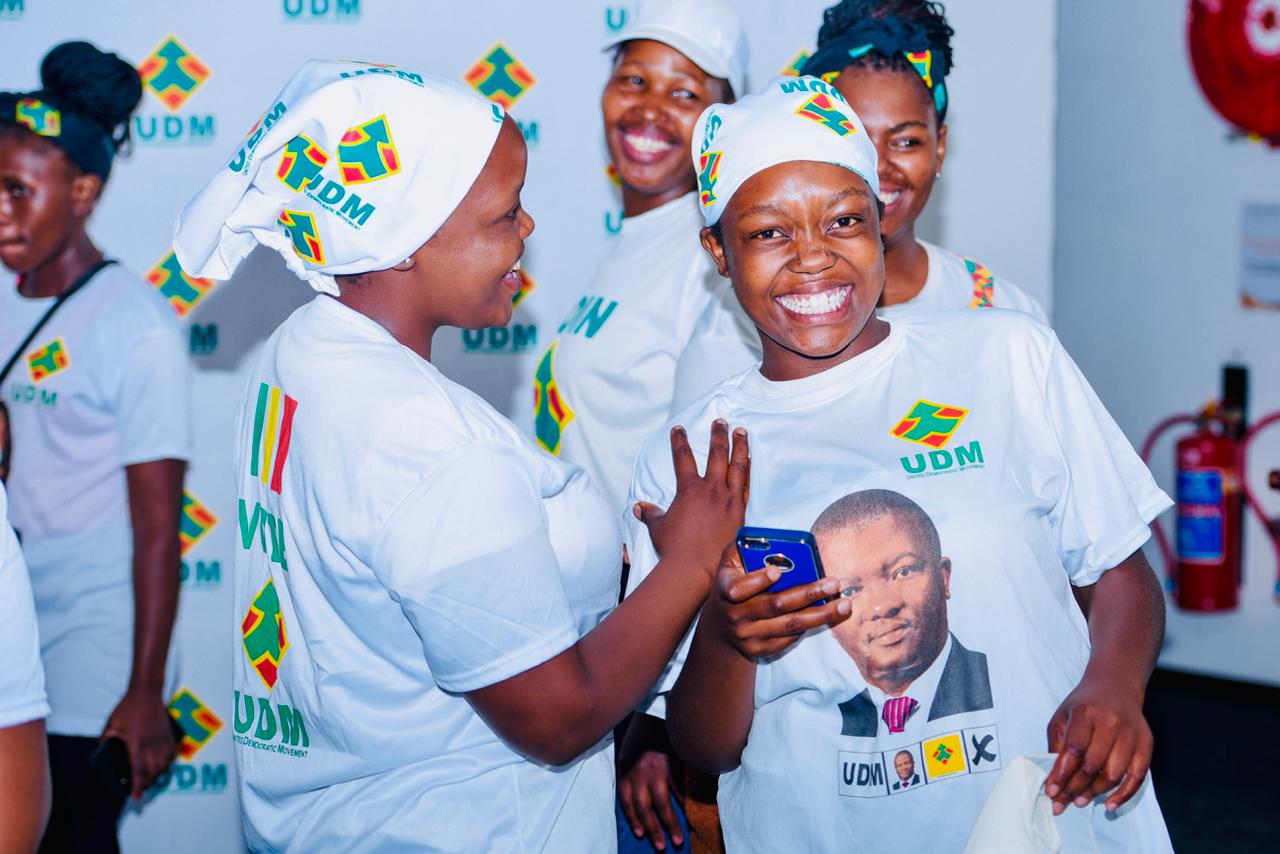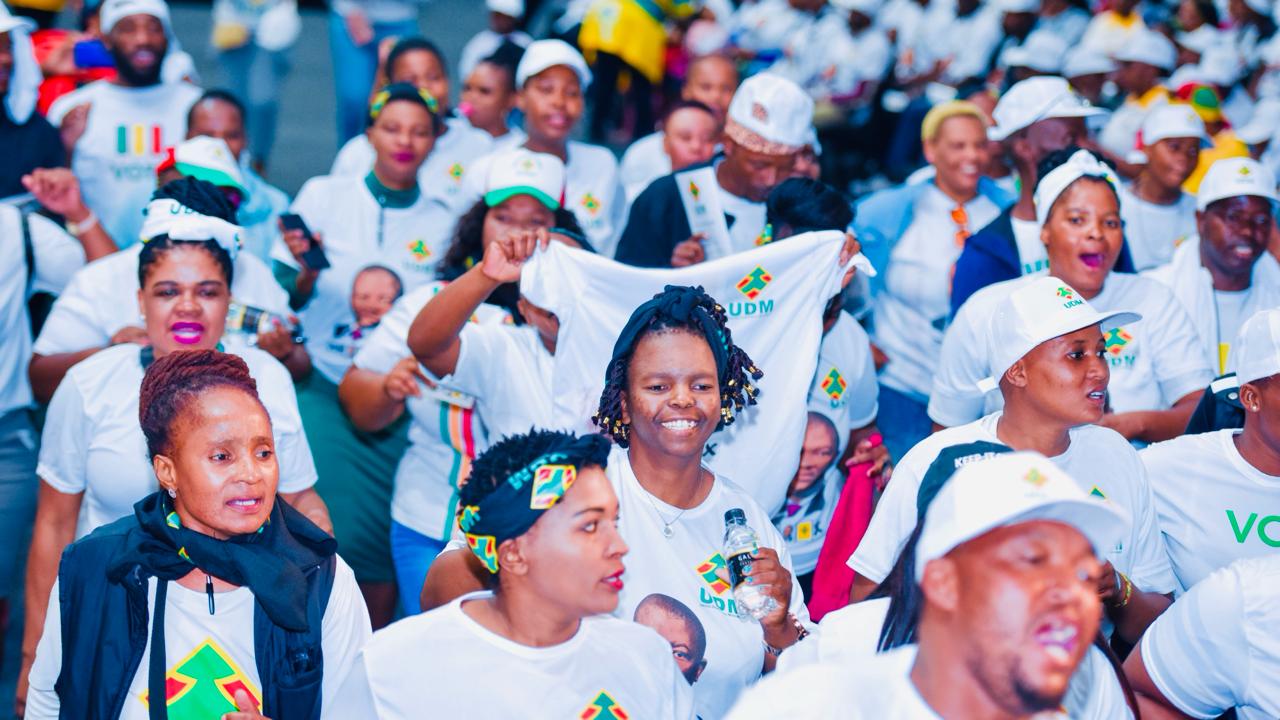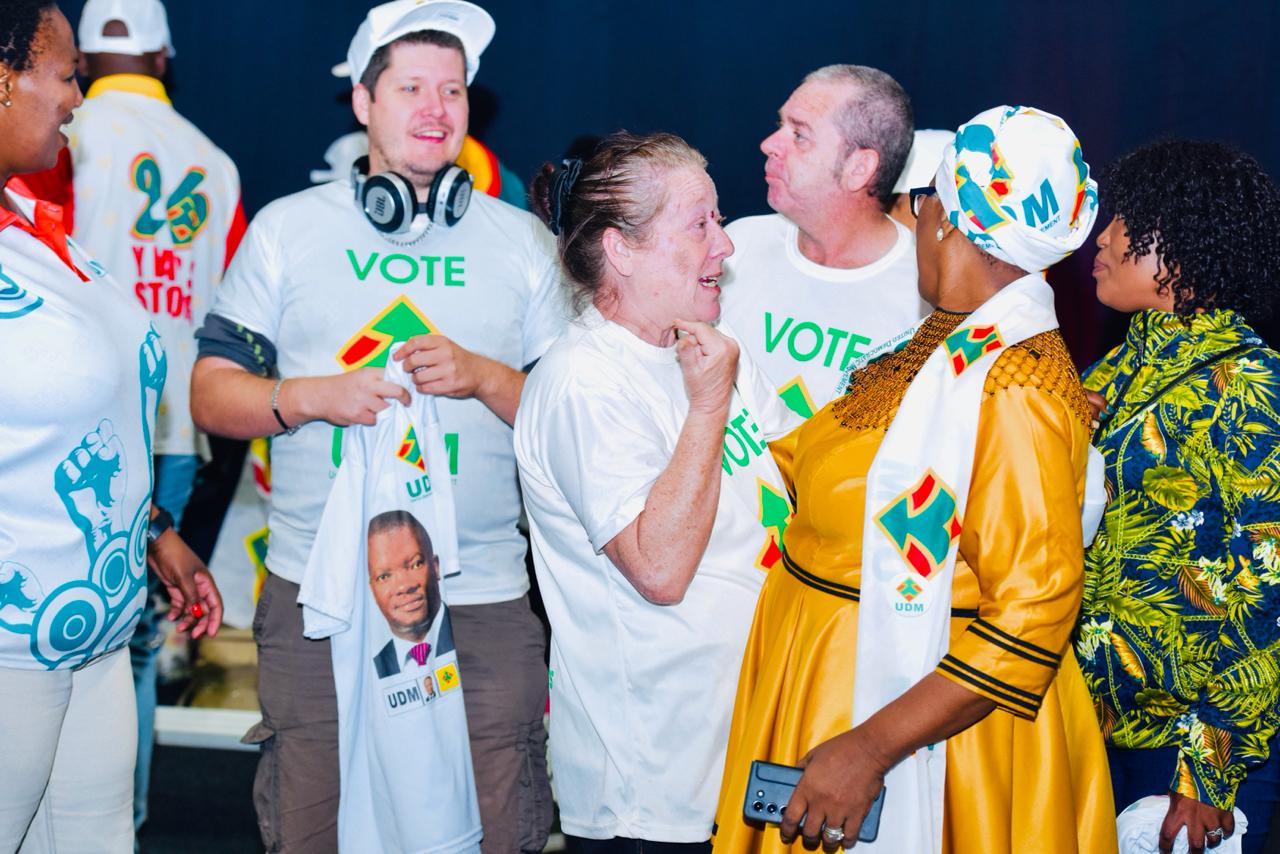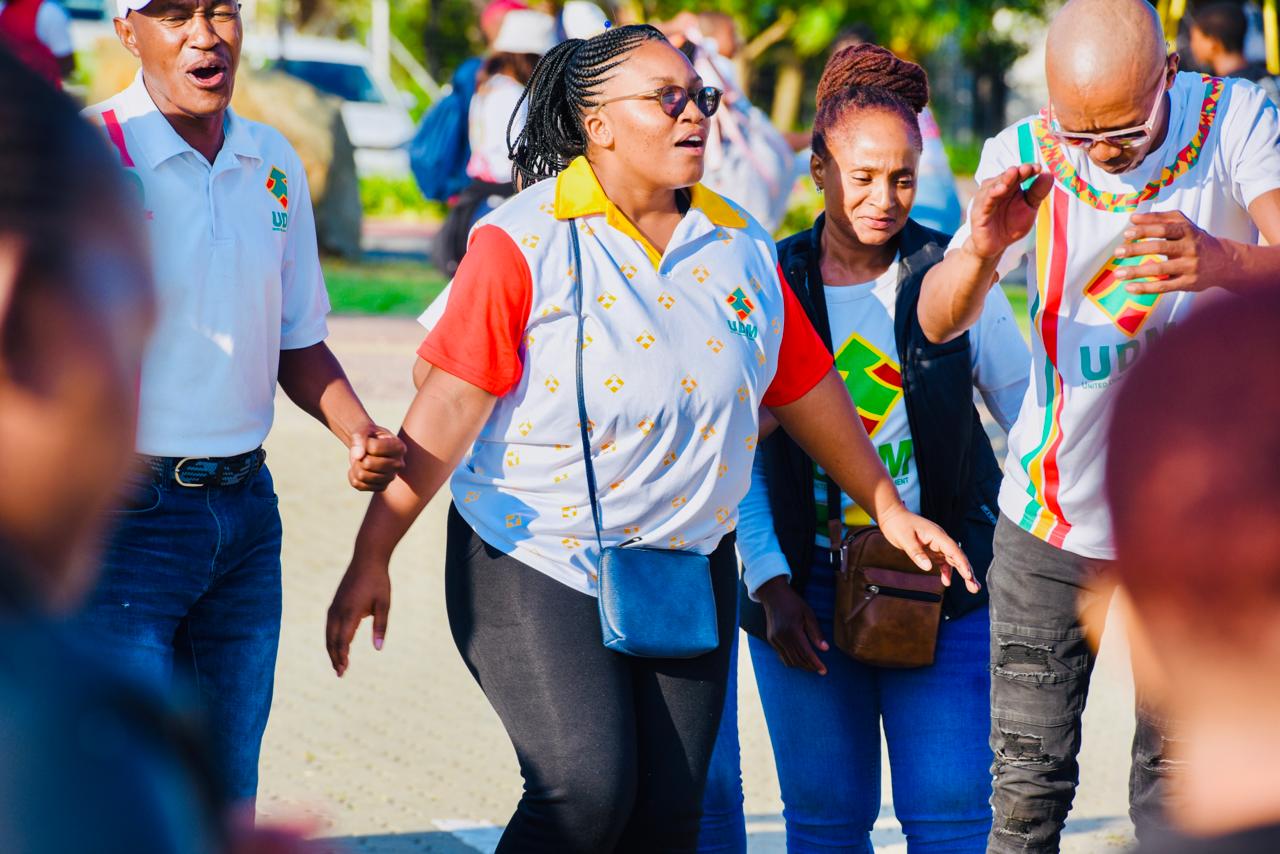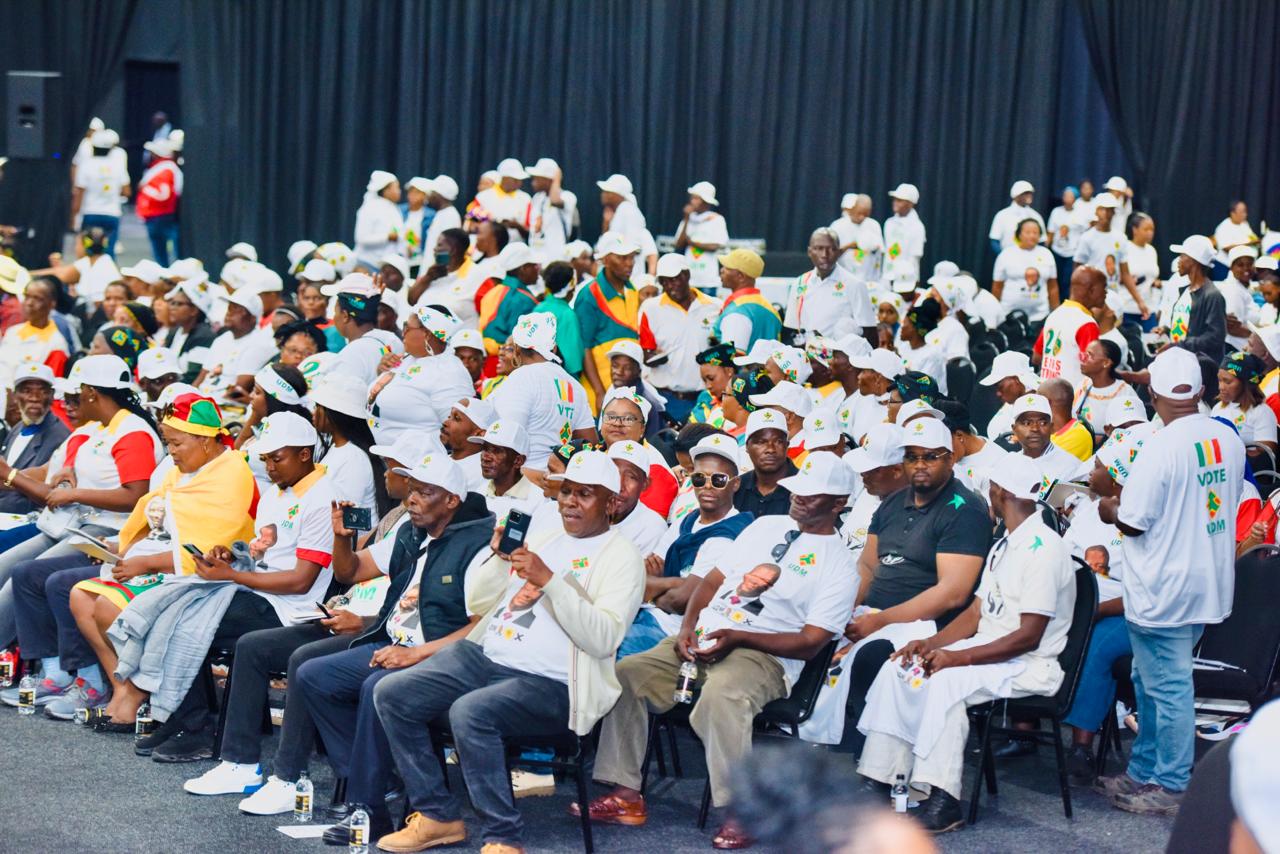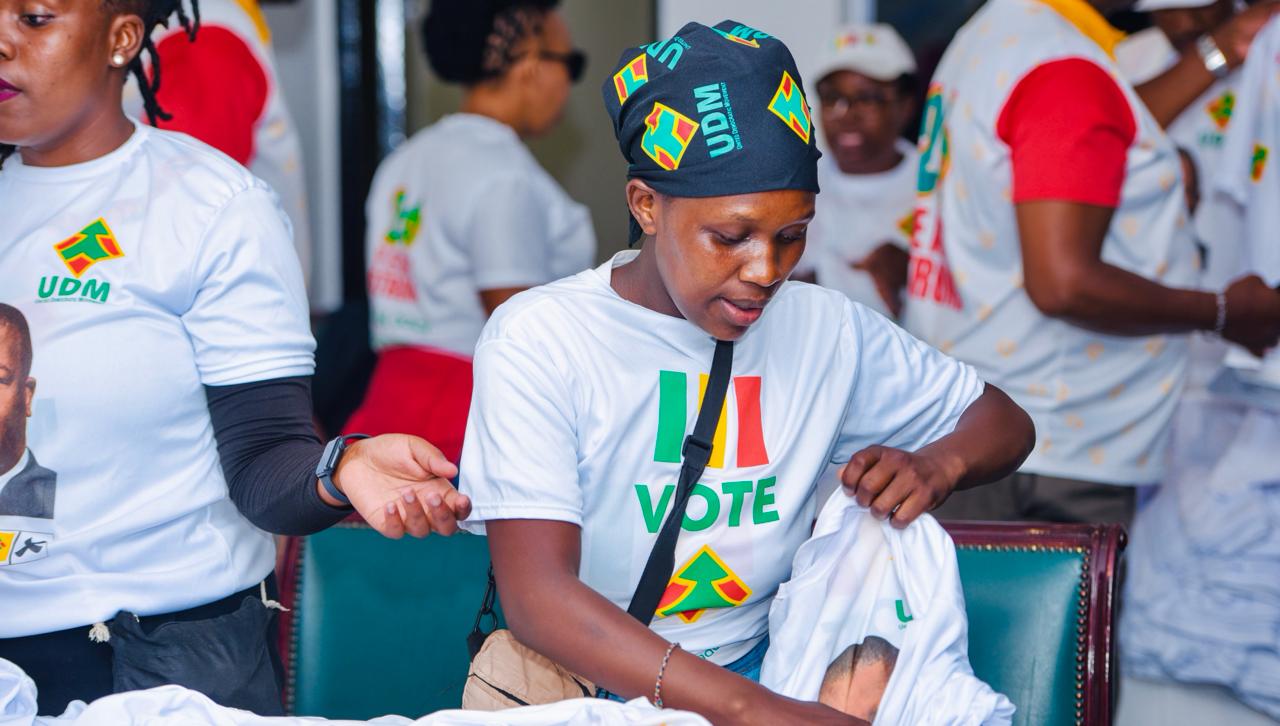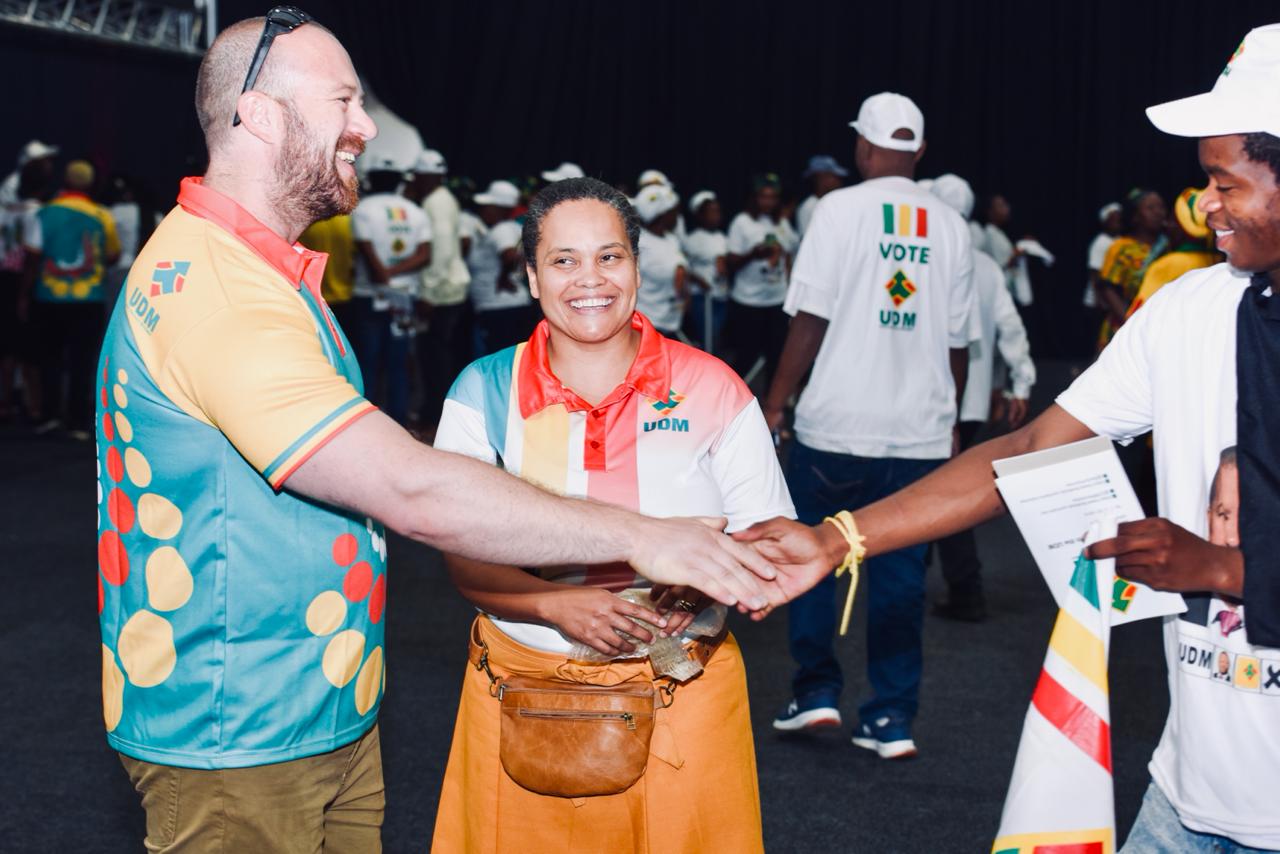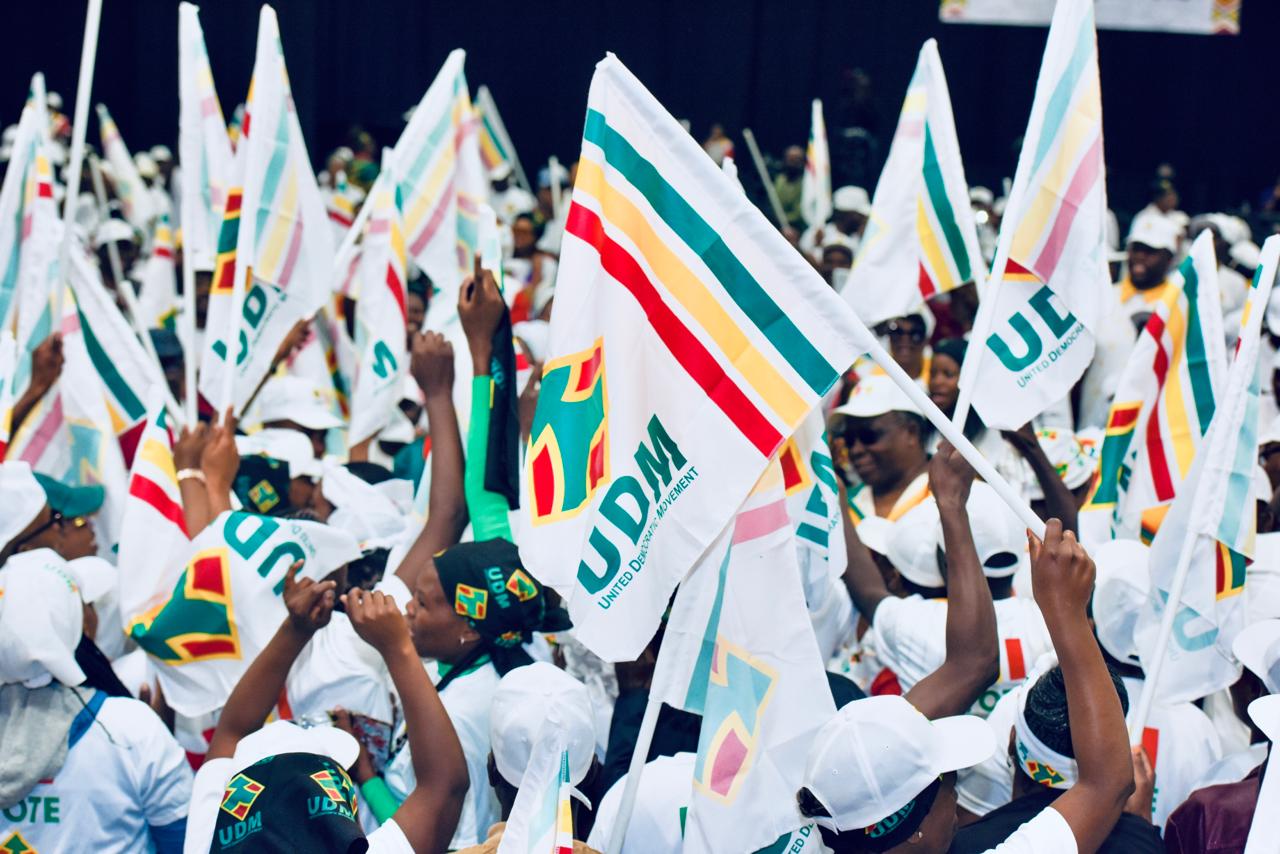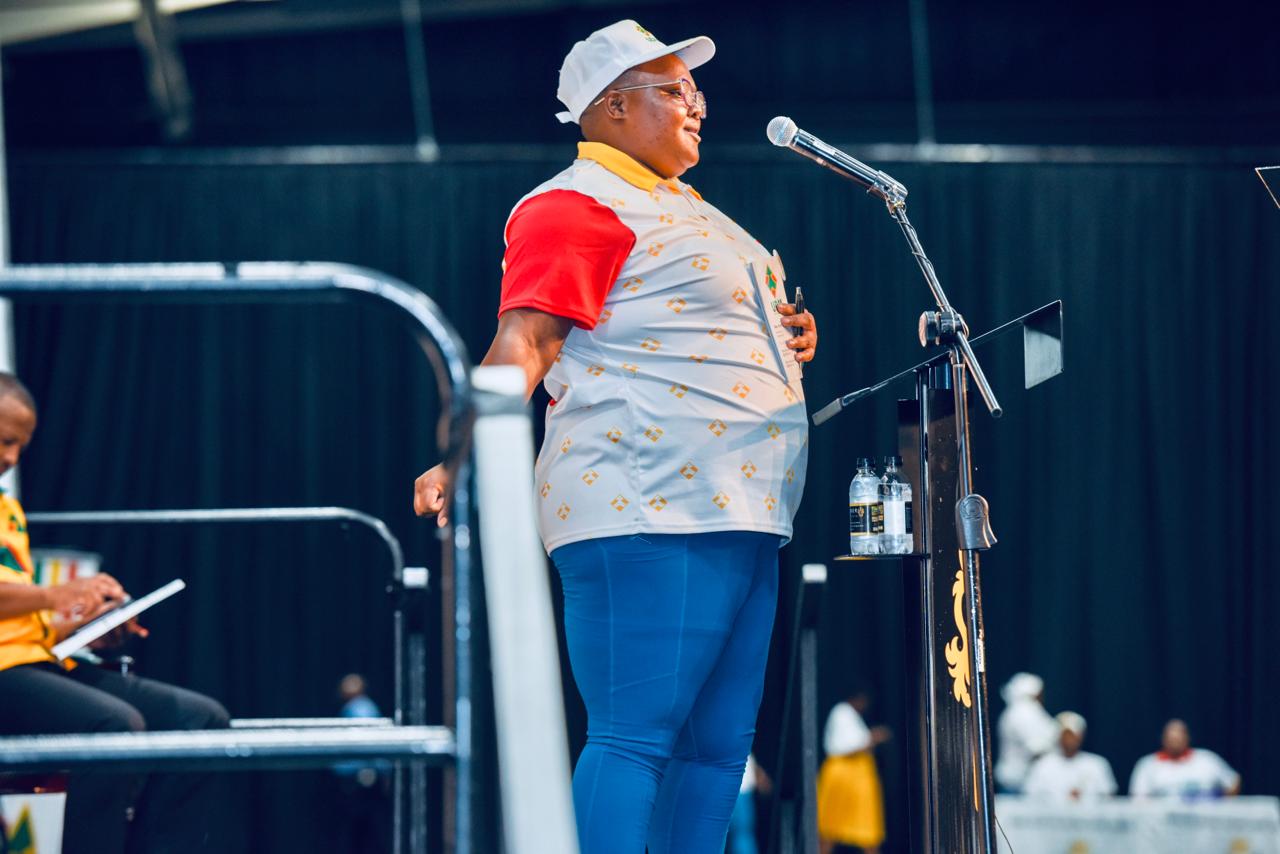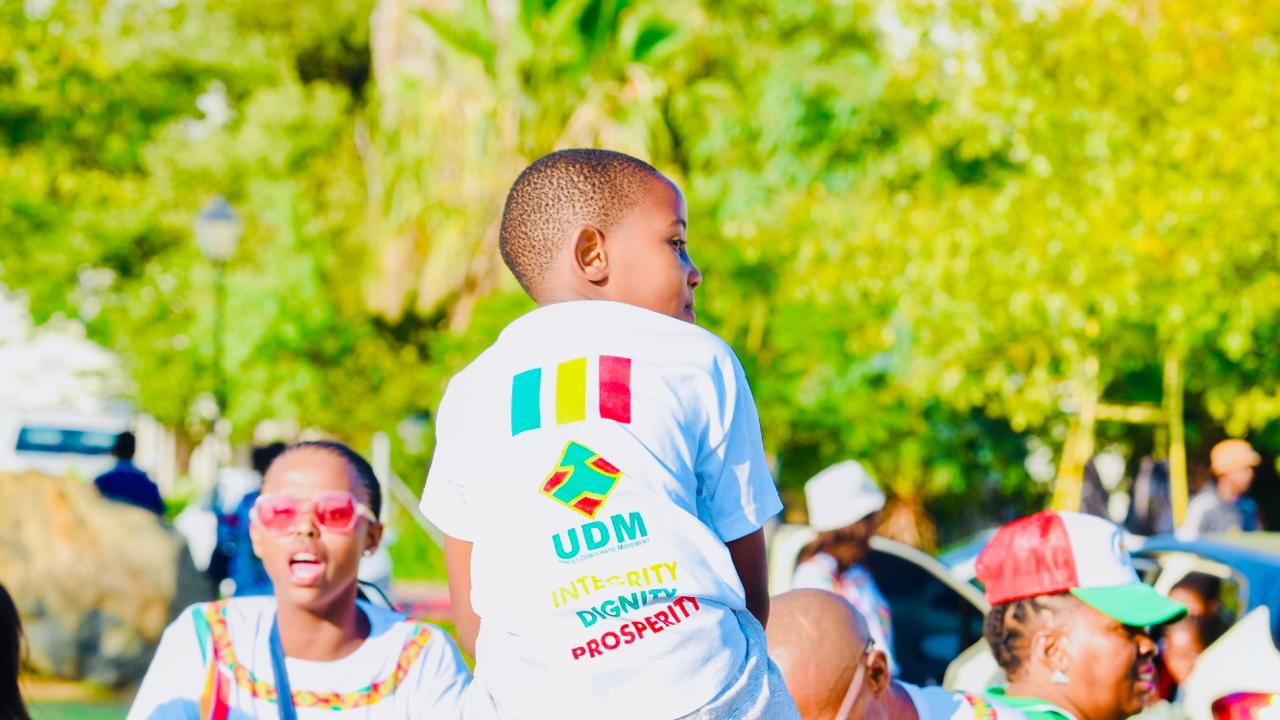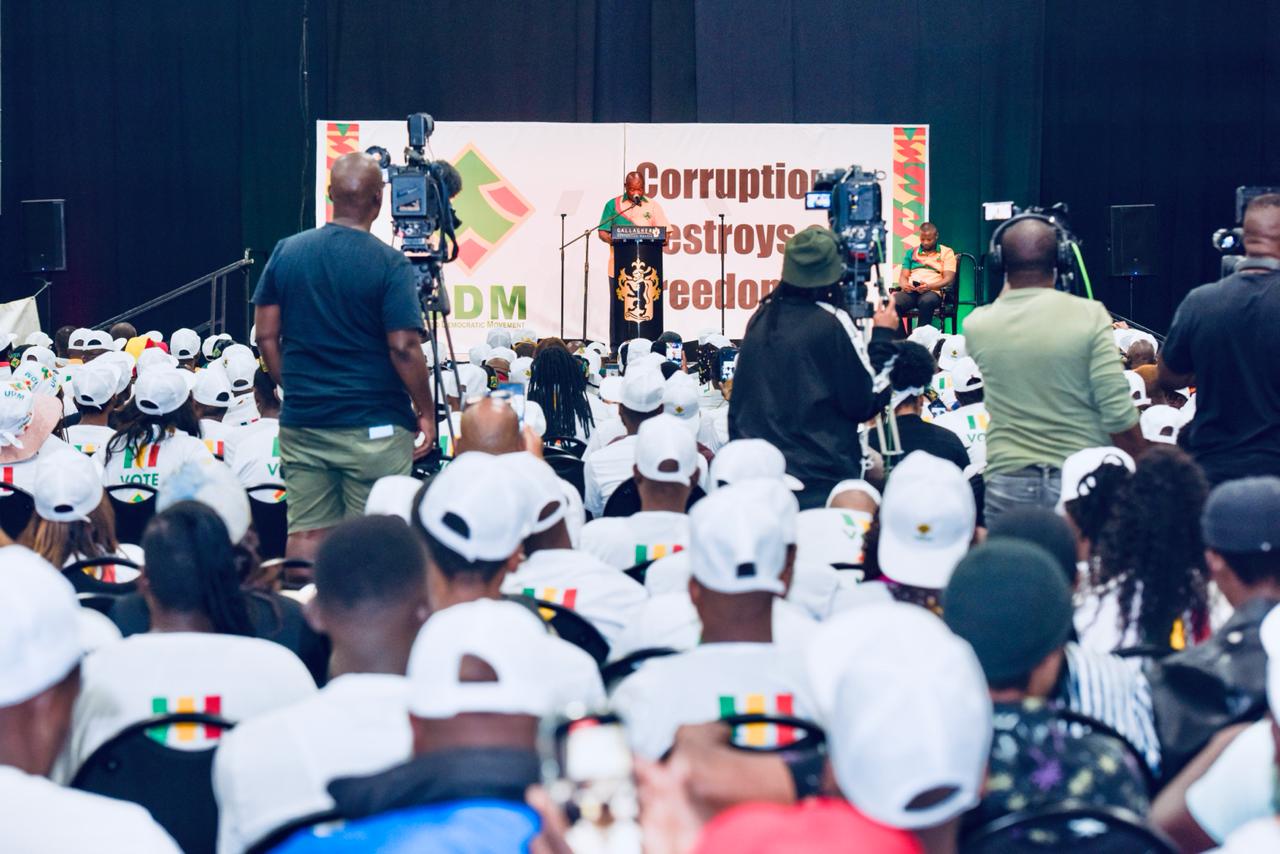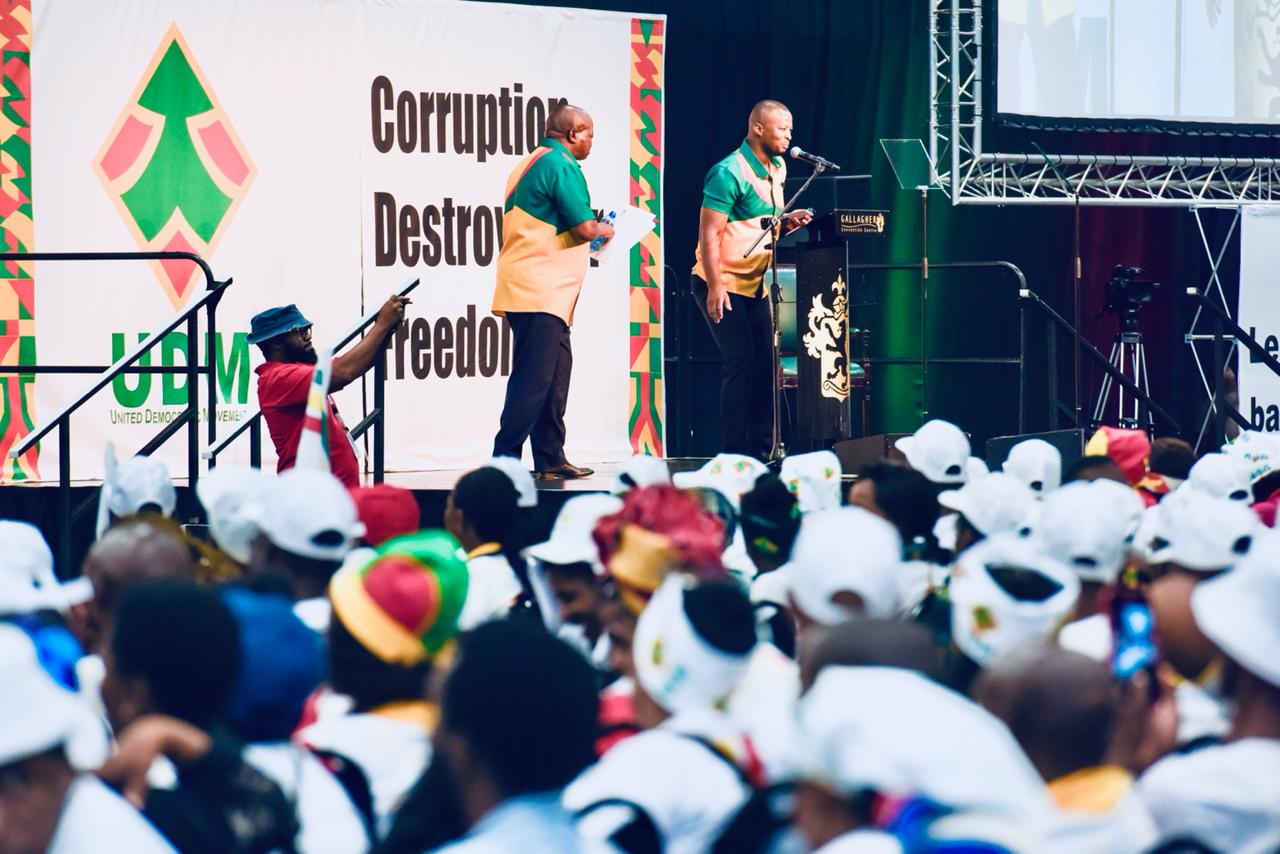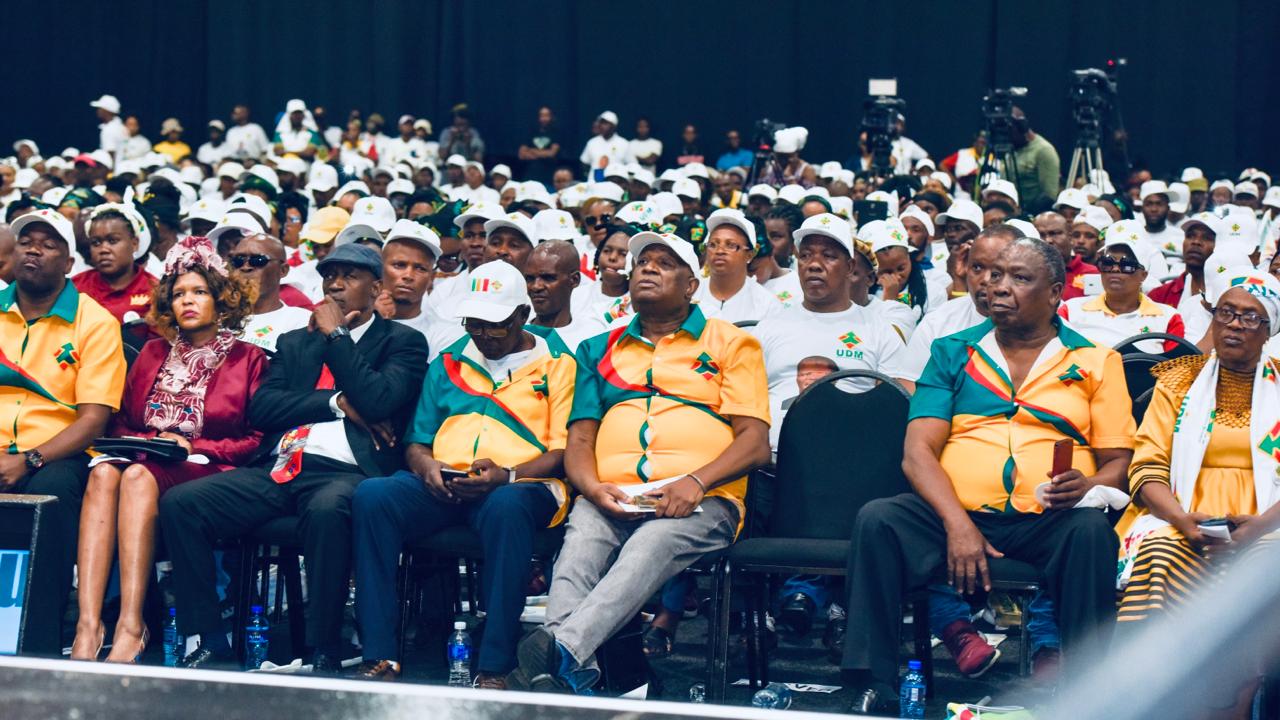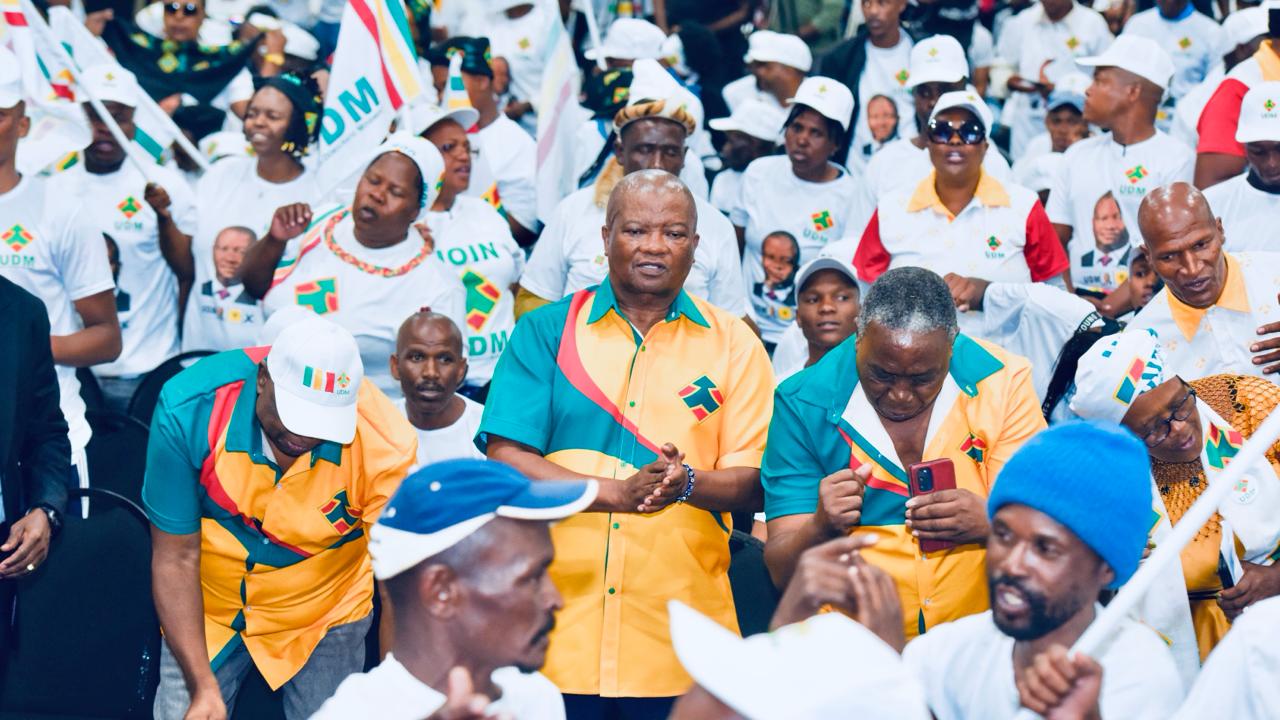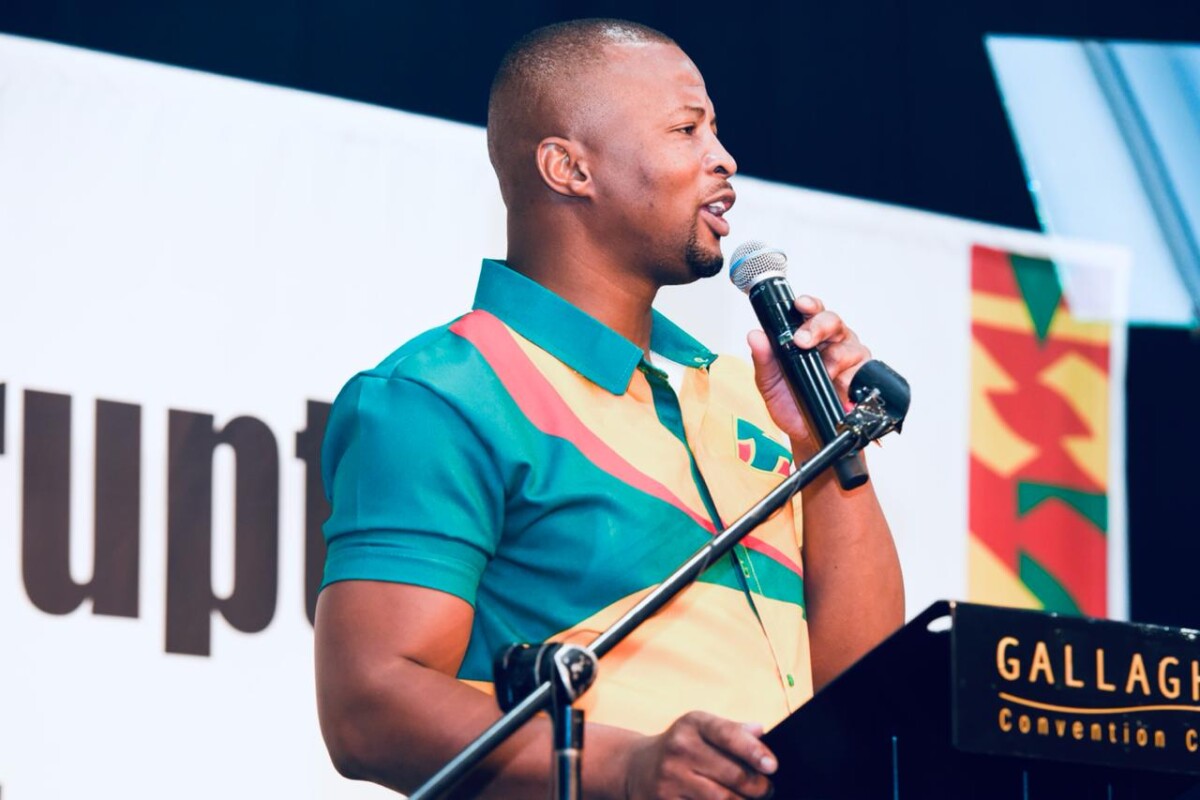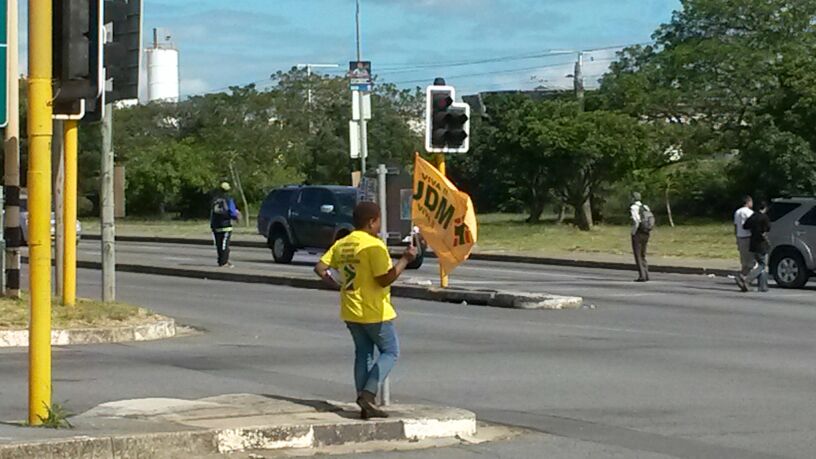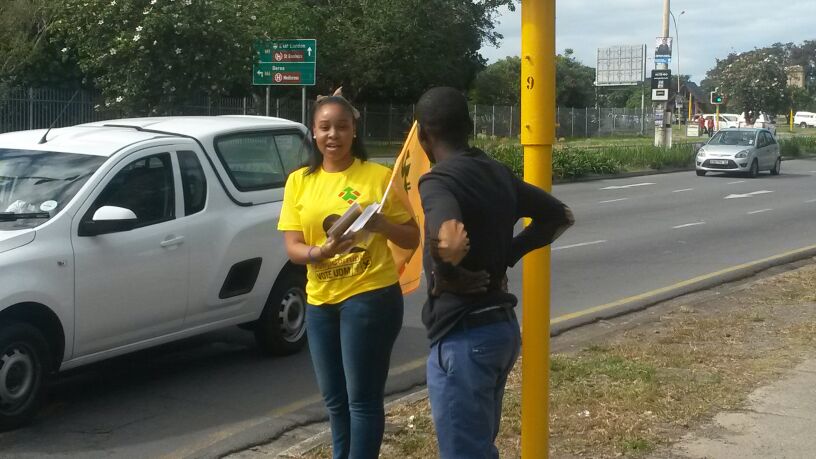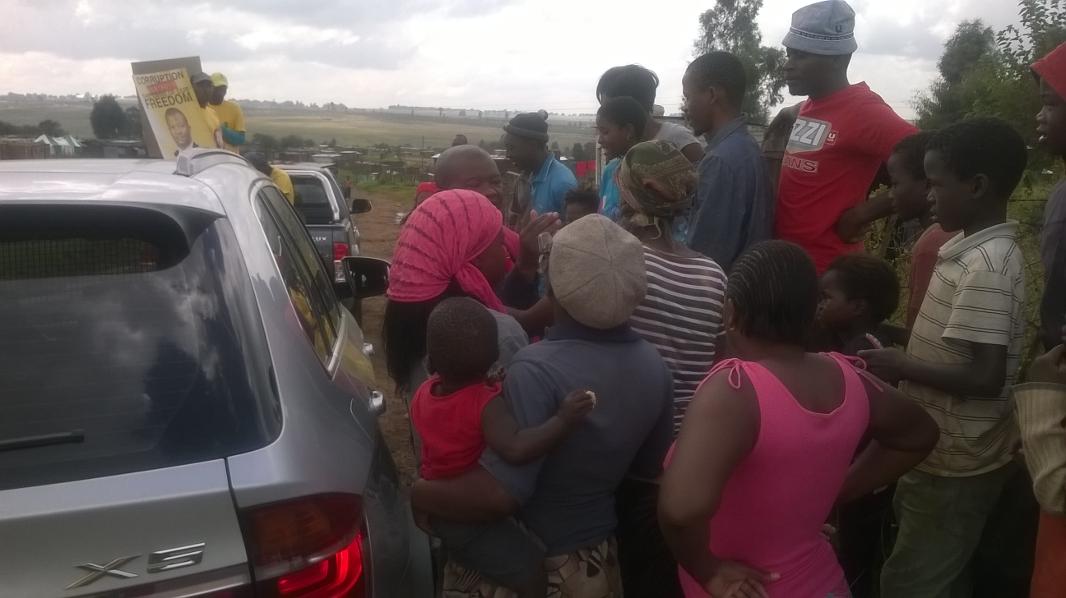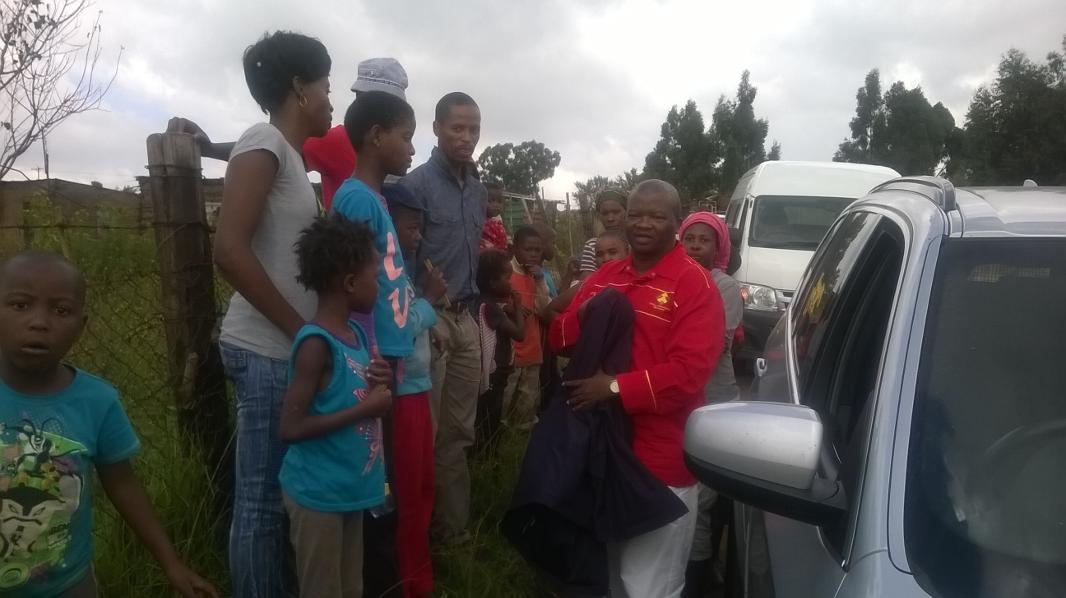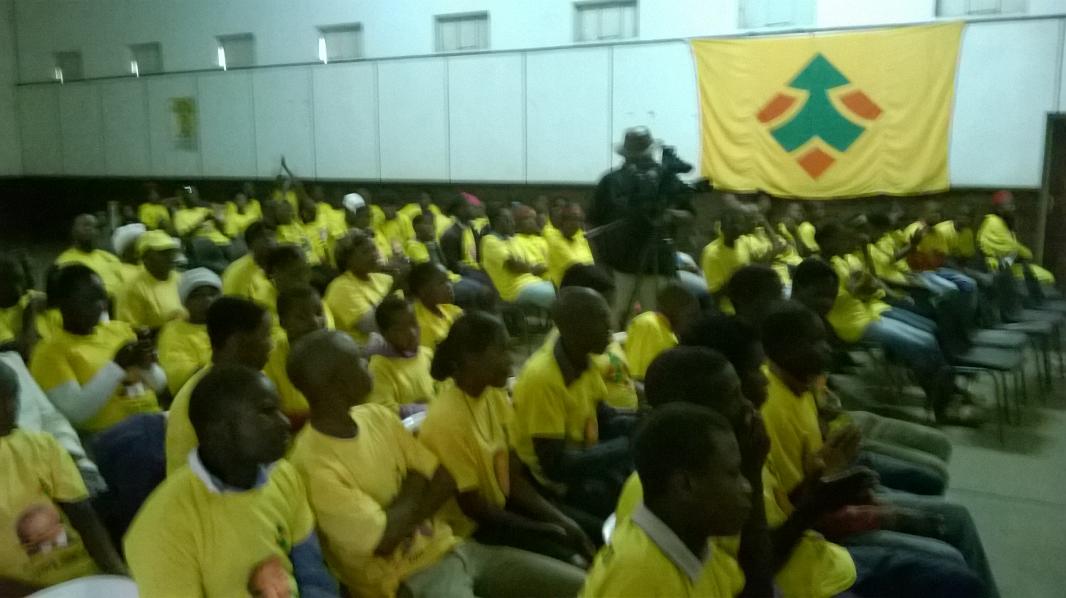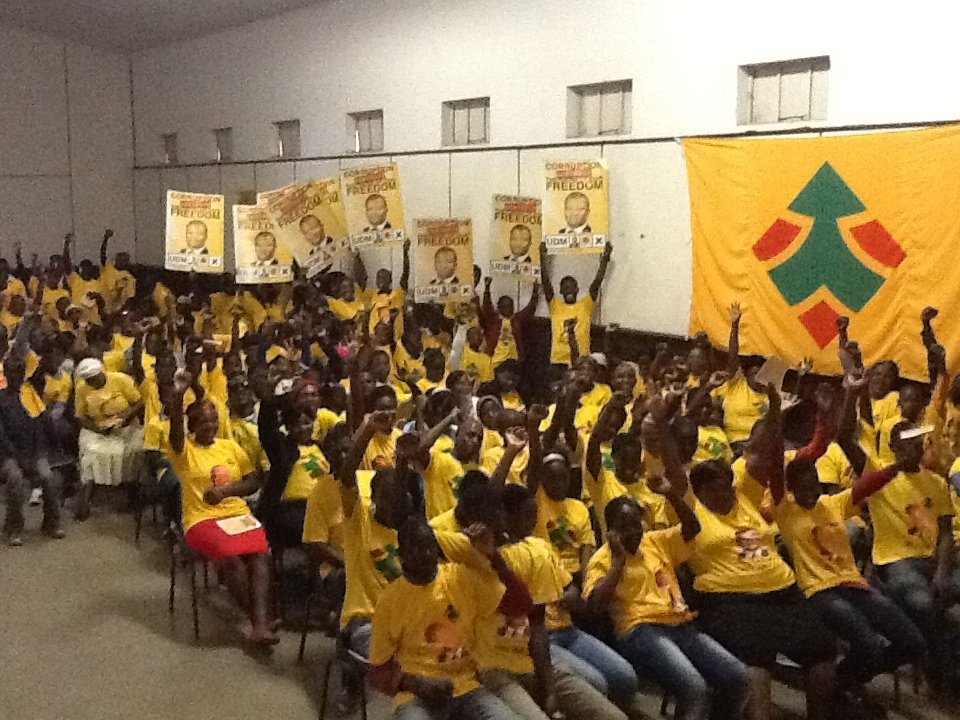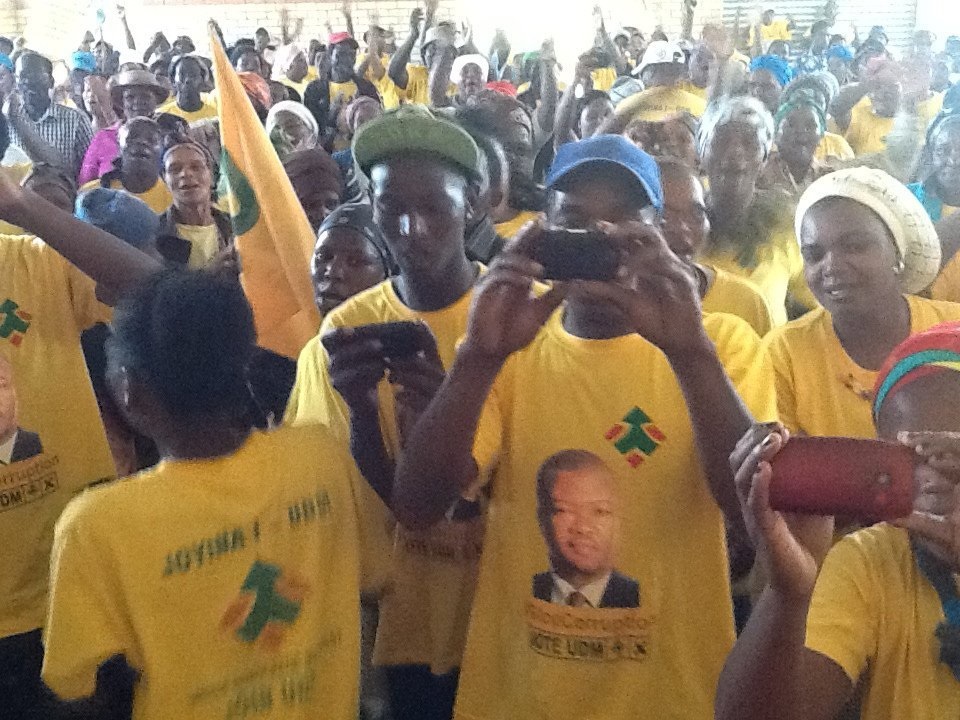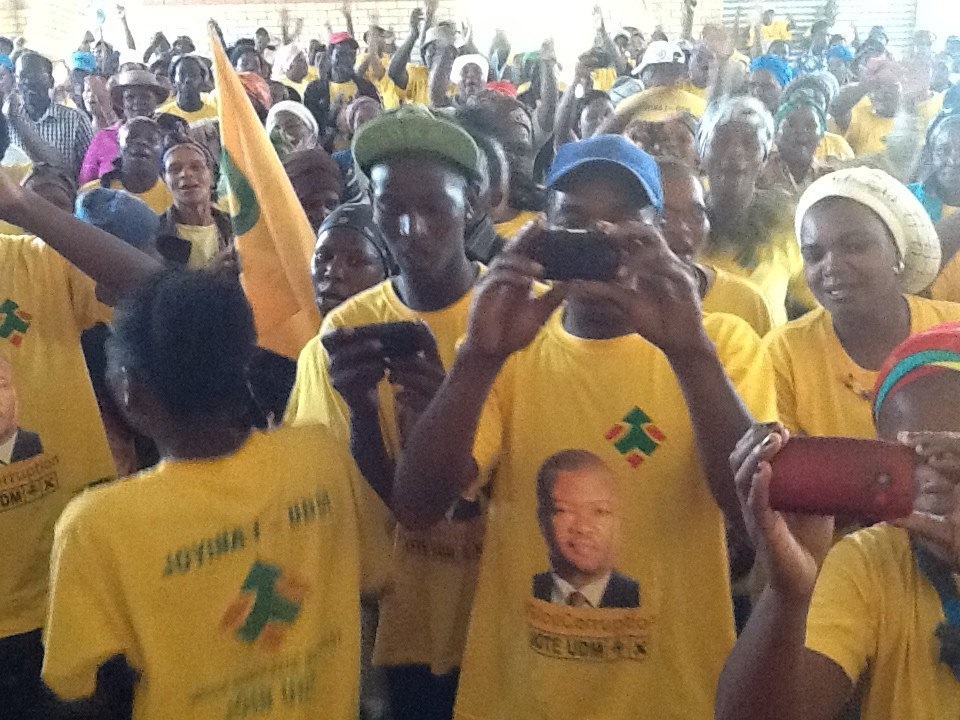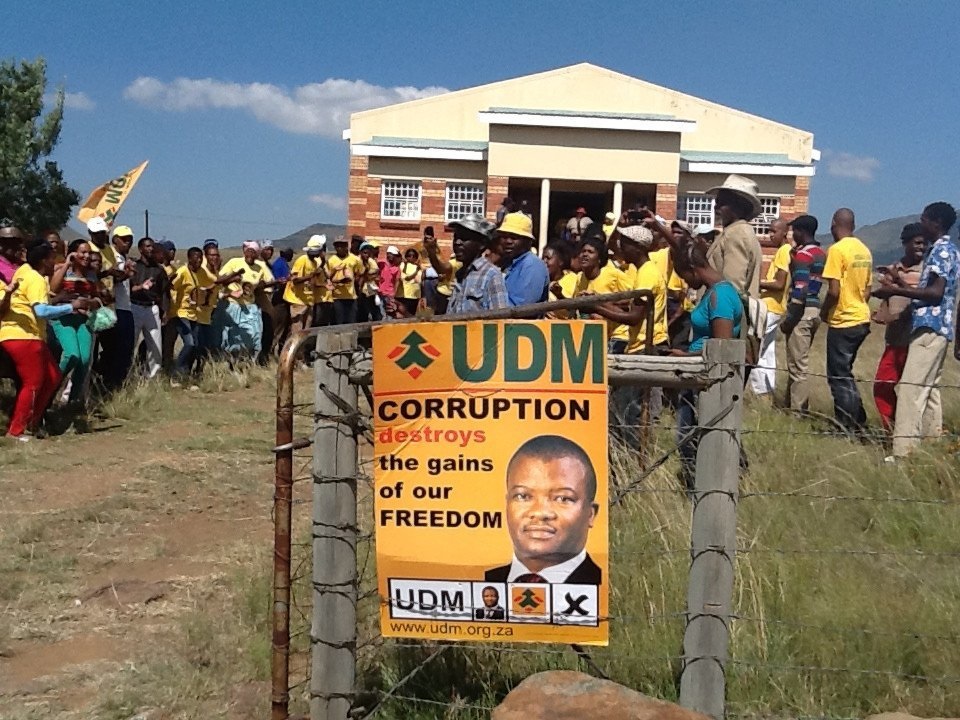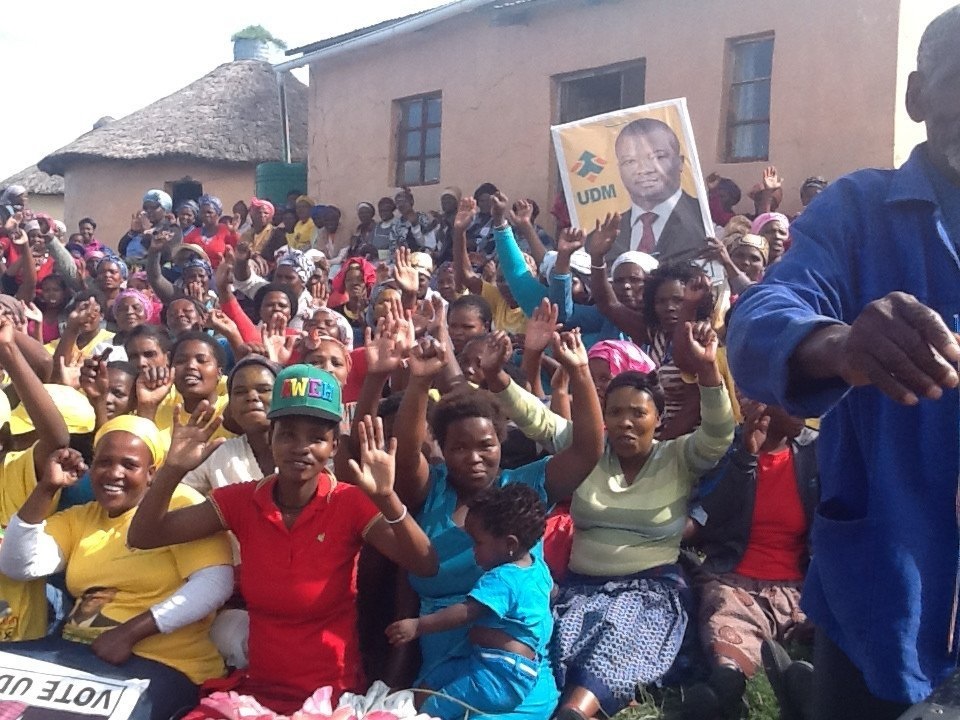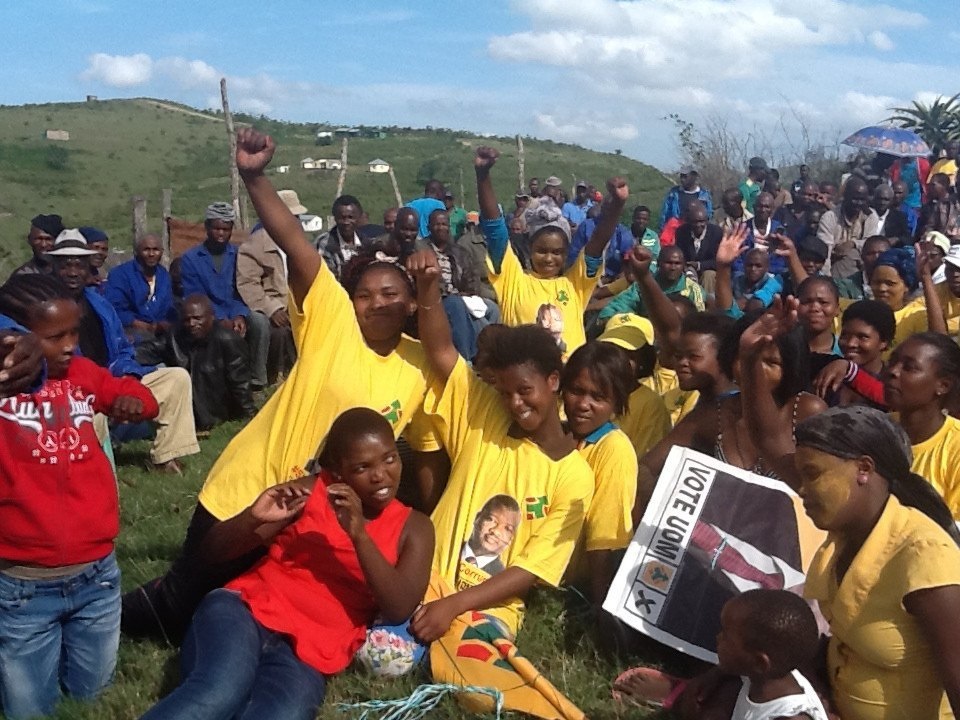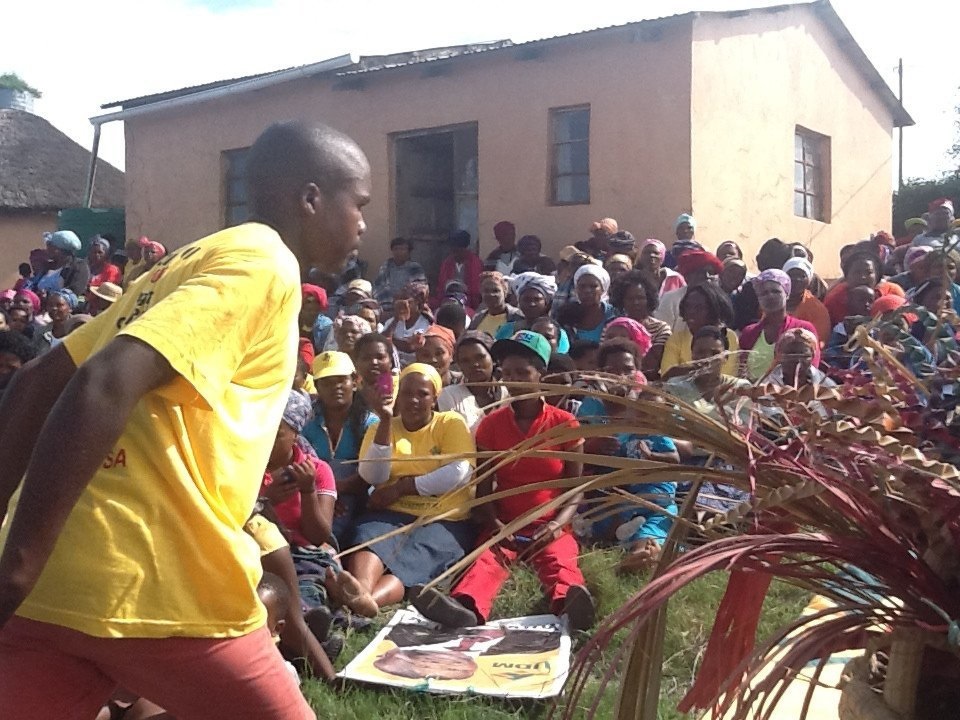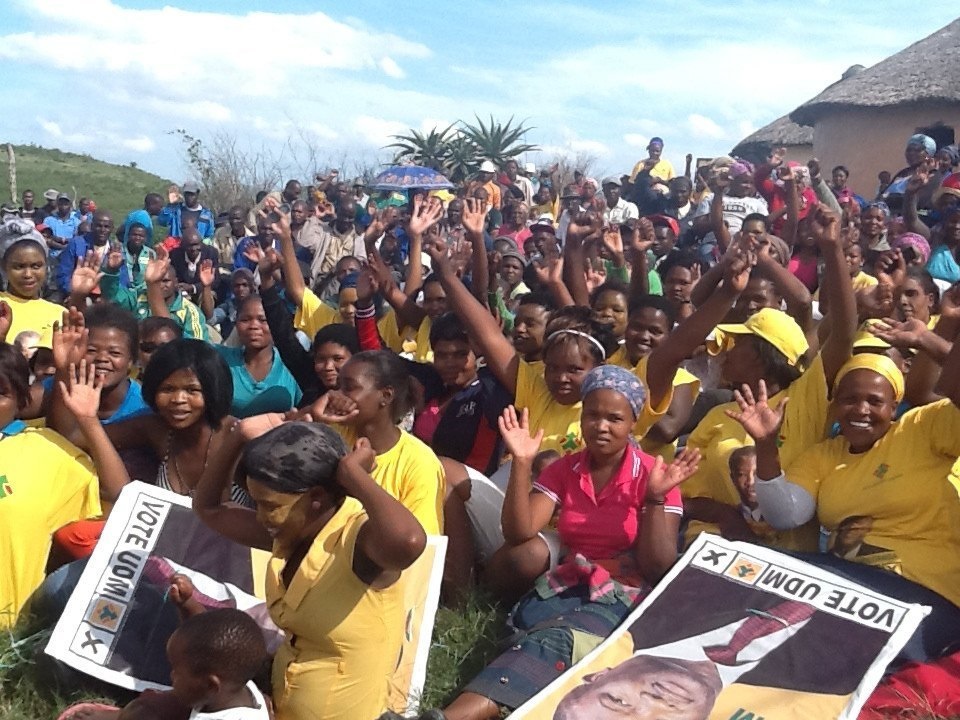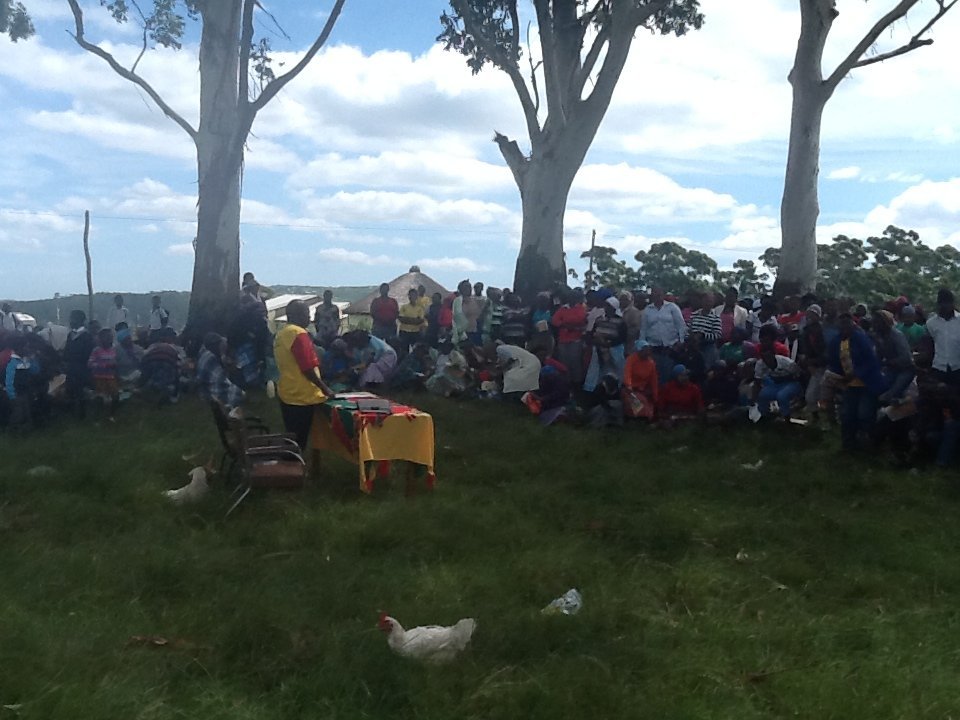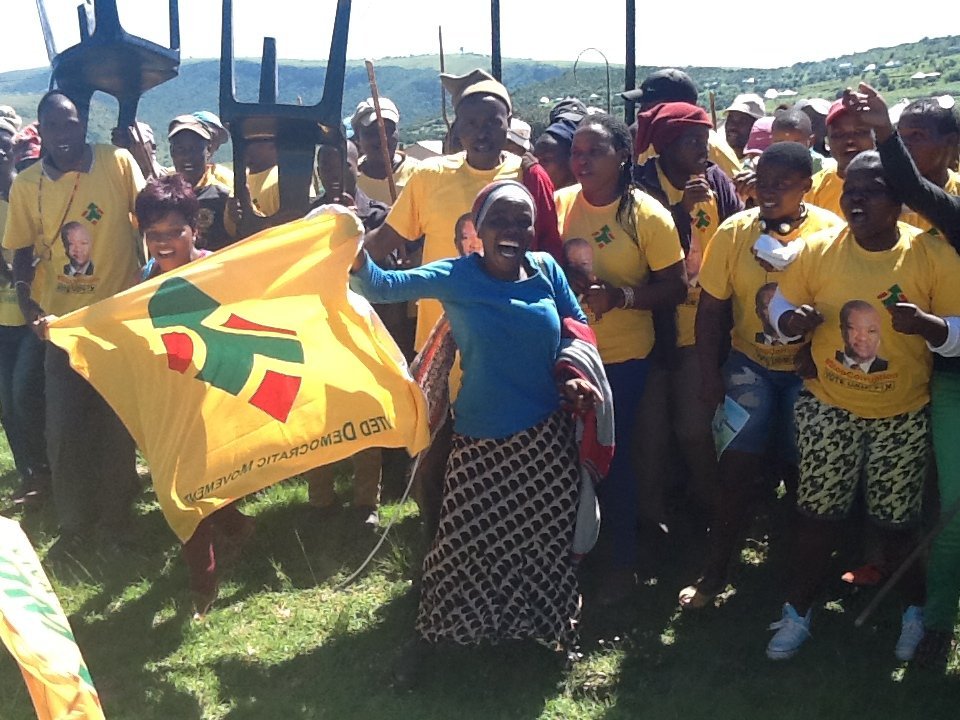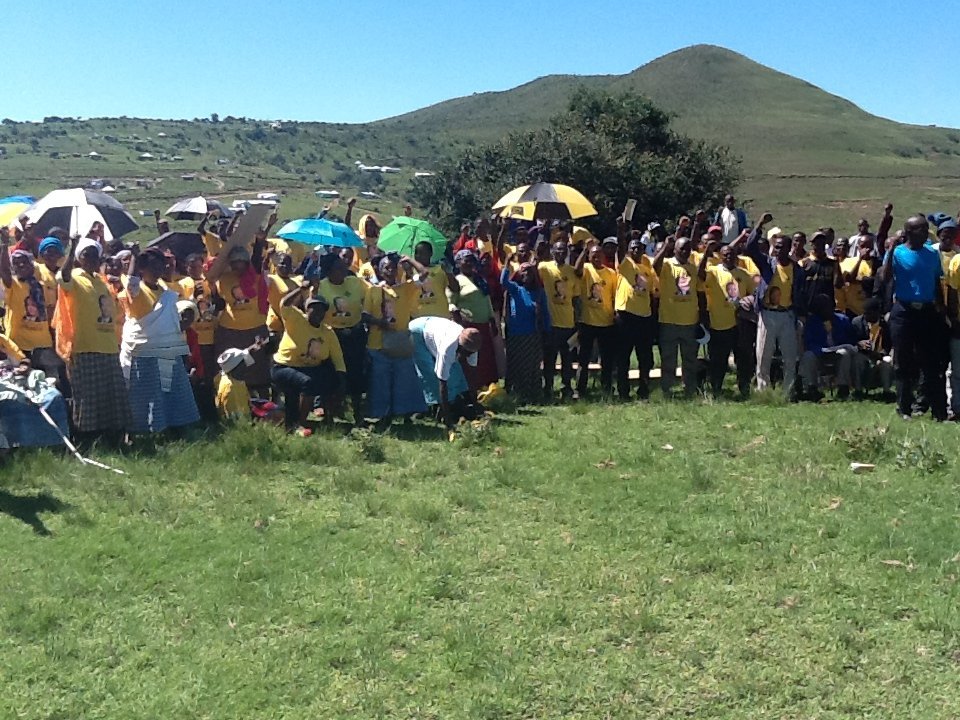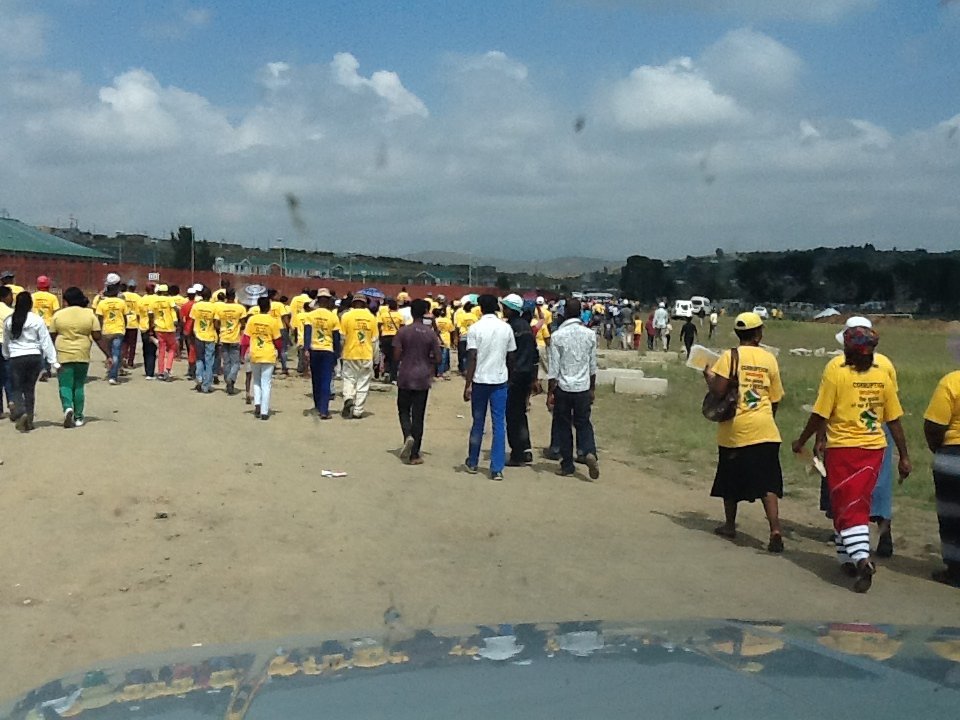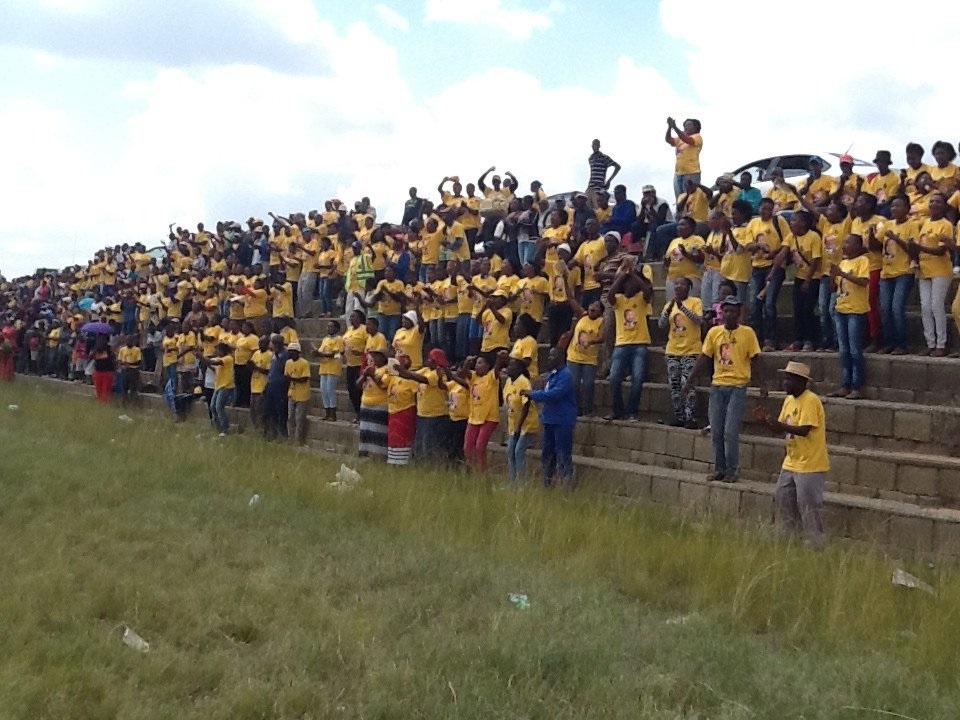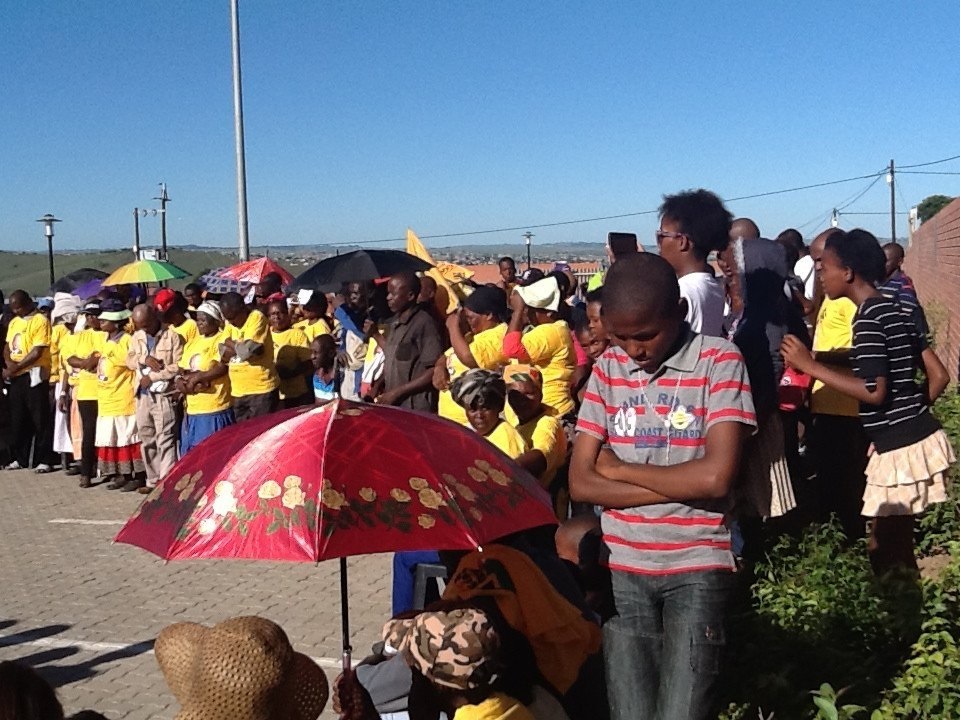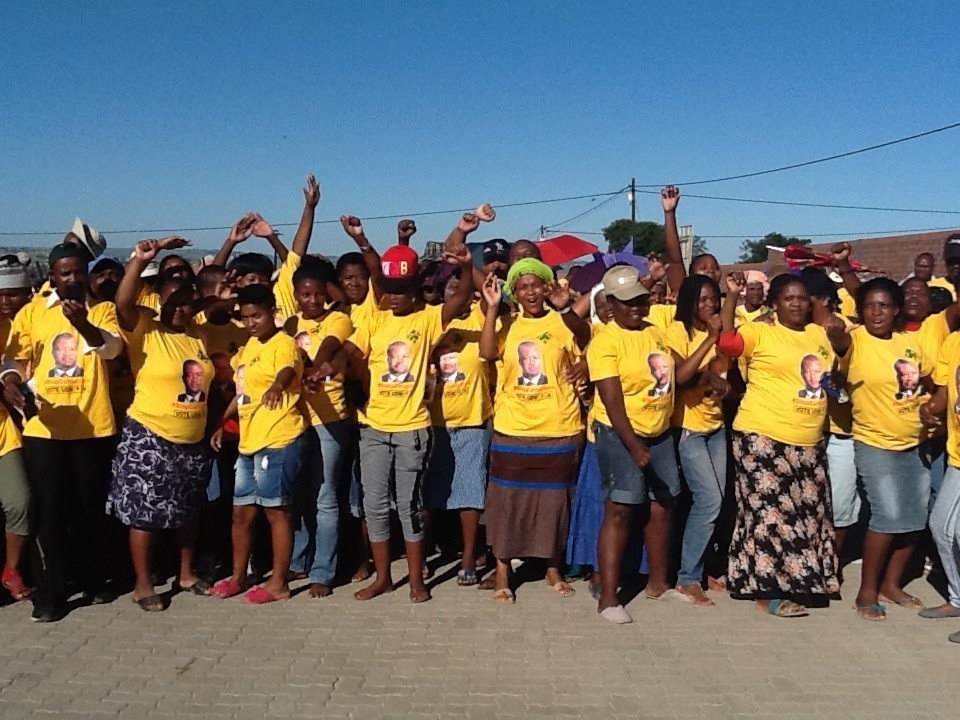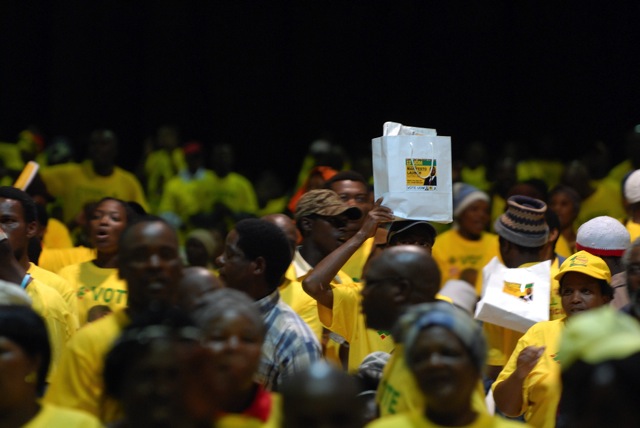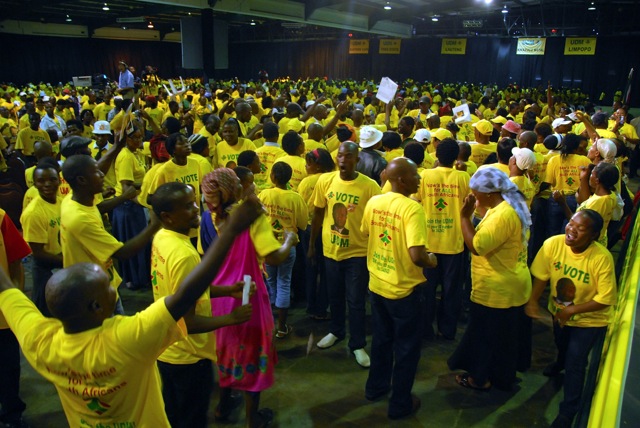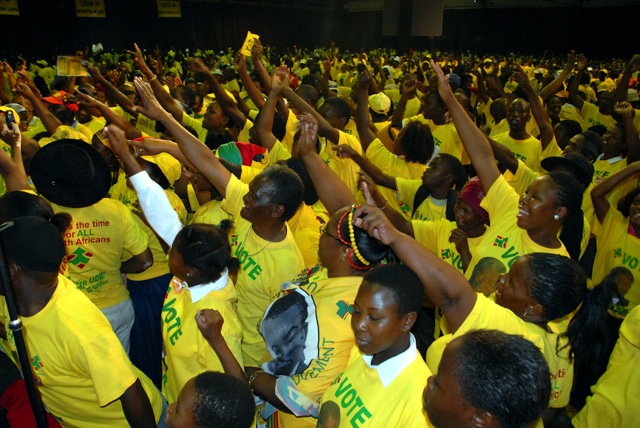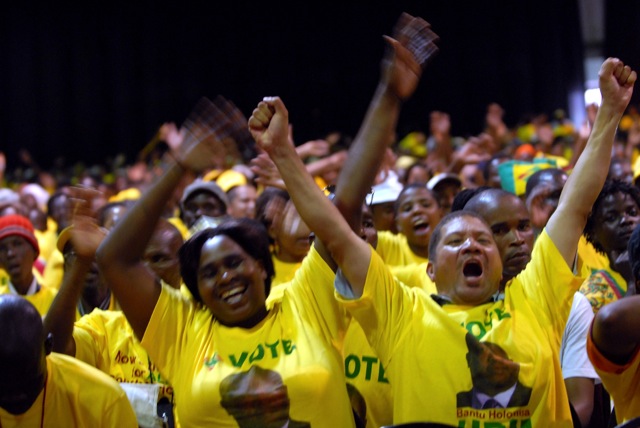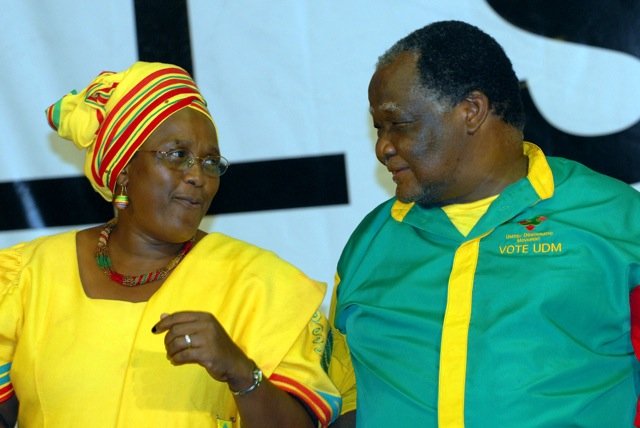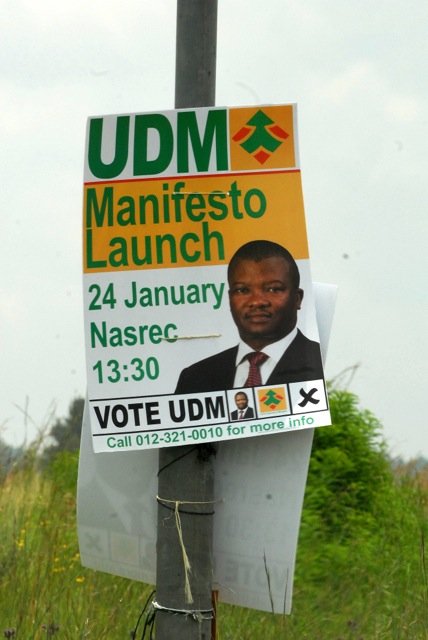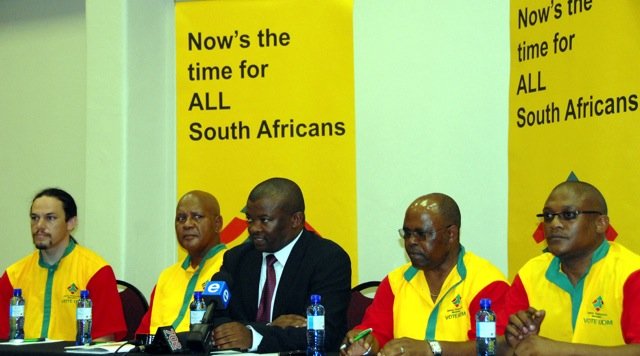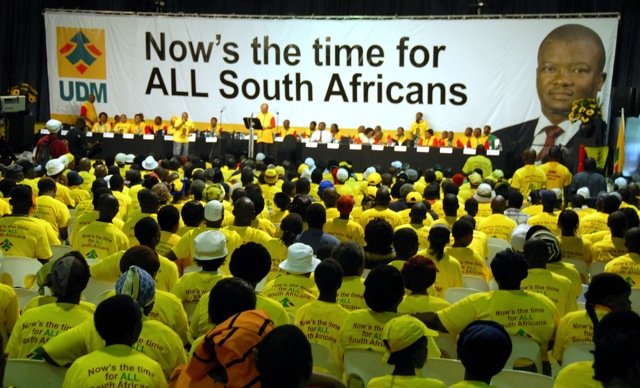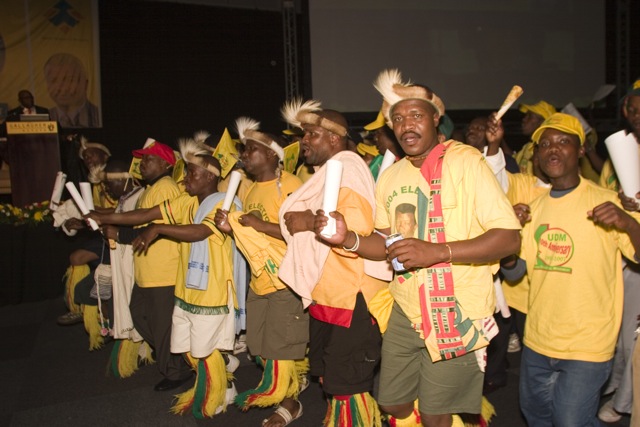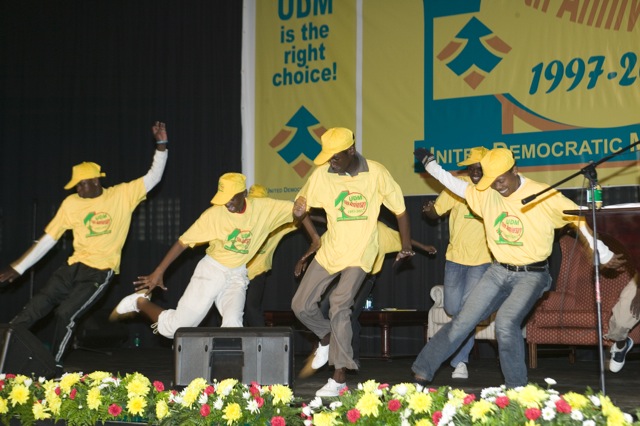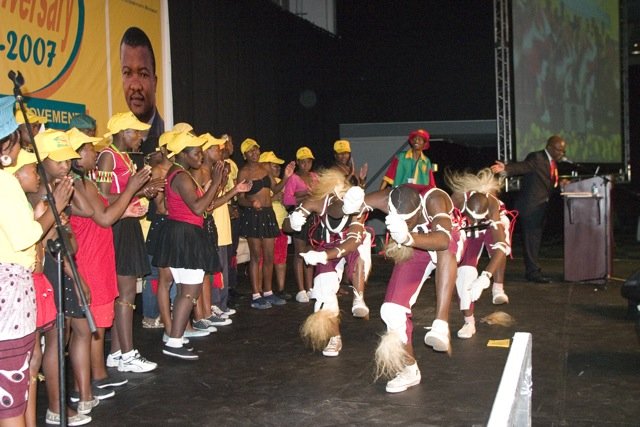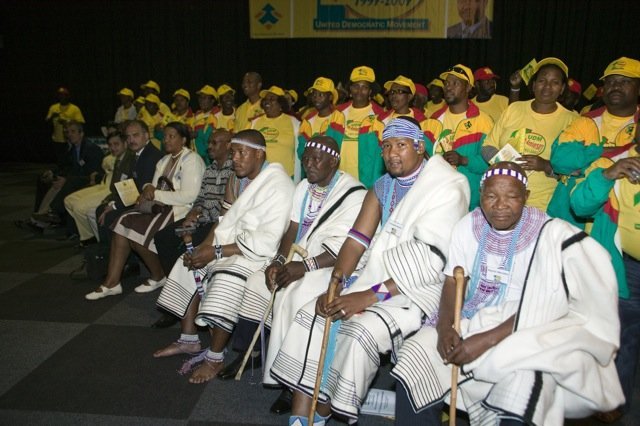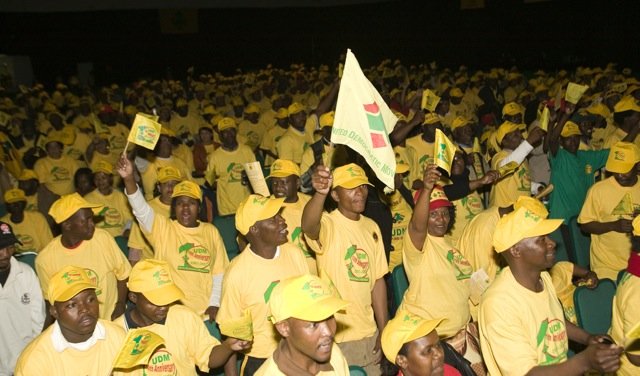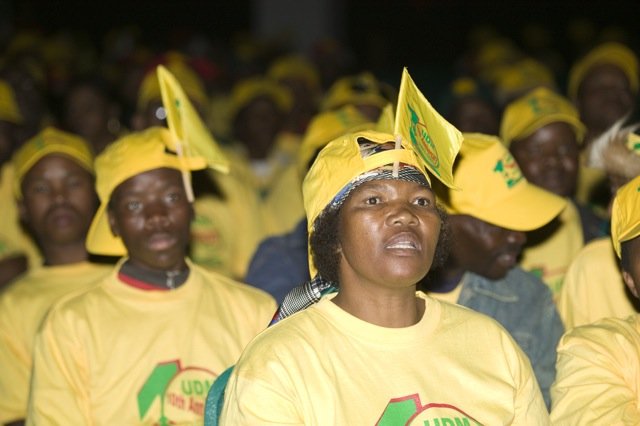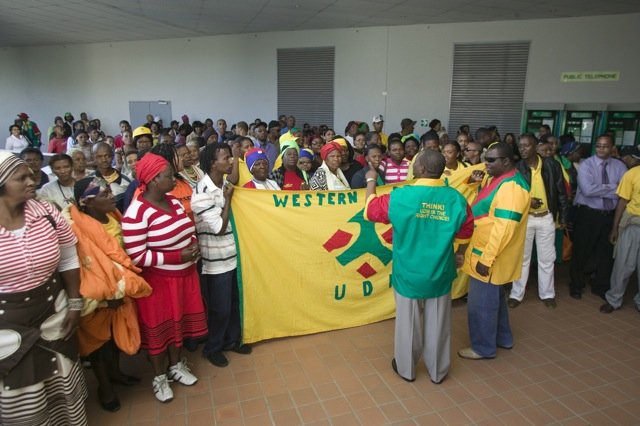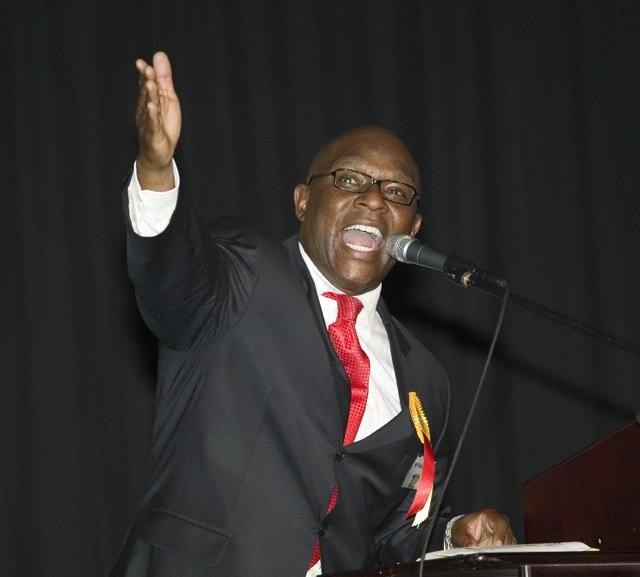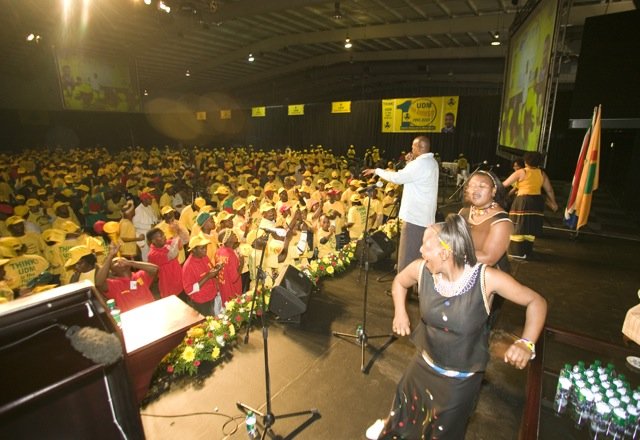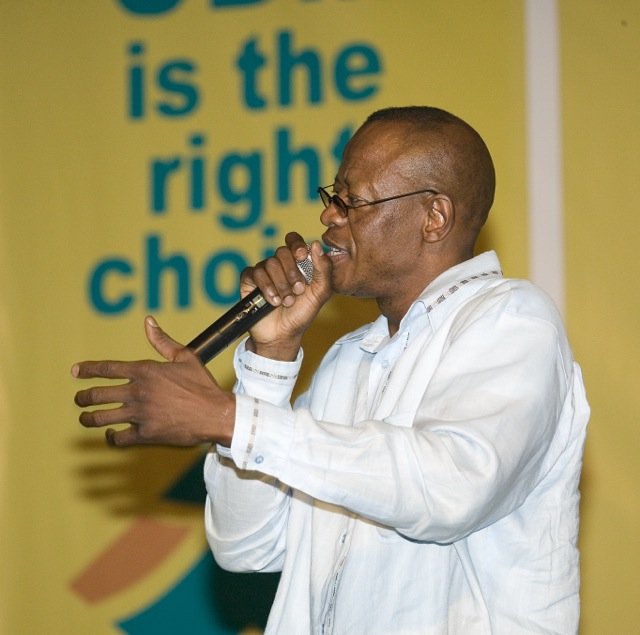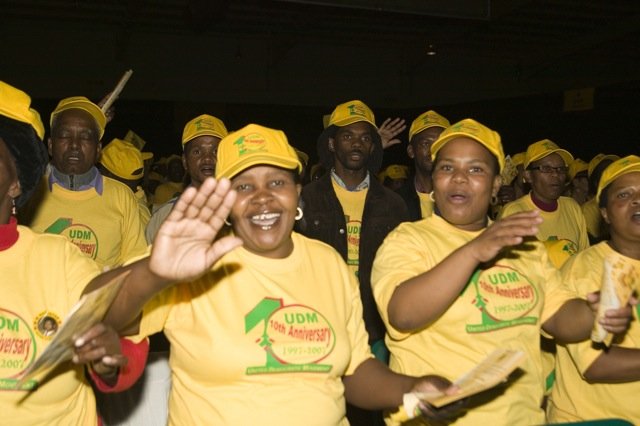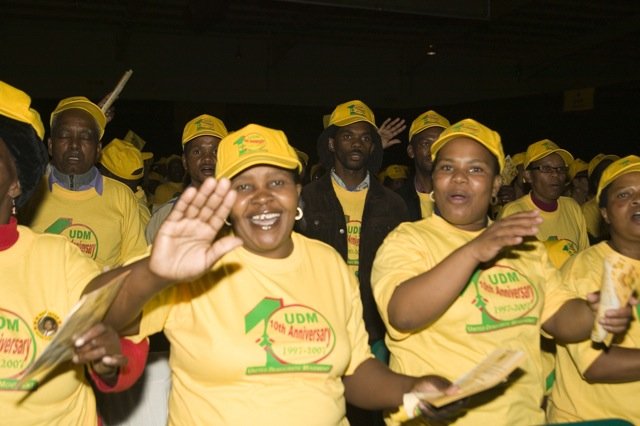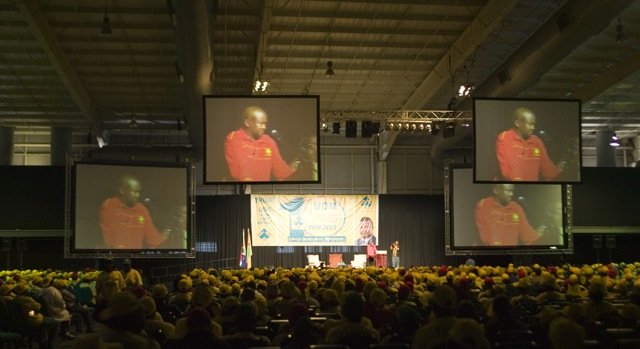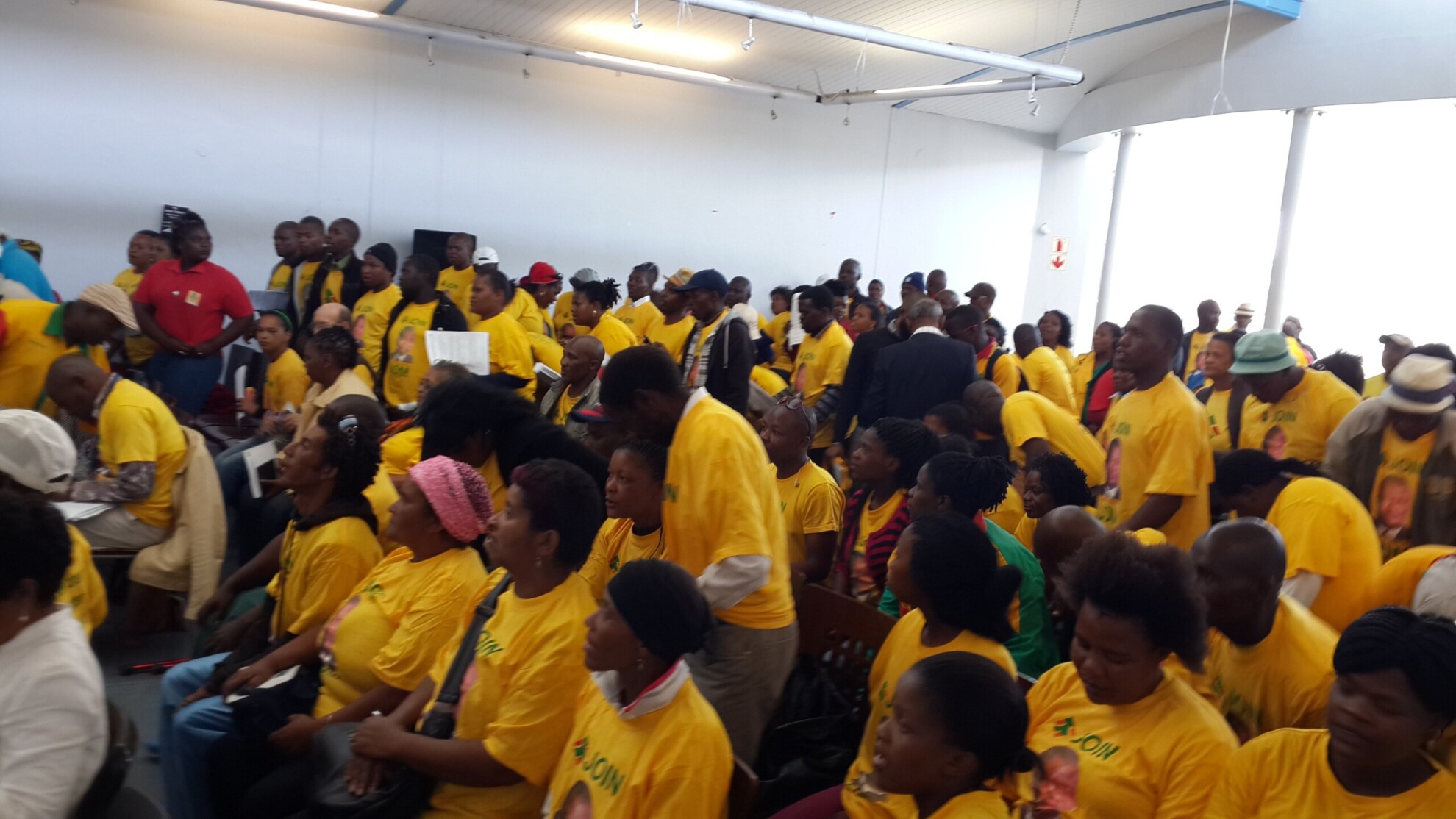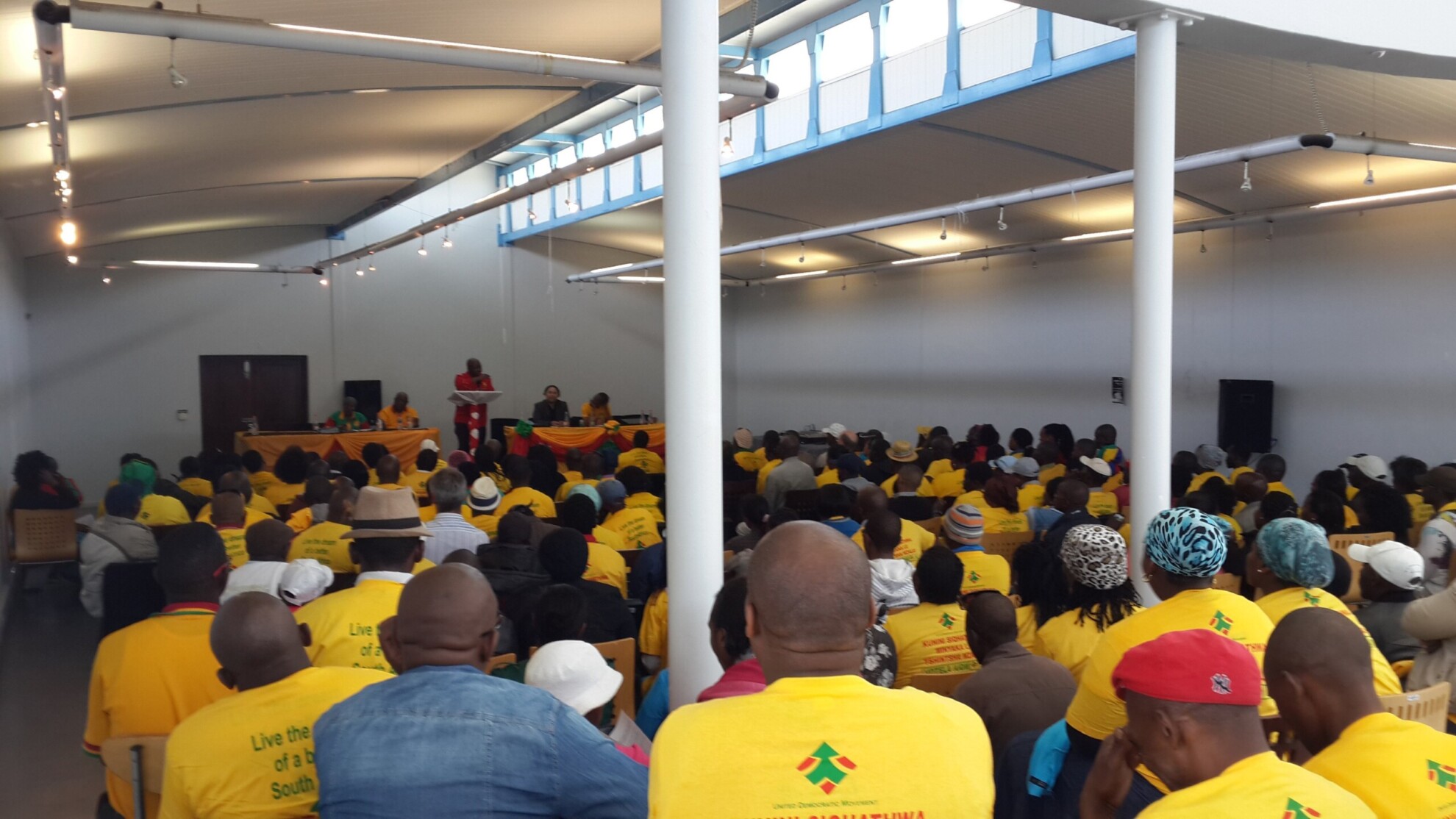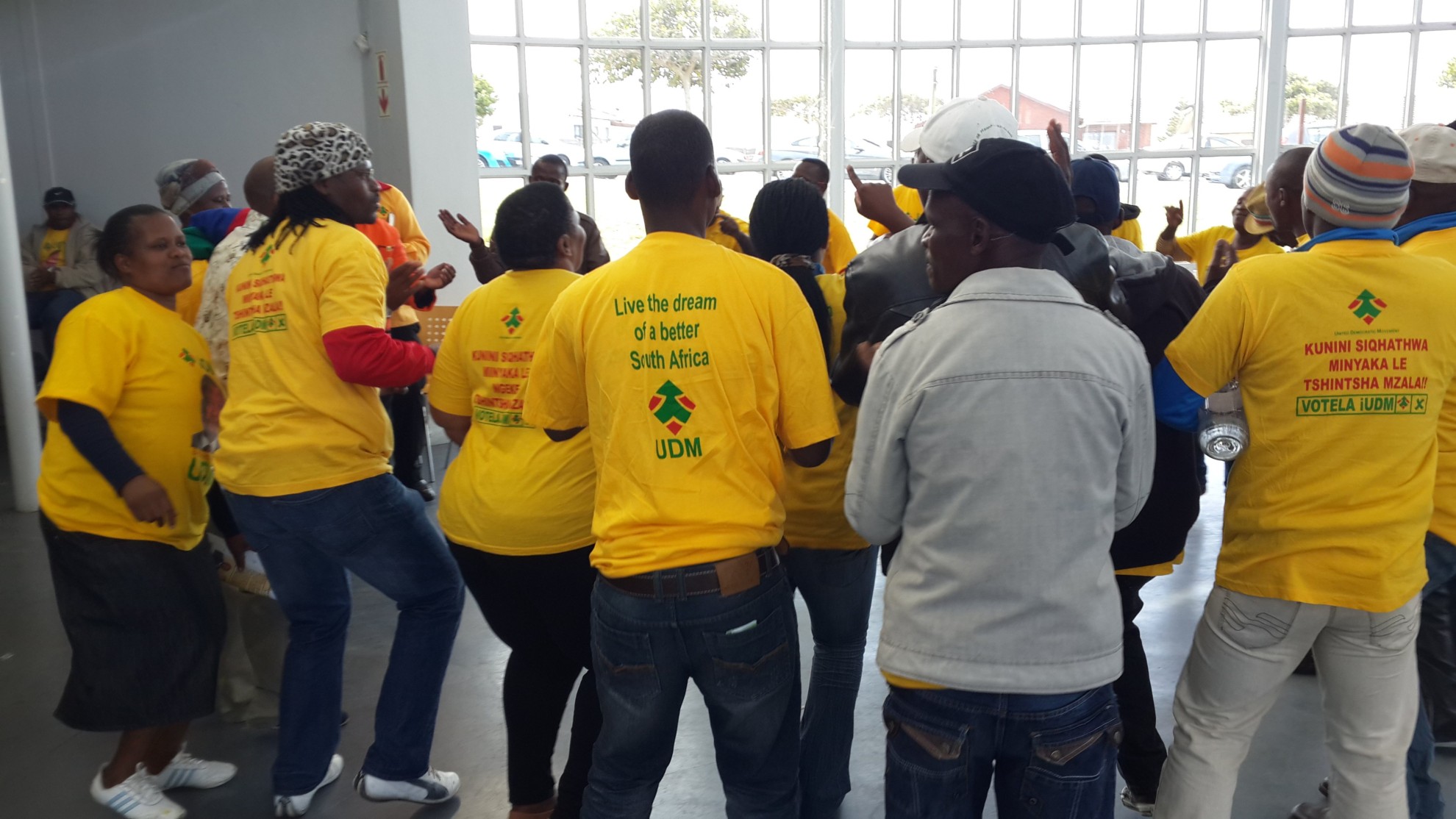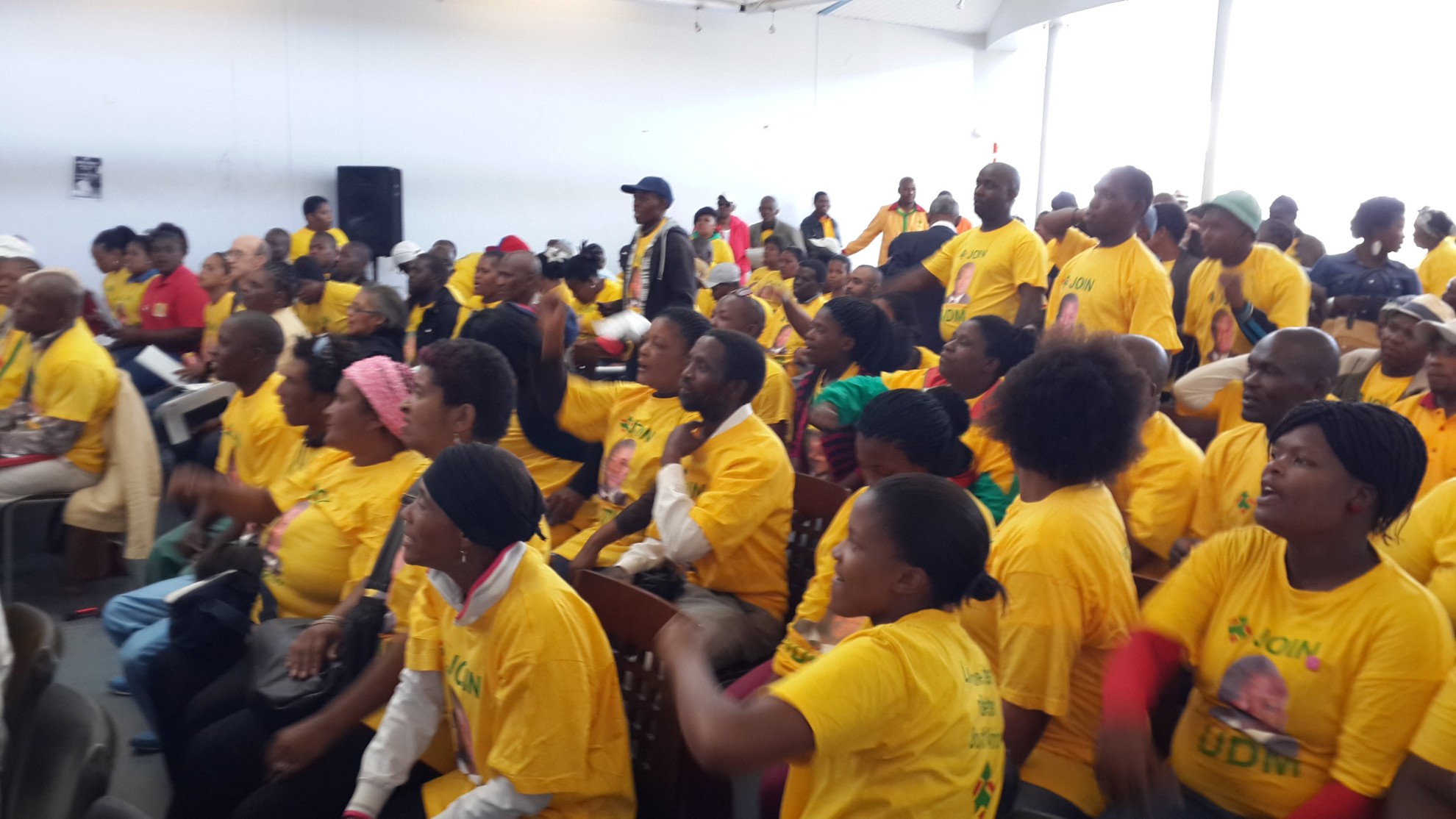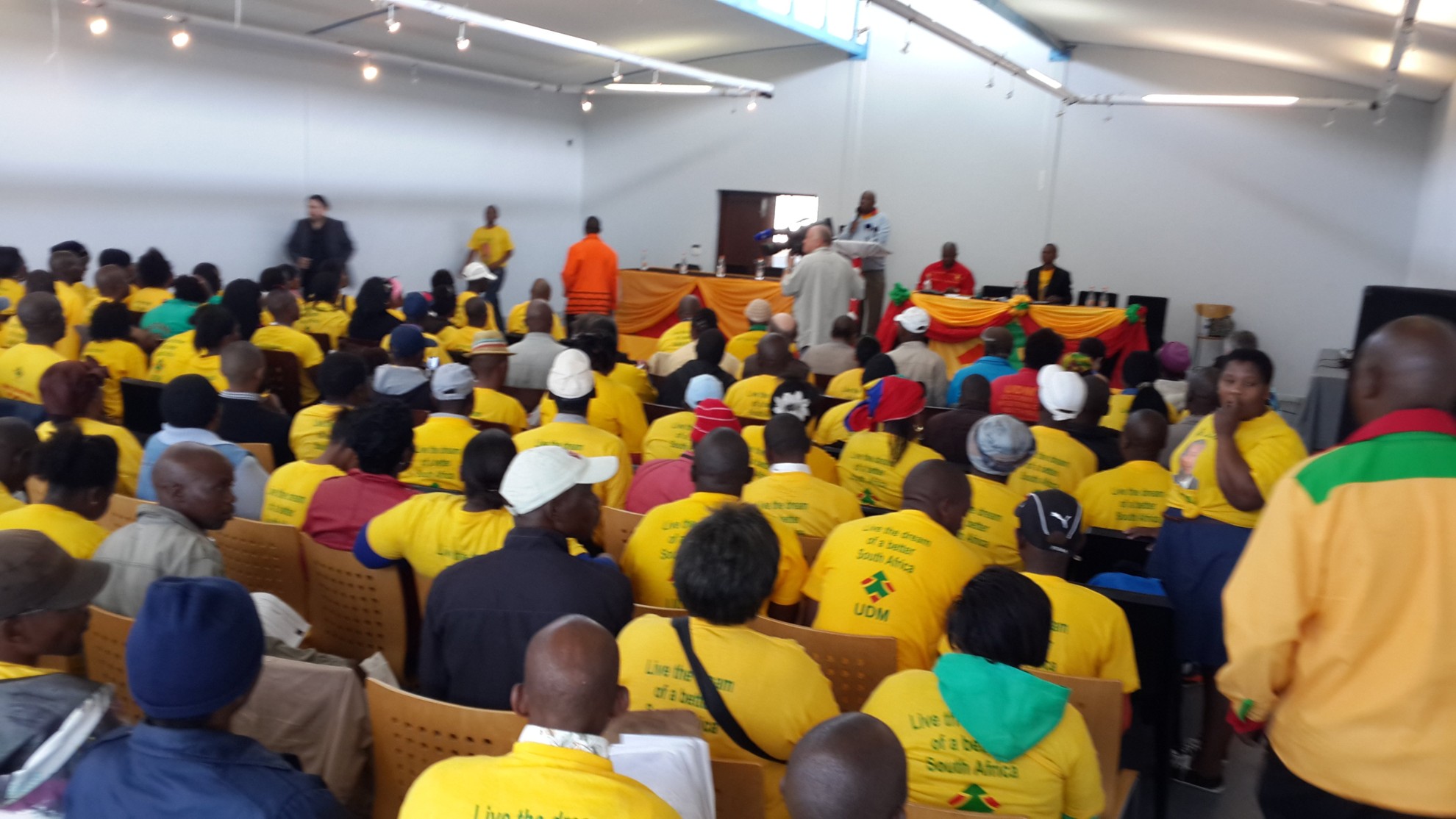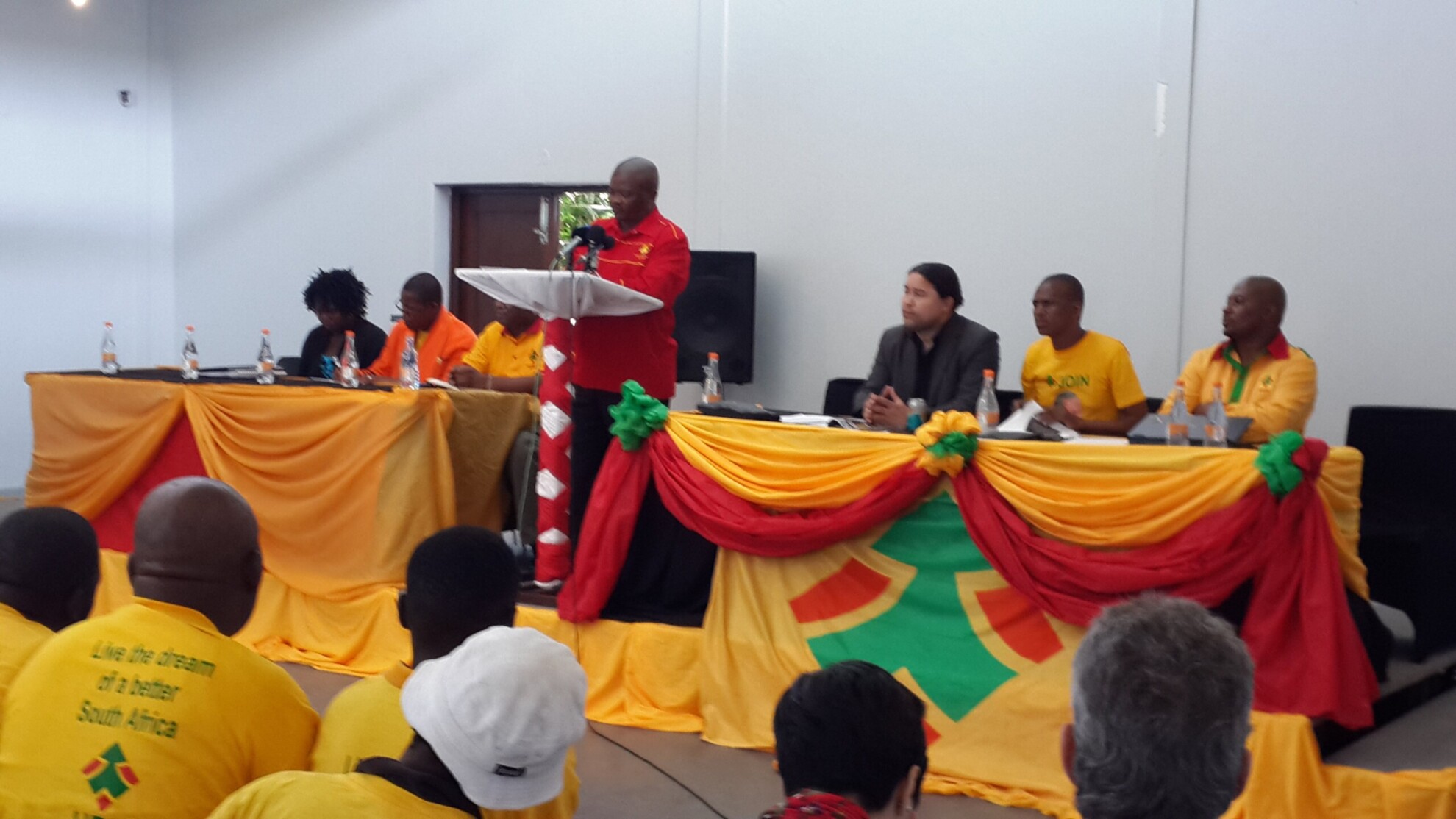

We will unite South Africans from all communities in a new political home, built on the foundation of the principles and ideals of our National Constitution. To this end we will address poverty and imbalances in our society, inspired by our unifying love of our Country and its people.

The Core Values, which the United Democratic Movement will uphold and promote and upon which its fundamental policy positions are based, are as follow : respect for life, dignity and human worth of every individual; integrity in public- and private life; the individual rights and freedoms enshrined in our Country’s Constitution;
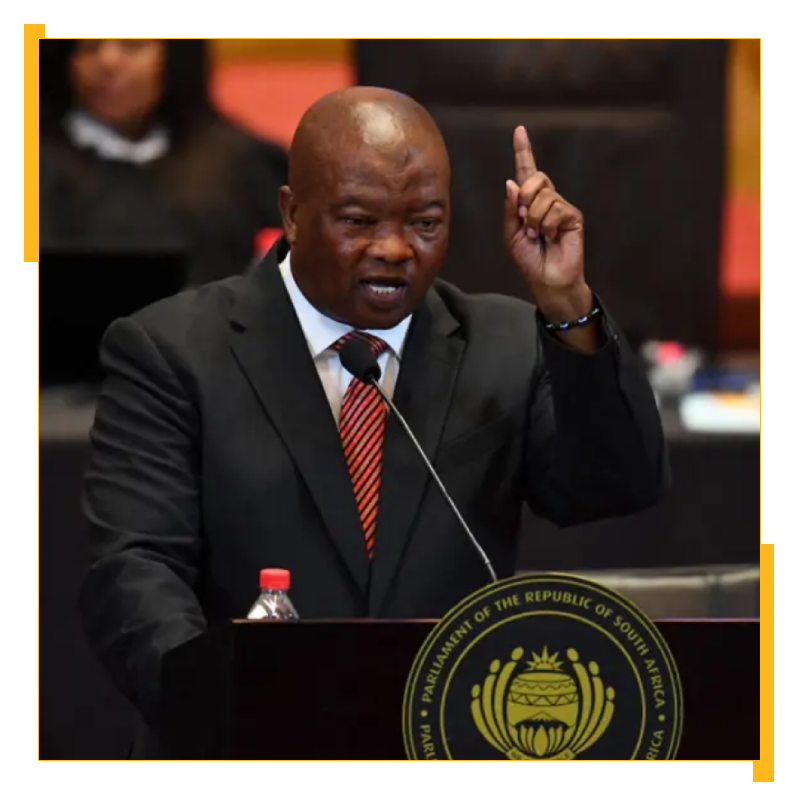
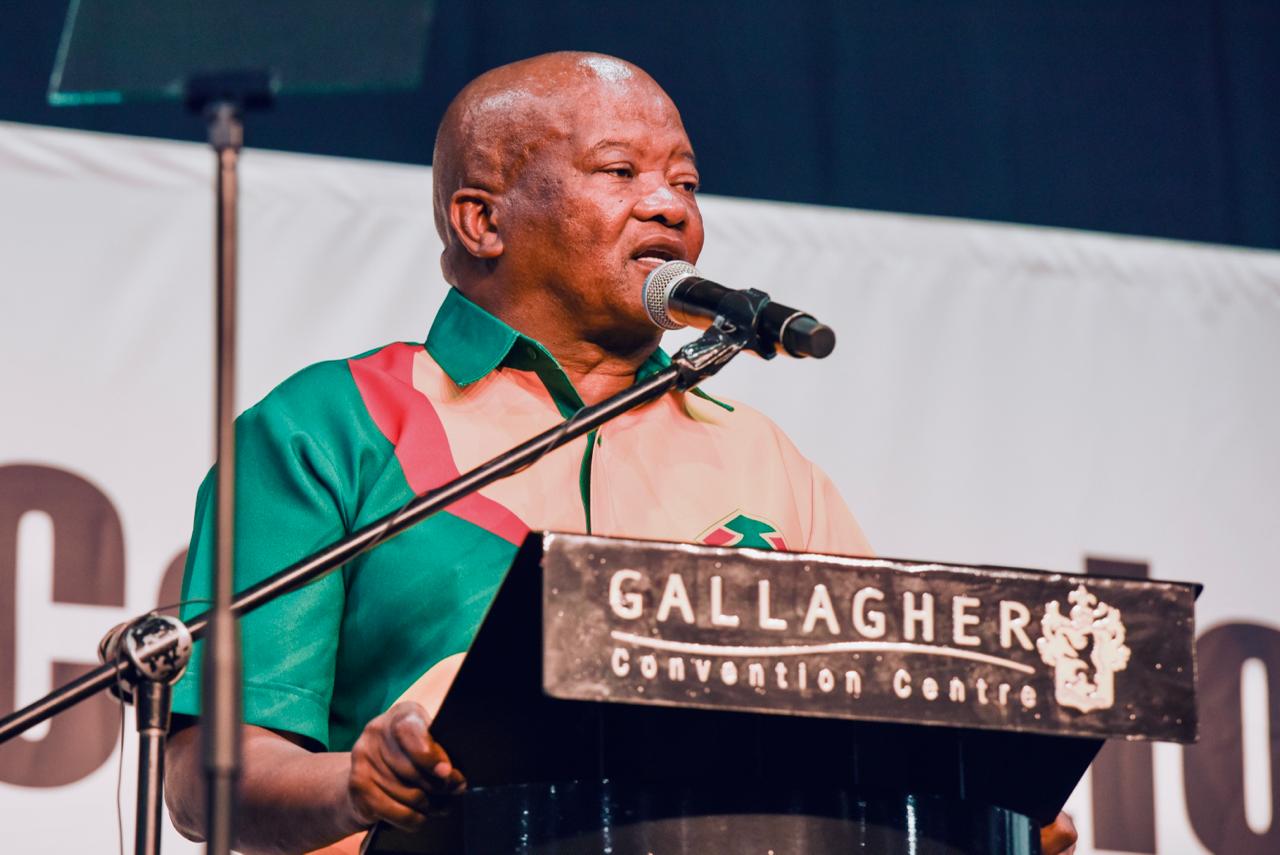
President of the UDM
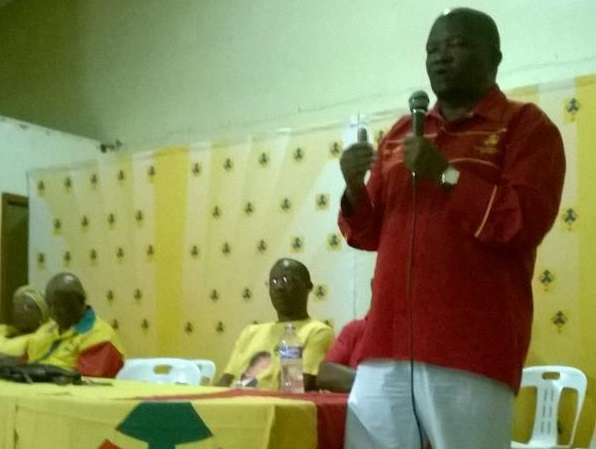
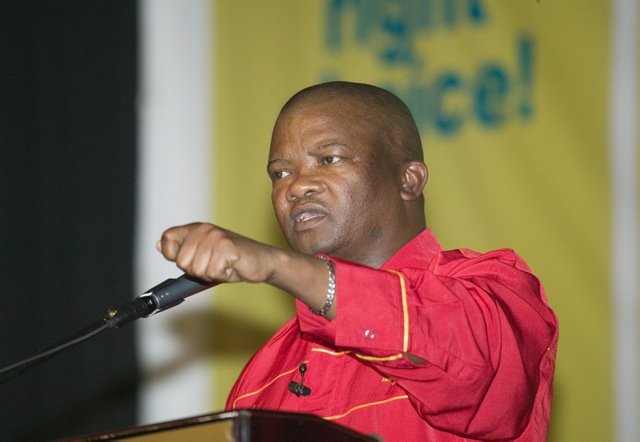
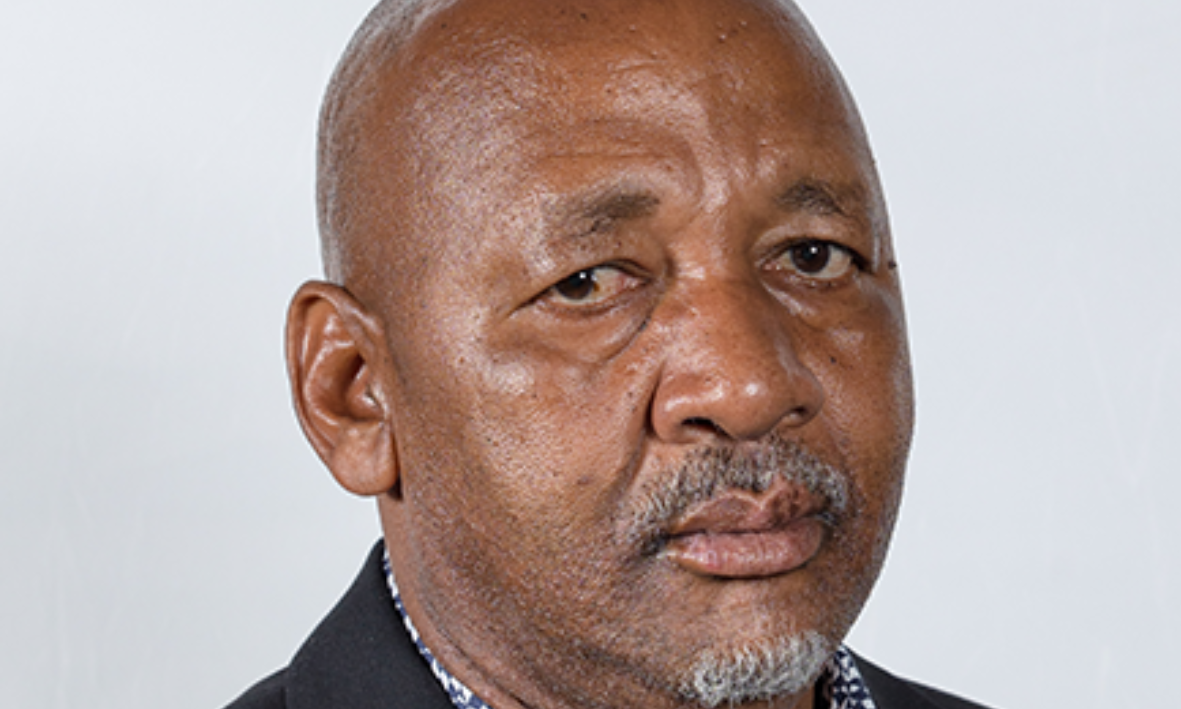
Major General (Retired) Bantubonke ‘Bantu’ Holomisa co-founded the United Democratic Movement (UDM) on 27 September 1997, and serves as its elected President, which in 2022 celebrated its 25th year of existence. He was again elected as a Member of Parliament in the 2024 National and Provincial Elections and was appointed as the Deputy Minister of Defence and Military Veterans in the Government of National Unity in the 7th Administration in President Cyril Ramaphosa’s cabinet.
He was the Commander of the Transkei Defence Force and Head of the Transkei Government (former independent homeland from 1987 to 1994) up to the first National Elections in South Africa in 1994. He was one of the first two black persons accepted by the South African Army College to do a one-year senior staff course for officers in 1984.








Contribute For Us
The United Democratic Movement (UDM) has worked diligently to promote the interests of all South Africans over the years. Despite the challenges and stumbling blocks the party rose to the occasion and scored many political victories. Our successes are manifested in our public representation at various levels of government across the country, but also in the influence we have had irrespective of the ruling party’s parliamentary majority.
The UDM’s vision is to be “…the political home of all South Africans, united in the spirit of South Africanism by our common passion for our Country, mobilising the creative power inherent in our rich diversity, towards our transformation into a Winning Nation”.


Admin

11 Aug, 2026
The Auditor-General of South Africa and The Chairperson Portfolio Committee on Basic Education National Assembly Parliament of the Republic of South Africa Dear Auditor-General and Chairperson Request for urgent independent forensic investigation and Parliamentary oversight into nearly R4 billion in contracts and expenditure involving Khumzi Investments and the Eastern Cape Department Of Education I write to formally request the urgent intervention of the Auditor-General of South Africa and the Portfolio Committee on Basic Education concerning the reported award and expenditure of approximately R3.95 billion in contracts involving Khumzi Investments and the Eastern Cape Department of Education over a five-year period. Recent media reports and information arising from parliamentary processes have raised serious questions regarding the scale, concentration, administration and value for money associated with this expenditure. Of particular concern is the reported figure of approximately R3.4 billion relating to travel and accommodation. The reported value of these contracts is extraordinary when considered against the persistent and well-documented challenges facing the Eastern Cape education system. The figures demand urgent scrutiny. Information now in the public domain indicates that approximately R336.56 million was authorised through 1,317 payments to Khumzi Investments during 2025 alone. Separate payments reflect 96 payments to the company between 19 June and 8 July 2025, with a combined value of R12,514,307.30. These transactions must be properly reconciled against the relevant contracts, purchase orders, invoices, services rendered and payments made by the Department. The scale of the reported expenditure is particularly disturbing when viewed against the conditions under which many learners in the Eastern Cape continue to receive their education. There are children who continue to learn under trees. There are learners who must cross rivers and travel long distances simply to reach school. There are schools without adequate sanitation and infrastructure, schools that continue to face shortages of essential learning and teaching materials, and communities that continue to raise serious concerns about scholar transport and school nutrition. Against this reality, the reported expenditure of billions of rands on travel and accommodation by an education department requires the highest possible level of scrutiny. The public purse cannot and must not become a source of luxury expenditure while children are denied basic educational necessities. Public money allocated to education must ultimately serve education and, above all, the learner. Every rand spent must be capable of being justified in terms of necessity, efficiency, effectiveness, economy and measurable public benefit. This is therefore not merely a question of whether a contract existed or whether officials can produce documents showing that a procurement process was followed. The more important question is whether the State actually received what it paid for and whether it received value for money. We need to know who travelled, where they travelled, when they travelled, why they travelled, who authorised each trip, who approved the expenditure, what services were procured, what prices were paid, whether those prices were reasonable, whether the services were actually rendered and what tangible outcomes resulted from the expenditure. We further need to know whether all travel was supported by proper travel authorities, whether officials submitted post-travel reports, whether bookings were cancelled or amended, whether there were duplicate bookings or payments, whether any expenditure was unnecessary or excessive, and whether there were effective controls over the allocation and utilisation of the relevant contracts. The concentration of such substantial expenditure through one company is itself a matter that warrants examination. Even if Khumzi Investments was one of a number of service providers appointed by the Department, the scale of expenditure reportedly channelled through the company requires an independent assessment of how the procurement framework operated, how work was allocated among service providers, whether there was genuine competition, whether the allocation of business was transparent and whether the Department obtained competitive pricing and value for money. One company should not be able to become so deeply embedded in the financial operations of an education department that billions of rands flow through it without the most rigorous scrutiny of the underlying transactions, contracts and services. I am particularly concerned by reports concerning the urgent processing of approximately R18.5 million in outstanding payments to Khumzi Investments, including a reported instruction issued in the early hours of the morning requiring senior departmental officials to assist with processing outstanding payments. If these reports are accurate, the circumstances surrounding such an instruction require detailed examination. It must be established who issued the instruction, why the payments required such urgency, which invoices and purchase orders were involved, whether the relevant services had already been delivered, whether all approvals were in place and whether the payments were properly supported. These circumstances cannot simply be dismissed as administrative matters. They go directly to the effectiveness of internal controls, financial governance and accountability within the Department. I therefore request that the Auditor-General consider undertaking an urgent special, investigative or forensic audit, within the scope of the AGSA's statutory mandate, into the contracts, expenditure and payments involving Khumzi Investments and the Eastern Cape Department of Education. I further request that the Portfolio Committee on Basic Education urgently exercise its parliamentary oversight responsibilities in relation to this matter. The Committee should summon the relevant officials of the Eastern Cape Department of Education, including the MEC, Head of Department, Chief Financial Officer and officials responsible for supply-chain management, procurement, finance, travel administration and contract management, and require them to provide a comprehensive account of the expenditure. The Department should be required to place before Parliament the complete documentary record supporting the reported expenditure. Parliament should not be expected to accept assurances that procurement procedures were followed without examining whether those procedures resulted in responsible expenditure and actual value for money. The Committee should specifically require the Department to reconcile the reported nearly R3.95 billion in contracts against actual expenditure and services rendered. It should establish how much was contracted, how much was paid, what was delivered and what measurable benefit accrued to the education system. The Committee should also engage the Auditor-General regarding the matter and, where appropriate, refer the findings to the relevant structures of the Eastern Cape Provincial Legislature, including the appropriate provincial oversight and public accounts structures. I also request that the Committee establish whether the Department has conducted any internal investigation into Khumzi Investments, including any investigation into potential irregularities, conflicts of interest, collusive practices or other concerns relating to the procurement and administration of the contracts. If no such investigation has been conducted, Parliament should establish why an expenditure portfolio of this magnitude has not received a comprehensive independent examination. The circumstances demand urgency because this is not an abstract accounting matter. This is money allocated to an education system that is already under enormous pressure. Every rand directed towards unnecessary expenditure is a rand that cannot be directed towards a classroom. Every rand wasted is a rand that could have contributed towards scholar transport. Every rand improperly spent is a rand that could have provided stationery, learning materials, sanitation, school nutrition or infrastructure. We cannot have a situation where children are expected to cross rivers to access education while billions of rands are being spent on travel and accommodation. We cannot have children learning under trees while the public purse is carrying expenditure whose value remains insufficiently demonstrated. We cannot tell communities that there is no money to address basic educational needs while expenditure of this magnitude is taking place without the public receiving a clear account of what it achieved. The public purse is not a luxury fund. It belongs to the people of South Africa. The Eastern Cape Department of Education has a responsibility to ensure that every rand entrusted to it is used to improve the lives and educational prospects of learners. The scale of the expenditure now under scrutiny requires us to establish whether that responsibility was fulfilled. I therefore urge the Auditor-General to urgently consider and institute the appropriate investigative process within its mandate, and I urge the Portfolio Committee on Basic Education to exercise its oversight powers without delay. I request written confirmation of receipt of this correspondence and an indication of the steps that will be taken by both institutions. Yours faithfully Maj. Gen. (Ret.) BH Holomisa President of the United Democratic Movement Deputy Minister of Defence and Military Veterans
Admin
10 Aug, 2026
Statement by President of the United Democratic Movement, Deputy Minister Bantu Holomisa, MP It is with profound sadness that we announce the passing of Mr Mkululi Mcotsho, our Member of the Eastern Cape Provincial Legislature and a valued member of the United Democratic Movement (UDM). We extend our deepest condolences to the Mcotsho family, his relatives, friends, colleagues and all those whose lives he touched. Mr Mcotsho came to the UDM with considerable experience in local government and public service. Before joining our ranks, he had served the people of Mbhashe Local Municipality in several capacities, including as Speaker of the Municipal Council and in responsibilities relating to infrastructure and service delivery. His experience, knowledge of local government and understanding of the everyday challenges facing communities made him a valuable addition to the UDM. Following the 2024 National and Provincial Elections, Mr Mcotsho took his place in the Eastern Cape Provincial Legislature as a UDM representative. He continued his public service through the Legislature's oversight and portfolio structures, contributing to the work of holding government accountable and ensuring that the concerns of ordinary communities were heard. For the UDM, his election to the Eastern Cape Legislature represented more than the gaining of a seat. We had entrusted him with carrying the voice of ordinary people into the provincial lawmaking and oversight process, and he accepted that responsibility with commitment. His passing comes at a particularly painful time for his family, which has already endured great personal loss in recent months. We therefore hold them especially close in our thoughts as they confront yet another bereavement. South African politics is too often remembered only through its most prominent national figures. Yet our democracy depends equally upon men and women who spend years working at municipal and provincial level, dealing directly with the problems experienced by communities and giving practical expression to public service. Mr Mcotsho belonged to that tradition. The UDM has lost a colleague and public representative. The Eastern Cape has lost an experienced servant of the people. Most importantly, his family has lost a loved one whose place in their lives can never be replaced. May they find strength and comfort in the knowledge that his contribution to public life and to the communities he served will be remembered. May his rest in peace.

Admin
10 Aug, 2026
Statement by Ms Bulelwa Zondeka, Chairperson of the UDM in the Western Cape The United Democratic Movement (UDM) in the Western Cape extends its deepest condolences to the families and loved ones of the eleven people killed in separate shootings in Langa, Gugulethu and Khayelitsha over the weekend. We wish those injured a full recovery. We condemn these killings in the strongest terms. But condemnation is no longer enough. For decades, Western Cape communities have endured gangsterism, drug trafficking, extortion, illegal firearms and recurring gun violence. Government cannot keep treating each mass shooting as an isolated tragedy followed by temporary intervention and promises of arrests. The UDM in the Western Cape has repeatedly warned about the proliferation of illegal firearms and the criminal networks that sustain gun violence. Every illegal firearm recovered should trigger an investigation beyond the person carrying it: where did it come from, who supplied it, and to what other crimes can it be linked? The suspicion that drugs and extortion may be connected to the latest violence further demonstrates that illegal firearms, gangsterism, drugs and extortion cannot be tackled separately. They form part of an organised criminal economy sustained by fear and intimidation. The UDM in the Western Cape is particularly concerned about the relationship between affected communities and the South African Police Service (SAPS). Residents are repeatedly urged to provide information and assured that they can do so anonymously, yet people in gang-affected areas fear that doing so could expose them and their families to retaliation. Government must take these fears seriously rather than lecture frightened communities about remaining silent. Where residents allege that confidential information supplied to law enforcement reaches criminals, those allegations must be independently investigated. Even the perception that information is compromised destroys trust, and cripples crime intelligence. The state cannot demand the courage of witnesses while failing to guarantee their safety. The UDM in the Western Cape is equally concerned about the fragmented response to this crisis. For years, national government and the Democratic Alliance-led Western Cape Government have argued over policing resources, powers and responsibilities. The City of Cape Town has its own Metro Police and law-enforcement capacity, while SAPS remains nationally controlled. South Africa now also operates under a Government of National Unity. After decades of bloodshed, communities should not still be caught between competing spheres of government. The criminals are integrated. Government is not. Gun traffickers, drug dealers, gangs and extortion syndicates do not respect jurisdictional boundaries. Neither can the state's response. The UDM in the Western Cape calls for an integrated, intelligence-led intervention involving SAPS, provincial and municipal law enforcement, crime intelligence and prosecutors. The priority must be dismantling gun-trafficking, drug and extortion networks; tracing illegal firearms; protecting witnesses and informants; rooting out corruption within law enforcement; and securing successful prosecutions. Communities across Langa, Gugulethu, Khayelitsha, Mitchells Plain, Manenberg, Hanover Park, Bonteheuwel and other affected areas have carried this burden for far too long. Repeated shootings, gang activity and intimidation cannot be allowed to become an accepted part of daily life. The Western Cape does not need another cycle of outrage, temporary intervention and eventual silence. National, provincial and local government may continue debating their respective powers and responsibilities, but communities cannot remain collateral damage in that argument. The people of the Western Cape do not care which sphere of government wins the argument over policing powers. They want the killing to stop.
Admin
21 Jul, 2026
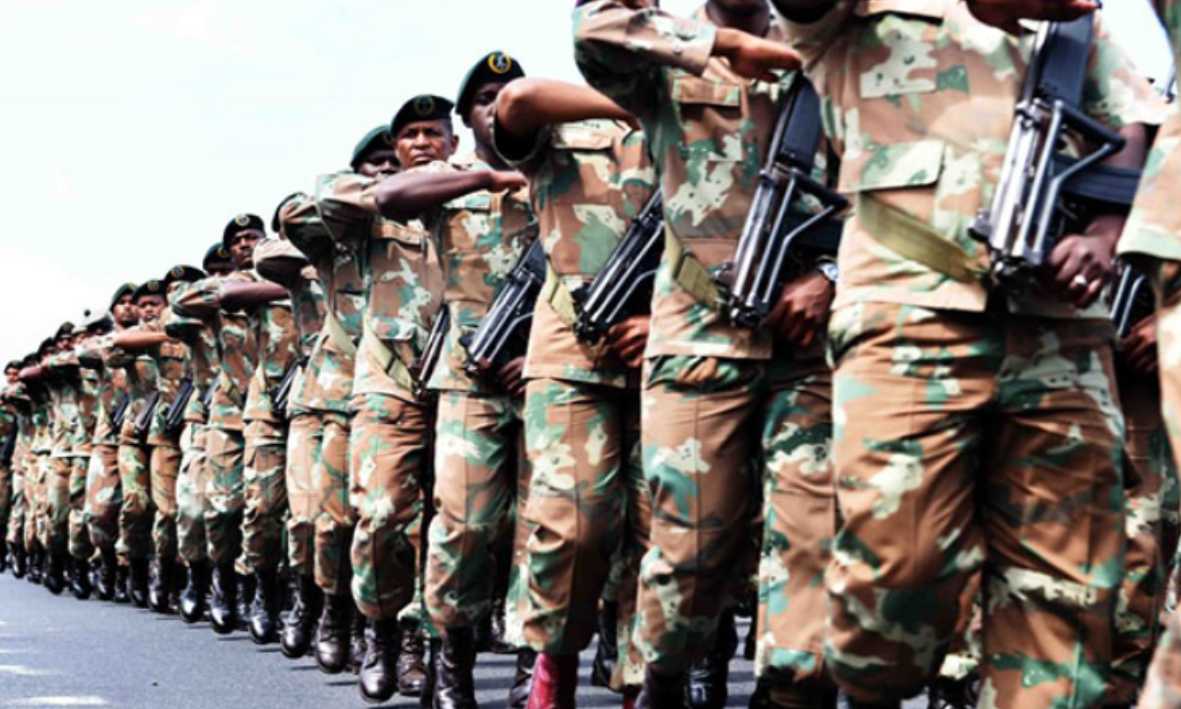
Keynote address by Deputy Minister of Defence and Military Veterans, Maj. Gen. (Ret) Bantu Holomisa, MP at the Defence Industry Lekgotla – 21 July 2026 Ministry of Defence and Military Veterans of the Republic of South Africa Programme Director; Honourable Minister of Defence and Military Veterans; Members of the Executive; Members of Parliament; Chief of the South African National Defence Force; Chiefs of Service and Divisions; Representatives of the defence industry; Representatives of Armscor, Denel, the CSIR and other research and development institutions; Representatives of the private sector, organised business, academia and labour; Distinguished guests; Ladies and gentlemen; Good morning. The purpose of this session of the Defence Industry Lekgotla is not simply to speak about the defence industry. It is to ask a more fundamental question: What must we do, together, to ensure that South Africa retains a capable, sustainable and sovereign defence capability in an environment of limited public resources and rapidly changing security threats? My assignment today is simple, but the consequences of how we approach it are significant: I have been tasked with speaking about Public-Private Partnerships and, more importantly, how we can move from discussion to practical implementation. Let us begin with honesty. We know many of the challenges confronting the Department of Defence and the defence industry. We know that there are significant infrastructure backlogs. We know that many military facilities require rehabilitation, modernisation and maintenance. We know that the Department has significant requirements in relation to prime mission equipment and the sustainability of existing capabilities. We know that there are challenges relating to military housing, health facilities, logistics infrastructure and other support systems. We know that our defence industry faces challenges relating to demand, funding, skills, research and development, industrial sustainability and access to markets. These challenges are not new. We have spoken about them for many years. The 2015 Defence Review already warned that inadequate levels of defence spending had placed the defence force and the local defence industry under severe pressure. More recently, Parliament has again highlighted the serious funding constraints facing the Department of Defence. For the 2026/27 financial year, the Department has been allocated approximately R57.6 billion, while Parliament has continued to emphasise the need for a sustainable funding model for defence. The reality is that the Department has substantial responsibilities, but the resources available to meet all those responsibilities are limited. We cannot pretend otherwise. The question before us is therefore not whether the problems exist. The Department cannot simply assume that every infrastructure backlog, every equipment requirement and every modernisation project will be fully funded through additional allocations from the National Treasury. That is not a realistic assumption. At the same time, we cannot accept the gradual deterioration of strategic defence capabilities as inevitable. We cannot allow our military bases to deteriorate indefinitely. We cannot allow our personnel to live in conditions that undermine their dignity and morale. We cannot allow critical infrastructure and equipment to reach a point where the cost of replacement becomes greater than the cost of timely intervention. We must therefore consider additional and innovative ways of mobilising capital and expertise. The timing of this conference is great because Cabinet has approved the Journey to Greatness, meaning the Defence Budget will look different and be in line with the instruction of the President that the Defence defunding must be arrested and the defence budget should grow to a favourable 1.5% of the GDP. This is where I believe the discussion on Public-Private Partnerships becomes important. 1. PPPs as a strategic instrument Let me be clear. When I speak about Public-Private Partnerships, I am not speaking about selling off the assets of the Department of Defence. I am not speaking about selling military land to the highest bidder. I am not speaking about compromising national security. I am speaking about using a lawful, transparent and carefully structured instrument to mobilise private capital and expertise in areas where this can assist the State to deliver infrastructure and services more efficiently. South Africa's PPP framework exists precisely because government recognises that the private sector can, under appropriate conditions, contribute capital, expertise, innovation and long-term operational capacity to public infrastructure projects. 2. Defence land as a strategic asset One of the important advantages of the defence portfolio is that the State possesses significant land and other strategic assets. The National Defence White Paper has previously recorded that the SANDF controls approximately 500 000 hectares of state-owned land, while also emphasising the need for the cost-effective utilisation and rationalisation of military land. This land is not simply a commercial asset. It is a strategic national asset. There may be opportunities for carefully structured partnerships in which the State retains ownership and control while private partners provide capital, construction expertise, technology or operational capacity. This could include, subject to proper feasibility studies and all applicable legal and security requirements: • Military housing; • Health and hospital infrastructure; • Logistics and maintenance facilities; • Training and support infrastructure; • Modernisation of selected military bases; and • Other infrastructure required to support the SANDF. The question is not whether we should commercialise the defence estate. The question is whether we can use our existing assets more intelligently to support the defence mission. 3. Military housing and the dignity of the soldier Let us consider the question of military housing. A soldier who serves the Republic should not be expected to live indefinitely in conditions that undermine his or her dignity. In some instances, military personnel live far from their formations or in informal settlements because suitable accommodation is not available. This is not only a housing issue. It is a military readiness issue. It affects morale, discipline, operational availability and the relationship between a soldier and the institution they serve. We must therefore explore whether partnerships with credible property developers, financial institutions and institutional investors can assist in addressing the military housing backlog. The model could be structured in such a way that the State provides access to appropriate land, while a private or institutional partner provides capital and development capacity. The State could then make structured payments over an agreed period, subject to a properly designed contract and demonstrated value for money. This is not a proposal to give away defence land. It is a proposal to investigate whether the land already owned by the State can help us secure the infrastructure required by the defence force. 4. A military city for the future We must also think beyond individual projects. In Pretoria, for example, various defence-related functions and institutions are spread across different locations, while the State incurs substantial expenditure on rented office accommodation. We should ask ourselves whether there is a better long-term model. Can we consolidate appropriate defence functions? Can we make better use of defence-owned land? Can we create a modern, integrated military precinct that brings together appropriate military, administrative, training, housing and support functions? I am not suggesting that every military function should be placed in one location. Nor am I suggesting that security considerations can be ignored. But we should at least investigate the feasibility of a modern military city or integrated defence precinct where appropriate. Such a project could be designed around modern principles of planning, sustainability, technology and efficiency. We now have access to advanced design technologies, including artificial intelligence-enabled tools, that can assist with planning and modelling. The objective should be to develop infrastructure that is fit for purpose, cost-effective and appropriate for the needs of a modern defence force. 5. The role of institutional investors We should also engage seriously with institutional investors. The Public Investment Corporation, for example, manages substantial institutional capital and has established experience in property and unlisted investments. However, it has also suffered significant losses in the past on certain unlisted investments involving billions of rands in pensioners’ money. Its property investment activities include development and investment in sectors such as office, industrial, specialised property and student accommodation. This raises an important question. Can the Department of Defence, together with the relevant government departments and agencies, engage institutional investors to explore carefully structured, long-term infrastructure investment opportunities? The principle is straightforward. A credible investor provides capital for a project. The project is constructed and maintained according to agreed standards. The State obtains the required infrastructure and service. The investor receives an agreed return over an agreed period. At the end of the agreed arrangement, the asset may return to the State in accordance with the terms of the contract. But let me emphasise: No such arrangement should be entered into merely because money is available. Every proposal must be tested against: • National security requirements; • Value for money; • Affordability; • Long-term fiscal implications; • Ownership and control; • Procurement law; • Security legislation; • Risk allocation; • Local industrial participation; and • The broader national interest. 6. Border security Where border infrastructure requires substantial investment in fencing, surveillance, sensors, communications and other capabilities, can we identify innovative models that allow the State to obtain the required capability more quickly and cost-effectively? 7. The navy and the defence industry The South African Navy requires a sustainable maritime infrastructure and industrial ecosystem. Where facilities require modernisation, including naval support infrastructure, we must ask whether there are credible partners who can bring capital, technical expertise and industrial capability into the equation. Such partnerships must, of course, protect the strategic interests of the Republic. 8. Prime mission equipment The discussion must also extend to prime mission equipment. The defence force cannot be effective without sustainable and modern capabilities across the land, air, maritime and other domains. But the acquisition of equipment cannot be separated from questions of affordability, maintenance, life-cycle costs, technology transfer and local industrial capability. One gets worried that should the SANDF get a deployment outside of our borders after our SAMIDRC withdrawal, would we have equipment that is in line with the mission requirements? The role of the defence industry must therefore extend beyond simply supplying equipment. We need to ask: • Can we improve maintenance, repair and overhaul capability? • Can we extend the life of existing platforms where appropriate? • Can we develop local manufacturing and technology capabilities? • Can we improve the sustainability of equipment already in service? • Can we use partnerships to develop new capabilities where this is strategically and economically viable? The role of institutions such as Armscor, the CSIR, Denel and the broader defence industry is critical in this regard. The CSIR already has capabilities across aerospace, landward sciences, command and control, cybersecurity, integrated security, radar, electronic warfare and other areas of defence research and technology. That is how we build a sustainable defence industrial ecosystem. 9. Youth, skills and technology I agree with the previous speakers, the future of defence is increasingly shaped by artificial intelligence, cybersecurity, autonomous systems, advanced manufacturing, robotics and other emerging technologies. These are already transforming military capability, and South Africa must ensure that it does not fall behind. We must therefore invest in our young people and create pathways from schools and universities into research, industry and the defence sector. My engagements with countries including Pakistan, India, Türkiye, the United Kingdom, France and Ethiopia have reinforced one lesson: countries that take defence seriously invest in their youth, technology and research. Institutions such as the CSIR, universities, Armscor, Denel and industry must work together to develop the skills, research and innovation required to build a sustainable and competitive South African defence industry. 10. International partnerships International partnerships must also be used to advance South Africa’s transformation objectives, particularly through meaningful Broad-Based Black Economic Empowerment. We must ensure that partnerships create opportunities for South African companies, especially emerging black-owned enterprises and young entrepreneurs, to gain access to markets, technology, mentorship, skills development and practical experience in the defence industry. Our young people must not remain spectators while major international companies participate in South Africa’s defence economy. Through properly structured partnerships and BBBEE commitments, young South Africans must be given opportunities to enter the defence value chain, develop their businesses, gain exposure to international standards and build the experience required to become future manufacturers, innovators and exporters. 11. A new approach to partnership I believe we need a new approach. We must move away from thinking about the defence industry only in terms of annual procurement. We must think in terms of long-term capability. We must move away from isolated projects. We must think in terms of integrated systems. We must move away from the assumption that every challenge can only be solved through a larger allocation from the fiscus. We must ask what can be achieved through better planning, better partnerships, better use of existing assets and more innovative financing models. But I must also emphasise that partnerships must not become an excuse for the State to abdicate its responsibilities. 12. The way forward I would therefore like to propose that this Lekgotla should not end with a list of challenges. We already know many of the challenges. South Africa already has a policy framework for Public-Private Partnerships, including the framework issued by National Treasury. The Department of Defence also has a dedicated team which has been familiarising themselves with the National Treasury’s PPP Policies, comprised of Mr Lebelo of the Defence Secretariat and the incoming Chief of Staff, General Xundu, which will engage the various formations of the SANDF, including the Army, Air Force, Navy and SAMHS, to identify priority areas requiring partnership. We must develop a clear menu of these requirements, aligned with the National Treasury framework, and present it to the defence industry so that potential investors can identify where they can contribute. The objective is to move from broad discussions to specific, structured and implementable opportunities. The Honourable Minister has made it clear that we must move with urgency and ensure that this Lekgotla does not become another talk shop. Following this engagement, the defence leadership must convene a focused roundtable to finalise priority areas so that, when industry approaches us, we are ready to direct them towards clear and well-defined opportunities. That said, it would be in our best interests for us to develop a practical partnership roadmap. This roadmap should identify: First, the major infrastructure and capability backlogs that require urgent attention. Second, which of these areas are suitable for PPP or other partnership models. Third, what role should be played by the Department of Defence, the Department of Public Works and Infrastructure, Armscor, Denel, the defence industry, institutional investors, research institutions and other stakeholders. Fourth, what regulatory and policy interventions may be required. Fifth, how we protect national security and sovereign capabilities. Sixth, how we ensure local industrial participation, skills development, youth opportunities and technology transfer. And finally: What can be implemented, and by when? I would like to see the development of a practical PPP Action Plan that moves beyond general statements and identifies actual projects, potential partners, funding models, risks, responsibilities and timelines. The Department of Defence is not going anywhere. The SANDF is not going anywhere. As long as South Africa exists as a sovereign state, it will require a defence capability. This means that defence is, by its very nature, a long-term investment. The question is whether we will continue to respond to our needs only when the crisis has already emerged, or whether we will develop a long-term model that allows us to plan, invest, modernise and sustain our defence capabilities. To avoid this from being a talk shop, I am requesting that my Colleagues in Parliament, the Portfolio Committee and the Joint Standing Committee on Defence to ensure that this PPP discussion becomes a standing agenda in all their meetings. This will help monitor implementation. I thank you.