
Admin

13 Oct, 2025
No more raw deals: UDM calls for industrialisation through beneficiation
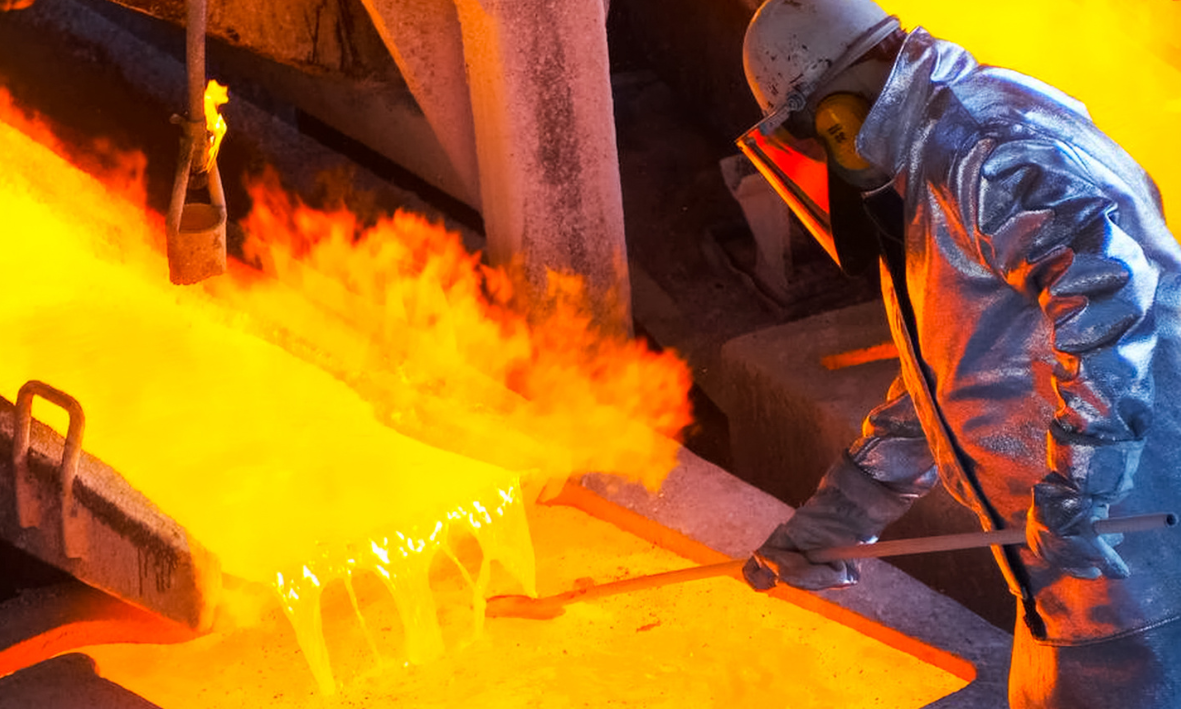
Statement by Nqabayomzi Kwankwa, MP, UDM Deputy President and Leader in Parliament The United Democratic Movement (UDM) welcomes the growing national recognition that South Africa can no longer afford to export its mineral wealth in raw form. Mining expert David van Wyk, senior researcher at the Bench Mark Foundation, has echoed what the UDM has consistently maintained: that sending our raw minerals abroad while importing finished goods back at high prices is economic madness that robs South Africans of jobs, skills, and industrial capacity. We also note that President Ramaphosa and Minister of Mineral Resources and Energy Gwede Mantashe have recently begun echoing the same arguments that the UDM has advanced for decades. It seems that government has at last cottoned onto our long-standing policy vision that beneficiation is not a slogan but the foundation for a self-reliant and inclusive economy. However, beneficiation cannot succeed through rhetoric alone. It requires practical readiness and firm commitment to implementation. South Africa needs affordable and reliable electricity, efficient rail and port systems, well-maintained roads and water infrastructure, sustained investment in research and technology, sound legislative frameworks, and policy certainty that inspires confidence among responsible investors. Without these foundations, talk of industrialisation will remain hollow. These are not new insights; they are the very obstacles the UDM has been raising in Parliament and in public since the late 1990s. In particular, the UDM reiterates that the revival of the national rail network is central to any beneficiation strategy. Rail is the backbone of mineral logistics, yet years of neglect, theft, and mismanagement at Transnet have crippled our ability to move bulk commodities cost-effectively. The UDM calls for an urgent rail recovery plan that includes modernisation of freight corridors, tighter security along strategic lines, and partnerships with the private sector and neighbouring states to open regional export routes. Without a reliable and affordable rail system, the promise of beneficiation will remain out of reach and South Africa will continue to lose billions to inefficiency and road damage. The UDM calls for the following: 1. Compulsory and measurable beneficiation targets that ensure South Africa no longer exports its wealth in raw form. This must be backed by reliable and affordable electricity, functioning transport networks, and a modern rail system capable of carrying bulk commodities and finished products efficiently. 2. A phased and strategic approach to export controls that links any restrictions or taxes to proven domestic readiness. Government must first fix energy, rail, and port infrastructure before introducing policies that could undermine mining operations or investment. 3. Focused public incentives for companies that process minerals locally, including tax relief, concessional financing, and access to industrial zones. These incentives must reward firms that create jobs, invest in new technology, and commit to training South African workers. 4. Concrete benefit-sharing for mining communities through local procurement, infrastructure investment, social facilities, and ownership opportunities. The people living alongside mines must see tangible improvements in their daily lives as part of beneficiation policy. 5. An urgent national rail recovery and modernisation plan to rebuild Transnet’s freight capacity, strengthen security against theft and vandalism, and link mining areas to ports and industrial hubs across the SADC region. Efficient rail transport will reduce road damage, lower logistics costs, and unlock regional trade potential. 6. A coordinated governance structure that brings together the Departments of Mineral Resources and Energy, Trade, Industry and Competition, Public Enterprises, Transport, and Science and Innovation. This structure must track progress, align funding, and report annually to Parliament on beneficiation outcomes. For too long, South Africa’s mineral riches have been a blessing squandered. Beneficiation offers a path to rebuild our industries and restore dignity to our people. The Government of National Unity must now prove that it governs for South Africans, not for exporters and elites.
Admin
15 May, 2014
Looming labour problems in entire mining industry
The protracted labour unrest at Marikana is probably a taste of what is soon to hit the entire mining industry. Mining houses in other sectors must prepare for the likelihood that their employees will soon follow suit and go on strikes – or even wild cat strikes – especially if Lonmin and Amcu find resolution on the remuneration of Lonmin’s workforce in the platinum sector. The United Democratic Movement (UDM) is of the view that the so-called “BEE partners” – in other words the ruling party elite – have a sizable stake in the success of the mining conglomerates. The implication thereof is that government cannot mediate in good faith. Why? Because the very same government mediators and the BEE partners meet each other at the ruling party’s NEC meetings. We must realise that South Africans who have been employed in mines since the advent of democracy are of a different generation. Their fathers and grandfathers were exploited in the worst possible way and the workforce of today have strong views about reasonable employment and what they consider a decent wage. The mining houses must wake up and smell the roses. The UDM has long advised, and reiterates its call, that unions and mining houses should deal directly with each other to counter the erosion of constructive negotiation. We implore the leaders of both the unions and mining houses to take responsibility and act in a mature way to reach agreement that is to the benefit of all parties. Regarding the future, it would be prudent for the leaders, in all the different mining sectors, to be proactive and start their discussions early before they are caught in untenable situations.
Admin
01 May, 2014
Workers’ Day 2014
Workers’ Day is a celebration of labour and the working classes. In this regard, the United Democratic Movement (UDM) recognises the right of employers and employees to organise themselves to campaign and lobby the aspirations of their members. Given our history it is clear that labour organisations have a role to play in society and are a strong voice of social conscience. After all, this country must never return to a situation where our people are exploited as slaves and a source of cheap labour. Although we celebrate this day with those who have jobs, we think of the millions of South Africans who do not have work. We must not only concern ourselves with the rights of workers, but also with the right of all South Africans to work and to contribute to the economy. The labour disputes – such as the current ones in the mining industry – makes it clear that where labour is directly affiliated and dependent upon a political master, it does not serve its primary purpose. The ruling party has presided over so-called ‘jobless growth’ – which simply means that it has steered the economy into a direction that does not create jobs or increase the overall wealth of the country. With elections around the corner, we hope that South Africans will vote for job creation – in other words, a vote for the UDM.