
Admin

02 Oct, 2018
Nelson Mandela Bay: Trollip is the orchestrator of his own demise
Demist mogafe <It looks as if the Democratic Alliance federal chairman Cllr Athol Trollip, of the Nelson Mandela Bay Metro, seems to be suffering from selective amnesia. He proves himself to be nothing more than a prevaricator and a practiced liar. It is about time that someone confronts Trollip for spreading falsehoods and misrepresenting facts. Having listened to the radio on what Trollip said in his address to the Cape Town Press Club, the United Democratic Movement (UDM) wishes to remind him of an internal audit report which details how he and former city manager, Johann Mettler, were up to no good. See the attached scathing internal report. We also want to remind Trollip of the PricewaterhouseCoopers (PwC) final report that he and his leader, Mmusi Maimane, carried about in their briefcases, saying that there was prima facie evidence that our Mongameli Bobani was corrupt. The council, the public and the media has been calling for him to make the report public. It is thanks to the Herald, which had access to the report, that we know that there was no finding that fingered Bobani. This report surely cost the municipality millions of rands. As we ponder this expense, one wonders how he will ever explain it. Trollip now sits with egg on his face having, what seems to be, a DA commissioned report. Trollip is yet to table at council, the “evidence” allegedly contained in the PwC report. That day will seemingly see the pigs fly. Trollip must man up and come clean, so that voters can know the real him. Trollip also chose to refer to the “dirty money” that the UDM allegedly used to fight a by-election in 2015. He sounds like a broken record. When he made the allegations, many months ago, I responded and said that it was hogwash. I challenged him to investigate the matter and table the findings at council. On the 15th of April, Trollip repeated these allegations in an article with Rapport’s Hanlie Retief, we responded by (yet again) saying get your facts straight and table the findings at council. In Retief’s article, Trollip is quoted saying that “julle” took money from the ANC, and that Bobani knew it; I knew it; and that’s why I had a blind spot where Bobani was concerned. Sorry, but that is a blatant lie and tells you who Trollip really is. I also told him that I don’t entertain high-level gossip. It has been ten months, or so, during which an investigation could have been done to either prove or disprove his allegations. Trollip dismally failed in this task. Trollip is said to have mentioned that if you give someone enough rope, they will hang themselves. We agree Cllr Trollip, that is exactly what you have done to yourself. It is for that reason that you don’t know, from what you have said and when you said it, whether you are going backwards of forwards. Trollip is suffering from a bout of sour grapes and he does not accept that he’s no longer an executive mayor. Issued by Mr Bantu Holomisa, MP UDM President
Admin
29 Sep, 2018
To give PIC CEO Dan Matjila a golden handshake is preposterous
We are all aware that there will be a commission of inquiry which shall investigate the mess at the Public Investment Corporation (PIC). Despite the announcement, we have for several months waited with bated breath to hear who will serve on the commission and what the terms of reference will be. We, in today’s Mail and Guardian, read that PIC chief executive officer Dr Daniel Matjila has approached the President with a view to exit through the back door with a golden handshake. This is preposterous and is tantamount to the police giving the get-away car’s key to a bank robber. The United Democratic Movement (UDM) rejects this notion outright. Matjila should be suspended immediately and be made to explain himself to a commission of inquiry. Most importantly, he, and the current board, should face the music and pay the price should they be guilty of wrong-doing. There seems to be scurrying about in the corridors of power to say a quick farewell to Matjila before he spills the beans. It’s not only several prominent families and powerful individuals who might have their hands caught in the cookie jar, but possibly a few political parties. We have certainly heard Zonkizizwe Investments being mentioned, which we all know is an ANC enterprise. Bizarrely, we have even heard how Matjila’s alleged girlfriend benefited from PIC cash. It leaves a bitter taste in the mouth when you chew on the fact that Finance Minister Nene, who once served as PIC board chairperson, now must drive the process of putting a commission together. This might shed some light on why it’s taking so long to get the commission off the ground. I will be interviewed today by Advocate Budlender SC and his team of forensic auditors to give guidance on how the UDM would see this matter pan out. The commission should establish which methods and schemes were used to syphon money from the PIC and make recommendations on how to prevent this kind of crime in future. This is exactly why Matjila should not be allowed the easy way out; he certainly has much explaining to do.
Admin
26 Sep, 2018
Public Protector to investigate allegations of corruption by Min Zweli Mkhize re PIC deals
The United Democratic Movement earlier this year wrote to President Cyril Ramaphosa wherein we revealed possible corruption that involved the Public Investment Corporation (PIC), Zonkizizwe Investments (which we understand to be solely owned by the ANC), some ANC heavy weights and Afric Oil. The alleged broker between the PIC and e.g. VBS Mutual Bank and the various municipalities was Minister Zweli Mkhize. We have been reliably informed that the Public Protector will be investigating the allegations with the affected individuals being subpoenaed to appear before the Public Protector on the 4th of October 2018. All those involved in syphoning money from the PIC are to explain themselves and their conduct; this includes the people who brokered any suspicious deals with the PIC. We call on the Public Protector to leave no stone unturned in teasing out who was involved and to what extent the allegations are true. Issued by: Mr Bantu Holomisa, MP UDM President
Admin
14 Sep, 2018
Nelson Mandela Bay: DA’s Trollip allegedly interfered with an internal audit to protect Mettler and Olver. UDM hands over a dossier with information to Auditor General
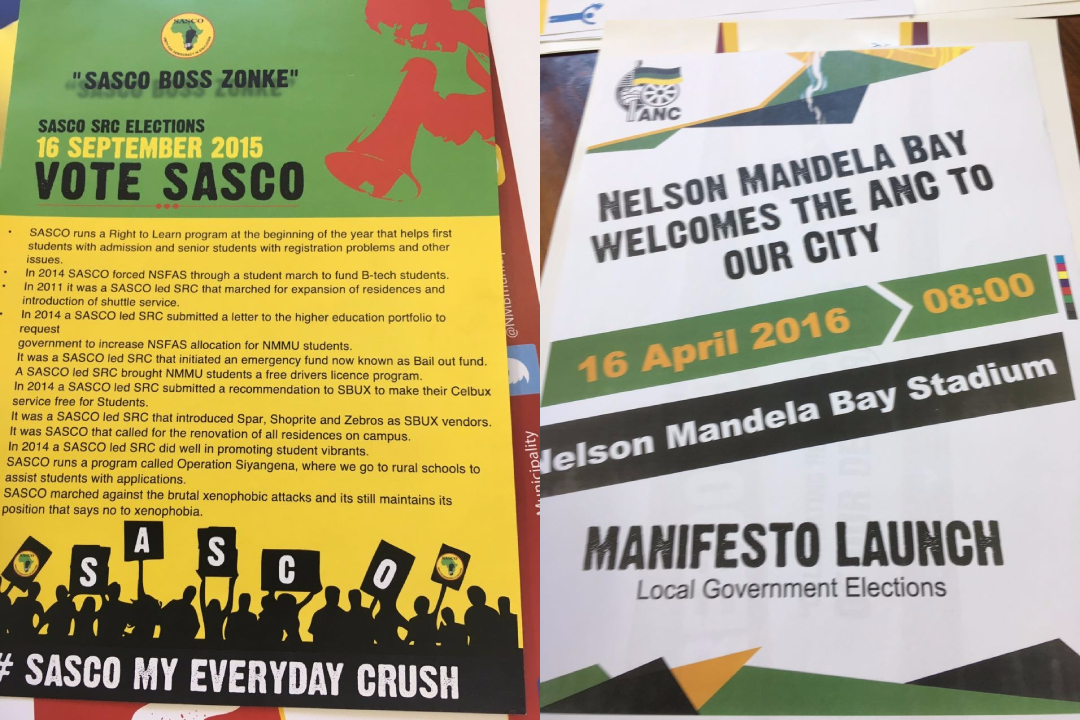
Dear Mr Makwetu Alleged corruption to the tune of R21.8 million irregular and wasteful expenditure involving Mohlaleng Media and a seeming cover-up in the Nelson Mandela Bay Metro 1. The above matter has reference and has been widely reported on in the media. 2. The United Democratic Movement (UDM) wishes to make you aware of claims of serious corruption in the Nelson Mandela Bay Metropolitan Municipality (NMB Metro) and the seeming cover-up by the NMB Metro’s former executive mayor Mr Athol Trollip of the Democratic Alliance (DA) and city manager Mr Johann Mettler. 3. It pertains to the alleged corruption involving a company called Mohlaleng Media, to the tune of R21,8 million which was of course at the ratepayers’ expense. 4. To provide background, I refer you to an article posted on Independent Online (IOL) dated 7 September 2016 (https://www.iol.co.za/news/south-africa/eastern-cape/trollip-to-freeze-contract-with-joburg-media-company-2065623) wherein it is reported that Mr Trollip stated his intention to have the contract (see item 6.1.2) with Mohlaleng Media frozen. He was quoted saying: “This administration will not tolerate irregular, wasteful or unnecessary expenditure, in any form, and any contract that is alleged to have facilitated any expenditure of this nature will be fully investigated and scrutinised”. I also refer you to an article in Herald Live dated 24 May 2018 (https://www.heraldlive.co.za/news/politics/2018-05-24-just-in–bobani-launches-scathing-attack-against-city-boss/) wherein it was reported that Mr Trollip ‘…said the Mohlaleng matter has been handed over to the investigation authorities.” 5. The UDM has in its possession a whistle-blower’s dossier that details the period during which the alleged corrupt activities took place, together with the attending evidence. According to the information contained in the dossier, Mr Johann Mettler played a pivotal role in the suspected corruption which was allegedly covered-up by Mr Trollip. 6. The dossier speaks in detail, and gives timelines, of an internal forensic audit that started in September 2016, which unveiled allegations, amongst others, that: 6.1. Pre-2016 Municipal Elections: 6.1.1. Services rendered by some printing companies, during the previous term of council, included party political work (see right). During the internal forensic audit, Mr Mettler was confronted with the details of the irregular print jobs, but he failed to act thus neglecting to perform his fiduciary duties. 6.1.2. Mr Mettler signed an “addendum” to a non-existing contract with a company called Mohlaleng Media. This was deemed to be irregular and again Mr Mettler failed to perform his fiduciary duties. 6.1.3. Dr Crispian Olver the author of the book “How to Steal a City: The Battle for Nelson Mandela Bay” wanted to conduct a pre-election survey that would cost the ratepayers R11 million. Mr Mettler was aware of this, but did not disclose it to the internal audit, which was deemed an impairment of the internal investigation. Note: According to the dossier, Dr Olver had instigated the initial appointment of Mr Mettler as city manager. 6.1.4. Dr Olver was also responsible for the appointment of a legal firm, because of a mutual association during their “activism days” which flouted SCM practices with only limited involvement of the legal services directorate. Mr Mettler was/is still to account for such an irregular appointment. 6.1.5. Two “political appointments” were made in former mayor Danny Jordaan’s office, the cost of which would be carried by the aforementioned Mohlaleng Media, thus the rate payer. The dossier states that this was done by Dr Olver and Mr Mettler, knowing full well that these were “political appointments”. 6.2. Post-2016 Municipal Elections: 6.2.1. Mr Trollip and Mr Mettler had interfered with and used various delaying tactics to derail the internal forensic investigation into what the dossier asserts are unlawful contracts with Mohlaleng Media. According to the whistle-blower, the internal forensic unit asked Mr Mettler a number of pointed questions in their investigation of the Mohlaleng deal. He however, knowing full well that he was a subject of the investigation, wrote a missive to the forensic unit instructing it to cease its investigation. 6.2.2. Several of the senior internal auditors and other staff members have been suspended and/fired for what appears to be spurious, but politically convenient, reasons. It is in fact alleged that these staff members were gotten rid of, precisely because of their knowledge of the corruption. 6.2.3. When the time came to appoint a new city manager, Mr Trollip had been aware of Mr Mettler’s alleged role in the suspected corruption involving Mohlaleng Media; yet he did not disclose this information at council. Mr Trollip persisted in protecting Mr Mettler and continued to champion his appointed as city manager, thus sweeping this material information under the carpet. If there is merit in any of the allegations, it seems as if there is a major cover-up by the former Trollip administration. 7. Once the coalition government took over after the 2016 municipal elections, the UDM hoped that any and all corruption would be exposed and rooted out. Little did we know that our and the voters’ faith in the election promises made by the DA and Mr Trollip was misplaced. As the record will attest, the UDM and our Cllr Bobani did our level best, over the years and in particular since the 2016 elections, to expose corruption in the NMB Metro but we were blocked and vilified at every turn. 8. Notwithstanding Mr Trollip’s stated intentions i.e. freezing the Mohlaleng Media’s [non-existing] contract and his comment that the matter was handed over to the “investigation authorities we still wonder who these mysterious “investigation authorities” are/were. 8.1. We however heard that, Mr Trollip handed over the investigation, not to the municipality’s internal watchdog, but to an outside outfit of his own choosing, which will naturally cost the municipality a lot of money. Mr Trollip has failed to take the council, and indeed the citizens of the NMB Metro, into confidence to report on any progress made in the investigation. In fact, his comments in the media regarding the aforementioned investigation are extremely vague and without substance. 9. We herewith hand over this dossier, which tells a tale of a web of lies and suggest that your office establish the veracity of the whistle-blower’s claims, so that we can get to the bottom of this nest of alleged corruption and to act in the interest of the NMB Metro’s people. 10. Sir, it is our considered view that it would be vital to compare: • the report of the firm that Mr Trollip appointed to investigate the matter; • that of the NMB Metro’s internal audit team and • any investigation you would undertake to test the veracity of the whistle-blower’s claims and to establish whether the proverbial books have been cooked. The claim that Mr Trollip and Mr Mettler covered up the corruption should specifically be tested. 11. Finally, irrespective of whom would be found guilty or innocent, the UDM asks that the abovementioned claims to be thoroughly investigated. We believe that the innocent should be exonerated and that the guilty should, without fear nor favour, be made to answer for their misdeeds and that the necessary actions are taken against them. Yours sincerely Mr Bantu Holomisa, MP President of the United Democratic Movement CC: Mr Fikile Xasa, Eastern Cape MEC of Cooperative Governance and Traditional Affairs, Cllr Mongameli Bobani, Executive Mayor of the NMB Metropolitan Municipal Council, Cllr Buyelwa Mafaya, Speaker of the NMB Metropolitan Municipal Council.
Admin
04 Sep, 2018
The Public Investment Corporation: concerns regarding time being taken to institute commission of inquiry and the PIC board appointing forensic auditors
Dear Mr President This matter has reference. The United Democratic Movement is very concerned that there is no movement in terms of the appointment of the Public Investment Corporation (PIC) commission of inquiry. Sir, in this matter, we want to remind you that Minister Nene had initially, in his court papers, said that he saw nothing untoward at the PIC. This raised some eyebrows at the time. His lack of action now raises the question as to why Minister Nene is dragging his feet in instituting the inquiry and appointing the commissioners. Our main concern is that Minister Nene, who once was a PIC Chairperson, is acting like a person who may himself, or maybe a family member, have been captured. Regarding Minister Nene’s instruction on a forensic audit at the PIC, the minister has not stated which aspects or transactions such an investigative team will audit. In fact, Sir, the entire matter is shrouded in secrecy. Mr President, we herewith ask that you take this matter away from Minister Nene and appoint the commission yourself. We also ask that you appoint the forensic auditing team i.e. not by the PIC board whose members may be compromised themselves. Kindly advise. Yours sincerely Mr Bantu Holomisa, MP President of the United Democratic Movement
Admin
31 Aug, 2018
Sars decision to pay Symington’s legal costs must be reversed and investigated
Dear Minister Nene and Judge Nugent MR VLOK SYMINGTON: SARS DECISION TO PAY SYMINGTON’S LEGAL COSTS MUST BE REVERSED AND INVESTIGATED I refer to a City Press article that reported on Sunday, 26 August 2018, (see https://city-press.news24.com/News/sars-settlement-with-symington-questioned-20180825) that the SA Revenue Service (Sars) has, in a “confidential settlement”, undertaken to abandon “its right to the costs awarded in its favour” by Judge Hans Fabricius, following Vlok Symington’s unsuccessful bid last September to block disciplinary charges against him.” According to City Press, “records showed that Symington was expected to pay Sars at least R300 000 for its legal bills. In terms of the settlement agreement, Sars would pay both its lawyers and those of Symington. At least R750 000 was tabled as half of Symington’s costs for the two-part case, meaning the entire transaction could cost the taxpayer in excess of R1 million if Sars’ costs were factored in”. Sir, we are also concerned that, according to City Press, acting commissioner Mark Kingon is on record saying that he enjoyed a friendship with Vlok Symington. There is clearly something wrong here, as it seems that Kingon is prepared to waste taxpayers’ money to advantage or save his friend. In our view, Mr Kingon, and employee relations executive Luther Lebelo who was part of this decision, have neglected their duties. The United Democratic Movement calls upon you to declare the decision null and void and that Mr Kingon and Mr Lebelo are to be made to explain what happened here; or that the matter be included in the current investigation of the commission of inquiry into the country’s tax management. Kindly advise Mr Bantu Holomisa, MP UDM President

Admin
16 Aug, 2018
Message by Mr BH Holomisa, MP and UDM President on the 16th of August 2018 at the Commemoration of the Marikana Massacre
• Programme Director • The families of the victims of the Marikana Massacre • Ladies and Gentlemen 1. Opening Thank you for allowing me to share in this occasion, the commemoration of the Marikana Massacre. We must always remember what happened on this awful day six years ago, so that it may never be repeated. 2. No consequences for criminals We live in a country where there are no consequences for breaking the law. Worst still when it is our very own government that is doing so. It is frustrating that there are no consequences for those who steal; there are no consequences for those who engage in corruption and there are no consequences for those guilty of murder. This must stop. 3. The UDM’s message to mineworkers It is the mineworkers of this country that must bring about change in how government manages the mineworking industry. Each time there is a cabinet reshuffle the policies change as a new personality takes over the reins. The mining experts are frustrated, because they are being tossed around by politicians. This too must stop. It is time for the owners and the mineworkers to get their acts together and speak the same language on this score. 4. Land and the purpose of the parliamentary committee’s hearings Whilst I have the opportunity, I want to remind you that the parliamentary hearings that took place all over the country, were to determine whether the constitution should in fact be amended or not. This is phase one. The second phase is where the “how” part should be discussed, whether the parliamentary committee recommends that the constitution should be amended or not. The current land-owners such as government, big business, the Anglo’s of this world and the traditional leaders and churches should meet under one roof, together with political parties, to hammer out the “how” part of such a process. People’s expectations have been raised and phase 2 must happen very soon, as there has already been threats of land grabs and even civil war. 5. When will things change? What each of us must take to heart is that things will not change unless we take to task those who have disappointed us… those who have abandoned us. We must stop moaning and do something about those who squander and pillage state resources. It is time for the South African voters to say: NO MORE. We will no longer be fooled by your empty election promises. The ANC must be punished come the 2019 elections. Their support should be drastically cut back as a lesson to any party which thinks it can walk over South Africans. That power lies in the voters’ hands alone; it lies in your hands alone. 6. Closing As I close, I say to the families of those who lost their lives, as well as to those who survived that fateful day; We will keep you in our prayers. We hope that time heals some of your sorrows and that peace will replace some of your heartache. Thank You
Admin
28 Jul, 2018
Bantu Holomisa’s address at the EFF’s 5th birthday
Address by Mr BH Holomisa, MP and UDM President On the occasion of the Economic Freedom Fighters’ 5th anniversary at Mdantsane Stadium • Programme Director; • The Commander in Chief of the Economic Freedom Fighters Mr Julius Malema; • The Deputy Commander in Chief Mr Floyd Shivambu; • The EFF Chairperson, Advocate Dali Mpofu • The entire National Command Leadership of the EFF; • The UDM chairperson in the Eastern Cape and member of the provincial legislature, Mr Tando Mpulu; • EFF members and the ground forces; • People of Mdantsane and the Eastern Cape 1. Happy birthday Let me start by saying: “Congratulations, Economic Freedom Fighters on your fifth birthday!” When the powers that be massacred the workers at Marikana in the North West, the United Democratic Movement (UDM) was one of the first political parties to visit this bereaved community. I there met the current leadership of the Economic Freedom Fighters (EFF) who still were with the African National Congress’ (ANC) Youth League. The rest of the events around this day are well documented. Fast forward to when the ANC booted out the executive of the Youth League and you decided to form a political party called the EFF. It is like yesterday when you called upon me to give a message of support on the formation of your party at Marikana. Since your arrival on the South African political scene things have dramatically changed. You certainly have made some waves and ruffled the establishment’s feathers. The EFF and the UDM worked together on several occasions where the convergence of ideas led to us collectively to achieve several victories in pursuit of South Africa becoming a winning nation; those include: • An unwavering fight against corruption, both in the public and private sectors; • The removal of the former chairperson of the Independent Electoral Commission after the Constitutional Court confirmed that she was conflicted; • The release of the State Capture Report which today is the subject of a judicial inquiry. • Going to the Constitutional Court where the judgement was made that the speaker of the national assembly had the power to decide that members may cast a secret ballot in the motion of no confidence in the former president of the country. • The call for the former president of the Republic to account and pay back the money stolen from the public. Our continued pressure bore fruit when he resigned. • There were several other high and constitutional court cases we won together, however, Zuma still owes us the money for the legal fees! Our team of legal eagles, under the leadership of your chairperson, senior counsel Dali Mpofu, has made us proud. For those who don’t know, I worked with Dali when he was part the campaign of release Mandela and other political prisoners. I also worked with him when we reburied King Sabata Dalindyebo. With his experience and knowledge of the South African politics, you were not wrong to bring him on board. The UDM and the EFF, together, organised several marches that culminated in the mother of all marches when thousands of South Africans walked to the Union Buildings to rid this country of a destructive, self-interested man who could not be trusted with this country’s future. 2. Coalitions post 2016 You heeded the call for us to start talking about coalition governments post the 2016 watershed municipal elections. Together with the EFF, the United Front and the Congress of the People, we agreed on the basic conditions for collaboration at our meeting at the Protea Hotel in Midrand. This collaboration effectively meant that the political landscapes in the big metros were going to drastically change. Hopefully this start in local government leads to bigger things since that exercise served as a game changer in the political landscape of this country. The voters of South Africa should not forget that we saved this country from the corrupt leaders of that time. They should give us the benefit of the doubt, as they cannot expect the ANC to correct itself. 3. The EFF’s agitation re the land question The EFF’s motion for expropriation of land without of compensation in the national assembly, which the UDM supported, has given rise to the current national consultations with the people. This is in line with the UDM’s call for an economic indaba, where the land issue would feature centre stage as one cannot achieve economic emancipation without security of tenure. The UDM agrees that there is a need to review the relevant constitutional provisions to ensure a fair distribution of land. It cannot be that the people who lived in the villages and townships of the former Ciskei and Transkei, and other homelands, find themselves still living in areas which were dubbed reserve areas for black blacks, whilst there are acres and acres of land now lay fallow and unused. As we follow the process on land we must come up with the laws, regulations and timeframes on how we are going to implement them. And, these must be followed to the letter. You will agree that this entire process is long overdue. There are however much to discuss, and I propose that those parties who voted in favour of the motion to convene a meeting so that we may compare notes and make sure that we sing from the same hymn book. We need to pay special attention on the “how” part of the process. The people’s wishes must always be at the heart of what we do, and we must ensure that the process is not sabotaged by those who want to bulldoze us because of a superiority of numbers. 4. Closing We must always ensure that rationality, supreme logic and the voice of the people are not only heard but that it dictates our course of action. Once more, Happy Birthday EFF and Thank you
Admin
25 Jul, 2018
UDM notes minister’s decision re PIC independent inquiry
Media release by Mr Bantu Holomisa, MP and UDM President The United Democratic Movement notes finance minister Nhlanhla Nene’s instruction to the Public Investment Corporation (PIC) board to commission a forensic investigation into allegations of corruption and to institute an independent inquiry into the PIC’s affairs. The mere fact that the minister has so decided shows that there must be prima facie evidence of wrong doing. We however completely disagree on the minister’s approach of giving the responsibility for instituting the inquiry by the very same people who may be tainted. Who will draft the terms of reference for the inquiry? The minister cannot rely on the very same board and the Chief Executive Office, Dr Dan Matjila, to be player and referee. In addition, we are also surprised that the CEO has in fact not been suspended. This smacks of favouritism and protection of a person that might be on the wrong side of the law once the commission gets to work. The UDM will consult with its lawyers on what the next step will be on our side, given that we have taken the minister to court.

Admin
31 May, 2018
@PresidencyZA, UDM writes to #PresidentRamaphosa abt #corruption in #PIC: Mr President plz walk the talk! Scandal bigger than #Guptas?
Mr CM Ramaphosa President of the Republic of South Africa Union Buildings Private Bag X 1000 Pretoria 0001 and Deputy Chief Justice RMM Zondo Chairperson of the Commission of Inquiry into State Capture Private Bag X1 Constitution Hill Braamfontein 2017 Dear Mr President and Deputy Chief Justice THE PUBLIC INVESTMENT CORPORATION, THE GOVERNMENT EMPLOYEE PENSION FUND AND SUSPECTED CORRUPTION; A SCANDAL BIGGER THAN THE GUPTA-FAMILY’S STATE CAPTURE? 1. I refer to the below information which is a summary of the alleged corruption involving, in main, the Chief Executive Officer of the Public Investment Corporation (PIC) Dr Daniel Matjila. 2. The allegations contained therein describes serious corruption, dodging of due diligence, misrepresentation, money laundering and purging of staff (possibly for a cover-up) in deals of the PIC, which could only be the tip of the proverbial iceberg. 3. The extent of the rot could in fact be worth billions of rands, which makes it potentially bigger than the Gupta Scandal. Through PIC, Dr Matjila appears to have tentacles across various sectors of society – from unions, political parties and possibly parts of the fourth estate. He seems to have built a platform that has so far protected him from scrutiny and they have been protecting him against accusations of serious corruption. 4. There are many other nauseating examples of corruption which the media (like amaBhungane Centre for Investigative Journalism) have uncovered and have put in the public domain. Yet we have not seen the authorities do anything about the allegations of corruption and irregular deals, especially those within the past nine years. 5. It is therefore the United Democratic Movement’s urgent request that this matter forms part of the inquiry into state capture, because of the potential scope of the corruption. The commission’s terms of reference could be widened to include these allegations, especially considering that this could only be the tip of the iceberg and that more corruption will be exposed in its investigations 6. Because of the sophistication with which this alleged wheeling and dealing in the PIC was done, we suggest that a team of specialist professionals (including but not limited to forensic auditors, as well as finance and investment experts), should speedily investigate this matter, before proof of these misdeeds are ferreted away. 7. Mr President, you have categorically stated that you will root out corruption in government, which includes State Owned enterprises; but in this instance it will also directly affect hundreds of thousands of families for whom this is a life or death situation. Yours in stamping out corruption Mr Bantu Holomisa, MP UDM President Re: Investigation of CEO, Dr Daniel Matjila, with regards to irregularities at PIC Background Public Investment Corporation (PIC) is one of the largest asset manager managing South African government public funds. Its biggest client is the Government Employee Pension Fund (GEPF), which constitute approximately 90% of its fund under management. GEPF is a defined benefit fund, which means it is guaranteed by the employer. Employer, with regards to GEPF, is the South African Government. Any shortfall in member benefits or liabilities are therefore guaranteed by the government. It is for this reason that any maladministration from the asset/investment management is detriment to both the members of the fund and the fiscus. There have been several irregularities that have been raised in the media which are of concern and could impairment the ability of GEPF to meet its obligations over the long-term, such eventuality could trigger support from the fiscus. The following deals need further investigations by an independent party: Steinhoff Steinhoff on the unlisted side where PIC gave R 9.3 billion to an entity led by Jayendra Naidoo called Lancaster01. The shareholding of Lancaster01 is as follows is as follows: GEPF 50%, J Naidoo, 25% and community trust 25%. (Why such a narrow-based BEE structure with one person getting 25% of the deal? Does the community trust a front?). The transaction was done in two phases: • Phase 1 PIC gave Lancaster R 9.3 billion secured by both shares and collar structure if share price decline for capital preservation. • Phase 2 was the restructuring of the transaction wherein PIC was to partially forego its security to another lender Citibank. Citibank funded Lancaster02 Investment in STAR worth over R 6 billion. • Compromising of the security package in favour of J Naidoo in phase 2 resulted in impairment amount worth billions of rands. (could be up to R 5 billion possible loss for doing a favour to J Naidoo and Citibank) Ayo Technologies Ltd • Ayo Technologies Ltd, a start-up company, listed on the Johannesburg Stock Exchange and due diligence was waived. Funds were disbursed without a condition precedent – put option being in place. Put option is an insurance instrument that would protect PIC if the share price declines. • PIC was the only material participant in the private placement despite media reports of oversubscription. • Lack of market participation could be indicative of the poor underlying investment value. The share price has remained below listing price and have experience very limited liquidity. • PIC invested R 4.3 billion, current market value is R 3.3 billion. Already lost R 1 billion on market to market basis. Sagarmantha Technologies • The CEO lobbied the investment committee members even by using letters from unions and convenient press release from a political party. Has the CEO allowed governance processes within PIC to breakdown to such a level that he felt better outsourcing the function of PIC Investment Committee to the political and union formations? Why did he deem it fit to have the letters from unions be sent to investment committees if he believes in the internal process that they will do the right thing? What was his intention to have these letters given to members of investment committee? • Despite the lobbying, the deal was declined due to critical media scrutiny. • Sagarmatha technology proposal lacked investment rationale and largely mirrored the same methodology used to get R 4.3 billion for AYO technology and backed by the same sponsor –Iqbal Surve. • GEPF was expected to invest a minimum of R 3 billion. S&S Oil Refinery • S&S Oil Refinery in Mozambique. PIC funds are tied in an asset that is currently not producing much of what have been projected? And the sponsor-Momade Rassul is alleged to be an underworld figure. Rassul is based Nacala in Northern Province of Mozambique was arrested on 29 June 2017 facing an assortment of serious charges including money laundering, illicit enrichment, tax fraud, foreign currency manipulation, smuggling and misappropriation. • Total investment at risk of full write down is R 1 billion. Erin Energy Media reported on a dodgy deal concluded with an American – Nigerian businessman – Kase Lawal. The ownership of the underlying oil asset by Erin Energy was disputed at the point of PIC investment, but the PIC proceeded. Erin Energy failed to get full ownership of the asset. Considering the PIC’s $270-million equity investment and the fact that Erin had drawn $65.6-million against the $100-million PIC-backed loan but held $9.1-million in cash security, the PIC could lose roughly R 4 billion. The girlfriend story • PIC utilisation of CSI budget to fund the project introduced by the girlfriend of the CEO. • CEO asked an Investee company to financially assist the girlfriend. Note that the CEO has not disputed this. It borders on money laundering and serous conflict of interest, this is subject to Police investigations. Other issues for further investigations: Corporate finance Advisory on deals seem to be for selected few. • Sao Capital has been an advisor on many deals. Why does the company have such a great strike rate within PIC? How many deals have they done through PIC? • Kurhisani has been an advisor in many deals – MOGS, Distell, etc. Why does the company have such a great strike rate within PIC? How many deals have they done through PIC? Recent purging of staff Head of risk is fired. Head of IT, IT security and Company secretary are under suspension. Over the last few years the PIC has victimised a lot of black professionals. Independent investigations of the staff issues will show the extent of the rot.
Admin
23 May, 2018
The UDM’s views on Budget Vote 01: Presidency
Honourable Deputy Speaker, Honourable President and Honourable Members United Democratic Movement (UDM) supports budget vote 1. Mr President you continue to make bold statements on the economic front. The recent appointment of your special envoy on investments is encouraging. We hope that the instability, that has the ruling party at the centre, will not undermine the work of these envoys. We also need to communicate a clear message that South Africa is working hard to be an investment destination of choice. Investments in our economy must be able to create jobs for the majority of young people who constitute the large section of the 26.7% of the unemployed South Africans. In the absence of much needed improvement on the governance front, the apparent delays on the commencement of the state capture inquiry note the business and consumer confidence will remain pessimistic. Accordingly, this administration must go beyond changing board members of the various State-Owned Entities (SOEs), but ensure sector leading qualitative and efficient productivity, through the appointment of qualified and competent administrators. In the same vein, let the State Capture Commission begin with its work. Yes, to see who has been misusing state funds to line their party or private pockets. South Africa needs a significantly improved fiscal base, accelerated inclusive economic growth, with a sharp decline in wasteful and fruitless expenditure, that will also contribute to the reduction of the budget deficit. Wastage which happens across the different spheres of government and in other public institutions, must be eliminated. However, these measures must not compromise the security of the country. We want you to do more to bring an end to violent protests that have occupied our streets, day-in day-out. Our law enforcement agencies, including the intelligence, must help you put an end to the increasing cash in transit heists, the burning of trucks, and all other forms of crime and lawlessness. We agree, with you, that so-called political killings are crimes and must be dealt with accordingly. Political killings are a blatant attack on the very democracy and constitution, that many so rightly fought for. As chairperson of Southern African Development Community (SADC), you are best placed to understand the conflicts internally and externally in many African regions. We call for the revitalisation of peace programmes that were started in the Mandela administration. South Africa cannot be expected to deploy its armed forces to, maintain stability, without progressive peace negotiations running parallel. The presence of South African armed forces must be a temporary measure, with the ultimate goal of promoting peace in the continent, not to protect corrupt regimes. Currently South Africa plays host to political refugees, who are being harassed by some of the governments which they are seeking refuge from. There are cases whereby these refugees are being assassinated within South African borders thereby threatening the security of our country. Ensuring peace in other African countries may lead to many refugees wanting to return to their homes and develop their states to become prosperous whilst also reducing the financial burden for deploying our troops. Thank you
Admin
13 May, 2018
North West under administration, but the provincial system itself is flawed
Media release by Mr Bantu Holomisa, MP and UDM President Some might consider President Cyril Ramaphosa’s taking control of North West a good move and believe that it will sort out the administrative and management quagmire it finds itself in. Whilst we appreciate the sentiment that prompted this move, it remains to be seen if it will eradicate institutionalised corruption in the North West. The unabated looting of state resources in this province have brought it to its knees, but one wonders whether, when national government steps in, this will not be a case of the wolf looking after the sheep. To sum up the situation, our people take to the streets daily, protesting the lack of service delivery, whether it be in the townships, rural areas or in the cities. We can no longer afford to fold our arms whilst South Africa is quite literally burning. Clearly the president has in fact used this constitutional provision in an attempt to sort out political problems within his party and it has nothing to do with a rescue mission. Given the exploitation of state funds, in all nine provinces, it makes sense to put the whole caboodle under administration. However, part of the problem is that the system in itself is flawed and have created nothing more but glorified homelands where racism and the fires of ethnicity are fanned. Do we really need these glorified homelands? We should rather strengthen the local sphere of government and let national government supervise. This piecemeal intervention by the president is simply not good enough to save South Africa from the slippery slope we find ourselves on due to the years’ long maladministration of the ruling party.
Admin
11 May, 2018
Open letter to Wesbank CEO re meeting about banks and car dealers’ relationships
Dear Mr De Kock LETTER OF GRATITUDE Our meeting of the 10th of May 2018 refers. I wish to express my gratitude that you convened us in the manner that you did. We are particularly grateful that you took time out of your busy schedule to prioritise this matter and to listen to us and allow us to engage with you. I believe it was a worthwhile and valuable exercise, where both sides of the story were expressed and pondered. Given yesterday’s deliberations it also became quite evident that something was amiss; all considered there is certainly a problem that needs to be attended to. 1. Observations Against the backdrop of the meeting I would also like to make the following observations: • I noted your firm response that the bank is not responsible or that it cannot be held accountable for the dealer’s actions. • As a layman, I had difficulty staying abreast of your perspective in this instance. The reason being that at all, if not most dealerships, there are bank representatives, who actually perform and participate in the acquisition process of a vehicle, liaising with and on behalf of banks. • It hence becomes difficult for me to grasp if the bank will now want to exonerate itself, when there is a problem. • Mr Ndara outlined to all of us in detail how the problematic deal came to be. I must say again I appreciate your frankness when you responded to him by saying “If what you are saying is true and accurate, then I must sympathise with you because you will have been done a grave injustice” • In all honesty anyone who would hear and intimately understand how the deal was concluded, can only sympathise with the situation in which he now finds himself. You will have noted the scathing comments made on my social media platforms; it was clear that the majority of responders either sympathised or empathised with him. • The other significant point that came from the meeting was that, he could have obliged and continued to make payments towards the vehicle, and had he not spent it on lawyers perhaps he would have settled the balance of the debt, but the principle superseded all. • In fact, Sir, Mr Ndara did not take a decision to pay himself. His lawyer at the time, Mr Ben Du Plessis, based in Pretoria, wrote to the bank in October of 2007 requesting documentation that de facto amended or cancelled the original agreement of 2004 that had been signed by both parties. When a month went by without a response, he advised Mr Ndara of his rights in terms of payments especially in view of the two reloaded agreements. 2. Facilitation of a meeting with the dealership I also believe that in view of master agreements between banks and dealerships, it is rather unfortunate that in this case the bank and the dealership worked together in the courts pursuing Mr Ndara. That is what makes me rather uncomfortable with your having to preside over the matter. Nevertheless, now that you have made this suggestion and also your response to Mr Ndara’s narration I do believe that you are engaging with us in good faith. I would therefore suggest that you proceed and arrange the meeting with the dealership so that everyone involved is present. Given that this is a credit agreement and to give more clarity and to lend credence to the meeting, you must also invite a representative from the National Credit Regulator, the custodian of credit agreements. Such a move would allow all of us to gain clarity and help us to move in the right direction. This by no means stops anyone who wants to go to court, but in the spirit of yesterday’s meeting I believe it is very important that we meet as such. 3. Way Forward At the end of the day, the bank is licensed to operate and as such it is obligatory that it also operates within the parameters and conditions of the license that it has been granted. We have various bodies like the Parliamentary Committee on Finance, the Financial Services Board, Ombudsmen, National Treasury, the Department of Trade and Industry and the Reserve Bank Disciplinary Committee who may take a particular interest in this matter. However, given our engagement yesterday I am convinced if we soberly apply our minds we may well be able to find one another here, as we are not only dealing with our opinions but more fundamentally we are also dealing with the laws that govern this country. As a member of parliament and the president of a political party it is my duty to see this matter through. I have no intention of abandoning this process. I intend to follow through until this matter is resolved either way. Once more I appreciate your leadership yesterday and I look forward to further engagement on this matter. Yours sincerely Mr Bantu Holomisa Member of Parliament President of the United Democratic Movement
Admin
02 May, 2018
Open Letter to Wesbank CEO re corruption in motor vehicle sales – immoral alliance between banks and car dealers
Mr Chris de Kock WesBank Chief Executive Officer Enterprise Road Fairland 2170 Dear Mr De Kock CORRUPTION IN MOTOR VEHICLE SALES – IMMORAL ALLIANCE BETWEEN BANKS AND CAR DEALERS Background In November of 2004, a senior government official, Mr Mzukisi Ndara is induced into buying a 2004 Nissan X-Trail 2.2 Diesel S.E. with approximately 7,000 kilometres distance travelled on the odometer, with a registration number DFR 613 EC. Mr Ndara was led to believe by the Dealer Principal, Jean Van Aardt, of Datnis Nissan in King Williamstown, that he offered him a “special deal” as a form of redress following a complaint of dishonest and unethical conduct by an employee, Sandra who was reporting to Van Aardt at the time. This deal was concluded on the 25th of November 2004 and financed by the FirstRand bank trading as Wesbank. Mr Ndara brought this matter to my attention, with the words, “General I have been everywhere in the last twelve years now I come to you seeking your help”. Whilst I am not a legal practitioner nor a judge for that matter, having gone through the documentation pertaining to this deal, it is not only an insult to Mr Ndara but to the people of South Africa in general, that FirstRand bank (t/a as Wesbank) and the Datnis Nissan dealership still have trading licenses and continue to operate and do business in this country. A former Judge President and an eminent jurist’s reaction on the matter when confronted with the facts in 2013 was that “this is so immoral, this does not even belong in a Court of Law, this should be published in order to embarrass those responsible and to hold them accountable”. Thirteen years down the line, in 2018, Mr Ndara has absolutely nothing to his name, instead carries a mountain of debt, owing to this saga and is also subject to harassment, threats and near financial ruin owing to what happened to him on that fateful day in 2004. What was a beginning of promising career in the public service back in 2004 turned into a lingering nightmare. Several of our public and private institutions, who have been privy to this damning story, that has been ruthlessly carried out with utmost arrogance, bravado and downright impunity, have failed this man. The Banking Association of South Africa, The National Credit Regulator, the National Treasury, the Motor Industry Ombudsman, and some media houses are aware of this. On discovery that this deal may have been concluded fraudulently Mr Ndara opened a case of fraud with the East London branch of the Special Commercial Crime Unit (Hawks) in March 2014. The case number is KWT Case No. 386/05/2014: SCCU Reference: 1/1/2-24/2004. At the National Prosecuting Authority (NPA) the case was assigned to one Advocate Tenjwa Sellem who incidentally holds a Masters Degree in Law and boasts 18 years’ experience. A criminal investigation by Sellem working with Captain Dyasi of the Hawks found prima facie evidence of fraud to be ventilated in court. A decision to prosecute and make arrests was made by Sellem following the six months investigation. Warning statements had already been obtained from the accused. To Mr Ndara’s disillusionment this decision was overturned by Sellem’s immediate supervisors Advocates Deshriee Naicker and Theunis Goosen on the basis that the elements of fraud were an honest mistake and that Mr Ndara had suffered no prejudice. In fact, Advocate Goosen contended in writing that a car can be deemed new and used at the same time. Mind you, the NPA is an institution that is expected to prosecute without fear or favour. This decision was taken against the backdrop of clear, damning and undisputed evidence in the docket. The Special Deal The Dealer Principal, Van Aardt offers Mr Ndara a special deal to appease him for a wrong committed against him by an employee of Datnis Nissan. Unbeknown to him and in his first six months in government employ at the time, he is duped and falls for a scam that was to cost him two properties, vehicles and a clean credit record. His only offence was trust and benevolence. The so called special deal amounted to the following; • A used 2004 Nissan X-Trail 2.2 Diesel Manual, was sold for a price of a brand new 2004 Nissan X-Trail 2.5 Petrol Automatic. • The deal was processed by the bank relying on what is clearly a fraudulent Offer to Purchase document bearing no signature of Mr Ndara. • The bank approved financed for a brand New superior vehicle worth R 29,7990.00 and still delivered a used inferior model, knowingly worth R 27,0000.00. • In addition to this Mr Ndara was also charged as part of the purchase price, “extras” that are fictitious to the tune of approximately R 35,140.00. Incidentally these “extras” of which R 25,900.00 is a Group life insurance…. R 6,190.00 is another insurance… R 1,060 is a courtesy car…All improbable and are NOT extras just gimmicks to increase the retail price…. FRAUDULENTLY. • To top it all, the on the finance side, whilst he had a very good credit record with a secure employment he was charged an interest of 15,25 fixed and yet Wesbank had an agreement with government called the Wesbank Senior Manager Scheme that financed any official of government employed at the level of a Director upwards an interest rate of 9% finance charges. • All this amounted to an instalment of R 8,000.00 for a used Nissal X-Trail over 13 years ago. Incredibly even if once were to buy today the 2018 Nissan X-Trail top of the range they wouldn’t pay that instalment. • Furthermore, whilst he had been assured the special deal would mean that there will not be a burden from trade-in of his 2003 Nissan Almera and yet an amount of R 27,000.00 was added on to the X-Trail unbeknown to him. Wesbank Wesbank leadership starting with your predecessor, Brian Riley abdicated all responsibility in full violation of the laws of this country. It is quite clear that no due processes or even Wesbank’s own policies were followed in concluding this deal and yet the bank approved it and sold this vehicle to Mr Ndara under these horrendous and unlawful conditions. On receipt of a letter of enquiry about the price from Mr Ndara in November 2005, instead of cancelling this deal, the Office of the CEO at Wesbank chose to continue this deal and to amend the conditions of sale, under the pretext that they were assisting him. Notably whilst Mr Ndara was ignorant of the fraud at the time, he wrote in the conclusion of this letter that “I want out of this contract, so that I could have my life back”. This was ignored by the bank and they chose to extend the period of the contract and adjust the interest rate in full violation of the Credit Agreements Act of 1980, which by the way is a criminal act that carries a prison sentence. In January 2007 Mr Ndara wrote another letter complaining bitterly about this contract and the inclination by the bank to “make profit out of an unsavoury situation” the bank again chose to undertake another “reload” and consequently this one vehicle now has three different account numbers which I reiterate is against the laws of our country. Hence my contention earlier that this company should no longer be doing business in South Africa. On being served with legal papers alleging fraud and seeking damages, the bank has had the audacity to argue that the matter has prescribed, de facto arguing that a criminal act has prescribed. This matter has called into question many of our institutions designed to protect the vulnerable precisely against such unwarranted and callous treatment of ordinary South Africans by elites in this country. It is equally shocking to learn that as part of Case No. 3180/2013 Mr Ndara gave evidence narrating all of the above and the record of these proceedings as I write this is missing from the Grahamstown High Court, as it is detrimental to the bank ‘s case and contrary to a judgement that was given against him upholding prescription. In the same vein, the same contract is not deemed to have prescribed in the East London Magistrate Court when the litigants are the bank. Implications for our constitutional democracy The South African Constitution is hailed in Africa, and around the world as one of the best, precisely due to its founding values, ethos, a slew of rights (including the Bill of Rights) that assure each one of us, of dignity, shelter, access to healthcare, education and justice …just to name a few. As a constitutional democracy, we are made to understand or led to believe, that the extent to which our beloved country is ahead of the pack, is premised in the main, on the healthy tension or contestation amongst, the Executive (led by the President), Parliament (led by the Speaker) and the Judiciary (led by the Chief Justice), with the rights of the individual as the centre of it all. All in all, how do we sustain the confidence of ordinary South Africans, in the belief and the durability of our democracy and its institutions. Clearly for Mr Ndara whatever hope and aspirations he had, have waned considerably given a heart wrenching, devastating and ruthless episode by the FirstRand Bank that has gone out of its way to enforce what is clearly a fraudulent contract, to his detriment and that of his family for 13 years now. Our constitution safeguards amongst other values, Human Dignity, needless to say Mr Ndara lost that many years ago, in writing this as an open letter to the leaders of our institutions, this serves to highlight discrepancy of a brand promise of a new South Africa and the lived experience of a nation that tends to devalue the life of an African Child, that makes a mockery of the Bill of Rights, and the “rainbow nation” of South Africa, positioned as a beacon of light and a ray of hope in Africa, and the World. I therefore call upon you Mr De Kock to occupy moral high ground and resolve this matter with the urgency it deserves. Recently (February 2018) the Sunday Times approached you seeking answers to this, instead you chose to engage a huge Public Relations company to peddle lies and fabrications on your behalf and continue to disrespect and disregard a cry for justice. Your lies included that Mr Ndara himself had insisted on this deal. You also claim that you have since sold this vehicle and yet that is also untrue. This is one last opportunity for you and your management to redeem yourselves and resolve this matter expeditiously. My expectation is that other institutions mentioned here will fall in line, take responsibility and cease to shield and protect high profile individuals who undermine the rights of ordinary South Africans through greed, corruption with wanton disregard for rights of others who are condemned to perpetual poverty as a result. Yours sincerely Mr Bantu Holomisa Member of Parliament President of the United Democratic Movement
Admin
13 Apr, 2018
The hype around uMama Winnie reveals hypocrisy of some leaders of the Mass Democratic Movement
As we say our last bon voyage to Mrs Winnie Madikizela-Mandela, we must also appreciate her enormous sacrifice, whilst her own party had been reluctant to rescue her from a situation where she desperately needed help. When we talk about uMama Winnie we must have some understanding that she paid a steep personal price for believing in her convictions and walking the talk – whether you agree with what she had done, or not. She had landed in a scalding cauldron of hate in the late 1980s, when the four youths had been kidnapped from her home in Soweto and the battered body of Stompie Sepei had been found thereafter. Justice Michael S. Stegmann, who found her guilty of kidnapping and being an accessory to the assaults, ruled that uMama should spend six years in jail. She had appealed this sentence, and subsequently it had been reduced to a R15,000 fine and a suspended sentence. I remember, like it was yesterday, that I received a call from Chief Mditshwa (the then Transkei Consular General iin Johannesburg) who had been at court that day supporting uMama. He had frantically said that there had been a crisis, and that he had no idea where the money for the fine could be sourced from as the family could not afford that kind of money. I then called to the then Bank of Transkei and asked late Mr Merence Mbana to prepare for a transfer from my personal account and to pay the entire sum of money straight into the court’s bank account. Naturally, as limited as technology had been at the time, we had to fax the proof of payment. There had been many within the Mass Democratic Movement (MDM) who chose to distance themselves from her and her hopeless situation. It was convenient to ignore her in her time of need. The reason for this short history lesson is that people might not know what the implications would have been if she could not pay the R15,000 fine. She would not have been able to play the critical role she had in the transition of an apartheid South Africa, to the new South Africa. Judging by the revelations of the operators of the StratCom, I am convinced that I had made the right decision to bail her out. Of course, we are happy that she is getting the twenty-one-gun salute, but the hypocrisy of the MDM leadership leaves a bitter taste in the mouth. Many of our liberation heroes spent their most productive years in jail and had been forced to use every trick in the book to continue with the struggle whilst behind bars. We are thankful for those stalwarts’ personal sacrifices in the name of a marginalised and downtrodden people. Ulale kakuhle Mama. Issued by: Mr Bantu Holomisa, MP UDM President
Admin
08 Apr, 2018
Athol Trollip is telling lies; here are the hard facts
Executive Mayor of the Nelson Mandela Bay Metropolitan Municipality (NMBMM) Athol Trollip, is holding rallies galore and tweets with the abandon of a small-town Donald Trump that he is the best man for the job. But the facts, evidence and his track-record, clearly show that Trollip is not worthy of trust. The evidence shows that he lives in an alternate universe as he continues to deceive the council for his self-serving political agenda. Trollip lied to council about his coalition deputy, the United Democratic Movement’s Mongameli Bobani. Trollip misrepresented a secreted draft PricewaterhouseCoopers (PwC) report, warned against by its authors for not complying with generally accepted auditing standards, and adjusted for surmised references to criminality to justify Bobani’s removal. Even Trollip’s new, and latest BFF, the Patriotic Alliance’s Marlon Daniels, admitted that he had been fooled by Trollip’s lies about Bobani. Only when confronted by evidence, and after being caught out, did Trollip try to justify his malicious misrepresentation. What did Trollip do yet again; he simply lied. These are the facts: The Weekend Post, on Saturday (see http://www.heraldlive.co.za/politics/2018/04/07/leaked-report-haunts-trollip/), reported that Trollip appointed PwC to investigate two separate matters: 1) The appointment of, and payments to, litter pickers, and also 2) the contract with Milongani Eco-Consulting. The reports have, however, yet to be tabled in council! Yet (reports the Weekend Post) the Democratic Alliance (DA) leader Mmusi Maimane has the reports in his possession. The UDM still finds it rather astonishing that PwC’s “draft report”, dated 21 August 2017, somehow landed in the briefcase of a leader of a political party. Why? The DA has, to date not explained this anomalous occurrence, where a council document is given to a national party leader (for that matter, whether it be the DA or not). The UDM only received a copy, of the so-called draft report, later in August when we demanded it from the DA… and guess what; the draft is silent on Bobani! In a motion to the council – which is expected to be debated next month – the African National Congress (ANC) also takes issue with the fact that Maimane is in possession of the two confidential council reports. City manager Johann Mettler responded to questions, from the ANC’s Rory Riordan, that the reports were not formally released to Maimane and that he had not given any authorisation for them to be released. This is laughable; who then gave the report to Maimane? In reaction, Trollip spoke only to the draft report and tried to wangle himself out of his self-made sinkhole of lies with the following lame story: “When I received the draft report compiled by PwC from the city manager, I sent them to my party leadership in order that they could get an insight into my concerns and that they should allow access to the respective co-governance leaders for the same reason.” “It was sent to their party leadership… I certainly did not leak the report to Mr Maimane or the leaders of our coalition partners. “I report to my party leadership and in a coalition to the coalition partners. When I raised concerns about the issues under councillor Bobani’s stewardship, it was Bantu Holomisa who requested the evidence/ report. When given to him, he said Mr Maimane and I kept it in our briefcases.” So, I ask again, as I 00have many times; as did the media; as did NMBMM councillors: Where is your proof that Bobani has done anything wrong? If the DA is all about good governance and accountability, there surely should be no reason to keep the reports under lock and key. Something is definitely rotten in the state of Denmark! It is a fact that Trollip, refused all suggestion of reconciliation for the benefit of service delivery. The champion of baasskap defied and undermined the coalition leaders. He very publicly insulted me for simply asking proof of the wild accusations against Bobani and then him and his leader disparaged the UDM and me personally. In a show of his true colours, he has crowned his neglect of the people of Nelson Mandela Bay, by leaving for the DA congress without council appointing a caretaker mayor in his absence (whilst he is away on party?political business). Trollip clearly justifies his mendacity, now and in the past, by simply restating the facts as and when it is necessary to create a new reality to hide the knavery, just as he did when he lied to the Weekend Post. It baffles the mind that he gets away with this deceit. Does the entire DA (its leaders and members) condone this kind of behaviour, thus deceiving the South Africans who voted for their party? It is clear that some media houses, especially Media24, has no shame in showing support of the DA. Does the media not have a responsibility to impartially and correctly inform news consumers? A few days ago, the former Die Burger editor and now political commentator Henry Jeffreys, said that Trollip had struggled to establish an effective and efficient relationship with his deputy, and alienated the Economic Freedom Fighters with his outspoken criticism. Jeffreys went as far as saying that Trollip cannot remain mayor and that the DA must make another plan to manage the NMBMM coalition. This from a former editor of a Media24 newspaper who is a DA supporter! All councillors, from all political parties, are encouraged to vote with their conscience on the motion of no confidence against Trollip at the council. Issued by: Mr Bantu Holomisa, MP UDM President
Admin
21 Mar, 2018
#HumanRightsDay Rally 2018, UDM Rally in Gauteng, DH Williams Grounds, Kathlehong, Ekurhuleni
Speaking notes for UDM President, Mr Bantu Holomisa 1. Welcome On behalf of the entire United Democratic Movement (UDM) leadership, I extend a word of welcome to all of you gathered here today as we commemorate Human Rights Day in South Africa. For each of you, being present is a personal sacrifice and is contribution to the life of the UDM. The UDM leadership therefore thanks you for investing your money, time and energy to be here, as we honour those who have come before us in the fight for a just and equal South African society; free of the shackles of Apartheid. 2. Remembering those who came before us Today, we remember the Sharpeville massacre of 1960 when police opened fire on thousands of people who protested the draconian pass laws. We will never forget that almost 300 lives were irrevocably changed that day; with 69 souls making the ultimate sacrifice so that we can, today, enjoy our civil liberties in a post-apartheid South Africa. The great tragedy of what happened that day, is that it was not the end of the struggle for the dignity and freedom of non-white South Africans. A few days later, on March the 31st, more than twenty people were massacred in a march against the pass laws in Langa, Cape Town. We had the Soweto Uprising – who will ever forget the iconic picture of the limp body of young Hector Pietersen? Much of which followed, happened in the name of the armed struggle, which affected black and white alike. Today, is also the 33rd commemoration of the 1985 Uitenhage Langa Massacre, where at least twenty people were killed at a Sharpeville commemoration. On this day, we also remember the 1992 Bhisho Massacre and the tragic deaths in Boipatong, where the fires of the so-called black-on-black violence were stoked for the most nefarious of goals. Soon Shell House followed. The word “massacre” far too often marks low-points in our history; and this does not even quantify the sacrifices that so many other black and white South Africans made, so that we may all enjoy political freedom. 3. What does Human Rights Day mean in 2018? Sadly, that awful word, again scarred our nation’s consciousness when we witnessed the Marikana massacre, which was the single most lethal use of force by South African security forces against civilians since 1960. Like at Sharpeville, many of the victims were shot in the back whilst trying to flee for their lives. We witnessed (what can arguably be considered as a massacre) when over a thousand patients were relocated to mainly unlicensed NGOs by order of the Gauteng Department of Health… 144 people lost their lives in this tragedy… and they were vulnerable people who most needed their human rights to be protected! It is therefore clear, that fighting for human rights (even when it is entrenched in our constitution), should remain on our daily radars. We cannot afford to forget our history and we must work hard to not repeat the atrocities of the past. May all their souls rest in peace. 4. The state of the nation in brief Despite the changes for the better since 1994, South Africa still faces, amongst others, challenges such as unemployment; inadequate housing and poor living conditions; sub-standard education; a dilapidated public healthcare system; the deeply emotional issue of land; stark racial, gender and economic inequality, as well as the scarcity of opportunities. The changing political landscape in South Africa, particularly over the past few years, has demonstrated that South Africans are tired of the so-called self-correcting nature of the ruling party. The UDM must certainly pat itself on the back for bringing about the change we witnessed with our now infamous former President’s exit from office. I remind you that we, last year, amassed in our thousands to march against this corrupt, constitutionally delinquent man who could no longer be trusted to lead the nation. The UDM went all the way to the Constitutional Court to fight for the “secret ballot” to rid South Africa of “Suspect Number One”. We have consistently made our voice heard in the media and kept ourselves relevant in the body politic of this country. The opposition, civil society, the media and the courts can rightly say that they fulfilled their tasks as part of the checks and balances that protect good governance and ensure a healthy democracy. Yes, 2018 ushered in a new South African president. But, despite the so-called right noises we hear from the Union Buildings, the question remains the same as it had been in 2017 and the preceding years… Notwithstanding the billions of rands spent on infrastructure development since the advent of democracy, just last week a five-year-old girl died, because of poor school infrastructure, when she fell into a pit latrine at a school in the Eastern Cape. Keiskamahoek is on fire because, amongst others, the local roads are beyond repair, because of the current government’s failure to even maintain the infrastructure they inherited in 1994. In this small town, street lights are a luxury, post the so-called new wave. Here in Gauteng, we still have the toll roads, which the people of this province cannot afford and drives up the cost of living. In fact, the Esidimeni Life tragedy points to a public health infrastructure, in this province, that have been neglected to the point where our people are dying for no reason at all. The UDM is very clear that, without a clear and focused investment into a comprehensive infrastructure development programme, the challenges of poverty, unemployment, inequality and underdevelopment shall continue to haunt our nation. In this regard, the UDM will in the second term of Parliament lead a debate in the National Assembly on this matter. We invite you to submit your ideas on what needs to be done in regards to infrastructure development. 5. How do we recue South Africa from the slippery slope of entrenched corruption and the maladministration of an uncaring government? We all know that, putting a fresh coat of paint on a delipidated car, does not make it new. Underneath the hood it is still has an engine that will leave you in the lurch (especially when you need it to perform at its best). Voters can no longer afford to be fooled by this leopard trying to convince us that it has changed its spots. The fact remains that the very people who presided over our county’s decline over the past few years are still at the helm. It is the same so-called leaders who were hell-bent on defending their corrupt colleague, even after the writing was on the wall. It’s even worse, when that very same party ropes in the same dubious character to work in its campaigns for the 2019 National and Provincial Elections. Clearly the “new dawn” is a continuation of the sunset it preceded. A Looter Continua! As a parting shot on this topic… it remains to be seen what the State Capture Inquiry will uncover. The nation could very well still be in for a major shock as the Deputy-Chief Justice starts digging into both public and private sector corruption. Indeed, the UDM can be proud of the fact that none of our leaders have been convicted of corruption and that we have been consistent in promoting the ethics of good governance. It is due to the continuous spade-work of parties like our own, that we hold the corrupt to account and turf out those who put their pockets first and the people last. 5.1. The land debate and expropriation without compensation in the bigger scheme of things Without belabouring the various crises that we face, some of which I mentioned earlier, I want to address one topic in particular… land. South Africans, of all persuasions, must understand and admit (whether they like it or not) that the land issue must be addressed once and for all, and that it must happen soon, because the country teeters on the precipice of open revolt. It has become a racial political football precisely because of South Africa’s divisive and turbulent history. The ruling party’s administrations, of the past twenty-four years, have also not done us any favours with their corruption-laced and slow-paced land redistribution project. No-one can dispute that black South Africans were, in the past, dispossessed of land without consultation (never-mind with compensation). To put this into context, I was recently told that historian WJ du Plessis noted that: “By the time of the advent of the new South Africa, about 17 000 statutory measures had been issued to segregate and control land division, with 14 different land control systems in South Africa.” Understanding the issue of land in this context, should find resonance with any rational individual. The UDM therefore voted in favour of the motion, that was recently tabled before the National Assembly, because the imbalances of the past must be addressed. But, with the following rider: it must be done, in terms of a constitutional review, fully cognisant of the implications and mechanisms of implementation. We, categorically, did not a vote for land grabs and turning the country into a second Zimbabwe. The debate, as it currently stands, needs level-headedness. The land issue should also not be used as a populist scaring tactic (by either the left, or the right) to drive the wedge deeper between the formerly oppressed and the formerly advantaged. I therefore invite the UDM’s structures, members and any interested parties, to enter into discussion on this topic and send your feedback to land@udm.org.za (by end-April) on what the fears, hopes and ideals of our people are where land is concerned. 6. Fighting “the good fight” since 1997 Many of you who are here today, have since the UDM’s inception, fought the good fight to clean government and hold those in power accountable. I recognise many faces of those who, with me, left behind a ruling party that, year-by-year, sunk deeper into the quagmire of moral decay, as well as those who exited a nationalist party that refused to recognise its cruel racism and discrimination. You will be proud together with me, that the UDM is firmly rooted in the post-apartheid South Africa that does not have any political baggage. The UDM therefore is the only credible political alternative that can enable South Africans to break free from the shackles of the past twenty-four years and the damage that was done in the era before democracy. 6.1. Recapturing the lost ground Notwithstanding the quite volatile political climate of the late nineties, the UDM, in 1999, managed to have public representatives in Parliament and in no less than six provincial legislatures. In 2000, when we contested municipal elections for the first time and we put into office, 240 councillors nationwide; and also won the King Sabata Dalindyebo Municipality in the Eastern Cape. But how do we recapture this lost ground? It is a fact that the UDM is widely recognised as an authentic, progressive alternative. People see the party as a champion of clean governance. Our reputation for ethical politics and rationality resonates with South Africans of all walks of life and gives us an edge over other parties. The UDM has, despite the shortcomings in the funding of political parties, sustained itself through mere word of mouth. We have never spent a cent on fancy public relations companies, image polishers and spin-doctors. In stark contrast to this set-up, it was reported that a certain political party (that shall remain nameless) plans to blow a whopping R264 million, on its 2019 Election Campaign. It almost feels like a Hail Mary Pass to stay in control of the country… In order for the UDM to effectively reach the electorate, whilst not having the same resources (including those pilfered from government) as the “big shots” do, it may be necessary for us to consider investing in a strategic marketing exercise, to persuade voters, especially the youth, that the UDM is the political home for all South Africans. 6.2. What’s on our “to-do list” in the months leading up to 2019? The UDM needs to be responsive and pick up issues that affects people’s daily lives and mobilise civil society organisations, all sectors of society, and the people in general, around those issues. The UDM must, in very practical terms, demonstrate its core vision i.e. being the “political home for all South Africans”. It is therefore important that our pool of candidates for the 2019 National and Provincial Elections reflects this characteristic. We therefore thought it wise to “throw the net wider” as we start the exercise of identifying prospective UDM candidates. Not only are we encouraging our members to step up to the plate, but we have invited members of the public, who identify with the UDM’s values and ideals, to give it a shot. We will however fiercely guard against opportunists, who want to parachute onto our candidates’ lists, without first proving themselves. Prospective candidates will therefore be given the assignment of building their own constituencies and grow the Party’s influence. 6.3. The UDM on post-2019 coalition governments If the 2019 elections are to deliver no outright winner, which political pundits predict, the question of coalitions comes to the fore. Just to clarify, the UDM will not consider any form of partnership with other parties before 2019. We will retain our political identity, promote our brand of politics and will only consider coalition after the results have been announced. At that point in time, the UDM will bargain on behalf of the people so that they will have a say in how their government should be run. In other words, in the UDM’s view the work of any coalition government must be rooted in: “putting people first”. 7. Conclusion The task to build the UDM, on our road to 2019, and years beyond, is a big challenge. This doable if we put our noses to the grindstone. We must motivate people (especially the disenfranchised youth) to register, at any time, at any Municipal Electoral Office – or during the coming voter registration weekends. It is important that we spread the word that voters must ensure that their addresses are complete and correct on the voters’ roll; if they don’t do this, they might be turned away from the polling stations in 2019. We must always remember that the task to build the UDM is not only about the future of the party, but about the prosperity of the country and her people. The hard work must start now! Our first milestone is an improved performance in the 2019 elections as a benchmark to build on for all future elections. We have a responsibility to convince voters that the UDM is the only vehicle that can make manifest the UDM’s vision for South Africa. I hope we all leave here today, feeling energised to go full-swing towards 2019. Go out and launch branches, knock on people’s doors and convince them that the UDM is the right, and only party to vote for. Thank you for listening and please arrive home safely. Phambili UDM! Phambili!
Admin
14 Mar, 2018
“The State of Peace in Africa – advancing the legal framework for a conflict-free Africa”
Bantu Holomisa, MP and UDM President’s contribution to the debate “The State of Peace in Africa” – advancing the legal framework for a conflict-free Africa” at the 2nd Annual Commemoration of the Proclamation of the Declaration of Peace and Cessation of War • Our hosts, • Colleagues, • Distinguished guests and participants, • Ladies and gentlemen 1. Introduction Let me start by saying that the United Democratic Movement (UDM) believes in the noble idea of the Declaration of Peace and Cessation of War (DPCW); especially in its uniqueness to end all war. Yet, as we are all aware, this is the proverbial “tall order”, which is ironic when one considers that most countries proclaim that peace is high on their national agendas. Let me also admit the following. In pondering this dilemma, and the virtuous intent of the DPCW, I am left with more questions than answers. 2. Religious persecution in Africa It is a sad fact that religious persecution is on the rise in Africa and the Middle East. It is said that the oppression of different religions in Africa dwarfs that of what is referred to as the world’s “most intractable conflict” i.e. the Israel/Palestine scenario. The world does not often enough talk about religious persecution in Africa, and the other “less important” parts of the world, as evidenced by President Donald Trump’s recent comment about Africa being a… I am not going to say the word. 3. Ethnic persecution in the name of religion To exacerbate matters, the line between ethnic and religious violence is often blurred. Differences in religion is used to “justify” ethnic cleansing or to assert dominance. The “us-and-them” mentality. Arguably the most stupefying example of this was the anti-Semitism in the Hitler-era. On a side note, with the acknowledgement of the suffering of Jews in Europe at that time, I wonder how those atrocities would compare to the religious persecution on the African continent over the last fifty years or so? However, in this regard, the DPCW is crafted broadly enough to say that war, no matter in which way it is justified, is wrong. Full-stop. 4. Religious persecution perpetrated by entire countries and how to make international law and concords stick? Naturally, to say that conflict in the name of religion, is only perpetuated by so-called radicals or fundamentalists, is simplistic. Persecution may be triggered by religious bigotry by a state when it views a particular religious group as a threat to its interests and/or security. Therein lies much of the rub for the DPCW. Even with internationally accepted definitions, many nations have a different interpretation of what constitutes “national interest” and “national security”. This is also not static, depending on which party, or dictator, governs a particular nation. There must be a universal agreement on what national interest, security and religious tolerance means; whether one talks about North Korea, Egypt, China or Nigeria. To use the analogy of alcoholism… admitting that there’s a serious problem is the first step. The next question would be, how does one treat countries where, at the most, they can be “punished” by using sanctions; which (more often than not), adversely affects the very people who needs protection from their governments. 5. Sovereignty of nations and their ability to defend themselves against aggressors Firstly, quite often the very countries where religious intolerance occurs, operate outside multi-national treaties and United Nations’ accords. One also has to be careful about the sovereignty of countries and even if this initiative gets billions of signatures to support it, how could this initiative, for example, stop China from considering the Dalai Lama a “dangerous separatist”. Secondly, as we have seen with the stand-off between North Korea and the United States, where does one draw the line between being able to defend one’s country against aggression versus demilitarising the entire world? Unfortunately (even though the world’s countries more or less have established boundaries) where humans are involved, conflict will ensue. That is why this initiative makes so much sense i.e. to have international understanding about achieving a warless society, that is legislated in some form. 6. Return of world-wide conservatism and refugees Terrorist attacks, sometimes in the name of religion, have contributed to an up-rise of world-wide conservatism, which has an element of intolerance. The issue of refugees, in the so-called developed countries, also contributes to this global “right swing”. It is clear that not enough is being done to resolve conflict in affected countries, especially in terms of our discussion today, on the African continent. 7. Conclusion The work of the United Nations, and international NGOs and bodies, is critical in bringing stability to many situations where religious persecution is rife; especially where it has escalated to war. The role of the media, as acknowledge in the DPCW, is an important piece of the puzzle, which is to shine a spotlight on the trouble-ridden parts of the world. However, the potentially biased interference by the world’s so-called super-powers, should be curbed. Even should their actions be well-intended, the world must understand that Africans will, because of our history, remain doubtful of our former colonisers. On a more positive note, the UDM has consistently advocated for constructive engagement between people with opposing views. Let the people with the problem, talk to each other (possibly with the assistance of a mediating body) or it should be considered to host a national gathering, where issues can be brought to the fore. In such a forum tolerance should be advocated and solutions found that suit all stakeholders; acknowledging and protecting religious (and other) minorities. Thank you Event hosted by: Heavenly Culture, World Peace, Restoration of Light in collaboration with the International Peace Youth Group and Junior Chambers International and Africa Unite
Admin
19 Feb, 2018
State of the Nation Address 2018 debate
Contribution by Mr Bantu Holomisa, MP and President of the United Democratic Movement on the occasion of the State of the Nation Address 2018 debate in the Parliament of the Republic of South Africa • Honourable Speaker & chairperson of the NCOP • Mister President • Honourable Members 1. Congratulations Mr Ramaphosa! When an opponent has done well, one must applaud and say: “Well done”. Well done on your speech Mr President! Your message has restored hope and put South Africa on the right track for the restoration of our dignity. This opportunity was given to you on a silver platter by the steadfast efforts of the loyal opposition, the media and civil society, while your party’s leadership turned a blind eye to brazen looting of state resources and fiddled while South Africa was burning. Who will forget the hundreds of thousands of South Africans who marched in a united display of dissatisfaction over an ill-suited and irresponsible President of the Republic. 2. Corruption is the lynchpin in giving effect to your SONA vision 3. Madam Speaker, Institutionalised corruption has been exacerbated by political heads usurping the powers of accounting officers in all three tiers of government. And Mr President, there must be consequences for those who have been found guilty of corruption. 4. The work of the State Capture Inquiry The State Capture Inquiry must be beefed up with the inclusion of forensic audit experts and even the Hawks. The Justice Department must be directed to make special provision for prosecuting capacity and the establishment of dedicated courts to expedite justice, as was done in 2010 with the Soccer World Cup. Once the Inquiry identifies an incident of corruption, the Hawks must pounce, the judicial system must take the baton, whilst the Inquiry continues. 5. On a side note Mr President, you mentioned infrastructure development in your speech; and specifically referred to roads, millions of South Africans are forced to travel long distances to work in the cities and mines. These long-distance travels are marred by accidents, death and injury, with some using insensible transport. It might be time for us to consider state of the art, safe, speed trains to decongest roads, decrease accidents and to save time and lives. Also, Mr President, we need to attend to the phenomenon of anarchy in our society, the general lack of discipline and disrespect for the law. 6. Thuma Mina Your call to action resonates with all South Africans Mr President! We all want to see it prosper so that we might thrive as a collective and as individuals. Your call builds on the action initiated by opposition parties and civil society of the course of the past year or so. We all said “we wanna be there” to stay the rot of corruption; and we were there on the streets in our thousands. We commend your consultative style and welcome the initiatives you mentioned in your SONA, but you did not go far enough. There must be a broadening of the collective consultative process and a wide range of topics that should be interrogated and discussed. Call it what you will, an indaba, convention or a summit, but we need to convene under one roof to discuss the critical challenges facing South Africa today. Contrary to the opinion of some political gurus, who said the opposition was exclusively obsessed with getting rid of former president Zuma, we have laid the groundwork for this national dialogue. With the input from some academics, we compiled a draft “Problem Statement”, which was released in August last year, to serve as a fundamental basis for such a dialogue. The identified issues are: • The reinstatement of our Constitutional order and the Rule of Law; • Reaffirmation of our founding vision and values; • Measures to ensure inclusive economic participation and to address inequality; • Reversing our economic decline. • The establishment of a shared consensus on land reform. This should include the rural tenure system, bodies like the Ingonyama Trust, as well as selling of urban land to foreigners. • Review the National Development Plan, with regard to its implementation and outcomes; • Reviving our national morality and the eradication of systemic corruption; • The reformation of our electoral system to enhance accountability and responsiveness; • Review of the powers and functions of the President to resolve the over- concentration of power; • The development of a capable and professional state, which requires fair employment opportunities in government, for all South Africans as opposed to non-professionals being parachuted into positions of power. • The rehabilitation of our international standing based on a human rights approach. • The reinvigoration of our structures and systems of education and training to ensure skills development and meaningful participation in economic and social activities; • Reversing social decay and putting a stop to violence against women and children; • The fostering of reconciliation, social cohesion and nationhood; • Resolving impediments to the progressive realisation of our basic human rights; • Strengthening and ensuring the independence of our Chapter 9 Institutions; • The reformation of party-political funding; • Securing the attainment of all role players towards the attainment of a state of good governance and the values that underpin it; We are here Mr President and we wanna be there to help find sustainable solutions. I thank you

Admin
13 Feb, 2018
Success! UDM reaction to “Suspect Number One”; Jacob Zuma being recalled
The United Democratic Movement (UDM) welcomes the decision to recall Mr Jacob Zuma as the President of the Republic of South Africa (SA). It has taken far too long for this to happen, once it became patently clear (years ago) that he was not fit to hold the highest office in the Country. We can rightly say that the African National Congress (ANC) only reached this decision because of the continued, consistent pressure exerted by opposition parties; civil society; and the media, who played a critical role in exposing institutionalised corruption such as #GuptaLeaks. It is encouraging that those who campaigned for Mr Zuma to vacate his office, had free access to media and radio talk shows. This demonstrates that the tools of democracy and a free society, as provided by our Constitution, work. The ANC’s much vaunted self-correcting nature is a damp squib. South Africans, especially eligible voters, have realised that the ANC has lost its moral high-ground and had relinquished its status as South Africa’s liberation movement. If it wants to be taken seriously, the ANC – which have been protecting Mr Zuma, at all cost – must own up to this mess and immediately charge Mr Zuma and his fellow gangsters. In the end him and his colleagues your deployees! Regarding the future, the UDM is positive, but recognise that it will take the nation years to recover from the damage caused by the tangible effects of Mr Zuma’s administration on the lives of our people on a daily basis. It will also take time to convince the international community, the ratings agencies, and investors that South Africa no longer has a weak and corrupt government that easily succumbs to the influence of pirates and privateers. However, only half the battle has been won at this time. All patriotic South Africans, opposition parties, civil society, and the media should not now rest and lower their guards. We must ensure that the culprits face the full might of the law and that the billions of stolen Rands be returned to the last cent! South Africa has learnt several harsh, but valuable lessons in this experience. One thing that should be done to curb corruption in Government – perpetrated by political deployees and officials alike – should be the appointment of specialist investigating units, with forensic auditing capacity, as well as dedicated courts to expedite the prosecution of offenders. We hope that Mr Zuma’s departure from office also signals a departure from this almost cult-like hero-worshiping of certain individuals just because they have “struggle credentials”. Struggle credentials do not maketh the man! There is no place in our history for people who have tarnished the legacy of our freedom fighters; we must draw a line in the sand and start from scratch to create a corruption-free government that works in the service of the people. Issued by: Mr Bantu Holomisa, MP and UDM President
Admin
09 Feb, 2018
President Zuma’s alleged demands of ANC Top Six is ridiculous: why are you even negotiating?
The United Democratic Movement (UDM) hears that the African National Congress (ANC) Top Six is considering President Zuma’s alleged demands that he will only bow out if his forthcoming legal fees are waived and the safety of his family is guaranteed. Who will foot this bill? Surely not the tax paying South African? One wonders how many people will qualify to be Zuma-family members? Why must we pay for Mr Zuma’s legal fees? Seemingly the soon to be former president is a suspect of a different kind… why must he be treated any differently from any other suspected criminal and get special treatment? How can the ANC conduct these backdoor negotiations on behalf of the South African taxpayer? This is not your territory; it’s not your money to commit or spend! ANC President Cyril Ramaphosa, you and your colleagues must stop this nonsense and these backdoor negotiations must be dropped; the Country can no longer be held at ransom. The ANC deployed Mr Zuma and you should “redeploy” him with the same ease! Let’s go ahead with the Motion of No-Confidence so that we can say goodbye to Mr Zuma and continue with the business of Parliament and Government’s work. Issued by: Mr Bantu Holomisa, MP and UDM President