Statement by Bantu Holomisa on President Ramaphosa’s visit to the United States
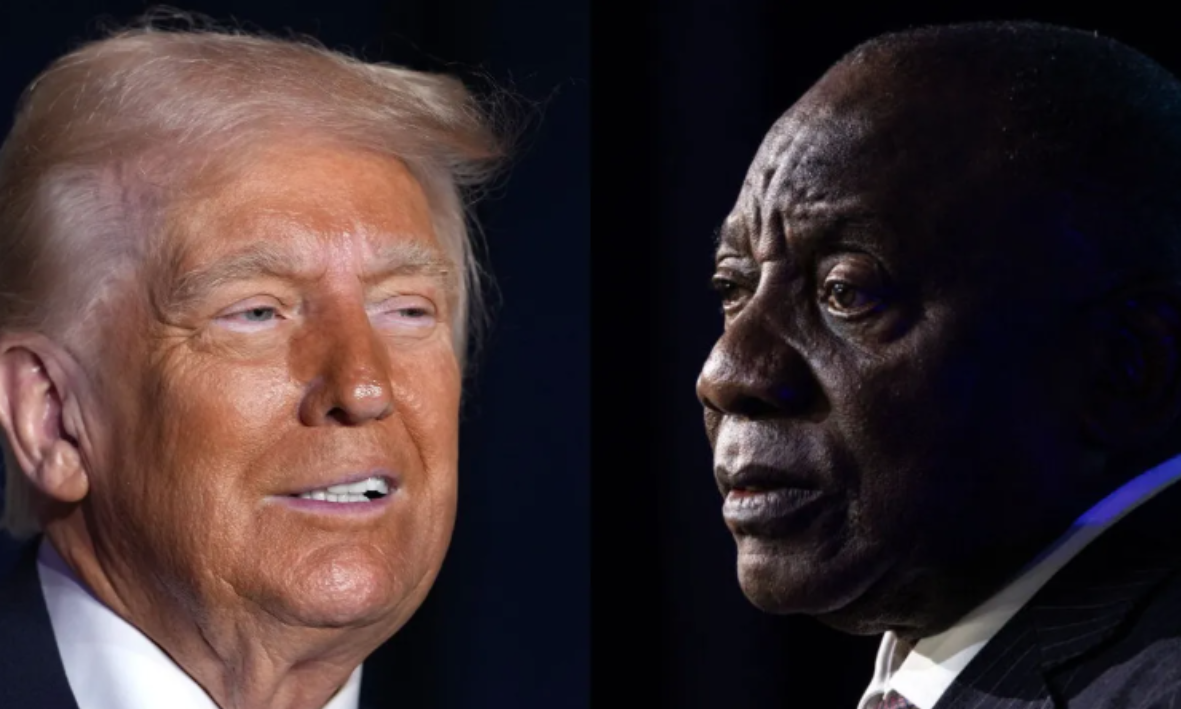
Statement by Deputy Minister Bantu Holomisa, MP President of the United Democratic Movement
As President Cyril Ramaphosa prepares for an important diplomatic engagement with the leadership of the United States, we take this opportunity to reflect on the recent tensions that have emerged between our two nations. These tensions have largely been attributed to unsubstantiated allegations of genocide and land being taken without compensation, among others, against certain communities within South Africa.
I remember it as though it was just yesterday when I accompanied President Mandela and President Thabo Mbeki to the United States in October 1993, where President Mandela made a powerful appeal to the international community during his address to the United Nations General Assembly, calling for the lifting of sanctions against South Africa. That call was heeded by the global community, opening the door for South Africa’s reintegration into the global economy.
Today, countries like China and the United States stand as South Africa’s largest trading partners. This economic relationship was significantly facilitated by the work of the Binational Commission, which enabled many companies and institutions to strengthen trade and cooperation between the two nations.
To ensure a credible and forward-looking path, we call for the resumption of a Binational Commission on the same scale and structure as the historic Al Gore/Thabo Mbeki Binational Commission.
This mechanism played a significant role in enhancing mutual trust, policy alignment and coordinated development efforts. A renewed Binational Commission can serve as a meaningful platform to address the current misunderstandings and to create space for practical cooperation.
It is in the interest of both countries, and indeed the international community, that these concerns be approached in a constructive and solution-oriented manner. This meeting should not become an arena for blame or division. Rather, it should serve as a platform for shared understanding and cooperative action.
Such a commission should include dedicated sub-committees on the Economy, Security, Education and Environment, where both governments can regularly engage on key strategic priorities. This structure would also allow for in-depth discussions on areas of concern and opportunities for collaboration, ensuring that all sectors of society benefit from the outcomes.
Importantly, the work of this commission should not occur in isolation. Both Parliaments must be kept informed of its progress, ensuring transparency, accountability and alignment with national interests. Parliamentary oversight will also help institutionalise the work of the commission beyond political cycles.
In addition to this, the departments responsible for trade and economic development, namely the South African Department of Trade, Industry and Competition and the United States Department of Commerce, should work closely to identify high-potential sectors and unlock investment opportunities in areas such as energy, agriculture, technology and manufacturing.
We must remain conscious that unresolved tensions and negative narratives, if left unaddressed, can erode investor confidence and economic stability. It is therefore essential that diplomacy, cooperation and mutual respect guide our engagements.
The weather predictions are promising, setting the stage for what is expected to be a remarkable day on the course. We trust that these two esteemed golfers, each distinguished in their own right and united by a deep love for the sport, will tee off with great enthusiasm and sportsmanship. As they take their first swings, the world watches with keen anticipation, hoping not only for a day of excellent golf, but also for a celebration of talent, passion, and the enduring spirit of the game as well as mutual national interests.
Once again, this reminds me of the day when President Mandela, President Thabo Mbeki, Mr Mahlangu of KwaNdebele and I travelled to the United Nations Security Council to make a compelling case for the endorsement of the Organisation of African Unity (OAU), now the African Union, to send monitors to observe and help manage the escalating violence in South Africa. In his characteristic foresight and diplomacy, President Mandela engaged then-President George HW Bush even before the meeting to secure the support of the United States. That request was accepted, and as a result, the lives of many black South Africans were saved through timely intervention.
These moments in history remind us of the enduring importance of leadership, partnership, and unity of purpose. This visit carries with it that same spirit of global engagement, shared values, and a collective hope for a more just and peaceful future.