
Admin

26 Feb, 2026
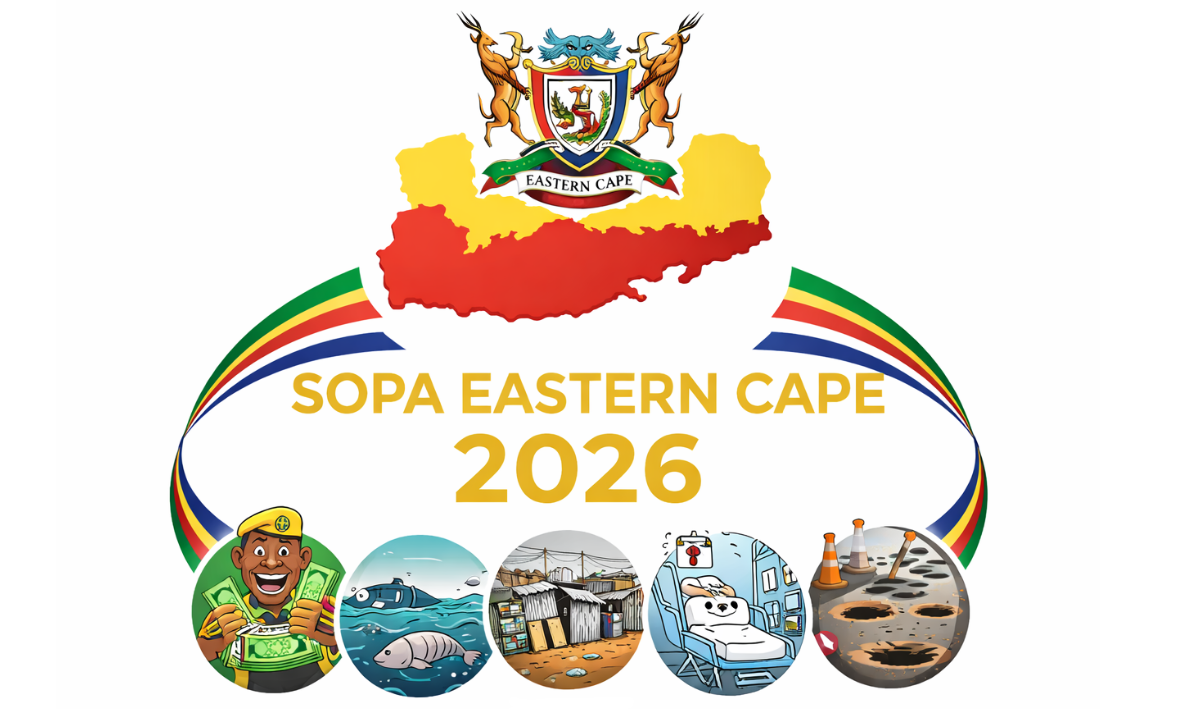
Eastern Cape SOPA2026: Mabuyane’s leadership on trial after year 7
Statement by Bulelani Bobotyane, Provincial Secretary of the UDM in the Eastern Cape The United Democratic Movement (UDM) in the Eastern Cape notes that on 27 February 2026, Premier Oscar Mabuyane will address the province in his seventh year at the helm. Across towns and villages, one hears a recurring sentiment: there was a period in this region’s history when executive authority translated into visible administrative discipline, when decisions were implemented with consistency and consequence management was not optional. That period existed within a different constitutional dispensation and must be understood in its proper historical context. It was not beyond criticism. In this province, what endures in public memory is not nostalgia for past structures, but the perception that governance was firm, coherent and enforceable. After nearly seven years in office, the current African National Congress (ANC) administration cannot dismiss that comparison. It must answer it. Seven years into the Mabuyane administration, the issue is no longer vision. The province has had vision documents, master plans, stimulus funds, growth frontiers and 2030 targets. The issue is executive control and institutional discipline. When the same sectors are re-announced year after year, when projected multipliers are pushed further into the future, and when governance reform deadlines quietly fade from the public record, the pattern reveals not a shortage of ideas, but a shortage of consolidation. After 32 years of uninterrupted ANC governance in this province, fragmentation cannot be blamed on transition or inheritance. It reflects a governing culture that accumulates initiatives faster than it stabilises systems. The Eastern Cape does not lack policy. It lacks conversion. It does not lack plans. It lacks enforcement. Seven years is sufficient time to entrench systems, discipline departments and impose consequence management. When plans multiply but structural indicators remain stubborn, it signals not complexity, but weak executive control. The ANC governs this province, with Premier Mabuyane at its helm. They cannot continue to govern through perpetual projection and recycled ambition. If the plans are sound on paper yet outcomes remain inconsistent, the question is no longer about design. It is about leadership. As the province approaches the 2026 Local Government Elections, SOPA 2026 must do more than defend a record. It must demonstrate that governance is stabilising where citizens experience the state most directly: in municipalities. Voters will not judge performance by presentation in the Chamber, but by functioning taps, maintained roads, disciplined finances and reliable services. In this election cycle, credibility will be earned on the ground. Accountability and delivery The UDM in the Eastern Cape will demand that SOPA2026 move beyond ambition and provide clear evidence of delivery. The people of the Eastern Cape have heard commitments on roads, water infrastructure, housing, health facilities and economic expansion before. This year’s address must account for what has been completed, what remains delayed and what has stalled. The public deserves measurable progress, not repetition. Municipal governance Municipal instability must be confronted honestly. If municipalities required intervention in the past year, the province must report whether those interventions worked. Financial stability, revenue collection, professional administration and consequence management determine whether communities receive services and whether local government can be trusted. Water security Access targets extending toward 2030 cannot substitute for consistent supply today. Communities experience governance through functioning taps, maintained infrastructure and effective wastewater systems. If these remain unreliable, explanations are no longer sufficient. Infrastructure maintenance Development cannot be credible if roads, stormwater systems and municipal assets deteriorate while new projects are announced. Maintenance is not secondary to growth. It is foundational to it. Economic reform and employment Sustainable job creation depends on stable municipalities, reliable infrastructure, clean procurement systems and a predictable regulatory environment. Temporary public employment programmes may offer short-term relief, but they do not replace structural reform. The province must demonstrate that institutional foundations for long-term economic expansion are being strengthened year by year. The National Development Plan’s 2030 horizon does not excuse weak implementation in the present. Governance and accountability Ethics frameworks and oversight mechanisms must translate into visible consequences. Clean governance, professional administration and disciplined public finance management are essential if public trust is to be restored. In 2020, this administration undertook to implement lifestyle audit guidelines by 2022. That deadline has passed. The province has yet to see consistent, transparent reporting on the outcomes of those audits or the consequences that followed. Anti-corruption cannot be rhetorical. It must be enforceable. With the 2026 Local Government Elections fast approaching, this address will be measured not by tone, but by evidence. The people of this province are demanding functional municipalities, reliable services and accountable leadership. In 2026, the UDM in the Eastern Cape will present a credible alternative grounded in administrative discipline, clean governance and service delivery that is felt in every municipality we contest.

Admin
11 Feb, 2026
Johannesburg water crisis exposes a city run without foresight
Statement by Yongama Zigebe, Councillor in the City of Johannesburg for the United Democratic Movement and Chairperson of the S79 Committee on Gender, Youth and People with Disabilities The United Democratic Movement (UDM) in the City Johannesburg notes with grave concern the protest by residents in Parktown West following more than twenty days without water. When a historically well-resourced suburb such as Parktown is forced into open protest over basic services, it signals not an isolated disruption but a systemic failure across the City of Johannesburg. If residents in Parktown are now pushed to the brink, one must pause and ask how communities in Alexandra, Soweto, Orange Farm, Eldorado Park, Riverlea and other working-class areas are coping. Many of these communities have endured intermittent supply, pressure reductions and prolonged outages for years. They do not have the financial cushion to hire private tankers, install storage systems, or absorb inflated municipal bills. For poorer residents, a water outage is not an inconvenience. It is a daily assault on dignity, health and survival. The crisis unfolding in Parktown is therefore not about geography. It is about governance. Johannesburg’s water challenges are rooted in years of inadequate planning, delayed infrastructure maintenance and reactive management instead of strategic investment. Our reservoirs and reticulation networks are aging; this is not breaking news. Demand has grown with urban expansion. Preventative maintenance has been deferred. Communication with residents remains inconsistent and often opaque. Instead of long-term infrastructure renewal and capacity planning, the city has relied on pressure management and emergency measures that treat symptoms while the underlying system continues to weaken. Water is not a luxury service. It is a constitutional right and the foundation of public health, economic activity and human dignity. When supply collapses for weeks in one part of the city, the ripple effects are felt across households, schools, clinics and businesses. When communication fails, trust collapses alongside it. The UDM in the City Johannesburg calls on the City council and management to present a transparent, citywide water recovery plan with clear timelines, infrastructure investment commitments and measurable targets. Residents deserve honest explanations, not shifting blame between entities. The City must strengthen coordination with bulk suppliers, accelerate infrastructure upgrades, address leak management aggressively and ensure equitable distribution across all regions. The current situation reflects a failure of foresight. A city of Johannesburg’s size and economic significance cannot operate on crisis mode governance. Proper planning, disciplined maintenance schedules and capital investment are not optional. They are the minimum requirements of responsible administration. Parktown’s protest should serve as a wakeup call. If communities across the socioeconomic spectrum are now united by water insecurity, then the problem is not localised. It is structural. Johannesburg must choose between continued decline through neglect or renewal through decisive leadership. The UDM in the City Johannesburg stands firmly for the latter.
Admin
19 Jan, 2026
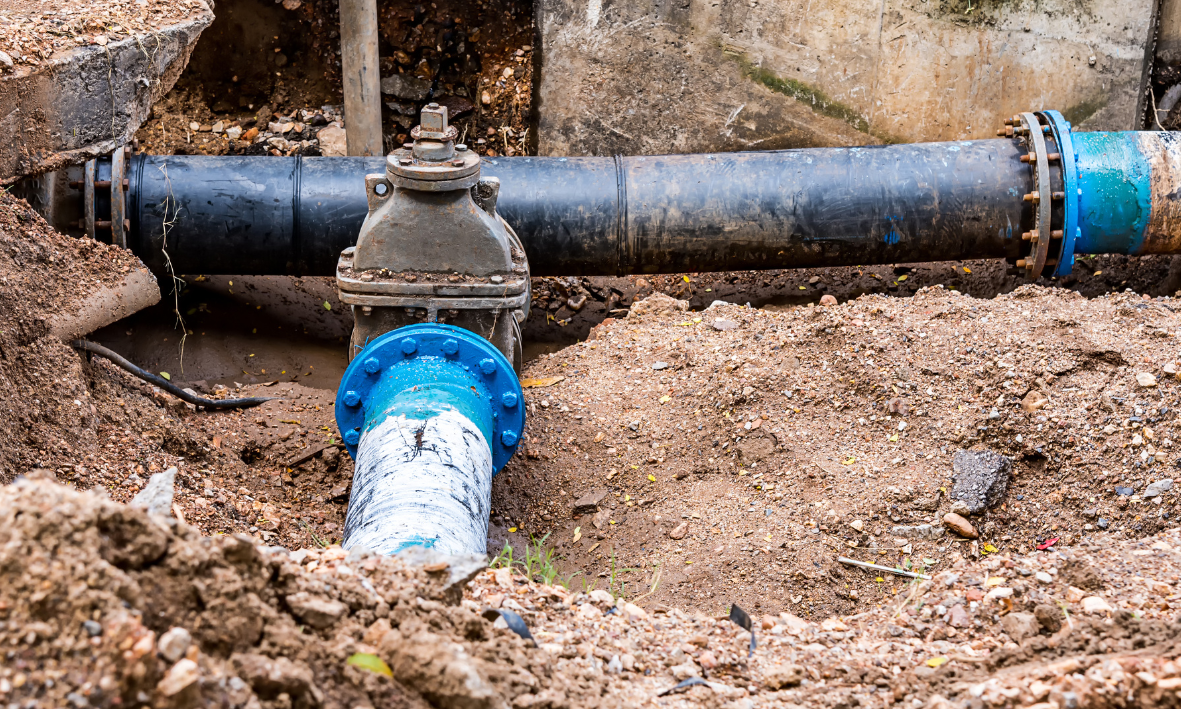
32 years of neglect: South Africa’s water crisis is manufactured
Statement by Zandile Phiri, Acting Secretary General of the United Democratic Movement South Africa is staring down a water emergency that has been decades in the making. The warnings now coming from within government itself confirm what communities have lived with for years: collapsing infrastructure, chronic leaks, failing storage systems, and a state that no longer plans for the future. The Director General of the Department of Water and Sanitation, Sean Phillips, has made it clear that the country’s water problems are deep, structural, and cannot be fixed quickly. This is not a sudden crisis. It is the predictable outcome of 32 years of neglect, mismanagement, and failure to invest in basic infrastructure. Gauteng residents are now being told to cut water consumption by as much as 40 percent, not because South Africa has run out of water, but because municipalities lack storage, lose vast volumes through leaking pipes, and fail to collect revenue. This is an indictment of governance. Households are being asked to sacrifice while billions of litres are lost every year through decaying infrastructure that was never maintained. The situation in Johannesburg is especially alarming. Despite having a technically sound water and sanitation turnaround plan, the City is unable to implement it because of severe financial distress. Contractors are not paid. Projects are abandoned. Funds generated by water services are diverted to cover other municipal pressures, despite National Treasury requirements to ring fence this revenue. This is not a lack of ideas. It is a collapse of discipline, accountability, and political will. The reality is that municipalities across the country are trapped in a vicious downward spiral. High levels of non-revenue water mean less income. Less income means poor maintenance. Poor maintenance leads to further infrastructure failure and even greater water losses. Communities pay the price through outages, rationing, and unsafe supply. Long term relief will only come when major supply projects are completed, but even here the story is one of delay and corruption. Strategic water projects that should have been completed years ago are now only expected late in the decade. South Africans are being asked to endure restrictions today because planning failed yesterday. What is emerging in Gauteng is already visible in other metros, including eThekwini, where leaks, limited storage, flooding damage, and excessive consumption mirror the same warning signs. Regions such as Nelson Mandela Bay and Knysna are facing drought conditions that place millions at risk. This is a national crisis, not an isolated municipal problem. Water has now replaced electricity as the main constraint on economic activity and daily life. Without reliable water, clinics cannot function, schools cannot operate, businesses cannot grow, and human dignity is stripped away. South Africa does not suffer from a lack of expertise. It suffers from a lack of consequence. The UDM has consistently warned that infrastructure cannot be wished into existence through speeches and plans that are never implemented. Maintenance, storage expansion, leak reduction, and disciplined financial management must happen together. Anything less is failure. The time for excuses has passed. South Africa needs urgent, coordinated action to protect water as a strategic national resource. The cost of continued failure will be paid not in reports, but in lost livelihoods, deepening inequality, and growing social instability.
Admin
08 Jan, 2026
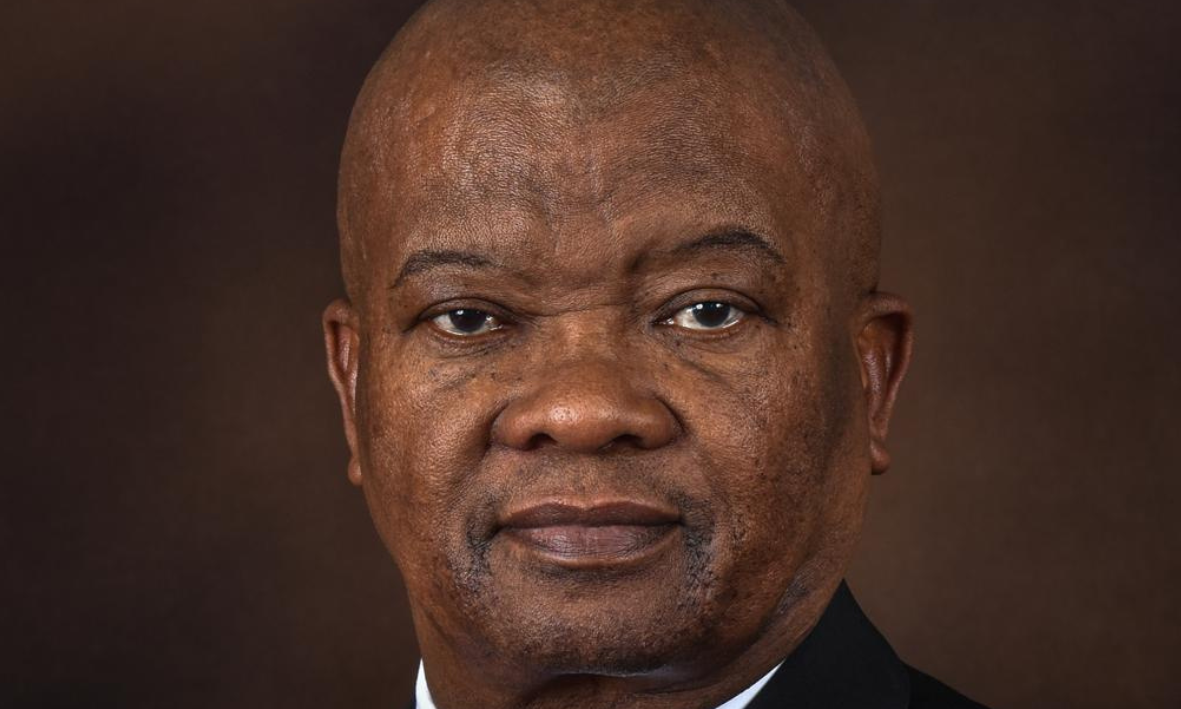
Speech by the President of the United Democratic Movement Maj. Gen. (Ret.) Bantu Holomisa, MP KwaTshezi Great Place
Traditional Leaders present here today, Community elders, Women and youth of KwaTshezi, Leaders of civil society, Councillors, Fellow South Africans, I am honoured to be here at KwaTshezi Great Place, near Coffee Bay, to engage directly with the people of this area. Let me begin by expressing our sincere gratitude to the people of this great place. You are among those who made a conscious decision that South Africa should not become a one party state a chapter that belongs firmly in the past. That decision strengthened our democracy and reaffirmed the principle that leadership must always be accountable to the people. For that we thank you. History has shown us that when power is concentrated for too long accountability weakens. Even law enforcement agencies have not been spared. When one reflects on the issues raised through the Madlanga Commission and the corruption exposed by General Mkhwanazi it becomes clear that under a one-party state some individuals, including General Mkhwanazi, would not still be occupying positions of authority today by virtue of being whistleblowers. This reality reinforces the urgency of ethical leadership. Towards the end of 2025 at the Cabinet Lekgotla one of the key resolutions tabled dealt precisely with this crisis of accountability. President Cyril Ramaphosa openly expressed frustration and anger at the slow pace and lack of prosecutions in corruption related cases. He went as far as to state that ministers or directors general who fail to act or who serve as gatekeepers for criminals should pack and go. The doors are open for them to leave. That is what he said. Another key resolution was the implementation of the Zondo Commission findings. I therefore anticipate that 2026 will be one of the years in which the Government of National Unity places strong emphasis on strengthening the criminal justice system. This will help restore confidence in the country’s leadership and enable decisive action on the triple challenges facing the nation. There can be no rebuilding of the country without consequences for wrongdoing. During the same Lekgotla, high levels of crime, unemployment, and the challenge of illegal immigration were also discussed at length. The reports of the Auditor General over the past thirty years tell a painful story. Announcements without implementing, findings without consequence management, and a culture of impunity across the board. Unfortunately this pattern has also engulfed the Department of Defence. People are aware of the pending criminal cases against the former Minister of Defence. This is part of what we inherited as a Government of National Unity, and we are confronting it directly. Within the Department of Defence, the Hawks, the Auditor General of South Africa, the Special Investigating Unit, and the Military Police are now working together to restore integrity and clean the image of the department. I am proud to say that I have been part of coordinating this operation. The Auditor General has highlighted that there is improvement in addressing their queries. Acting on a whistle blower report, I took steps to halt an irregular tender at Armscor in 2025. The Armscor Board subsequently cancelled that deal. We are currently following up on calls by Members of Parliament to investigate a contract in which Armscor allegedly awarded a tender for troop armoured plate carriers. This work is not easy. We are dealing with a culture that developed over nearly thirty years where the misuse of state resources became normalised. The era of state capture embarrassed South Africa and severely damaged its institutions. By the end of the Government of National Unity term when, we hand over to the next government after 2029 election, we must be able to present a report that reflects a country in a far better state one that has decisively addressed the failures of the past three decades. We saw early warning signs as far back as the 1996 Sarafina Two scandal and later, the 1998 Arms Deal. Auditor General reports on the South African National Defence Force point to lack of accountability weak consequence management and alleged corruption dating back as early as 2006. We do not have the luxury of time. We must deal decisively with corruption namasela without fear or favour. The stolen money from departments, state owned entities, and parastatals has directly contributed to the collapse of infrastructure and the failure to improve services. It is the reason communities still lack proper roads, schools, clinics, fibre connectivity, police vehicles, and military equipment. Corruption is not an abstract crime. It is the reason people continue to suffer. We therefore congratulate the recently appointed National Director of Public Prosecutions, Advocate Mothibi, and wish him well in his role. As a former head of the Special Investigating Unit, he has first hand knowledge of how corruption has damaged South Africa. We urge him to prioritise the backlog of cases within the Defence Force that have placed significant pressure on the National Prosecuting Authority. In the same vein, I wish to commend the Special Investigating Unit for recovering over 1.6 billion lost within the Department of Defence, declared when they were briefing the portfolio committee on defence in a closed session. We look forward to working with the new head of the SIU and stand ready to cooperate fully with his team to restore integrity and accountability. That is why the unfulfilled promises to this area are so painful. The people of KwaTshezi were promised water from the Mthatha Dam to Coffee Bay. Trenches were dug and later filled in again. No water came. Neither have there been action taken against the fingered officials of the OR Tambo District who allegedly squandered the funds for this project. You were promised a proper road from the Viedgesville off ramp on the N2 to Coffee Bay. Former Minister Mbalula and SANRAL assured the community that a new road would be built, yet nothing materialised. Another route that has deteriorated severely is the turnoff from the Coffee Bay route that links it to Elliotdale. Its condition is now worse than it was in the past, to the point where sections are no longer usable. Today, these roads remain in a state of severe disrepair. These roads lead to tourism centres where international resorts such as Coffee Bay and Hole in the Wall resorts are housed. As residents of King Sabata Dalindyebo particularly here in Mqanduli we must now act collectively. There is a need for a formal approach led by traditional leaders, civil society, councillors, and community representatives to engage the national government directly. This approach must not be a talk shop. It must demand clear commitments on roads infrastructure and development timelines. It must also summon network providers Vodacom, MTN, and Telkom to account for when rural connectivity especially in Mqanduli will be improved. As we approach local government elections, we must also confront governance failures honestly. In line with what you have declared at the national level to get rid of one-party dominance, that must be reflected in the upcoming elections. Your vote can give way to concept of coalition governance to cascade to municipalities such as King Sabata Dalindyebo and OR Tambo District where long standing problems persist. Where systems fail communities, alternatives must be explored in the interests of the people. Finally, the process that began in 2024 of sharing power among political parties has made it clear that after the 2029 elections, it will no longer be a foregone conclusion which party provides the President of South Africa. We must therefore remain vigilant and begin serious discussions about the kind of leadership required to take South Africa forward beyond this term. The communities here must satisfy themselves that we will have leaders who would have passed the test of public scrutiny. The people of KwaTshezi are not asking for miracles. They are asking for honesty accountability and action. That is a fair demand and one we must meet. I thank you.

Admin
06 Oct, 2025
Urgent Inquiry into the expenditure and delays of the Upper and Lower uMkhomazi Water Projects
Mr Songezo Zibi, MP Chairperson of the Standing Committee on Public Accounts PO Box 15 Cape Town 8000 Dear Chairperson and Members of SCOPA Urgent Inquiry into the expenditure and delays of the Upper and Lower uMkhomazi Water Projects 1. Introduction 1.1. The United Democratic Movement (UDM) writes to formally request that the Standing Committee on Public Accounts (SCOPA) institute a full inquiry into the expenditure, procurement processes and governance failures associated with the Upper and Lower uMkhomazi Water Projects. 1.2. In my understanding, the uMkhomazi development has always been envisaged as two complementary projects with distinct roles. The Upper uMkhomazi Water Project centres on the construction of the Smithfield Dam and a transfer tunnel into the uMngeni system, designed to secure bulk raw water for Durban, Pietermaritzburg and inland communities. The total costing reportedly R28 billion. By contrast, the Lower uMkhomazi Water Project is focused on potable water delivery, with a balancing dam, treatment works, and bulk pipelines intended to serve an estimated 50,000 households in southern eThekwini and the Ugu District, including Amanzimtoti, Umkomaas, Scottburgh and Hibberdene. 1.3. The Upper project is therefore about storage and transfer to the metropolitan supply, while the Lower project is about immediate, treated water supply to households along the coast. The latter project is valued at over R20 billion. The UDM did note the recent statement by Water and Sanitation Minister Pemmy Majodina that the Lower uMkhomazi scheme has reached over 60% completion, with key components such as the Ngwadini Dam, bulk pipelines and treatment works underway. 1.4. These projects, with a combined estimated value of R48 billion, are meant to secure water supply for both inland and coastal communities in KwaZulu-Natal . Instead, they have become emblematic of delays, disputes and dysfunction, leaving thousands of households without access to their constitutional right to water. 2. Problems and delays 2.1. The Upper uMkhomazi scheme, was originally projected to be completed by 2018. It has now been pushed back to 2032, a 14-year delay . Communities such as Tafelkop , west of Durban, have already lived with dry taps for more than 15 years and now face the prospect of another generation without water. 2.2. In 2022, the then Minister of Water and Sanitation noted that the Department is making efforts to deal with abandoned projects by resuscitating them and accelerating those that have been slow to implement. He admitted that in the past the Department struggled with weak project management, premature announcements of projects without proper planning or budgets, and failures to complete essential processes such as procurement. He added that steps are currently being taken to resolve these shortcomings. 2.3. The Lower uMkhomazi scheme, has a R7 billion tender was interdicted in court due to disputes about the adjudication process . This is not a minor administrative hiccup but a sign of systemic weaknesses in procurement governance. 3. Governance and procurement failures 3.1. The UDM is gravely concerned that: 3.1.1. Funding shortfalls have been allowed to derail timelines repeatedly, even though public money continues to flow into the projects. 3.1.2. Procurement disputes have resulted in costly litigation, effectively freezing delivery while contractors and departments fight in court. 3.1.3. Former Minister Senzo Mchunu made explicit commitments to resuscitate and fast-track these projects, commitments that have not been honoured. 3.1.4. Current leadership — Minister Pemmy Majodina and Deputy President Paul Mashatile — have yet to provide the public with clear milestones or an accountability framework for delivery on both projects. 3.2. Recent media reports highlight troubling governance lapses at uMngeni-uThukela Water (UUW), the implementing institution for the uMkhomazi schemes. A forensic probe by Strauss Daly found that Mr Khanyisani Stanley Shandu, Chairperson of UUW’s subsidiary, uMngeni Water Services (UWS), failed to fully declare his and his spouse’s interests in several companies, including one doing business with UUW. Following these findings, the UUW board removed Shandu from his roles as chairperson of UWS and member of its Capital Projects and Fixed Assets Committee. However, he remains a member of the main UUW board. Reports also note that Minister of Water and Sanitation Pemmy Majodina considered his removal in July 2024 but did not proceed. These red flags go beyond individual failings. They highlight systemic weaknesses in conflict-of-interest controls, related-party disclosures, procurement integrity, and executive oversight in the water sector. The fact that a senior figure implicated in such governance failures remains on the board of a critical water utility undermines public confidence in the stewardship of multi-billion-rand projects such as the Upper and Lower uMkhomazi schemes. For this reason, SCOPA’s potential inquiry cannot be limited to tracing financial flows alone. It must also scrutinise the fitness of governance structures and leadership at implementing institutions and assess whether ministerial oversight has been exercised effectively to protect the public interest. 4. Financial oversight concerns 4.1. The scale of investment is staggering: R48 billion committed, yet the tangible benefit for communities remains minimal. Parliament has no transparent breakdown of: 4.1.1. How much of this money has already been spent. 4.1.2. Which contracts have been signed and honoured. 4.1.3. The cost implications of court interdicts and legal wrangles. 4.1.4. The extent of waste, irregular expenditure, or overpayments over the years. 4.2. Without this clarity, the risk is that billions will continue to be consumed without producing a single drop of water for households. 5. Variations in project costs 5.1. Over the past decade, the projected cost of the Upper uMkhomazi project has escalated dramatically. As far back as 2015 and 2016, government admitted “affordability concerns”, with early estimates for project climbing into the range of R19 billion . In 2023 it was estimated to cost R23 billion by 2028 . In the most recent reporting from 2024 and 2025, figures as high as R26 billion have been cited. In her 100-days performance report, Minister Pemmy Majodina confirmed that the Department is pursuing the R28 billion Upper uMkhomazi project, including a new dam and transfer tunnel intended to supply eThekwini and surrounding municipalities. 6. Human impact 6.1. At the heart of this crisis are people. Communities west of Durban such as Tafelkop, and along the coast from Amanzimtoti to Hibberdene, remain without safe, reliable water despite living next to multi-billion-rand projects. 6.2. Families are forced to fetch water from rivers and streams. Children go to school without the guarantee of clean water at home. Clinics and local businesses operate under extreme constraints. The constitutional promise of access to sufficient water is being violated. 6.3. This is not simply a technical or financial issue. It is a matter of human dignity and social justice. 7. Request to SCOPA 7.1. The UDM therefore requests that SCOPA: 7.1.1. Launch a full inquiry into the expenditure on the Upper and Lower uMkhomazi Water Projects, with disclosure of every contract, payment, and variation order to date. 7.1.2. Summon former and current Ministers of Water and Sanitation, including Mr Senzo Mchunu, as well as the incumbent Minister Pemmy Majodina, to account for promises made, delays, and failures of oversight. 7.1.3. Call Deputy President Paul Mashatile to outline the role of the Infrastructure Fund and coordination mechanisms in preventing further waste. 7.1.4. Require National Treasury to provide a detailed account of funding allocations, affordability assessments and interventions since the start of the projects. 7.1.5. Examine the impact of court interdicts on the Lower scheme and recommend measures for expediting the resolution of procurement disputes, including interim service delivery arrangements so that communities are not left hostage to litigation. 7.1.6. Assess the human cost of these delays by inviting submissions from affected communities, civil society, and municipalities in eThekwini and Ugu. 7.1.7. Report quarterly to Parliament and the public on the progress of the inquiry and recommendations for corrective action. 7.1.8. Assess the fitness of leadership at uMngeni-uThukela Water and its subsidiaries, including the conduct of board members and the adequacy of ministerial oversight, to ensure that governance failures do not derail multi-billion-rand water projects 8. Conclusion 8.1. The Upper and Lower uMkhomazi schemes were meant to represent hope for communities long denied water. Instead, they have become symbols of how governance failures, procurement disputes and weak financial oversight can hollow out even the most important infrastructure projects. 8.2. SCOPA has a constitutional duty to ensure that every rand spent produces results. Water is life, and public money is sacred. The UDM urges SCOPA to take up this inquiry without delay, as a test of Parliament’s commitment to accountability and the protection of the rights of ordinary South Africans. Yours sincerely Ms Thandi Nontenja, MP United Democratic Movement Member of SCOPA
Admin
05 Sep, 2025
SCA ruling against Nelson Mandela Bay Metro over toddler’s death
Statement by Zandile Phiri, Acting Secretary General of the United Democratic Movement The United Democratic Movement (UDM) notes with sadness the tragic case in which the Supreme Court of Appeal (SCA) has held the Nelson Mandela Bay Municipality liable for the death of a 17-month-old toddler who drowned in an open stormwater drain in Uitenhage in 2014. This heartbreaking incident is a stark reminder of the human cost of municipal neglect. For years, the UDM has consistently raised alarm over the collapse of infrastructure maintenance across municipalities in South Africa. The failure to maintain, secure, and inspect basic public infrastructure such as stormwater drains, sewerage systems, and roads has created daily hazards for our communities. In this case, evidence before the courts confirmed that residents had repeatedly reported the danger posed by the uncovered drain. The municipality’s failure to act, despite being warned, directly resulted in the needless death of an innocent child. No parent should have to bury their child because of government negligence. The UDM therefore calls on: 1. All municipalities to urgently audit their infrastructure, particularly stormwater systems, manholes, and open drains, and to secure or repair them without delay. 2. The Department of Cooperative Governance and Traditional Affairs (CoGTA) to strengthen oversight over municipalities and ensure consequences for negligent officials who ignore community warnings. 3. The South African Local Government Association (SALGA) to guide municipalities in implementing proactive maintenance systems to prevent further tragedies. The UDM further insists that municipalities must stop treating infrastructure maintenance as a secondary matter. It is a matter of life and death, and the SCA judgment has reaffirmed that municipalities have a legal and moral duty to protect the public. Our deepest condolences go to the family of the child who lost her life under such tragic circumstances. The UDM will continue to hold municipalities accountable until such preventable tragedies become a thing of the past.
Admin
26 Apr, 2017
ANC must stop looting state resources
Statement issued by UDM Secretary General, Mr Bongani Msomi Eastern Cape is one of the worst struggling provinces with severe challenges such as poor infrastructure. It is with great sadness that we observe those who are in power abusing resources meant for uplifting the poor. The United Democratic Movement (UDM) is however happy to note that action has been taken against those who allegedly stole from the state purse. The recent court appearance of the former Amathole district municipality mayor Nomasikizi Konza, as well as Buffalo City Metro mayor Zukiswa Ncitha with their co-accused, bodes well. It gives us hope as a country that the Hawks have finally woken up to smell the coffee and are doing their job. We hope to see a maximum punishment being meted out to all found guilty. The leadership of the ruling party seems to be in denial while the state is being looted. It is high time that they own up to the widespread corruption within the ranks of their political deployees and officials.