Eastern Cape SOPA2026: Mabuyane’s leadership on trial after year 7
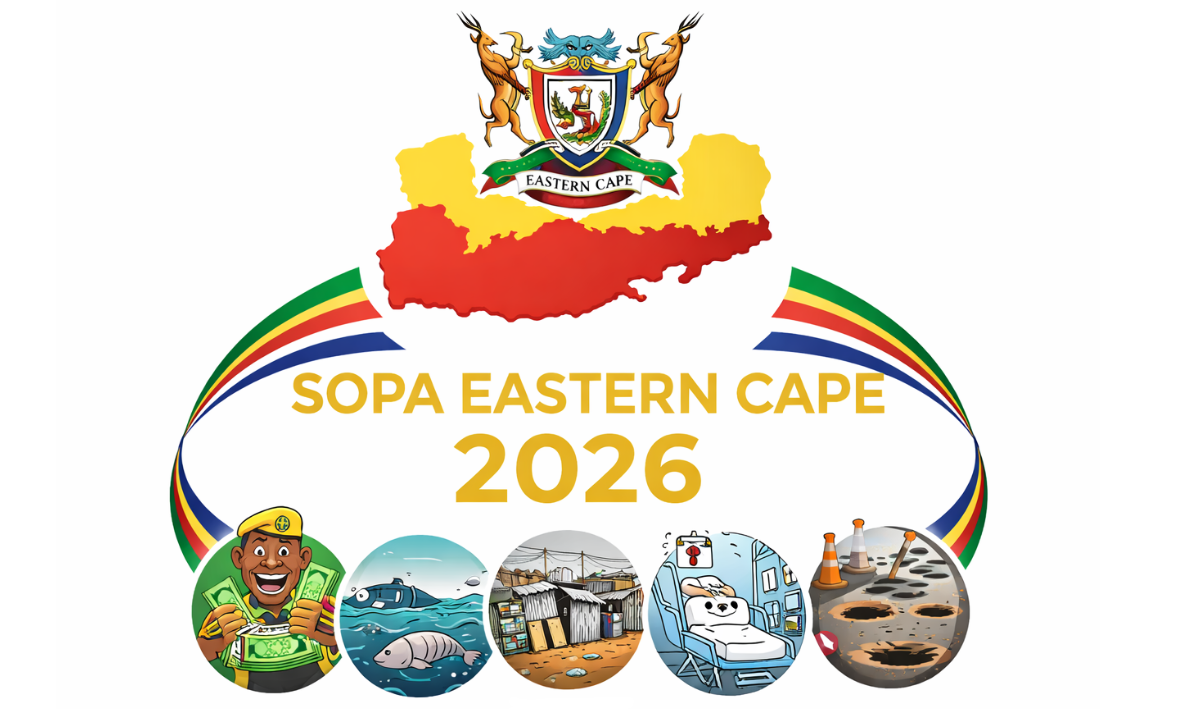
Statement by Bulelani Bobotyane, Provincial Secretary of the UDM in the Eastern Cape
The United Democratic Movement (UDM) in the Eastern Cape notes that on 27 February 2026, Premier Oscar Mabuyane will address the province in his seventh year at the helm. Across towns and villages, one hears a recurring sentiment: there was a period in this region’s history when executive authority translated into visible administrative discipline, when decisions were implemented with consistency and consequence management was not optional. That period existed within a different constitutional dispensation and must be understood in its proper historical context. It was not beyond criticism. In this province, what endures in public memory is not nostalgia for past structures, but the perception that governance was firm, coherent and enforceable. After nearly seven years in office, the current African National Congress (ANC) administration cannot dismiss that comparison. It must answer it.
Seven years into the Mabuyane administration, the issue is no longer vision. The province has had vision documents, master plans, stimulus funds, growth frontiers and 2030 targets. The issue is executive control and institutional discipline. When the same sectors are re-announced year after year, when projected multipliers are pushed further into the future, and when governance reform deadlines quietly fade from the public record, the pattern reveals not a shortage of ideas, but a shortage of consolidation.
After 32 years of uninterrupted ANC governance in this province, fragmentation cannot be blamed on transition or inheritance. It reflects a governing culture that accumulates initiatives faster than it stabilises systems. The Eastern Cape does not lack policy. It lacks conversion. It does not lack plans. It lacks enforcement.
Seven years is sufficient time to entrench systems, discipline departments and impose consequence management. When plans multiply but structural indicators remain stubborn, it signals not complexity, but weak executive control.
The ANC governs this province, with Premier Mabuyane at its helm. They cannot continue to govern through perpetual projection and recycled ambition. If the plans are sound on paper yet outcomes remain inconsistent, the question is no longer about design. It is about leadership.
As the province approaches the 2026 Local Government Elections, SOPA 2026 must do more than defend a record. It must demonstrate that governance is stabilising where citizens experience the state most directly: in municipalities. Voters will not judge performance by presentation in the Chamber, but by functioning taps, maintained roads, disciplined finances and reliable services. In this election cycle, credibility will be earned on the ground.
Accountability and delivery
The UDM in the Eastern Cape will demand that SOPA2026 move beyond ambition and provide clear evidence of delivery. The people of the Eastern Cape have heard commitments on roads, water infrastructure, housing, health facilities and economic expansion before. This year’s address must account for what has been completed, what remains delayed and what has stalled. The public deserves measurable progress, not repetition.
Municipal governance
Municipal instability must be confronted honestly. If municipalities required intervention in the past year, the province must report whether those interventions worked. Financial stability, revenue collection, professional administration and consequence management determine whether communities receive services and whether local government can be trusted.
Water security
Access targets extending toward 2030 cannot substitute for consistent supply today. Communities experience governance through functioning taps, maintained infrastructure and effective wastewater systems. If these remain unreliable, explanations are no longer sufficient.
Infrastructure maintenance
Development cannot be credible if roads, stormwater systems and municipal assets deteriorate while new projects are announced. Maintenance is not secondary to growth. It is foundational to it.
Economic reform and employment
Sustainable job creation depends on stable municipalities, reliable infrastructure, clean procurement systems and a predictable regulatory environment. Temporary public employment programmes may offer short-term relief, but they do not replace structural reform. The province must demonstrate that institutional foundations for long-term economic expansion are being strengthened year by year. The National Development Plan’s 2030 horizon does not excuse weak implementation in the present.
Governance and accountability
Ethics frameworks and oversight mechanisms must translate into visible consequences. Clean governance, professional administration and disciplined public finance management are essential if public trust is to be restored. In 2020, this administration undertook to implement lifestyle audit guidelines by 2022. That deadline has passed. The province has yet to see consistent, transparent reporting on the outcomes of those audits or the consequences that followed. Anti-corruption cannot be rhetorical. It must be enforceable.
With the 2026 Local Government Elections fast approaching, this address will be measured not by tone, but by evidence. The people of this province are demanding functional municipalities, reliable services and accountable leadership. In 2026, the UDM in the Eastern Cape will present a credible alternative grounded in administrative discipline, clean governance and service delivery that is felt in every municipality we contest.