
Admin

20 Jul, 2026
One communal tap does not end Majamisa Village’s water crisis, but it brings relief
Statement by Remington Mazibuko, Councillor in the Inkosi Mtubatuba Local Municipality and UDM KwaZulu-Natal Provincial Chairperson The United Democratic Movement (UDM) in Mtubatuba welcomes the restoration of access to water at a communal tap in Majamisa Village, within the Inkosi Mtubatuba Local Municipality, after residents had complained for a prolonged period without receiving assistance. When the community approached me, I joined residents in taking up the matter and remained involved until water access was restored. The immediate relief experienced by residents is understandable. However, access to one communal tap must not be presented as though the water crisis in Majamisa Village has been resolved. Residents should not have to carry containers, queue at a communal collection point or organise their daily lives around an uncertain water supply. A communal tap may provide temporary relief, but it is not a substitute for reliable running water and proper household infrastructure. The fact that residents are grateful simply to have water flowing from one tap shows how badly they have been failed. Access to water is a constitutional right, not a favour that communities must repeatedly plead for. The uMkhanyakude District Municipality is the water services authority responsible for water and sanitation services within the Inkosi Mtubatuba municipal area. The water crisis in uMkhanyakude predates the current municipal term. Following the local government elections in November 2021, the national Department of Water and Sanitation invoked section 63 of the Water Services Act in February 2022 and appointed a water board to support the management, operation and maintenance of the District Municipality’s water and sanitation infrastructure. The intervention has since included the refurbishment and upgrading of water schemes across the district. Government has indicated that 22 projects, valued at approximately R1.3 billion, are being implemented and that the programme is expected to continue until September 2027. Despite this substantial and prolonged intervention, residents of Majamisa Village still do not have reliable running water in their homes. This raises serious questions about what has been achieved, which projects have reached communities in Inkosi Mtubatuba and why residents remain dependent on temporary communal water points. Furthermore, the people of Majamisa Village must not become casualties of political rivalry or administrative buck passing between the African National Congress (ANC) led uMkhanyakude District Municipality and the Inkatha Freedom Party (IFP) led Inkosi Mtubatuba Local Municipality. The District Municipality bears responsibility for water services, while the Local Municipality is the government closest to residents and has a duty to ensure that the needs of communities are not ignored. Political differences cannot be allowed to delay cooperation or leave residents trapped between two municipalities blaming one another. Water has no party colour. The people of Majamisa Village are entitled to functioning infrastructure and dependable services regardless of which political party governs the District Municipality, the Local Municipality or any particular ward. The restoration of the communal tap must therefore be treated as an emergency measure while a permanent solution is implemented. The UDM in Mtubatuba calls on the uMkhanyakude District Municipality to explain how long Majamisa Village has been without reliable running water, why residents do not have adequate household connections and whether the current communal water point is intended only as a temporary intervention. The District Municipality must also disclose whether Majamisa Village forms part of any current water infrastructure project and provide the community with the relevant budget, implementation plan and timeframe for establishing a reliable and sustainable supply. The Inkosi Mtubatuba Local Municipality must ensure that the plight of Majamisa Village remains before council and that residents receive regular and truthful information about progress.

Admin
13 Feb, 2026
SONA2026: vision has been declared. Delivery will decide
Statement by Nqabayomzi Kwankwa, MP, UDM Deputy President and Leader in Parliament The 2026 State of the Nation Address was characteristically vision driven, aspirational and wide ranging. President Cyril Ramaphosa once again laid out an ambitious reform agenda across the economy, crime prevention, local government, infrastructure, agriculture, public service reform and social protection. The difficulty, however, has never been the quality of the vision. The difficulty has consistently been implementation. South Africa has heard many turning point speeches over the past decade. Each one has identified the correct problems. Each one has proposed the appropriate frameworks. Yet departments have repeatedly failed in execution, coordination and accountability. That is the central concern the United Democratic Movement (UDM) raises in response to this address. On the economy, President Ramaphosa points to improved macroeconomic indicators, investment commitments and infrastructure allocations. These are welcome developments. However, macro stability does not automatically translate into employment at scale. The UDM will be watching closely whether infrastructure projects move beyond announcement phases and whether small and medium enterprises actually experience reduced red tape and improved access to markets and finance. The same applies to energy reform and logistics recovery. Structural reform is necessary, but tariff stability, grid expansion and port efficiency must now be visible in declining costs and increased competitiveness. South Africans cannot live on reform processes. They must feel outcomes. The President’s firm stance against organised crime is appropriate. Organised syndicates, illicit trade, illegal mining and gang violence are undermining the state and terrorising communities. The deployment of the South African National Defence Force to support the police is a serious step and reflects the gravity of the situation. However, such deployments must be carefully managed and time bound. UDM President General Bantu Holomisa, MP has however cautioned that when the South African National Defence Force (SANDF) is deployed internally, public cooperation is essential. Communities must cooperate fully and ensure that firearms are not drawn against soldiers. Escalation will only result in tragedy. At the same time, deployment must not become a substitute for fixing weaknesses within South African Police Services (SAPS) and the criminal justice system. Long term safety depends on professional policing, intelligence coordination and successful prosecutions. On the water crisis and local government reform, the President Ramaphosa has correctly identified systemic failure, poor planning and patronage as root causes. The establishment of a National Water Crisis Committee and the threat of personal liability for municipal managers signal seriousness. But here too, the UDM’s concern is implementation. We have seen interventions before. The question is whether dysfunctional municipalities will actually be stabilised, whether revenue will be ring fenced for infrastructure maintenance and whether political interference in appointments will truly end. The response to foot and mouth disease and the commitment to vaccinate the national herd is necessary. Yet this outbreak again highlights a pattern of reactive governance rather than anticipatory planning. Biosecurity must become a permanent strategic priority, not an emergency response after damage has been done. Smaller and communal farmers must not be left exposed while policy is refined. On youth employment and skills reform, the structural overhaul of the training system is overdue. However, public employment programmes must evolve into real economic pathways. Too many young people cycle through short term opportunities without progression into permanent work. The continuation and redesign of the Social Relief of Distress grant is understandable in the current economic climate. But redesign must be credible, administratively stable and clearly linked to economic participation. Dependency without opportunity cannot be the long-term model. President Ramaphosa speaks of professionalising the public service and insulating appointments from political interference. The UDM strongly supports this. Yet the country will judge reform by whether unqualified individuals are removed from critical posts and whether disciplinary processes are finalised swiftly. Announcing professionalisation is not the same as enforcing it. In many respects, the 2026 State of the Nation Address identifies the right priorities. The risk lies in whether line departments possess the capacity, discipline and coordination to deliver at the speed required. Vision without execution deepens public frustration. The UDM therefore approaches this address with cautious scrutiny. We will support reforms that strengthen the state, protect communities and grow the economy. But we will equally insist on measurable timelines, transparent reporting and consequence management where departments fail. In many respects, the 2026 State of the Nation Address identifies the correct priorities. The risk lies in whether line departments possess the capacity, discipline and coordination to deliver at the speed required. Vision without execution deepens public frustration. The UDM therefore approaches this address with cautious scrutiny. We will support reforms that strengthen the state, protect communities and grow the economy. But we will equally insist on measurable timelines, transparent reporting and consequence management where departments fail. The true test of this vision will begin in the upcoming Budget Votes and departmental budget speeches. It is there that priorities must be matched with credible allocations, implementation frameworks and performance targets. It is there that we will see whether this is a speech of intention or a programme of action. South Africans are not asking for inspiration alone. They are asking for implementation. 2026 must not become another year of plans layered upon plans. It must become the year where delivery finally catches up with vision.

Admin
11 Feb, 2026
Johannesburg water crisis exposes a city run without foresight
Statement by Yongama Zigebe, Councillor in the City of Johannesburg for the United Democratic Movement and Chairperson of the S79 Committee on Gender, Youth and People with Disabilities The United Democratic Movement (UDM) in the City Johannesburg notes with grave concern the protest by residents in Parktown West following more than twenty days without water. When a historically well-resourced suburb such as Parktown is forced into open protest over basic services, it signals not an isolated disruption but a systemic failure across the City of Johannesburg. If residents in Parktown are now pushed to the brink, one must pause and ask how communities in Alexandra, Soweto, Orange Farm, Eldorado Park, Riverlea and other working-class areas are coping. Many of these communities have endured intermittent supply, pressure reductions and prolonged outages for years. They do not have the financial cushion to hire private tankers, install storage systems, or absorb inflated municipal bills. For poorer residents, a water outage is not an inconvenience. It is a daily assault on dignity, health and survival. The crisis unfolding in Parktown is therefore not about geography. It is about governance. Johannesburg’s water challenges are rooted in years of inadequate planning, delayed infrastructure maintenance and reactive management instead of strategic investment. Our reservoirs and reticulation networks are aging; this is not breaking news. Demand has grown with urban expansion. Preventative maintenance has been deferred. Communication with residents remains inconsistent and often opaque. Instead of long-term infrastructure renewal and capacity planning, the city has relied on pressure management and emergency measures that treat symptoms while the underlying system continues to weaken. Water is not a luxury service. It is a constitutional right and the foundation of public health, economic activity and human dignity. When supply collapses for weeks in one part of the city, the ripple effects are felt across households, schools, clinics and businesses. When communication fails, trust collapses alongside it. The UDM in the City Johannesburg calls on the City council and management to present a transparent, citywide water recovery plan with clear timelines, infrastructure investment commitments and measurable targets. Residents deserve honest explanations, not shifting blame between entities. The City must strengthen coordination with bulk suppliers, accelerate infrastructure upgrades, address leak management aggressively and ensure equitable distribution across all regions. The current situation reflects a failure of foresight. A city of Johannesburg’s size and economic significance cannot operate on crisis mode governance. Proper planning, disciplined maintenance schedules and capital investment are not optional. They are the minimum requirements of responsible administration. Parktown’s protest should serve as a wakeup call. If communities across the socioeconomic spectrum are now united by water insecurity, then the problem is not localised. It is structural. Johannesburg must choose between continued decline through neglect or renewal through decisive leadership. The UDM in the City Johannesburg stands firmly for the latter.
Admin
19 Jan, 2026
32 years of neglect: South Africa’s water crisis is manufactured
Statement by Zandile Phiri, Acting Secretary General of the United Democratic Movement South Africa is staring down a water emergency that has been decades in the making. The warnings now coming from within government itself confirm what communities have lived with for years: collapsing infrastructure, chronic leaks, failing storage systems, and a state that no longer plans for the future. The Director General of the Department of Water and Sanitation, Sean Phillips, has made it clear that the country’s water problems are deep, structural, and cannot be fixed quickly. This is not a sudden crisis. It is the predictable outcome of 32 years of neglect, mismanagement, and failure to invest in basic infrastructure. Gauteng residents are now being told to cut water consumption by as much as 40 percent, not because South Africa has run out of water, but because municipalities lack storage, lose vast volumes through leaking pipes, and fail to collect revenue. This is an indictment of governance. Households are being asked to sacrifice while billions of litres are lost every year through decaying infrastructure that was never maintained. The situation in Johannesburg is especially alarming. Despite having a technically sound water and sanitation turnaround plan, the City is unable to implement it because of severe financial distress. Contractors are not paid. Projects are abandoned. Funds generated by water services are diverted to cover other municipal pressures, despite National Treasury requirements to ring fence this revenue. This is not a lack of ideas. It is a collapse of discipline, accountability, and political will. The reality is that municipalities across the country are trapped in a vicious downward spiral. High levels of non-revenue water mean less income. Less income means poor maintenance. Poor maintenance leads to further infrastructure failure and even greater water losses. Communities pay the price through outages, rationing, and unsafe supply. Long term relief will only come when major supply projects are completed, but even here the story is one of delay and corruption. Strategic water projects that should have been completed years ago are now only expected late in the decade. South Africans are being asked to endure restrictions today because planning failed yesterday. What is emerging in Gauteng is already visible in other metros, including eThekwini, where leaks, limited storage, flooding damage, and excessive consumption mirror the same warning signs. Regions such as Nelson Mandela Bay and Knysna are facing drought conditions that place millions at risk. This is a national crisis, not an isolated municipal problem. Water has now replaced electricity as the main constraint on economic activity and daily life. Without reliable water, clinics cannot function, schools cannot operate, businesses cannot grow, and human dignity is stripped away. South Africa does not suffer from a lack of expertise. It suffers from a lack of consequence. The UDM has consistently warned that infrastructure cannot be wished into existence through speeches and plans that are never implemented. Maintenance, storage expansion, leak reduction, and disciplined financial management must happen together. Anything less is failure. The time for excuses has passed. South Africa needs urgent, coordinated action to protect water as a strategic national resource. The cost of continued failure will be paid not in reports, but in lost livelihoods, deepening inequality, and growing social instability.

Admin
17 Oct, 2025
Request for intervention regarding Jozini: where a full dam meets empty taps
Mr Paul Shipokosa Mashatile, MP Deputy President of the Republic of South Africa Private Bag X1000 Cape Town 8000 and Ms Pemmy Majodina, MP Minister of Water and Sanitation Private Bag X9052 Cape Town 8000 and Mr Velenkosini Hlabisa, MP Minister of the Department of Cooperative Governance and Traditional Affairs Private Bag X802 Pretoria 0001 and Mr Leonard Jones Basson Chairperson of the Portfolio Committee on Water and Sanitation PO Box 15 Cape Town 8000 Dear Deputy President, Minister Majodina, Minister Hlabisa and Chairperson Basson Request for intervention regarding Jozini: where a full dam meets empty taps 1. Introduction In 2011, government promised that families living around the Jozini Dam (Pongolapoort Dam), in KwaZulu-Natal, would soon drink water from the dam for the first time in 40 years. Fourteen years later, thousands of those same families are still waiting. The people of Jozini and the greater uMkhanyakude District continue to fetch untreated water from the dam that towers above their homes. Children, elders, and livestock share the same water source in one of South Africa’s greatest contradictions, abundance without access. This is no longer an infrastructure problem. It is an accountability crisis. 2. The record of some of the reported broken promises In 2011, government announced the imminent launch of three water reticulation schemes expected to benefit about eight thousand families in the kwaJobe Traditional Authority area of Jozini. By 2015, elderly residents were still walking long distances to collect water directly from the dam, carrying heavy containers home each day while living in sight of the vast reservoir they could not access. In 2017, government declared that more than 10,000 residents across the wider Jozini area would henceforth have access to potable water. This promise was tied to phase launches of bulk infrastructure intended to expand coverage beyond urban nodes into rural settlements. However, despite this public commitment, countless households in these same areas remain without functional taps today; a stark reminder that grand launches have not translated into sustained service at the household level. That same year, the Jozini Bulk Water Supply Project launched a new treatment works designed for 40 million litres per day, meant to supply about 135,000 people (16,200 households). However, despite this major investment (over R1.075 billion spent) and the appointment of Mhlathuze Water as implementing agent, far too many in Jozini remain without functional taps. Infrastructure was built, yet the link from bulk works to community households has broken down. This disconnect between promise and performance demonstrates that the challenge is not just constructing infrastructure, but making it work for the people it was meant to serve. In 2022, the district finally obtained a licence to draw water from Jozini Dam, raising hopes that the long wait was ending. Yet, years later, the pipelines and treatment works remain incomplete, and most households still have no reliable supply. Between 2023 and 2024, frustration boiled over as residents in Mathayini and Mbabanana blocked roads and marched in protest after burst pipes, illegal connections and poor maintenance once again left entire wards without water. By 2024 and 2025, the much-celebrated Nondabuya Water Scheme, funded at R151 million and intended to reach 2,400 households, had collapsed, reaching only about 700 families before allegations of corruption and over-expenditure surfaced. Two senior officials were suspended, yet one has since resurfaced in another province’s department, continuing the cycle of impunity that defines this tragedy. 3. The cost in human dignity Behind every failed project is a community forced to live without the most basic necessity of life. Schools and clinics operate without reliable water supply. Women and children spend hours each day walking for water instead of attending school or work. Farmers lose livestock because pumps and canals lie idle. Families bury children who drown fetching water from unsafe sources. Water is life, but for many in Jozini it remains a privilege. 4. Findings from national oversight The Department of Water and Sanitation has acknowledged uMkhanyakude as one of the municipalities under Section 63 intervention, meaning national government itself recognises local collapse. The South African Human Rights Commission has confirmed that water supplied by nearly half of South Africa’s municipalities is unsafe to drink, with uMkhanyakude among those in critical condition. We take note of Water and Sanitation Minister Pemmy Majodina’s commitments in her 2025/26 Budget Vote, where she pledged to strengthen accountability, professionalise municipal water services, and accelerate delivery through the Water Partnerships Office and new legislative reforms. These undertakings are welcome and necessary. However, communities like Jozini must see these commitments materialise in real, functioning infrastructure and visible results on the ground, not only in plans, task teams, or budget lines. Minister Majodina’s speech identified vandalism, illegal connections, and non-payment as national challenges, but Jozini’s experience shows the deeper truth: these failures persist because accountability remains optional. We also note the establishment of the Makhathini Lower Pongola Water User Association in 2023 by Gazette Notice No. 48514, designed to manage the dam, river, and canal infrastructure across Jozini, uMhlabuyalingana, and parts of Zululand in a coordinated manner. Its governance structure is to include representation from farmers, municipalities, conservation authorities, traditional leaders, and other user groups to ensure equity in decision-making over water releases, allocation and infrastructure operations. Yet despite this statutory framework, the association remains largely aspirational: canal sections are vandalised or illegally tapped, refurbishment is unfunded, and community voices seem excluded from real oversight. If it is to be more than symbolic, the Water User Association must be empowered, resourced and held to account, and its operations must align with the accountability and transparency demands outlined above. We further note with grave concern the redeployment of Chuleza Hombisa Jama, a former KwaZulu-Natal Cooperative Governance and Traditional Affairs (CoGTA) official who was suspended in connection with the failed R151 million Jozini water project, to a senior position in the Eastern Cape’s disaster management unit. Despite her suspension and the unresolved investigations, she was transferred without clear vetting or accountability. Such actions undermine the principle that those under investigation should not be placed in positions of authority over public resources or emergency response. This practice erodes public trust and highlights the urgent need for national safeguards against the redeployment of officials implicated in misconduct. The UDM firmly holds that cadre deployment and redeployment without accountability have become a mechanism for perpetuating maladministration and corruption. Time and again, officials who fail or are implicated in wrongdoing are simply shuffled from one department to another with no consequence. They are recycled instead of being removed. This practice undermines public confidence and shows that loyalty and political patronage matter more than competence, integrity or results. According to UDM policy, the state must institute measures to vet, sanction and, when necessary, dismiss such officials permanently from public service. Appointments and redeployments must be subject to transparent scrutiny, and no individual should be protected from consequence because of political connections. 5. A Parliamentary call for action As a Member of the Standing Committee on Public Accounts (SCOPA), I therefore call for the following actions, each with clear lines of responsibility for the: 5.1. Minister of Water and Sanitation and the Auditor-General of South Africa to commission a joint forensic and performance audit, with the Special Investigating Unit, into all Jozini and uMkhanyakude water projects since 2010, including Nondabuya, Greater Ingwavuma, and the Makhathini Canal. 5.2. KwaZulu-Natal MEC for CoGTA to implement the immediate suspension of any official implicated in financial or project irregularities, pending the finalisation of investigations, and ensure that no redeployments occur until due process is completed. 5.3. Department of Water and Sanitation, working with the uMkhanyakude District Municipality to publish up-to-date progress reports on all water projects in Jozini and uMkhanyakude, detailing expenditure, appointed contractors, and realistic timelines for completion. 5.4. Department of Water and Sanitation and the National Treasury to fast-track the completion of the Greater Ingwavuma Bulk Water Supply Scheme and secure the funding necessary to ensure full functionality before the 2026 financial year. 5.5. Minister of Water and Sanitation, in collaboration with CoGTA and the Municipal Infrastructure Support Agent to establish a multi-agency task team, including the Department of Water and Sanitation, the Department of Cooperative Governance and Traditional Affairs, the National Treasury, the Municipal Infrastructure Support Agent, and local civil society, to coordinate funding, technical support, and consequence management. 5.6. Deputy President of the Republic, in his capacity as Chairperson of the Infrastructure and Investment Committee to provide executive coordination and oversight to ensure that national, provincial, and municipal interventions in the Jozini and uMkhanyakude water projects are properly aligned, funded, and implemented within measurable timelines, with quarterly progress reports submitted to Parliament. 5.7. Parliamentary Portfolio Committee on Water and Sanitation, together with SCOPA to receive and review all audit outcomes from the above processes and ensure ongoing Parliamentary oversight and follow-up to guarantee accountability and delivery. 6. Restoring trust and transparency The people of Jozini deserve honesty. They deserve updates, site visits, and written reports, not ribbon-cutting ceremonies. Transparency must replace secrecy and confusing messaging, and delivery must replace excuses. 7. Conclusion The African National Congress and Inkatha Freedom Party in KwaZulu Natal have repeatedly traded accusations over who are to blame for the ongoing water crisis in Jozini, while actual delivery to communities remained absent. The political squabbling has become a spectacle, a diversion from the core failure: that waterless residents suffered years of neglect. This unhealthy dynamic has allowed both parties to claim moral high ground without ever changing the status quo for the people. The Jozini crisis also reflects a massive failure of coordination between the three spheres of government. Over the years, every department and level of authority has made promises; yet there has been no sustained follow-through. The national department announces interventions, the province appoints task teams, and the district and local municipalities hold community meetings, but these efforts rarely converge into one accountable plan. The result is duplication, confusion, and continued hardship for ordinary residents. The lack of alignment between policy, funding, and implementation is glaring, and the people of Jozini are bearing the brunt. The Government of National Unity (GNU) has promised to turn a page on this legacy of division and failure. That promise will mean nothing if it does not reach the most neglected corners of our country. The crisis in Jozini is a test of the GNU’s sincerity: whether it can replace political blame with shared responsibility and turn promises into pipes that actually deliver water. Water is life, and accountability must now flow as freely as the water that surrounds Jozini. It is now imperative for Deputy President Paul Mashatile, as Chairperson of the Infrastructure and Investment Committee, to convene all stakeholders at national, provincial, and local levels, into one coordinated platform to resolve this crisis once and for all. Yours sincerely Ms Thandi Nontenja, MP United Democratic Movement Member of the Standing Committee on Public Accounts Copied to: ? Mr Enoch Godongwana, MP - Minister of Finance ? Mr Songezo Zibi, MP - Chairperson of the Standing Committee on Public Accounts ? Rev Thulasizwe Buthelezi, MPL – KwaZulu-Natal MEC for Cooperative Governance and Traditional Affairs ? Ms Tsakani Maluleke - Auditor-General of South Africa ? Adv Andy Mothibi - Head of the Special Investigating Unit ? Adv Chrystal Pillay – Acting Chief Executive Officer of the South African Human Rights Commission ? Cllr Remington Mazibuko - Provincial Chairperson of the UDM in KwaZulu-Natal
Admin
12 Sep, 2025
Water crisis in South Africa: a call for accountability and sustainable solutions
Statement by Zandile Phiri, Acting Secretary General of the United Democratic Movement The United Democratic Movement (UDM) notes with alarm Deputy President Paul Mashatile’s revelation that as of June 2025, municipalities collectively owe South Africa’s water boards R25.1 billion. This staggering debt is not a new phenomenon. It reflects long-standing financial mismanagement and poses a severe threat to the equitable provision of water services for millions of households. Water is a scarce and precious resource in South Africa. Yet instead of building capacity to deliver this essential service, many municipalities remain trapped in cycles of arrears, infrastructure decay, and disputes. These failures compromise both urban and rural communities and demonstrate a persistent breakdown in governance. The UDM cautions government against treating this crisis as merely a matter of debt collection. Punitive measures, such as slicing municipal budgets, may provide temporary relief for water boards but will ultimately deepen dysfunction in local government and compromise the delivery of water and sanitation services. Adding to the urgency, water boards themselves have faced severe dysfunctionality for years, driven by instability in leadership, poor governance, and weak oversight. Without stable boards, effective CEOs, and proper institutional controls, service delivery, financial management, and strategic planning remain compromised. The UDM believes that a sustainable solution requires that household water supply becomes a reality for every family, with local government fully supported and capacitated by national government. Infrastructure renewal and maintenance must be prioritised to address aging systems, avoidable losses, contamination, and service breakdowns. Clear national standards for water treatment and sanitation must be enforced to safeguard public health. A universal system of water charges, including a Basic Service Subsidy, must ensure access for indigent and poor households, with fair and transparent revenue collection ring-fenced for service provision. Capacity-building and skills transfer from national to local government are essential to ensure municipalities can meet their constitutional obligations. The UDM calls for a comprehensive stabilisation plan for water governance that balances financial accountability with capacity-building. Municipalities that deliberately withhold payments despite collecting revenue must face consequences. Equally, national government has a duty to strengthen the systems, skills, and infrastructure required for sustainable water delivery. The urgency of this crisis is visible in communities across the country. In Gauteng, families in Coronationville, Westbury, and Ivory Park, Tembisa, have clashed with police over dry taps. In the Eastern Cape, residents of Qunu have been forced to draw water from untreated rivers, exposing themselves to deadly waterborne diseases, a situation compounded by allegations that the town has had no proper running water since 2014. These incidents are not isolated; they are symptomatic of systemic collapse in water governance. Communities should not have to protest, blockade highways, or drink unsafe water to access a basic constitutional right. Water is a right, not a privilege. South Africans cannot be made to suffer for the failures of governance. The time for government to stop papering over the cracks and to decisively address the root causes of municipal dysfunction is long overdue.
Admin
25 Feb, 2025
Ikageng Village near Rustenburg under threat of water, 3 years going, and nobody cares
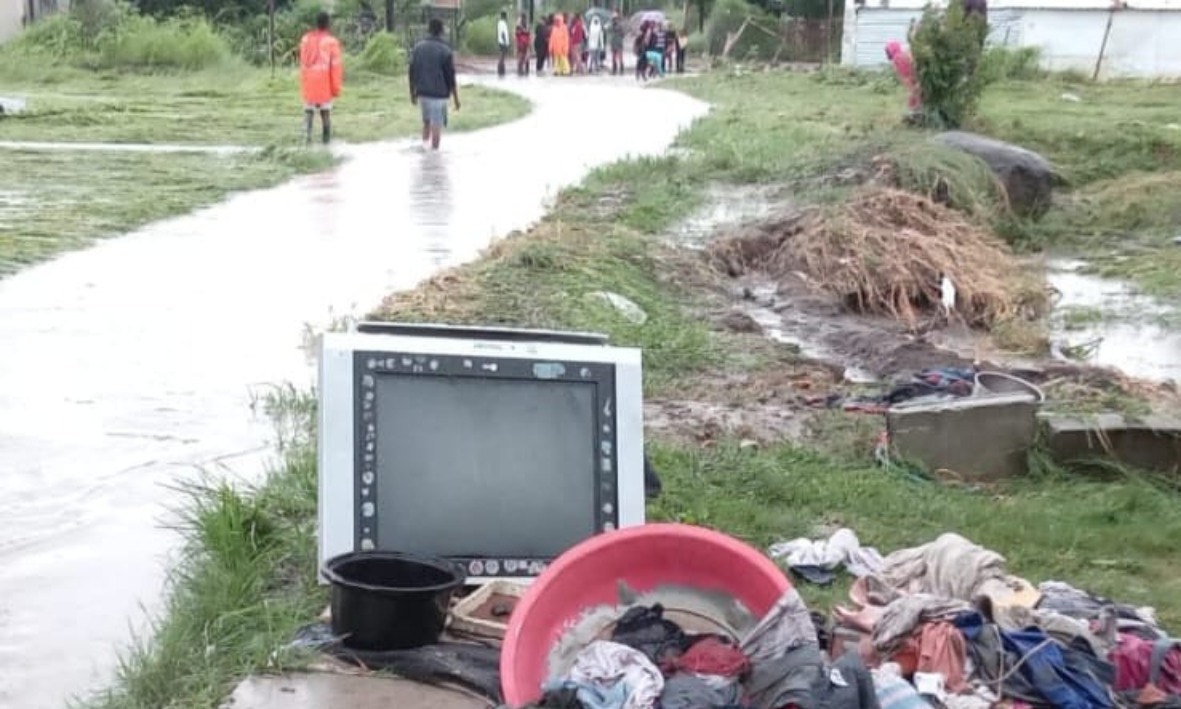
Statement by Samuel Mualefe Chairperson of the UDM in North West and Msawenkosi Dumela, UDM National Deputy Organiser who hails from North West The United Democratic Movement (UDM) in North West is deeply concerned about the persistent and worsening issue of floodwater affecting the Village of Ikageng, originating from the Village of Rankilenyana on the road to Sun City, near Rustenburg in the North West. This ongoing crisis, which has plagued the community for the past three years, continues to cause widespread damage and suffering. The floodwater, stemming from mining operating companies near Rankilenyana, flows into Ikageng, wreaking havoc on residents' homes, infrastructure, and livelihoods. Despite numerous proposals and pleas submitted to government authorities to address the situation, there has been no response, intervention, or update from either the government or the ward councillor. The silence and inaction from those in leadership positions demonstrate a gross disregard for the well-being of the affected community, leaving residents in a state of uncertainty and frustration. The consequences of the flooding are devastating and include: • Severe damage to homes, belongings, and essential infrastructure. • Loss of valuables and financial setbacks for already struggling families. • Health and safety risks, including waterborne diseases and potential drownings. • Disruptions to daily life, including access to schools, workplaces, and essential services. • Severe environmental impacts and soil erosion. While the officials from disaster management have made visits to the area, their response has been wholly inadequate. They merely take down the contact details of affected residents and leave, offering no tangible assistance, emergency relief, or long-term solutions. This level of neglect is unacceptable. The UDM in North West calls on the government and all relevant authorities to take urgent and concrete steps to resolve this crisis: 1. Government must provide a detailed and transparent response to the proposals submitted by pressure groups and concerned community leaders, outlining their validity and the planned course of action. 2. Authorities must urgently implement sustainable flood control measures to address the root cause of the problem. This includes proper drainage systems, water diversion strategies, and holding accountable the operating companies responsible for exacerbating the crisis. 3. The government must provide tangible support to residents who have suffered financial losses due to the flooding. Compensation packages, emergency aid, and improved disaster response mechanisms should be put in place to protect vulnerable families from further hardship. This ongoing disaster is a failure of governance and planning. The residents of Ikageng cannot continue to suffer while those in power remain inactive and unresponsive. The UDM will not allow this issue to be ignored any longer and will continue to push for accountability and action. The time for empty promises is over, government must act now!