
Admin

10 Mar, 2026
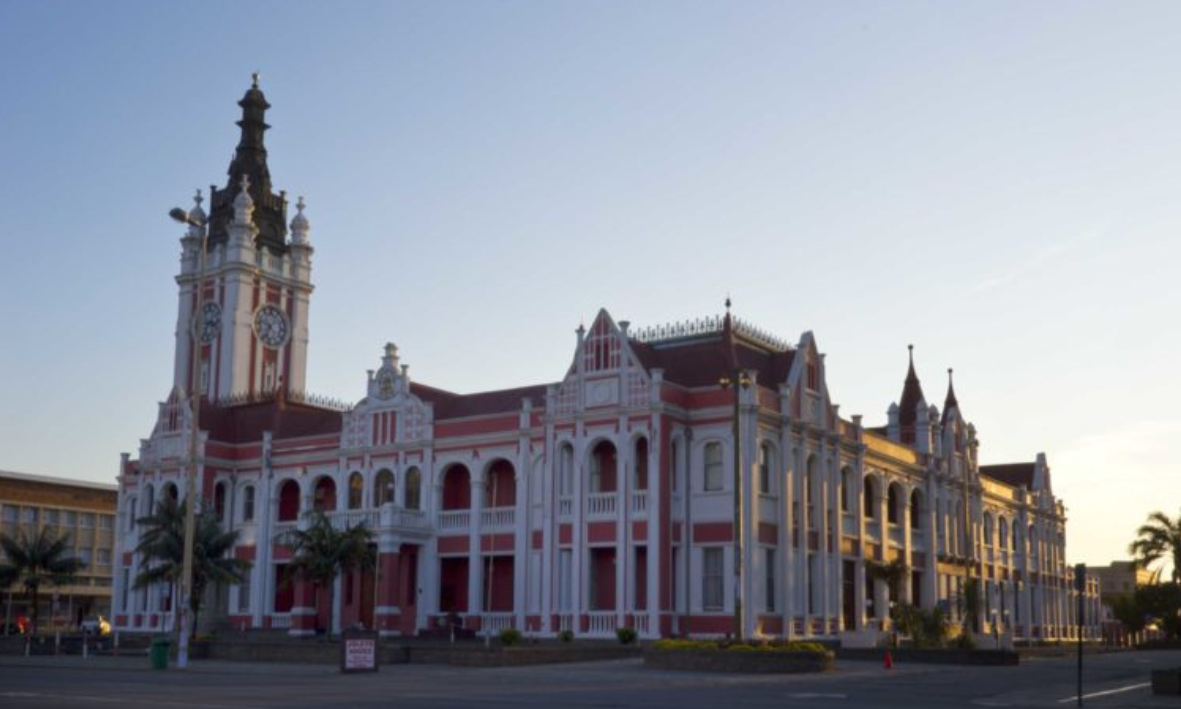
Eastern Cape UDM demands transparency and accountability as IEC probes Buffalo City mayor allegations
Statement by Bulelani Bobotyane, Provincial Secretary of the UDM in the Eastern Cape The United Democratic Movement (UDM) in the Eastern Cape has taken note of media reports indicating that the Executive Mayor of Buffalo City Metropolitan Municipality, Princess Faku, is allegedly the subject of a matter currently under consideration by the Independent Electoral Commission (IEC) relating to allegations of misrepresentation and the potential misuse of municipal resources for electoral purposes. The UDM in the Eastern Cape believes that the integrity of South Africa’s democratic and electoral systems must remain beyond reproach. Allegations suggesting the possible use of public resources, municipal programmes, or state platforms to advance partisan political interests are matters that require careful and transparent scrutiny. At the same time, the UDM in the Eastern Cape wishes to emphasise that South Africa’s constitutional framework is founded on the principle that every person is presumed innocent until proven otherwise. It is therefore important that the IEC be allowed to conduct its processes independently, fairly, and without interference so that the facts of the matter may be properly established and the public properly informed. This process must also serve as an opportunity to address persistent concerns about governance and the use of public resources within Buffalo City Metropolitan Municipality and, where wrongdoing is found, to ensure that accountability is finally enforced. Public institutions and municipal resources exist to serve communities impartially and in accordance with the law. Any situation that creates the perception that public resources may be used for electoral advantage risks undermining public confidence in governance and in the fairness of democratic competition. These allegations also reinforce longstanding concerns about governance and the use of public resources within Buffalo City Metropolitan Municipality, concerns that communities and opposition parties have raised repeatedly over time. In such circumstances it is particularly important that public representatives demonstrate the highest standards of ethical leadership, transparency, and accountability. The UDM in the Eastern Cape will continue to monitor this matter closely and supports all lawful and appropriate oversight processes to ensure that accountability is upheld and that the integrity of South Africa’s electoral framework is protected. The people of Buffalo City deserve governance that is transparent, responsible, and firmly grounded in the rule of law.
Admin
26 Feb, 2026
Eastern Cape SOPA2026: Mabuyane’s leadership on trial after year 7
Statement by Bulelani Bobotyane, Provincial Secretary of the UDM in the Eastern Cape The United Democratic Movement (UDM) in the Eastern Cape notes that on 27 February 2026, Premier Oscar Mabuyane will address the province in his seventh year at the helm. Across towns and villages, one hears a recurring sentiment: there was a period in this region’s history when executive authority translated into visible administrative discipline, when decisions were implemented with consistency and consequence management was not optional. That period existed within a different constitutional dispensation and must be understood in its proper historical context. It was not beyond criticism. In this province, what endures in public memory is not nostalgia for past structures, but the perception that governance was firm, coherent and enforceable. After nearly seven years in office, the current African National Congress (ANC) administration cannot dismiss that comparison. It must answer it. Seven years into the Mabuyane administration, the issue is no longer vision. The province has had vision documents, master plans, stimulus funds, growth frontiers and 2030 targets. The issue is executive control and institutional discipline. When the same sectors are re-announced year after year, when projected multipliers are pushed further into the future, and when governance reform deadlines quietly fade from the public record, the pattern reveals not a shortage of ideas, but a shortage of consolidation. After 32 years of uninterrupted ANC governance in this province, fragmentation cannot be blamed on transition or inheritance. It reflects a governing culture that accumulates initiatives faster than it stabilises systems. The Eastern Cape does not lack policy. It lacks conversion. It does not lack plans. It lacks enforcement. Seven years is sufficient time to entrench systems, discipline departments and impose consequence management. When plans multiply but structural indicators remain stubborn, it signals not complexity, but weak executive control. The ANC governs this province, with Premier Mabuyane at its helm. They cannot continue to govern through perpetual projection and recycled ambition. If the plans are sound on paper yet outcomes remain inconsistent, the question is no longer about design. It is about leadership. As the province approaches the 2026 Local Government Elections, SOPA 2026 must do more than defend a record. It must demonstrate that governance is stabilising where citizens experience the state most directly: in municipalities. Voters will not judge performance by presentation in the Chamber, but by functioning taps, maintained roads, disciplined finances and reliable services. In this election cycle, credibility will be earned on the ground. Accountability and delivery The UDM in the Eastern Cape will demand that SOPA2026 move beyond ambition and provide clear evidence of delivery. The people of the Eastern Cape have heard commitments on roads, water infrastructure, housing, health facilities and economic expansion before. This year’s address must account for what has been completed, what remains delayed and what has stalled. The public deserves measurable progress, not repetition. Municipal governance Municipal instability must be confronted honestly. If municipalities required intervention in the past year, the province must report whether those interventions worked. Financial stability, revenue collection, professional administration and consequence management determine whether communities receive services and whether local government can be trusted. Water security Access targets extending toward 2030 cannot substitute for consistent supply today. Communities experience governance through functioning taps, maintained infrastructure and effective wastewater systems. If these remain unreliable, explanations are no longer sufficient. Infrastructure maintenance Development cannot be credible if roads, stormwater systems and municipal assets deteriorate while new projects are announced. Maintenance is not secondary to growth. It is foundational to it. Economic reform and employment Sustainable job creation depends on stable municipalities, reliable infrastructure, clean procurement systems and a predictable regulatory environment. Temporary public employment programmes may offer short-term relief, but they do not replace structural reform. The province must demonstrate that institutional foundations for long-term economic expansion are being strengthened year by year. The National Development Plan’s 2030 horizon does not excuse weak implementation in the present. Governance and accountability Ethics frameworks and oversight mechanisms must translate into visible consequences. Clean governance, professional administration and disciplined public finance management are essential if public trust is to be restored. In 2020, this administration undertook to implement lifestyle audit guidelines by 2022. That deadline has passed. The province has yet to see consistent, transparent reporting on the outcomes of those audits or the consequences that followed. Anti-corruption cannot be rhetorical. It must be enforceable. With the 2026 Local Government Elections fast approaching, this address will be measured not by tone, but by evidence. The people of this province are demanding functional municipalities, reliable services and accountable leadership. In 2026, the UDM in the Eastern Cape will present a credible alternative grounded in administrative discipline, clean governance and service delivery that is felt in every municipality we contest.
Admin
18 Feb, 2026
State of the Nation Address 2026 debate in the NCOP
Speech for Mr MM Peter, MP and Member of the NCOP for the United Democratic Movement at the State of the Nation Address 2026 debate CHECK AGAINST DELIVERY Honourable Speaker Honourable Members The United Democratic Movement (UDM) supports the State of the Nation Address as tabled by His Excellency, President Ramaphosa. But support does not mean silence. In the true interest of serving the people of South Africa, we rise to sharpen, strengthen and submit proposals that move this nation from promise to performance. 1. No country survives without law Mr President, on the issue of illegal immigrants, the UDM wishes to comment as follows - no country can function if its laws are optional, and anyone who comes to this country legally must be prepared to abide by the law or they will be shipped out. Fellow South Africans, you deserve a state that works, systems that speak to each other, and early warning mechanisms that stop crime before it spreads. Without accurate Financial Intelligence Centre Act (FICA) registration, South African Revenue Service (SARS) cannot collect revenue from all traders operating in our economy. Furthermore, law enforcement cannot properly trace or dismantle criminal syndicates operating in the underworld. South Africa urgently needs a coordinated security response plan with time frames and the strengthening of the National Prosecuting Authority (NPA) as to be functional. South Africa’s liberation history teaches us solidarity. But protection must be credible and enforceable. If a person is granted asylum yet voluntarily returns to the very country they claim to be fleeing during holiday season, that status must be reviewed. You cannot be in danger today and on holiday tomorrow. Accountability is not hostility. It is fairness. It is security. It is sovereignty. 2. Skills development: from training to productivity We welcome the review of the Sector Education and Training Authorities (SETAs) as a corrective measure to ensure that skills funding delivers measurable results. Within the Department of Defence, the South African National Service Institute (SANSI) recently passed out over 500 young people. Mr President, do consider ring-fencing and redirecting SETA funding towards: • Funding into structured, outcome-based programmes such as SANSI. • Standardised study guides in mathematics, languages, accounting and entrepreneurship. • Mandatory practical and technical skill components. In 2001, Deputy Minister Holomisa, Matt Matthys, a maths teacher, Chantel Mulder, then Chief Executive Officer of the South African Institute of Chartered Accountants (SAICA), and the then President of SAICA, Ignatius Sehoole spearheaded the Thuthuka Project, providing English, Mathematics, and Accounting study guides for Grades 9 to 12. Today, that project has produced over 2,000 Black Chartered Accountants. We may need to have a tailor made, or similar setup into skills development. 3. Public Investment Corporation: Mr President, in 2023 you called on the Minister of Finance to address the pension queries of former civil servants. The affected community is still waiting for feedback and progress reports. People are dying while the system drags its feet, and each day of delay is a day of injustice. It is even more painful to see that the funds meant to secure these pensions are being looted by the elite through the Isibaya Fund at the Public Investment Corporation (PIC). Resources meant for ordinary South Africans are being diverted to enrich a few, deepening inequality and betraying public trust. How we wish that money could instead be invested in South Africa’s infrastructure, generating real returns for the country and creating jobs. This is a guaranteed investment in the nation, not in private greed. The people deserve accountability and action, not corruption. I thank you.
Admin
17 Feb, 2026
State of the Nation Address 2026 debate by Bantu Holomisa
Speech for Deputy Minister Bantu Holomisa, MP and President of the United Democratic Movement at the State of the Nation Address 2026 debate CHECK AGAINST DELIVERY Honourable Speaker Honourable Members The Government of National Unity (GNU) will not be judged by the promises tabled during the opening of Parliament, but by whether that skeletal plan is implemented with urgency, discipline and measurable results. South Africans have heard plans before. What they demand now is execution. 1. Security is the foundation of development The State of the Nation Address (SONA) emphasised economic recovery and energy stability, but sustainable growth also depends on protecting our environment and critical infrastructure from vandalism, illegal mining and sabotage that damage ecosystems and investor confidence. We are strengthening enforcement, deploying coordinated security and accelerating prosecutions because environmental protection, stability and growth are inseparable. The GNU further recognises that development cannot flourish without security. We therefore welcome: • The deployment of the South African National Defence Force (SANDF) in support of South African Police Service (SAPS) in crime epicentres such as the Cape Flats and the broader Western Cape, and areas such as Randfontein in Gauteng. • The elevation of the security cluster as a national priority. • The use of Artificial Intelligence-driven systems for predictive policing and intelligence coordination. In line with the orders issued by the Commander-in-Chief, President Ramaphosa, I confirm that the Department of Defence is seized with operational requirements to support stabilisation interventions in consultation with the security cluster. This is just phase one of restoring normality. 2. Crime and consequences: the era of impunity is over Mqwathi, mandikuqinisekise amasela ixesha lawo liphelile. Yekani ii Law Enforcement Agencies zenze umsebenzi wazo, singaphazanyiswa. The honeymoon is over. Corruption and maladministration have not merely touched the state, they have engulfed it, reaching even into our law enforcement agencies. The rot did not spare the Department of Defence either. That is why we acknowledge the President’s decision to sign the proclamation authorising the Special Investigating Unit (SIU) to investigate these matters and more. Accountability cannot be selective. It must be decisive and it must reach everywhere. At a briefing to the Portfolio Committee and Joint Standing Committee on Defence, the SIU, the Military Police, and the Hawks assured us that we have recovered over R1.6 billion linked to corruption and mismanagement within Defence. This is just a start of restoring the image of our defence force. That is consequence management in action. If Special Courts could be established by the Department of Justice in partnership with the National Prosecuting Authority (NPA), this will assist to accelerate the resolution of all pending military cases. Crime and corruption embarrass this country. They damage investor confidence. They weaken sovereignty. We have no choice but to confronting them head-on. 3. No country survives without law No country can function if its laws are optional, and anyone who comes to this country legally must be prepared to abide by the law or they will be shipped out. Fellow South Africans, you deserve a state that works, systems that speak to each other, and early warning mechanisms that stop crime before it spreads. Without accurate Financial Intelligence Centre Act (FICA) registration, South African Revenue Service (SARS) cannot collect revenue from all traders operating in our economy. Furthermore, law enforcement cannot properly trace or dismantle criminal syndicates operating in the underworld. South Africa urgently needs a coordinated security response plan with time frames and the strengthening of the NPA as to be functional. South Africa’s liberation history teaches us solidarity. But protection must be credible and enforceable. If a person is granted asylum yet voluntarily returns to the very country they claim to be fleeing during holiday season, that status must be reviewed. You cannot be in danger today and on holiday tomorrow. Accountability is not hostility. It is fairness. It is security. It is sovereignty. 4. The Public Investment Corporation Mr President, in 2023 you called on the Minister of Finance to address the pension queries of former civil servants. The affected community is still waiting for feedback and progress reports. People are dying while the system drags its feet, and each day of delay is a day of injustice. It is even more painful to see that the funds meant to secure these pensions are being looted by the elite through the Isibaya Fund at the Public Investment Corporation. Resources meant for ordinary South Africa are being diverted to enrich a few, deepening inequality and betraying public trust. How we wish that money could instead be invested in South Africa’s infrastructure, generating real returns for the country and creating jobs. This is a guaranteed investment in the nation, not in private greed. The people deserve accountability and action, not corruption. 5. Skills development: from training to productivity We welcome the review of the Sector Education and Training Authorities (SETAs) as a corrective measure to ensure that skills funding delivers measurable results. Within Defence, the South African National Service Institute (SANSI) recently passed out over 500 young people. Mr President, do consider ring-fencing and redirecting SETA funding towards: • Funding into structured, outcome-based programmes such as SANSI. • Standardised study guides in mathematics, languages, accounting and entrepreneurship. • Mandatory practical and technical skill components. In 2001, Matt Matthys, Chantal Mulder, the President South African Institute of Chartered Accountants (SAICA), Ignatius Sehoole, and I spearheaded the Thuthuka Project, providing English, Mathematics, and Accounting study guides for Grades 9 to 12. Today, that project has produced over 2,000 Black Chartered Accountants. We may need to have a tailor-made, or similar setup into skills development. 6. Prevention of Hate Crimes and Combating of Hate Speech Act The Prevention of Hate Crimes and Combating of Hate Speech Act, though intended to protect dignity and equality, goes beyond what our Constitution permits and places freedom of religion at risk. It criminalises expression using vague and undefined concepts and expands protected grounds without legal certainty. In a constitutional democracy, believers must be free to express their faith without fear of prosecution. Equality must never be advanced by eroding religious freedom. We therefore urge that the Act be constitutionally aligned through appropriate amendments before it comes into operation. 7. Conclusion: restoring dignity, restoring the state No country survives without law. No economy grows without stability. No democracy thrives without accountability. South Africans want safety, fairness, opportunity and a state that works. Through decisive, coordinated action on security reform, border integrity, infrastructure protection, skills development and consequence management, we will deliver. Judge us not by our words, but by the order we restore, the stability we secure and the future we build together. I thank you.

Admin
11 Feb, 2026
UDM Johannesburg demands accountability over R1 million ‘ghost wall’ payment
Statement by Yongama Zigebe, Councillor in the City of Johannesburg for the United Democratic Movement and Chairperson of the S79 Committee on Gender, Youth and People with Disabilities The United Democratic Movement (UDM) in the City Johannesburg notes with serious concern the reports that a City of Johannesburg entity allegedly paid approximately R1 million for a wall that was never built at the Moffat View Old Age Home. According to media reports, the payment was authorised despite the work not being completed, with photographic evidence allegedly not reflecting the actual site. This matter, involving the Johannesburg Social Housing Company, strikes at the heart of governance, financial oversight and ethical leadership within the City’s entities. Whether the funds were later recovered or not, the fact that such a payment could be processed raises fundamental questions about internal controls, verification systems and consequence management. Johannesburg residents are battling deteriorating infrastructure, housing backlogs, unsafe buildings and declining service delivery. At a time when every rand must stretch to serve the poor and vulnerable, allegations of payments for work that never materialised are not just irregularities, they are betrayals of public trust. We note that internal investigations and forensic processes have reportedly been initiated. However, the UDM in the City Johannesburg insists that transparency must accompany these processes. The people of Johannesburg deserve clear answers: 1. Who authorised the payment and on what verification basis? 2. What due diligence was conducted before disbursement? 3. Were supply chain processes followed? 4. What disciplinary steps have been taken against implicated officials? 5. How will the City strengthen controls to prevent recurrence? The UDM in the City Johannesburg further calls on the City Council and the relevant oversight committees to exercise their constitutional responsibilities without fear or favour. If wrongdoing is established, there must be visible and swift consequences. Accountability cannot depend on media exposure. This incident once again underscores the urgent need to professionalise municipal administration, depoliticise appointments in city entities, and ensure that senior positions are filled on merit and integrity, not networks and patronage. Johannesburg cannot afford “ghost projects” while communities live without basic infrastructure. Every cent mismanaged is a cent stolen from residents who rely on the City for housing, safety and dignity. The UDM in the City Johannesburg will continue to monitor this matter closely and will push for full disclosure and corrective action. Clean governance is not optional. It is the minimum standard our people deserve.

Admin
09 Feb, 2026
The slow collapse: banal corruption and state failure
Statement by Zandile Phiri, Acting Secretary General of the United Democratic Movement Recent reports of queue jumping and the exploitation of desperate citizens at offices of the Department of Home Affairs expose a form of corruption that is often ignored precisely because it appears small, routine, and ordinary. This is not grand corruption involving dramatic scandals or massive sums of money. It is banal corruption: the everyday abuse of a malfunctioning system, where inefficiency becomes profitable and desperation is quietly monetised. When access to identity documents, birth certificates, or civic registration depends on who can pay a small bribe or find a “fixer”, corruption has been normalised. This is not a new phenomenon, but one that has steadily worsened over time, nor is it confined to the Department of Home Affairs alone. If grand corruption is a robbery, banal corruption is termites in the walls. By the time the building collapses, everyone swears they did not notice the damage. Yet it is this slow, continuous erosion that weakens the state long before any spectacular collapse occurs. Banal corruption leaves a trail that South Africans know all too well. It is visible in roads that crumble months after being “rehabilitated”; in water and sanitation projects that consume millions yet never quite reach completion; in wastewater plants that repeatedly fail compliance without consequence. It is seen in clinics without medicine, ambulances without fuel, schools without textbooks, and housing projects that stall while contractors are paid. It is present in municipalities that cannot produce basic records, where audit findings are repeated year after year, and where failure carries no personal cost. At Home Affairs, banal corruption feeds on long queues, broken appointment systems, understaffed offices, weak supervision, and the absence of visible accountability. Informal queue-jumpers and fixers thrive not because the system is complex, but because dysfunction is tolerated and allowed to become a business model. The greatest victims of banal corruption are the poor and vulnerable. Those seeking documents for grants, school registration, employment, or healthcare are exploited precisely because they cannot afford to wait indefinitely or return repeatedly. What should be a basic constitutional right becomes a daily humiliation. Banal corruption can be defeated, but only if government confronts it deliberately and consistently. This requires fixing the conditions that allow it to exist by restoring functional systems, predictable turnaround times, and orderly queues that cannot be manipulated or sold. It requires visible management at frontline offices, clear service standards, and strict supervision of high-risk points of service delivery. Most importantly, it requires real and visible consequences. Officials who enable, ignore, or benefit from petty corruption must face swift disciplinary action. Quiet transfers and internal reshuffles are not accountability. Consequence management must be public, consistent, and unavoidable. Government must also draw a firm line between politics and administration. Political interference in queues, procurement, staffing, or service prioritisation is a major driver of banal corruption and must end. A professional, protected public service is essential if integrity is to be restored. Whistleblowers and ordinary citizens must be protected and empowered. Reporting corruption must be safe, simple, and worthwhile. Silence thrives where people believe nothing will change and retaliation is guaranteed. The UDM cautions that focusing only on headline corruption scandals while ignoring these everyday abuses is a serious error. Banal corruption is the seedbed of larger corruption. It normalises dishonesty, erodes discipline in the public service, and teaches citizens that the state only works for those who can pay. A state does not collapse overnight. It collapses quietly, one compromised queue, one incomplete project, one normalised injustice at a time. Confronting banal corruption is therefore not optional. It is essential to restoring trust, dignity, and the rule of law.

Admin
08 Nov, 2025
Renewed concerns over probable governance irregularities and conflicts of interest at the Public Investment Corporation: the PIC’s confused(ing) rhetoric regarding the Lanseria and FlySafair deals
Mr MC Ramaphosa President of the Republic of South Africa Private Bag X1000 Pretoria 0001 and Mr Songezo Zibi, MP Chairperson of the Standing Committee on Public Accounts PO Box 15 Cape Town 8000 Dear Mister President and Chairperson Zibi Renewed concerns over probable governance irregularities and conflicts of interest at the Public Investment Corporation: the PIC’s confused(ing) rhetoric regarding the Lanseria and FlySafair deals 1. I refer to my correspondence dated 29 October 2025, titled “R3.5 trillion at risk: the Public Investment Corporation’s governance collapse demands action.” In that letter, I outlined the serious risks arising from several recent and questionable transactions undertaken by the Public Investment Corporation (PIC), which place over R3.5 trillion in pensioners’ funds in jeopardy, as well as broader governance and ethical failures within the institution. 2. “The PIC’s records in respect of Harith’s (or a party related to Harith) application/request for funding to acquire all or portion of the shares in FlySafair, directly or indirectly.” This is a direct quote from the letter referred to in Paragraph 4.2, wherein the PIC is asked to preserve “records, minutes, notes, guest lists, recordings and resolutions and/or other material” relating to Harith General Partners’ acquisition of shares in FlySafair. One must ask: who is fooling whom? 3. On 5 November 2025, the PIC Board Chairperson and Deputy Minister of Finance, Dr David Masondo, launched a scathing and aggressive attack on me personally and made a weak attempt to tarnish my reputation, question my credentials, and cast aspersions on the information the UDM provided in its letter of 29 October 2025. In this regard, I wish to make the following observations: 3.1. While the PIC provides impressive financial statistics, it fails to meaningfully address the core governance concerns raised by the UDM, namely valuation manipulation, political interference, and weak board oversight. 3.2. The PIC attempts to project transparency by citing asset growth and external audits yet simultaneously hides behind claims of legal confidentiality in the Lanseria Holdings matter. This contradiction severely undermines its credibility. 3.3. Although claiming to respect Parliament, the PIC’s statement labels a Member of Parliament’s formal correspondence as “nefarious i.e. language that may be interpreted as contemptuous of democratic oversight and to which I take strong personal exception. 3.4. Furthermore, while denying wrongdoing, the PIC’s statement acknowledges that a review of the arbitration proceedings is underway, implicitly conceding that there may indeed be irregularities in the transaction. This is clearly evidenced by the correspondence referred to in Paragraph 4.14.1, which confirms that the matter remains under internal scrutiny. Yet, instead of welcoming the alert and taking proactive corrective measures, the PIC chose to attack me personally, rather than expressing gratitude for having brought this concerning deal to its attention. 3.5. Why issue the statement in the first place? The PIC went to great lengths to adopt a defensive posture, using offensive language directed at me, while at the same time conceding through its own actions that there is indeed something fishy about the Lanseria transaction. 4. To provide further context to this entire matter, I have attached two pieces of critical correspondence which demonstrate that Dr Masondo, in the name of the PIC, “doth protest too much”: 4.1. A letter from Werksmans Attorneys to Mabotja Attorneys titled: “PUBLIC INVESTMENT CORPORATION SOC LIMITED // ACAPULCO TRADE AND INVEST 164(RF) (PTY) LTD” dated 6 November 2025. 4.2. Mabotja Attorneys’ response to the above entitled.: “LANSERIA AND RELATED MATTERS” of 7 November 2025. 4.3. Werksmans Attorneys, acting on behalf of the PIC, addressed a letter to Mabotja Attorneys, who represent Acapulco Trade and Invest 164 (Pty) Ltd, regarding the aftermath of an arbitration award in favour of Acapulco, dated 17 September 2025 in the amount of R411 282 264.44. The correspondence indicates that the PIC intends to review or challenge the arbitration award and seeks to freeze the funds already deposited in Mabotja Attorneys’ trust account pending the outcome of that review. 4.4. In response, Mabotja Attorneys issued a combative and defensive reply, aimed at discrediting Werksmans Attorneys’ correspondence on behalf of the PIC and portraying Acapulco as the aggrieved party. The exchange suggests escalating tension between Acapulco and the PIC, its Chief Executive Officer (CEO), Mr Patrick Dlamini, as well as Harith General Partners and its founder, Mr Mahloele, who appears to be a central figure of contention. 4.5. The revelation that Mr Mahloele hosted a “celebratory gathering” in Bryanston to mark Mr Dlamini’s appointment as PIC CEO is particularly concerning in the broader context of potential conflicts of interest and governance integrity within the PIC. 5. Clearly, the Lanseria transaction and the PIC’s dealings in the FlySafair matter, both linked to Mr Tshepo Mahloele, appear increasingly suspect in light of the aforementioned context. The Lanseria deal has been unfolding for over twelve years, and it is now imperative that SCOPA asks even more probing questions than it did before my letter of 29 October 2025. 6. The key question for the UDM therefore remains: how many other transactions of this nature the PIC has entered into, in violation of its own governance protocols, and in the process placing at risk the R3.5 trillion in pensioners’ funds managed through the Government Employees Pension Fund (GEPF), notwithstanding Dr Masondo’s protestations to the contrary. 7. Ultimately, the PIC is a state-owned enterprise, and Parliamentary oversight is a cornerstone of ensuring that such institutions are managed ethically and transparently. Yet, the PIC appears determined to avoid public scrutiny and to continue operating in secrecy, contrary to the principles of accountability and public trust. 8. The UDM reiterates that the protection of public pension funds is a matter of national importance. Urgent intervention is required to ensure that the PIC is not used as a vehicle for political patronage and that the R3.5 trillion in assets under its management are handled with the highest standards of integrity, professionalism, and accountability. 9. We are in for a jolly period, to say the least, consider this my early Christmas gift to the public. The truth is finally coming to light. Yours sincerely Deputy Minister Bantu Holomisa, MP President of the United Democratic Movement Copied to: • Mr Enoch Godongwana, MP - Minister of Finance • Dr David Masondo, MP - Deputy Minister of Finance and Chairperson of the Board of the Public Investment Corporation • Ms Thoko Didiza, MP - Speaker of the National Assembly of South Africa • Mr Patrick Dlamini - Chief Executive Officer, Public Investment Corporation • Mr Musa Mabesa - Principal Executive Officer, Government Employees Pension Fund • Ms Tsakani Maluleke - Auditor-General of South Africa • Adv Andy Mothibi - Head of the Special Investigating Unit

Admin
18 Oct, 2025
UDM KZN demands accountability as the province’s governance falters
Statement by Remington Mazibuko, Councillor in the Inkosi Mtubatuba Local Municipality and UDM KwaZulu-Natal Provincial Chairperson The United Democratic Movement (UDM) in KwaZulu-Natal notes with deep concern the Auditor-General’s findings that the provincial departments of Education, Health and Transport must be placed under enhanced monitoring due to material irregularities and systemic governance failures. These are not minor administrative lapses but warning lights that speak to a pattern of weak internal control, poor financial discipline and a culture of impunity that continues to rob KwaZulu-Natal’s citizens of quality public services. The UDM believes that this moment demands honesty and leadership, not political point-scoring. The Government of Provincial Unity must act decisively to restore integrity to provincial administration. The provincial executive must publish clear turnaround plans with measurable timelines, ensure that disciplinary processes are concluded without delay, and recover every cent of public money lost through negligence or corruption. The people of KwaZulu-Natal deserve schools that work, hospitals that heal and roads that are safe, not yet another round of empty promises. As a partner in the Government of National Unity, the UDM in KwaZulu-Natal will continue to advocate for transparency, consequence management and a professionalised public service. We will support the Auditor-General’s call for stricter oversight and insist that the Premier and all Members of the Executive Council account fully to the legislature and to the public. The UDM in KwaZulu-Natal warns against those who exploit legitimate frustration to promote separatism or populist division. South Africa’s unity and the stability of KwaZulu-Natal depend on responsible governance within a constitutional framework, not on reckless rhetoric that seeks to dismantle it. We urge all parties to prioritise service delivery, ethical leadership and the rebuilding of public confidence. The UDM in KwaZulu-Natal reiterates that the restoration of clean governance in KwaZulu-Natal depends on accountability, not slogans. Civil society, organised labour and business have already raised their concerns about the province’s direction, and those concerns must be met with facts, transparency and lawful action. KwaZulu-Natal cannot afford leadership paralysis or administrative drift. The public expects consequence and competence, not excuses.

Admin
04 Oct, 2025
Cape Town cannot hide behind spin while billions go missing
Statement by Bongani Maqungwana, UDM Councillor in the City of Cape Town The United Democratic Movement (UDM) in the City of Cape Town notes with grave concern the large-scale police raids conducted across Cape Town this week in connection with alleged fraud and corruption involving R1.6 billion worth of municipal contracts. Reports indicate that 26 properties, including the private residences of municipal officials and businesses linked to tenders, were searched with documents and electronic devices seized as part of the ongoing investigation by the South African Police Services (SAPS). While we recognise the importance of law enforcement acting on credible whistle-blower information, it is deeply troubling that once again the City of Cape Town finds itself at the centre of allegations of corruption, maladministration and questionable procurement practices. These scandals come at the direct expense of ordinary residents who rely on municipal services and who expect that every rand of public money is spent on service delivery, not siphoned off through shady contracts. The UDM is particularly concerned that the spectre of “tenders for cash” has become a recurring theme in Cape Town’s governance. Allegations of links to underworld figures and repeat instances of unlawful contracting erode public confidence and reinforce the perception that corruption is entrenched rather than being rooted out. We caution against premature self-congratulation by the City for “cooperating” with SAPS. True accountability does not come from spin but from transparent investigations, full disclosure and holding individuals, no matter how senior, personally liable if they are found complicit. The UDM therefore calls for: • The immediate suspension of any officials under suspicion to prevent interference with evidence. • Law enforcement to ensure prosecutions follow swiftly so that whistle-blowers and the public see justice done. Cape Town’s residents deserve a municipality that prioritises clean governance and service delivery, not one mired in allegations of corruption worth billions. The UDM will continue to monitor these developments closely, engage relevant oversight bodies and demand accountability at every level.

Admin
30 Sep, 2025
The R2 billion warning: reform procurement or repeat Tembisa everywhere
Statement by Thandi Nontenja, MP, UDM Member of the Standing Committee on Public Accounts The United Democratic Movement (UDM) has note with alarm the interim report of the Special Investigating Unit (SIU) into the looting of Tembisa Hospital. The SIU has confirmed what many South Africans feared: more than R2 billion was siphoned away through coordinated syndicates that exploited procurement loopholes. The report reveals that 2 207 procurement bundles, 4 501 purchase orders and 207 service providers are under scrutiny. Three criminal networks alone are linked to nearly R1.7 billion. At least 15 officials have been implicated, while R122 million in corrupt payments have been traced to insiders. Services were invoiced and paid for but never delivered. Even losing bidders were paid. The sophistication of these schemes, including fake supply chain documents, front companies and manipulation of three quote rules, proves that this was not opportunism but organised criminality within the state. The assassination of whistle-blower Babita Deokaran is a tragic reminder of how dangerous it has become to expose corruption in our country. Her murder was not in vain; the SIU findings vindicate her warnings. But South Africans cannot be expected to rely on martyrs to defend public money. The UDM is clear: Tembisa is not an outlier. It is a mirror of how corruption has hollowed out our state. The same patterns can be seen in housing projects, water schemes, municipal contracts, state owned enterprises and schools. This case must be treated as a wakeup call for comprehensive reform across all sectors, not only in health. We therefore call for: 1. Swift prosecution of all implicated individuals with clear timelines for referrals from the SIU to the National Prosecuting Authority (NPA), and public updates on progress in the courts. 2. End to end digital procurement across government with full transparency and audit trails. 3. Whistle-blower protection as a matter of urgency, with the state ensuring that the next Babita is not left vulnerable. 4. A specialised anti-corruption task team combining the SIU, NPA, Auditor General and SAPS commercial crimes units, with quarterly public reporting. 5. Swift recovery of assets so that mansions, cars and bank accounts bought with stolen funds are seized and redirected to service delivery. 6. Political accountability so that senior officials and politicians who presided over these failures must answer, not hide behind process. South Africa cannot afford another decade of commissions and reports gathering dust while syndicates loot unchecked. Every stolen rand is a bed without linen, a clinic without medicine and a community without water. The Tembisa heist is not only about one hospital. It is the clearest example yet of a state where corruption has become a parallel system of government. Unless procurement is reformed from top to bottom, we will see Tembisa repeated in every department and municipality. The UDM stands ready to fight for reforms that restore dignity to our public finances, protect whistle-blowers, and return stolen resources to the people they were meant to serve.
Admin
12 Sep, 2025
Lawlessness, violent protests, and broken governance: South Africa needs urgent reform
Statement by Nqabayomzi Kwankwa, MP, UDM Deputy President and Leader in Parliament The United Democratic Movement (UDM) notes with concern the violent turn taken by community protests in Mondlo township, KwaZulu-Natal, where municipal buildings and vehicles were torched in the wake of anger over load reduction, poor services, and a lack of municipal accountability. Similar scenes unfolded in Coronationville in Westbury and Ivory Park in Tembisa, where residents clashed with police over prolonged water cuts, leaving community members injured. These incidents are neither isolated nor unprecedented. They form part of a deepening national crisis of lawlessness, in which citizens increasingly turn to destruction, arson, and violent attacks to express their grievances. This alarming trend reflects both a collapse of governance and the erosion of trust in peaceful engagement with authorities. International examples provide a stark warning for the powers that be. In Nepal, widespread protests by young citizens over corruption, nepotism, and mismanaged policy escalated into the burning of parliament and the homes of prominent politicians, forcing the army to airlift government ministers to safety. South African politicians must take heed: ignoring the cries of communities for basic services risks a similar escalation, where frustration could spill over into chaos and threaten social stability. Experts have already warned that South Africa’s legacy of socio-economic neglect, political disillusionment, and an ineffective justice system has created an environment where violence is seen as the only language government listens to. Communities often exhaust every formal avenue, writing memoranda, petitioning councillors, and pleading with municipal officials, only to be ignored until protests erupt. While the frustration of citizens who live without water, electricity, and safe infrastructure is understandable, the UDM strongly condemns the destruction of property and the loss of life that follow such unrest. Burning municipal buildings, petrol-bombing government offices, and attacking fellow citizens only deepen the crisis, disrupt service delivery further, and strip communities of the very resources they need. Equally, the UDM abhors the excessive and sometimes indiscriminate use of force by the South African Police Service (SAPS), including reports of rubber bullets fired at elderly people and children during recent protests. Heavy-handed policing only hardens anger and deepens mistrust. The UDM calls for: • A comprehensive reform of local governance to restore accountability, transparency, and service delivery. • Stronger and fairer enforcement of the law, so that criminal acts of arson and violence do not go unpunished, while ensuring that policing respects human rights and protects vulnerable community members. • Genuine dialogue between government (especially at local level) and communities before frustrations boil over into unrest. Engagement must be consistent, respectful, and solutions-driven. • National government to urgently intervene in municipalities crippled by corruption, maladministration, and financial collapse, to prevent further violent flashpoints. Many communities exhaust formal channels, such as petitioning ward councillors, municipal officials, and provincial leaders, before resorting to violence. The UDM therefore calls for the agenda of the National Dialogue to address these repeated frustrations. Service delivery challenges, local governance failures, and mechanisms for meaningful citizen participation must be central, with clear commitments and accountability measures to ensure that public grievances do not escalate into unrest. South Africa cannot build a future by burning the present. Violence and destruction must never become acceptable or normalised as a way of forcing government action. At the same time, government must demonstrate through action, not words, that it listens to peaceful demands, honours commitments, and delivers the basic services enshrined in our Constitution. The cycle of neglect, protest, violence, and suppression must be broken. What is at stake is not only community stability but the very fabric of our democracy.

Admin
18 Apr, 2025
UDM Nelson Mandela Bay calls for accountability and transparency after R53 million flood repair tender irregularities
Statement by Luxolo Namette, UDM councillor in the Nelson Mandela Bay Metropolitan Municipality and Deputy Chairperson of the UDM in the Eastern Cape The United Democratic Movement (UDM) Nelson Mandela Bay Metropolitan Municipality is gravely concerned by the explosive revelations regarding alleged misconduct by senior officials of the Nelson Mandela Bay Municipality, as detailed in a memorandum by the municipality’s former Acting City Manager, Mr Sizwe Mvunelwa. The memorandum apparently outlines a troubling sequence of events suggesting that seven senior officials may have misled the Office of the City Manager and deliberately bypassed valid contracts in order to irregularly award new flood repair projects worth R53 million. This, despite the existence of properly procured service providers already under contract with the municipality. This conduct not only undermines the Municipal Finance Management Act (MFMA), but it also exposes the Municipality to serious legal risks, potential withdrawal of disaster relief funding, and irreparable damage to the communities of KwaNobuhle, Kariega, and Kwazakhele, who continue to suffer the consequences of the devastating floods without timely intervention. The allegations include: • Possible collusion to subvert procurement procedures; • Recommending the appointment of companies without valid tax clearance certificates; • Issuing appointment letters to companies in violation of legal requirements; • Concealing critical information from incoming leadership to influence decision-making. Such actions, if proven, represent a gross dereliction of duty and a betrayal of public trust. The UDM fully supports the call for this matter to be referred to independent law enforcement agencies, such as the Hawks or the Special Investigating Unit, for a thorough and impartial investigation. We further call for: • The immediate suspension of all officials implicated in the memorandum, pending the outcome of investigations. • A full audit of the tender processes related to the R53 million flood relief funding. • The reversal of all irregularly issued contracts and reinstatement of the original contractors appointed under the valid triennial agreement. • Assurance from the municipality that service delivery in the affected communities will not be compromised due to internal administrative failures. The UDM maintains that the integrity of public institutions must be upheld at all costs. We will continue to monitor this situation closely and demand accountability for those who compromise the rule of law and the needs of the people for personal or political gain.
Admin
15 Oct, 2020
Allegations of political interference by Minister Nzimande in CHIETA CEO appointment
Dear Mr President Allegations of political interference by Minister Nzimande in CHIETA CEO appointment 1. I have previously raised with you the alleged interference of the political head of the Department of Higher Education and Training (DHET), the Minister of Higher Education, Science and Technology, Dr Blade Nzimande, in that department’s administration and also in the management of the Sector Education and Training Authorities (SETAs). 2. Yesterday, the Chemical Industries Education and Training Authority (CHIETA) announced the appointment of Mr Yershen Pillay as its Chief Executive Officer. 3. Mr Pillay is a former Young Communist League chairperson and, according to our source, is a personal confidant of Minister Nzimande. In fact, in the communication to staff, announcing Mr Pillay’s appointment, Ms Wezi Khoza (Chairperson of the CHIETA Accounting Authority) flaunted that he works in the Minister’s office as Director Stakeholder Management. 4. To provide further information and context, I remind you of my 10 September 2020-letter regarding the Minister’s reward scheme for party cronies, where his direct involvement is alleged in the creation of five DHET posts for which no logic or justification were provided in terms of the Public Service Regulations. Allegedly, these posts were not advertised; nor was there an appointment committee; nor were competency assessments conducted and no vetting or checking of qualifications were undertaken. 5. Mr Pillay was one of those lucky communists and received a whopping salary of just over R88,000 per month in the 2019/20 financial year. So, whilst business at the DHET is run like the Wild Wild West, Mr Pillay has been rewarded a second time, this time with a SETA CEO-ship. 6. Seen against the backdrop of the past allegations made around Dr Nzimande’s seeming empire building, Mr Pillay’s appointment is clearly another block in that structure, and one wonders at the goal. 7. Actions speak louder than words and no matter what Minister Nzimande says, he does not appear to be building a robust, merit-based higher education management system that works in service of South Africa for the long-term. 8. With due respect Sir, the lack of response from your office to the various matters I have raised relating to Minister Nzimande resembles ostrich politics. I therefore hope that you will break your silence on this topic with a definitive stance. 9. The United Democratic Movement will however in the meantime and in good faith persist in raising issues of national importance with you, in line with your cause to rid government of corruption. Yours sincerely Mr Bantu Holomisa, MP President of the United Democratic Movement
Admin
23 Sep, 2020
Holomisa submission to the state capture commission: the real mastermind behind state capture
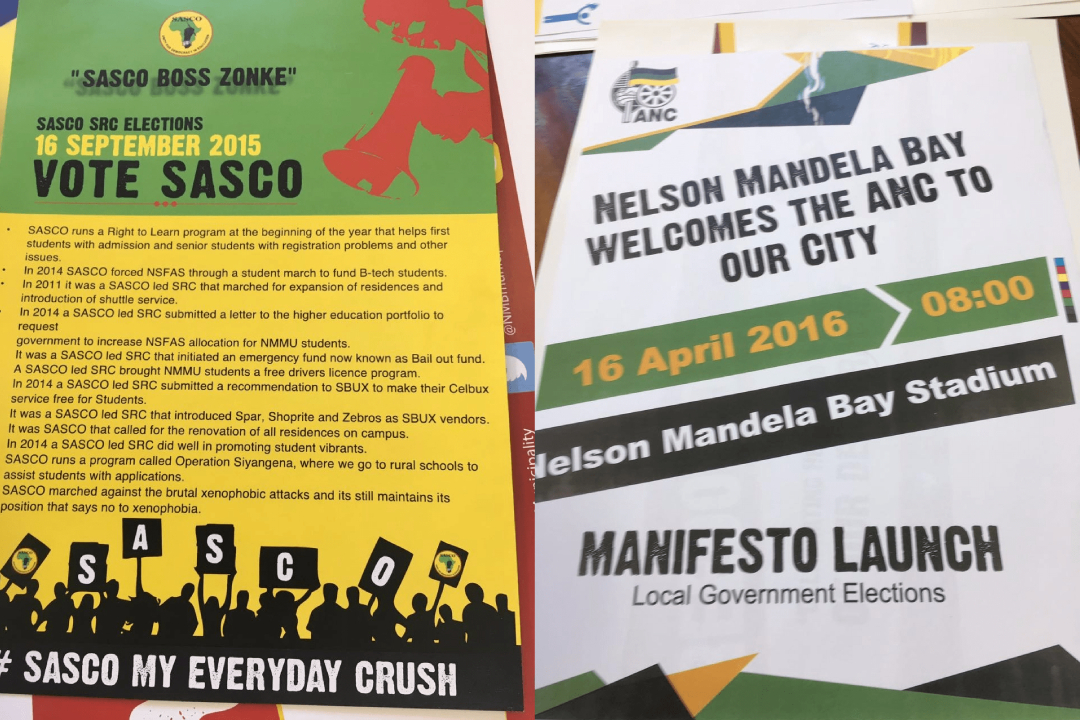
Deputy Chief Justice RMM Zondo Chairperson of the Judicial Commission of Inquiry into State Capture PO Box 31322 Braamfontein 2017 Per the acting Secretary of the Judicial Commission of Inquiry into State Capture Dear Sir SUBMISSION TO THE COMMISSION: THE REAL MASTERMIND BEHIND STATE CAPTURE 1. Corruption: a cancerous tumour 1.1. One of government’s major mistakes is delaying the implementation process to deal with corruption and addressing maladministration. It is evident that incompetence and corruption has collapsed and downgraded this country, thereby costing our economy billions of Rands. As a result of this undesirable culture, many municipalities have crumbled, because there are no effective structures to stop corruption, and to prevent maladministration and mismanagement of funds. 1.2. We acknowledge that measures have been taken, such as the formation of the Judicial Commission of Inquiry into State Capture (‘the Commission’) so that it may establish who has captured the state, but the process has been laborious and, in our view, not nearly far-reaching enough. 1.3. The former Public Protector, Professor Thuli Madonsela, had revealed that the Gupta family had effectively captured the state, however, as it turns out, the real architect of corruption is the ruling party itself, the African National Congress (ANC). 1.4. Accordingly, the Commission has been making the ruling party’s head honchos account for their alleged acts of corruption, but there is much more to this iceberg than what is presented to the public. Although the media and opposition parties, like the United Democratic Movement, have exposed some of the ANC and their leaders’ misdeeds, I believe most of it is kept diligently under wraps, because it might be the lurking iceberg that finally sinks the ANC Titanic. 1.5. The ANC and its leaders have misused state funds through companies like Bosasa, Chancellor House, Mohlaleng Media and Maverick State, to mention but a few. Looting from public resources has become a habitual act to fund the ANC by whatever means necessary, whether it be by paying its cadres’ exorbitant salaries or financing their election campaigns by any means necessary. 1.6. It is repulsive that this brazen looting takes place right under the noses of the authorities, whilst parliament’s oversight has not been effective either. The powers of the accounting officers have been usurped by the executive, consequently it has also affected the performance of state-owned enterprises. 1.7. The Commission’s terms of reference states that your work shall be guided by the Public Protector’s state capture report and we have noticed from the testimony that other accounts of corruption have been creeping out of the woodwork. It is therefore evident that there is a ‘big picture’ corruption that must be looked at. 1.8. Whilst much is made of Guptagate implicating former President Zuma and some other insatiable cadres, the fact that the corruption and looting at all spheres of government is to the benefit of the ANC itself, is negated. The Commission should therefore investigate the involvement of the ANC in acts of corruption, in totality. 1.9. This institutionalised corruption is not new, and it can be traced back through the previous decades. Even the Commission of inquiry into allegations of impropriety regarding Public Investment Corporation (‘PIC Commission’) quoted my testimony where I said that: “One of the most difficult tasks regarding dealing with the type of corruption that is alleged to have happened at the PIC is the sophisticated nature of the transactions. Corruption can come in two forms, legal and illegal corruption. Legal corruption occurs when the elite build a legal framework that protects corruption or manipulate existing legal framework without necessarily breaking the law.” 1.10. The PIC Commission concurred with my statement when they said in their report to the President that: “When going through the story of Harith, these words resonate. The layering of legal entities (state owned corporations, pension funds, banks, companies and trusts and partnerships etc.), when applied by financiers and corporate structure experts, can make finding the substance, and not form, of a transaction or series of transactions complex and quite perplexing. These layers also give the players in such a formation use ‘plausible deniability’ most effectively, as looking through all the conducts is challenging and time consuming.” 1.11. This designed incompetence permeates our law enforcement agencies, such as the police, the Directorate for Priority Crime Investigation (Hawks), the Special Investigating Unit (SIU) and the National Prosecuting Authority (NPA), which all have dismally failed to investigate and prosecute the reported culprits. One must be honest in one’s assessment of the competence of the state’s investigative and judicial resources. It is a given that the state lacks such competence in all respects, whilst the same is further exacerbated by means of prevalent corruption within the ranks of these institutions themselves. 1.12. The gate keepers of maladministration are the incompetent key administrative personnel who have been deliberately appointed (deployed) to accomplish the agenda of looting state resources on behalf of the ANC and, of course, to feed their own personal greed. It must be borne in mind that the ANC’s cadre deployment policy is just another form of corruption. It is called nepotism for a reason, because making appointments based on party affiliation, friendship and familial connections violate the statute books and is patently wrong. Cadre deployment deprives our civil service of talented individuals and we have thousands of young South Africans with degrees who cannot find jobs. 1.13. Epidemic levels of corruption handicaps service delivery which results in many violent protests. Not only that, prospective international investors shun South Africa because of the high levels of corruption and sadly our people are paying the price. Ultimately, corruption is destroying the gains of our freedom and patriotic South Africans have lost all hope and endlessly question the so-called measures put in place to address this untenable situation, whilst the ruling party itself perpetuates corruption in order to sustain itself. 1.14. Let us remind ourselves of what the late, former President Nelson Mandela admitted, already in 1998, about corruption in South Africa: “Unfortunately there are officials who betray their calling… this is part of the wider cancer of corruption that is undermining our efforts in all areas of society. We have learnt now that even those people with whom we fought the struggle against apartheid’s corruption can themselves become corrupted.” 1.15. The sad state of affairs is that the liberators of yesteryear have become the perpetuators of this immoral pillaging of state resources, whilst we are misdirected in our focus on the Gupta’s involvement in state capture. 1.16. The true architects of state capture are those who run government and its institutions in collusion with certain elements within the private sector. The private sector, which particularly benefits from government tenders, is represented by individuals who are shareholders in large corporations. These individuals appear to represent the private sector, but instead they use corporate fronts that merely return the loot to the ANC. These individuals also represent the corrupt interests of the ruling party in that they are either ANC stalwarts or that they are connected in one or other compromising manner to that party, politically or otherwise. 2. A Nelson Mandela Bay example: Mohlaleng Media, the ANC’s access to public funds 2.1. The purpose of this letter is to request the Commission to investigate the mechanisms used in government institutions to misuse state funds, especially at local government level. 2.2. I was recently briefed, on the matters which I raise below, by Mr Werner Wiehart, a persecuted forensic investigator formerly employed by the Nelson Mandela Bay (NMB) Metropolitan Municipality. He indicated to me that he had forwarded the information to numerous political parties and as well as the Commission (See Annexure A), but I took the liberty to meet with him last week and wish to report the matter to you formally. 2.3. The matter centres on how municipal funds have been looted by the ANC over, at least, the past fifteen years in NMB. Some information is already in the public domain including those that have been reported to the police, Hawks, NPA and the Public Protector. 2.4. The documentary evidence, which I have in my possession, convinced me that there is prima facie evidence that NMB municipal funds were looted for the ANC’s benefit, to fund its operations and to sustain itself. Questionable entities or companies (which are non-compliant with tax obligations and also lack related tax and billing clearances) and the registration of multiple enterprises simultaneously, are used as tools to achieve their dastardly goals. 2.5. Furthermore, I noted that law enforcement agencies remain actionless where corruption in the NMB municipality, more often than not, remains uninvestigated – in some cases, for more than three years. I cannot over-emphasise my concern if this is the alacrity with which this government is driving the fight against corruption, whilst little or nothing is achieved to start off with. 2.6. The widely publicised NMB Integrated Public Transport System (IPTS) scandal, in which National Treasury is implicated, is simply not being addressed, except for a single case in court. National Treasury, with particular reference the Chief Director, Mr Jan Hatting, had apparently been informed in writing during October 2012 of the large-scale looting, yet with such knowledge National Treasury continued to make payments thus feeding the large-scale looting scheme over a period of a further three years. So, nothing is happening, whilst the thieves are still trawling through personal protective equipment (PPE) tenders to rake in money to fund the ANC’s campaign for the 2021 municipal elections. 2.7. The evidence in my possession shows that, according to Mr Wiehart, there were three key players from Luthuli House involved, namely, Mr Pravin Gordhan (then Minister of Cooperative Governance and Traditional Affairs), Dr Crispian Olver (famous author of “How to Steal a City: The Battle for Nelson Mandela Bay: An Inside Account) and Mr Cheslyn Mostert (a well-known ANC operator), who presented themselves as those mandated to address the NMB municipality’s issues; a process which led to the appointment of Mr Danny Jordaan as executive mayor and Mr Johann Mettler as acting city manager. 2.8. The same process led to the suspension (with full pay) of some municipal officials and their subsequent resignations, as well as some limited dismissals. Amongst others, these suspensions and resignations were caused by the allegations that some of the employees benefited from the IPTS deal. 2.9. Prior to the aforementioned ‘Luthuli House intervention”, the opposition, the media and the people were voicing out their anger about the IPTS corruption and as a result our Mr Mongameli Bobani, an ordinary councillor at that point in time, asked the Public Protector in October 2014 to investigate the matter. The Public Protector’s Advocate Tom had apparently investigated, but the final report was never made public. The municipality had appointed legal firms which have cost the rate payer more than R100 million over three years. 2.10. The evidence shows that the hand of Dr Olver extends beyond ‘helping the municipality’, but that he also played a role in the mismanagement of funds which were channelled to the ANC through a company called Mohlaleng Media, which served exclusively as the propaganda machinery of the ruling party in NMB. In this email Dr Olver informs the acting city manager that: “Here are the two CVs from Cheslyn, together with the draft letter to be signed and sent back to him, and the rates for the resources has set out in the SLA. The start date in the letter needs to be changed to Monday Next Week.” 2.12. A “tender” for R7,5 million was awarded to Mohlaleng Media, however the municipality failed to comply with its obligations in terms of the Municipal Finance Management Act to conclude the prescribed SLA which had to be signed between the municipality and Mohlaleng Media prior to commencement of any services. In fact, on assessment of the information, it is evident that Mohlaleng Media’s bid is riddled with fraudulent information, whilst even the entire procurement process was rigged from inception in favour of Mohlaleng Media. 2.13. Mohlaleng Media operated from December 2014 to February 2016 before any so-called SLA was signed on a fraudulent basis and of course the ratepayer footed the bill. This so-called SLA is referred to as an addendum to a former SLA, which never existed, hence, fraud. The tender/contract period entailed three years, however the bid value of R7,5 million had already been exhausted within the first ten months of the contract period. 2.14. Documentary evidence reveals that Mohlaleng Media invoices merely claimed monthly “resource cost” which eventually reached the amount of more than R21 million versus the actual approved bid value of R7,5 million over three years. These invoices were specifically created in such a manner to conceal the true nature of the work/service performed by this ANC aligned communications machine. 3. Mohlaleng Media forensic investigations, the cover-up and harassment of an investigator 3.1. One of the things I noticed as I went through these files is the harassment of Mr Wiehart by the office of the then Democratic Alliance executive mayor, Mr Athol Trollip, and his chief of staff together with the then acting city manager, Mr Johann Mettler. The harassment resulted in the malicious suspension of one of the municipal auditors based on fabricated and trumped-up charges and who was eventually expelled in a collusive manner. 3.2. The quarrel stemmed from Mohlaleng Media, which was used to generate ANC campaign material for the 2016 local government elections. (see pictures on the right) 3.3. An internal investigation had been done regarding Mohlaleng Media during which the Chief Audit Executive and forensic investigator, Mr Wiehart, questioned Mr Mettler’s involvement, which clearly caused discomfort in some quarters given the backlash that followed. 3.4. After Mr Trollip became aware that Mr Mettler and Dr Olver were implicated in the internal investigation on Mohlaleng Media, he had the terms of reference that was prepared by the internal audit team changed and, in essence, had it watered down in order to intentionally and actively conceal ANC corruption using an external forensic inquiry. In fact, Mr Mettler drafted the terms of reference for the external audit, which was a clear conflict of interest. The new terms of reference did not require the investigation of Mr Mettler and Dr Olver’s involvement, which was obviously intentional and self-serving. 3.5. A certain Morrison and Vermeulen were appointed on 31 May 2017, with the new terms of reference, whilst Mr Wiehart was placed on compulsory special leave, during which he was persecuted on the basis of fabricated charges of misconduct. Morrison and Vermeulen apparently performed very poorly, and in fact showed little progress. Mr Morrison furnished a preliminary report on 6 November 2017. 3.6. Mr Morrison’s final report does not contain the factual findings that were communicated to him since May 2017, nor did he make any reference to evidence furnished to him by a whistle-blower whose disclosures are included in the documents that I have now studied. 3.7. Same resulted in the comprehensive Chief Audit Executive review queries in that Mr Morrison had simply not performed, but more concerning is the fact that he collusively acted with Mr Mettler in concealment of impropriety by Mr Mettler, Dr Olver and others. 3.8. From the evidence before me, Mr Morrison is in all probability a compromised individual who did not render the service that he was appointed and paid for. This is how entrenched corruption is in our society, that even external forensic consultants are prepared to engage in the very same cancerous agenda that society is attempting to eradicate. 3.9. According to Mr Wiehart, Mr Trollip had even gone so far as to hide documents at his residence for a period of twenty-six months after a forensic report was furnished to a Hawks investigator in March 2018. Mr Trollip may say that he was the one who mandated the investigation, yet he must be made to account for his collusive actions in protection of corrupt officials and politicians. 3.10. This entire narrative raises a concern, which is that “the system” used in NMB to loot funds through companies like Mohlaleng Media could be, and probably is, “the system” that is replicated in other municipalities (and even other spheres of government) in favour of the corrupt and looting ruling party. 4. The leaked CR17 campaign bank statements: the same names crop up 4.1. Mr Wiehart further took me into confidence and shared information with me that relates to Linkd Environmental Services of which Dr Olver is, at the moment, the sole director. This three-man operation in 2017 entered into an SLA with Ria Tenda Trust (which belongs to President Ramaphosa) to provide accounting and financial services (https://www.thepresidency.gov.za/download/file/fid/1649) This is rather odd, because Linkd Environmental Services is not a financial services or accounting firm at all. What had apparently piqued Mr Wiehart interest had been that, given what had transpired in NMB, that this might be a case of history repeating itself. 4.2. I was shown some of the various leaked bank statements, that are quite easily accessible on social media platforms and, even though they have been sealed by the court , they therefore can never enjoy protection from public scrutiny. 4.3. What can be seen from these bank statements is that a bank account was utilised to channel alleged CR17 campaign funding. I find it questionable that the principals segregated so-called day to day business operations, with alleged campaign donations, as one would expect that separate trust accounts be opened and be managed in a transparent manner. 4.4. What was however of much interest to me, given the context of this submission, was that these statements showed the involvement of the very same individuals involved in the NMB/Mohlaleng Media corruption. They are Maverick State (formerly known as Mohlaleng Media), Crispian Olver, Cheslyn Mostert, Grant Pascoe, Vukile Pokwana and some others. 4.5. I was also shocked by some of the names of the listed beneficiaries, where I saw that many members of the ANC received money, totalling millions of Rands, in their personal bank accounts. Although, I hold no brief for the ANC as an organisation, I am concerned about Crispian Olver and Cheslyn Mostert’s seeming endgame. Whilst on the one hand, their hands may loom large in the corruption that has been taking place in NMB and on the other hand, Dr Olver’s company is alleged to have distributed millions of Rands to ANC members. There seems to be a strange disconnect between those actions. 4.6. That said, my concern is that, from where exactly did the funding in Dr Olver’s company bank account originate. On review of the deposits, it is evident that these origins are not vested in well-known and/or credible corporate resources from the private sector. Considering how Mohlaleng Media was used to fund and sustain the ruling party’s ever-hungry hyenas in NMB, one cannot believe that there is any legitimacy behind the so-called donor funding from private individuals or corporations. 4.7. Who are the real ‘donors’ and from where does such funding truly originate? Looking closely at the methodology used by Bosasa, and what could possibly be used by Linkd Environmental Services, one is left with unanswered questions as to who the real architects of state capture are. This is the actual question that must be considered, and investigated, by the Commission. 4.8. The innocuous words ‘donor funds’ are constantly used, whilst the biggest and most important ‘donor’ is the state through the looting of public funds. These so-called donor funds emanate directly from state contracts and government tenders and not from happy and morally complacent ANC supporters. 5. Conclusion 5.1. To verify the authenticity of the information contained in this submission, the Commission should consider conducting a preliminary investigation by engaging Mr Werner Wiehart. All the documentation I have scrutinised is available on request. 5.2. Furthermore, to aid its work, the Commission would be well advised to request the Public Protector’s report on its 2014/15 investigation of the NMB municipality’s IPTS system, as well as all the NMB corruption cases that have been reported to the police, Hawks, SIU and the NPA. 6. Parting shot: the money must be recovered from the ANC 6.1. We, at the moment, spend a lot of time talking about corruption and plumbing its depths, which is of course right. But we must also emphasise the imperative that all the moneys that have been pilfered through tender rigging, as was done with the eye-opening Bosasa shenanigans, in favour of ANC linked companies, or ANC leaders and linked individuals or the party itself, must be recuperated. 6.2. Tracing exactly into whose pocket the money went might look like an insurmountable task, and it probably will be a massive operation. But not tackling this task, would be short-changing South Africans from the moneys that should have been spent to make manifest their constitutional rights. Simple as that. 8. I remain at your disposal. Yours sincerely Mr Bantu Holomisa, MP President of the United Democratic Movement Copied to: • President of the Republic, Mr Cyril Ramaphosa • Minister of Finance, Mr Tito Mboweni • Speaker of the National Assembly, Ms Thandi Modise, for the relevant portfolio committees’ attention • NMB acting Executive Mayor, Cllr Thsonono Buyeye • NMB acting City Manager, Mr Mandla George
Admin
31 Aug, 2020
PSETA: Minister Nzimande’s alleged manipulation and political interference in the appointments of the board, chairperson and CEO
Dear Mr President PSETA: MINISTER NZIMANDE’S ALLEGED MANIPULATION AND POLITICAL INTERFERENCE IN THE APPOINTMENTS OF THE BOARD, CHAIRPERSON AND CEO 1. I refer to my letter to you, dated 24 August 2020, regarding the alleged direct interference of the political head of the Department of Higher Education and Training (DHET), the Minister of Higher Education, Science and Technology, Dr Blade Nzimande, in that department’s administration. Although I have not received a formal acknowledgement of receipt, the Presidency’s automated stock-email response, indicates that you are in receipt thereof. 2. I would like to bring to your attention further information I received pertaining to the Minister’s conduct, in what appears to be interference and manipulation of the administrative process leading to the appointment of the board and chairperson of the Public Service Sector Education and Training Authority (PSETA) as well as the chief executive officer (CEO). 3. Appointment of PSETA board 3.1. The fact that Minister Nzimande twice advertised, at the end of 2019 and the beginning of 2020, the call for appointments to the Sector Education and Training Authority (SETA) boards is a fact. His unexplained reasoning for doing so is, however, open to criticism for several reasons. 3.2. Regarding the 2019-round, I am told that the PSETA employed a selection process that considered merit, continuity, and the requirements of stakeholder representation. Its recommendations were forwarded to the DHET for approval. Yet, it is alleged that the Minister did not make appointments for reasons known only to him, but rather directed for the process to be re-opened. This came as a surprise to PSETA, as I suspect other SETAs, since they had already gone through their long-used process with which they are familiar. 3.3. It must be noted that PSETA apparently did not receive any new nominations during the second round of a request for nominations. This meant that recommendations made to the Minister in 2019 were relevant for appointment. It must be noted that a nomination of a certain Mr Thulani Tshefuta was apparently received during the initial nominations for board appointment but was rejected as he did not meet the requirements. The relevance of this specific allegation will become apparent later in this letter and the Minister must explain this phenomenon. 3.4. PSETA recommended a full roster of six names allocated to organised labour representatives, yet the Minister for some odd reason, appointed five, one of whom did not receive an appointment letter, thus leaving the two existing vacancies. The Minister, again without explaining himself, only made two of PSETA’s recommended reappointments. 3.5. There are two persons, namely Mr Lewis Nzimande (community organisations’ representative) and Ms Linda Dube (organised employers’ representative), who the Minister has seemingly unilaterally appointed. PSETA apparently has no records, such as curriculum vitae and the background check, ordinarily undertaken by Managed Integrity Evaluation (MIE), on file. These documents are crucial for audit purposes. 3.6. The directive by the Minister for re-advertisement without providing reasons and the subsequent appointment of board members who were not recommended nor nominated through PSETA processes is indicative of an abuse of power and manipulation of a regulated process by Minister Nzimande. 3.7. The critical question here is, was this entire exercise merely an attempt to satisfy compliance, whilst the Minister had his own agenda? 3.8. Furthermore, the Minister’s “double advertising” imposed time pressures, which resulted in the newly appointed board being unprepared and they allegedly fell prey to the CEO, Ms Bontle Lerumo, causing them to make decisions before they received a hand-over report and induction, and before they could familiarise themselves with the organisation and previous board resolutions. This is a dangerous set of circumstances, but when one considers the allegation that Ms Lerumo is a confederate of the Minister and Mr Mabuza Ngubane (the Director SETA Performance Management whom I referred to in my previous letter), matters take a shadier turn. 4. Appointment of PSETA chairperson 4.1. Regulation 14(2) of the “Standard Constitution of SETA regulations associated with the Skills Development Act 26 of 2011” was amended in 2017, ironically by Minister Nzimande himself, to allow for SETA board chairpersons to serve two terms of office. 4.2. The motivation had been to ensure continuity and organisational stability. I therefore suspect that all the SETAs were stunned when the Minister directed the advertising of the chairpersonships in late 2019. For reasons known only to the Minister this call was reopened in early 2020. 4.3. The Minister, in essence, unilaterally limited the former PSETA chairperson’s service to one term, this despite the spirit of the aforementioned amendment. I however found it extremely disturbing that the Minister, also for reasons known only to him, decided to appoint Mr Thulani Tshefuta (to whom I referred in Paragraph 3.3) as PSETA board chairperson. It is surprising that he emerged as the chairperson of the board when he did not meet the requirements for the board. 5. Appointment of PSETA CEO 5.1. As I understand it, the appointment of CEOs is in line with the SETAs’ five-year licencing period and that the SETAs’ executive committees and boards (assisted by corporate services) take responsibility for this process. Ms Lerumo’s contract ended on 31 March 2020 but, to ensure smooth transition, she must serve until 30 September. 5.2. This NQF Level 9 post was advertised in two Sunday newspapers and on PSETA’s website, but shortly thereafter the advert was recalled and re-placed (this time only on the website) with an erratum specifically lowering the level of academic qualifications. Why on earth was this done, if not to accommodate a certain applicant? 5.3. Shortlisting evidently took place and, Ms Lerumo, whom I hear does not possess an NQF Level 9 qualification, was amongst the top three performers recommended to the Minister possibly due to the new board’s inexperience and some irregular influence. 5.4. There is already an indication that the Minister refused the top candidate, because he did not know him/her. The initial list of recommended candidates is available, and should the appointment not be done according to this recommended list and Ms Lerumo is appointed, the Minister must be held accountable for flaunting the process in favour of his alleged collaborator. 5.5. It would also mean that the top candidate was discriminated against, because of the Minister’s personal preferences, and that the entire process is legally contestable in terms of our labour legislation. As a matter of fact, given the Minister’s reputation, there could be a wholesale legal action where these SETA CEO appointments are concerned. If the new PSETA board is confident that the process was fair and transparent, they should confidently supply you with all the relevant documentation. 6. Mr President, Minister Nzimande seems to be running DHET and the SETAs from his briefcase and in light of all the nauseating allegations against him that have risen of late, it is incumbent upon you and cabinet to intervene in the appointments of the SETA boards, chairpersons and CEO until the veracity of these allegations are established by your office. 7. This entire set of circumstances demonstrates Minister Nzimande’s seeming lack of duty of care as an executive authority in managing public resources and ensuring efficient public service. He appears to have demonstrated a high level of disregard for public service regulations, not acting in the interest of the public good and is not fit to be a minister and it is your responsibility to sort this out. Yours sincerely Mr Bantu Holomisa, MP President of the United Democratic Movement
Admin
05 Aug, 2020
Is dissolution of executive, in favour of a caretaker, not the answer to corruption?
Media release by Mr Bantu Holomisa, MP and UDM President To put things in perspective the start of South Africa’s steady descent into the depths of dishonesty and exploitation was Sarafina II, what followed was the Arms Deal, Oilgate, Travelgate, as well as the Chancellor House/Hitachi deal. Then it was Transnet, Prasa, VBS, PIC, relationships with the Gupta family, to name but a few headliners and most recently, the alleged corruption involving the R500 billion Covid-19 relief fund, which took an already despicable practice to new moral lows. How can the people of this country believe Ace Magashule when he says his party is “outraged and deeply embarrassed” by acts of corruption allegedly committed by some of its members and leaders in Covid-19 procurement across the country? Tenderpreneurship, (ab)using ties with family and/or friends, is certainly not new. South Africa has reeled from one scandal to another and the African National Congress (ANC) National Executive Committee (NEC) saw nothing wrong, and has, for years, allowed the comrades in corruption to perfect their craft. Now, suddenly, the ANC NEC woke up to the idea that, even if its legal to benefit at a suffering people’s expense, which has been its primary defence in the past, it is unethical. If it had not been for the Covid-19 experience, things would have merrily continued… as it turns out, some corruption are worse than others. Cadre deployment, as well as factional infighting, have paralyzed the state completely. That said, after a quarter of a century’s worth of corruption, the truth of the matter is that the governing party is incapable of rooting out corruption. Not only because of a lack of political will, but mainly because its entire leadership is tainted, and it is impossible for the accused to preside over the investigation, trial and punishment. Maybe the time is ripe for South Africans to consider, and debate, something a little more drastic i.e. should they not demand that the executive arm of government be dissolved and be replaced by a caretaker administration until the 2024 National and Provincial Elections? Such a structure could be comprised of representatives from civil society and the judiciary; with no political component. Parliament must be kept in place to play its crucial oversight role. Part of its mandate should be to develop legislation to specifically, and definitively, deal with corruption and the recovery of taxpayers’ stolen monies, as well as drafting a white paper on what kind of local government system this country requires as our current system is failing the people. Resuscitating our economy should be at the top of such a caretaker government’s agenda, as well as a review of the Chapter 9 institutions and addressing our collapsing infrastructure and waste management (our country is dirty). Issued by: Mr Bantu Holomisa, MP UDM President
Admin
20 Jul, 2020
Alleged looting of state resources, through the DBSA, by some of the same people who have been fingered in the Public Investment Corporation investigation
Mr CM Ramaphosa President of the Republic of South Africa Private Bag X1000 Pretoria 0001 Dear Mr President RE: Alleged looting of state resources, through the DBSA, by some of the same people who have been fingered in the Public Investment Corporation investigation 1. I wrote to you a little more than a month ago, on 17 June 2020, regarding my grave concerns over the apparent looting of state resources by some of the very same individuals who were found to have had an enhanced ability to secure easy access to Public Investment Corporation (PIC) funds, as well as some new characters, who have now seemingly set their sights on looting from the Development Bank of Southern Africa (DBSA). 2. In the 17 June-letter I also suggested that Treasury intervene and cause the DBSA to urgently stop the Crede Power and Infrastructure funding, via a vehicle called Poseidon, and that investigation be made into the allegations of impropriety. 3. Much water has flown under this bridge and, since then, the individuals who I had named in my letter, first tried to bully me via a lawyers’ letter and had ultimately run to the courts in an attempt to, what appears to me, intimidate and of course gag me. Their first volley failed as the court removed their application from the urgent court roll and they were ordered to pay the wasted costs occasioned by the set-down on the urgent court roll. 4. I had also made a Promotion of Access to Information Act (PAIA) application to the DBSA to obtain all the information pertaining to the Crede Power and Infrastructure/Poseidon water project but was unsuccessful because the DBSA relied on frivolous technicalities to refuse my request. I am of the view that this was a gambit to play for time. Speculating about the real reason why they acted in this manner, leads me to think someone was up to no good. 5. The DBSA’s chief executive officer and managing director, Mr Patrick Dlamini, had also decided to engage with me in letter-warfare, which I believed to be yet another effort to intimidate me. But, knowing what I know now, I suspect it might also have been a play for time to cook the books. 6. I was quite disturbed, last week, to learn that there had been alleged interference with the DBSA’s computer systems, where electronic documentation and records on the Crede Power and Infrastructure/Poseidon water project had been made to vanish at the time of my PAIA application, thus frustrating a good cause, whilst aiding and abetting those suspected of ill deeds. 7. Up to now, there have been far too many coincidences, that point to a massive cover-up. For instance, Crede Power and Infrastructure’s website being unavailable, just after my complaint to you and a threat from some lawyers, when I wanted to double-check my researched information. Then the DBSA spitefully refused my PAIA application and Mr Dlamini inadvertently confirmed, in writing, that the information at my disposal was accurate. Now we have an alleged sudden clean-up and wipe-out of critical information on the DBSA’s funding of the Crede Power and Infrastructure/Poseidon water project. 8. This brings another serious matter into focus and that is whether there are any other current funding deals at the DBSA, involving the same parties, of which we are unaware and whilst the grass is growing underneath your feet, evidence of such are also disappearing. 9. Given the information I have imparted to you in this writ, I wonder whether you and/or Minister of Finance Tito Mboweni can rely on any information provided to you by, who in my view are, potentially discredited DBSA executives. 10. I submit to you that there is a clear need for an independent forensic investigation to review the entire matter and in particular the alleged tampering with the DBSA’s computer records. Forensic investigators will be able to validate which files and what information have been tampered with and/or have been deleted. Computer experts will also be able to ensure that any restored information is legitimate. 11. The other matter that I had raised in my 17-June letter had been that PIC board member, Ms Irene Charnley, had allegedly received a USD 20 million loan from the DBSA and that she has yet to pay that back. It might behove you to also have investigation made of the DBSA’s loan practices and whether those loans are serviced, and who the culprits are that do not pay their instalments as per the agreement with the bank and why. 12. I remain at your disposal to discuss these matters and I reiterate my request that a forensic audit is urgently needed to get to the bottom of what seems to be the machinations of the greedy and the looting of state resources. Yours sincerely Mr Bantu Holomisa, MP President of the United Democratic Movement Copied to: Minister of Finance, Mr Tito Mboweni DBSA Chairperson, Mr Enoch Godongwana DBSA Chief Executive Officer and Managing Director, Mr Patrick K Dlamini

Admin
18 Jul, 2020
What would Madiba do? #StopTheDegeneration
There are remarkable lessons to be learnt from the life of Nelson Rolihlahla Mandela, the man who managed to unite South Africans from all walks of life after having wasted away in prison for 27 years. His amazing lack of bitterness, cynicism and hostility at this personal injustice astounds to this day. We must understand that, by the time he walked this earth as a free man, the socio-economic conditions for the majority of South Africans were in dire straits and there was, and unfortunately still is after 26 years, a need to address the backlogs and imbalances of the past. We must also remind ourselves that, militarily speaking, there was no winner of a war between black and white. Our leaders soberly decided to negotiate a bloodless transition into a free South Africa and our journey to promote the quality of life for all South Africans had only then started. The Constitution, which Madiba played an integral role in crafting, does not mince words in terms of government’s obligation to ensure that all South African’s rights are protected and honoured. But, the results, so far, are embarrassing and the governing party has failed at designing implementable and sustainable policies that address these inherited socio-economic imbalances, or the set of challenges we have faced these recent years. Instead its policies and management style are laced with corruption, tribalism, nepotism and racism. It also has become a handy, knee-jerk excuse to blame apartheid for the governing party’s every failure. How could apartheid have caused their corruption and scandals, such as the Arms Deal, Sarafina 2, Transnet, Prasa, VBS, relationships with the Gupta family, the Eastern Cape “ambulance scooters” and the millions of Rands syphoned through municipalities, like with the recent OR Tambo water and sanitation projects? Apartheid, really? What the governing party does not seem to realise is that South Africa is in serious trouble with its lack of programmes to integrate South Africans and to address the existing socio-economic imbalances. A classic example of this is our government’s response to the Covid-19 pandemic, where South Africa has been caught off guard in terms of our infrastructure capacity and human resources. We have lost the plot and I cannot help to think: What would Madiba do? The spirit of reconciliation is a lesson he taught by example. How to listen to each other; to acknowledge the dignity and views of the person on the other side of an argument. Madiba also taught us to find common cause despite our differences, but we seem to have forgotten this lesson. Madiba would have been disappointed at what we have allowed ourselves to become. He would probably have told us on his Twitter account, that, #ColouredLivesMatter, #IndianLivesMatter, #WhiteLivesMatter, #BlackLivesMatter and ultimately, that #AllLivesMatter and that #AllSouthAfricansMatter. We have a lot of work to do to get back on track and achieve social-cohesion as South Africans. So, how would Madiba have counselled us? He would surely have pleaded with us to show respect to our fellow South African, no matter our colour, tribe, race, sexual persuasion, religious belief, physical inability, age and gender. We must constantly remind ourselves to stay the course and do what is right. We have many common causes, which, at the very least, is that we are all patriotic and love South Africa. Let us harness our rich diversity to address the challenges of our economy, education, health, and safety and security, etc. Let us honour what Madiba and his peers (who were black, white, coloured and Indian) fought for and transform South Africa into a united and winning nation. Let us, every year, as a birthday gift for Nelson Mandela, engage each other with an #AllSouthAfricansMatter attitude, especially when we disagree. Issued by: Mr Bantu Holomisa, MP UDM President
Admin
13 Jul, 2020
DBSA’s strange treatment of the allegations of corruption regarding the Poseidon water project and its funding
Mr Patrick K Dlamini Chief Executive Officer and Managing Director Development Bank of Southern Africa PO Box 1234 Halfway House 1685 Dear Mr Dlamini Development Bank of Southern Africa’s strange treatment of the allegations of corruption regarding the Poseidon water project and its funding 1. I respond to your letter of 10 July 2020, which the Development Bank of Southern Africa (DBSA) Company Secretary, Ms Bathobile Sowazi, sent at 22:57 on a Friday. Looking back at other emails, after hours correspondence seems to be the norm at the DBSA and one can but speculate as to the reasons why. 2. In all your letters to me regarding the Poseidon water project you sound defensive and blustering regarding the DBSA’s handling of this funding deal. Why would you cover your wickets with such excessive vigour and choose to cast aspersions on my bona fides? 3. You stated that I have “…publicly disclosed confidential information and documents belonging to the DBSA’s clients…”, what I interpret this to mean is that the information at my disposal is true and accurate. You are, in fact, right to be worried that the DBSA’s credibility might be undermined, as it, and/or some of its leadership, are seemingly engaged in activities they do not want exposed. 4. It is interesting that you decided to pre-empt President Ramaphosa’s response to my request for an investigation of the Poseidon deal. Now that you have positioned yourself as the president of this country, will you please tell the nation how the following people, as per your below document, are involved in the Poseidon transaction and how they directly and/or indirectly benefit from this deal. 5. This list of politically exposed persons (PEPs) in Poseidon’s group structure is a veritable Who’s Who of directors of public owned entities. It raises questions about the comprehensiveness and effectiveness of the DBSA’s due diligence processes in terms of corporate governance as defined in the Companies Act, No. 71 of 2008 and its 2011 amendment, the Public Finance Management Act, No. 1 of 1999 and the fourth revision of the King Report on Corporate Governance. 6. Item number 4 of the above document (in the picture), refers to the Public Investment Corporation (PIC) directors who were identified as PEPs in this deal by virtue of being board members of a state-owned entity. Who exactly are these PIC board members your document refers to i.e. the board members at the time of the submission of the application or those at the time of its approval? Either way it would be helpful if you could explain their involvement in this private, for-profit matter and whether the DBSA condones this kind of association. 7. It is confounding that your very own document states that Dr Renosi Mokate is a PEP by virtue of her being a trustee of the Harith Holdings Employee Trust and the board chairperson of the Government Employees Pension Fund (GEPF), yet she made a bare denial of any connection to Poseidon in her submission to the court in her defamation case against me and the United Democratic Movement. So, the questions the public and/or a judge might ask you are: Who added her name to this document, and why? Also, from where did you obtain this information? 8. Ultimately you are to be thanked for confirming the veracity of the above information. We will however ask those individuals (including the GEPF chairperson) who ran to court, to explain why their names appear on a DBSA document pertaining to the Crede Power and Infrastructure Investments/Poseidon funding application. 9. Our letter to the President is clear in terms of what we want to be investigated. Part of that would be that you seemingly misled the DBSA’s board by allegedly recommending that this project be funded despite the above information being at your disposal. Worse still is that some of these PEPs have been fingered in the Commission of inquiry into allegations of impropriety regarding the Public Investment Corporation. Why are you promoting and protecting these people? 10. You have placed on record that “On or about June 2019 the DBSA received an application from Crede Power and Infrastructure Investments…”. Mr Jabu Moleketi left as DBSA Chairperson in December 2018. What these two facts mean is that the Crede Power and Infrastructure Investments/Poseidon funding application was submitted to the DBSA within six months of his having left the DBSA, which I understand is in contravention of the DBSA’s twelve month “cooling off” period for directors who have left the Bank. The public might ask you whether these facts were disclosed to the Board when it considered and approved the funding application? 11. Your artless attempt to threaten me with “the law” where it pertains to whistleblowing, begs the question: “Is it not nice and convenient that the DBSA decision-makers, in the Poseidon water project deal, can hide behind this country’s laws?” This might exactly be the reason why there was no other way of exposing the alleged corruption in the way that we have. 12. The DBSA’s refusal of my Promotion of Access to Information Act 2 of 2000 request, because of technicalities, is utter drivel. You and Ms Kim Sanderson (DBSA Deputy Information Officer) who wrote to me, know exactly to which deal I was referring and what information I had asked for. Such seemingly spiteful delaying tactics could be interpreted as the DBSA playing for time to “cook the books”. If I were in your boots, I would be preparing to explain this mess in court. 13. Your 10 July 2020 letter smacks of a panicked response to being confronted by facts that are not to your and your colleagues’ liking, least of all to the liking of the PEPs involved in Poseidon. 14. I walk away from all your correspondence, thus far, with a very repulsive taste in my mouth and the perturbing feeling that you are not acting in the best interest of the people of this country. Yours sincerely Mr Bantu Holomisa, MP UDM President Copied to: Minister of Finance, Mr Tito Mboweni DBSA Chairperson, Mr Enoch Godongwana DBSA Company Secretary, Ms Bathobile Sowazi DBSA Deputy Information Officer, Ms Kim Sanderson Mabuza Attorneys, Attorney Eric Mabuza
Admin
09 Jul, 2020
Call on the IEC to host a meeting for political parties to debate South Africa’s democratic ideals, electoral reform and the impact of Covid-19 on elections
Mr Glen Mashinini Chair of the Electoral Commission Private Bag X112 Centurion 0046 Dear Mr Mashinini Call on the IEC to host a meeting for political parties to debate South Africa’s democratic ideals, electoral reform and the impact of Covid-19 on elections 1. The United Democratic Movement (UDM) has had in-depth internal discussions around two critical matters that have already impacted on, and will still impact, the way that South Africa practices democracy and runs elections. One is of course the Constitutional Court’s judgment that the Electoral Act 73 of 1998 (‘the Electoral Act’) is unconstitutional in so far as it requires candidates to contest national and provincial elections only as members of political parties and, the other, the impact that Covid-19 is having, and will have, on future elections. 2. We have also noted the opinions of some political parties on electoral reform, as well as that of the Independent Electoral Commission (IEC), expressed in the media. 3. One such item is the notion of combining national, provincial and local government elections, especially given the impact of the Covid-19 pandemic on the IEC’s preparations for the 2021 Local Government Elections and what an election would look like – in a little more than a year from now – with the uncertainty around our continued journey with the Coronavirus. Combining our elections will require constitutional changes and the practicality of somehow altering the five-year election cycles to achieve synchronicity, and the impact it will have on democracy, must be carefully considered. 4. The UDM has long been of the view that changes to our electoral system is indeed needed and the opportunity has presented itself, no matter how it was precipitated, to have earnest debate around public representatives’ accountability to the electorate and whether South Africa’s purely proportional system is the right tool to ensure that. 5. But to our minds, the most important change necessary is the need to have voters directly elect their president of the country, as is the case in many established democracies across the globe. The UDM believes that South Africa’s president should be directly elected by her people, and be held accountable to them, instead of the around 3,000 delegates at a party congress choosing a party president to be foisted onto an entire nation. 6. It is necessary to have a structured debate around these issues and it is imperative that we, as political parties, must formally engage as primary stakeholders of the IEC and South Africa’s democratic processes. 7. Given the complexities of the matters on the table, we must start the debate now in order to (if there is consensus that changes to our electoral systems are necessary and will achieve greater democracy) amend the Constitution, the Electoral Act and the Municipal Electoral Act 27 of 2000 and the attending regulations. 8. The UDM therefore calls on the Electoral Commission to urgently host a formal debate, maybe in a virtual hybrid format, where political parties can officially table their policies on the matter of electoral reform so that we can chart the way forward. Time is of the essence. Yours sincerely Mr Bantu Holomisa, MP UDM President Copied to the leaders of all political parties and the people of South Africa
Admin
01 Jul, 2020
Capturing of the administration of NSFAS
Advocate Busisiwe Mkhwebane The Public Protector South Africa Private Bag X677 Pretoria 0001 Dear Advocate Mkhwebane COMPLAINT: CAPTURING OF THE ADMINISTRATION OF THE NATIONAL STUDENT FINANCIAL AID SCHEME – ALLEGED NEPOTISM AT THE HIGHEST LEVELS, STAFF VICTIMISATION AND PURGE, CORRUPTION AND MALADMINISTRATION As you might be aware, the National Student Financial Aid Scheme (NSFAS) was placed under administration by former Minister of Higher Education and Training Naledi Pandor after its failure to pay out bursaries had led to student protests. I have been approached by concerned NSFAS employees for assistance, and the seriousness of the allegations that are being made lead me to think that this process has been “captured”. There are allegations of nepotism, victimisation and purging of staff, racism, corruption, general maladministration, mismanagement by Dr Randall Carolissen (NSFAS Administrator) in particular, as well as a general collapse of corporate governance at NSFAS. Worst of all is the allegation that the Minister of Higher Education, Science and Technology, Dr Blade Nzimande (who is supposed to oversee this process and is the custodian of good governance) is aware of some of these issues and are seemingly ignoring them and worse still, is involved in nepotism with the appointment of those loyal to him to key NSFAS (and other) positions. I hereby lodge a complaint in terms of Section 6(1) (A) of the Public Protector Act, 1994 and request you to investigate these allegations. To assist you at this point in time, please find attached to this email: 1. Annexure A (98KB) – a document that details various allegations of poor performance, unscrupulous procurement, compromised internal auditing, failures of NSFAS’s IT system, maladministration, racism and compromised oversight. 2. Annexure B (85KB) – a list of key questions regarding allegations against Dr Carolissen in terms of his role in various matters, such as nepotism and maladministration (amongst others, how much of the cumulative irregular expenditure of R7.5 billion NSFAS declared in the 2018/19 financial year was spent under his watch?). 3. Annexure C – a list of staffers and former staffers who have allegedly been victimised, targeted and or purged by Dr Carolissen (not posted due to sensitivity of the information). 4. Annexure D1 and D2 – list of persons allegedly appointed by virtue of their links to Dr Carolissen and other key players. (not posted due to sensitivity of the information) 5. Annexures E and F – allegations around a list of key persons appointed at NSFAS, and other bodies, by virtue of their personal links to Minister Nzimande. (not posted due to sensitivity of the information) I have further and more detailed information in my possession, which I am more than willing to share should you decide to investigate, as it is of paramount importance (at this stage) to protect the identities of the whistle-blowers to avoid further victimisation. I am at your disposal and look forward to engaging with you. Yours faithfully Mr Bantu Holomisa, MP President of the United Democratic Movement