Admin

24 Apr, 2025
UDM welcomes announcement that VAT will not be increased: our stance has been vindicated
Statement by Nqabayomzi Kwankwa, UDM Deputy President and Leader in Parliament The United Democratic Movement (UDM) welcomes the announcement by the Minister of Finance that Value Added Tax (VAT) will not be increased on 1 May 2025. This decision comes as a direct response to serious concerns raised by the UDM and other stakeholders regarding the potential impact of a VAT hike on already struggling South African households. In a statement on 3 April 2025, the UDM clarified our position that we had voted for the 2025/2026 Budget Fiscal Framework with the strict proviso that “the Minister of Finance facilitates the receipt of substitute revenue proposals from the committee, together with corresponding expenditure savings, that will form the basis of an alternative revenue proposal instead of the proposed 0.5 percentage point increase in VAT for the 2025/26 financial year, effective 1 May 2025, in respect of which the committee has expressed serious concerns.” as articulated in Paragraph 6.29 of the “Report of the Standing Committee on Finance on the 2025 Fiscal Framework And Revenue Proposals, dated 01 April 2025”. The UDM furthermore took into consideration Paragraph 6.30 of the same document which reads: “…the committee recommends that the alternative revenue proposals and expenditure savings to balance the R28 billion shortfall which must effectively suspend the proposed increases be finalised and submitted by the committee to process within 30 days for consideration and adoption of this report by the house.” The UDM is pleased that the Finance Minister has heeded this call, thereby prioritising the economic wellbeing of ordinary South Africans over regressive tax measures. We will continue to champion equitable fiscal policy and work with all stakeholders to find creative, inclusive, and sustainable ways to raise revenue without deepening the burden on the most vulnerable members of society.
Admin
15 Apr, 2025
Congratulations: Inkosi Yomoya Dr Uzwi Lezwe Radebe on being awarded the 2025 Sunhak Peace Prize
Statement by Nqabayomzi Kwankwa, UDM Deputy President and Leader in Parliament The United Democratic Movement (UDM) extends its heartfelt congratulations to Inkosi Yomoya Dr Uzwi Lezwe Radebe on receiving the esteemed 2025 Sunhak Peace Prize, a global recognition reserved for those who have made extraordinary contributions to peace, human development, and moral leadership. This honour is not only well-deserved but deeply symbolic, reflecting the indelible mark Inkosi Yomoya Dr Uzwi Lezwe Radebe continues to make in the spiritual and moral reawakening of our people. His leadership through The Revelation Spiritual Home has reignited a spirit of African pride, unity, and purpose, restoring a sense of identity and healing that transcends generations and geographies. The UDM recognises Inkosi Yomoya Dr Uzwi Lezwe Radebe as a custodian of African wisdom, a moral voice in our times, and a peacemaker whose teachings continue to shape a more conscious and harmonious world. His message resonates with the principles of justice, self-determination, and restoration values we, as a movement, hold dear. As he takes his rightful place among global champions of peace, we salute his unwavering commitment to the upliftment of humanity through African spirituality and moral regeneration. May this prestigious accolade further amplify his mission and serve as a beacon of hope to all who strive for a better, united and peaceful world. Camagu. Makwande. Mathemba ayaphila.

Admin
03 Apr, 2025
UDM sets the record straight on its position on 2025/2026 Budget Fiscal Framework
Statement by Nqabayomzi Kwankwa, UDM Deputy President and Leader in Parliament The United Democratic Movement (UDM) firmly refutes the misconception being propagated in the media and on social media that it voted in favour of the 0.5-percentage-point VAT hike. This claim is entirely false and misrepresents the Party’s stance on the matter. The UDM voted for the 2025/2026 Budget Fiscal Framework with the strict proviso that “the Minister of Finance facilitates the receipt of substitute revenue proposals from the committee, together with corresponding expenditure savings, that will form the basis of an alternative revenue proposal instead of the proposed 0.5 percentage point increase in VAT for the 2025/26 financial year, effective 1 May 2025, in respect of which the committee has expressed serious concerns.” as articulated in Paragraph 6.29 of the “Report of the Standing Committee on Finance on the 2025 Fiscal Framework And Revenue Proposals, dated 01 April 2025”. The UDM furthermore took into consideration Paragraph 6.30 of the same document which reads: “…the committee recommends that the alternative revenue proposals and expenditure savings to balance the R28 billion shortfall which must effectively suspend the proposed increases be finalised and submitted by the committee to process within 30 days for consideration and adoption of this report by the house.” The UDM advocates for a pragmatic approach to South Africa’s economy, emphasising the urgent need to balance the books - something that is not happening at present. The government cannot afford to suspend critical social welfare programmes like the Special COVID-19 Social Relief of Distress (SRD) grant, yet it also cannot afford them without securing additional funding. While tax hikes are vastly unpopular, the reality is that the R28 billion shortfall must be addressed to keep essential programmes running.
Admin
21 Mar, 2025
Congratulations to Namibian's first female President on historic victory
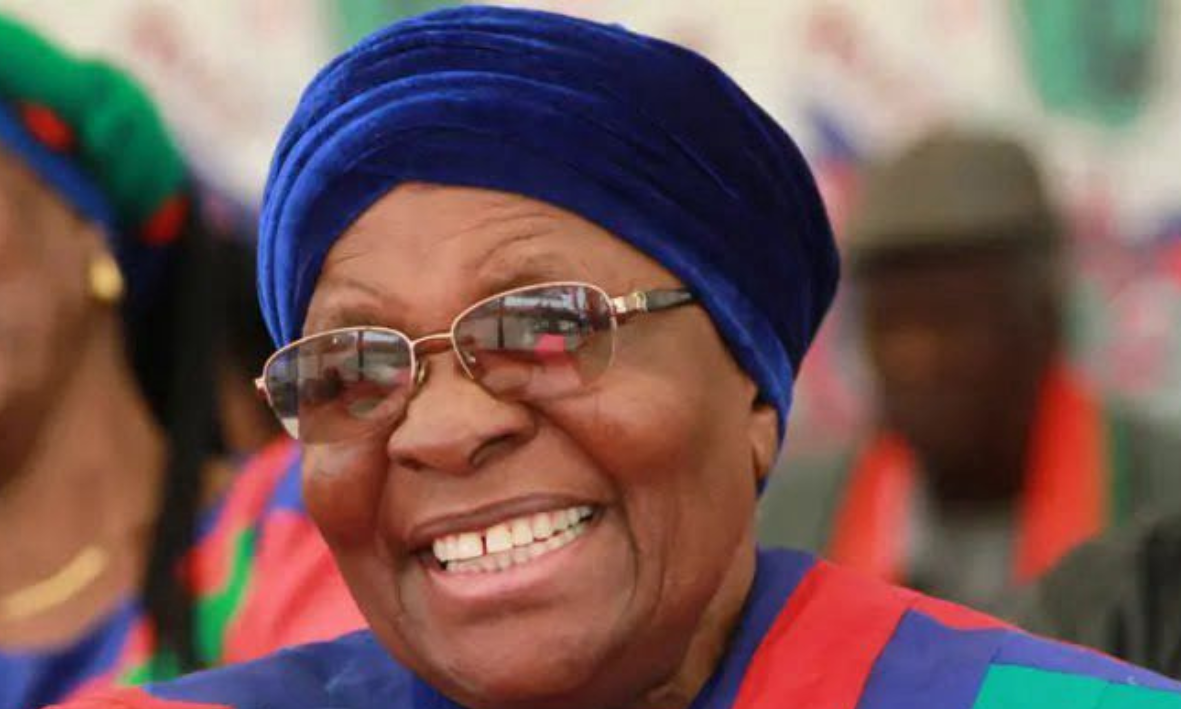
Statement by Nqabayomzi Kwankwa, UDM Deputy President and Leader in Parliament The United Democratic Movement (UDM) extend its congratulations to President Netumbo Nandi-Ndaitwah on her historic election as the first female President of Namibia. This is a momentous occasion not only for Namibia but for the entire African continent, as it marks a significant step forward in the advancement of women in leadership. Her election is a testament to the strength of democracy in Namibia and the growing recognition of the vital role women play in shaping the future of our nations. We commend the people of Namibia for their commitment to progress, equality and good governance. As she takes on this important responsibility, we wish President Nandi-Ndaitwah strength, wisdom and success in leading Namibia towards greater economic growth, social justice and unity. We look forward to fostering strong relations between Namibia and South Africa as we work together for the development of our region. May her leadership inspire many more women across Africa to rise, lead and break barriers for generations to come.

Admin
21 Mar, 2025
Human Rights Day 2025
Statement by Nqabayomzi Kwankwa, UDM Deputy President and Leader in Parliament As South Africa commemorates Human Rights Day, on 21 March 2025, the United Democratic Movement (UDM) reaffirms its unwavering commitment to upholding the fundamental rights and freedoms enshrined in our Constitution. This day is a solemn reminder of the sacrifices made by those who fought for justice, equality, and dignity in our country. The UDM has always stood for a South Africa where human rights are not just words on paper, but a lived reality for all. We remain steadfast in ensuring that every South African enjoys the rights to freedom, dignity, safety, and equal opportunities. The UDM will continue to safeguard democracy and strengthen institutions that protect human rights with our continued fight against corruption, abuse of power, and any attempts to undermine the rule of law. We will continue to fight against poverty, inequality, and unemployment by pushing for policies that promote economic inclusion, land reform, and fair wages. In a country combatting high levels of crime, we will continue our advocacy for stronger action against gender-based violence, crime, and human trafficking and a reform in the justice system as unpacked in our last election manifesto. Access to healthcare, education, water, and housing is a fundamental human right and the UDM remains committed to holding the government accountable for better service delivery. As we mark Human Rights Day, let us honour the past by working towards a better future, i.e. a South Africa where freedom, fairness, and dignity are the cornerstones of our democracy. The UDM will continue to fight for the rights of all South Africans, ensuring that our hard-won democracy benefits every citizen, not just a privileged few.
Admin
27 Feb, 2025
UDM rejects commission of inquiry into initiation deaths as a wasteful exercise
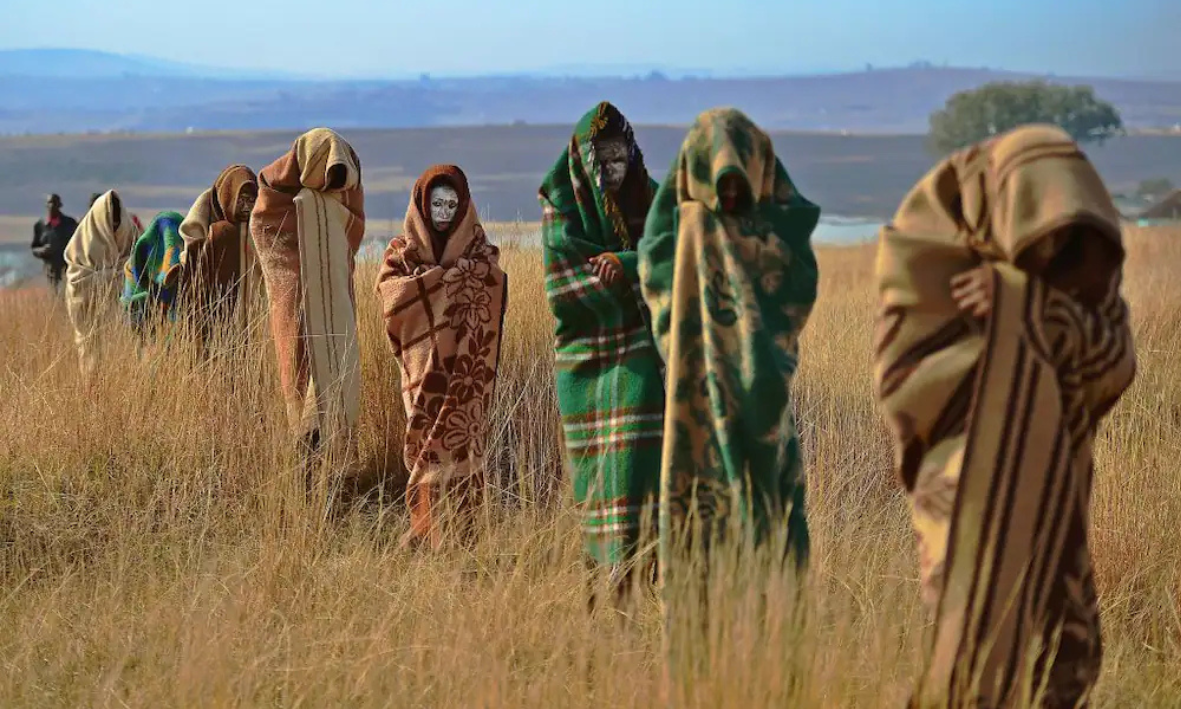
Statement by Nqabayomzi Kwankwa, UDM Deputy President and Leader in Parliament The United Democratic Movement (UDM) strongly rejects the Department of Cooperative Governance and Traditional Affairs’ (CoGTA) decision to establish yet another commission of inquiry into the tragic deaths of initiates in the Eastern Cape. This is nothing more than a wasteful exercise that will do nothing to address the ongoing crisis. We have seen this pattern before; the government launches a commission, spends millions of rands, compiles a report, and then shelves it. Meanwhile, families continue to bury their children, and the root causes of the problem remain unaddressed. If the government were truly serious about resolving this issue, it would prioritise the solutions that traditional leaders have long proposed. The House of Traditional Leaders has consistently called for stricter enforcement against illegal initiation schools, proper training and regulation of traditional surgeons, and better coordination between cultural structures, communities, and law enforcement agencies. These are practical, implementable measures, yet CoGTA chooses to waste time and money on another commission that will bring no new solutions. Even more concerning is the complete lack of consultation on this matter. Some leaders of the Congress of Traditional Leaders of South Africa (CONTRALESA) were not even informed of this decision and only learned about it through the media. This raises serious questions about the government’s true intentions. If this commission is genuinely meant to protect initiates, then why are those responsible for overseeing the tradition being sidelined? This is unacceptable and further proof that the commission is nothing more than a political smokescreen, an illusion of action with no real impact. For years, traditional leaders, as custodians of this sacred practice, have pleaded for resources to properly implement their strategies, yet they have struggled to secure government support. They have called for funding and resources to ensure that initiation schools are safe, properly regulated, and culturally authentic. Yet, instead of investing in these well-funded solutions, the government suddenly finds money for an inquiry, a process that could cost millions while delivering little to no tangible change. This is yet another example of misplaced priorities: money wasted on endless discussions instead of real, life-saving action. Should CoGTA insist on proceeding with this commission, it must be led by Xhosa men who have undergone the initiation process themselves. Anything less would be a complete insult to this deeply significant rite of passage. Initiation is not a bureaucratic procedure, it is a sacred tradition that requires respect, cultural understanding, and firsthand experience. No one who has not walked this path can claim to regulate or intervene in a process they do not fully grasp. The UDM demands that CoGTA abandon this unnecessary commission and instead redirect its resources towards real, practical interventions, such as regulating traditional surgeons and caregivers, enforcing strict oversight of initiation schools, and strengthening collaboration between cultural structures, communities, and law enforcement. Furthermore, there must be aggressive law enforcement operations targeting illegal initiation schools and unqualified surgeons, particularly in hotspot areas such as the OR Tambo and Alfred Nzo regions of the Eastern Cape. The time for talking is over, now is the time for action. Mabaye bephila, babuye bephila abantwana!
Admin
21 May, 2019
World Day for Cultural Diversity for Dialogue and Development
On this day, World Day for Cultural Diversity for Dialogue and Development, we are reminded of how we should respect one another’s constitutional rights and, specifically, each South African’s right to cultural expression. The United Democratic Movement (UDM) believes that cultural diversity drives change, not only with respect to economic growth, but it also assists our society to achieve sustainable development, which in turn reduces poverty. Bridging the gap between cultures is urgent and necessary for stability, development and social cohesion in our country. On this score, South Africa still has a long way to go. Unfortunately, there is a palpable feeling of unease amongst our people, which is born out by the results in our just passed election. From the UDM’s perspective, we cannot afford to lose more time in forming a cohesive society and to unleash the creative power inherent in our diversity to transform South Africa into a winning nation for all who live in it. It is not only incumbent on government to promote social cohesion, but it is each of our responsibility to learn about each other’s cultures and live-out our constitutional rights, responsibilities and ideals. The UDM therefore calls on all South Africans to reach out to one another and respect each other’s beliefs and traditions, so that we may be a unified nation. Issued by: Mr Nqabayomzi Kwankwa UDM Deputy President

Admin
03 Jun, 2018
UDM National Election Workshop
The United Democratic Movement (UDM), held its National Election Workshop from the 1st to the 2nd of June, at Burgers Park Hotel, in Pretoria. The UDM can now confirm, with confidence, that it is all systems go. 2018. The workshop was attended by the national leadership, the representatives from provinces and regions, the youth, women and young professionals associate structures. President Holomisa said the gathering’s main purpose was to establish a UDM Road Map towards 2019 national and provincial elections, and to retune its Manifesto to effectively address the national current challenges. He said the current state of national affairs require a new thinking. He made it clear that the old thinking of Liberation Movement no longer serves the needs of the majority of South Africans and lamented the loss of vision within the ruling party, which has been captured by the corrupt, and co-opted by the elites. The current change of leadership in the ruling party does not bring anything new, Holomisa said; instead it is a step backward towards the neoliberal narrative that brought us corruption in a large scale. In Orwellian language, it is just a change of characters who stands on the first trough feeding line. The Secretary General of the UDM, Mr Bongani Msomi, presented the state of the party report. He talked with r egards to laws and regulations of IEC, making it clear how the UDM features in the current political landscape. The UDM believes the country is in urgent need of a comprehensive and integrated infrastructure plan, both for social and economic development. The party emphasis is on the maintenance, improvement and sustainability of the existing, whilst new and modern infrastructure is developed. The well-known independent political analyst, Dr Somadoda Fikeni gave a robust and critical evaluation of the balance of political forces in the country. With regard to elections, we took bold resolutions, amongst others, are the following: Reconnect with our communities through a campaign called Community Service – Putting People First. [We are clear that there are still serious service delivery gaps that need to be take up with the government of the say on behalf of the people in particular the vulnerable groups.] Internally, we plan to be ready with the list processes before the end of the current year. All our election machinery shall be in full swing by the end of August. Polish our manifesto and policies on the socio-economic challenges facing our people: rural and the urban infrastructure, implementation weaknesses, job creation, crime, education, health, good governance and anti-corruption.The UDM has been successful in championing current Popular Policy Positions in the country. Amongst those is: The need for a dialogue on Land. A National Convention on economic policy development and redistribution that must benefit the majority of our people. The National Assembly resolution of the 27 February 2018, which is also consistent with the UDM call for explicit constitutional clarity on expropriation without compensation, thus we supported it. The recently adopted Party Funding Bill is one of the campaigns the UDM has been championing since 2003. The party sharpened and consolidated its position on the Land Issue and its prepared contribution in the current national debate on Land Expropriation without Compensation. The workshop is of the view that: Land must be expropriated without compensation, for the common cause, where necessary. The constitution as it stands, must be tested to the maximum to create progressive precedence. The state capacity to deliver on this constitutional mandate has to be enhanced for efficiency and speedy effectiveness. There is an urgent need to attend to the urban / city land hunger for human settlement and entrepreneurship. Rural development must be reprioritised. Land Tax Gender Parity The UDM notes the politically related violence and which finds its expression within the governing party. We call on all political parties, to ensure that their internal party squabbles do not become a threat to free and fair elections in 2019. We also call on IEC to ensure that all its systems are in place on time to enable citizens. Lastly, the UDM welcomes the good work being done by our members in various provinces. We are excited about the growth of the party, especially in provinces like KZN.
Admin
03 May, 2018
Debate: Condolence Motion on the passing of Ms Winnie Madikizela Mandela
Honourable Speaker and Members, Mr Nqabayomzi Kwankwa, MP and UDM Deputy-President A big tree, an outstanding servant of the people, a struggle icon has fallen. Dr Maya Angelou, in her poem “The Great Tree has Fallen” says, and I quote: “…. when great souls die, after a period, peace blooms, slowly and always irregularly. Spaces fill with a kind of soothing electric vibration. Our senses, restored never to be the same, whisper to us. They existed. They existed. We can be. Be and be better. For they existed.” As we mourn and are still trying to come to terms with the untimely death of Mam’ uWinnie, no one can deny the fact that our lives are better because she existed. Mama was a fearless freedom fighter, who brought her superlative courage to the struggle during the darkest hours of oppression. She was a colossus that bestrode the lives of the poor and downtrodden, shielding them from the vicious onslaught of the apartheid regime. It was therefore not surprising that South Africans, who understand the passage of the struggle for freedom, regarded her with veneration. It is because these South Africans understand that both in the war against the apartheid regime and in peace, Mam’ uWinnie served South Africa unfailingly and wholeheartedly for decades. For these reasons, it was also not surprising that, when Mama uWinnie passed away, the world rang with tributes to this great leader of our time. We were however flabbergasted by the ostentatious vulgarity of the criticism of her legacy by some of her detractors and the brazen lies they told to tarnish her image. Despite your venomous attacks on her, our love and respect for her remains undiminished. Disappointingly, even the behaviour displayed by some of those who tried to defend her legacy was at times marked by puerility. This group displayed an exclusivist notion to national interest and the right to defend her legacy, which was extremely intolerant of dissenting views, whether valid or not. It the saddest irony of history and a damning indictment of our leadership that we used her passing to divide the very same nation she fought tooth and nail to unite. Colleagues, you know that I prefer truth to comfort! Granted, Mama was not without faults. She made mistakes just like everyone else. However, to reduce her legacy to her mistakes understands neither the dangers of the struggle for freedom, nor the monumental sacrifices on which our pedestal of hope is premised. In this regard, we owe it to the youth of this country and future generations to tell an objective account of Mam’ uWinnie’s historical contribution to our liberation struggle that is free of distortions. Madam Speaker, Throughout our struggle for freedom, Mam’s uWinnie was sustained not only by her love for our people, but by her sincerity and commitment towards building a democratic, united, non-racial and non-sexist South Africa. In your honour Mama, we will continue to fight for the improvement of the lives of the poor and to ensure that land is returned back to our people. We will not let your passing, as our struggle icons, to be the end of era of South African greatness! We will continue to individually and collectively work hard towards building a South Africa in which we look forward to the sunrise of our tomorrow! Menze Thixo aphumle ngonaphakade. Umkhanyisele ngokhanyiso olungacimiyo. Thank you.
Admin
30 Apr, 2018
Workers Day 2018
Media release by Mr Nqabayomzi Kwankwa, MP and UDM Deputy President On Labour Day, 1 May 2018, we all dwell on the plight of the working South African and the United Democratic Movement (UDM) unequivocally supports our workforce. South Africa’s painful history, with the exploitation of black South Africans, has left a scar on the psyche of our workforce and the poor. Today the formerly oppressed, comprising the biggest section of our workforce, as well as the poor, find themselves doing menial and/or physical labour for a slave wage. Only the lucky few has joined the middle class and the comrades in corruption have left their brothers and sisters to rot in the clutches of poverty which they are unlikely to escape under a ANC-led government. The UDM takes a dim view of big corporates’ annual threat of job-shedding, because they claim they cannot afford a too-high wage bill at the time of annual increases. Pay your directors less money and reduce the gap between the haves and the have-nots! Be what Judge Mervyn King calls conscious companies and look at the big picture before you ruthlessly cut jobs. The UDM reiterates the urgent call it made last week, for government to refer the proposed changes to our labour legislation back to the National Economic Development and Labour Council (Nedlac). We believe that the proposed changes will roll back progress made thus far. We also reiterate the call that Nedlac must have a wider range of representation and should not exclusively comprise of big business, the big unions and big trade federations. As we mark this day with those who have jobs, we also have in mind the millions of South Africans (including those with tertiary qualifications) who do not have work. We must not only concern ourselves with the rights of workers, but also with the right of all our people to work, have dignity and prosperity, as well as the opportunity to contribute to the economy. In fact, every day should be Labour Day, where we work towards a working and winning nation. Issued by: Mr Nqabayomzi Kwankwa, MP UDM Deputy-President and Chief Whip in the National Assembly
Admin
24 Apr, 2018
Changes to labour legislations must go back to #Nedlac for broader consultation
The United Democratic Movement (UDM) makes an urgent call on government to refer the proposed changes to the Labour Relations Act and the Basic Conditions of Employment Act, as well as the introduction of the National Minimum Wages Bill, back to the National Economic Development and Labour Council (Nedlac). These proposed changes are tantamount to rolling back progress made thus far in terms of the rights of the working class. From the thunderous outcry of various key role players, that the consultation process around these laws was flawed, it is clear the government did not do its due diligence. The voices of several unions and union federations were simply not heard. Government leaders like President Ramaphosa, Deputy President DD Mabuza and Minister Gwede Mantashe, whom all have their political careers – and the powers they wield – thanks to their union roots, must surely understand that ignoring key role-players, or putting some before others, is a recipe for disaster. The Congress of South African Trade Unions (COSATU) and big business cannot be the only influencers at Nedlac. The other union federations such as South African Federation of Trade Unions (SAFTU) must be given an opportunity to present their views, vent their frustrations and form part of the collective decision. Their participation cannot be denied just because they do not meet a convenient threshold to exclude certain bodies. In addition, a great portion of our national economy and future prosperity rests in small, medium and micro-sized enterprises (SMMEs). Therefore, organisations like the Federated Chamber of Commerce and Industry (NAFCOC) must also be represented at Nedlac. The UDM believes that no law must be foisted on an unsuspecting public, especially when it runs the risk of contradicting the constitution and infringes on people’s rights as enshrined in our ultimate law.

Admin
16 Nov, 2017
UDM Deputy President, Nqabayomzi Kwankwa, to address annual assembly of the Southeast Asian Nations Parliamentarians
Background Mr Nqabayomzi Kwankwa, MP (Deputy President and Chief Whip of the United Democratic Movement) was invited to – from 6 to 8 October 2017 – participate in a Regional Meeting of Association of Southeast Asian Nations (ASEAN) Parliamentarians. The meeting focussed on the use innovative means to prevent discrimination, to uphold political freedom and to promote democracy and human rights throughout that region (and in fact the world). There was also some focus on protecting and promoting freedom of religion or belief, under the auspices of the International Panel of Parliamentarians for Freedom of Religion or Belief (IPPFoRB). Mr Kwankwa joined a delegation in Bangkok (Thailand) comprised of various leaders of political parties, international diplomats and civil society representatives, as well as ASEAN Parliamentarians and former Parliamentarians from Thailand, Vietnam, Indonesia, Malaysia, Philippines, Singapore, Myanmar, Cambodia, Laos and Brunei. The trip included a visit to Nepal (on 9 and 10 October) with time spent on negotiating with the most senior Nepalese public representatives about their people’s civil rights and, specifically, that of freedom of religion or belief. The various interactions with individual leaders and groups, gave Mr Kwankwa the opportunity to, not only learn from their experiences, but to also showcase the South African narrative. To advocate that: bitter adversaries can meet peacefully; to talk, but also listen; to grieve and find reason to again rejoice; to meet each other half-way and, most importantly, to continue working on sustainable democracy in South Africa. South Africa’s model Constitution, which gives expression to, amongst others, our dignity of person; freedom of expression, association and religion; gender equality as well as press freedom, served as a prime example of what is possible in creating, fostering and protecting human rights. Invitation to address APHR Annual Assembly Upon his return to South African, APHR again invited Mr Kwankwa to – this time – address its Annual Assembly to be held from 25 to 26 November 2017 in Phuket, Thailand. The theme is: “The role of African Parliamentarians in creating and fostering a Human Rights Culture in Africa and the World”. Mr Kwankwa will not only make use of this opportunity to promote the ongoing South African project (to assist in the project of creating and fostering a world-wide human rights culture) but also to build partnerships between African and ASEAN Parliamentarians, and others around the world, in building healthy, tolerant and equal societies.
Admin
03 Apr, 2017
UDM Chief Whip asks the NA Speaker for urgent debate on President Zuma motion of no confidence
Dear Madam Speaker MOTION OF NO CONFIDENCE IN THE PRESIDENT OF THE REPUBLIC IN TERMS OF SECTION 102 OF THE CONSTITUTION OF SOUTH AFRICA AND SECTION 129 OF THE RULES OF THE NATIONAL ASSEMBLY With his unexplained, and seemingly unilateral, cabinet reshuffle the President of the Republic of South Africa, Mr JG Zuma, has effectively relegated the South African economy to junk status. Whether he considered the consequences his decision seems doubtful. South Africans will soon feel the pinch – but ultimately the poorest of the poor will be hardest hit when food, transport and other necessities become unaffordable. The United Democratic Movement adds its voice to that of our colleagues in other parties, and I herewith lodge a motion of no confidence in the President in terms of Section 102 of the Republic’s Constitution, as well as Section 129 of the rules of the National Assembly. Yours sincerely Mr Nqabayomzi Kwankwa, MP UDM Chief Whip