Admin

17 Sep, 2025
No Space, No Future? UDESMO says Enough!
Statement by Lucia Matomane, UDESMO Eastern Cape Provincial Chairperson The United Democratic Students’ Movement (UDESMO) in the Eastern Cape has long been outraged by the persistent crisis in higher education. For years, students have been forced to carry the burden of the government’s failure to plan, NSFAS’s chaos, and issues like universities that reward executives while neglecting learners. Each academic year brings the same broken promises, the same delays, and the same exclusion of thousands of young people who only seek the chance to study further. This year, 850,000 matriculants will sit for exams, but only half of them will find a place in universities, TVETs, or CET colleges. The rest will be left behind. Imagine working hard to pass matric, only to be told there is no space for you. That is not just bad planning, it is a betrayal of our generation. At the same time, the National Student Financial Aid Scheme (NSFAS) is collapsing under the weight of its own failures. Kimberley is the latest example, centred on Sol Plaatje University, where landlords housing more than 500 students have not been paid for over a year. Businesses are closing, jobs are being lost, and students now face the threat of eviction. This is not a “Kimberley issue,” it is a national crisis that repeats itself every year. Meanwhile, vice-chancellors and executives continue to pocket millions while students sleep in libraries, go hungry, and drop out because allowances never arrive. The inequality is staggering, and it proves that the system serves the powerful, not the students. • Now we are told that a “war room” will solve these problems. But students do not need another committee. We need urgent action. Minister Manamela’s war room must address the following issues: • Pay landlords now to stop evictions. • Expand the number of student spaces for 2026 so that no deserving learner is left behind. • Ensure safe, affordable housing by funding universities and TVET colleges to expand residences, and by holding NSFAS and accredited private providers accountable for the conditions students live in. • Stop rewarding executives with inflated salaries while students are denied basic dignity. • Think long term: expand infrastructure, build new universities and TVET colleges, and create the capacity to serve the next generation of students instead of leaving them stranded year after year. The truth is that the Department of Higher Education and Training has failed to plan for the long term. In 2026, we will see the same heartbreak as in 2025: young people arriving at campuses only to be turned away. For 30 years, successive ministers have wasted opportunities and resources, while the system remains stuck in crisis mode. Year after year, students pay the price for their inaction. We as UDESMO say: enough is enough. We will not be silent while our generation is robbed of opportunity. We will organise, we will mobilise, and we will hold government, NSFAS, and institutions accountable. Students cannot wait. Our future cannot be postponed. Inclusion now!
Admin
11 Sep, 2025
NCA’s inclusion of educational institutions is a death knell for student credit records
Statement by Lucia Matomane, UDESMO Eastern Cape Provincial Chairperson The United Democratic Students’ Movement (UDESMO) in the Eastern Cape is deeply troubled about the Department of Trade, Industry and Competition’s, proposed amendment to the National Credit Act (NCA), which seeks to include educational institutions as data sources for credit reporting. We strongly oppose this amendment and its potential consequences for South African students and graduates. South Africa is already facing an unprecedented unemployment crisis, with graduates forming a significant part of the jobless population. Many young people, despite having completed their studies, remain unemployed and unable to service their crippling student debt. Instead of addressing the structural challenges that hinder youth employment, this amendment risks trapping graduates in a cycle of debt and financial exclusion. There is also a very real risk that negative credit records arising from unpaid student debt could prevent graduates from employment opportunities, particularly in the financial sector and other industries where a clean credit record is required. This policy could worsen youth unemployment and deny poor and previously disadvantaged graduates, access to already limited economic opportunities. Education must serve as a pathway to empowerment and upliftment. Instead, these proposed credit measures will deepen inequality and effectively oppress the financially vulnerable and economically marginalised youth, closing the door to economic participation and social mobility. The NCA is threatening to kill the future of our generation. Young people who wish to start businesses risk being blacklisted at the very beginning of their journeys, with their futures destroyed before they even have the chance to build them. As UDESMO Eastern Cape, we stand firm in advocating for fair and transparent credit practices, greater financial education, and meaningful support for vulnerable students. We call on policymakers to take into account the unique challenges students face and to work towards creating a more inclusive, just, and supportive financial environment that empowers rather than cripples young South Africans. The UDESMO Eastern Cape therefore calls for the withdrawal of this amendment and for the Department of Trade, Industry and Competition to engage with stakeholders on solutions that address the root causes of graduate debt and unemployment, such as debt relief measures and sustainable pathways to employment. South Africa’s future cannot be built on the financial exclusion of its youth.

Admin
20 May, 2025
Gauteng’s subsidy cuts to independent schools amid R317 million underspending
Statement by Andile Jabavu, Provincial Secretary of the UDM in Gauteng The United Democratic Movement (UDM) in Gauteng is deeply alarmed by the Gauteng Department of Education’s (GDE) decision to slash subsidies to independent schools by 20% for secondary and 18% for primary institutions, while simultaneously failing to spend R317 million of its 2024 education budget. This decision is not only fiscally unjustifiable but also morally reprehensible in a province grappling with widespread educational inequality. Independent schools, particularly low-fee institutions, play a vital role in absorbing learners who would otherwise be left behind by a public system strained by overcrowding, inadequate infrastructure, and uneven quality. These schools often serve poor and working-class communities, offering a beacon of hope to parents who seek quality education for their children in the absence of viable public alternatives. To cut funding to these institutions while returning funds to Treasury reflects a glaring disconnect between the department’s policy intentions and the lived realities of learners and educators. What is particularly disconcerting is that this cut affects the most vulnerable - children in low-fee independent schools that operate on razor-thin margins. It undermines the constitutional imperative of access to quality education and violates the principle of equity that should guide all public funding decisions. The GDE’s explanation, that the funds were redirected to fee-free public schools, raises more questions than answers. Why must support for one group of disadvantaged learners come at the expense of another? Is the Department not capable of simultaneously planning for both? Moreover, the underspending of R317 million is a symptom of administrative inefficiency and poor planning. This is not merely a missed financial target; it is a failure to deliver services, provide resources, and invest in the future of Gauteng’s learners. Underspending on education in a province where schools still battle with infrastructure backlogs, teacher shortages, and over-enrolment is both inexcusable and an indictment on leadership. The UDM calls on MEC Matome Chiloane to account to the people of Gauteng: • Why were these funds not spent in a province with so many glaring education needs? • What processes were followed in deciding on the subsidy reductions, and were affected schools consulted? • What are the GDE’s contingency plans to prevent low-fee independent schools from collapsing under the weight of these cuts? We further urge the Provincial Legislature to institute a full review of GDE’s budgeting processes and to ringfence funding for low-fee independent schools in future fiscal years. The UDM also calls on the Portfolio Committee on Basic Education in Parliament to initiate an inquiry into provincial education departments that repeatedly underspend while simultaneously cutting essential services. Education is not a favour bestowed by government; it is a right enshrined in our Constitution. No child should be punished because their school does not fall neatly into the public sector box. The real question is not whether we can afford to support independent schools; it is whether we can afford to lose the contributions they make to an already overburdened education system.

Admin
26 Apr, 2025
UDESMO welcomes Jafta Commission at WSU but calls for broader student issues to be addressed
Statement by Manyano Njikela, UDESMO Branch Chairperson at Walter Sisulu University The United Democratic Students’ Movement (UDESMO) in the Eastern Cape notes and welcomes the appointment of retired Justice Chris Jafta to lead the Commission of Inquiry into the serious events that have recently taken place at the Walter Sisulu University (WSU) including the tragic shootings of students Sisonke Mbolekwa, Ntando Gqetywa, and Lizwa Ndzumo on 15 April 2025. We commend the University Council for invoking Section 7(2)(n) of the Institutional Statute of 2024, which allows the Council to establish a Commission of Inquiry into matters that pose significant risks to the institution. We trust the Commission will carry out its work independently and thoroughly. While we appreciate the urgent response by the University Council and welcome the scope of the Commission, especially its focus on issues of security, student safety, governance and allegations of violence, we are deeply concerned that the broader struggles of students are not being fully addressed. In particular, we call on the university and the Commission to investigate the root causes of student protests and unrest, including the painful issue of students from poor families being deregistered due to financial exclusion. This is a national crisis that continues to deny young South Africans their right to education and a better future. The UDESMO in the Eastern Cape therefore believes that the Jafta Commission must go beyond the incidents of violence and look at the full picture of student experiences at WSU, including academic exclusion, poor living conditions, lack of psychosocial support and the WSU’s response to student grievances. We hope the Jafta Commission will be a turning point, not just for accountability, but for lasting change that puts students first and ensures our institutions of higher learning are safe, inclusive and fair.

Admin
24 Apr, 2025
UDM Eastern Cape shocked by sexual abuse cases in our schools; tougher laws and real accountability needed
Statement by Bulelani Bobotyane, Provincial Secretary of the UDM in the Eastern Cape The United Democratic Movement (UDM) in the Eastern Cape is shocked and angered by reports that nearly 30 educators in the Eastern Cape including five principals and two deputy principals, have been implicated in sexual offences involving learners in just the past year. This includes cases of sexual harassment, sexual assault and inappropriate relationships with pupils, many of whom are minors. This is a disgrace and a betrayal of trust by those meant to educate and protect our children. Schools should be safe places for learning and growth, not hunting grounds for sexual predators. The UDM in the Eastern Cape strongly believes that dismissal is not enough, there must be harsher punishments for perpetrators of such crimes. We are calling for urgent legislation that enforces criminal charges, longer prison sentences and permanent blacklisting of any educator or school staff member found guilty of sexual abuse or misconduct. Predators should never be allowed to work with children again, not in schools, not anywhere. It is unacceptable that some educators simply walk away with written warnings, short suspensions or salary deductions. Even more disturbing is that some cases are being withdrawn because victims, often traumatised children are too scared to testify, resulting in abusers escaping justice. We welcome the report by Education MEC Fundile Gade to the Bhisho Legislature, but we demand that this not be the end, the department must work hand in hand with SAPS, the Department of Justice and social workers to ensure every victim is supported and every perpetrator is brought to book. We also urge the South African Council for Educators (SACE) to act decisively in cancelling the registration of these individuals so they can never return to the profession. It is time that we say enough is enough. This is not just a school issue, it is a national crisis. A system that delays justice or allows abusers to slip through the cracks is complicit in harming children. The UDM in the Eastern Cape is committed to defending the rights and dignity of learners across our province. We will continue to advocate for a school environment where trust is protected, justice is swift, and survivors are never left to suffer in silence. This crisis demands bold and urgent action; not only from the department but from society as a whole. Our children deserve better, and we will not rest until the full weight of the law protects them.

Admin
17 Apr, 2025
GDE’s continued failure to place 50 Diepsloot and Riverside learners in schools
Statement by Andile Jabavu, Provincial Secretary of the United Democratic Movement in Gauteng The United Democratic Movement (UDM) expresses concern and frustration over the continued failure by the Gauteng Department of Education to place nearly 50 learners from Diepsloot and Riverside into schools, despite the second term of the academic year already being underway. It is unacceptable that four months into the school year, children are still sitting at home while their right to basic education as enshrined in Section 29 of the Constitution is being denied. According to community reports and confirmation by activist Reginald Lebotse, dozens of learners remain unplaced due to delays in the completion of the Tanganani Primary School a project that was promised to be operational by the end of March 2025. Instead, families continue to face broken promises and vague reassurances. We further note the South African Human Rights Commission’s (SAHRC) intention to scrutinise the province’s admissions system, especially in areas affected by migration and rapid urban growth. The UDM supports this investigation and urges the SAHRC to prioritise Diepsloot and similar communities in their review. We call on the Gauteng Department of Education to urgently place all unplaced learners in temporary, safe and properly resourced classrooms while awaiting permanent school infrastructure. Provide clear timelines and transparent reporting on the completion of Tanganani Primary School and any other affected infrastructure projects.

Admin
03 Apr, 2025
Far-reaching consequences of bullying: suicide of Joseph Maimela
Statement by Zandile Phiri, Acting Secretary General of the United Democratic Movement The United Democratic Movement (UDM) expresses its sympathies to the family of Joseph Maimela, a Grade 12 student from Kgabo Secondary School in Mokgokong Village, Limpopo, who tragically took his own life in October last year. His death has highlighted serious concerns regarding the role of educators, particularly allegations that teachers at the school may have contributed to his distress. Reports suggest that teachers publicly shared Joseph's progress report card with the entire school, an action that, if confirmed, would be a significant violation of professional conduct and a breach of the student’s dignity and emotional well-being. The Maimela family's frustration with the lack of transparency and delayed action from the Limpopo Department of Education is both understandable and justified. Despite claims from the department that an investigation has been concluded, the family has yet to receive any meaningful updates or information on the status of the case. Six months have passed since Joseph’s death, and the family remains in the dark, without any clarity or assurances that accountability will be pursued. This delay in action has left the family feeling unsupported and neglected by the authorities responsible for overseeing the investigation. In response, the UDM calls for the Limpopo Department of Education to take immediate and decisive action. We call on the Department to speed up the disciplinary process and ensure that those responsible for the alleged bullying are held accountable. The failure to act swiftly would be a disservice to the Maimela family and to all students who deserve to learn in an environment free from fear and harm. Furthermore, the UDM calls for a comprehensive review of how the Department has handled this case, emphasising the need for transparency and better communication with families involved in serious allegations. The broader issue of bullying within schools also requires urgent attention. While young Joseph’s tragic case is particularly devastating, bullying is a pervasive problem that affects many students nationwide. Bullying, whether physical, emotional, or psychological, can have severe consequences on a student’s mental health and well-being. The UDM believes that every student should have the right to a safe and supportive learning environment. Therefore, both educators and policymakers must work together to create schools where students feel valued and protected from harm. Finally, the UDM urges the Limpopo Department of Education, and all provincial education departments, to implement comprehensive anti-bullying strategies in schools. These strategies should include regular teacher training on recognising and addressing bullying, as well as systems that allow students to report bullying confidentially. Schools should also be equipped with mental health resources, including counsellors to support students facing emotional or psychological challenges. The recent data from the Department of Health, revealing that 7,426 children under 18 were treated for suicide attempts in 2023, underscores the critical need for a national focus on mental health in schools, with an emphasis on early intervention and proactive prevention to safeguard the well-being of all students.
Admin
01 Apr, 2025
UDM disappointed as Education Department fails to meet pit toilet eradication deadline
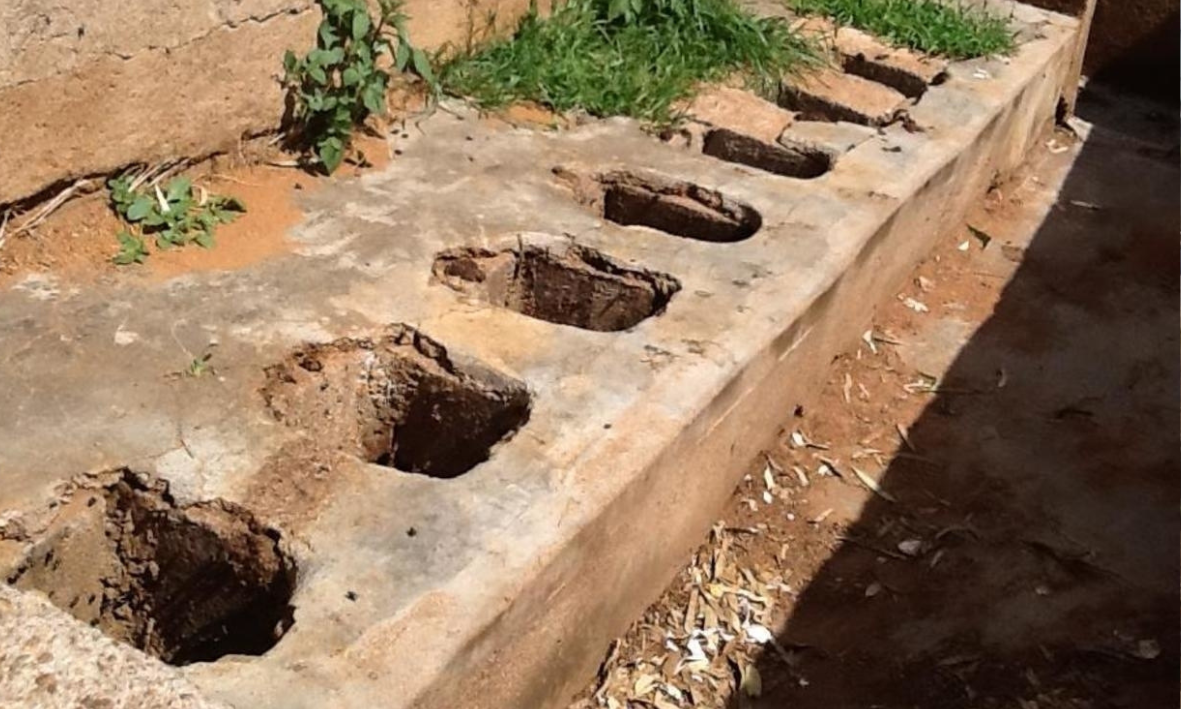
Statement by Yongama Zigebe, Councillor in the City of Johannesburg for the United Democratic Movement and Chairperson of the S79 Committee on Gender, Youth and People with Disabilities The United Democratic Movement (UDM) expresses deep disappointment over the Department of Basic Education's failure to meet its deadline for eradicating pit latrines in schools. This failure is not just a missed deadline, but an extension of a health hazard to our children. The deadline, set for 31 March 2025, has once again come and gone, leaving thousands of learners exposed to unsafe and undignified conditions. Basic Education Minister Siviwe Gwarube recently claimed that 93% of identified pit latrines have been eradicated. However, civil society organisations, including SECTION27, have raised serious concerns that the 2018 audit used to track progress is outdated, and many schools still operating with pit toilets have been overlooked. This failure is not just a missed deadline, it is an extension of a public health crisis and a health hazard to the lives of our children. The tragic case of a five-year-old learner who drowned in a pit latrine in 2014 in the Eastern Cape, should have been a wake-up call, instead, after years of court battles and repeated extensions, the government continues to move at an unacceptably slow pace. Reports from civil society indicate that many schools, particularly in rural provinces like Limpopo and the Eastern Cape, remain without proper sanitation. Some schools rely on unsafe and unhygienic mobile toilets, which are not a viable solution. In some cases, there are not enough toilets to accommodate all learners, and they are not properly maintained. According to media reports, almost 11,000 schools across the country still lack a single flushing toilet, and hundreds of schools have no running water. Learners are forced to use unsafe facilities creating serious hygiene and health risks. The government's continued failure to address this crisis with urgency is unacceptable. The UDM demands the following immediate actions: • A new, transparent national audit of all schools still relying on pit latrines, with the results made publicly available. • A clear, time-bound implementation plan for eradicating all remaining pit latrines, with no further extensions. • An accountability mechanism to track progress and ensure that responsible officials are held accountable for ongoing failures. • Increased collaboration between government, civil society and the private sector to accelerate sanitation projects. South Africa cannot afford another empty promise. The dignity and safety of our children must come first. The UDM will continue to monitor this issue closely and hold the government accountable for ensuring that no learner is forced to endure these inhumane conditions any longer.

Admin
28 Feb, 2025
UDM disturbed by ill-considered McDonald's foldable desks for Grade 1 learners
Statement by Zandile Phiri, Acting Secretary General of the United Democratic Movement The United Democratic Movement (UDM) is deeply concerned about the ill-conceived donation of foldable school desks, handed over by the Minister of Basic Education, Ms Siviwe Gwarube, in partnership with McDonald's and MiDesk Global. These desks were given to St. Paul's Primary School in Cape Town's Bo Kaap, in the Western Cape. It is unacceptable that, in 2025, our children are being used as walking advertisements for corporate branding instead of being provided with fully equipped classrooms that uphold their dignity. South African parents and educators have justifiably expressed their outrage over this situation. Rather than ensuring every child has a proper desk in the classroom, the department is celebrating a donation that shifts the responsibility from the government onto the backs of young children - literally! These desks are highly impractical, especially given the long distances and challenging roads many children must traverse to get to school. Adding this extra burden is absurd. To make matters worse, it is highly likely that the average child carrying the McDonald's foldable desk won’t even be able to afford a McDonald's Kiddies Meal in the first place! This situation is a national embarrassment for which Minister Gwarube must take full responsibility. We call on the Government of National Unity to ensure that every child, especially the poorest of the poor, has a desk to sit at when they are at school. Let us hope this is a one-time failed experiment that is not repeated elsewhere in the country.

Admin
28 Feb, 2025
UDM calls for urgent action against school bullying after more than 500 incidents occurred
Statement by Zandile Phiri, Acting Secretary General of the United Democratic Movement The United Democratic Movement (UDM) is deeply concerned about the alarming number of bullying cases reported in South African schools since the start of the 2025 academic year. A staggering 548 incident have been recorded, with Limpopo leading at 305 cases, followed by North West (78), Eastern Cape (68), and other provinces reporting significant numbers. The recent tragic deaths of learners, as well as shocking cases of physical and emotional abuse in schools, highlight the urgent need for decisive action. No child should fear going to school and no family should have to mourn a child due to bullying. The UDM calls on: 1. School authorities to strictly enforce disciplinary measures against bullies, including suspensions, expulsions and criminal charges where necessary. 2. Government to immediately launch a nationwide anti-bullying campaign, involving teachers, parents, learners and law enforcement to educate and prevent further incidents. 3. Schools and school governing bodies to have clear anti-bullying policies that are strictly implemented and monitored. An updated “Addressing Bullying in Schools” manual must be expedited and enforced by mid-2025. 4. Government to ensure that trauma counselling and legal support are available for victims of bullying and their families. 5. School principals, governing bodies and education departments must be held accountable for failing to act on bullying cases. The UDM further calls on the Department of Basic Education, SAPS and the Department of Social Development to intensify their inter-departmental efforts to prevent school violence. Parents, communities and school staff must work together to ensure that schools are safe learning environments for all children. Bullying is not just “child’s play”, it has deadly consequences. The UDM demands urgent action before more lives are lost.
Admin
27 Feb, 2025
UDM raises concerns over education crisis: Our children deserve better
Statement by Zandile Phiri, Acting Secretary General of the United Democratic Movement The United Democratic Movement (UDM) is alarmed by the findings of the latest 2030 Reading Panel report, which confirms the ongoing crisis in South Africa’s education system. This report paints a bleak picture of literacy and mathematics skills among both pupils and educators, further entrenching inequality and threatening the future of our children. According to the Report, a shocking 80% of Grade 3 pupils still cannot read for meaning in any language, while nearly 70% of Grade 6 pupils fail to reach appropriate reading levels in their language of learning and teaching. Even more concerning is the widening gap between pupils who speak English and Afrikaans and those who speak African languages - an unacceptable reality in a democratic South Africa. Equally distressing is the sharp decline in Maths proficiency among teachers. In 2013, only 1.4% of Grade 6 maths teachers had basic maths knowledge; today, that number has jumped to 7.3%. This means too many of our children are being taught by educators who lack essential skills to prepare them for the future. How can we expect our young people to compete in a world driven by science, technology, and innovation when our education system is failing them so badly? While we note the improvement in teacher reading proficiency, with 94% of Grade 6 teachers now classified as critical readers, this progress has yet to translate into better literacy outcomes for pupils. The UDM acknowledges efforts by some provinces to introduce reading assessments, but we need a national approach that ensures no child, regardless of where they live, is left behind. The root causes of this crisis are clear: • The lack of proper teacher training and professional development. • Overcrowded classrooms that prevent individual attention. • Budget cuts that leave provinces struggling to provide basic resources. • Misalignment between universities and the Department of Basic Education, leading to teachers unprepared to teach in African languages. The Department of Basic Education’s slow response has already robbed too many children of their right to quality education. The UDM demands urgent and decisive action: • Immediate intervention in foundation phase education to equip young learners with strong literacy and numeracy skills from the start. • Better teacher training and recruitment, where universities must produce educators who are truly fit for purpose. • Investment in African language education, because language should not be a barrier to success. • Proper budget allocations: Government must better spend funding for quality education. Our children are the future of this country but without the right education, they have no future at all. The UDM calls on the Government of National Unity to step up its game so that every child in South Africa receives the quality education they deserve.
Admin
19 Oct, 2020
Minister Nzimande’s high-handed interference in appointment of Unisa vice-chancellor
Dear Mr President MINISTER NZIMANDE’S HIGH-HANDED INTERFERENCE IN APPOINTMENT OF VICE-CHANCELLOR OF THE UNIVERSITY OF SOUTH AFRICA 1. Minister of Higher Education, Science and Technology Dr Blade Nzimande’s interference in the departmental processes and administration of the Department of Higher Education and Training (DHET), and that of the Sector Education and Training Authorities, have been reported to your office several times. 2. Seemingly Minister Nzimande’s ambitions do not stop there as he has set his sights on South Africa’s largest university, the University of South Africa (Unisa), in that he is directly interfering with the appointment of its vice-chancellor. 3. Sources indicate that Minister Nzimande had met with the Unisa council where he raised concern about three main issues: 3.1. The high number of students who yearly, directly enrol from high school at Unisa, a distance-learning institution, and the attending problems when these students agitate for National Student Financial Aid Scheme (NSFAS) sponsorship and they expect the same kind of support as students at contact-learning institutions. 3.2. High failure rate. 3.3. Implication of the cost of new technologies on the operations of the university. 4. At this meeting, the Minister indicated that there was a need to review Unisa considering the aforementioned challenges. He also indicated that it would be the right time for the review as the term of office of the vice-chancellor would be coming to an end. The common understanding was that the process of appointing a new vice-chancellor would be delayed until the review was completed. 5. At a later stage, the Minister specifically stated that it was the council’s prerogative to appoint the vice-chancellor and that his interactions with the university’s governing bodies should not be misconstrued as interference on his part. What an odd thing to be pointing out, if that was not in fact exactly what he was doing. 6. The Ministerial Task Team that had been made responsible for the Unisa review, started in mid-July 2020 and it would be logical, that the outcome of the review would dictate who should be appointed to implement the review recommendations i.e. in terms of the needed qualifications, experience, skills, etc. This echoes the initial expectation that the vice-chancellor would be only appointed after the review, yet the process of the appointment is being forged ahead with, with the interference of the Minister. 7. Apparently out of the five candidates that had been shortlisted earlier this year, two had withdrawn and there were those in the university establishment that thought the net should be cast wider. However, on 13 October 2020, the council chairperson and a ministerial advisor had apparently announced that they had identified a preferred candidate and that there would be no need to identify more candidates. I understand that interviews were conducted on the 14th, and the earmarked candidate was in fact recommended. 8. It is said that the preferred candidate has raised concern amongst the Unisa management and staff as there is doubt about this person’s experience and qualifications and, also, that there are many South Africans who should be considered for appointment. 9. Unisa’s council is to convene on 21 October 2020 and is expected to rubberstamp the palace decree. It is also clear that a selection committee had only been put in place to satisfy the policy requirements and it served no actual purpose as the decision on who was to be appointed as Unisa’s vice-chancellor was a fait de accompli. 10. However, Unisa’s council will be tested on Wednesday, to see whether they will endorse a woefully dysfunctional process that was spearheaded by a person who is not even a civil servant. The involvement of the Minister’s ‘industrial envoy’, Mr Nqaba Nqandela, who is masquerading as a DHET representative, definitively compromises Minister Nzimande’s promise that he would not interfere in the vice-chancellor’s appointment. Who mandated Mr Nqandela to poke his nose into Unisa’s affairs? 11. We recommend that you ask Unisa’s council, the outgoing vice-chancellor, as well as the Ministerial Task Team to brief you on the need for the review, its progress, as well as the entire process around appointment of the vice-chancellor. 12. By implication, one would expect that Unisa’s council would postpone the consideration of this item on its agenda, on Wednesday, and that it would not endorse appointment of the parachuted-in candidate, until they have satisfied themselves that the minister’s involvement has not compromised prescribed processes and appointment policies. 13. Mr President, although we have written to your office many times, Minister Nzimande continues to use his briefcase lackeys to intimidate all and sundry in the higher education establishment and this must stop. Yours sincerely Mr Bantu Holomisa, MP President of the United Democratic Movement
Admin
15 Oct, 2020
Allegations of political interference by Minister Nzimande in CHIETA CEO appointment
Dear Mr President Allegations of political interference by Minister Nzimande in CHIETA CEO appointment 1. I have previously raised with you the alleged interference of the political head of the Department of Higher Education and Training (DHET), the Minister of Higher Education, Science and Technology, Dr Blade Nzimande, in that department’s administration and also in the management of the Sector Education and Training Authorities (SETAs). 2. Yesterday, the Chemical Industries Education and Training Authority (CHIETA) announced the appointment of Mr Yershen Pillay as its Chief Executive Officer. 3. Mr Pillay is a former Young Communist League chairperson and, according to our source, is a personal confidant of Minister Nzimande. In fact, in the communication to staff, announcing Mr Pillay’s appointment, Ms Wezi Khoza (Chairperson of the CHIETA Accounting Authority) flaunted that he works in the Minister’s office as Director Stakeholder Management. 4. To provide further information and context, I remind you of my 10 September 2020-letter regarding the Minister’s reward scheme for party cronies, where his direct involvement is alleged in the creation of five DHET posts for which no logic or justification were provided in terms of the Public Service Regulations. Allegedly, these posts were not advertised; nor was there an appointment committee; nor were competency assessments conducted and no vetting or checking of qualifications were undertaken. 5. Mr Pillay was one of those lucky communists and received a whopping salary of just over R88,000 per month in the 2019/20 financial year. So, whilst business at the DHET is run like the Wild Wild West, Mr Pillay has been rewarded a second time, this time with a SETA CEO-ship. 6. Seen against the backdrop of the past allegations made around Dr Nzimande’s seeming empire building, Mr Pillay’s appointment is clearly another block in that structure, and one wonders at the goal. 7. Actions speak louder than words and no matter what Minister Nzimande says, he does not appear to be building a robust, merit-based higher education management system that works in service of South Africa for the long-term. 8. With due respect Sir, the lack of response from your office to the various matters I have raised relating to Minister Nzimande resembles ostrich politics. I therefore hope that you will break your silence on this topic with a definitive stance. 9. The United Democratic Movement will however in the meantime and in good faith persist in raising issues of national importance with you, in line with your cause to rid government of corruption. Yours sincerely Mr Bantu Holomisa, MP President of the United Democratic Movement
Admin
10 Sep, 2020
DHET: further allegations of Minister Nzimande’s political interference: appointment of SACP cronies
Dear President Ramaphosa DEPARTMENT OF HIGHER EDUCATION AND TRAINING: FURTHER ALLEGATIONS OF MINISTER NZIMANDE’S POLITICAL INTERFERENCE: APPOINTMENT OF PARTY CRONIES 1. I refer to my letters of 24 and 31 August 2020 regarding allegations of interference of the political head of the Department of Higher Education and Training (DHET), the Minister of Higher Education, Science and Technology, Dr Blade Nzimande, in departmental processes and administration, as well as the undermining of the senior departmental accounting officers. 2. Minister Nzimande’s alleged direct interference in procurement processes, such as what apparently happened with the National Student Financial Aid Scheme (NSFAS) laptop tender, clearly has disastrous consequences. This much vaunted project has flopped; everyone sits with egg on their faces and our students are left right where they started, without learning devices. NSFAS’s feeble attempt to mitigate the damage, effectively blaming a total of 150 bidders for “getting it wrong”, is almost laughable. 3. It has now come to my attention that Minister Nzimande was allegedly directly involved in twelve DHET appointments in the 2019/20 financial year that were not made in line with Public Service Regulations (PSR) and/or the Public Finance Management Act (PFMA) 1 of 1999. 4. The salaries of these twelve allegedly irregularly appointed individuals cost the taxpayer around R9,7 million a year, but once you consider the allegation that the majority of them are South African Communist Party comrades of the Minister, their appointments take another flavour and one can see why the regulations were seemingly so grossly flouted. 5. It is alleged that, in March 2020, five employees additional to the DHET establishment were appointed, but that there were no logic or justification for the creation of these posts in terms of Section 57(2) of the PSR. Apparently, the posts were not even advertised. I also understand that there was no appointment committee and no competency assessments were conducted as required by Section 67(1). Lastly, there were allegedly no vetting or checking of qualifications in terms of Section 57(3). These appointments are: 6. Another alleged appointment where the Minister had a hand in, is that of a 12-month contract of a Deputy Director-General Planning, Policy and Training, whilst this post already existed in the department establishment and it was vacant. The story with this appointment is the same as with the previous five; none of the PSR prescriptions were adhered to. 7. Two staff members were allegedly headhunted, whilst this is only allowed in terms of the DHET Recruitment and Selection Policy under certain circumstances as described in Section 2.1.6. For some reasons, apparently known only to the Minister, they were both headhunted after only one failed advertisement and the process was not conducted by a recruitment agency. Also, apparently, no verification of their qualifications has been done; they are: 8. The last four instances where the Minister apparently had a hand in are listed below, and as I understand it, there is no evidence on file, that indicates that their qualifications/studies and employment verifications were performed prior to their appointment as is required by Section 67(9a) of the PSR. 9. Much as the blustering rationalisations and irritable explanations come from the Minister, no amount of spin-doctoring can camouflage the dysfunction within the DHET, the Sector Education and Training Authorities (SETAs) and NSFAS. 10. Given the information that you have, I am interested to know what actions you have taken, or plan to take, to address these serious allegations against Minister Nzimande? Have you, at all, considered the United Democratic Movement’s call to suspend him? If not, why not? 11. Lastly, in the interest of setting the record straight, I also refer you to Minister Nzimande’s use of a ministerial briefing to strike at me and his use of a manipulative lie when he said I have an interest in doing business with his department. I wonder how he justifies conscientiously executing his oath of office if a lie is so easily told using a government platform. I wish to place on record that I am not the businessman he disparaged me to be, and that I have no interests, nor have I ever had, in any companies that do business with government and/or any of its entities. I have, in an effort to clear this up with the Honourable Minister, gone to the extent of offering to engage him on this topic on any live radio or television platform of his choice, but the response from his corner has, thus far, been mute. Yours sincerely Mr Bantu Holomisa, MP President of the United Democratic Movement
Admin
31 Aug, 2020
PSETA: Minister Nzimande’s alleged manipulation and political interference in the appointments of the board, chairperson and CEO
Dear Mr President PSETA: MINISTER NZIMANDE’S ALLEGED MANIPULATION AND POLITICAL INTERFERENCE IN THE APPOINTMENTS OF THE BOARD, CHAIRPERSON AND CEO 1. I refer to my letter to you, dated 24 August 2020, regarding the alleged direct interference of the political head of the Department of Higher Education and Training (DHET), the Minister of Higher Education, Science and Technology, Dr Blade Nzimande, in that department’s administration. Although I have not received a formal acknowledgement of receipt, the Presidency’s automated stock-email response, indicates that you are in receipt thereof. 2. I would like to bring to your attention further information I received pertaining to the Minister’s conduct, in what appears to be interference and manipulation of the administrative process leading to the appointment of the board and chairperson of the Public Service Sector Education and Training Authority (PSETA) as well as the chief executive officer (CEO). 3. Appointment of PSETA board 3.1. The fact that Minister Nzimande twice advertised, at the end of 2019 and the beginning of 2020, the call for appointments to the Sector Education and Training Authority (SETA) boards is a fact. His unexplained reasoning for doing so is, however, open to criticism for several reasons. 3.2. Regarding the 2019-round, I am told that the PSETA employed a selection process that considered merit, continuity, and the requirements of stakeholder representation. Its recommendations were forwarded to the DHET for approval. Yet, it is alleged that the Minister did not make appointments for reasons known only to him, but rather directed for the process to be re-opened. This came as a surprise to PSETA, as I suspect other SETAs, since they had already gone through their long-used process with which they are familiar. 3.3. It must be noted that PSETA apparently did not receive any new nominations during the second round of a request for nominations. This meant that recommendations made to the Minister in 2019 were relevant for appointment. It must be noted that a nomination of a certain Mr Thulani Tshefuta was apparently received during the initial nominations for board appointment but was rejected as he did not meet the requirements. The relevance of this specific allegation will become apparent later in this letter and the Minister must explain this phenomenon. 3.4. PSETA recommended a full roster of six names allocated to organised labour representatives, yet the Minister for some odd reason, appointed five, one of whom did not receive an appointment letter, thus leaving the two existing vacancies. The Minister, again without explaining himself, only made two of PSETA’s recommended reappointments. 3.5. There are two persons, namely Mr Lewis Nzimande (community organisations’ representative) and Ms Linda Dube (organised employers’ representative), who the Minister has seemingly unilaterally appointed. PSETA apparently has no records, such as curriculum vitae and the background check, ordinarily undertaken by Managed Integrity Evaluation (MIE), on file. These documents are crucial for audit purposes. 3.6. The directive by the Minister for re-advertisement without providing reasons and the subsequent appointment of board members who were not recommended nor nominated through PSETA processes is indicative of an abuse of power and manipulation of a regulated process by Minister Nzimande. 3.7. The critical question here is, was this entire exercise merely an attempt to satisfy compliance, whilst the Minister had his own agenda? 3.8. Furthermore, the Minister’s “double advertising” imposed time pressures, which resulted in the newly appointed board being unprepared and they allegedly fell prey to the CEO, Ms Bontle Lerumo, causing them to make decisions before they received a hand-over report and induction, and before they could familiarise themselves with the organisation and previous board resolutions. This is a dangerous set of circumstances, but when one considers the allegation that Ms Lerumo is a confederate of the Minister and Mr Mabuza Ngubane (the Director SETA Performance Management whom I referred to in my previous letter), matters take a shadier turn. 4. Appointment of PSETA chairperson 4.1. Regulation 14(2) of the “Standard Constitution of SETA regulations associated with the Skills Development Act 26 of 2011” was amended in 2017, ironically by Minister Nzimande himself, to allow for SETA board chairpersons to serve two terms of office. 4.2. The motivation had been to ensure continuity and organisational stability. I therefore suspect that all the SETAs were stunned when the Minister directed the advertising of the chairpersonships in late 2019. For reasons known only to the Minister this call was reopened in early 2020. 4.3. The Minister, in essence, unilaterally limited the former PSETA chairperson’s service to one term, this despite the spirit of the aforementioned amendment. I however found it extremely disturbing that the Minister, also for reasons known only to him, decided to appoint Mr Thulani Tshefuta (to whom I referred in Paragraph 3.3) as PSETA board chairperson. It is surprising that he emerged as the chairperson of the board when he did not meet the requirements for the board. 5. Appointment of PSETA CEO 5.1. As I understand it, the appointment of CEOs is in line with the SETAs’ five-year licencing period and that the SETAs’ executive committees and boards (assisted by corporate services) take responsibility for this process. Ms Lerumo’s contract ended on 31 March 2020 but, to ensure smooth transition, she must serve until 30 September. 5.2. This NQF Level 9 post was advertised in two Sunday newspapers and on PSETA’s website, but shortly thereafter the advert was recalled and re-placed (this time only on the website) with an erratum specifically lowering the level of academic qualifications. Why on earth was this done, if not to accommodate a certain applicant? 5.3. Shortlisting evidently took place and, Ms Lerumo, whom I hear does not possess an NQF Level 9 qualification, was amongst the top three performers recommended to the Minister possibly due to the new board’s inexperience and some irregular influence. 5.4. There is already an indication that the Minister refused the top candidate, because he did not know him/her. The initial list of recommended candidates is available, and should the appointment not be done according to this recommended list and Ms Lerumo is appointed, the Minister must be held accountable for flaunting the process in favour of his alleged collaborator. 5.5. It would also mean that the top candidate was discriminated against, because of the Minister’s personal preferences, and that the entire process is legally contestable in terms of our labour legislation. As a matter of fact, given the Minister’s reputation, there could be a wholesale legal action where these SETA CEO appointments are concerned. If the new PSETA board is confident that the process was fair and transparent, they should confidently supply you with all the relevant documentation. 6. Mr President, Minister Nzimande seems to be running DHET and the SETAs from his briefcase and in light of all the nauseating allegations against him that have risen of late, it is incumbent upon you and cabinet to intervene in the appointments of the SETA boards, chairpersons and CEO until the veracity of these allegations are established by your office. 7. This entire set of circumstances demonstrates Minister Nzimande’s seeming lack of duty of care as an executive authority in managing public resources and ensuring efficient public service. He appears to have demonstrated a high level of disregard for public service regulations, not acting in the interest of the public good and is not fit to be a minister and it is your responsibility to sort this out. Yours sincerely Mr Bantu Holomisa, MP President of the United Democratic Movement
Admin
01 Jul, 2020
Capturing of the administration of NSFAS
Advocate Busisiwe Mkhwebane The Public Protector South Africa Private Bag X677 Pretoria 0001 Dear Advocate Mkhwebane COMPLAINT: CAPTURING OF THE ADMINISTRATION OF THE NATIONAL STUDENT FINANCIAL AID SCHEME – ALLEGED NEPOTISM AT THE HIGHEST LEVELS, STAFF VICTIMISATION AND PURGE, CORRUPTION AND MALADMINISTRATION As you might be aware, the National Student Financial Aid Scheme (NSFAS) was placed under administration by former Minister of Higher Education and Training Naledi Pandor after its failure to pay out bursaries had led to student protests. I have been approached by concerned NSFAS employees for assistance, and the seriousness of the allegations that are being made lead me to think that this process has been “captured”. There are allegations of nepotism, victimisation and purging of staff, racism, corruption, general maladministration, mismanagement by Dr Randall Carolissen (NSFAS Administrator) in particular, as well as a general collapse of corporate governance at NSFAS. Worst of all is the allegation that the Minister of Higher Education, Science and Technology, Dr Blade Nzimande (who is supposed to oversee this process and is the custodian of good governance) is aware of some of these issues and are seemingly ignoring them and worse still, is involved in nepotism with the appointment of those loyal to him to key NSFAS (and other) positions. I hereby lodge a complaint in terms of Section 6(1) (A) of the Public Protector Act, 1994 and request you to investigate these allegations. To assist you at this point in time, please find attached to this email: 1. Annexure A (98KB) – a document that details various allegations of poor performance, unscrupulous procurement, compromised internal auditing, failures of NSFAS’s IT system, maladministration, racism and compromised oversight. 2. Annexure B (85KB) – a list of key questions regarding allegations against Dr Carolissen in terms of his role in various matters, such as nepotism and maladministration (amongst others, how much of the cumulative irregular expenditure of R7.5 billion NSFAS declared in the 2018/19 financial year was spent under his watch?). 3. Annexure C – a list of staffers and former staffers who have allegedly been victimised, targeted and or purged by Dr Carolissen (not posted due to sensitivity of the information). 4. Annexure D1 and D2 – list of persons allegedly appointed by virtue of their links to Dr Carolissen and other key players. (not posted due to sensitivity of the information) 5. Annexures E and F – allegations around a list of key persons appointed at NSFAS, and other bodies, by virtue of their personal links to Minister Nzimande. (not posted due to sensitivity of the information) I have further and more detailed information in my possession, which I am more than willing to share should you decide to investigate, as it is of paramount importance (at this stage) to protect the identities of the whistle-blowers to avoid further victimisation. I am at your disposal and look forward to engaging with you. Yours faithfully Mr Bantu Holomisa, MP President of the United Democratic Movement
Admin
30 Apr, 2020
UDEMWO: Children going to school: is government really ready for this massive operation?
As we are amid the battle against the Coronavirus, we have heard government saying that strict health guidelines have been drawn up regarding the operation of schools, including limiting pupils to 40 in a class, compulsory mask-wearing and the sanitisation of hands, classrooms and scholar transport. However, since the number of infections is rising on a daily basis, even considering recoveries, how did government arrive at the decision to open schools so soon? The United Democratic Movement Women’s Organisation (UDEMWO) therefore calls on Minister of Basic Education Angie Motshekga to take the country, and parents, into confidence on whether her department is ready and able (financially and practically) to provide Personal Protective Equipment (PPE) for each and every school; for each and every child; each and every day. We have heard disconcerting stories that government cannot even provide enough PPE at our healthcare institutions, never mind institutions of learning! This especially is a massive concern for scholars in disadvantaged areas, where parents struggle to provide food for their children and PPE is financially out of reach. There are a number of other concerns, such as, how the department is going to resolve scholar transport? Children, under “normal circumstances”, are wrongly loaded into vehicles like sardines, how on earth will it be feasible to transport thousands of children, considering the need for social distancing? What control measures are going to be put in place to maintain social distancing during breaks? Also, if no more than two pupils should share a desk, how is government going to handle schools that have large volumes of school-goers? Even though we realise that lockdown and partial lockdown (level 4) is eating away at the school year, UDEMWO is of the view that government may be jumping the gun in opening schools. At this rate, we are running a real risk of allowing the Coronavirus to run rampant through our communities by opening schools at this point in time. Issued by: Ms Thandi Nontenja UDEMWO Secretary General

Admin
29 Apr, 2020
UDMYV: Bad labour practice: remuneration of educators urgent attention
The United Democratic Movement Youth Vanguard (UDMYV) commends national government for supporting educators’ bursaries, as well as the National Student Financial Aid Scheme (NSFAS) in order to advance disadvantaged learners, especially those from informal and rural areas. It is however discouraging that, even though educators continue to commit themselves to ensure that learners receive an acceptable standard of education, their efforts are not sufficiently recognised. Amongst their major concerns, in the Eastern Cape in particular, are: (i) Lack of coordination between the school governing bodies, district and the provincial offices when it comes to assumption of duties dates; (ii) Late payment of monthly remuneration; and (iii) Inefficient protocols in dealing with the authorisations for placement. Coordination issues have been raised mostly by educators on short term contracts and by those in substitute posts. The school principal and the employee would sign the assumption of duty on a date later than the start date of engagement, in which case this document would be backdated. When this document is submitted to the relevant district office, the date of assumption of duty would be questioned and be changed to the perceived date of submission to the district. This issue would consequently affect the remuneration payment due to the employee and it is in contravention of Section 29(1)(d) of Basic Conditions of Employment Act (BCEA) which requires that the employer indicates the date on which the employment began. Based on anecdotal information collected in the Eastern Cape, KwaZulu Natal, Gauteng and the Western Cape, the majority of educators are not paid on time in the Eastern Cape and in some districts in KwaZulu Natal. Section 29(1)(j) of BCEA requires that the employer indicate the frequency of how remuneration will be paid and Section 32(1)(b) requires that the employee be paid by the employer in money either daily, weekly, fortnightly or monthly. It is apparent that this is rarely complied with. In most cases, educators (notably those on contracts or in substitute posts) are paid three months late and in worst cases five, which violates best practice. This ongoing bad labour practice requires urgent attention. This kind of negligence has a domino effect and not only negatively affects educators, but also those in need of a better education. Inefficient systems of authorisation are linked to the above two issues. Educators are no paid on time and the response always is: “We are waiting for authorisation”. The innovative world is doing away with paper and the Department of Basic Education should be using online systems – from requisitions to authorisations. This inefficiency mostly affects young graduates who need their salaries the most to sustain their monthly expenses and commitments, such as student loans. How do you expect them to produce results if they are demotivated? Government must recognise educators’ efforts in ensuring that all learners receive quality education as endorsed by the Constitution. The UDMYV therefore demands Minister Angie Motshekga’s urgent intervention in this long lasting administrative and systematic negligence, and unfair labour practice. — End — Issued by: Mr Masonwabe Nqawe UDM Youth Vanguard
Admin
05 Mar, 2020
Bantu Holomisa on Socio-Economic Transformation and Inclusive Growth
Speech by Bantu Holomisa, MP and UDM President on The Big Political Corner – Socio-Economic Transformation and Inclusive Growth at the Black Business Council Annual Policy Summit at Gallagher Estate in Midrand Let me start off by saying thank you to the Black Business Council for hosting this summit and complimenting it for having a good spread of contributors to the “big debate”, which is our economy. 1. Introduction Ladies and gentlemen, truth be told, during the struggle period the arts and law faculties of our universities were flooded by students from our disadvantaged communities. This happened because the focus at the time was to train scholars who were focussed on the liberation of our people. This was the right thing to do at that time. Unfortunately, while those classes were full, those in the economic sciences were bare. I witnessed this in 1979 when I enrolled for just such courses at the Umtata branch of the University of Fort Hare, where Professor Wiseman Nkuhlu, South Africa’s first black chartered accountant, lectured us. Hindsight being 20/20; looking at the success of, for example, Gloria Serobe who was my classmate and our highly successful businesswoman who obtained her BCom degree at the then University of Transkei during those years, we would have been speaking a totally different language today if there had been greater focus on economic sciences. This was part of the reason that I in 1998 partnered with Mr Matt Matthyser in a project called P-m=g2, where we developed supplementary study guides, providing high quality education in the subjects of English, physics, math and accounting. The aim was to give an edge to formerly disadvantaged students entering tertiary education, and for those who did not have the means to proceed, to have a proper grasp of the basics that would enable them to run their own businesses and their own private finances. Matt and I met with Ignatius Sehoole and Chantel Mulder of the South African Institute of Chartered Accountants (SAICA). We also lobbied various state departments and those in the corporate sector. Our efforts culminated in a programme, which is today called, Thuthuka and is run by SAICA. The aim having been to produce more black chartered accountants. Some of you might be aware that this project was launched in 2001 by Nelson Mandela in Umtata, and today I am proud that thousands of students have successfully graduated through the efforts of this programme, with many more to follow. Today Ignatius is the CEO of KPMG and we wish him well in turning that organisation around. I give this background, because once we attained political freedom in 1994, it was clear that our important institutions, government and the private sector would require trained and qualified professionals to run their business. The take-away from me making the point of an effective education system is that the successes of programmes like Thuthuka must be replicated en masse in, for example, the fields of agro-processing, steel and other manufacturing industries and tourism. It is not only important to create jobs, but also to send a skilled and qualified work force to fill those jobs. Not this mediocrity we have been subjected to. 2. A high-level snapshot of what we are facing Regarding the achievement of socio-economic transformation and inclusive growth, the United Democratic Movement (UDM) is of the view that government must do more, especially to address the backlogs and imbalances of the past. This would include the issues of education, land, economy and integrating the infrastructure of South Africa. Not only do we have to contend with the legacy of the past, but compounding our problems is a new triple crisis, which is: first, a fiscal crisis; second, an energy crisis; and third, the climate crisis that affects everyone, everywhere around the world. While the climate crisis is a global phenomenon, in which the developing world is a victim of the choices made by the Western powers of the industrial revolution and what followed it, the first two are own goals. The fiscal crisis and the energy crisis are clear failures of governance. On a side note and talking about a global phenomenon, the jury is still out on how great the effects of the Corona Virus will be on our economy in the end. That said, to position ourselves for the future, we urgently must fix the fiscal and energy problems over which we have control. For the economy to grow, we need a reliable supply of energy. If the government finds that it cannot maintain the social security safety needs, that it has created since 1994, and which the Constitution requires, then we will be in real trouble in terms of socio-economic risks and public order unrest. At some point, we need to take a serious look at our population growth, and the impact it has on our economy and the need to ensure a certain level of economic growth that keeps pace. This debate must take into consideration the burden on our limited resources and the pace of infrastructure development required. This dynamic should be considered in tandem with bulging immigration. Disrespect for the rule of law, as exhibited by our executive over the years, as well as institutionalised corruption have a direct bearing on South Africa’s downgrading on international ratings, which in turn negatively impacts investor confidence. Nobody doubts that over the last 25 years we have been consumers only. We need to find the ingredients to bake a bigger economic cake so that everyone not only gets a fair share, but that they also contribute to an inclusive, healthy, stable and growing economy. Also, in the past, companies like Anglo and other big conglomerates sustained government; albeit the Apartheid government. Too late did we realise that their campaigns for changes in foreign exchange policies would culminate in their listing outside South Africa. Thus, they sent the message that it is not good to invest here, and they also ended up spiting the new democratic government. Our focus from now on must be on how do we empower our own people to bake this larger economic cake I have mentioned. 3. A historical perspective on socio-economic transformation We must also look at which useful lessons history can teach us. A case in point of the “government must do more”-principle I mentioned earlier, is the international precedent of the European Recovery Programme of 1948, better known as the “Marshall Plan”. Closer to home, the Afrikaner government was deliberate in using state resources to successfully address Afrikaner poverty after the Anglo-Boer War. Some might consider state intervention as a taboo, but there is a lesson to be drawn from this part of the Afrikaner’s history i.e. how they purposefully managed to pull themselves up by their own socks and actively did something about their problems. 4. Policy certainty as a steppingstone for socio-economic growth The other important way in which we can position ourselves for the future is to be more decisive about where in our economy we want to welcome new private sector investment. Also, we cannot get away from the fact that policy uncertainty has for far too long caused South Africa much economic damage and has, in essence, halted socio-economic transformation and inclusive growth. First we had the Reconstruction and Development Programme (RDP), then the Growth, Employment and Redistribution framework (GEAR), then we switched to the Accelerated and Shared Growth Initiative for South Africa (AsgiSA), followed by the New Growth Path (NGP), then the National Development Plan 2030 and most recently, Radical Economic Transformation. This chopping and changing erodes investor confidence and drives out entrepreneurship. To compound matters, the tri-partite alliance’s differing stances on the economy further confuses policies. We urgently need to align policies with the needs of investors, and we need to provide clear policy certainty above all else. 5. Economic Indaba Regarding our macro-economic policy, after 25 years, there is still no consensus (not even within the tri-partite alliance) on how South Africa must transform its economy in a manner that creates wealth and improves the fortunes of the disadvantaged majority. This is indicative that something drastic must happen, and it must happen soon. Although we do not out of hand discard the current administration’s economic summits, the UDM strongly believes that a similar exercise as the Codesa talks needs to take place, but this time in the form of an Economic Indaba. Piecemeal conferences and summits will not do the job; it needs a concerted effort with all stakeholders gathering under one roof to hammer out South Africa’s economic policy. This Economic Indaba should emerge with consensus after which its decisions should directly go to parliament for ratification and implementation In this concerted manner, we are more likely to achieve policy certainty that will in turn ensure socio-economic transformation and inclusive growth in the near future. This proposed Economic Indaba is our best chance to find the right socio-economic solutions that will benefit all South Africans. I thank you.
Admin
20 Feb, 2020
Violent protests at universities: why is Dr Nzimande quiet?
The United Democratic Movement (UDM) is concerned that the Minister of Higher Education, Science and Technology is quite reticent when the country needs his attention the most. Since the beginning of the academic year, there has been unrest in a number of South African universities like the University of KwaZulu-Natal, the Central University of Technology in the Free State and others. These crises have been met with Dr Blade Nzimande’s deafening silence. The nationwide outcry of unhappy students, as some who qualify for National Student Financial Aid Scheme (NSFAS) support are denied their benefits, is disconcerting. This whilst Dr Nzimande has made a promise that students from disadvantaged backgrounds, and those who are from families that earn a gross income of up to R350,000 annually, would automatically be accepted for NSFAS support. What is currently taking place is different from what the minister said three weeks ago at the Council for Scientific and Industrial Research where he addressed political parties. Who is in-charge of this higher education portfolio? Why are the vice-chancellors of these universities using different approaches with regards to NSFAS? All and sundry have seen the videos circulating on social media with extremely disturbing scenes of buildings being burnt down and attacks on campus security personnel. The UDM deplores this totally wrong and unacceptable behaviour. What the perpetrators of this violence don’t seem to realise is that rehabilitation will take some years, and that this will negatively affect the future of our youth. The UDM calls on Minister Nzimande to speedily attend to the outcries of the students; these are our future leaders and they deserve better than a passive, seemingly don’t care minister. – end — Issued by: Mr Bongani Msomi UDM Secretary General
Admin
29 Jan, 2020
Free education a reality or a dream deferred
In December 2017 on the evening of the ANC Conference, South African youth woke up to news that free higher education was finally a reality as the then President Jacob Gedleyihlekisa Zuma declared. These news were greatly received with jubilation hence fees must fall activists thought they finally won the long war that has seen many young people lose their lives and others like Khanya Cekeshe activists incarcerated for a cause they so much believed in. The fees must fall campaign saw many violent attacks and blood was shed as the ANC government was very sluggish in responding to the cries of young people who so wants to be educated in-order for them to be formidable players in all economic activities. It was the same Minister Blade Nzimande who was at the helm of the Department of Higher Education and Training then and he is still today as we see yet another historical National shutdown. This is really Minister Nzimande’s legacy in this ministry, every time he holds this position in this particular department there emanates chaos as young people feel that what he says and what is happening on the ground do not talk to each other. The United Democratic Movement Youth Vanguard is of the view that there are no measures in place, plans to curb such from re-occurring, year in year out there are these shutdowns of higher learning institutions. Clearly there’s no preventative work done, and the DHET get surprised when each academic year resumes. The Youth Vanguard lamented the appointment of Minister Nzimande into DHET and all those cries and of many young South Africans fell on deaf ears as our President felt obligated to appease his comrades, factions within the ANC and tripartite alliance above the interest of the country. This is costing the country dearly. What young people are fighting for are not new demands or needs they’ve been there for years and we have called for action and decisive leadership and nothing has emanated. The UDM Youth Vanguard proposes that there should be a synergy between the two departments of lower and higher Education, since the latter seemed to not know how to prepare for the in-take of matriculants that have passed each year. These two departments are required to work closely together. Selling out the youth dreams is a gross human rights violation. A country that does not take care of its youth is a country with no future. The way things are, the ruling party will be judged negatively by history. Issued by: Yongama Zigebe UDMYV Gauteng Secretary