Admin

20 Oct, 2025
Exposing the water-tanker mafia: UDM urges SCOPA to act on corruption and sabotage in municipal supply
Mr Songezo Zibi, MP Chairperson of the Standing Committee on Public Accounts PO Box 15 Cape Town 8000 Dear Chairperson and Members of SCOPA Exposing the water-tanker mafia: UDM urges SCOPA to act on corruption and sabotage in municipal supply 1. The United Democratic Movement (UDM) wishes to bring to the Standing Committee on Public Accounts’ (SCOPA) urgent attention the alarming escalation of spending on water-tanker services by municipalities across South Africa, and the growing evidence of systemic abuse, corruption, and sabotage of water infrastructure associated with these contracts. 2. Recent investigative reports reveal that the City of Tshwane spent R777 million on water-tanker services in the 2024/25 financial year, an astronomical figure that far exceeds the reasonable cost of emergency water provision. This follows earlier findings that Tshwane alone paid more than R116 million in 2023/24 for tanker operations in areas repeatedly affected by burst pipes and alleged deliberate vandalism. 3. These numbers are not merely accounting anomalies; they speak to a wider pattern of dysfunction and profiteering. Treasury has already warned municipalities that water tankering must remain a temporary emergency measure, yet it has become a long-term business model feeding a network of contractors who thrive on public desperation. 4. The South African Human Rights Commission has gone so far as to suggest that deliberate interference with water infrastructure for profit could amount to terrorism against essential services. Lack of oversight, weak internal controls, or corruption in tendering and contracting tanker services, meaning funds may not be used optimally, or contracts may be awarded to unqualified providers. 5. The abuse of tanker procurement undermines every principle of clean administration and human dignity. It drains municipal budgets, discourages maintenance of pipelines, and forces poor communities to depend on unreliable and unsafe water sources. Every rand spent on this corruption-ridden system is a rand diverted from lasting solutions such as reservoirs, reticulation upgrades, and proper maintenance. 6. In view of these disturbing trends, I respectfully request that SCOPA: 6.1. Launch a national investigation into municipal expenditure on water-tanker services for the past five years, beginning with the City of Tshwane as a case study. 6.2. Summon the National Treasury, Department of Water and Sanitation, and the Auditor-General to account for the monitoring and control of tanker-related procurement. 6.3. Direct the Special Investigating Unit and Hawks to examine allegations of sabotage of water infrastructure and possible collusion between municipal officials and private contractors. 6.4. Recommend policy reform to ensure that water-tanker services are used only for emergency relief and are strictly time-bound, audited, and publicly reported. 6.5. Ensure transparency to communities by compelling municipalities to publish all tanker contracts, expenditure, and service records on accessible platforms. 7. South Africa’s water crisis is deepening, not only because of scarcity but because corruption has been allowed to pollute the very systems meant to deliver relief. The people deserve answers and decisive action. It is time for Parliament to intervene before water delivery becomes the next national scandal. Yours sincerely Ms Thandi Nontenja, MP United Democratic Movement Member of SCOPA

Admin
17 Oct, 2025
Request for intervention regarding Jozini: where a full dam meets empty taps
Mr Paul Shipokosa Mashatile, MP Deputy President of the Republic of South Africa Private Bag X1000 Cape Town 8000 and Ms Pemmy Majodina, MP Minister of Water and Sanitation Private Bag X9052 Cape Town 8000 and Mr Velenkosini Hlabisa, MP Minister of the Department of Cooperative Governance and Traditional Affairs Private Bag X802 Pretoria 0001 and Mr Leonard Jones Basson Chairperson of the Portfolio Committee on Water and Sanitation PO Box 15 Cape Town 8000 Dear Deputy President, Minister Majodina, Minister Hlabisa and Chairperson Basson Request for intervention regarding Jozini: where a full dam meets empty taps 1. Introduction In 2011, government promised that families living around the Jozini Dam (Pongolapoort Dam), in KwaZulu-Natal, would soon drink water from the dam for the first time in 40 years. Fourteen years later, thousands of those same families are still waiting. The people of Jozini and the greater uMkhanyakude District continue to fetch untreated water from the dam that towers above their homes. Children, elders, and livestock share the same water source in one of South Africa’s greatest contradictions, abundance without access. This is no longer an infrastructure problem. It is an accountability crisis. 2. The record of some of the reported broken promises In 2011, government announced the imminent launch of three water reticulation schemes expected to benefit about eight thousand families in the kwaJobe Traditional Authority area of Jozini. By 2015, elderly residents were still walking long distances to collect water directly from the dam, carrying heavy containers home each day while living in sight of the vast reservoir they could not access. In 2017, government declared that more than 10,000 residents across the wider Jozini area would henceforth have access to potable water. This promise was tied to phase launches of bulk infrastructure intended to expand coverage beyond urban nodes into rural settlements. However, despite this public commitment, countless households in these same areas remain without functional taps today; a stark reminder that grand launches have not translated into sustained service at the household level. That same year, the Jozini Bulk Water Supply Project launched a new treatment works designed for 40 million litres per day, meant to supply about 135,000 people (16,200 households). However, despite this major investment (over R1.075 billion spent) and the appointment of Mhlathuze Water as implementing agent, far too many in Jozini remain without functional taps. Infrastructure was built, yet the link from bulk works to community households has broken down. This disconnect between promise and performance demonstrates that the challenge is not just constructing infrastructure, but making it work for the people it was meant to serve. In 2022, the district finally obtained a licence to draw water from Jozini Dam, raising hopes that the long wait was ending. Yet, years later, the pipelines and treatment works remain incomplete, and most households still have no reliable supply. Between 2023 and 2024, frustration boiled over as residents in Mathayini and Mbabanana blocked roads and marched in protest after burst pipes, illegal connections and poor maintenance once again left entire wards without water. By 2024 and 2025, the much-celebrated Nondabuya Water Scheme, funded at R151 million and intended to reach 2,400 households, had collapsed, reaching only about 700 families before allegations of corruption and over-expenditure surfaced. Two senior officials were suspended, yet one has since resurfaced in another province’s department, continuing the cycle of impunity that defines this tragedy. 3. The cost in human dignity Behind every failed project is a community forced to live without the most basic necessity of life. Schools and clinics operate without reliable water supply. Women and children spend hours each day walking for water instead of attending school or work. Farmers lose livestock because pumps and canals lie idle. Families bury children who drown fetching water from unsafe sources. Water is life, but for many in Jozini it remains a privilege. 4. Findings from national oversight The Department of Water and Sanitation has acknowledged uMkhanyakude as one of the municipalities under Section 63 intervention, meaning national government itself recognises local collapse. The South African Human Rights Commission has confirmed that water supplied by nearly half of South Africa’s municipalities is unsafe to drink, with uMkhanyakude among those in critical condition. We take note of Water and Sanitation Minister Pemmy Majodina’s commitments in her 2025/26 Budget Vote, where she pledged to strengthen accountability, professionalise municipal water services, and accelerate delivery through the Water Partnerships Office and new legislative reforms. These undertakings are welcome and necessary. However, communities like Jozini must see these commitments materialise in real, functioning infrastructure and visible results on the ground, not only in plans, task teams, or budget lines. Minister Majodina’s speech identified vandalism, illegal connections, and non-payment as national challenges, but Jozini’s experience shows the deeper truth: these failures persist because accountability remains optional. We also note the establishment of the Makhathini Lower Pongola Water User Association in 2023 by Gazette Notice No. 48514, designed to manage the dam, river, and canal infrastructure across Jozini, uMhlabuyalingana, and parts of Zululand in a coordinated manner. Its governance structure is to include representation from farmers, municipalities, conservation authorities, traditional leaders, and other user groups to ensure equity in decision-making over water releases, allocation and infrastructure operations. Yet despite this statutory framework, the association remains largely aspirational: canal sections are vandalised or illegally tapped, refurbishment is unfunded, and community voices seem excluded from real oversight. If it is to be more than symbolic, the Water User Association must be empowered, resourced and held to account, and its operations must align with the accountability and transparency demands outlined above. We further note with grave concern the redeployment of Chuleza Hombisa Jama, a former KwaZulu-Natal Cooperative Governance and Traditional Affairs (CoGTA) official who was suspended in connection with the failed R151 million Jozini water project, to a senior position in the Eastern Cape’s disaster management unit. Despite her suspension and the unresolved investigations, she was transferred without clear vetting or accountability. Such actions undermine the principle that those under investigation should not be placed in positions of authority over public resources or emergency response. This practice erodes public trust and highlights the urgent need for national safeguards against the redeployment of officials implicated in misconduct. The UDM firmly holds that cadre deployment and redeployment without accountability have become a mechanism for perpetuating maladministration and corruption. Time and again, officials who fail or are implicated in wrongdoing are simply shuffled from one department to another with no consequence. They are recycled instead of being removed. This practice undermines public confidence and shows that loyalty and political patronage matter more than competence, integrity or results. According to UDM policy, the state must institute measures to vet, sanction and, when necessary, dismiss such officials permanently from public service. Appointments and redeployments must be subject to transparent scrutiny, and no individual should be protected from consequence because of political connections. 5. A Parliamentary call for action As a Member of the Standing Committee on Public Accounts (SCOPA), I therefore call for the following actions, each with clear lines of responsibility for the: 5.1. Minister of Water and Sanitation and the Auditor-General of South Africa to commission a joint forensic and performance audit, with the Special Investigating Unit, into all Jozini and uMkhanyakude water projects since 2010, including Nondabuya, Greater Ingwavuma, and the Makhathini Canal. 5.2. KwaZulu-Natal MEC for CoGTA to implement the immediate suspension of any official implicated in financial or project irregularities, pending the finalisation of investigations, and ensure that no redeployments occur until due process is completed. 5.3. Department of Water and Sanitation, working with the uMkhanyakude District Municipality to publish up-to-date progress reports on all water projects in Jozini and uMkhanyakude, detailing expenditure, appointed contractors, and realistic timelines for completion. 5.4. Department of Water and Sanitation and the National Treasury to fast-track the completion of the Greater Ingwavuma Bulk Water Supply Scheme and secure the funding necessary to ensure full functionality before the 2026 financial year. 5.5. Minister of Water and Sanitation, in collaboration with CoGTA and the Municipal Infrastructure Support Agent to establish a multi-agency task team, including the Department of Water and Sanitation, the Department of Cooperative Governance and Traditional Affairs, the National Treasury, the Municipal Infrastructure Support Agent, and local civil society, to coordinate funding, technical support, and consequence management. 5.6. Deputy President of the Republic, in his capacity as Chairperson of the Infrastructure and Investment Committee to provide executive coordination and oversight to ensure that national, provincial, and municipal interventions in the Jozini and uMkhanyakude water projects are properly aligned, funded, and implemented within measurable timelines, with quarterly progress reports submitted to Parliament. 5.7. Parliamentary Portfolio Committee on Water and Sanitation, together with SCOPA to receive and review all audit outcomes from the above processes and ensure ongoing Parliamentary oversight and follow-up to guarantee accountability and delivery. 6. Restoring trust and transparency The people of Jozini deserve honesty. They deserve updates, site visits, and written reports, not ribbon-cutting ceremonies. Transparency must replace secrecy and confusing messaging, and delivery must replace excuses. 7. Conclusion The African National Congress and Inkatha Freedom Party in KwaZulu Natal have repeatedly traded accusations over who are to blame for the ongoing water crisis in Jozini, while actual delivery to communities remained absent. The political squabbling has become a spectacle, a diversion from the core failure: that waterless residents suffered years of neglect. This unhealthy dynamic has allowed both parties to claim moral high ground without ever changing the status quo for the people. The Jozini crisis also reflects a massive failure of coordination between the three spheres of government. Over the years, every department and level of authority has made promises; yet there has been no sustained follow-through. The national department announces interventions, the province appoints task teams, and the district and local municipalities hold community meetings, but these efforts rarely converge into one accountable plan. The result is duplication, confusion, and continued hardship for ordinary residents. The lack of alignment between policy, funding, and implementation is glaring, and the people of Jozini are bearing the brunt. The Government of National Unity (GNU) has promised to turn a page on this legacy of division and failure. That promise will mean nothing if it does not reach the most neglected corners of our country. The crisis in Jozini is a test of the GNU’s sincerity: whether it can replace political blame with shared responsibility and turn promises into pipes that actually deliver water. Water is life, and accountability must now flow as freely as the water that surrounds Jozini. It is now imperative for Deputy President Paul Mashatile, as Chairperson of the Infrastructure and Investment Committee, to convene all stakeholders at national, provincial, and local levels, into one coordinated platform to resolve this crisis once and for all. Yours sincerely Ms Thandi Nontenja, MP United Democratic Movement Member of the Standing Committee on Public Accounts Copied to: ? Mr Enoch Godongwana, MP - Minister of Finance ? Mr Songezo Zibi, MP - Chairperson of the Standing Committee on Public Accounts ? Rev Thulasizwe Buthelezi, MPL – KwaZulu-Natal MEC for Cooperative Governance and Traditional Affairs ? Ms Tsakani Maluleke - Auditor-General of South Africa ? Adv Andy Mothibi - Head of the Special Investigating Unit ? Adv Chrystal Pillay – Acting Chief Executive Officer of the South African Human Rights Commission ? Cllr Remington Mazibuko - Provincial Chairperson of the UDM in KwaZulu-Natal
Admin
01 Oct, 2025
The R26 billion question: where is the uMkhomazi water?
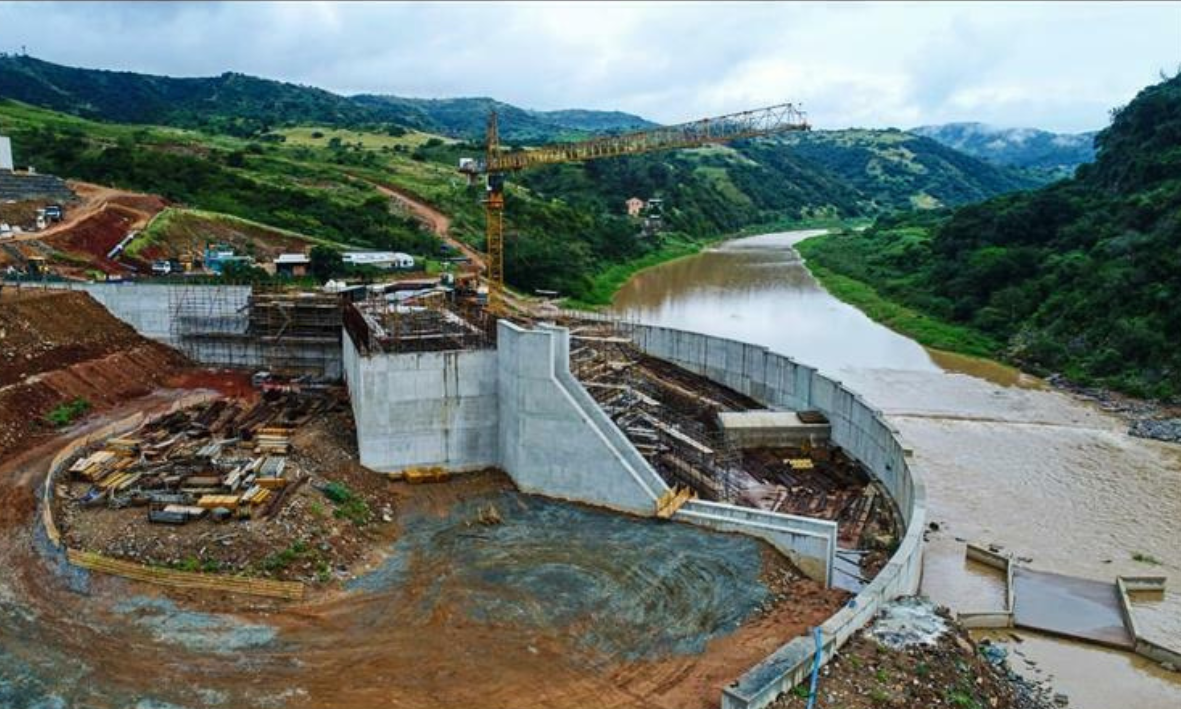
Statement by Thandi Nontenja, MP, UDM Member of the Standing Committee on Public Accounts LISTEN: Ms Nontenja on the subject of the uMkhomazi projects The United Democratic Movement (UDM) is gravely concerned about the continuing delays and disputes in the Upper and Lower uMkhomazi Water Projects, which have left communities without water despite billions of rands being committed. The Upper and Lower uMkhomazi Water Projects were meant to secure supply for both inland and coastal communities. The Upper scheme, centred on the Smithfield Dam and transfer tunnel, was designed to boost the uMngeni system and bring long-awaited relief to Durban and surrounding areas. The Lower scheme, with its storage dam and treatment works, was intended to serve southern eThekwini and the Ugu District, benefiting an estimated 50,000 households in towns like Amanzimtoti, Umkomaas, Scottburgh and Hibberdene. The Upper uMkhomazi scheme was originally projected to be completed in 2018. Instead, it has been dogged by funding shortfalls, procurement disputes and legal wrangles. Its completion date has now been pushed to 2032. This means that communities such as Tafelkop, west of Durban, have lived with dry taps for over 15 years and will wait another generation for what their constitutional right is. The UDM is disturbed that public money continues to flow, but public benefit does not. Government admitted as far back as 2015 that affordability concerns had stalled the project. In 2025, a R7 billion tender for the Lower uMkhomazi scheme was interdicted in court over disputes about the adjudication process. These are not small technical glitches — they are signs of systemic weaknesses in financial governance and procurement. The promises made to resuscitate and fast-track the project, including those by Senzo Mchunu during his tenure as Minister of Water and Sanitation, have not been honoured. Now the urgent question is what the incumbent Minister, Pemmy Majodina, and Deputy President Paul Mashatile, who oversees infrastructure coordination in the Government of National Unity, are doing to prevent billions more from being wasted while people still fetch water from streams. It is unacceptable that a R26 billion investment can be committed to schemes that deliver ribbon cuttings, contracts and disputes, but not water. The UDM therefore demands: 1. A full Standing Committee on Public Accounts (SCOPA) inquiry into the expenditure on the uMkhomazi projects to date, with disclosure of every contract and payment. The UDM will formally write to SCOPA to request that such an inquiry be initiated as a matter of urgency. 2. A halt to further waste until there is assurance that the money is translating into water for households. 3. Quarterly reporting to the Portfolio Committee on Water and Sanitation on progress, costs and delays. 4. Accountability from both current leaders and former ministers who presided over these failures, including appearances before Parliament and referrals to law enforcement where misconduct is proven. 5. Transparency and expedited resolution of procurement disputes that have landed in court, so that communities are not held hostage to years of litigation, with interim measures put in place to ensure access to water in the meantime. The UDM is serious about infrastructure development as the backbone of service delivery and economic growth. We have long argued for investment in dams and water storage schemes to secure supply for households, agriculture and industry. Projects like the uMkhomazi Water Scheme are urgently needed and should be welcomed, but they must be delivered on time, on budget and free of corruption. South Africans cannot drink blueprints and promises - they need functioning infrastructure that works Water is life, and public money is sacred. It is SCOPA’s duty to ensure that every rand spent on infrastructure, including water, translates into services that work, not empty promises and endless delays.
Admin
10 Sep, 2025
UDM BCMM on the Metro’s collapsing water and sanitation infrastructure
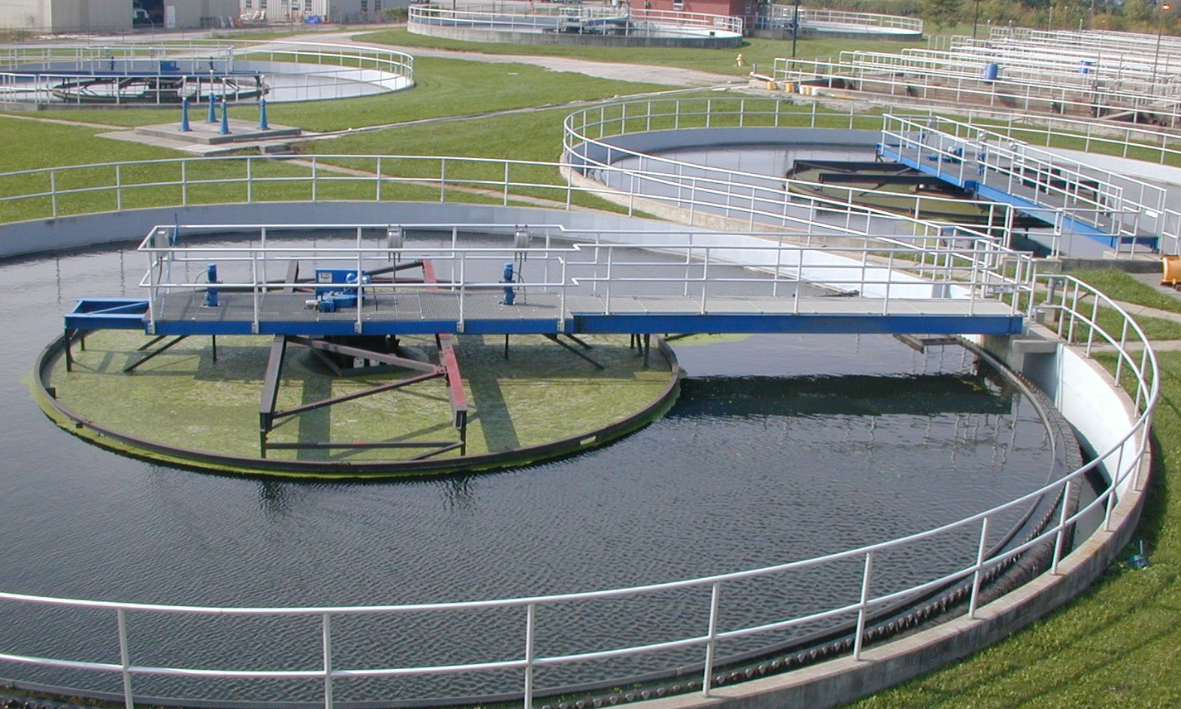
Statement by Anele Skoti, United Democratic Movement Councillor and Whip in Buffalo City Metropolitan Council The United Democratic Movement (UDM) in the Buffalo City Metropolitan Municipality (BCMM) is gravely alarmed by the recent revelations that only four of the Metro’s fifteen wastewater treatment plants are fully operational, with the rest either vandalised, unlicensed, or out of service. The disclosure by the municipal manager that more than R10 billion will be needed over the next six years to rescue the metro’s failing water and sanitation systems confirms what residents have known and lived with for years: decades of neglect, poor maintenance, and mismanagement have pushed the metro into a full-blown crisis. The UDM in the BCMM will not ignore the devastating reality confronting communities. Raw sewage running through streets and homes, foul odours in the air, and persistent health risks have become an everyday experience in many neighbourhoods. This is not only a humanitarian and environmental disaster but also a direct violation of the constitutional right to access clean water and a healthy environment. The UDM in the BCMM notes the municipal manager’s proposal to seek private sector investment and public-private partnerships (PPPs). While innovative financing models must be considered, PPPs must not become a back door to privatisation or a mechanism for elites to enrich themselves while residents continue to suffer. Any partnership must be transparent, carefully structured, and rooted in protecting water and sanitation as a public good accessible to all. The truth is that Buffalo City cannot solve this crisis on its own. National and provincial government must intervene decisively with financial, technical, and security support. Without this, the city risks further collapse, with dire consequences for residents, businesses, and future investment. The UDM in the BCMM calls for: • An immediate emergency plan to repair and secure wastewater treatment plants and sewage pump stations. • The ringfencing of infrastructure budgets to ensure that money allocated is spent only on water and sanitation. • Clear accountability for the decades of mismanagement and neglect that led to this collapse. • Transparent and inclusive public engagement on any proposed PPP arrangements. Buffalo City deserves better than this steady decline into dysfunction. The UDM in the BCMM will continue to hold the municipality and national government accountable until residents enjoy safe, reliable, and dignified water and sanitation services.

Admin
14 May, 2025
UDM BCMM expresses concern over 3-day water outage in Mdantsane
Statement by Anele Skoti, United Democratic Movement Councillor and Whip in Buffalo City Metropolitan Council The United Democratic Movement (UDM) in the Buffalo City Metropolitan Municipality (BCMM) deeply concerned about the ongoing water outage in the Mdantsane area, which has now persisted for more than three days. This situation has caused immense frustration and hardship for residents who rely on consistent water supply for their daily needs, sanitation, and well-being. Despite numerous enquiries and growing public concern, there has been no official explanation provided to residents. After consulting with the Ward Councillor, we were informed that the matter is still under investigation. Alarmingly, it has also been confirmed that councillors themselves have not been briefed or updated by the relevant authorities regarding the cause or expected duration of the outage. This lack of transparency and communication is unacceptable. Access to water is a basic human right, and the failure to provide timely information or implement contingency plans reflects poorly on those responsible for service delivery in the area. The UDM BCMM demands that the Buffalo City Metropolitan Municipality urgently clarify the cause of the disruption, provide an estimated time for restoration, and ensure that emergency relief measures, such as water tankers, are rolled out without delay. Communities cannot be left in the dark while enduring such a critical service interruption.
Admin
25 Jun, 2020
Holomisa: Allegations of millions of Rands in irregular expenditure for critical OR Tambo District Municipality water and sanitation projects Edit | Live Builder | Gutenberg
Mr TK Makwetu Auditor-General of South Africa PO Box 446 Pretoria 0001 Mr Dondo Mogajane, Director-General: National Treasury Private Bag X115 Pretoria 0001 Mr Mbulelo Tshangana Acting Director-General: National Treasury Private Bag X313 Pretoria 0001 Dear Gentlemen ALLEGATIONS OF MILLIONS OF RANDS IN IRREGULAR EXPENDITURE FOR CRITICAL OR TAMBO DISTRICT MUNICIPALITY WATER AND SANITATION PROJECTS Serious allegations of financial mismanagement and misconduct have been made against the municipal manager of the OR Tambo District Municipality that involves millions of Rands in water and sanitation projects (see attached memo). Most disconcerting of these allegations is that this R170 million were allegedly paid in advance of these water and sanitation projects and not a single jot of work has allegedly been done, whilst R134,004,193 (the bulk) of that amount was paid to Amatola without any explanation. To make matters worse, apparently the municipality’s chief financial officer’s life has been threatened because of his refusal to process illegal payment and has had to hire bodyguards to keep him safe. I would suggest that immediate investigation be done to find out what is going on with these projects. Aside from the need to have accountability in place for municipalities, one should keep in mind that hundreds of thousands of South Africans living in the villages of Mthatha, right up to Coffee Bay are adversely affected. Keeping this in mind, I would also suggest that in this particular case that these water and sanitation projects be removed from the municipality’s management and it be taken over by the national department as it is too important and affects the people of that area’s basic human rights and survival. Yours sincerely Mr Bantu Holomisa, MP UDM President
Admin
17 Jul, 2015
President Zuma to look into issues raised by Bantu Holomisa: Moretele Local Municipality
Issued by the Office of the Presidency President Jacob Zuma has assigned the Department of Planning, Monitoring and Evaluation (DPME) to look into the issues raised by United Democratic Movement leader and Member of Parliament, Gen. Bantu Holomisa on the challenges facing Moretele Local Municipality, in the North West Province. General Holomisa has written to the President raising concerns about service delivery matters such as water and sanitation, roads infrastructure, public works programmes and general management of the municipality. The DPME will liaise with the province and other affected Departments. Enquiries: Harold Maloka – Maloka.harold@gmail.com or Harold@presidency.gov.za