
Admin

26 Feb, 2026
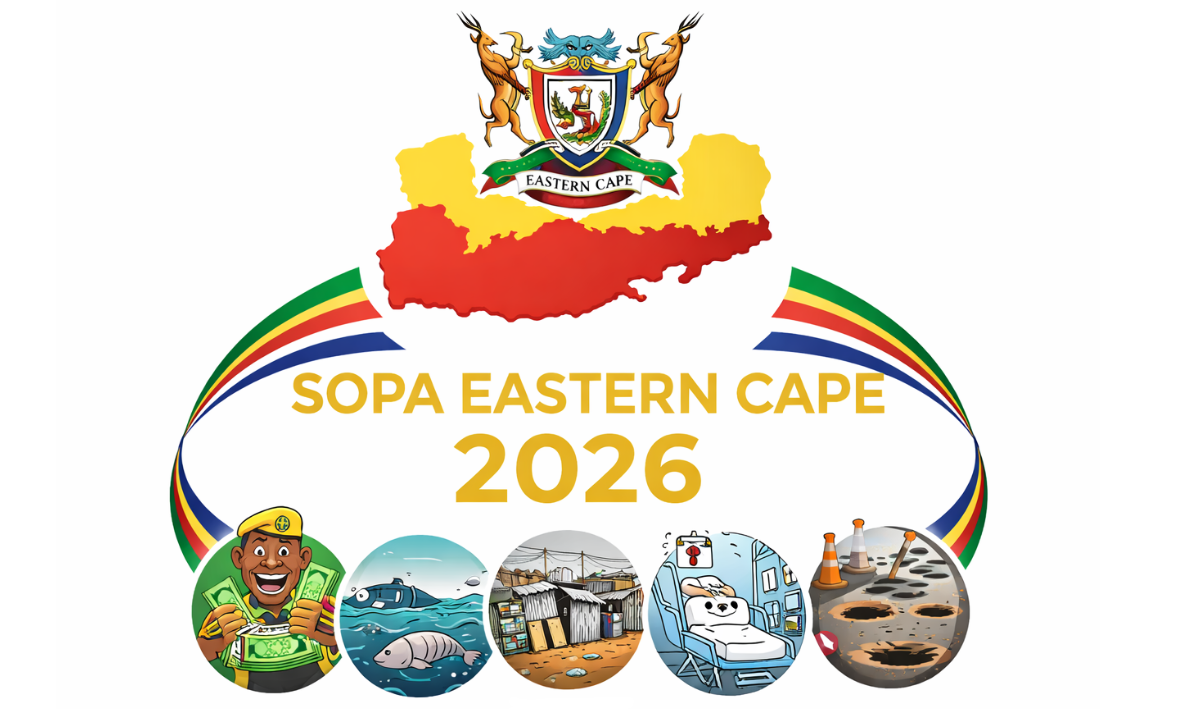
Eastern Cape SOPA2026: Mabuyane’s leadership on trial after year 7
Statement by Bulelani Bobotyane, Provincial Secretary of the UDM in the Eastern Cape The United Democratic Movement (UDM) in the Eastern Cape notes that on 27 February 2026, Premier Oscar Mabuyane will address the province in his seventh year at the helm. Across towns and villages, one hears a recurring sentiment: there was a period in this region’s history when executive authority translated into visible administrative discipline, when decisions were implemented with consistency and consequence management was not optional. That period existed within a different constitutional dispensation and must be understood in its proper historical context. It was not beyond criticism. In this province, what endures in public memory is not nostalgia for past structures, but the perception that governance was firm, coherent and enforceable. After nearly seven years in office, the current African National Congress (ANC) administration cannot dismiss that comparison. It must answer it. Seven years into the Mabuyane administration, the issue is no longer vision. The province has had vision documents, master plans, stimulus funds, growth frontiers and 2030 targets. The issue is executive control and institutional discipline. When the same sectors are re-announced year after year, when projected multipliers are pushed further into the future, and when governance reform deadlines quietly fade from the public record, the pattern reveals not a shortage of ideas, but a shortage of consolidation. After 32 years of uninterrupted ANC governance in this province, fragmentation cannot be blamed on transition or inheritance. It reflects a governing culture that accumulates initiatives faster than it stabilises systems. The Eastern Cape does not lack policy. It lacks conversion. It does not lack plans. It lacks enforcement. Seven years is sufficient time to entrench systems, discipline departments and impose consequence management. When plans multiply but structural indicators remain stubborn, it signals not complexity, but weak executive control. The ANC governs this province, with Premier Mabuyane at its helm. They cannot continue to govern through perpetual projection and recycled ambition. If the plans are sound on paper yet outcomes remain inconsistent, the question is no longer about design. It is about leadership. As the province approaches the 2026 Local Government Elections, SOPA 2026 must do more than defend a record. It must demonstrate that governance is stabilising where citizens experience the state most directly: in municipalities. Voters will not judge performance by presentation in the Chamber, but by functioning taps, maintained roads, disciplined finances and reliable services. In this election cycle, credibility will be earned on the ground. Accountability and delivery The UDM in the Eastern Cape will demand that SOPA2026 move beyond ambition and provide clear evidence of delivery. The people of the Eastern Cape have heard commitments on roads, water infrastructure, housing, health facilities and economic expansion before. This year’s address must account for what has been completed, what remains delayed and what has stalled. The public deserves measurable progress, not repetition. Municipal governance Municipal instability must be confronted honestly. If municipalities required intervention in the past year, the province must report whether those interventions worked. Financial stability, revenue collection, professional administration and consequence management determine whether communities receive services and whether local government can be trusted. Water security Access targets extending toward 2030 cannot substitute for consistent supply today. Communities experience governance through functioning taps, maintained infrastructure and effective wastewater systems. If these remain unreliable, explanations are no longer sufficient. Infrastructure maintenance Development cannot be credible if roads, stormwater systems and municipal assets deteriorate while new projects are announced. Maintenance is not secondary to growth. It is foundational to it. Economic reform and employment Sustainable job creation depends on stable municipalities, reliable infrastructure, clean procurement systems and a predictable regulatory environment. Temporary public employment programmes may offer short-term relief, but they do not replace structural reform. The province must demonstrate that institutional foundations for long-term economic expansion are being strengthened year by year. The National Development Plan’s 2030 horizon does not excuse weak implementation in the present. Governance and accountability Ethics frameworks and oversight mechanisms must translate into visible consequences. Clean governance, professional administration and disciplined public finance management are essential if public trust is to be restored. In 2020, this administration undertook to implement lifestyle audit guidelines by 2022. That deadline has passed. The province has yet to see consistent, transparent reporting on the outcomes of those audits or the consequences that followed. Anti-corruption cannot be rhetorical. It must be enforceable. With the 2026 Local Government Elections fast approaching, this address will be measured not by tone, but by evidence. The people of this province are demanding functional municipalities, reliable services and accountable leadership. In 2026, the UDM in the Eastern Cape will present a credible alternative grounded in administrative discipline, clean governance and service delivery that is felt in every municipality we contest.
Admin
22 Apr, 2020
UDM’s reaction to Ramaphosa’s economic stimulus package
The United Democratic Movement (UDM) welcomes the announcements President Cyril Ramaphosa made on government’s plans to temper the impact of the Coronavirus pandemic on South African’s lives and stimulate the economy. With this R500 billion stimulus package the government is falling in step with governments around the world, which have embarked on massive fiscal stimulus packages and expansionary monetary policies to counter the negative impact of the Coronavirus on their economies. This is directly in line with the UDM’s long-standing policy that: “Government Must Do More” and get back to the original agenda of addressing the backlogs and imbalances of the past and high levels of inequality in South Africa. We are pleased that SMMEs and the informal sector have been targeted for assistance and growth, and that mention was made of salary and job protection, as well as extended social grants. As is the case in America with the Federal Reserve Bank, we are of the view that the South African Reserve Bank has a critical role to play in providing a pay-cheque protection liquidity facility, and other facilities, to commercial banks so that they can provide loans to small businesses to maintain their payroll during this difficult time. Banks would then provide monthly updates to the Reserve Bank about the number and value of the facilities extended for this purpose. We are of the view that the South African Reserve Bank should introduce similar facilities to commercial banks in order for them to use these facilities for targeted sectors of the economy, as part of the Reserve Bank’s broader “Coronavirus Pandemic Response Programme”. We also believe that there is scope for the central bank to further reduce the interest rate as a way to stimulate the economy. Furthermore, the jobless benefit should also cover freelancers and those who work in the informal sector. In particular, the UDM feels that Unemployment Insurance Fund (UIF) pay-outs should be handled on a sectoral level and that employers should apply for these pay-outs on behalf of individual employees rather than individual applications clogging up the system. There should also be a three-month moratorium on bond, car and other loan payments, as these are still left to the discretion of commercial banks which are sometimes reluctant to give loan recipients a breather because they use payment profiles and credit records to make their decisions. In the same vein to the UIF scenario, it would make more sense to do this to avoid clogs in the system and people standing in endless queues outside banks in contravention of the stay-at-home regulations and putting themselves in danger of contracting the Coronavirus. A stay on bank account closures and bank fees, due to bad bank account conduct and returned debit orders, is needed. We also think that life insurers should be brought on board to create breathing space for policy holders, by allowing a three-month payment holiday. Once all these relief measures are put in place, and in view of the fact that taxpayers who donate to the Solidarity Fund will be able to claim up to an additional ten percent as a deduction from their taxable income, South Africans will be in a position to contribute to the Solidarity Fund. A call should also be made to all sectors of society, celebrities and private businesses and other arms of the state which have not made a public declaration on contributions, to lead by example, and contribute to the Solidarity Fund. Government must also immediately settle the R7 billion debt owed to its small and medium enterprise service providers, which, beside it being the right thing to do, will serve as a lifeline and important stimulus package for SMMEs. Localisation of our economy is paramount. In light of the Coronavirus crisis we should ensure that during this time all protective equipment is produced and sourced locally. This could be a magnificent project to create jobs in the informal sector and in rural areas, for women in particular. This strategy should be continued post-Coronavirus and our manufacturing industry should be brought up to scratch so that South Africa is less dependent on imported goods and we should not be a dumping ground for other countries. In principle, we support the economic stimulus package as it is good on paper and it is in line with our social democratic values of equality and solidarity as the plan seeks to ensure that our country’s resources are arranged to the greatest benefit of the most vulnerable and the poorest of the poor. The UDM, however, strongly believes that if government had recouped the R500 billion stolen during state capture, South Africa would not have had to stand in the queue for loans from the World Bank, International Monetary Fund, BRICS New Development Bank and the African Development Bank. In addition, we are sceptical of government’s political will and ability to manage South Africa’s finances under the current circumstances. The reason being that, given for instance state capture, it does not have a proven track-record and also, given the extraordinary circumstances created by the Coronavirus pandemic, there are not sufficient checks and balances in place to monitor government’s income and spending. Just now we will need a Coronavirus Commission of Inquiry, post the crisis, which we cannot afford. Time will tell. Issued by: Mr Bantu Holomisa UDM President
Admin
20 Feb, 2020
Bantu Holomisa on South Africa today and how best to position ourselves for the future
Let me start off by saying a heartfelt “thank you” to the South African Ubuntu Foundation for giving me this opportunity to chat with you today. Ladies and gentlemen, South Africa faces a triple crisis. Not the conventional one of unemployment, poverty and inequality, though those underlying socio-economic conditions remain, scarring our land, and casting a long shadow over the post-1994 South Africa. No, a new triple crisis: first, a fiscal crisis; second, an energy crisis; and third, the climate crisis that affects everyone, everywhere around the world. While the climate crisis is a global phenomenon, in which the developing world is a victim of the choices made by the Western powers of the industrial revolution and what followed it, the first two are own goals. The fiscal crisis and the energy crisis are failures of governance. To position ourselves for the future, we first must fix these two problems. For the economy to grow, we need a reliable supply of energy. For the investors to invest, we need a reliable supply of energy. And to avoid a downgrade to full junk status, we need to stabilize the fiscus. In turn, that means addressing the size of the public sector wage bill. All eyes will be on Tito Mboweni next week when he delivers his budget speech. Will he be able to show sufficient progress since the mini-budget last October. I very much doubt it. The danger of the downgrade, is that it puts further pressure on the fiscus and then on the social wage. If the government finds that it cannot maintain the social security safety need that it has created since 1994, and which the Constitution requires, then we will be in real trouble in terms of socio-economic risks and public order unrest. But we are not there yet. And we must not be too pessimistic. This is a resilient country, as we have shown many times. Most recently, we showed it in our determination to defend the freedoms and rights enshrined in the Constitution. A rogue president was held to account and ultimately ousted from power. Our rule of law held the line; our judges proved their independence; and many of our institutions either resisted state capture or slowly being rebuilt. Although I credit our President with having made steady progress in his reform programme, I worry about the urgency and boldness of his decision-making. I am concerned that he does not understand the full gravity of the situation. Even more worryingly, I am worried that he is too concerned about appeasing his political enemies within the ruling party. That is a waste of time and energy. The Zuma cabal, the Fightback Faction – call them what you like – are a bunch of scoundrels. Their strategy is a scorched earth strategy. The worst things are, the worse it is for the president, and the better it is for them. They believe that they can defend their interests and avoid prosecution and jail. They must be proved wrong. Hence, although the link with the economy is vague and indirect, I realise that in order to position ourselves for the future, we need to show to ourselves and to the world that we are capable of bringing to account those who were responsible for state capture. And we must not make the mistake, state capture did not start in Zuma’s era, it was there long before that. Just look at the Arms Deal and Sarafina II scandals and Chancellor House in particular which was a vehicle to loot state resources with impunity. They must pay the price for their vandalism and their selfish disregard for public integrity. The other important way in which we can position ourselves for the future is to be more decisive about where in our economy we want to welcome in new private sector investment. It is clear now that the government has run out of ideas and run out of runway – certainly in terms of SAA, if you will forgive the pun – in terms of the contribution it can make to public investment and job creation. If anything, the state needs to make some tough decisions to prevent massive job losses and cut costs, because of the fiscal crisis. While the state has a developmental role to play, it also needs to reignite economic growth of new private investment. This is no time, then, for holding onto sacred ideological cows. We need to be pragmatic. We cannot deny the fact that the state has a critical role play in redressing the backlogs and imbalances of the past. There is once more a great opportunity to find common cause between the state, the people and the private sector. We need to align policies with the needs of investors, and we need to provide clear policy certainty above all else. The tensions at NEDLAC, between labour and big business, and the mistrust investors have around government’s connection with labour needs to be addressed. This could be attended to by including other social partners. Here again, there are concerns about the willingness and ability of the President and his cabinet to offer the certainty that is required. Too often they appear not to be singing from the same hymn sheet. The notes jar; there is a discordant sound when, for example, Minister of Minerals and Energy Gwede Mantashe, speaks on the subject of opening up the energy sector to private investment. Why is this? Is it really ideological wariness or is the hesitation due to something else? Is he trying, for example, to protect coal interests? Or his apparent reserve about renewable energy more to do with a concern that foreign renewable energy companies will prove to be resistant to attempts to create rent-seeking opportunities for the tender-preneur community? We need the president to lead. His job is to ensure that his cabinet is aligned and speaks with one voice, unequivocally obedient to the strategies he outlined in SONA last week. To do so, he will have to abandon the pretence that the ANC can be re-united. That ship has sailed – long ago. It is divided and factionalised. He is on a complete hiding to nothing if he invests too much political capital in trying to keep everyone inside the ANC happy. So, he must decide where his real priority lies. There can be only one choice: the country. But I wonder whether he is capable of making that tough choice. Lastly, we must play to our strengths. This is a country that is rich in talent, has plentiful local capital markets and well-run companies as well as some well-run public institutions. As I have said, it has an independent judicial branch of government. And it has an effective, free media and a robust civil society. We must work together to harness these talents. We can no longer expect government to do everything, still less the ANC. We must take our futures into our own hands, forging partnerships across sectors and society and the economy. We must do what we do best as South Africans – be creative and resilient, and thereby avoid the precipice. The responsibility for those of us who are elected to serve in parliament is to look beyond the walls of parliament and to help cultivate those creative partnerships. As we build our ability to build and sustain coalitions in party politics, so too we must build and sustain extra parliamentary coalitions – between political leaders, community leaders, NGOs and thinktanks, and, yes, business. That is the sort of social compact that we need. If we do so well, then we will position ourselves effectively. We will be able to articulate exactly what it is that we need our government to do, and then the government will have no choice but to respond positively. This requires a sense of strategic leadership and vision. Those of us with power and privilege and wealth will need to continue to make sacrifices in service of this goal. Because we must remember that the great majority of South Africans struggle to live a decent life and to feed their children. We owe to them to create the conditions, the partnerships, the policies, and the good governance needed to grow the economy and create employment. Nobody doubts that over the last 25 years we have been consumers, we need to find the ingredients to bake a bigger economic cake so that everyone not only gets a fair share, but that they also contribute to a healthy, stable and growing economy. I thank you.

Admin
14 Aug, 2019
UDMYV: Return of “drug mule” Babsie Nobanda
The United Democratic Movement Youth Vanguard would like to congratulate Nolubabalo “Babsie” Nobanda for taking her destiny into her own hands whilst imprisoned in Thailand for drug smuggling. She is returning home with a degree in communications obtained from the University of South Africa. However, we are concerned that she is coming back to a country with an alarming 29% youth unemployment, which is one of the major contributing factors to our young people finding themselves in conflict with the law and in dire trouble as Ms Nobanda did. The South African government needs to heed the call of the United Democratic Movement for an urgent Economic Indaba, where all stakeholders can converge under one roof and come up with a solution to the major economic and socio-economic challenges facing this country. Government alone will not in any way help the youth of South Africa out of poverty and unemployment. We call on all South Africans to stand up for their own country and take it back into our own hands and build it with greatness. Let us have a country where our youth are not forced to make irrevocable decisions to their own detriment, as Ms Nobanda did. Ms Noloyiso Nontenja National Task Team Secretary
Admin
06 May, 2014
UDM Siyabulela Rally – address by UDM President, Mr Bantu Holomisa
• UDM Leaders from all across South Africa • UDM public representatives • Citizens of the Eastern Cape • The people of my hometown, Mthatha, and • My fellow South Africans 1.WELCOME AND THANK YOU TO ALL UDM ACTIVISTS Before we get into the politics and issues of Elections 2014, I want to welcome you all and quickly say something about teamwork. Many of you might not be familiar with the name Vince Lombardi. He was a legend in American football and had astounding success as a coach. He was an expert on teamwork. In honour of our election teams, I quote Mr Lombardi: “The achievements of an organisation are the results of the combined effort of each individual.” The United Democratic Movement (UDM) says: thank you, realeboga, dankie, and siyabulela to each individual who: • distributed flyers or hung posters, • represented the UDM on radio and television interviews, • spent weekends spreading the gospel of the UDM, and • dedicated the past months to this organisation we all love. 2. THE PAST, PRESENT AND FUTURE 2.1. THE PAST On 15 August 1985, PW Botha gave his infamous “Rubicon” speech. There was much hope pinned on him to announce big changes to the policies of apartheid. To say that he disappointed us, is a colossal understatement. Fortunately we were blessed with people who fought for our freedom. They were principled individuals who never faltered in their cause; who were willing to make an enormous sacrifice for our freedom at their personal expense. [You might want to use fewer examples – names are alphabetically listed according to surname] We think of, amongst others, Helen Joseph, Chris Hani, Albert Luthuli, Govan Mbeki, Raymond Mhlaba, Walter and Albertina Sisulu, Robert Sobukwe, Desmond Tutu and of course in 1990 the Father of our Freedom, Mr Nelson Mandela, walked out of Victor Verster prison a free man. The Eastern Cape takes a proud place in this history. In almost every town and remote rural areas you can find traces of the heroes and heroines who made the ultimate sacrifice in the fight for freedom. FW de Klerk followed Botha’s rule and during the early nineties we at last felt the winds of change. In 1994 we, at last, crossed the “Rubicon”. We recently celebrated 20 years of our new democracy. It is remarkable that we came so far in such a short time. We will never forget the oppression of the past. It serves as a reminder to never allow that history to be repeated. 2.2. THE PRESENT The tragedy of the last years of ANC rule is that this nation is sinking deeper into the quagmire of corruption, poor service delivery, maladministration and no regard for the rule of law. Our hard won liberties are systematically being destroyed with the socio-economic circumstances of our people making it impossible to protect the gains of our freedom. It is even worse that institutionalised corruption has reached the highest office in the country. We are led by a man who refuses to be held accountable and whose vocabulary extends to one phrase: I did not know. In addition, the executives (nationally and provincially) practice corruption as a sport – where one strives to best the other in a game where taxpayers’ money is misused. They are shameless. The ruling elite’s arrogance is a slap in the face of a nation. They cavort around, whilst many people go to bed hungry; our children receive a second-hand education and our townships, as well as villages, belong in a 3rd world country. In particular, the Eastern Cape is heavily under-budgeted. The infrastructure of the two homelands – and the townships in the province – was never brought on par with the developed one we inherited in 1994. A description of the current state of affairs; amongst others, includes: • The people in the province have become accustomed to mediocre schooling and results. • Dilapidated hospitals have become places of death. • Municipal administrations are rife with corruption and tenderpreneurship. • The industrial hubs in Butterworth, Ezibeleni, Dimbaza and Fort Jackson have perished or are following suit. • This province was the granary of Southern Africa, but agriculture was allowed to systematically wane and this threatens food security. • Roads are in disrepair, electrification and water supply are erratic and in some places non-existent. • Respect and power of traditional leaders are almost non-existent. The ANC of today has forgotten the values of the Freedom Charter. They have abandoned the original agenda, which is to improve the lives of all South Africans. 2.3. THE FUTURE The obvious question is: Are things so bad that we might as well throw in the towel? The UDM emphatically says NO! We believe that it is not too late to turn the situation around. 3. THE FUTURE – WHAT ARE THE UDM’s PLANS FOR THE EASTERN CAPE? Should I, as the UDM’s candidate for premiership in the Eastern Cape, be given the opportunity to govern, the following critical objectives shall be on the agenda for change: 3.1. Addressing the democracy dividend deficiency in the Eastern Cape so that it becomes a model province in terms of all development goals. 3.2. Turning the province into a key economic growth area so that it becomes the 4th fastest growing economy in South Africa by 2019. 3.3. Bringing essential services closer to the people and increasing the capacity the institutions that provide those services such as healthcare and education, as well as programmes that ensure food security and local employment. 3.4. Turning around the performance of provincial government – in particular the departments of health and education. 3.5. Providing effective governance by employing the right people, with the right skills, in the right places. Ensuring proper short and long-term planning, the appropriate use of resources as well as managing performance and monitoring. 3.6. A zero tolerance for corruption and not employing people for political reasons and/or their association to our party. 4. THE FUTURE – OUR PLANS FOR SOUTH AFRICA 4.1. We will promote good governance and the separation of the powers of government, legislatures and the judiciary. 4.2. A UDM government will do more and invest in our economy. We will: • implement checks and balances to ensure that taxpayers’ money is not wasted and take speedy action against corrupt government officials. • ensure that our people, especially in rural areas, have access to passable roads, electricity, irrigation and reticulation as well as a functioning railway network. • provide a conducive environment for our people, especially the youth, to become entrepreneurs and creators of wealth. 4.3. The UDM will ensure quality education and • go back to the basics i.e. teachers must teach and learners must learn. • translate the large education budget into quality education that produces school-leavers and graduates that are equipped with job related and life skills. 4.4. One of our main priorities is food security and rural development. The UDM will: • use agriculture as a tool to expand our economy, to create jobs and generate wealth. • prioritise the needs of farmers, emerging and commercial alike, by developing policies that enable them to compete against their international counterparts. 4.5. A UDM government will make quality health care a priority and bring services closer to communities, improve on emergency response; provide necessary supplies and equipment, as well as maintain hospitals and clinics. 4.6. Regarding safety and security, a UDM government will: • restore civil order and develop a doctrine for the police service to function in line with our constitution’s values. • enhance coordination between the ministries and departments of justice, the police and correctional services, as well as defence and national intelligence. • We will champion the environment and teach our people of climate change, water scarcity and energy, so that they – and future generations – become partners of a UDM government in protecting our natural heritage. 4.7. The UDM will bring about electoral reform by: • introducing a mix of a constituency and proportional representation system where politicians are accountable to the people. • changing electoral laws so that we elect our president directly – instead of a ruling party foisting a president on the people. 5. CONCLUSION An annual South African Social Attitudes Survey, done by the Human Sciences Research Council, showed that 66% of South Africans believe that the country is heading in the wrong direction. Why then do people want to again vote for the ANC? Open your eyes and punish the ANC for its cavalier attitude and callously risking our futures and the prosperity South Africa. It is time for us to cross another “Rubicon”. This Wednesday will give voters the opportunity to affect such a change. This is your country. Take charge and vote UDM! Thank you

Admin
26 Apr, 2014
National and Provincial Elections 2014
Message from UDM President Bantu HolomisaMy fellow South Africans2014 is an auspicious year, as South Africans mark 20 years of freedom.The Bill of Rights ensures that all the citizens of our beautiful country have the right to equal protection and benefit of the law. Our dignity has been restored and we enjoy freedom and security of our person. We can live where we want to. No one is denied access to establishments based on colour. We all have the right to basic education; to speak our own languages, freedom of religion and celebrate our diverse cultures.These liberties, as enshrined in the country’s constitution, which were hard won are being destroyed by corruption. To compound matters the socio-economic circumstances of our people make it very difficult to safeguard the gains of our freedom.The United Democratic Movement (UDM) seeks to address these basic deficiencies and also empower our people and transform South Africa into a Winning Nation. If one looks at our economy one cannot deny that, amongst others, job creation and poverty are interlinked. The UDM believes that job creation is the ultimate weapon to combat poverty, but this goal will not be realised if our economy is not managed properly. Government has a must intervene to protect our economy and South African jobs when necessary. Meaningful government intervention is needed to ensure economic growth. This necessarily means, for instance, that our roads should be passable; an efficient rail network should be in place; the electrification, water, irrigation and reticulation of communities and business should be high on government’s agenda. Regarding our macro-economic policy, there is still no consensus on how South Africa can transform its economy in a manner that creates wealth and improves the fortunes of the disadvantaged majority. South Africa already finds itself on the same path as our sister nations on the African continent that have failed their citizens. Disrespect of the rule of law, as exhibited by our executive, as well institutionalised corruption, has a direct bearing on South Africa’s downgrading on international ratings, which in turn negatively impact on investor confidence. The symbiotic relationships between political parties and their so-called “investment arms” (such as the ANC and Chancellor House Holdings) erodes private sector confidence. It is an unfortunate fact that South Africa is steadily sinking deeper in the quagmire of corruption. What makes matters worse is that these acts of corruption keep reaching new heights and they happen with greater frequency. A case in point is, during the infrastructure development in preparation of the 2010 Soccer World Cup, service providers inflated their prices to make a greater profit at the expense of the taxpayer. Citing another example, we were all shocked to learn that Independent Electoral Commission (IEC), which had a good international reputation, could be embroiled in corruption and maladministration. In the final analyses; no one can dispute that: Corruption destroys the gains of our freedom! The obvious question that follows is: Are things so bad that we might as well throw in the towel? The UDM emphatically says NO! As much as the situation in which we find ourselves might be discouraging and bleak, the UDM firmly believes that it is not too late for us to turn things around. There is so much untapped potential in our country and her people that we cannot, and should not, let go of the dream of prosperous nation. In this manifesto the UDM makes a number of constructive suggestions to address some of the burning issues we face as a nation – for greater detail on our policies please visit our website www.udm.org.za. As you read through this manifesto, remind yourself that you, the voter, have the power to make the dream of a prosperous South Africa a reality. We need a government that puts South Africa and her people first. We deserve a government that will really take South Africa forward. Vote UDM! Thank you Bantu Holomisa Good Governance Rule of law is a system on which a proper government should be based as it guards against the abuse of power and allows innovation and the economy to flourish. As an indictment of our government, the Institute for Accountability unequivocally stated that, since 1994, the reason for poverty in South Africa is directly attributable to, “the theft” of R700-billion. The Institute further stated that government in fact had the resources necessary to uplift 11 million citizens from abject poverty – see http://www.timeslive.co.za/thetimes/2014/01/27/corruption-is-killing-the-poor). The UDM sees corruption as one of the main contributors to unemployment, poverty, inequality and poor service delivery. Our people are so frustrated by their living conditions that their anger frequently boils over and instead of government listening to their concerns it dispatches the police. We cannot hope to effectively eradicate poverty without addressing “institutionalised corruption”. There are many examples, such as the E-tolling system; Travelgate; the Oilgate/PetroSA (Iraq) scandal; the deal involving Hitachi, Eskom and Chancellor House Holdings; the IEC and the South African Police Services’ lease agreement scandals; Guptagate and also of course Nkandlagate. Another typical example of the disregard of the rule of law is that, despite the fact that a court ordered the President of this country to hand over the so-called “spy tapes”, a government property, he refuses to do so. In yet another instance, cabinet chastised the Public Protector for simply fulfilling its mandate. This cancer of corruption has implicated many top leaders and officials (including the highest office in this country) and it has spilled over into the private sector. The brazen practice of corruption has the ruling party reeling from one scandal to the next. It has in fact reduced its promise to combat corruption to a joke. How perfectly timed was the arrival of the Information Bill just after the media had exposed a number of corruption scandals. Although the jury is still out, there seems to be general consensus that the Bill was introduced to hide evidence of corrupt practices. The tendency to appoint people with the “right political connections”, instead of those who have the right qualifications and/or skills, promote mediocrity. One sees many examples of this tendency when one looks at the corrupt and ineffective state owned enterprises (SOEs) that serve as a gravy train for the elite. To make matters worse, the situation has become more complicated with the tri-partite alliance leaders now fighting over state resources forgetting that this infighting erodes investor confidence and leaves our people living in squalor without basic services. A UDM Government commits itself to: promote a culture of good governance. respect the separation of powers of government, legislatures and the judiciary. develop a vetting process where persons nominated for positions in the executive are subjected scrutiny to establish their integrity and suitability to serve in a specific portfolio. restore proper relationships between politicians and officials; the current culture of political interference in the daily administration of government, causes bureaucratic chaos and fuels corruption and tender fraud. restore the powers of the accounting officers and ensure that there is no political interference. The role of political heads should be confined to oversight. introduce courts dedicated to handle cases of corruption; to swiftly eradicate corruption as demonstrated by the UDM’s track record of consistently and fearlessly exposing corruption. root out this culture where corruption is condoned and celebrated. conduct a skills audit to ascertain whether the right people are employed in the right posts and at the right levels. appoint government employees, leaders of the Chapter 9 Institutions and SOEs, based on merit, relevant knowledge and qualifications. review the current tender system that currently makes it possible for bribery and corruption to flourish. SA economy in context While the UDM acknowledges and appreciates the impact of the colonial and apartheid legacy on the South African economy, 20 years into our democracy there is clear verifiable evidence that poor policy choices, mismanagement, corruption and lack of visionary and imaginative intervention has negatively affected our economy. As a direct consequence, massive poverty, high unemployment (especially among the youth), growing inequality as well as shrinking productive manufacturing sector have become defining features of our economy. In recent years our global and continental competitiveness has been on the decline as reflected in most studies and surveys. The reality is that this country is fast becoming more of a welfare state than a developmental state with the swelling number of dependents on state-provided social security and diminishing productive sector of manufacturing and entrepreneurship. All this happens against the backdrop of escalating cost of living which puts a greater squeeze of economic hardship on the average citizen. As an answer to these challenges, the UDM has a carefully considered plan to stimulate and grow the South African economy for the benefit of all its citizens while remaining globally competitive. The economy and job creation Since 1994 the paradox of the South African economy has been a jobless growth, even when this country has had a sustained growth for ten years. Therefore the recent global financial crisis can never be used as an excuse for what is obviously a structural problem perpetuated by poor policy choices by the ruling party. The problem is twofold, slow economic growth to meet the increasing demands for employment and development as well as jobless growth even in the sectors that have registered significant growth. The ruling party has adopted policies that have failed to grow the South African economy at the rate required to create jobs. As a result, the average economic growth rate stands at a dismal 2.6% per annum compared to the other emerging markets and most African economies where average is between 6 and 8%. The official unemployment rate is 24.7%. This unemployment rate excludes those people who have given up looking for work. When this category is included in the overall measurement, the unemployment rate deteriorates to more than 35%, with youth the most affected. This presenting perfect conditions for social and political instability should this situation not be urgently addressed. In other words, nearly 7 million South Africans are unemployed due to the misguided policies of the ruling party. According to the 2014 World Economic Forum (WEF) Global Risk report, South Africa has the third highest youth unemployment rate in the world. It estimates that more than 50% of young South Africans are unemployed and this rises to above 70% in some rural communities and informal settlements. The growing service delivery protests and labour unrest are objective irrefutable indications of a growing crisis, with the state more frequently relying on violence and brute force as evidenced by the Marikana Massacre and many other situations in communities in the Northwest and Limpopo. The most painful irony is that the former liberation movement, that espoused egalitarian principles during the struggle years, now presides over the most grotesque and ever-worsening inequality. South Africa today has earned the dubious title of being one of the most unequal societies in the world even surpassing Brazil that has held this ignoble title for some time. This badge of dishonour is a direct consequence of corruption and policies that allow the rich to accumulate obscene levels of wealth in a vast ocean of material poverty of the majority of our citizens. This situation is made worse by the ruling party’s abuse of otherwise well-intended policies of empowerment such as Black Economic Empowerment (BEE) and state tender policies that are twisted to enrich the politically connected cadres of the ruling party. The most dramatic and symbolic demonstration of the social distance between the ruling political elite and the people is the failure to review and make modest the ministerial handbook. Even in the face of global and local economic and financial crises they insist on parasitic preservation of their lifestyle using taxpayers’ money. Poor management of fiscus The ruling party often prides itself on its ability to maintain fiscal discipline. However, in the past five years South Africa’s fiscal position has deteriorated significantly due to the ruling party’s poor management of the economy and its failure to improve the country’s competitiveness. Nowhere is this loss of competitiveness more evident than in the current account deficit of 6% (R200 billion). In 2008, South Africa’s debt-to-GDP ratio was 23%, and it is projected to reach 39.3% in 2013/14 and 43.9% in 2016/17. In 2007/2008 South Africa had a budget surplus of 1.7%. This surplus declined to a budget deficit of 4.2% in 2013/14, which puts our country in the unenviable position of operating twin deficits on the expenditure side of the budget and the current account. It is clear that the ruling party has failed to properly manage our economy. It has also failed to close the gap between revenue and consumption and is therefore unfit to govern. Government has failed to create an environment that is conducive for foreign direct investment. Instead it insists on keeping the interest rates artificially high in order to attract portfolio investments that are fickle in nature. This however raises the cost of credit for ordinary South Africans. South Africa’s current cabinet is far too big to function effectively. Millions of taxpayers’ money is wasted on maintaining their opulent lifestyles with perks like fancy cars and luxury accommodation. Government departments waste billions of rands hiring service providers and consultants to start projects; they however do not even make the effort to monitor progress and establish whether the minimum requirements are met. Such service providers are paid in full without government inspecting the quality of their work. When international businesses seek to invest in our economy, they are “told” who their South African partners would be. A classic example would be the deal between Hitachi, Eskom and Chancellor House Holdings (the latter of course being the ruling party’s investment arm). This institutionalised corruption that makes potential investors think twice about investing in our economy. UDM plans for economic development and job creation After a careful analysis of South Africa’s economic challenges and opportunities, reinforced by comparative analysis of successful policies in other countries, the UDM has a practical realisable plan. The basic philosophy of the UDM is that “Government Must Do More”. While the UDM recognises the valuable role that markets should play, it is of the firm belief that government must play a key role in creating a stable policy environment and developing the economy for the benefit of our people. “Government Must Do More” means that a responsible government: cannot depend on market forces alone. cannot fail to decisively intervene in the economy whilst the quality of life of its citizens deteriorates, South Africans cannot find decent work, millions live in abject poverty and suffer because of underdevelopment. has to ensure that our political freedom translates into economic emancipation. A UDM government commits itself to: use a manageable budget deficit and government debt to create jobs and stimulate the economy. implement the necessary checks and balances to ensure that government (i.e. taxpayer’s) money is not wasted. streamline the cabinet by appointing fewer ministers as part of cutting costs. review the public sector wage bill. stop the over-utilisation of consultants by appointing competent staff. stop the current practice of appointing individuals, who did not make it as public representatives, as so-called “advisors”. standardise the value of perks (e.g. vehicles) across the board for ministers, deputy-ministers, directors general, mayors and traditional leaders, etc. take action against any government employee found guilty of corruption, instead of rewarding them with ambassadorial posts. Infrastructure development Well-targeted strategic infrastructure development is critical for the proper functioning of the economy. It is the cornerstone of sustainable social and economic development. The ruling party’s infrastructure development programme is not properly planned and fails to address past imbalances and backlogs. For instance, while government has budgeted and approved more than R800 billion over the next few years for infrastructure development, very little of this is allocated to rural areas and other previously disadvantaged communities in the townships, informal settlements and peri-urban areas. As a result, the infrastructure in these areas is in a state of disrepair. This causes people to migrate to large cities in search of better job prospects and better living conditions. Even as new infrastructure is being put in place there is a decay of the old infrastructure due to the lack of maintenance plans. In many parts of this country the only way to access service delivery requires that a citizen be a card-carrying member of a particular political party. A UDM government commits itself to: draft a “map of infrastructure development” with emphasis on transparency and closer cooperation between government and the people. invest in the economy through a properly planned infrastructure development programme and other large scale, government funded programmes that are community-driven and applies good environmental practice. empower communities by investing in the transfer of knowledge and skills to create jobs. ensure that South Africans have access to passable roads, electricity, water irrigation and reticulation as well as a railway network. allocate a significant amount of resources to infrastructure development in rural areas and previously disadvantaged communities e.g. build roads and dipping tanks, fence grazing lands and mealie fields and adequate sanitation. ensure proper consultation with the affected communities before projects are rolled out. eradicate the culture of rolling out infrastructure development and basic service delivery to people who belong to a certain political party. Small business development Development of small businesses has been accepted worldwide as the backbone of global economic growth and development while simultaneously creating more jobs. Small businesses in developed countries contribute more than 50% to Gross Domestic Product (GDP), while in Asia they contribute around 40%. In South Africa, too little has been done to reduce the costs and administrative burden for existing small businesses. As a result, our small businesses contribute around 30% to the GDP. Ironically, government’s delayed or even non-payment to small businesses has contributed to their collapse. The UDM believes that a growth rate of 6 to 8% is required to reduce unemployment. To do this we need to unleash the creative spirit inherent in South Africans to create jobs. UDM also plans to reverse the trend of shrinking numbers of South Africans in the retail sector that is gradually being taken over by foreign nationals with little, if any, assistance provided to South Africans to compete effectively in this sector. A UDM government commits itself to: develop a policy that will ensure a fair system where entrepreneurs and small business owners, from inside and outside of South Africa, can do business harmoniously. do more to promote small business development to ensure that our citizens become wealth creators rather than employment seekers. introduce capacity building and training programmes for aspirant and existing entrepreneurs as a way to encourage people to start new businesses and to improve the competitiveness of existing ones. identify and remove obstacles that inhibit small business development. create access to capital, for example, via development banks that assist sector specific entrepreneurs. facilitate access to new markets for their products. provide tax incentives for businesses that create jobs and specifically those in labour intensive industries. empower and create opportunities for unemployed graduates in beneficiation programmes. review labour policies to reflect the desire to stimulate SMME growth. Women empowerment There is no equitable partnership between men and women. There needs to be a social paradigm shift about gender-equality that should usher in a new generation of women and men working together to create a humane world order. The violent crime perpetrated against women and children should be addressed. Women must be assisted to establish co-ops as part of economic empowerment and job creation. A UDM government commit itself to: ensure the participation of women in development processes with sustainable investment in capacity building through education, health and nutrition programmes. eliminate all obstacles that limit women’s access to wealth creation, decision-making, education, health care services and productive employment. a zero-tolerance system to punish, deter and rehabilitate offenders while supporting and restoring dignity and justice to victims. Youth empowerment According to the 2014 World Economic Forum (WEF) Global Risk Report, we have the third highest youth unemployment rate in the world. It estimates that more than 50% of young South Africans do not have jobs – this includes the semi-skilled and skilled youth. A UDM government commits itself to: focus on initiatives to get our youth working through education, skills development and vocational training. initiate job creation and opportunities for young South Africans, by radically reducing the red-tape that stifles entrepreneurship, introducing targeted incentives and supporting programmes for small businesses started by young people. employ semi-skilled youth as “green battalions” in projects to remove alien species, combat soil erosion, help with afforestation projects and introduce sustainable subsistence farming. empower our youth to develop micro-businesses, where they could for instance recycle, maintain schoolyards, parks, cemeteries, sporting facilities, etc. arrange youth mentorship and exchange programmes through bilateral agreements with other countries. Empowering people with disabilities There is a whole department dedicated to improve the lives of women, youth and people with disabilities and yet those with disabilities are treated as the step-child of this department. There are very few people with disabilities who are employed, not only in the public service, but also in the private sector. A UDM government commits itself to: develop policies based on the United Nation’s Convention on the Rights of Persons with Disabilities as described in http://www.un.org/disabilities/convention/conventionfull.shtml. conduct regular audits to ascertain whether the public and private sectors are fair in giving people with disabilities the same opportunities as able persons. Industrial Policy In 1995, government embarked on a massive trade liberalisation programme that dramatically reduced trade tariffs in a wide range of labour intensive sectors, such as textile, agriculture and mining industries. This resulted in massive job losses as our core industries and labour intensive sectors had to compete with countries where such industries are heavily subsidised. Even worse, key strategic industries e.g. the steel industry (Iscor) were unbundled and sold to the private sector that now sells the same products for infrastructure development at inflated prices. The governments of the most powerful economies in the world, such as America, China and India and various other countries in Europe recognise the responsibility they have to their citizens. They do not hesitate to intervene in their economies by protecting local jobs and businesses. A government that proposes anything less does not care, and is not willing to accept responsibility, for the welfare and prosperity of its people. If you drive around in Ekurhuleni (in Gauteng), which used to be a hub of the steel industry, one only sees the scars of neglect and disuse because it could not compete with subsidised industries in other parts of the world. The ruling party is obsessed with the concept of beneficiation – this is however mere lip service. How ironic that, we export raw materials only to import the final products. The ruling party thus creates jobs for people in other countries. There are far too many instances where major developments, such as big mining projects, start in areas without the necessary consultation with the affected communities. What makes matters worse is that these companies, after pillaging the resources and damaging the environment, disappear into thin air. A UDM government commits itself to: do more – a responsible government cannot depend on market forces alone and fail to intervene in the economy while the quality of the life of its citizens deteriorates and millions of our people live in abject poverty and under-development review South Africa’s international trade tariffs and duties to protect developing local industries, encourage exports, increase international trade and support inbound tourism. create an environment that is conducive for the manufacturing sector and industry to flourish. create Export Processing Zones (EPZ) or Industrial Development Zones (IDZ) on a trial basis in some of our coastal provinces or in identified industrial areas with the purpose of creating jobs. reduce the red tape that stifles the ability of domestic companies to export their products to the rest of the world. develop support programmes for the labour intensive sectors and give special attention to those that create job opportunities for all South Africans. Mining There has recently been some interest in the subject of the nationalisation of mines which raised tensions to a boiling point. This situation resulted in great instability, not only amongst mine workers and their employers, but it also negatively impacted on South Africa as an investment destination. The complete UDM policy regarding minerals and energy is available on www.udm.org.za. A UDM government commits itself to: Make the mining topic one of the major points of discussion at the Economic Indaba which the UDM proposes. Some of the matters to be discussed are: the question of ownership of land, mines and mineral wealth. the allocation of mining rights to the ruling elite and its implications. socio-economic conditions of the workers and the communities that settle close to where the jobs are. the controversial issue of mineworkers’ access, or lack thereof, to a provident fund worth billions of rands. the unions’ investment arms and the pay-out of dividends to workers who have contributed to the fund. the appointment of an independent commission of inquiry to investigate how these workers’ monies had been invested, especially in cases where the workers were retrenched, had retired or passed away. Quality Education Our education system has become a political football and the solution lies in firm leadership. We need to restore authority to government and not teacher unions. Government spends approximately 6% of GDP on education. Despite the significant amount of resources ploughed into our basic education system, South Africa’s quality of education is very poor. This means that our children do not get the basic education they deserve thus leaving them ill-equipped to find employment. The 2013 matric pass rate of 78.2% is meaningless when one considers that the majority of matriculants can barely read and/or write. This scenario worsens when one considers that 60% of learners drop out before they reach Grade 10. Another factor that puts our learners and teachers at a disadvantage is the chopping and changing of education policy with the appointment of each new minister. Just when the teachers master a new curriculum, they have to start from scratch and in turn the learners suffer. Our tertiary institutions do not provide fair access to deserving students. They suffer from high drop-out rates and do not produce enough graduates to fill the skills shortages in the economy. The Sector Education and Training Authorities (SETAs) have failed spectacularly – after 20 years they have produced nothing more than employment opportunities for the ruling party cadres who could not find jobs elsewhere. A UDM government commits itself to: translate the large education budget into quality education by developing and maintaining an education system that produces school-leavers and graduates that are equipped with job-related and life-skills. get back to the basics i.e. teachers must teach; learners must learn. free public education until Grade 12. career orientation and education will be enhanced to ensure that children can determine their future careers timeously and can reach the various goals on the way towards their employment. involve all the relevant stakeholders in curriculum development. design curriculum in such a way that it adapts to changing needs of society. it is important that the vital pillars of our education policy do not depend on the whims of one party’s minister, but are agreed to by all. improve the quality of the educational infrastructure, such as the physical infrastructure, teaching material and human resources. increase spending on the provision, development and maintenance of school buildings, water, sanitation and electricity. instil discipline, order, neatness and productivity. address the lack of commitment reflected in the neglect of the dress code by teachers and pupils as well as vandalism and truancy. ensure that crime, especially sexual harassment and abuse, at schools is met with zero-tolerance. Offenders will be removed from the institution and will face the full might of the law. foster a culture of learning and discipline with the reintroduction of regular school inspections. depoliticise the management and administration of schools by unions. review the entrance requirement as well as the curriculum for teacher training. include self-employment as a viable alternative within career guidance. Implement specific entrepreneurship education and training in the curricula of both basic and higher education institutions. review structures and curricula at FET colleges to ensure that they become more practical in addressing the needs of learners who aspire to be future entrepreneurs. restructure the SETAs by appointing the right people to the right positions. Feeding South Africa – Food Security and Rural Development The degradation of household food security in the country is of great concern. Though household food security is not the sole responsibility of the agricultural sector, it is vital that the production of food is stimulated to fulfil the needs of a fast growing population. Rural revitalisation and economic stagnation Many rural areas are in crisis with regard to resources and service delivery. Rural economies have imploded. The majority of people live in abject poverty. A major flaw of economic policy in the past 20 years has been the failure of the ruling party to bring infrastructure in rural areas and townships on par with that in the cities. People migrate to the large cities fuelling the chronic housing shortage; millions are forced to live in shacks because the infrastructure in the cities cannot keep pace with the demands of rapid urbanisation. Commercial farmers and their concerns In the past South Africa was net exporters of food and today we are net importers. It is extremely difficult for our commercial farmers to compete against their counterparts in other counties, because those countries make great effort to support their farmers. The safety and security of those who live in rural areas and far-flung areas of our country is of great concern. Poor border control and stock theft have a negative impact on our farming communities. Rural poverty is compounded by government’s neglect of development, alienation of farmers, communities and traditional leaders alike. In some instances land lies fallow or commercially viable farms has become unproductive because the new owner/s of the land do not have the necessary knowledge and/or capacity to run those farms. A UDM government commits itself to: use agriculture as a tool to expand our economy, create jobs and generate wealth, especially in rural areas. prioritise the needs of South African farmers by developing policies to subsidise farmers that will enable them to fairly compete against their international counterparts. We will also protect the South African market from the dumping of such subsidised products. reverse this situation through a concerted effort to stimulate agriculture and related businesses as well as using them as platforms for development in rural areas. create the necessary infrastructure that will create jobs and encourage the growth of more employment-creating agricultural-related enterprises, to ensure that the migration to urban areas is slowed down. accelerate the distribution of land in line with the UDM’s Land Policy and to encourage people to return to, or remain in, rural areas and start productive enterprises there. build infrastructure to support agricultural activity, such as irrigation schemes that have been proven to be successful in the past. establish “One-Stop Agricultural Service Centres” in rural areas where emerging farmers can ask for advice, veterinary services, access the necessary tools and knowledge to run their farms as businesses and also have a market for their produce. introduce special units specifically involved in rural safety through the deployment of reserve forces and other government security agencies to provide safety and enhance border control to curb stock-theft and smuggling. streamline the Department of Rural Development and Land Reform to speed up the processes and restore land to their rightful owners, because the delays causes uncertainty and tension. The role of traditional leaders in development Traditional leaders have been side-lined for the past 20 years and they could have, and should, play an important role in rural revitalisation. In rural municipalities tensions between traditional leaders and councillors have reached boiling point, because traditional leaders have been stripped of the power and the deference they are entitled to. Many of them feel that they are only given recognition at election time. The houses that were established for traditional leaders are reduced to talk-shops and any decisions made by such bodies are not taken seriously by the ruling party. There is no standardisation in terms of the packages of the traditional leaders of the various tribes. Quality Healthcare Currently the poor are still disadvantaged in regards their access to, and the quality of, the primary health care they receive. It remains a sad fact of daily life for many South Africans who have to travel long distances to the nearest clinic or hospital. Hygiene at many clinics and hospitals are at unacceptable levels and must be addressed immediately. Provision and medicine stock at many clinics and hospitals fall far short of the basic requirements. The current spread of infrastructure and services prevent medicine from reaching hospitals and clinics. Inefficient mechanisms in the current system deprives patients, especially those in a critical state or in emergency, from being treated timeously and/or referred to institutions that are able to deal with their needs. At the moment patients are forced to wait hours and sit in long queues before they are assisted by staff that have a dismissive attitude towards their fellow humans in need. A UDM government commits itself to: bring health care infrastructure and services closer to the poor. improve public health facilities and services, including the maintenance of hospitals and clinics. ensure that all hospitals and clinics are properly stocked with medicines and other medical supplies and/or equipment. ensure that allocated money is spent on the services for which it is intended. No “savings” on budgets or rollovers will be tolerated. Accounting officers shall comply with the principle that under-spending is worse than over-spending. ensure that all doctors and nurses at primary healthcare facilities are properly trained, qualified and well compensated. streamline referral procedures to ensure that patients who require emergency or specialised care receive speedy and appropriate treatment at the appropriate medical facility. ensure that the primary health care system is tailored to respond effectively to the major diseases threatening the South African population such as tuberculosis (especially drug-resistant tuberculosis), cholera and malaria which are preventable illnesses and/or that can be treated. ensure that nutrition education and family planning form a basic part of primary health care, recognising that appropriate education and training in these areas will have a major impact on the well-being of communities. ensure that the Department of Health is part of an integrated response to alcohol and drug abuse, recognising that substance abuse contributes to high levels of violence, death and the breakdown of South African society. Justice cluster – safety and security There is no synergy between the various partners in the justice cluster i.e. intelligence, police, the courts and correctional services. The only time when we see any semblance of synergy is when they act in defence of the ruling elite. For many years the ruling party has refused to acknowledge the magnitude of the crime crisis facing South Africa (aside from the occasional outburst from a minister or two which never makes a difference). A world-class nation can exist only in a productive and safe environment that encourages enterprises to flourish whilst attracting local and foreign investments. It is extreme folly to parachute a national police commissioner, with no policing experience, to command the South African Police Force (SAPS) and that has a negative impact on discipline and morale. A UDM government commits itself to: restore civil order as an immediate priority. develop a doctrine that ensures that our police service functions according to a set of rules that are in line with the values enshrined in our Constitution. enhance coordination between the ministries and departments of justice, the police service, correctional service, defence and national intelligence. improve border and rural security by making use of a re-empowered, reorganised and retrained reserve force of the South African National Defence Force (SANDF) to patrol our borders. transform certain units of the South African Army into smaller, disciplined, professional and well-trained forces that are able to rapidly expand and mobilise when required i.e. rhino poaching. implement a crime eradication strategy. encourage communities to participate in fighting crime through the establishment of neighbourhood watches, etc. improve the relationship between the public and police in order to enhance intelligence gathering. establish a baseline information system (database) for strategic planning around crime and policing issues. ensure that SAPS encourage the best and the brightest to rise through the ranks; thereby ensuring that the people who command the police force understand policing. promote regional cooperation between South Africa and its neighbouring countries. Such cooperation will, amongst others, include improved extradition treaties to ensure that criminals do not cross our borders with impunity. Protecting the Environment The issue of the environment is of critical national and international importance. The threats to the survival of our environment and the people who inhabit it makes the issue a top national priority. The practice of proper use of land and resources is understood, but high levels of poverty in many parts of the country have led to the destruction of the environment; soil erosion, water pollution and widespread deforestation. As a result, desertification is threatening our country. It is critical that we uplift the poor and rescue our environment from permanent destruction. At the same time storms and adverse weather are becoming commonplace due to global climate change and this further exacerbates the threat to our environment. The socio-economic implications of the destruction or degradation of our environment imposes a serious obligation on everybody to play his or her part to protect our environment. Environmental concerns require a holistic and non-political approach because it affects all players, irrespective of social standing. Any activity by any person that harms the environment impacts on the lives of all the people of South Africa. The task of saving our environment calls for the elevation of the problem as a priority that warrants a “Marshall Plan” to save our natural heritage. Such a plan should identify, build and reward individuals, institutions and community-based organisations to rescue and conserve our environment. Here a specific opportunity exists to make use of the many community radio stations, which are doing sterling work on reflecting community issues and are well-placed to raise awareness about environmental, health and the related issues. Government advertisements would also help to make these stations economically viable and break the artificial advertising monopoly of the SABC. Community radio programmes would help with the broadening of knowledge, awareness of environmental issues and encourage commitment to its protection as well as development to show the poor who may have previously viewed issues of environment as a preoccupation of the wealthy. It must be made known to all our people that environmental concerns and strategies are geared towards the improvement of the quality of lives of all our people without exception. We must defuse the potential conflict between the imperatives of conservation and those of resource-poor communities. We need to link conservation with socio-economic development by allowing communities to have sustainable access to the life-supporting and income-earning potential of nature reserves and other protected areas. Population, resources and land distribution will remain areas of challenge and opportunity. The environmental and socio-political needs must deal with the material and perceived legacy of apartheid. In environmental management terms, this might mean a shift in focus to living and working environments and land reform. The UDM supports sustainable environmental development, in other words, we want that the prosperity we create today to not leave future generations without useful resources. The UDM believes that, through the implementation of bio-diversity programmes thousands of jobs can be created – it is possible to generate jobs and business opportunities whilst being environmentally responsible. A UDM Government will pursue the following objectives: Implementation of tax incentives to encourage the private sector and other institutions to invest in the development of technologies for conservation and sustainable use of bio-diversity programmes. Similarly more active enforcement of the environmental law is required. Individuals or organisations that contravene these laws must be penalised. The massive number of environmental laws and regulations must immediately be consolidated into one concise and effective law. In South Africa in particular, and in the world in general, we face three major environmental crises: climate change, water scarcity and the energy crisis. These three challenges pose massive threats and require a concerted national and international response. A UDM Government would be a champion of these causes locally, on the continent and in international forums. Electoral Reform Political accountability is at the heart of fully-functioning democracy. The current proportional representation (PR) system means that elected leaders are accountable solely to their party bosses and not to the people who voted them into office. We need to be discard the PR system sooner rather than later. In addition the current practice where political parties impose their choice of president on the nation is profoundly undemocratic. A UDM government commits itself to: move towards a mixed electoral system that draws from the strengths of both the proportional and constituency based electoral systems. The first major step we will take is the introduction of constituencies into the PR system to ensure that politicians have a specific geographically-defined community they represent. change the electoral laws to allow for a separately elected President, as is the case in many democracies across the globe in that way we will put the power back in the hands of the voters.
Admin
26 Apr, 2004
National and Provincial Elections 2004
Better Future Plan UDM Manifesto 2004 MESSAGE FROM BANTU HOLOMISA – FREEDOM FOR ALL Dear Fellow South African This year we celebrate ten years of freedom. We understand freedom as the ability of individuals and groups to make choices and pursue their aspirations freely. This includes choices such as where to live, what work to choose and where to engage in it, where and what to learn, where and what business to pursue, and many others. This means that the level of freedom depends on the socio-economic conditions. The better the socioeconomic conditions, the greater the freedom of citizens to pursue their aspirations and address their concerns. Our democratic Constitution seeks to guarantee our freedom, but this can only be achieved if the socioeconomic environment allows the Bill of Rights to become a reality for all South Africans. Freedom is not just a political condition; freedom is also a social and economic condition. Political freedom, without social and economic freedom is a hollow concept. Has the political freedom gained in 1994 translated into social and economic freedom? Freedom of choice will be the key symbol of our celebration of ten years of liberation. South Africans will exercise their freedom of choice to determine who must govern, both and national and provincial levels. This political choice will not only determine who governs, but also which political party is best suited to keep an eye on the ruling party. This party will use Parliament to ensure that the ruling party sticks to the mandate it received and that it serves the entire nation, not just those that voted for it. After all, the entire nation, irrespective of party political support, contribute to the funding of Government through taxes and are equal under the Constitution. The United Democratic Movement (UDM) is ready, willing and able to fulfill either of these roles: to govern and deliver, or to hold the ruling party accountable to the citizens of this country. The UDM is seven years old, but already has established itself as a significant player on the political landscape. In less than two years since our launch the UDM participated in the 1999 elections and gained 16 seats in Parliament, and representation in six provincial legislatures. In the process the UDM became the official opposition in the Eastern Cape and Limpopo legislatures. The UDM has given value to all South Africans who voted for us in the 1999 elections, and to those who did not vote for us but who are committed to the democratic principles of good governance. Three examples of this are: The floor-crossing legislation When the ruling party, with the support of the DA and NNP introduced the floor-crossing legislation, it was the UDM that took the fight for the rights of voters to the highest court. Voters need to ask these parties why they supported this law, and thereby gave the right to a single individual politician to nullify the votes of tens of thousands of people. The Arms Deal The UDM is amongst those who took the lead in challenging the Arms Deal that appears to be a hotbed of corruption and fraud. Eventually certain Government officials were found to have been guilty of improper behaviour. Even now, the matter is not resolved, with powerful people linked to the ANC facing court trials, and a cloud of suspicions hanging over Deputy President, Jacob Zuma. The Hefer Commission came about as a direct result of these unresolved matters relating to the Arms Deal. The UDM will continue to pursue this matter because corruption cannot be tolerated. We disagree with the wastage of billions of Rands of weapons of war when the real enemies of our country are unemployment, poverty, crime and HIV/AIDS. This is part of the UDM’s commitment to accountable and responsible government. We have the resolve and commitment to fight corruption, and take on any party, no matter its history or power, to ensure that South Africans have the ethical governance that they deserve. Taxi Recapitalisation When Government announced its Taxi Recapitalisation programme most South Africans were justifiably relieved that the existing taxi fleet would be upgraded and the industry would be democratically run. However it quickly became evident that Government was bungling the process, not sticking to its own deadlines and blaming taxi owners for Government’s mistakes. Government was unable to answer commuters’ questions about affordability and availability of services, whilst owners’ questions about equity remained unanswered. Government refused to apply relevant safety regulations to existing makes of vehicles, and offered owners a small scrapping fee regardless of the roadworthiness of their current vehicle, thus making it virtually impossible for owners to afford the new vehicles. It became apparent that this process was in danger of becoming a self-enrichment scam for the elite, at the expense of commuters and black business people in the industry. It would be wrong for an industry that supplies millions of people with transport and tens of thousands of people with jobs to be undermined in this fashion. The UDM together with most of the taxi associations actively campaigned for Government to address these concerns, since Government itself had unreasonably delayed the process and was making it impossible for the industry to transform. As a result Government recently agreed to postpone the deadlines to ensure that the Taxi Recapitalisation is properly implemented and that commuters are not deprived of services whilst thousands of entrepreneurs in the industry are bankrupted. These are but some examples of the UDM’s active role in national politics and the further consolidation of South Africa’s democracy. Being a viable, trustworthy and reliable opposition party is a demonstration that we are equally up to the task of governing. Fundamental values The UDM and its leadership understand the fundamental values that South Africans apply when choosing their government. We understand that: – South Africans want a sense of ownership of their government. – South Africans want direct control of their government. – South Africans want an accountable, ethical and incorruptible government. – South Africans want mutual trust between them and their government. – South Africans want to be in charge of their own destiny. – South Africans want a say in the management of the country’s resources. A vote, at national or provincial level, for the UDM is a vote for these values. Ten years after the achievement of political freedom we need to ask how free are South Africans. How much has freedom grown for South Africans of all races and creeds since 1994? Reviewing ten years of freedom We must deliberately measure our progress since 1994, because true freedom is not a once-off event but an ongoing process. The UDM understands that the growth of freedom depends on certain basic conditions that affect citizens’ physical ability but are also directly linked to their dignity, including the following: Jobs. Without productive employment and a decent living wage people will not be able to experience the fruits of freedom. In the long term, food security can only be achieved and hunger beaten if people have jobs Education. Without knowledge and skills people cannot make informed decisions and achieve their goals, and so enhance their livelihoods. Health. People need to be healthy and have adequate health care in order to reach their full potential and share in the benefits of a democratic society. Security. People who feel under siege from criminals in their homes, neighbourhoods and places of work cannot fully concentrate on pursuing their aspirations. Property ownership. Without ownership of land and property people are unable to participate actively in the economic and social life of the country. The UDM understands that if these conditions are lacking or inadequate, freedom for all has not yet been achieved. Unemployment and poverty is a direct contradiction of freedom. Real freedom – political, social and economic – provides dignity to a nation. On the other hand, unemployment and poverty undermines it. Similarly, crime, rampant HIV/AIDS and inadequate education are all factors that undermine freedom. Whilst Apartheid undermined the majority’s dignity and freedom, the current levels of unemployment, poverty, crime and HIV/AIDS are taking many South Africans back to that same state of hardship and suffering experienced under Apartheid. Therefore, when we assess South Africa since 1994 we need to ask: Are South Africans more free now that ten years ago? The answers are well-documented and visible all over our country. Despite major strides that have been taken: unemployment is rife; poverty and homelessness are evident everywhere, HIV/AIDS affects millions, crime is holding people hostage in their own homes, education fails to provide adequate skills for employment and the majority are still without property and landless. This is a clear indication that in ten years we have not seen the advancement of our freedom that we deserve. Whilst real freedom still eludes the majority a new black elite connected to the ANC are reaping the rewards of freedom. The ANC’s Black Economic Empowerment amounts to real freedom only for their political comrades. Real freedom is about equal opportunities for all, not immoral wealth for the few. Women, youth and people with disabilities The UDM is particularly aware that these challenges of unemployment, poverty, crime, HIV/AIDS and Education have a greater impact on some sectors of our society. It is especially women, youth and people with disabilities that are more prone to suffering under these conditions. A society that claims to be democratic and free but allows its women, youth and people with disabilities to be left behind is immoral and unjust. Especially the youth are faced with huge obstacles and whilst many of them are trapped in unemployment, it is impossible for them to prepare for their role as future leaders of our society. It is It is our task to lay a foundation for them, a better future, in order that they may deliver for their children not merely a better, but a greater future. Women, Youth and people with disabilities will be specifically included in the UDM’s government programmes/policies to deal with unemployment, crime, HIV/AIDS and Education. The current Umsombovu Fund must be scrapped and replaced with a mechanism that is not used solely for ANC aligned youth groups and people. Stringent measures to stop crime and abuse perpetrated against women and children must be implemented. UDM’s Mission Real freedom for all is the UDM’s mission. The achievement of real freedom for all can only be gained through massive socio-economic delivery. In this manifesto we outline the UDM’s proposals for achieving this massive socio-economic delivery. Our point of departure is that this massive socio-economic delivery can only be achieved by a Government that is willing to invest in its own economy and people. This is a philosophy that says Government must do more. It stands in stark contrast with the thinking of other parties that hold the view that Government must do less and everyone else must do more. This manifesto is the UDM’s pledge of commitment. We offer no “contract”, no fine print, no loopholes and no excuses. Whilst policy issues on jobs, poverty, crime and HIV/AIDS will be central to the debates during this election campaign, I wish to place the issue of responsibility and integrity on the agenda alongside these policy discussions. I believe that it is time for all political leaders to be held accountable for the promises they make. I believe it is time for responsibility and integrity among all political leaders to become the rule rather than the exception. I believe that the voters should judge all political parties, not just on their policies, but on their leaders’ integrity and willingness to accept responsibility. The UDM is an established and growing organisation with the vision as well as capable women and men from all races who are bound together in their quest to achieve real freedom for all. As South Africa embarks on the second decade of political freedom, the UDM undertakes to translate that into social and economic freedom for all. We need a government that puts South Africa and its people first. You deserve a Government that does more! Yours sincerely President, United Democratic Movement THE ECONOMY, JOBS AND POVERTY Fundamentally the UDM is convinced that the Economy, Jobs and Poverty are inter-linked issues. We believe that Jobs are the ultimate weapon against Poverty and that the Economy must be managed to ensure the achievement of this goal. Government has a responsibility to intervene and protect the South African economy and South African jobs when necessary. Whilst Free Market Capitalism is the best economic system developed by humanity, it is still fraught with weaknesses and failures that must be actively managed. South Africans are suspicious and mistrust Government because of perceptions that Government is not equitably distributing the resources of the country. A new privileged political elite exclusively enjoys the resources. There is no consensus on a macro-economic policy that can transform the economy in a manner that could create and spread wealth wider and improve the lot of disadvantaged majority. There are in particular concerns about the inadequacies and contradictions of the fiscal and industrial policies. The harsh reality is that we are suffering from: – a 42% rate of unemployment. – the economy is unable to create jobs. – more than a million jobs have been destroyed. – economic growth is too slow to absorb new entrants into the labour market. The prospects of reversing this dismal trend appear far-fetched under the present economic policies and performance of the ruling party. Consequently the gains of liberation in 1994 have not translated into real economic freedom for all. Our economy suffers from jobless growth due to the confusion created by an ambivalent Tripartite Alliance (ANC, Cosatu & SACP). This ruling clique preaches elimination of unemployment in the streets and legislate retrenchments and greater unemployment in parliament. The governments of the USA, Europe, China, India and most others recognise the responsibility that they have towards their citizens and intervene to protect their domestic jobs and businesses. A Government that proposes anything less does not care about its people, and is not willing to accept responsibility for their welfare and prosperity. During the UDM National Congress of 2001, the UDM adopted the policy of responsible government intervention in the economy through infrastructure development to create jobs. A UDM Government will focus on job creation and stimulating economic growth, investor confidence and efficient service delivery, but will be equally aware, and willing, to responsibly intervene in the economy to open up business and employment opportunities for all South Africans. Because South Africans deserve to have an input in how the economy is run and how job creation is pursued, the UDM proposes the establishment of a Presidential Council on Planned Sustainable Development representing all stakeholders in society, not just Government, Business and Labour only. This forum will afford broader society the opportunity to advise a UDM Government on issues related to the economy, infrastructure development and job creation. THE BROKEN PROMISES OF THE PAST TEN YEARS – In 1994 under RDP hundreds of thousands of jobs and massive development was promised. – In 1996 GEAR promised hundreds of thousands of jobs with its inception. – In 1998 The Presidential Jobs Summit promised hundreds of thousands of jobs. – In 1999 under the Arms Deal 65 000 jobs were promised. – The 2003 Growth and Development Summit promised jobs. BUT IN 10 YEARS MORE THAN A MILLION JOBS WERE DESTROYED! UNEMPLOYMENT AND POVERTY UNDERMINES THE PEOPLE’S FREEDOM! To create jobs, strengthen the economy and alleviate poverty, a UDM Government will: Create jobs through Small Business Development. A UDM Government will assist South Africans to create their own wealth whilst creating jobs for others. Launch Planned Sustainable Development programmes (like building roads, schools and clinics as well as providing water, electricity and creating irrigation schemes) to create jobs on a large scale and make communities economically and socially viable. Implement a Manageable Budget Deficit so that government can responsibly intervene in the economy by investing in Planned Sustainable Development programmes. In other words a UDM Government will lend money, if necessary, to finance these job creation programmes. Involve all stakeholders in society in growing the economy, creating jobs and developing infrastructure. A new body, the Presidential Council on Planned Sustainable Development, representing all stakeholders, will monitor infrastructure development and job creation and advise a UDM Government. Pursue an economic growth rate of 8% within five years, which is necessary and achievable. Support progressive taxes – taxing those who can afford it more – so that the poor can take their rightful economic and social place in society and help contribute to tax revenue and the success of South Africa. We propose that 1% of income tax you already pay (R1 billion per year) should be equally divided as additional funding that will be spent directly on Skills Creation and Crime Prevention in order to address these urgent concerns. Implement new supportive measures for South African industries and businesses to excel in domestic and international trade. All international trade deals will, in the first instance, serve the interests of South African workers and businesses. Recognise that education and skills development is pivotal to the long-term success of any economic strategy. A UDM Government will improve Sectoral Education and Training Agencies, make schools more skills-orientated and focus on literacy and numeracy. Embark on an intensive skills training programme in the civil service to enhance the quality, speed and efficiency of all Government services, because the success of all Government programmes is dependent upon qualified and motivated civil servants. Target tourism and agriculture as industries that have massive economic growth and job creating potential. Initiate immediate poverty alleviation. We support a Basic Service Subsidy to assist poor people to afford basic rates. Furthermore, a comprehensive food parcel system operated with smart-cards will be implemented, so that poor households can use the smart-card to receive a minimum of food and basic household goods every month. In addition, a UDM Government will address the current discrimination against rural areas in the provision of social grants and housing subsidies. Ensure that credit bureaus are strictly licensed and controlled, and current blacklisting practices will be abolished. A proper system will be legislated, based on ratings, and bureaus will be allowed only to report a person’s rating and no other private or personal details. Every person will have the right to contest their credit rating and the information it is based on. Implement Equal Economic Empowerment in an effort to genuinely help all South Africans, especially those who are economically marginalised. This must replace the current government’s Black Economic Empowerment policy that has become a buzzword for self-enrichment by a new elite. The emphasis of Equal Economic Empowerment will be focused on industries that create jobs, as opposed to the current Black Economic Empowerment policy that consists of merely handing over shares and stock options to a small elite that does not grow the economy or create jobs. Equal Economic Empowerment will be about growing the economic cake, instead of just giving a bigger slice of the current cake to a select few. Under fiscal policy a UDM Government will: Maintain real interest rates at internationally competitive levels, while constantly guarding against an unsustainably high Rand exchange rate. Whilst we recognise that interest rate volatility can be caused by international trends such as the strength of other currencies, there are also domestic factors. Interest rate volatility is often the result of domestic factors such as crime, corruption, rampant HIV/AIDS and the slide to a one-party state. These factors undermine the image of South Africa in the eyes of investors and currency traders. Monetary policy does not exist in a vacuum, but is directly affected by the perceived stability of the country. Therefore a UDM Government will actively address these issues to ensure monetary stability. Constantly review South Africa’s international trade tariffs and duties to protect developing local industries, encourage exports, increase international trade and support inbound tourism. Adapt fiscal policies to suit the particular circumstances in South Africa as a developing nation. Blindly imitating neo-liberal policies – that the developed world themselves do not follow strictly – is damaging our economy. Policies that directly stabilize the cost of strategic commodities such as oil will be preferred. To create jobs and build infrastructure, a UDM Government will: Establish a new body called the Presidential Council on Planned Sustainable Development to guide planning and coordination of these Sustainable Development programmes aimed at building infrastructure and creating jobs. Business, labour, civil society groups and affected communities will be represented at national and provincial level on the Council. This will ensure that proper consultation takes place in the development of infrastructure. The Department of Public Works will play a central role. Implement this strategy, whilst creating jobs, with the aim to turn all communities into productive and safe environments that will improve the quality of life of all South Africans, especially those who are economically deprived and marginalised. Ensure that security of tenure for homeowners will underpin all housing intervention strategies. This will reduce the risk of evictions and make it easier to provide communities with essential services. Ensure that Planned Sustainable Development programmes recognise that South Africa can be divided into two economic parts, urban and rural, with different needs. Follow an aggressive national recruiting campaign to reach out to all the unemployed and informal sector workers, in order to accommodate them in Planned Sustainable Development programmes. Ensure that every Planned Sustainable Development programme seeks to create as many jobs as possible in all its activities. The focus of these job creation efforts will be Small Business Development. A UDM Government will engage in infrastructure delivery by sub-contracting and training skilled and unskilled people to handle aspects of infrastructure construction and maintenance. It will mean that these emerging small businesses will have contracts for the period of a specific infrastructure development programme, and thereafter will have the necessary skills and experience to continue unaided as viable, privately-owned businesses. To promote Small Business Development, a UDM Government will: Place Small Business Development at the core of the UDM economic plan. A UDM Government will vigorously pursue policies that encourage and generate opportunities for those who wish to start up and grow their own businesses. Improve the coordination between national, provincial and local departments dealing with small business support. Dissolve the current financing agencies, Khula and Ntsika, and replace them with a new small business-financing agency, operating according to corporate principles. Ensure that the Department of Trade and Industry becomes visible nationally, also in rural and disadvantaged areas, by establishing Small Business advice and support centres. Ensure that the Department of Trade and Industry actively promotes small business to domestic and international consumers. Give small businesses preferential access to government tenders and will help them to secure further contracts and financing. Review all regulatory and licensing obstacles that stand in the way of Small Business Development. Small businesses will be heavily promoted in urban and rural areas, in labour intensive (manufacturing and production), knowledge-based and service orientated, industries and sectors. Ensure that the Department of Trade and Industry establishes a partnership with the South African Postal Service and Telkom, so that small businesses can harness and take advantage of modern technology at preferential rates. Ensure that we retain our developed technology and highly trained citizens, and that we take the lead in technological breakthroughs. To promote Agriculture and Land, a UDM Government will: Recognise that agriculture receives government aid in all first world countries, and will introduce subsidies and grants for farmers and emerging farmers. Provide all subsidies and grants with the overall aim of allowing farmers a fair and sustainable return on the capital invested. Aim subsidies and grants at start-up funding for commercial farmers. Encourage sound agricultural practices, because government aid will only go towards farmers that avoid wasteful and unsustainable practices. Encourage the employment of farm workers – in sectors where long-term growth is possible – by short-term subsidization of their wages, to ensure that the minimum wage is paid. Encourage beneficiaries of land redistribution to engage in commercial farming. Recognise the role and value of Traditional Leaders. Issues of land and administrative duties involving local government will include Traditional Leaders. All laws affecting Traditional Leaders and the millions of people who recognise them will be reviewed in consultation with those affected. Reverse the neglect of rural areas. It is essential to recognise the inequity of subsidizing homes in urban areas whilst, rural communities who also pay taxes receive no such subsidy. A UDM Government will ensure that rural areas receive an equitable share of subsidization aimed at agricultural activity, so that where an urban beneficiary is supported to build a home, a rural beneficiary is supported to begin farming (with for instance seed, fertilizer and implements, such as tractors). In this way people will be able to feed themselves and their families, and in the long run are placed on the path towards becoming commercial farmers. HIV/AIDS AND HEALTH ISSUES The UDM is committed to protecting and promoting the constitutional right of all South Africans to basic health care, and providing proper and immediate responses to the major health risks facing the country. Too many people in our country still cannot access proper health care. Too many clinics and hospitals have fallen into squalor. Too many people and babies have died unnecessarily of HIV/AIDS. ANC GOVERNMENT’S HIV/AIDS FAILURES HAVE LED TO: – 7 million people being infected. – Cemeteries filling up. – A growing population of AIDS orphans. – More and more households losing breadwinners and sinking into poverty. – The productive sector of the population dying at an increasing rate. – The plight of South African women worsening because they are the majority of people living with HIV/AIDS. This state of affairs means that many South Africans are condemned to a life lacking in dignity. This is a reversal of the gains of liberation, and simply undermines our hard-earned freedom. DON’T YOU DESERVE BETTER HEALTH CARE? HIV/AIDS AND POOR HEALTH CARE UNDERMINE THE PEOPLE’S FREEDOM! To improve health care, a UDM Government will: Improve health facilities, including the maintenance of hospitals and clinics. Ensure that all hospitals and clinics are properly stocked with medicines and other medical supplies. Increase the number of hospitals and clinics, and upgrade facilities to deal with the massive increase in demand due to HIV/AIDS. Ensure that all staff at primary health care facilities are properly qualified and trained. Streamline referral procedures to ensure that all patients requiring specialised care receive speedy and appropriate treatment at the relevant medical facility. Strive towards ensuring that no medical practitioner, ambulance service, hospital or clinic should be allowed to refuse treatment, aid or admission to any person based solely on his/her ability to pay. Maintain the current spending on the health budget, excluding HIV/AIDS programmes, because this would be sufficient if spent appropriately and effectively. “Savings” or budget rollovers will not be tolerated. Ensure that all persons without a private medical aid and lacking sufficient resources to pay for medical treatment are considered Government Aided Patients. In consultation with the organized medical profession, a UDM Government will negotiate fair treatment for such people and provide reasonable payment to doctors and nurses handling such cases. Such patients will receive medicine subsidized by Government. Ensure that the Primary Health care system is tailored to respond effectively to the major diseases, aside from HIV/AIDS, threatening the South African population, such as TB, Cholera and Malaria. All are preventable and can be treated. Ensure that nutritional issues and family planning forms a basic part of Primary Health care, recognising that appropriate education and training in these areas will have a major impact on the well-being of communities. Ensure that the Department of Health is part of an integrated response to alcohol and drug abuse, recognising that substance abuse contribute to high levels of violence, death and the social breakdown of South African society. To deal with HIV/AIDS, a UDM Government will: Implement and take the lead in a National Plan of Action to fight HIV/AIDS, including the implementation of a comprehensive education and awareness programme. Ensure that the National Plan of Action to deal with HIV/AIDS sets aside adequate funding for credible research into treatments and vaccines for HIV/AIDS. Make HIV/AIDS a notifiable disease, with due regard to confidentiality, to ensure that accurate and continuous information on the exact incidence and prevalence of HIV/AIDS is available to guide the fight against the pandemic. In partnership with business and organised labour, will prepare for the anticipated impact of HIV/AIDS, both economically and socially. Ensure that the primary health care system provides the necessary medical and counseling support to all people living with HIV/AIDS to extend and enhance their quality of life. Urgent attention will be given to the fair, equitable and universal provision of anti-Aids drugs and treatment. ACCOUNTABILITY Integrity and honesty in politics will remain under threat as long as the floor-crossing law continues to exist in its current form. Voters must remember that aside from the ANC’s openly opportunistic attitude in passing this law, that they were supported by the DA and NNP. Though these parties all pretend an immense concern for the voters’ wishes, they vigorously pursued floor-crossing for their own short-term interests. Though the DA and NNP expressed shock and cried foul when the opportunistic defection circus commenced, in truth they had been soliciting defectors for more than a year. Though the DA and NNP claimed surprise that floor-crossers did not defect on principles and that the whole exercise turned into a cynical abuse of the voters, the UDM had warned from the outset that opportunism would be the hallmark of such a law. DON’T YOU DESERVE ACCOUNTABLE PUBLIC REPRESENTATIVES? UNACCOUNTABLE PUBLIC REPRESENTATIVES UNDERMINE THE PEOPLE’S FREEDOM! Voters need to ask these parties why they supported this law, and thereby gave the right to a single politician to nullify the votes of tens of thousands of people. These parties must explain to voters why they supported this law when there was and is no mechanism to test the opinion of voters about each and every defection. The ANC, DA and NNP must explain to voters why anything they promise during the election should be trusted when they openly and enthusiastically support cheating the voters. The floor-crossing law must be scrapped until the electoral laws are amended so that public representatives are elected in constituencies and any floor-crossing triggers an immediate by-election. Then any floorcrosser will be voted out if he or she cannot convince the voters that abandoning their original agenda and election promises is correct. We cannot allow the situation to continue where tens of thousands of voters supporting a specific set of policies as expressed by a specific party can be ignored and their choices unmade on the whim of a single politician. Throughout the world, especially in younger democracies, it has been clearly demonstrated that floor-crossing leads to a one-party state. A vote for the UDM is your guarantee that we will be in Parliament actively pursuing this objective to increase your democratic right to determine how the country is run and by whom it is run. STRENGTHENING EDUCATION The UDM supports free public education from primary school until Grade 12, as well as more Government assistance for students studying in select subjects, such as Engineering, that will contribute to the overall economic and social development of the country. The high levels of functional illiteracy and innumeracy, and the uncoordinated attempts at skills development, together constitute a great obstacle to the development of South Africa into a flourishing, world-class nation. Foreign investors shy away from South Africa largely because of the low levels of education and skills of its workforce as a whole. Because of these challenges, the UDM supports an increased Education Budget, as well as greater resources being dedicated towards the development and maintenance of educational infrastructure. Government must dedicate a percent of income tax you already pay (half a billion Rand per year) as additional funding to assist in the vital task of Skills Creation. DON’T YOU AND YOUR CHILDREN DESERVE PROPER EDUCATION? LACK OF EDUCATION UNDERMINES THE PEOPLE’S FREEDOM! To enhance Education, a UDM Government will: Develop and maintain an Education system that produces school-leavers and graduates that are equipped with balanced job-related and life-skills to enter the job-market, economy and greater society and be productive and responsible citizens. Improve Educational Infrastructure, including human resources, physical infrastructure, as well as teaching materials. 2.1. Human Resources – Teacher training. Teachers will be properly equipped to implement the new syllabus through intensified in-service training and workshops. A UDM Government will recognise the central role of teachers in improving the quality of education in the country and pay them accordingly. 2.2. Managing Human Resources. Governing bodies and stakeholders will be empowered to monitor and measure the performance of teachers, lecturers, principals and senior management in the Department. This monitoring system will take into account indicators of access, equity, efficiency, and management delivery. 2.3. Physical infrastructure: The spending on the development and maintenance of school buildings, water, sanitation and electricity will be increased. It is immoral that the lack of potable water and adequate sanitation at schools remain reprehensibly common while about one-third of the capital budget for investment in school infrastructure goes unspent. This clearly points to a lack of capacity or commitment at Senior Management level in the present system, which a UDM Government will not tolerate. In line with UDM policy on infrastructure, education physical infrastructure will be prioritized. 2.4. Teaching materials and resources: Additional funding will be made available to ensure that every school has the required learning materials and resources. This will not be limited merely to textbooks, but will also include the provision of libraries, laboratories, computers and other relevant technologies. Increase the number of education institutions. A UDM Government will bring education institutions closer to communities, instead of the current trend of reducing the number of education institutions at high cost to the communities involved. Ensure that all education institutions promote a culture of continuous learning. Adult Basic Education and Training will be enhanced with emphasis on employable skills. Ensure that the curriculum starts from the values and rights enshrined in the Constitution, and will aim to foster respect for these rights and values, such as equality, dignity, as well as religious, racial, language and gender tolerance. 5.1. In line with international standards, learners will understand their individual duties and responsibilities in a democratic society. Every learner will understand the principles of sustainable development, including knowledge of the country’s resources and how they should be managed for this and future generations’ prosperity. 5.2. Curriculum development will be an inclusive process involving all stakeholders. It will also be a continuous process to adapt to changing needs in the job-market and society. 5.3. Career-orientated advice and education will be enhanced to ensure that children can determine their future careers timeously and can attain the various goals on the way towards their employment. 5.4. In line with the UDM’s proposed National Plan of Action to deal with HIV/AIDS, HIV/AIDS education and awareness will be a compulsory aspect of all curricula. Establish a Spirit of Excellence in education. It is vital that schools are places of discipline, order, neatness and productivity. The lack of commitment reflected in the neglect of the dress code by teachers and pupils, vandalism and truancy will be addressed. A UDM Government, the community, teachers and school children will unite in a spirit of excellence, determined to make every school part of the foundation of a world-class nation. 6.1. As professionals, teachers will be equipped and committed to contribute actively towards creating an atmosphere conducive to learning inside and outside the classroom. 6.2. Learners, similarly, will adopt a culture of learning and be taught to appreciate the value of time. Emphasis will be placed on discipline in order to promote learning and each school authority must develop effective and constitutionally acceptable ways to discipline pupils. 6.3. Children will be actively engaged at school during school hours. Specially trained people will deal with erratic attendance by pupils, with the involvement of their families. 6.4. Ensure that crime, especially sexual harassment and abuse, at schools receives zero-tolerance. Offenders will be removed from the institution and punished with the full might of the law.
Admin
10 Dec, 1997
The challenges facing South Africa as we approach the New Millennium
Presented by Mr Bantu Holomisa, UDM Co-leader, at the South African Institute of Race Relations, Johannesburg In the letter of invitation which I received from the Institute of Race Relations, it is stated that the United Democratic Movement (UDM) is attracting much media attention. The UDM on the other hand feels that scant attention is paid to its activities by the media, so it is a matter of debate as to whether we enjoy any sufficient media coverage or not. However, what is important to us is the reasons of our existence or the process which led to the formation of the UDM. The process which led to the first 1994 April democratic elections in the history of South Africa was initiated to bring about freedom to the people of South Africa. Indeed the first democratic government was unveiled to assume its task of continuing with the democratisation process of state institutions, above all to bring about qualitative change and particularly improving the lives of the poor. The UDM is ready to measure to current and future challenges facing South Africa, as we approach the 21 Century. We embrace the challenge with passion and alacrity the practical demands of rebuilding our severely divided society with unprecedented vigour. We will set free the creative power inherent in our diversity, and will co-operate with all stake-holders to ensure a quality of life and freedom for every citizen, based on good governance and civil order, towards being a winning nation. The UDM presently is for obvious reasons not represented at parliament. This does not necessarily mean that our primarily aim is to contest the 1999 elections and be part and parcel of other political parties in parliament without any broader vision and sense of purpose. We clearly see ourselves playing an effective role outside and inside parliament if ever we gets sufficient seats in 1999 elections. The UDM programme of action is geared towards the achievement of just social outcome. In dealing with: unemployment; civil order; housing; education; economy; We are currently involved in the process of designing specific policy positions, what the UDM have contrary to what is said, is broader policy framework or principles. Can the current political parties stand to the current and future challenges? The parliamentary experience/or observations such as: the inability of minority parties to exert pressure and hold the executive to account; the majority party using its numeric strength to dismiss constructive views from other parties; the past activities of parties in parliament being used by the majority party to weaken its opposition during policy-making process with some of the issues with no direct connection on what is being deliberated upon; These are some of the factors, which had weakened the current political parties in terms of playing effective opposition role. It is against this background that the UDM has a role to play and to fill this gap and unite the country by consolidating and defending this hard won fledgling democracy as we move towards the 21 Century and positioning ourselves in dealing with the unforeseen challenges of the future and building together a just society for all. The role of civil society in addressing these challenges should not be undermined. The non-government sector in South Africa has played an important role in making sure that Apartheid as government policy fails. This sector has played an important role in capacitating our communities through various means, in the form of training, poverty reduction programmes, particularly in the rural areas, providing support for small and medium enterprises for the disadvantaged sector of our communities, adult basic education to combat illiteracy. The South African Institute of Race Relations with other similar minded NGOs has in the past and I believe still made education a priority by recognising its importance as a liberating tool. The fact that these institutions granted scholarships and bursaries to the needy bears testimony to this commitment of uplifting our communities. It clear that the government alone cannot transform our society without the active involvement of the Non-governmental Institutions. The fact that NGOs by their nature are suppose to be apolitical they are strategically placed to intervene on behalf of citizens, especially when the government is inclined to abuse its political power in pursuance of sectional/ or individual interests. The civil society can effectively play its role by supplementing oppositional parties in government. This can be achieved by being public watchdogs or whistle blowers, especially when acts of corruption are detected. However, we do acknowledge the limitations which the NGOs are faced with in carrying out their mandate, precisely that the funding environment had dried up. The future direction of South Africa is already mapped by the ANC through RDP initially which was later abandoned and replaced by GEAR as government normative policy document, it sets out in no uncertain terms as to what the ANC hopes to achieve in a given period from job creation to provision of infrastructure. Today teachers who are supposed to be building the nation are to be retrenched. So compare the objectives of GEAR with what is happening now. Is it more jobs or speedy retrenchments of the people whom should be benefiting from the new dispensation? Judge for yourselves… In conclusion I wish to take this opportunity to thank the Institute of Race Relations for inviting me and the audience. Bantu Holomisa UDM Co-leader