
Admin

10 Mar, 2026
Eastern Cape UDM demands transparency and accountability as IEC probes Buffalo City mayor allegations
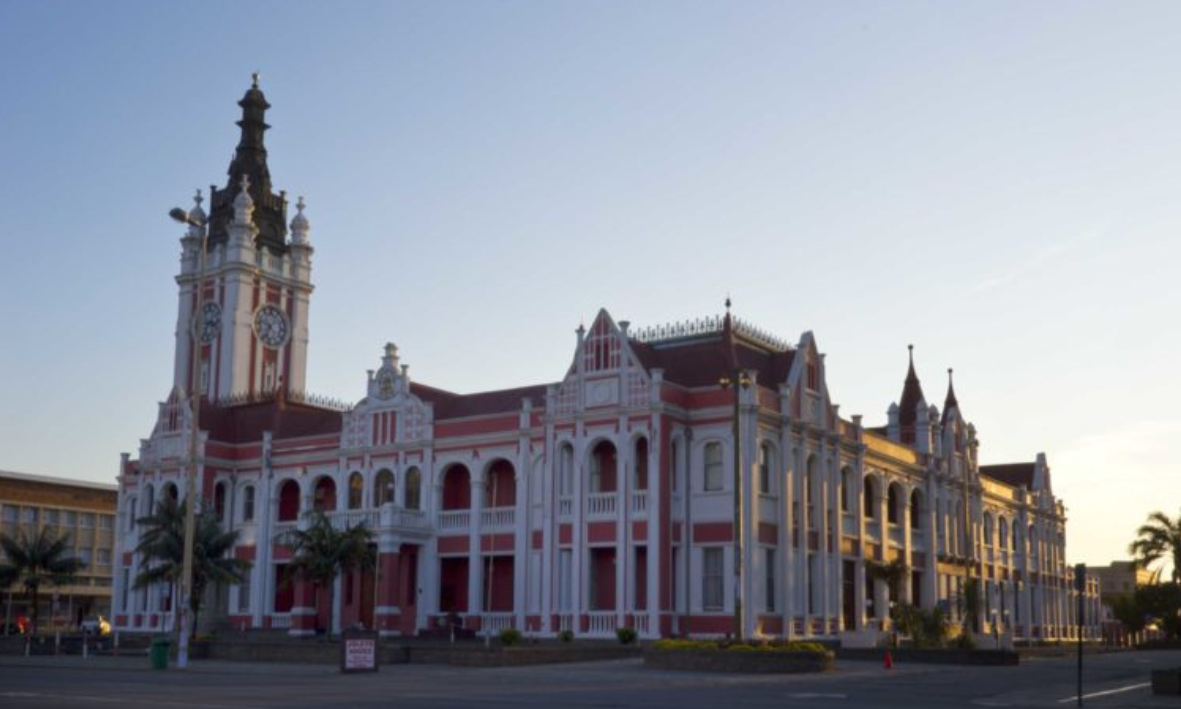
Statement by Bulelani Bobotyane, Provincial Secretary of the UDM in the Eastern Cape The United Democratic Movement (UDM) in the Eastern Cape has taken note of media reports indicating that the Executive Mayor of Buffalo City Metropolitan Municipality, Princess Faku, is allegedly the subject of a matter currently under consideration by the Independent Electoral Commission (IEC) relating to allegations of misrepresentation and the potential misuse of municipal resources for electoral purposes. The UDM in the Eastern Cape believes that the integrity of South Africa’s democratic and electoral systems must remain beyond reproach. Allegations suggesting the possible use of public resources, municipal programmes, or state platforms to advance partisan political interests are matters that require careful and transparent scrutiny. At the same time, the UDM in the Eastern Cape wishes to emphasise that South Africa’s constitutional framework is founded on the principle that every person is presumed innocent until proven otherwise. It is therefore important that the IEC be allowed to conduct its processes independently, fairly, and without interference so that the facts of the matter may be properly established and the public properly informed. This process must also serve as an opportunity to address persistent concerns about governance and the use of public resources within Buffalo City Metropolitan Municipality and, where wrongdoing is found, to ensure that accountability is finally enforced. Public institutions and municipal resources exist to serve communities impartially and in accordance with the law. Any situation that creates the perception that public resources may be used for electoral advantage risks undermining public confidence in governance and in the fairness of democratic competition. These allegations also reinforce longstanding concerns about governance and the use of public resources within Buffalo City Metropolitan Municipality, concerns that communities and opposition parties have raised repeatedly over time. In such circumstances it is particularly important that public representatives demonstrate the highest standards of ethical leadership, transparency, and accountability. The UDM in the Eastern Cape will continue to monitor this matter closely and supports all lawful and appropriate oversight processes to ensure that accountability is upheld and that the integrity of South Africa’s electoral framework is protected. The people of Buffalo City deserve governance that is transparent, responsible, and firmly grounded in the rule of law.
Admin
26 Feb, 2026
Eastern Cape SOPA2026: Mabuyane’s leadership on trial after year 7
Statement by Bulelani Bobotyane, Provincial Secretary of the UDM in the Eastern Cape The United Democratic Movement (UDM) in the Eastern Cape notes that on 27 February 2026, Premier Oscar Mabuyane will address the province in his seventh year at the helm. Across towns and villages, one hears a recurring sentiment: there was a period in this region’s history when executive authority translated into visible administrative discipline, when decisions were implemented with consistency and consequence management was not optional. That period existed within a different constitutional dispensation and must be understood in its proper historical context. It was not beyond criticism. In this province, what endures in public memory is not nostalgia for past structures, but the perception that governance was firm, coherent and enforceable. After nearly seven years in office, the current African National Congress (ANC) administration cannot dismiss that comparison. It must answer it. Seven years into the Mabuyane administration, the issue is no longer vision. The province has had vision documents, master plans, stimulus funds, growth frontiers and 2030 targets. The issue is executive control and institutional discipline. When the same sectors are re-announced year after year, when projected multipliers are pushed further into the future, and when governance reform deadlines quietly fade from the public record, the pattern reveals not a shortage of ideas, but a shortage of consolidation. After 32 years of uninterrupted ANC governance in this province, fragmentation cannot be blamed on transition or inheritance. It reflects a governing culture that accumulates initiatives faster than it stabilises systems. The Eastern Cape does not lack policy. It lacks conversion. It does not lack plans. It lacks enforcement. Seven years is sufficient time to entrench systems, discipline departments and impose consequence management. When plans multiply but structural indicators remain stubborn, it signals not complexity, but weak executive control. The ANC governs this province, with Premier Mabuyane at its helm. They cannot continue to govern through perpetual projection and recycled ambition. If the plans are sound on paper yet outcomes remain inconsistent, the question is no longer about design. It is about leadership. As the province approaches the 2026 Local Government Elections, SOPA 2026 must do more than defend a record. It must demonstrate that governance is stabilising where citizens experience the state most directly: in municipalities. Voters will not judge performance by presentation in the Chamber, but by functioning taps, maintained roads, disciplined finances and reliable services. In this election cycle, credibility will be earned on the ground. Accountability and delivery The UDM in the Eastern Cape will demand that SOPA2026 move beyond ambition and provide clear evidence of delivery. The people of the Eastern Cape have heard commitments on roads, water infrastructure, housing, health facilities and economic expansion before. This year’s address must account for what has been completed, what remains delayed and what has stalled. The public deserves measurable progress, not repetition. Municipal governance Municipal instability must be confronted honestly. If municipalities required intervention in the past year, the province must report whether those interventions worked. Financial stability, revenue collection, professional administration and consequence management determine whether communities receive services and whether local government can be trusted. Water security Access targets extending toward 2030 cannot substitute for consistent supply today. Communities experience governance through functioning taps, maintained infrastructure and effective wastewater systems. If these remain unreliable, explanations are no longer sufficient. Infrastructure maintenance Development cannot be credible if roads, stormwater systems and municipal assets deteriorate while new projects are announced. Maintenance is not secondary to growth. It is foundational to it. Economic reform and employment Sustainable job creation depends on stable municipalities, reliable infrastructure, clean procurement systems and a predictable regulatory environment. Temporary public employment programmes may offer short-term relief, but they do not replace structural reform. The province must demonstrate that institutional foundations for long-term economic expansion are being strengthened year by year. The National Development Plan’s 2030 horizon does not excuse weak implementation in the present. Governance and accountability Ethics frameworks and oversight mechanisms must translate into visible consequences. Clean governance, professional administration and disciplined public finance management are essential if public trust is to be restored. In 2020, this administration undertook to implement lifestyle audit guidelines by 2022. That deadline has passed. The province has yet to see consistent, transparent reporting on the outcomes of those audits or the consequences that followed. Anti-corruption cannot be rhetorical. It must be enforceable. With the 2026 Local Government Elections fast approaching, this address will be measured not by tone, but by evidence. The people of this province are demanding functional municipalities, reliable services and accountable leadership. In 2026, the UDM in the Eastern Cape will present a credible alternative grounded in administrative discipline, clean governance and service delivery that is felt in every municipality we contest.
Admin
17 Feb, 2026
State of the Nation Address 2026 debate by Bantu Holomisa
Speech for Deputy Minister Bantu Holomisa, MP and President of the United Democratic Movement at the State of the Nation Address 2026 debate CHECK AGAINST DELIVERY Honourable Speaker Honourable Members The Government of National Unity (GNU) will not be judged by the promises tabled during the opening of Parliament, but by whether that skeletal plan is implemented with urgency, discipline and measurable results. South Africans have heard plans before. What they demand now is execution. 1. Security is the foundation of development The State of the Nation Address (SONA) emphasised economic recovery and energy stability, but sustainable growth also depends on protecting our environment and critical infrastructure from vandalism, illegal mining and sabotage that damage ecosystems and investor confidence. We are strengthening enforcement, deploying coordinated security and accelerating prosecutions because environmental protection, stability and growth are inseparable. The GNU further recognises that development cannot flourish without security. We therefore welcome: • The deployment of the South African National Defence Force (SANDF) in support of South African Police Service (SAPS) in crime epicentres such as the Cape Flats and the broader Western Cape, and areas such as Randfontein in Gauteng. • The elevation of the security cluster as a national priority. • The use of Artificial Intelligence-driven systems for predictive policing and intelligence coordination. In line with the orders issued by the Commander-in-Chief, President Ramaphosa, I confirm that the Department of Defence is seized with operational requirements to support stabilisation interventions in consultation with the security cluster. This is just phase one of restoring normality. 2. Crime and consequences: the era of impunity is over Mqwathi, mandikuqinisekise amasela ixesha lawo liphelile. Yekani ii Law Enforcement Agencies zenze umsebenzi wazo, singaphazanyiswa. The honeymoon is over. Corruption and maladministration have not merely touched the state, they have engulfed it, reaching even into our law enforcement agencies. The rot did not spare the Department of Defence either. That is why we acknowledge the President’s decision to sign the proclamation authorising the Special Investigating Unit (SIU) to investigate these matters and more. Accountability cannot be selective. It must be decisive and it must reach everywhere. At a briefing to the Portfolio Committee and Joint Standing Committee on Defence, the SIU, the Military Police, and the Hawks assured us that we have recovered over R1.6 billion linked to corruption and mismanagement within Defence. This is just a start of restoring the image of our defence force. That is consequence management in action. If Special Courts could be established by the Department of Justice in partnership with the National Prosecuting Authority (NPA), this will assist to accelerate the resolution of all pending military cases. Crime and corruption embarrass this country. They damage investor confidence. They weaken sovereignty. We have no choice but to confronting them head-on. 3. No country survives without law No country can function if its laws are optional, and anyone who comes to this country legally must be prepared to abide by the law or they will be shipped out. Fellow South Africans, you deserve a state that works, systems that speak to each other, and early warning mechanisms that stop crime before it spreads. Without accurate Financial Intelligence Centre Act (FICA) registration, South African Revenue Service (SARS) cannot collect revenue from all traders operating in our economy. Furthermore, law enforcement cannot properly trace or dismantle criminal syndicates operating in the underworld. South Africa urgently needs a coordinated security response plan with time frames and the strengthening of the NPA as to be functional. South Africa’s liberation history teaches us solidarity. But protection must be credible and enforceable. If a person is granted asylum yet voluntarily returns to the very country they claim to be fleeing during holiday season, that status must be reviewed. You cannot be in danger today and on holiday tomorrow. Accountability is not hostility. It is fairness. It is security. It is sovereignty. 4. The Public Investment Corporation Mr President, in 2023 you called on the Minister of Finance to address the pension queries of former civil servants. The affected community is still waiting for feedback and progress reports. People are dying while the system drags its feet, and each day of delay is a day of injustice. It is even more painful to see that the funds meant to secure these pensions are being looted by the elite through the Isibaya Fund at the Public Investment Corporation. Resources meant for ordinary South Africa are being diverted to enrich a few, deepening inequality and betraying public trust. How we wish that money could instead be invested in South Africa’s infrastructure, generating real returns for the country and creating jobs. This is a guaranteed investment in the nation, not in private greed. The people deserve accountability and action, not corruption. 5. Skills development: from training to productivity We welcome the review of the Sector Education and Training Authorities (SETAs) as a corrective measure to ensure that skills funding delivers measurable results. Within Defence, the South African National Service Institute (SANSI) recently passed out over 500 young people. Mr President, do consider ring-fencing and redirecting SETA funding towards: • Funding into structured, outcome-based programmes such as SANSI. • Standardised study guides in mathematics, languages, accounting and entrepreneurship. • Mandatory practical and technical skill components. In 2001, Matt Matthys, Chantal Mulder, the President South African Institute of Chartered Accountants (SAICA), Ignatius Sehoole, and I spearheaded the Thuthuka Project, providing English, Mathematics, and Accounting study guides for Grades 9 to 12. Today, that project has produced over 2,000 Black Chartered Accountants. We may need to have a tailor-made, or similar setup into skills development. 6. Prevention of Hate Crimes and Combating of Hate Speech Act The Prevention of Hate Crimes and Combating of Hate Speech Act, though intended to protect dignity and equality, goes beyond what our Constitution permits and places freedom of religion at risk. It criminalises expression using vague and undefined concepts and expands protected grounds without legal certainty. In a constitutional democracy, believers must be free to express their faith without fear of prosecution. Equality must never be advanced by eroding religious freedom. We therefore urge that the Act be constitutionally aligned through appropriate amendments before it comes into operation. 7. Conclusion: restoring dignity, restoring the state No country survives without law. No economy grows without stability. No democracy thrives without accountability. South Africans want safety, fairness, opportunity and a state that works. Through decisive, coordinated action on security reform, border integrity, infrastructure protection, skills development and consequence management, we will deliver. Judge us not by our words, but by the order we restore, the stability we secure and the future we build together. I thank you.

Admin
03 Oct, 2025
Open letter to the Financial Sector Conduct Authority, National Treasury and the government of South Africa on pension arrears
Mr Enoch Godongwana, MP Minister of Finance Private Bag X115 Pretoria 0001 and Mr Velenkosini Hlabisa, MP Minister of the Department of Cooperative Governance and Traditional Affairs Private Bag X802 Pretoria 0001 and Commissioner Unathi Kamlana Financial Sector Conduct Authority PO Box 35655 Menlo Park 0102 Dear Minister Godongwana, Minister Hlabisa and Commissioner Kamlana An open letter to the Financial Sector Conduct Authority, National Treasury and the government of South Africa on pension arrears 1. The United Democratic Movement (UDM) writes with grave concern about the worsening crisis of unpaid pension contributions, recently highlighted by the Financial Sector Conduct Authority (FSCA). According to the FSCA, employers across South Africa owe more than R7.29 billion in pension arrears, affecting nearly 600,000 workers. 2. This is not only a financial scandal; it is a betrayal of trust. Pensions are not perks; they are deferred wages. For thousands of workers, the discovery that contributions deducted from their salaries were never paid over to pension funds has caused shock and despair. Many only became aware of this painful truth when attempting to access their savings under the two-pot retirement system in September 2024. 3. The introduction of the two-pot retirement system was meant to improve financial security by splitting new contributions into a savings pot, from which one withdrawal can be made each year, and a retirement pot, which remains locked until retirement. Instead of providing relief, the system has exposed the depth of the arrears crisis. When workers tried to make their first withdrawals, many discovered that their contributions had never been transferred to their funds. What should have been a safety net has become proof of betrayal, leaving workers with empty accounts where their savings should have been. 4. Families who are already struggling with rising costs of living now face the indignity of poverty in their old age because of the failures of their employers and the weakness of the regulatory framework. 5. As a party within the Government of National Unity (GNU), the UDM sees it as our duty to exercise firm oversight from within, ensuring that government does not turn a blind eye to failures that harm workers and their families 6. The scale of the crisis 6.1. The arrears problem is no longer marginal; it is systemic. Arrears surged by 40% in one year to reach over R7 billion. Nearly 600,000 workers are affected, with many still in employment and others already retired. Over 1,000 cases have been referred to the South African Police Service, and more than 8,000 instances of legal action have been initiated by retirement funds. Yet, prosecutions remain limited and recoveries slow. 6.2. This problem is not confined to small businesses. Large provident funds such as the Auto Workers Provident Fund and the Motor Industry Provident Fund account for the bulk of legal actions, and government itself has emerged as one of the biggest culprits. 7. Accuracy and transparency of data 7.1. While the scale of the arrears is shocking, there are also concerns about the accuracy of FSCA data. Reports have shown that some employers named in arrears lists insist they had made payments, but that the arrears were still reflected because of delays in updating data, incomplete reporting by funds, or administrative errors. 7.2. Such inaccuracies undermine trust in the regulatory system, cause reputational harm to compliant employers, and create confusion for workers. Transparency only has value if the information is accurate and up to date. Workers and Parliament need figures they can rely on. 8. The systemic weaknesses 8.1. The UDM acknowledges steps the FSCA has taken, including publishing arrears lists, collaborating with Treasury and the Hawks, recovering R39 million and R50 million from municipalities through withheld transfers, and securing court orders against delinquent municipalities and company directors. These are important interventions. 8.2. However, they remain insufficient. The FSCA itself admits that it lacks full powers over employers until the Conduct of Financial Institutions (COFI) Bill is passed into law. Enforcement is slow, arrears continue to grow, and some retirement fund trustees are failing to act decisively against non-compliant employers. In the meantime, workers continue to suffer while billions in deferred wages are withheld. 9. Accountability and governance 9.1. It is especially alarming that government itself (through national and provincial departments and municipalities) is among the biggest culprits, owing an estimated R1.5 billion despite Treasury interventions. Municipalities in particular are repeat offenders, often defaulting again even after arrears are recovered through withheld equitable share transfers. National and provincial departments are not immune either. 9.2. This is unacceptable. When the state itself is in breach, it weakens public confidence in the entire system and sets a terrible example for private employers. The UDM cannot remain silent while the state itself is one of the worst offenders. We will use every platform in Parliament, including SCOPA, to hold both our partners and ourselves to account. Leadership cannot demand compliance from others while defaulting on its own workers’ pensions. 10. In light of the above, the United Democratic Movement calls for urgent action on the following: 10.1. The Minister of Finance to prioritise the Conduct of Financial Institutions Bill and for the Portfolio Committee on Finance to fast-track its passage through Parliament, so that the FSCA is fully empowered to act against defaulting employers. 10.2. The FSCA, working with National Treasury, the Hawks and the National Prosecuting Authority, to enforce the law through criminal charges, asset seizures and by holding directors, officers and municipal managers personally liable. 10.3. The FSCA to continue publishing arrears lists, but to strengthen them by ensuring accuracy, providing sectoral breakdowns, and reporting not only on arrears but also on recoveries and enforcement actions, so that workers, Parliament and the public can track real progress transparently 10.4. National Treasury and Minister Velenkosini Hlabisa, in his role as Minister of Cooperative Governance and Traditional Affairs, to intervene firmly in delinquent municipalities and government departments, with SCOPA exercising oversight to ensure that such failures do not repeat. 10.5. The FSCA to act against trustees who neglect their duty to recover contributions from defaulting employers. 10.6. National Treasury to put in place interim protection measures so that workers making use of the two-pot system are not left destitute because of employer failures. 11. Conclusion 11.1. South Africa cannot tolerate a situation where nearly R7.3 billion in pensions is left unpaid while workers go hungry and pensioners live in indignity. Pensions are deferred wages earned through years of labour and withholding them is nothing short of theft from the future. 11.2. Being part of the GNU does not mean turning a blind eye. It means doubling our vigilance. The UDM will continue to play its role by exercising firm oversight inside government to safeguard the rights of workers and ensure public money is used with integrity. Yours sincerely Mr NLS Kwankwa, MP Deputy President of the United Democratic Movement Party Leader in Parliament Copied to: Ms Nomakhosazana Meth, MP - Minister of Employment and Labour Mr Songezo Zibi, MP - Chairperson of the Standing Committee on Public Accounts Dr Mkhacani Maswanganyi – Chairperson of the Standing Committee on Finance Mr Makhosonke Maneli – Chairperson of the Portfolio Committee on Employment and Labour Dr Zwelini Mkhize – Chairperson of the Portfolio Committee on Cooperative Governance and Traditional Affairs Ms Thandi Nontenja, MP - UDM Member on the Standing Committee on Public Accounts
Admin
12 Sep, 2025
Lawlessness, violent protests, and broken governance: South Africa needs urgent reform
Statement by Nqabayomzi Kwankwa, MP, UDM Deputy President and Leader in Parliament The United Democratic Movement (UDM) notes with concern the violent turn taken by community protests in Mondlo township, KwaZulu-Natal, where municipal buildings and vehicles were torched in the wake of anger over load reduction, poor services, and a lack of municipal accountability. Similar scenes unfolded in Coronationville in Westbury and Ivory Park in Tembisa, where residents clashed with police over prolonged water cuts, leaving community members injured. These incidents are neither isolated nor unprecedented. They form part of a deepening national crisis of lawlessness, in which citizens increasingly turn to destruction, arson, and violent attacks to express their grievances. This alarming trend reflects both a collapse of governance and the erosion of trust in peaceful engagement with authorities. International examples provide a stark warning for the powers that be. In Nepal, widespread protests by young citizens over corruption, nepotism, and mismanaged policy escalated into the burning of parliament and the homes of prominent politicians, forcing the army to airlift government ministers to safety. South African politicians must take heed: ignoring the cries of communities for basic services risks a similar escalation, where frustration could spill over into chaos and threaten social stability. Experts have already warned that South Africa’s legacy of socio-economic neglect, political disillusionment, and an ineffective justice system has created an environment where violence is seen as the only language government listens to. Communities often exhaust every formal avenue, writing memoranda, petitioning councillors, and pleading with municipal officials, only to be ignored until protests erupt. While the frustration of citizens who live without water, electricity, and safe infrastructure is understandable, the UDM strongly condemns the destruction of property and the loss of life that follow such unrest. Burning municipal buildings, petrol-bombing government offices, and attacking fellow citizens only deepen the crisis, disrupt service delivery further, and strip communities of the very resources they need. Equally, the UDM abhors the excessive and sometimes indiscriminate use of force by the South African Police Service (SAPS), including reports of rubber bullets fired at elderly people and children during recent protests. Heavy-handed policing only hardens anger and deepens mistrust. The UDM calls for: • A comprehensive reform of local governance to restore accountability, transparency, and service delivery. • Stronger and fairer enforcement of the law, so that criminal acts of arson and violence do not go unpunished, while ensuring that policing respects human rights and protects vulnerable community members. • Genuine dialogue between government (especially at local level) and communities before frustrations boil over into unrest. Engagement must be consistent, respectful, and solutions-driven. • National government to urgently intervene in municipalities crippled by corruption, maladministration, and financial collapse, to prevent further violent flashpoints. Many communities exhaust formal channels, such as petitioning ward councillors, municipal officials, and provincial leaders, before resorting to violence. The UDM therefore calls for the agenda of the National Dialogue to address these repeated frustrations. Service delivery challenges, local governance failures, and mechanisms for meaningful citizen participation must be central, with clear commitments and accountability measures to ensure that public grievances do not escalate into unrest. South Africa cannot build a future by burning the present. Violence and destruction must never become acceptable or normalised as a way of forcing government action. At the same time, government must demonstrate through action, not words, that it listens to peaceful demands, honours commitments, and delivers the basic services enshrined in our Constitution. The cycle of neglect, protest, violence, and suppression must be broken. What is at stake is not only community stability but the very fabric of our democracy.
Admin
20 Oct, 2020
President Ramaphosa does not take the youth seriously!
The United Democratic Movement Youth Vanguard (UDM Youth Vanguard) thinks President Cyril Ramaphosa lives in a fool’s paradise if he believes that his government will implement his big plans. Since Mr Ramaphosa became president, every speech has been full of optimism and plans for a new dawn, however South Africans have not seen any implementation. The UDM Youth Vanguard has a lingering question as to what exactly makes the President thinks his big plans are easily implementable and we would like to know if there is an effective strategy in place to successfully execute his plans. Our concern stems from the looting culture we recently witnessed with the Coronavirus pandemic, where government officials were accused of the abuse of state funds, as well as the severe maladministration of the President’s initiatives. A simple example is the dismal failure to implement the R350 special Covid-19 Social Relief of Distress Grant (SRD grant) as, to date, young unemployed South Africans have not received their full grants as promised. It is a struggle for the department of social development to disburse these grants every month to deserving beneficiaries. We strongly reject the assertion, and proffered statistics, that these SRD grants have helped young unemployed South Africans to live above the poverty line. We have experienced a ridiculous increase in food prices, therefore the R350 certainly is not enough to make a tangible difference. The statistics are misleading, and it surely does not represent the realities and hardships that young people daily face. It is repulsive to see the President addressing the nation with misleading information and this culture must be condemned The UDM Youth Vanguard would like the President to present an effective implementation strategy of all the plans he mentioned in his speech, more especially on his plans regarding job creation. We should be cognisant of the fact that thousands of South Africans have lost their jobs during the Covid-19 pandemic and therefore creating 800,000 jobs will not only be challenging, but insufficient. This kind of plan requires strong leadership and integrity which the current leadership has failed to provide to date. The President also needs to be specific regarding the duration of the employment, because it is unfair to create job opportunities that only last for a few months and thereafter the recipients must return to the unemployment benches. We refuse to call that job-creation and it cannot be documented on the statistics as it is demeaning and undignified. We call on President Ramaphosa to issue a directive to all departments with clear plans and implementation strategies, with timeframes, that clearly sets out how his plans must be implemented. Accordingly, those plans must be published so that young people can hold those departments and the relevant ministers accountable. Furthermore, young people are hungry for change and we are tired of empty promises. We want urgent change, and the government should respond with speed. President Ramaphosa must take the necessary measures to hold all government officials who are suspected of corruption to account. Suspend, fire and open criminal cases. The youth is ready to serve this nation and thereby better the lives of all our people. We cannot afford to continue on this slippery slope of corruption and degradation. Young South Africans do not need motivation, they have it is an innate ability. They do not want pity, they want change. Cut the red tape and make it possible for young people to thrive, work and build their own businesses and enhance their standard of living. Issued by: Mr Yongama Zigebe UDM Youth Vanguard
Admin
05 Aug, 2020
R30m PPE scandal: AFU must restrain KZN social development officials’ property
The United Democratic Movement (UDM) in KwaZulu-Natal (KZN) calls on the National Prosecuting Authority’s Asset Forfeiture Unit (AFU) to urgently apply for an order of restraint of the property of the high-ranking provincial social development officials who have been accused of contravening the Public Finance Management Act and who face charges of misconduct over the dodgy procurement of personal protective equipment (PPE) as well as blankets. We commend the department’s move to suspend the implicated officials as announced by the KwaZulu-Natal MEC for social development Nonhlanhla Khoza. However, suspending them and opening criminal cases are not enough, the AFU should obtain a restraint order to seize property before their potential conviction to ensure that the property is available to be sold later if needs be to recoup the R30 million. Furthermore, the department must take the public into confidence and indicate whether this is the only filthy transaction that these officials might have been involved in, if there are any other transactions, those too must be made known publicly. It is however an indictment of the department that it only ordered investigation, into what appears to be blatant theft, due to public pressure. Whether public pressure is exerted or not, the government owes it to the South African taxpayer to be transparent in all its dealings, especially where corruption is concerned. The UDM also calls upon the department to name and shame the involved service providers and to blacklist them so that they may not do any further business with the government. Issued by: Mr Boysey Gumede UDM KZN Interim Provincial Secretary
Admin
13 Jul, 2020
Is our healthcare system actually ready for President Ramaphosa’s coronavirus storm?
We listened attentively to President Cyril Ramaphosa’s recent announcements regarding stricter regulations governing our lives in the face of the exponential increase of Coronavirus infections in South Africa. The United Democratic Movement Youth Vanguard (UDMYV) has noted that the President couched this decision as being necessary to relieve the pressure on our healthcare system. An immediate ban on alcohol was also imposed, because of misbehaving citizens who land in hospital due to alcohol related injuries and this takes up much-needed bed space. What we do not understand is that Health Minister Zweli Mkhize was super confident that our healthcare system was ready to deal with an enemy that has felled first world countries’ healthcare systems. Now the President, in so many words, admitted that our healthcare system is in fact under severe pressure and is not ready, as there is, for instance, still a serious shortage of more than 12,000 health workers. We hear of hospitals that have no water, staff who receive substandard personal protective equipment, bulk Covid-19 infections of hospital staff and how fear and anxiety are causing panic among them. To make matters worse, we understand that analysis of the coronavirus’ genome sequence found a mutation, which makes the virus more infectious than the original strain; we better hope and pray this mutation does not happen in South Africa. The mysterious National Coronavirus Command Council (NCCC) and Cabinet are making and breaking as they please and never unpack their decisions satisfactorily. We therefore call on Parliament, as the oversight arm of the state that holds the executive to account, to investigate our healthcare system’s state of readiness. Who was speaking the truth when? Something is severely wrong here. Lastly, the UDMYV feels strongly that the NCCC must go back to the drawing board and eliminate some inequalities in their regulations. If children are forced to go back to school and risk coronavirus infection, Parliament must, with immediate effect, suspend its hybrid model of sitting, and all Members of Parliament must go back to their benches to work. We do not understand why it is different strokes for different folks. Where we do agree with the President is that we must unite in making sure that we win the fight against the coronavirus, it is indeed in our hands (quite literally) and no one will help us, except us. Let us spread the message to wear masks and wash hands and hold each other accountable, we need to be responsible not just for ourselves, but also for others; especially the frontline healthcare workers who daily put their lives on the line to take care of ours. Issued by: Mr Yongama Zigebe UDM Youth Vanguard
Admin
26 May, 2020
UDM KZN perplexed at renaming of Umzinyathi District Municipality to Prince Mangosuthu Buthelezi
The United Democratic Movement (UDM) in KwaZulu-Natal is shocked at the announcement made by Umzinyathi District Municipality Mayor PMS Ngubane, that the municipality is undergoing a name change to “Prince Mangosuthu Buthelezi District Municipality”. The Umzinyathi community was taken by total surprise when we heard the announcement via uKhoziFM. What is at issue here is the constitutional mandate the directs municipalities as per Sections 152(1)(e) and 153(a) of the Constitution, which reads: S152(1) “ The objects of local government are: (e)To encourage the involvement of the communities and community organizations in the matters of local government “. S153(a) “A municipality must structure and manage its administration and budgeting and planning process to give priority to the basic needs of the community, and to promote the social and economic development of the community”. As far as the UDM in KwaZulu-Natal is aware, there was no consultation with the community, regarding the name-change, as is dictated by Section 152(1)(e) and for all intents and purposes, a name is being forced down their throats. If the community had been consulted, there would have been several, well-known local names that would have been thrown into the hat, such as Inkosi Simakade Mchunu, Mr FS Sikhakhane (former mayor of Msinga) and Bambatha kaMancinza. At the heart of the matter is a lack of prioritisation when a random name change is now more important than this municipality discharging its core functions. Section 153(e) explicitly directs municipalities to give priority to basic needs provision in its budgeting and planning. The Umzinyathi District Municipality is failing to provide water to its communities. One of the excuses is that it awaits financial assistance from the provincial Cooperative Governance and Traditional Affairs department, to fix 706 dysfunctional water hand pumps to the tune of R1.5m. Yet it has the audacity to splash scarce funds on a name change. The UDM in KwaZulu-Natal calls on the Umzinyathi District Municipality to correct its skewed priorities, halt the name change and re-channel those funds into fixing the 706 water hand pumps. This is the morally and constitutionally correct thing to do. — end — Issued by: Mr Boysey Gumede UDM KwaZulu-Natal Interim Provincial Secretary
Admin
11 Dec, 2019
Access to the internet is a human right!
The United Democratic Movement Youth Vanguard welcomes the Competition Commission call for the South African mobile operator giants Vodacom and MTN to reduce their data charges by 30% to 50% within two months. This has been a call that the UDMYV has made for quite some time, calling for data to fall and allow young people to access jobs, business opportunities, studying purposes, social safety awarenesses and other miscellaneous itinerary. It is unacceptable and business unreasonable to have South African originating mobile network operators selling data at a lower cost in the neighbouring countries than at home. Our local data costs are significantly high consistently marginalizing the unemployed, low income and poverty-stricken young people. Internet allows for more sustainable development and economic participation and if South Africa is serious about growing an all-inclusive economy, now it is the time to walk the talk. Access to Internet is a basic Human Right equivalent and in line with 2.8 Freedom of Expression, 2.14 Freedom of Trade, Occupation and Profession, 2.21 Education, 2.24 Access to Information, etc. Access to Internet means e-commerce, e-business/ e-trading, e-marketing, e-health, e-learning & e-training, e-government, etc and citizens, especially, youth are currently held on captive with the high data tariffs. As a United Nations’ member state, an attendee and participant of the World Summit on the Information Society (WSIS), and an adopter of A Call to Action of the African Union’s Agenda 2063 looking at Connecting Africa through World-Class Infrastructure with specific reference to ICT, South Africa is infrastructural and technically behind its promise. The UDMYV calls on Minister Stella Ndabeni-Abrahams, Minister Ebrahim Patel and the Independent Communications Authority of South Africa (ICASA) to carry on expedite plans to release more spectrum to allow the industry to grow and be competitive in the world that is fast changing and heading towards the popular Fourth Industrial Revolution (4IR). They must give specific timeframe on the issue of the spectrum as to when will it be released and all other related details putting her confidence to the public. Also as she claims to be a pioneer behind the 4IR, Minister Ndabeni-Abrahams should have paved a better foundation first by ensuring that a high speed broad-banded and low to free internet society with cyber-security in place is created. The sooner this is done the lesser we will hear stories from services providers of less spectrum. We commend the Competition Commission on this move and hope that this will be extended to all the network providers not just MTN and Vodacom to comply and reduce data without compromising its speed. — End — Issued by: Mr Masonwabe Nqawe UDM Youth Vanguard Western Cape
Admin
03 Jul, 2019
The UDM in KwaZulu-Natal calls on the IFP to come clean on its forever lasting investigation of its uMzinyathi District Municipality Mayor
On 24 May 2019, the United Democratic Movement (UDM) exposed, in the form of recordings, the until then, widely speculated allegations of corruption of the Inkatha Freedom Party’s (IFP) uMzinyathi District Municipality Mayor. The allegations pertained to the siphoning off of funds from that municipality. In an Isolezwe newspaper article on the 3rd of June, IFP Spokesperson, Mr Mkhuleko Hlengwa, was quoted saying that the IFP was investigating the matter. On 7 June, during a live talk-show hosted by Ikhwezi FM, the mayor, who was cornered by the UDM KwaZulu-Natal Interim Provincial Secretary, admitted that the voice on the recordings was his. He therefore owned up to the content of those recordings. More allegations of corruption, where the mayor was involved, were published by the Daily Sun on 28 June. Mr Hlengwa was again quoted saying that the IFP was investigating that matter too! The IFP does not seem to be in the least concerned about these compromising claims and allegations about their deployed mayor, whom has apparently rendered the district as a total failure in the core function of providing water to this community; yet the yearly budget is committed and exhausted without any provision of what it was earmarked for. The UDM calls on the IFP to come clean about whether its mayor is siphoning off funds from this municipality’s service providers as a directive from itself or not. If not, the IFP must respect the community of the uMzinyathi district by removing their seemingly corrupt mayor with immediate effect and conclude its never-ending and ineffectual investigation into these allegations. Statement issued by Mr Boysey Gumede UDM KwaZulu-Natal Interim Provincial Secretary