
Admin

26 Feb, 2026
Eastern Cape SOPA2026: Mabuyane’s leadership on trial after year 7
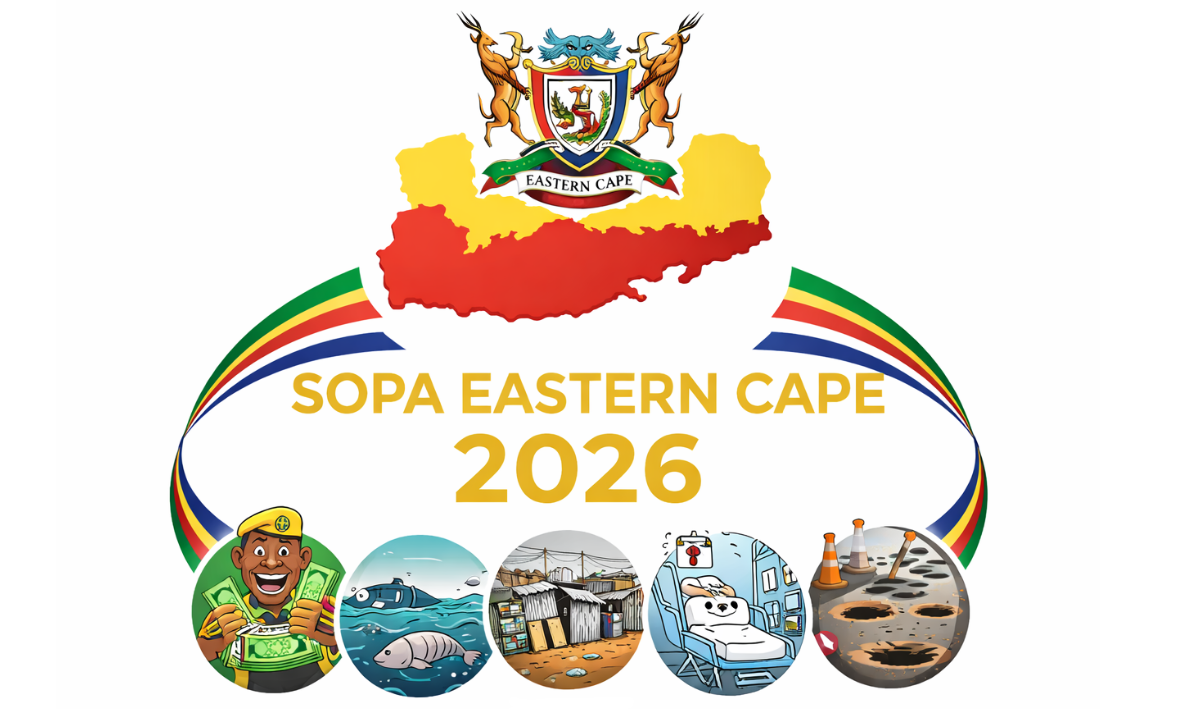
Statement by Bulelani Bobotyane, Provincial Secretary of the UDM in the Eastern Cape The United Democratic Movement (UDM) in the Eastern Cape notes that on 27 February 2026, Premier Oscar Mabuyane will address the province in his seventh year at the helm. Across towns and villages, one hears a recurring sentiment: there was a period in this region’s history when executive authority translated into visible administrative discipline, when decisions were implemented with consistency and consequence management was not optional. That period existed within a different constitutional dispensation and must be understood in its proper historical context. It was not beyond criticism. In this province, what endures in public memory is not nostalgia for past structures, but the perception that governance was firm, coherent and enforceable. After nearly seven years in office, the current African National Congress (ANC) administration cannot dismiss that comparison. It must answer it. Seven years into the Mabuyane administration, the issue is no longer vision. The province has had vision documents, master plans, stimulus funds, growth frontiers and 2030 targets. The issue is executive control and institutional discipline. When the same sectors are re-announced year after year, when projected multipliers are pushed further into the future, and when governance reform deadlines quietly fade from the public record, the pattern reveals not a shortage of ideas, but a shortage of consolidation. After 32 years of uninterrupted ANC governance in this province, fragmentation cannot be blamed on transition or inheritance. It reflects a governing culture that accumulates initiatives faster than it stabilises systems. The Eastern Cape does not lack policy. It lacks conversion. It does not lack plans. It lacks enforcement. Seven years is sufficient time to entrench systems, discipline departments and impose consequence management. When plans multiply but structural indicators remain stubborn, it signals not complexity, but weak executive control. The ANC governs this province, with Premier Mabuyane at its helm. They cannot continue to govern through perpetual projection and recycled ambition. If the plans are sound on paper yet outcomes remain inconsistent, the question is no longer about design. It is about leadership. As the province approaches the 2026 Local Government Elections, SOPA 2026 must do more than defend a record. It must demonstrate that governance is stabilising where citizens experience the state most directly: in municipalities. Voters will not judge performance by presentation in the Chamber, but by functioning taps, maintained roads, disciplined finances and reliable services. In this election cycle, credibility will be earned on the ground. Accountability and delivery The UDM in the Eastern Cape will demand that SOPA2026 move beyond ambition and provide clear evidence of delivery. The people of the Eastern Cape have heard commitments on roads, water infrastructure, housing, health facilities and economic expansion before. This year’s address must account for what has been completed, what remains delayed and what has stalled. The public deserves measurable progress, not repetition. Municipal governance Municipal instability must be confronted honestly. If municipalities required intervention in the past year, the province must report whether those interventions worked. Financial stability, revenue collection, professional administration and consequence management determine whether communities receive services and whether local government can be trusted. Water security Access targets extending toward 2030 cannot substitute for consistent supply today. Communities experience governance through functioning taps, maintained infrastructure and effective wastewater systems. If these remain unreliable, explanations are no longer sufficient. Infrastructure maintenance Development cannot be credible if roads, stormwater systems and municipal assets deteriorate while new projects are announced. Maintenance is not secondary to growth. It is foundational to it. Economic reform and employment Sustainable job creation depends on stable municipalities, reliable infrastructure, clean procurement systems and a predictable regulatory environment. Temporary public employment programmes may offer short-term relief, but they do not replace structural reform. The province must demonstrate that institutional foundations for long-term economic expansion are being strengthened year by year. The National Development Plan’s 2030 horizon does not excuse weak implementation in the present. Governance and accountability Ethics frameworks and oversight mechanisms must translate into visible consequences. Clean governance, professional administration and disciplined public finance management are essential if public trust is to be restored. In 2020, this administration undertook to implement lifestyle audit guidelines by 2022. That deadline has passed. The province has yet to see consistent, transparent reporting on the outcomes of those audits or the consequences that followed. Anti-corruption cannot be rhetorical. It must be enforceable. With the 2026 Local Government Elections fast approaching, this address will be measured not by tone, but by evidence. The people of this province are demanding functional municipalities, reliable services and accountable leadership. In 2026, the UDM in the Eastern Cape will present a credible alternative grounded in administrative discipline, clean governance and service delivery that is felt in every municipality we contest.

Admin
10 Nov, 2025
From job offer to captivity: how human traffickers prey on South Africa’s desperate
Statement by Zandile Phiri, Acting Secretary General of the United Democratic Movement Human trafficking in South Africa has become a national emergency hiding in plain sight. It is destroying lives through sexual exploitation, forced labour, and debt bondage, and it thrives on poverty, desperation, and the failures of the state to coordinate an effective response. Recent reports have exposed the scale of this crisis. Three young women from Botswana were rescued at OR Tambo International Airport after being lured through social media with false promises of lucrative jobs in Sierra Leone. A 22-year-old woman from Bonteheuwel was tricked into travelling to Thailand, later trafficked to Cambodia, and forced into work after her passport was confiscated. In Johannesburg, seven Chinese nationals were convicted earlier this year of human trafficking after exploiting more than ninety Malawian workers, including thirty-three minors, in a garment factory where they were kept under guard and paid R65 a day. In the past year, investigations have revealed houses in Sandton, Johannesburg, and Durban where dozens of foreign nationals were held captive by trafficking syndicates. In one incident in March 2025, more than 50 people escaped from a house in Lombardy East, and in May 2025, 44 victims were rescued from a locked property in Parkmore, Sandton. Similar discoveries have been made in Durban, exposing a network that uses residential properties as holding sites for victims awaiting transport across borders. It is reported that less than one percent of victims is ever rescued. At the centre of this tragedy are employment scams that promise opportunity but deliver slavery. These operations exploit South Africa’s severe unemployment, preying on people desperate for income or a chance to work abroad. Our joblessness has become a recruitment tool for traffickers, and the state has done too little to close that door. The problem is compounded by weak coordination among law-enforcement agencies, poor data collection, and a lack of capacity in social services. Police, immigration, labour inspectors, and welfare officials often work in isolation, while traffickers move people freely across borders and provinces. Corruption and bureaucracy slow down victim identification, shelter placements, and prosecutions. South Africa’s porous borders worsen the crisis. Traffickers exploit weak controls and under-resourced posts to move victims alongside migrants and contraband. Until border management is tightened, corruption addressed, and regional intelligence improved, the country will remain a key corridor for trafficking across southern Africa. The United States Trafficking in Persons Report has again warned that South Africa is failing to identify victims, prosecute offenders, or coordinate a national response. The country’s placement on the Tier 2 Watchlist signals growing international concern over its weak efforts to combat trafficking. Unless coordination and enforcement improve, South Africa risks further sanctions and the erosion of its global credibility on human rights. The UDM calls for decisive action to break this cycle of exploitation and neglect: 1. A national anti-trafficking strategy led by the Department of Justice and Constitutional Development, bringing together the South African Police Service (SAPS), Department of Home Affairs, Department of Employment and Labour, Department of Social Development, and reputable civil society organisations under one command structure with measurable targets and real accountability. 2. Public awareness and prevention campaigns coordinated by the Department of Communications and Digital Technologies, in partnership with Basic and Higher Education, to educate communities about fake job offers, social-media recruitment, and passport confiscation; especially in provinces with high unemployment such as Mpumalanga, Limpopo, and the Eastern Cape. 3. Protection and reintegration services for victims managed by the Department of Social Development and provincial governments, with the support of accredited NGOs, to ensure safe shelters, counselling, and job placement programmes so survivors can rebuild their lives without fear or stigma. 4. Enforcement of labour laws and regulation of recruiters overseen by the Department of Employment and Labour and the SAPS, with heavy penalties for those who exploit undocumented workers, confiscate passports, or deceive jobseekers. Inspections must be routine and unannounced, and corrupt officials must be prosecuted. 5. Investment in youth employment and skills development driven by the Departments of Employment and Labour, Trade, Industry and Competition, and Higher Education and Training, working alongside the National Youth Development Agency and private sector partners. Preventing trafficking begins with creating real, sustainable opportunities at home through job creation, apprenticeships, and skills programmes that give young people viable alternatives to risky job offers and exploitation. 6. Strengthened cross-border cooperation spearheaded by the Department of International Relations and Cooperation and the Border Management Authority, working with SADC partners to dismantle trafficking networks, share intelligence, and ensure the safe repatriation of victims. Human trafficking is not only a criminal enterprise but a profound moral failure that strikes at the heart of our nation’s values. South Africa cannot claim to be a democracy that protects human rights while allowing syndicates to trade in human lives with impunity. The UDM calls on government to act with urgency, unity, and compassion to protect the vulnerable, prosecute the guilty, and restore integrity to our borders and institutions. Every victim rescued is a life reclaimed, but true victory will come only when no person in South Africa can be bought, sold, or enslaved.
Admin
16 Oct, 2025
No town left behind: UDM backs call to re-industrialise rural and small communities
Statement by Yongama Zigebe, Councillor in the City of Johannesburg for the United Democratic Movement and Chairperson of the S79 Committee on Gender, Youth and People with Disabilities The United Democratic Movement (UDM) welcomes the release of the report titled “The Impact of De-Industrialisation on Small Towns: Case Studies of Lichtenburg and Komati,” presented yesterday at the Heidelberg Symposium. This ground-breaking report, produced by Frontline Africa Advisory in partnership with the Industrial Development Think Tank (IDTT) and the Department of Trade, Industry and Competition (the dtic), provides a sobering analysis of how the collapse of industrial capacity in small towns has deepened unemployment, weakened municipal sustainability, and eroded the social fabric of local communities. For the UDM, this report reinforces our long-held conviction that South Africa’s economic revival depends on a deliberate, targeted, and inclusive strategy to re-industrialise small towns and rural areas. It affirms what the UDM has consistently championed: that a vibrant and resilient economy cannot be built on the prosperity of metropolitan centres alone; it must draw its strength from productive, self-sustaining communities across all regions of our country. The UDM was represented at the Heidelberg Symposium by Cllr Yongama Zigebe, who also serves as the Chairperson of the Section 79 Oversight Committee on Gender, Youth and People with Disabilities in the City of Johannesburg. Cllr Zigebe’s participation signified the Movement’s commitment to engaging in evidence-based policy dialogue and to advancing a developmental agenda that restores dignity and opportunity to South Africa’s forgotten towns. The UDM commends the report’s emphasis on place-based industrial renewal, the District Development Model (DDM), and the rebuilding of the industrial commons, which include roads, water systems, energy reliability, and local governance institutions that enable production and investment. These interventions speak directly to the UDM’s policy position that economic transformation must be locally grounded, transparent, and inclusive, ensuring that every South African community becomes a site of growth and productivity rather than decline. We also welcome the report’s gendered and youth-centred analysis, which recognises that women, young people, and persons with disabilities are disproportionately affected by economic collapse. The UDM reiterates that re-industrialisation must be socially just, integrating empowerment and equality into every policy and programme aimed at rebuilding our small towns. The UDM, calls on government to translate these findings into urgent action by aligning industrial policy, infrastructure investment, and skills development through the DDM and in partnership with local communities. Revitalising production, diversifying anchor industries, and professionalising municipal governance are critical to restoring South Africa’s economic dignity. In welcoming this report, the UDM renews its call for a new social compact for re-industrialisation that is collaborative, transparent, and responsive to the lived realities of our people. Small towns are not relics of the past; they are the frontiers of South Africa’s economic future.

Admin
03 Apr, 2025
UDM sets the record straight on its position on 2025/2026 Budget Fiscal Framework
Statement by Nqabayomzi Kwankwa, UDM Deputy President and Leader in Parliament The United Democratic Movement (UDM) firmly refutes the misconception being propagated in the media and on social media that it voted in favour of the 0.5-percentage-point VAT hike. This claim is entirely false and misrepresents the Party’s stance on the matter. The UDM voted for the 2025/2026 Budget Fiscal Framework with the strict proviso that “the Minister of Finance facilitates the receipt of substitute revenue proposals from the committee, together with corresponding expenditure savings, that will form the basis of an alternative revenue proposal instead of the proposed 0.5 percentage point increase in VAT for the 2025/26 financial year, effective 1 May 2025, in respect of which the committee has expressed serious concerns.” as articulated in Paragraph 6.29 of the “Report of the Standing Committee on Finance on the 2025 Fiscal Framework And Revenue Proposals, dated 01 April 2025”. The UDM furthermore took into consideration Paragraph 6.30 of the same document which reads: “…the committee recommends that the alternative revenue proposals and expenditure savings to balance the R28 billion shortfall which must effectively suspend the proposed increases be finalised and submitted by the committee to process within 30 days for consideration and adoption of this report by the house.” The UDM advocates for a pragmatic approach to South Africa’s economy, emphasising the urgent need to balance the books - something that is not happening at present. The government cannot afford to suspend critical social welfare programmes like the Special COVID-19 Social Relief of Distress (SRD) grant, yet it also cannot afford them without securing additional funding. While tax hikes are vastly unpopular, the reality is that the R28 billion shortfall must be addressed to keep essential programmes running.
Admin
29 Jul, 2020
Billion-dollar loans and budget adjustments are relegating our children to economic misery
No matter at which statistic or projection one looks, South Africa’s economy is in acute trouble and is being effectively paralyzed by government, despite their promises to the contrary. Our economy was standing with one foot in the grave before Covid-19 and the around US$10 billion South Africa borrowed from the World Bank, the BRICS New Development Bank, the African Development Bank and the International Monetary Fund (IMF), in the name of fighting the Coronavirus, is going to dig us, but mostly our children, into a deeper economical grave. To place things in perspective, it is reported that, South Africa’s debt levels will exceed 100% of gross domestic product by 2024/25. Have we not sold our souls to these banks, and for what? In the letter of intent to the IMF, government committed to introduce debt sustainability measures yet the United Democratic Movement (UDM) has been calling on government to introduce fiscal rules (debt management) since the end of 2018. The UDM furthermore believes that borrowing US$10 billion is one thing, and that seeing that this vast amount of money is spent in the right way, is another… especially given that government’s pre-Coronavirus modus operandi has been marred by rising levels of corruption and endemic wasteful expenditure. We must remember that the combined fruitless and wasteful expenditure for both completed and outstanding audits at municipalities was R3.12 billion, just for the 2018/19 financial year, and irregular expenditure had increased to R32.06 billion. When counting this with the provincial and national governments’ sins, we annually lose about R80 billion due to government failures. Also, let us remind ourselves, that President Ramaphosa is on record saying that State Capture cost South Africa R500 billion, and there are those who argue this is a conservative estimation. South Africans have already coined a new term, “coronapreneurship” and as much as President Cyril Ramaphosa talked tough about fighting corruption, we are of the view that a leopard does not change its spots, and to abuse another saying, the proof will be in the pudding. The UDM is extremely worried for South Africa’s socio-economic future and the impact this omnishambles will have on our people, but especially on the lives of the formerly disadvantaged and poor South Africans. The reality is this, if South Africa had managed its operations and money properly, we would not have needed to borrow any money from anyone. That we are in this position is the African National Congress government’s fault. Furthermore, the UDM is of the view that the Adjustments Appropriations Bill is nothing but a case of robbing Peter to pay Paul and the repercussions of reducing the ten currently affected departments’ budgets will be felt for years to come. The reduction of income across the various departments “due to restricted economic activity imposed by the Covid-19 pandemic” is cause for serious concern. However, using language which states that a virus had imposed restrictions on economic activity is a bit of a reach, as these are surely the decisions of the Ramaphosa administration. The main areas of concern for the UDM (both for the immediate future and on the long term) is the reduction in various infrastructure development and maintenance grants and provincial road maintenance, the non-filling of vacant posts across various departments, the reduction in the Integrated National Electrification Programme and large reductions in the urban and human settlements grants. Specifically, the R2.4 billion reduction in the Department of Agriculture, Land Reform and Rural Development budget baseline is a problem as this will surely impact on food security and the UDM believes that agriculture, as a main driver of the economy, should not be targeted. Tourism, which the UDM argues is one of South Africa’s main economic contributors and job-generating industries, is already vanishing and will suffer even more with the R1 billion (40.3%) cut to its budget. The massive reallocations in the education budgets are mindboggling, especially the proposed delay in the funding of the Historically Disadvantaged Institutions Development Programmes and Generation of Academic Programme and Technical, and impact on the Vocational Education and Training (TVET) colleges by delaying the operationalisation of new colleges and deferring the intake of the Centres of Specialisation Programme. The reduction on the Education Infrastructure Grant of R2 billon for infrastructure maintenance at schools, the eradication of mud schools, etc. is totally unacceptable. Once more, it is the poor and formerly disadvantaged that are paying the price. The proposed downward adjustment of the Department of Small Business Development’s 2020/21 main appropriation by R67 million, even if it is justified as being “non-essential goods and services”, is a case of a government shooting itself in the foot. Taking away R39 million from the Township Entrepreneurship Fund makes no sense either. The UDM is concerned that the adjustment budget shows the suspension of R257 million at the Department of Water and Sanitation. We also noted that, in terms of the department’s non-financial performance, 26% of its targets were not achieved as at the end of the fourth quarter of the 2019/20 financial year. This is a patent indication that a key service is not being delivered and it will be negatively affected by the proposed adjustment. Considering this turn of events, it is ironic that we must wash our hands as a tool to combat the spread of Covid-19. We noted that R3 billion has been earmarked for the recapitalisation of the Land Bank, but the UDM is of the view that the perennial bail-outs of the ailing, corruption-ridden, State Owned Enterprises (SOEs) has a knock-on effect on service delivery and that their reforms are long overdue. The Ramaphosa administration must find the political will to definitively deal with corruption and maladministration to bring SOEs back on course, streamlining and even possibly privatising them. The UDM appreciates that the Coronavirus pandemic has become the government’s central priority, but it cannot make sacrifices – on behalf of the nation – that are short-sighted and might end up being a case of throwing the baby away with the bathwater where long-term projects are concerned. Issued by: Mr Bantu Holomisa, MP UDM President
Admin
25 Apr, 2020
UDM’s reaction Finance Minister’s briefing on the economic stimulus package
The United Democratic Movement (UDM) has listened with interest to the details that Finance Minister Tito Mboweni announced as part of South Africa’s response to the economic havoc the Coronavirus has wrought. He appears to have clarity of thought with regards to the economic policy interventions required, but the proof will be in the pudding where execution is concerned. The UDM is pleased to hear that the South Africa Reserve Bank (SARB) has been tasked to play a more central role in the R200 billion loan guarantee scheme. This is in line with our view that the SARB has a critical role to play in providing facilities to commercial banks in order for them to use such facilities for targeted sectors of the economy, such as small and medium enterprises, as part of a broader “Coronavirus Pandemic Response Programme”. We however reiterate our view that there still is scope for an expansionary monetary policy and that the central bank should further reduce the interest rate to provide South Africans with much needed relief. We had earlier suggested that insurers be brought on board, and we therefore welcome Minister Mboweni’s announcement that insurance companies will have to put in place a set of measures so that policy holders are not penalised for missing premium payments. It is however a pity that Minister Mboweni did not consider our suggestion, of a three-month moratorium on bond, car and other loan payments, which the UDM made earlier this week. We still feel that banks are in too much of a position of power as they have the discretion to say no to desperate loan holders who are struggling to meet their payments due to the economic impact of the Coronavirus lockdown. Another aspect the UDM believes should be considered is the fact that South Africans are going to experience serious cash-flow problems and it would be good if, for three months, no debit orders are reversed due to insufficient funds. A stay on bank account closures, due to bad bank account conduct, as well as bank fees would give our people a reprieve. In light of the fact that government will be reprioritising R130 billion within the current budget it is common cause that the minister will have to table a revised budget and we look forward to that. Issued by: Mr Bantu Holomisa UDM President
Admin
22 Apr, 2020
UDM’s reaction to Ramaphosa’s economic stimulus package
The United Democratic Movement (UDM) welcomes the announcements President Cyril Ramaphosa made on government’s plans to temper the impact of the Coronavirus pandemic on South African’s lives and stimulate the economy. With this R500 billion stimulus package the government is falling in step with governments around the world, which have embarked on massive fiscal stimulus packages and expansionary monetary policies to counter the negative impact of the Coronavirus on their economies. This is directly in line with the UDM’s long-standing policy that: “Government Must Do More” and get back to the original agenda of addressing the backlogs and imbalances of the past and high levels of inequality in South Africa. We are pleased that SMMEs and the informal sector have been targeted for assistance and growth, and that mention was made of salary and job protection, as well as extended social grants. As is the case in America with the Federal Reserve Bank, we are of the view that the South African Reserve Bank has a critical role to play in providing a pay-cheque protection liquidity facility, and other facilities, to commercial banks so that they can provide loans to small businesses to maintain their payroll during this difficult time. Banks would then provide monthly updates to the Reserve Bank about the number and value of the facilities extended for this purpose. We are of the view that the South African Reserve Bank should introduce similar facilities to commercial banks in order for them to use these facilities for targeted sectors of the economy, as part of the Reserve Bank’s broader “Coronavirus Pandemic Response Programme”. We also believe that there is scope for the central bank to further reduce the interest rate as a way to stimulate the economy. Furthermore, the jobless benefit should also cover freelancers and those who work in the informal sector. In particular, the UDM feels that Unemployment Insurance Fund (UIF) pay-outs should be handled on a sectoral level and that employers should apply for these pay-outs on behalf of individual employees rather than individual applications clogging up the system. There should also be a three-month moratorium on bond, car and other loan payments, as these are still left to the discretion of commercial banks which are sometimes reluctant to give loan recipients a breather because they use payment profiles and credit records to make their decisions. In the same vein to the UIF scenario, it would make more sense to do this to avoid clogs in the system and people standing in endless queues outside banks in contravention of the stay-at-home regulations and putting themselves in danger of contracting the Coronavirus. A stay on bank account closures and bank fees, due to bad bank account conduct and returned debit orders, is needed. We also think that life insurers should be brought on board to create breathing space for policy holders, by allowing a three-month payment holiday. Once all these relief measures are put in place, and in view of the fact that taxpayers who donate to the Solidarity Fund will be able to claim up to an additional ten percent as a deduction from their taxable income, South Africans will be in a position to contribute to the Solidarity Fund. A call should also be made to all sectors of society, celebrities and private businesses and other arms of the state which have not made a public declaration on contributions, to lead by example, and contribute to the Solidarity Fund. Government must also immediately settle the R7 billion debt owed to its small and medium enterprise service providers, which, beside it being the right thing to do, will serve as a lifeline and important stimulus package for SMMEs. Localisation of our economy is paramount. In light of the Coronavirus crisis we should ensure that during this time all protective equipment is produced and sourced locally. This could be a magnificent project to create jobs in the informal sector and in rural areas, for women in particular. This strategy should be continued post-Coronavirus and our manufacturing industry should be brought up to scratch so that South Africa is less dependent on imported goods and we should not be a dumping ground for other countries. In principle, we support the economic stimulus package as it is good on paper and it is in line with our social democratic values of equality and solidarity as the plan seeks to ensure that our country’s resources are arranged to the greatest benefit of the most vulnerable and the poorest of the poor. The UDM, however, strongly believes that if government had recouped the R500 billion stolen during state capture, South Africa would not have had to stand in the queue for loans from the World Bank, International Monetary Fund, BRICS New Development Bank and the African Development Bank. In addition, we are sceptical of government’s political will and ability to manage South Africa’s finances under the current circumstances. The reason being that, given for instance state capture, it does not have a proven track-record and also, given the extraordinary circumstances created by the Coronavirus pandemic, there are not sufficient checks and balances in place to monitor government’s income and spending. Just now we will need a Coronavirus Commission of Inquiry, post the crisis, which we cannot afford. Time will tell. Issued by: Mr Bantu Holomisa UDM President
Admin
20 Feb, 2020
Bantu Holomisa on South Africa today and how best to position ourselves for the future
Let me start off by saying a heartfelt “thank you” to the South African Ubuntu Foundation for giving me this opportunity to chat with you today. Ladies and gentlemen, South Africa faces a triple crisis. Not the conventional one of unemployment, poverty and inequality, though those underlying socio-economic conditions remain, scarring our land, and casting a long shadow over the post-1994 South Africa. No, a new triple crisis: first, a fiscal crisis; second, an energy crisis; and third, the climate crisis that affects everyone, everywhere around the world. While the climate crisis is a global phenomenon, in which the developing world is a victim of the choices made by the Western powers of the industrial revolution and what followed it, the first two are own goals. The fiscal crisis and the energy crisis are failures of governance. To position ourselves for the future, we first must fix these two problems. For the economy to grow, we need a reliable supply of energy. For the investors to invest, we need a reliable supply of energy. And to avoid a downgrade to full junk status, we need to stabilize the fiscus. In turn, that means addressing the size of the public sector wage bill. All eyes will be on Tito Mboweni next week when he delivers his budget speech. Will he be able to show sufficient progress since the mini-budget last October. I very much doubt it. The danger of the downgrade, is that it puts further pressure on the fiscus and then on the social wage. If the government finds that it cannot maintain the social security safety need that it has created since 1994, and which the Constitution requires, then we will be in real trouble in terms of socio-economic risks and public order unrest. But we are not there yet. And we must not be too pessimistic. This is a resilient country, as we have shown many times. Most recently, we showed it in our determination to defend the freedoms and rights enshrined in the Constitution. A rogue president was held to account and ultimately ousted from power. Our rule of law held the line; our judges proved their independence; and many of our institutions either resisted state capture or slowly being rebuilt. Although I credit our President with having made steady progress in his reform programme, I worry about the urgency and boldness of his decision-making. I am concerned that he does not understand the full gravity of the situation. Even more worryingly, I am worried that he is too concerned about appeasing his political enemies within the ruling party. That is a waste of time and energy. The Zuma cabal, the Fightback Faction – call them what you like – are a bunch of scoundrels. Their strategy is a scorched earth strategy. The worst things are, the worse it is for the president, and the better it is for them. They believe that they can defend their interests and avoid prosecution and jail. They must be proved wrong. Hence, although the link with the economy is vague and indirect, I realise that in order to position ourselves for the future, we need to show to ourselves and to the world that we are capable of bringing to account those who were responsible for state capture. And we must not make the mistake, state capture did not start in Zuma’s era, it was there long before that. Just look at the Arms Deal and Sarafina II scandals and Chancellor House in particular which was a vehicle to loot state resources with impunity. They must pay the price for their vandalism and their selfish disregard for public integrity. The other important way in which we can position ourselves for the future is to be more decisive about where in our economy we want to welcome in new private sector investment. It is clear now that the government has run out of ideas and run out of runway – certainly in terms of SAA, if you will forgive the pun – in terms of the contribution it can make to public investment and job creation. If anything, the state needs to make some tough decisions to prevent massive job losses and cut costs, because of the fiscal crisis. While the state has a developmental role to play, it also needs to reignite economic growth of new private investment. This is no time, then, for holding onto sacred ideological cows. We need to be pragmatic. We cannot deny the fact that the state has a critical role play in redressing the backlogs and imbalances of the past. There is once more a great opportunity to find common cause between the state, the people and the private sector. We need to align policies with the needs of investors, and we need to provide clear policy certainty above all else. The tensions at NEDLAC, between labour and big business, and the mistrust investors have around government’s connection with labour needs to be addressed. This could be attended to by including other social partners. Here again, there are concerns about the willingness and ability of the President and his cabinet to offer the certainty that is required. Too often they appear not to be singing from the same hymn sheet. The notes jar; there is a discordant sound when, for example, Minister of Minerals and Energy Gwede Mantashe, speaks on the subject of opening up the energy sector to private investment. Why is this? Is it really ideological wariness or is the hesitation due to something else? Is he trying, for example, to protect coal interests? Or his apparent reserve about renewable energy more to do with a concern that foreign renewable energy companies will prove to be resistant to attempts to create rent-seeking opportunities for the tender-preneur community? We need the president to lead. His job is to ensure that his cabinet is aligned and speaks with one voice, unequivocally obedient to the strategies he outlined in SONA last week. To do so, he will have to abandon the pretence that the ANC can be re-united. That ship has sailed – long ago. It is divided and factionalised. He is on a complete hiding to nothing if he invests too much political capital in trying to keep everyone inside the ANC happy. So, he must decide where his real priority lies. There can be only one choice: the country. But I wonder whether he is capable of making that tough choice. Lastly, we must play to our strengths. This is a country that is rich in talent, has plentiful local capital markets and well-run companies as well as some well-run public institutions. As I have said, it has an independent judicial branch of government. And it has an effective, free media and a robust civil society. We must work together to harness these talents. We can no longer expect government to do everything, still less the ANC. We must take our futures into our own hands, forging partnerships across sectors and society and the economy. We must do what we do best as South Africans – be creative and resilient, and thereby avoid the precipice. The responsibility for those of us who are elected to serve in parliament is to look beyond the walls of parliament and to help cultivate those creative partnerships. As we build our ability to build and sustain coalitions in party politics, so too we must build and sustain extra parliamentary coalitions – between political leaders, community leaders, NGOs and thinktanks, and, yes, business. That is the sort of social compact that we need. If we do so well, then we will position ourselves effectively. We will be able to articulate exactly what it is that we need our government to do, and then the government will have no choice but to respond positively. This requires a sense of strategic leadership and vision. Those of us with power and privilege and wealth will need to continue to make sacrifices in service of this goal. Because we must remember that the great majority of South Africans struggle to live a decent life and to feed their children. We owe to them to create the conditions, the partnerships, the policies, and the good governance needed to grow the economy and create employment. Nobody doubts that over the last 25 years we have been consumers, we need to find the ingredients to bake a bigger economic cake so that everyone not only gets a fair share, but that they also contribute to a healthy, stable and growing economy. I thank you.
Admin
10 Feb, 2020
Dissent voices on SOEs by top leadership is disheartening!
The United Democratic Movement takes note on contradicting statements issued over the weekend by the President of the ruling party and his National Person on the ailing state-owned entity the South African airways. The President, Mr Cyril Ramaphosa insisted that SAA will not be sold or shut down and within hours the chairperson, Mr Gwede Mantashe told the nation that this entity should be shut down if it does not make profit. The ANC recently had a lekgotla, and they had promised the nation that the issue at SAA was going to be discussed, but from these statements one may conclude that there was no discussion, if there was, no agreement was reached as to how this important would be made viable. If it is like this at SAA, what about the other SOE’s? Seemingly the ruling party does not have a strategy to make these SOE’s to operate as companies that sustain themselves. The ANC is in the about what needs to be done to save these SOEs. This might be the reason why the rescuing practitioners of SAA are now dictating terms on how the entity should operate hence certain domestic and international routes had to be abruptly stopped without the approval government. This has turned South Africa a banana republic. The State Owned Enterprises need a decisive leadership and intervention not what it is being heard, that is, dissenting voices of the senior leaders of the ruling party and the government. The majority if not all SOEs are currently in the Intensive-care unit (ICU), they are not making any profit. These SOEs are supposed to be contributing to the GDP of the country yet they are a liability. This is a biggest shame. How long will the hard-earned money of taxpayer’s money keep saving these SOEs? The problem with ruling party is for it to admit that cadre deployment is killing these SOEs and it is afraid to take drastic actions as it does not want to lose support from their comrades who are somehow being compensated for failing to make it to parliament or provincial legislatures. This must stop if South Africa is be made a winning nation. Issued by: Bongani Msomi UDM Secretary General

Admin
31 Jan, 2020
Postponement of lower data prices is a justice denied
The UDM Youth Vanguard is in awe at the extension of the deadline that was initially two months for network operators to reduce data costs. If these network operators were interested in reducing data, they could have done so within the timeframe the Competition Commission had set. Calls for reduction of data prices were not a new thing when the Commission tabled their report in December,2019. This clarion call has been around for years. In the previous State of the Nation Address, President Cyril Ramaphosa promised that data will fall, yet it remained relatively high as network operators did not take him seriously. The Competition Commission should have strengthened their hand instead of eating from the palm of the corporations and enforced them to adhere to the deadlines, failing to do so harsh punishments should be instituted instead the Commission has extended the deadline by a month. This is unacceptable as South Africans have waited for far too long. Actions should have been taken long-time ago to enforce these so-called giants network operators to drop these high data prices. The UDMYV is not happy at all. This is yet another failed promise to desperate people who rely on usage of data. Affordable data prices are not negotiable but a must! Issued by: Masonwabe Nqawe UDM YOUTH VANGUARD WESTERN CAPE
Admin
21 Jan, 2020
Dismissal of corrupt managers at the SABC is not enough!
The United Democratic Movement is of the view that the reports that shows the South African Broadcast Corporation (SABC) has lost 1.5Billion in revenue over the period of 2018/19 is unacceptable to the core. The dismissal and disciplinary measures by the Public broadcaster are not enough punishable measures for the perpetrators. The public has heard enough of this. The SABC, recently got a bailout of 2.1Billion rand for their incompetence, irregular expenditure, irregular discounts and corruption milking the public broadcaster’s purse. These unacceptable practices is continuously putting pressure, load on the public purse to save the corporation. If top management does not play blind into irregularities at the SABC, taxpayers would not have to bail this SOE. Seemingly, the current SABC board is also failing to bring about positive and effective change, the board knew exactly what was happening at the public broadcaster since taking over from infamous Hlaudi Motsoeneng’s board. They promised to bring about change as they claimed to have a turn-around strategy. The South Africans were prepared to give them a sympathetic ear but have been let down again. The UDM call for the Minister Stella Ndabeni-Abrahams to be decisive in taking harsh stance and heads must roll at the SABC starting from the board members. We demand that criminal charges be brought forth to all those involved in this corruption with impunity. We need to see them behind bars. The youth of South Africa is yearning for opportunities of employment in order to realise their dreams as producers, presenters and directors at the public broadcaster, however, some greedy individuals are taking away all those dreams from them. The UDM can no longer be by-standers and watch our future becoming bleak every minute. How long will these SOE’s milk South African’s hard earned money that would have been used to create much needed opportunities, building a winning nation with a thriving economy. We are tired of incompetence and it should end now! — end – Issued By: Bongani Msomi UDM SECRETARY GENERAL
Admin
11 Dec, 2019
Access to the internet is a human right!
The United Democratic Movement Youth Vanguard welcomes the Competition Commission call for the South African mobile operator giants Vodacom and MTN to reduce their data charges by 30% to 50% within two months. This has been a call that the UDMYV has made for quite some time, calling for data to fall and allow young people to access jobs, business opportunities, studying purposes, social safety awarenesses and other miscellaneous itinerary. It is unacceptable and business unreasonable to have South African originating mobile network operators selling data at a lower cost in the neighbouring countries than at home. Our local data costs are significantly high consistently marginalizing the unemployed, low income and poverty-stricken young people. Internet allows for more sustainable development and economic participation and if South Africa is serious about growing an all-inclusive economy, now it is the time to walk the talk. Access to Internet is a basic Human Right equivalent and in line with 2.8 Freedom of Expression, 2.14 Freedom of Trade, Occupation and Profession, 2.21 Education, 2.24 Access to Information, etc. Access to Internet means e-commerce, e-business/ e-trading, e-marketing, e-health, e-learning & e-training, e-government, etc and citizens, especially, youth are currently held on captive with the high data tariffs. As a United Nations’ member state, an attendee and participant of the World Summit on the Information Society (WSIS), and an adopter of A Call to Action of the African Union’s Agenda 2063 looking at Connecting Africa through World-Class Infrastructure with specific reference to ICT, South Africa is infrastructural and technically behind its promise. The UDMYV calls on Minister Stella Ndabeni-Abrahams, Minister Ebrahim Patel and the Independent Communications Authority of South Africa (ICASA) to carry on expedite plans to release more spectrum to allow the industry to grow and be competitive in the world that is fast changing and heading towards the popular Fourth Industrial Revolution (4IR). They must give specific timeframe on the issue of the spectrum as to when will it be released and all other related details putting her confidence to the public. Also as she claims to be a pioneer behind the 4IR, Minister Ndabeni-Abrahams should have paved a better foundation first by ensuring that a high speed broad-banded and low to free internet society with cyber-security in place is created. The sooner this is done the lesser we will hear stories from services providers of less spectrum. We commend the Competition Commission on this move and hope that this will be extended to all the network providers not just MTN and Vodacom to comply and reduce data without compromising its speed. — End — Issued by: Mr Masonwabe Nqawe UDM Youth Vanguard Western Cape

Admin
14 Aug, 2019
UDMYV: Return of “drug mule” Babsie Nobanda
The United Democratic Movement Youth Vanguard would like to congratulate Nolubabalo “Babsie” Nobanda for taking her destiny into her own hands whilst imprisoned in Thailand for drug smuggling. She is returning home with a degree in communications obtained from the University of South Africa. However, we are concerned that she is coming back to a country with an alarming 29% youth unemployment, which is one of the major contributing factors to our young people finding themselves in conflict with the law and in dire trouble as Ms Nobanda did. The South African government needs to heed the call of the United Democratic Movement for an urgent Economic Indaba, where all stakeholders can converge under one roof and come up with a solution to the major economic and socio-economic challenges facing this country. Government alone will not in any way help the youth of South Africa out of poverty and unemployment. We call on all South Africans to stand up for their own country and take it back into our own hands and build it with greatness. Let us have a country where our youth are not forced to make irrevocable decisions to their own detriment, as Ms Nobanda did. Ms Noloyiso Nontenja National Task Team Secretary
Admin
01 Aug, 2019
Bantu Holomisa, MP and UDM President’s address at the BPI Foundation’s 2019 Summit
Bantu Holomisa, MP and UDM President’s address at the BPI Foundation’s 2019 Summit on 1 and 2 August 2019 at the Midrand Conference Centre Topic of discussion: “The oneness and shared success we seek and should aspire to as a new nation and developing country, while battling with deep wounds of our historical atrocities” • Our hosts at the BPI Foundation • Fellow speakers • Ladies and gentlemen 1. Thank you Thank you to the BPI Foundation for allowing me to talk to you today and share the stage with a variety of great minds discussing an interesting array of topics. It’s an honour. 2. Talking about history To say that South Africa still bears the scars of colonialization and Apartheid is obvious; but it still bears saying. To nay-say this history and its impact on the South Africa of today is denialist and foolish. Some say history is just that; history. But good or bad, history keeps us aware of what should never be repeated and what worked. It also teaches us what our priorities should be. I mention this specifically, because if we had – for instance – tackled the land issue timeously, we could have avoided the entire drama that is playing out at the moment. It could have gone a long way in addressing some of the economic ills of our time. If we keep history at the back of our minds, we know where we come from so that we can know where we are going. The reason I make these points is that we need to think constructively about creating a prosperous country. Yes, we must be sensitive, but we can make an active choice to not wallow in our past. We can decide to roll up our sleeves and work towards making South Africa a winning nation. I say this, because our children and future generations will hold us responsible for the decisions we make. Each of us alive today must make the best choices possible for a prosperous South Africa. 3. Leadership in post-Apartheid South Africa I think we started off with this project we called “The New South Africa” on the right track. But we got lost or waylaid, especially in the past ten years or so. But let me quickly add, in all fairness, that 25 years is not a long time in terms of what established, modern democracies look like. We might lay the blame for this ambushed project at several possible doors, but to my mind being a politician, much of the blame can be apportioned to weak and/or corrupt leadership – starting at the highest level, right down to local government. You will agree with me that, if the commander of the army is directionless and corrupt, the lower command and troops will follow instructions; or worse, follow suit. We see evidence of this mind-set and institutionalised corruption in the testimony we hear at both the Zondo and the Mpati Commissions. Our newspapers are flooded with tales of people in positions of power who have succumbed to wrongdoing, including those in the private sector. Given that greediness, reward and compensation were the prime policies of past 25 years, you will find that the poor are progressively more agitated by empty promises. In some corners these policies are called deployment and patronage, but it not only ransacked government coffers in the process, it also elbowed-out people with skills and experience. However, this behaviour has not escaped the notice of the poor. One cannot deny that, in simple terms, the poor of today is different from the poor of the past who were easily manipulated. I think this is evidenced by the sheer number of satellite dishes one sees in the villages, townships and informal settlements. Gone are the days where the poor’s only source of information is party propaganda. They are now more informed and better educated about their rights and the basic services they are entitled to. Even if you watch their interviews on television, you can hear that people are articulating themselves well. South Africa has been burning for some years now, with people more aggressively protesting about service delivery. It is worrying though that once they start resisting law enforcement, and we have already seen this happen, it looks as if we are entering the second stage of the revolution. More often than not, anger and frustration boil over with private and government buildings and property being damaged or destroyed. In all seriousness, we are staring anarchy and lawlessness in the face. This is where one starts to ask whether the centre is holding. Do the people who have been given a mandate to run this country, know what they are doing? I think that South Africans are not going to wait another 30 years to read through the lies and recognise that they are being led by clueless and corrupt leaders. One thing that is certain, when the ANC was given power in 1994, they might have been politically ready, but not in terms of technocracy and the civil service. They were caught off guard. We know this, because some of those people, who hail from the same political party, are now subject to the commissions of inquiry. 4. Eradicating corruption If one likens corruption to a boil, it is best to lance it, as soon as possible… even if it’s painful. It is therefore better that we have the Zondo and Mpati Commissions at this point in time – let all the pus be drained, so that we can start afresh. The only wish I would have had, is that this process should have started sooner. Having said that, I would also wish that these commissions be given enough time to get to the bottom of the rot and that no-one should be spared. The next important step, to my mind, is that the guilty must be brought to book. I made a suggestion to the President (in the recent Budget Vote on the Presidency) to have a meeting with the commissions, to assist in what I called “Phase 2” of the process. In this proposed meeting, I suggested that the President discuss with the commissions, how law enforcement agencies and the auditor general, could be involved in giving them some bite to their bark. The final, long-lasting outcomes of these commissions could be: 1) upping the checks and balances to deter the would-be corrupt and 2) creating special instruments, like dedicated courts that only deal with corruption. 5. Is it possible to build a nation? I want to quote a translation of an academic article that I was recently shown, written by one H.O. Terblanche about Port Elizabeth in the 1920’s and 1930’s. “Two factors were mainly responsible for the impoverished rural Afrikaner’s trek to the city, namely rural impoverishment and urban industrialisation. Most of the poor whites were unskilled or semi-skilled workers. White unemployment was rife in Port Elizabeth during the 1920’s and 1930’s. Only a small percentage of the whites owned their own homes. Overcrowding was a common phenomenon. Korsten and Sidwell was in actual fact one big slum. The health conditions were shocking. Community poverty also adversely affected the urban Afrikaner as regards education. Many impoverished Afrikaners in the city thus developed a feeling of inferiority.” Without trying to be controversial, does this description not sound familiar? It is as if this article describes modern day South Africa, almost a century later, for blacks. There is a lesson to be drawn from this part of the history of the Afrikaner i.e. how they managed to pull themselves up by their socks and actively did something about their problems. They had their own Marshal Plan and implemented it with great success. They did this without fear or shame; so why is our government shy of doing the same and on the same scale? Maybe corruption is too much of a debilitating factor, but the past has proven that transforming a nation, in a relatively short space of time, is doable. 6. Hosting an Economic Indaba One of the problems we have, in the running of our economy, is that many family owned companies have either fled our shores or have closed down, because government withdrew incentives or because their owners left because of our high crime levels. Some did not agree with the political changes after 1994. These companies were responsible for generating and sustaining thousands and thousands of jobs. If we expect our population of 57 million people to be sustained through companies currently on the playing field, we are wasting our time. The situation is also aggravated by the brain-drain, which, these days has no colour. We are losing far too many South Africans to other economies in the world. These are the kind of matters which should pressurise government into taking the lead in organising an economic indaba, where all stakeholders can meet, to emerge with a Marshall Plan for the South Africa of today. 7. Conclusion The desire to live in an equal, peaceful and prosperous South Africa is undoubtfully universal, irrespective of which political party one votes for. The question is how do we get there. Maybe, with the few ideas I’ve mentioned, we can achieve this. I thank you
Admin
30 Jul, 2019
Youth unemployment can only be solved at an Economic Indaba
Second quarter stats have shown that youth unemployment has risen significantly and President Cyril Ramaphosa has cautioned the citizens of this country to prepare themselves for more job losses. These pronouncements come just after the President’s famous promise of the creation of two million jobs in ten years’ time. President Ramaphosa cannot make beautiful statements in his SONA and budget speech address to only come to us a little later, saying things are not going to work out as he promised. Surely the President knew of the likelihood of job losses whilst he was making his speeches? Is this some form of warped reverse psychology? We, in part, suffer this fate because of the African National Congress’ selfish factional battles at play in the public discourse. We have our President battling the Public Protector, and ministers and prominent public figures slinging mud at each other. It is the country that suffers because of this public posturing and ugly spats. Young people of South Africa, we are in a crisis and we need to stand up against pretence and empty promises. If we stand idly by, we will go straight to the pit holes of poverty that will take many more years to overcome. We cannot allow this any further. The United Democratic Movement Youth Vanguard reiterates the call that the United Democratic Movement made in its manifesto that an urgent Economic Indaba is needed to find ways to stop this country from degenerating any further. If the incumbent leadership is serious about taking South Africa forward, we need a New Era Codesa (Economic Indaba) and soon. Issued by: Mr Yongama Zigebe Gauteng Provincial Secretary, UDM Youth Vanguard
Admin
05 Feb, 2019
An Alternative State of the Nation: Holomisa addresses the Cape Town Press Club
Address by Mr BH Holomisa, MP and UDM President regarding an Alternative State of the Nation at the Cape Town Press Club • Chairperson • Ladies and gentlemen 1. Introduction We are grateful to be part of this engagement exploring the very important subject of the true state of the nation. We are just three months away from the 6th democratic elections in South Africa, which means that electioneering has begun and that all political parties are roaming the streets with their manifestos. We invite you to the launch of our manifesto on the 16th of February in Port Elizabeth. You can participate through personal attendance, the mainstream media and social media platforms. It is in this manifesto that the United Democratic Movement (UDM) will address the true state of the nation and project our vision for South Africa’s future. 2. The status quo South Africa has fast diminishing hopes of being able to respond to the triple threat of acute poverty, ever-rising unemployment and inequality. Our massive socio-economic problems remain glaring after 25 years into democracy. Furthermore, the pace at which the governing party is developing South Africa, takes a back seat to corruption. The reality is that South Africa is swamped in corruption scandals that extend its poisonous tentacles in almost all state institutions with little hope that there will be consequences. We are a nation of commissions of inquiry, because the governing party has decided to put itself and its corrupt leaders at the top of government’s agenda rather than serving the people. If my numbers are correct, we are currently dealing with three major judicial commissions (NPA – Mokgoro Commission, PIC – Mpati Commission, State Capture – Zondo Commission) and endless other investigation such as those into VBS, the HAWKS and Eskom. These commissions reveal that governance systems have collapsed due to brazen looting. We have also seen that state intelligence and law enforcement agencies have no absolute commitment to hold those accused of wrong-doing accountable. This is as a result of the governing party’s deployment policy. Instead of owning up and showing respect for the nation, the governing party, led by its president and finance minister, further insult the nation and solely place the blame for South Africa’s mess, squarely in the Zuma court when in fact they were also leaders. They attempt to hide behind any of their own goals by attributing it to the legacy of their former leader. South Africans must remember that the removal, of the African National Congress’ (ANC) sponsored head of state, was an initiative of the opposition parties supported by several civil society organisations. This initiative was fiercely opposed by the ANC on all fronts. Be reminded of his nine lives when he was defended by the ANC in nine votes of no-confidence. Whilst the governing party remain haunted by his presence, who is either a critical element, if not the face of their campaign, we must move forward and move with speed. We have not forgotten that more than 80% of the current ANC leadership was in the national executive and this fact was exposed in the Zondo commission when Ngoako Ramatlodi found it extremely difficult to distance the party from the looting that has robbed the nation of its resources. South Africa’s development trajectory has been significantly reversed by the governing party. We have less of their so-called good stories to tell. Instead, we see a rise of lawlessness, would-be whistle blowers are murdered, mud schools still exist, infrastructure keeps on decaying, the economy is faltering, which all present a loss of hope. 3. The PIC fiasco As if the state capture through the state-owned enterprises and departments was not enough, these looters have made a grand visit to the coffers of the Government Employees Pension Fund (GEPF). When we discovered this plot, we were not sure about its depth and scale. Since we succeeded in calling for a judicial commission of inquiry, we can now characterise the thievery at the PIC as nothing different from the grand capture of state by leaders of the governing party and its travellers in the administration of state institutions. Nepotism and patronage are the most dominant methods of bankrupting the PIC, robbing the pensioners whilst filling the bottomless pockets of the connected few. The UDM, as it promised the nation, shall not rest until those who have stolen from the pensioners face the might of the law. In August 2017, I asked Minister Nene a question in parliament, which dealt with the alleged mismanagement and irregularities at the PIC and the PPC board. To date, this question has not been answered. The current minister of finance must not act like his predecessor, he must show maximum interest in bringing stability to this institution. In this regard, Minister Mboweni must deal decisively with corruption, and start by immediately putting in place a credible board, so that the corrupt legacy left by the former board that resigned last Friday is erased. 4. UDM recommendations If there is going to be any meaningful change and hope, South Africa must go back to basics. 1. Thieves who are mainly in the leadership roles of the ruling party at all levels, must be removed from power come May 2019. 2. Those who are mentioned in all the investigations and are alleged to have been on the wrong side of the law, must be thoroughly investigated and subjected to the full might of the law. 3. South Africa must place active citizenry in the development trajectory of the nation. 4. We cannot be indifferent to the battle to bring back hope to our nation. We must through a range of avenues engage all South Africans all of whom have an interest in clean governance, legality and equitable distribution of resources, as a basis for improving our lives. 5. Lastly, we need a major structural change in the economy of South Africa from a consumption driven, exporting economy to a redistributive economy. We need to intensify the productive nature of our economy and for this, we need to find a new industrialisation of our economic model. 5. Conclusion The UDM is certain that the situation of our nation is far from what we define as a winning nation. We have reversed the hope for a winning nation that we brought by the 1994 break-through. We have collective responsibility to reclaim our freedoms. For this to happen, we must change gear and vote for credible leaders. Thank you
Admin
10 Oct, 2018
The PIC commission should start now that Nene has been fired
We welcome President Ramaphosa’s decision to show Nhlanhla Nene the door. We have consistently been calling on the President to act with speed in instituting a commission of inquiry regarding the Public Investment Corporation (PIC). The Gupta scandal makes the exploitation of the PIC look like a Sunday picnic and the President should take immediate action so that the rot may be exposed. We now know why Nene was dragging his feet when it came time for him to institute the PIC commission of inquiry. He was protecting certain individuals at the PIC, given the involvement of his son. The United Democratic Movement (UDM) has consistently called upon President Ramaphosa to make certain that the cancerous tumour of corruption, that envelopes the PIC, should be cut out. The UDM had, a couple of weeks ago, handed over our files on the whole PIC saga to Advocate Budlender SC which included the details of the Mozambican oil deal scandal. It showed the role of the PIC CEO and certain Fidelis Madavo in this mess. The President’s focus should now be on publishing the terms of reference for the commission of inquiry and the appointment the commissioners. The terms of reference for the PIC commission of inquiry should include all the questionable deals that went through the system whilst Nene was board chairperson. It would also be important to scrutinise any other suspicious deals that were approved by previous board chairpersons.
Admin
30 Apr, 2018
Workers Day 2018
Media release by Mr Nqabayomzi Kwankwa, MP and UDM Deputy President On Labour Day, 1 May 2018, we all dwell on the plight of the working South African and the United Democratic Movement (UDM) unequivocally supports our workforce. South Africa’s painful history, with the exploitation of black South Africans, has left a scar on the psyche of our workforce and the poor. Today the formerly oppressed, comprising the biggest section of our workforce, as well as the poor, find themselves doing menial and/or physical labour for a slave wage. Only the lucky few has joined the middle class and the comrades in corruption have left their brothers and sisters to rot in the clutches of poverty which they are unlikely to escape under a ANC-led government. The UDM takes a dim view of big corporates’ annual threat of job-shedding, because they claim they cannot afford a too-high wage bill at the time of annual increases. Pay your directors less money and reduce the gap between the haves and the have-nots! Be what Judge Mervyn King calls conscious companies and look at the big picture before you ruthlessly cut jobs. The UDM reiterates the urgent call it made last week, for government to refer the proposed changes to our labour legislation back to the National Economic Development and Labour Council (Nedlac). We believe that the proposed changes will roll back progress made thus far. We also reiterate the call that Nedlac must have a wider range of representation and should not exclusively comprise of big business, the big unions and big trade federations. As we mark this day with those who have jobs, we also have in mind the millions of South Africans (including those with tertiary qualifications) who do not have work. We must not only concern ourselves with the rights of workers, but also with the right of all our people to work, have dignity and prosperity, as well as the opportunity to contribute to the economy. In fact, every day should be Labour Day, where we work towards a working and winning nation. Issued by: Mr Nqabayomzi Kwankwa, MP UDM Deputy-President and Chief Whip in the National Assembly
Admin
24 Apr, 2018
Changes to labour legislations must go back to #Nedlac for broader consultation
The United Democratic Movement (UDM) makes an urgent call on government to refer the proposed changes to the Labour Relations Act and the Basic Conditions of Employment Act, as well as the introduction of the National Minimum Wages Bill, back to the National Economic Development and Labour Council (Nedlac). These proposed changes are tantamount to rolling back progress made thus far in terms of the rights of the working class. From the thunderous outcry of various key role players, that the consultation process around these laws was flawed, it is clear the government did not do its due diligence. The voices of several unions and union federations were simply not heard. Government leaders like President Ramaphosa, Deputy President DD Mabuza and Minister Gwede Mantashe, whom all have their political careers – and the powers they wield – thanks to their union roots, must surely understand that ignoring key role-players, or putting some before others, is a recipe for disaster. The Congress of South African Trade Unions (COSATU) and big business cannot be the only influencers at Nedlac. The other union federations such as South African Federation of Trade Unions (SAFTU) must be given an opportunity to present their views, vent their frustrations and form part of the collective decision. Their participation cannot be denied just because they do not meet a convenient threshold to exclude certain bodies. In addition, a great portion of our national economy and future prosperity rests in small, medium and micro-sized enterprises (SMMEs). Therefore, organisations like the Federated Chamber of Commerce and Industry (NAFCOC) must also be represented at Nedlac. The UDM believes that no law must be foisted on an unsuspecting public, especially when it runs the risk of contradicting the constitution and infringes on people’s rights as enshrined in our ultimate law.

Admin
05 Dec, 2017
#RememberingMandela, Bantu Holomisa’s keynote address on the the Fourth anniversary since Madiba’s passing
• Chairperson and Chief Executive Officer of the Nelson Mandela Foundation, • Mrs Graça Machel and Members of the Mandela Family, • Honoured Guests, • Ladies and Gentlemen. 1. Meeting Nelson Mandela When Madiba passed away, four years ago, a great sense of loss filled the Nation and a resounding note of sadness reverberated across the Globe. Today we remember his departure, reflect on his life, as well as the contribution he made to South Africa and the World. Thank you for inviting me to participate. The World had lost one of the great icons of the last century. The Country had lost its guiding light; its moral beacon. For me, it was the loss of a mentor and friend. I first met Madiba after his release in 1990. During my visit to his Soweto home, Mrs Winnie Madikizela-Mandela expressed legitimate concerns about Madiba’s safety. For obvious reasons it would not have been proper to ask Mr FW De Klerk’s government to provide for his security. She thought that I might be able to assist, and I was honoured to do so. I immediately contacted the then Transkei Defence Force Commander, Lieutenant General TT Matanzima. He arranged that two trusted officers would – at all times – be at Madiba’s side, until the personnel of the African National Congress (ANC) armed wing, MK (uMkhonto we Sizwe), returned from exile. During those early years, he frequently invited me to travel with him locally and internationally. He had introduced himself to star-struck world leaders and simultaneously sought to raise funds for the ANC. On our local trips, we met with the Kings, Amakhosi and religious groupings to brief them about the pending negotiations to free South Africans. Our first stop, soon after his release in February 1990, was in Namibia to celebrate its independence. We went to the United Nations (UN) in 1992 and 1993. We also paid visits to countries like the United Kingdom and the Republic of Ireland, the Netherlands, France, as well as Norway (where Madiba and Mr De Klerk received their Nobel Peace Prizes). Although he had not yet won any election, Madiba was treated like a president elect and was afforded the high-level protocol associated with this status. The reason why I am sharing a little of this history is because I soon realised that Madiba had an impressive, magnetic personality, as well as a commanding presence. He was also a consummate master of the art of persuasion. But, he was not schooled in some of the aspects of being a statesman and I helped him navigate numerous protocol issues. For example, one of the duties we asked him to dispense of, had been to inspect military guards of honour (once at the Transkei Military Base and another at the Independence Stadium in Umtata). I explained to him: “Tata, when you perform this duty, it is not necessary to shake each soldier’s hand”. As we are all aware, Madiba habitually greeted everyone he met and asked: “How are you?” in that most recognisable voice of his. 2. Madiba: defusing a ticking time bomb South Africa had entered an extraordinary period; with the eyes of the World upon us. We were in the middle of doing something exceptional i.e. the process of ending a vicious, racist, authoritarian regime. We achieved this relatively peacefully, through a carefully orchestrated transition to democracy. Regarding this history, there are two instances that come to mind where Madiba’s exceptional leadership defused potentially explosive situations. The first was when we went to New York, where Madiba, the late Mr Mlami Makwetu (then President of the Pan Africanist Congress of Azania, Prince Mahlangu (a Minister and brother of Prince James Mahlangu of KwaNdebele) and I addressed the UN Security Council and asked for intervention and monitoring during the period where the so-called black-on-black violence was at a peak. The second was when Chris Hani was assassinated by a far-right, anti-communist. On that day Madiba asked me to accompany him from Umtata to Johannesburg, where we were received by the South African Communist Party’s (SACP) General Secretary Joe Slovo, Mr Cyril Ramaphosa and Ms Jill Marcus. From there Madiba went on to address the Nation, live on the public broadcaster. This atrocity had brought the ‘left’ and the ‘right’ to a head-on confrontation. If Madiba had not practiced sensible, responsible leadership, you might agree that South Africa would have been dumped into civil war. It was at this stage that Joe Slovo proposed the so-called “sunset-clauses”. The ANC, and its allies, interrogated this proposal and the implications thereof. Chris’ assassination, brought home the stark reality that violent conflict was imminent, and it therefore made sense that the only peaceable solution was to apply “principled compromise”. Once that concession was made, Madiba however demanded a date for elections. This left no-body in any doubt that he meant business. He was also not shy to explain to South Africans, and the World, that there was still a tremendous amount of work to be done in fulfilling the objective of freeing South Africans. Indeed, Madiba was aware that, in the conflict between black and white in South Africa, there were no winners. But, the Country was victorious in the end. 3. What happened to the tone and example Madiba set? I would like to move to the question of: “What happened to the tone and example Madiba set?”. After these volatile years, a golden period followed. Madiba had the wisdom and presence of mind to surround himself with capable individuals. The calibre of the people in his cabinet was just at a higher level than what we have today. He, almost uncannily, managed to unite a deeply divided Nation. At the time, there had also been a deep scepticism – from both black and white quarters – that the “new South Africa project” would fail. Yet, he inspired everyone to trust in his leadership. Under his administration, Government managed to make tremendous strides in bettering the lives of the formerly disadvantaged. There was, for instance, a remarkable improvement in the provision of electricity, water and housing to previously disadvantaged communities; especially in the rural areas. We used to sit together and make phone calls to many big business leaders. With his considerable powers of persuasion, he coaxed them to partner in building schools, clinics, hospitals, etc. Who would ever forget his dream of a hospital dedicated to kids? Indeed, his influence on international celebrities, most notably Ms Oprah Winfrey – who built a school for girls in Henley on Klip near Meyerton – made tangible differences to many South African’s lives. The other project, I remind you of, was the annual Christmas gathering at Qunu where, at one stage, no less than 75 000 children received their gifts from Madiba and Ms Winfrey. Now, just over two decades later, despite considerable changes for the better, there is a sour taste in our mouths; don’t you agree? At the moment, there is a universal sense of bitter frustration and disillusionment amongst South Africans across the board. In the context of the values Madiba stood for, we have a sense of collective shame that we are compelled to ask ourselves an uncomfortable question: “How did we let the great promise of the Mandela-years slip away, unfulfilled?” So, on the fourth anniversary of his passing, we should find answers to the following questions: 1) How can we reclaim the lost ground and live up to the standards that Madiba set? and, 2) Which lessons, from his life, can we apply to assist us in this endeavour? The year, that would have seen his hundredth (100th) birthday, presents a vital opportunity to do what we perhaps did not do four years ago i.e. to properly reflect on Madiba’s legacy and genuinely take stock of the man’s life. Mandla Langa’s skilfully written book ‘I dare not linger’ shows that there were many aspects of Madiba’s leadership that deserve our attention and deep reflection. For one thing, Madiba was not the ‘reconciliation junkie’ he is often portrayed as. He definitely was a ‘one nation’-president, who extended the hand of friendship in quite extraordinary ways. His visits to “Die Groot Krokodil” and Orania were remarkable gestures; not to mention the famous donning of the Springbok jersey in front of a packed Ellis Park crowd and captive world audience. But, he was far more than that! He was a stern taskmaster. He could sometimes be harsh and over-bearing. Even as I experienced this, FW De Klerk also had (several times) been confronted with this aspect of Madiba’s manner. He was also a mischievous fellow. He sometimes tasked me to welcome former President Thabo Mbeki, his Deputy-President then, Mr Zuma, as well as the entire ANC National Executive Committee, to his home. This was quite ironic since I was the leader of another political party. When I asked him, why he did this, he said that the politics of the ANC and those of the “United Party” must be left outside his yard. I tried to correct him, saying that my party was called the United Democratic Movement and he said to me: “Whatever, Bantu”. There were also definite limits to Madiba’s reconciliatory style; if you crossed a certain line he would hit you like a ton of bricks. Equally so, Madiba could display tremendous patience. Quite often he would carefully listen to anyone who had the guts to candidly differ with him. Madiba would then, almost verbatim, repeat that person’s arguments to illustrate that he had understood and appreciated his/her point of view. Yet, once he used the words “however” or “but”, you knew that you were about to lose the argument. 4. Unthreading Madiba I am very glad to learn that the Nelson Mandela Foundation proposed using the concept of ‘unthreading’ Madiba’s life, as the guiding theme for the anniversary of his hundredth (100th) birth year. This is a worthy idea, ladies and gentlemen. Madiba’s life must not be reduced to a one-dimensional rendition, based only on his role as a reconciler. If we do this, we will allow mythology to trump reality, and we will miss out on the many other threads of his character and leadership. Therefore, unthreading his life and legacy is a vital project and I am grateful to the Foundation for its stellar work in honouring Madiba’s legacy and to find practical ways to do so. How befitting that the Foundation’s project follows in the footsteps of the commemoration of OR Tambo’s Centenary Year. Oliver Tambo had been Madiba’s friend, and compatriot, who had entrusted him with the ANC’s presidency. Just as we celebrated the hundredth (100th) anniversary of OR Tambo’s birthday this year; we will pay the same tribute to Nelson Mandela in 2018. In this regard, I acknowledge the leadership of Mr Sello Hatang, the Nelson Mandela Foundation’s Chief Executive, who is of course assisted by the Foundation’s partners and patrons. I have great admiration for how the Foundation engages with the critical issues of constitutional democracy and ethical leadership in the face of the South Africa’s current crisis. Particularly in the days and weeks that followed Comrade Kathy’s death in March this year, which happened to coincide – arguably – with the lowest point in President Zuma’s rule. I just also wish to mention that, having kept the Foundation’s work in mind, I thought that there is a venture that would fit nicely in your stable. It relates to two matters which were very close to Madiba’s heart: 1) deforestation and 2) the maintenance of environmental standards; especially in rural areas. Yes, it is true that electrification has positively impacted people’s lives, but in the bitter winter-cold, fire remains the main source of heat and therefore, survival. Gathering firewood has become an onerous task, as more landscapes are denuded, and people must walk great distances to find wood. There is an identifiable gap between people’s understanding of the impact of their practices on, for instance, the soil and indigenous vegetation. The message of the long-term benefits of sustainably living in concert with nature must be brought home. Perhaps the Foundation could start an afforestation project that inculcates respect and appreciation of environmental preservation, especially in the light of the escalating effects of climate change in South Africa. And this afforestation project could possibly be called: “The Nelson Mandela Forests” which would inspire people to become environmental activists in their own communities. 5. The health of our democracy and the impact of corruption Part of my sense of deep nostalgia of the nineties (‘90s), is that it was also a golden period of reform and institution-building. Madiba understood the need to build strong, independent institutions that would endure and serve the people, regardless of who would be in power. The travesty of the so-called state capture, has hollowed out many of these state institutions. This is an insult to Madiba’s legacy. In the same vein, it is difficult to comprehend how some people stooped so low by stealing funds allocated to give Madiba a dignified farewell, as the Public Protector recently found. This goes beyond commonplace-corruption. It is not only immoral, but evil. Former ANC leader in Nelson Mandela Bay, Crispian Olver, wrote a book called ‘How to Steal a City’. This book is a salutary read, which portrays (in graphic and shocking detail) how quickly a group of dishonest individuals can betray the trust of the people. Thinking of the nauseating “Gupta Leaks”, I am sure you will agree, that we now have a new book on the shelves and it is called: “How to Steal a Country”. You still remember that, as far back as 2001, Madiba said: “Little did we suspect that our own people, when they got a chance, would be as corrupt as the apartheid regime.” Madiba must have already, sixteen years ago, felt that corruption would destroy the gains of our freedom. As we speak, pervasive corruption – even at the highest level – is scaring off protentional investors and capital outflow is at an all-time high. To top it all off, the ratings agencies downgraded South Africa to ‘junk status’. As a result, jobs are shed at an alarming rate, which leaves an economically and socially depressed Nation. This situation is undoing the progress we had made in 1993, when I accompanied Madiba to address the UN General Assembly to ask for the reversal of sanctions against South Africa. Instead of continuing the unfinished business of fulfilling the dream of a new South Africa, the last few ANC-led administrations have certainly dropped the ball. They did not find sustainable solutions to ensure economic freedom, quality education, good health care, as well as safety and security for our people. The land issue remains a perennial thorn in our Nation’s side. Institutionalised corruption, and the looting of state resources with impunity, are the order of the day. We could say that this has become the “new normal”. Considering that one political party has caused so much damage, we cannot afford to put all our future eggs in one basket. Trusting in the so-called self-correcting nature of the ruling party is living in a fool’s paradise. To find lasting solutions to the Country’s problems, we need to cast a wider net; like we did with the Convention for a Democratic South Africa (Codesa). We have taken note of the Nelson Mandela Foundation’s recent dialogues, but, has the time not come for it to collect all the parallel-running dialogues of other organisations under one umbrella? If all stakeholders (including government, civil society and political parties) could participate in a concerted effort, we would be able to generate a unified blue-print for solutions to our Country’s problems. Any resolutions of such a convention could be referred to Parliament for ratification; just like when FW De Klerk’s government were tasked to implement Codesa’s resolutions. This would neutralise the dominance of one party which ignores the people and does as it pleases. We can no longer delay such a convention given unashamed trampling of the values of people like: Steve Biko, Ahmed Kathrada, Albert Luthuli, Nelson Mandela, Lilian Ngoyi, Joe Slovo, Robert Sobukwe, Oliver Tambo, and many others who fought for this Country. 6. Towards a Winning Nation South Africa is entering an exciting era of truly competitive multi-party democracy and we need to ask: “What can we learn from Madiba’s life and his leadership?”. Firstly, there is the spirit of what I would call “principled compromise”. Madiba has been described as an extreme pragmatist. Certainly, his approach to power-sharing and the transfer of power from the apartheid regime, was pragmatic in the sense that – tactically and strategically – it was as much about negotiating freedom, as it was about fighting for it. None of us should however forget that the negotiations were always conducted with one eye on the window, looking at the resistance that was taking place throughout the Land. The Nationalists knew that if the negotiations broke down, there would be a high price to pay on the streets as the mass democratic movement would not hesitate to make the Country ungovernable. Madiba had always been quick to remind them of this fact. That is why I prefer to think of his approach as: “principled compromise”. In other words, one makes concessions, but one does so conscious of the ‘red lines’ i.e. the non-negotiables. I witnessed this when FW De Klerk’s government withdrew indemnity for Chris Hani and we had to house him in the Transkei. Madiba stamped his authority and demanded the withdrawal of the warrant for Chris’ arrest. As Madiba put it, quite strongly at the time, Mr De Klerk had been negotiating in bad faith. Madiba was willing to share power and not dominate. He recognised that the advantages, which come with forging consensus and building a social compact, comprises of the support of not just your side, but also that of your opponent’s. The lesson we should learn, when it comes to possible future coalitions, is that we need to develop the practice thereof, which is fundamentally about sharing power; not power mongering. This will take real skill and level-headed leadership. Considering the possibility of a new “Government of National Unity” in 2019, future coalition partners will have to practise “principled compromise” as per Madiba’s example. There can be no space for a “big brother” mentality. 7. Madiba’s respect for Rule of Law and Constitutionalism Another aspect of Madiba’s life, that I would like to discuss, relates to his commitment to constitutionalism and the rule of law. In this respect, we currently have a country that has not only lost its way, but has tarnished Madiba’s institutional bequeathal. On the one side of the coin, we should be ashamed of the way in which powerful people, both in the public and private sectors, have taken advantage of gaps in institutional arrangements. Or those, who have done so, by exploiting the personal weaknesses of some of our leaders to enrich themselves at the expense of the majority of our people. But, on the flipside of the coin, we should be proud of the way in which our courts have withstood pressures. Where would we be without an independent judiciary? Certainly, opposition parties, civil society organisations and the media, have claimed their rights and used the Constitution to hold those in power to account. To illustrate what a respectful interaction with the courts is, is how Madiba conducted himself in the infamous Louis Luyt case. He not only submitted to the subpoena to appear before an “old-guard” High Court judge, but he willingly subjected himself to long and gruelling cross-examination. When the High Court ruled against him, he accepted the outcome without complaint. He then appealed the decision at the Constitutional Court and prevailed. By so doing, he set the standard of respect for our court system. 8. Madiba’s lessons of resilience A very important thread in Madiba’s life was his resilience. He suffered, and he endured; through his strength he inspired millions in this Country and throughout the World. South Africa is a resilient country. Look at the way in which we fought back against state capture and the racism fanned on by Bell Pottinger. Our important institutions, civil society and media, which are resisting capture, are holding the front line. And, despite the inherent pressures of poverty and unemployment, our people also remain resilient. They make sacrifices every day. So, in return, they have every right to expect a lot more from their leaders. We each have a responsibility to respect the rule of law, defend the Constitution and insist that those with power go about their business honestly, transparently and accountably. We must return all state institutions to full working order. State capture must not only be pushed into retreat, but must be defeated once and for all. Those who were ‘captured’ should be charged, prosecuted and convicted. Frankly speaking, until we do so, Madiba’s legacy will be in jeopardy. A large part of Madiba’s strength as a leader came from his unrelenting high standards and his lack of tolerance for shoddy work and incompetence. He did not suffer fools easily; nor should we. 9. Conclusion Pulling Madiba’s threads together, his legacy entails: 1. Reconciliation based on principled compromise, 2. A real commitment to the rule of law and constitutionalism, and 3. Resilience. Investing in these threads is not only a worthwhile exercise for the Country as a collective, but also for each individual. I therefore wish the Nelson Mandela Foundation well in your project of “unthreading” uTata. Good luck with celebrating this milestone next year! Once again, thank you for inviting me today and bestowing on me the honour of sharing some of my thoughts with you. May Madiba rest in peace.

Admin
25 Oct, 2017
#MTBSP2017 Mini-budget: Minister Gigaba is reaping what he sowed
Finance Minister Malusi Gigaba’s maiden Medium-Term Budget Policy speech was unimpressive. In fact, it seemed a mere rehash of his predecessors’ old proposals. He was so non-committal, that there is very little hope that we will soon see agencies rate South Africa higher than ‘junk status’. The reaction of the Rand, to his speech, might be a sign of worse things to come. The United Democratic Movement (UDM) notes that South Africa’s current debt stands at R2.32 trillion, whilst the 2020/21 forecast is at a chilling R3,4 trillion. Our debt service cost stands at R146.5 billion per annum, with the projected cost (in just three years’ time) at R223.4 billion. This is cause for serious concern. Minister Gigaba’s lukewarm proposals and vague statements did not speak to this existing, nor the looming – even bigger – financial crisis. The reality of the situation is that Minister Gigaba, and therefore the Country, has become the victim of the mess he created whilst he was still Minister of Public Enterprises. The calamitous management of many State-Owned Enterprises (SOEs), like Eskom and SAA, happened on his watch. Might Minister Gigaba have been non-committal in today’s speech, because he is walking on egg shells, trying to appease both factions of the African National Congress going to their elective congress in December? The UDM however does commend Minister Gigaba on the steps he has taken to improve governance at SAA. We hope that things change for the better. Regarding SOEs, the UDM had warned in the past that Government’s over-commitment in terms of contingent liabilities is a recipe for disaster. Those warnings were laughed off and we see Minister Gigaba and his department scrambling and wanting to channel funds away from service delivery. What’s the use of doing a people-driven budget, if you don’t stick to it? Minister Gigaba’s commitment, to combat corruption and curb wasteful expenditure, has the credibility of a cat conducting a commission of inquiry into the disappearance of mice. Statement by: Mr Nqabayomzi Kwankwa, MP UDM Deputy President and Chief Whip