Admin

06 Oct, 2025
Urgent Inquiry into the expenditure and delays of the Upper and Lower uMkhomazi Water Projects
Mr Songezo Zibi, MP Chairperson of the Standing Committee on Public Accounts PO Box 15 Cape Town 8000 Dear Chairperson and Members of SCOPA Urgent Inquiry into the expenditure and delays of the Upper and Lower uMkhomazi Water Projects 1. Introduction 1.1. The United Democratic Movement (UDM) writes to formally request that the Standing Committee on Public Accounts (SCOPA) institute a full inquiry into the expenditure, procurement processes and governance failures associated with the Upper and Lower uMkhomazi Water Projects. 1.2. In my understanding, the uMkhomazi development has always been envisaged as two complementary projects with distinct roles. The Upper uMkhomazi Water Project centres on the construction of the Smithfield Dam and a transfer tunnel into the uMngeni system, designed to secure bulk raw water for Durban, Pietermaritzburg and inland communities. The total costing reportedly R28 billion. By contrast, the Lower uMkhomazi Water Project is focused on potable water delivery, with a balancing dam, treatment works, and bulk pipelines intended to serve an estimated 50,000 households in southern eThekwini and the Ugu District, including Amanzimtoti, Umkomaas, Scottburgh and Hibberdene. 1.3. The Upper project is therefore about storage and transfer to the metropolitan supply, while the Lower project is about immediate, treated water supply to households along the coast. The latter project is valued at over R20 billion. The UDM did note the recent statement by Water and Sanitation Minister Pemmy Majodina that the Lower uMkhomazi scheme has reached over 60% completion, with key components such as the Ngwadini Dam, bulk pipelines and treatment works underway. 1.4. These projects, with a combined estimated value of R48 billion, are meant to secure water supply for both inland and coastal communities in KwaZulu-Natal . Instead, they have become emblematic of delays, disputes and dysfunction, leaving thousands of households without access to their constitutional right to water. 2. Problems and delays 2.1. The Upper uMkhomazi scheme, was originally projected to be completed by 2018. It has now been pushed back to 2032, a 14-year delay . Communities such as Tafelkop , west of Durban, have already lived with dry taps for more than 15 years and now face the prospect of another generation without water. 2.2. In 2022, the then Minister of Water and Sanitation noted that the Department is making efforts to deal with abandoned projects by resuscitating them and accelerating those that have been slow to implement. He admitted that in the past the Department struggled with weak project management, premature announcements of projects without proper planning or budgets, and failures to complete essential processes such as procurement. He added that steps are currently being taken to resolve these shortcomings. 2.3. The Lower uMkhomazi scheme, has a R7 billion tender was interdicted in court due to disputes about the adjudication process . This is not a minor administrative hiccup but a sign of systemic weaknesses in procurement governance. 3. Governance and procurement failures 3.1. The UDM is gravely concerned that: 3.1.1. Funding shortfalls have been allowed to derail timelines repeatedly, even though public money continues to flow into the projects. 3.1.2. Procurement disputes have resulted in costly litigation, effectively freezing delivery while contractors and departments fight in court. 3.1.3. Former Minister Senzo Mchunu made explicit commitments to resuscitate and fast-track these projects, commitments that have not been honoured. 3.1.4. Current leadership — Minister Pemmy Majodina and Deputy President Paul Mashatile — have yet to provide the public with clear milestones or an accountability framework for delivery on both projects. 3.2. Recent media reports highlight troubling governance lapses at uMngeni-uThukela Water (UUW), the implementing institution for the uMkhomazi schemes. A forensic probe by Strauss Daly found that Mr Khanyisani Stanley Shandu, Chairperson of UUW’s subsidiary, uMngeni Water Services (UWS), failed to fully declare his and his spouse’s interests in several companies, including one doing business with UUW. Following these findings, the UUW board removed Shandu from his roles as chairperson of UWS and member of its Capital Projects and Fixed Assets Committee. However, he remains a member of the main UUW board. Reports also note that Minister of Water and Sanitation Pemmy Majodina considered his removal in July 2024 but did not proceed. These red flags go beyond individual failings. They highlight systemic weaknesses in conflict-of-interest controls, related-party disclosures, procurement integrity, and executive oversight in the water sector. The fact that a senior figure implicated in such governance failures remains on the board of a critical water utility undermines public confidence in the stewardship of multi-billion-rand projects such as the Upper and Lower uMkhomazi schemes. For this reason, SCOPA’s potential inquiry cannot be limited to tracing financial flows alone. It must also scrutinise the fitness of governance structures and leadership at implementing institutions and assess whether ministerial oversight has been exercised effectively to protect the public interest. 4. Financial oversight concerns 4.1. The scale of investment is staggering: R48 billion committed, yet the tangible benefit for communities remains minimal. Parliament has no transparent breakdown of: 4.1.1. How much of this money has already been spent. 4.1.2. Which contracts have been signed and honoured. 4.1.3. The cost implications of court interdicts and legal wrangles. 4.1.4. The extent of waste, irregular expenditure, or overpayments over the years. 4.2. Without this clarity, the risk is that billions will continue to be consumed without producing a single drop of water for households. 5. Variations in project costs 5.1. Over the past decade, the projected cost of the Upper uMkhomazi project has escalated dramatically. As far back as 2015 and 2016, government admitted “affordability concerns”, with early estimates for project climbing into the range of R19 billion . In 2023 it was estimated to cost R23 billion by 2028 . In the most recent reporting from 2024 and 2025, figures as high as R26 billion have been cited. In her 100-days performance report, Minister Pemmy Majodina confirmed that the Department is pursuing the R28 billion Upper uMkhomazi project, including a new dam and transfer tunnel intended to supply eThekwini and surrounding municipalities. 6. Human impact 6.1. At the heart of this crisis are people. Communities west of Durban such as Tafelkop, and along the coast from Amanzimtoti to Hibberdene, remain without safe, reliable water despite living next to multi-billion-rand projects. 6.2. Families are forced to fetch water from rivers and streams. Children go to school without the guarantee of clean water at home. Clinics and local businesses operate under extreme constraints. The constitutional promise of access to sufficient water is being violated. 6.3. This is not simply a technical or financial issue. It is a matter of human dignity and social justice. 7. Request to SCOPA 7.1. The UDM therefore requests that SCOPA: 7.1.1. Launch a full inquiry into the expenditure on the Upper and Lower uMkhomazi Water Projects, with disclosure of every contract, payment, and variation order to date. 7.1.2. Summon former and current Ministers of Water and Sanitation, including Mr Senzo Mchunu, as well as the incumbent Minister Pemmy Majodina, to account for promises made, delays, and failures of oversight. 7.1.3. Call Deputy President Paul Mashatile to outline the role of the Infrastructure Fund and coordination mechanisms in preventing further waste. 7.1.4. Require National Treasury to provide a detailed account of funding allocations, affordability assessments and interventions since the start of the projects. 7.1.5. Examine the impact of court interdicts on the Lower scheme and recommend measures for expediting the resolution of procurement disputes, including interim service delivery arrangements so that communities are not left hostage to litigation. 7.1.6. Assess the human cost of these delays by inviting submissions from affected communities, civil society, and municipalities in eThekwini and Ugu. 7.1.7. Report quarterly to Parliament and the public on the progress of the inquiry and recommendations for corrective action. 7.1.8. Assess the fitness of leadership at uMngeni-uThukela Water and its subsidiaries, including the conduct of board members and the adequacy of ministerial oversight, to ensure that governance failures do not derail multi-billion-rand water projects 8. Conclusion 8.1. The Upper and Lower uMkhomazi schemes were meant to represent hope for communities long denied water. Instead, they have become symbols of how governance failures, procurement disputes and weak financial oversight can hollow out even the most important infrastructure projects. 8.2. SCOPA has a constitutional duty to ensure that every rand spent produces results. Water is life, and public money is sacred. The UDM urges SCOPA to take up this inquiry without delay, as a test of Parliament’s commitment to accountability and the protection of the rights of ordinary South Africans. Yours sincerely Ms Thandi Nontenja, MP United Democratic Movement Member of SCOPA
Admin
01 Oct, 2025
The R26 billion question: where is the uMkhomazi water?
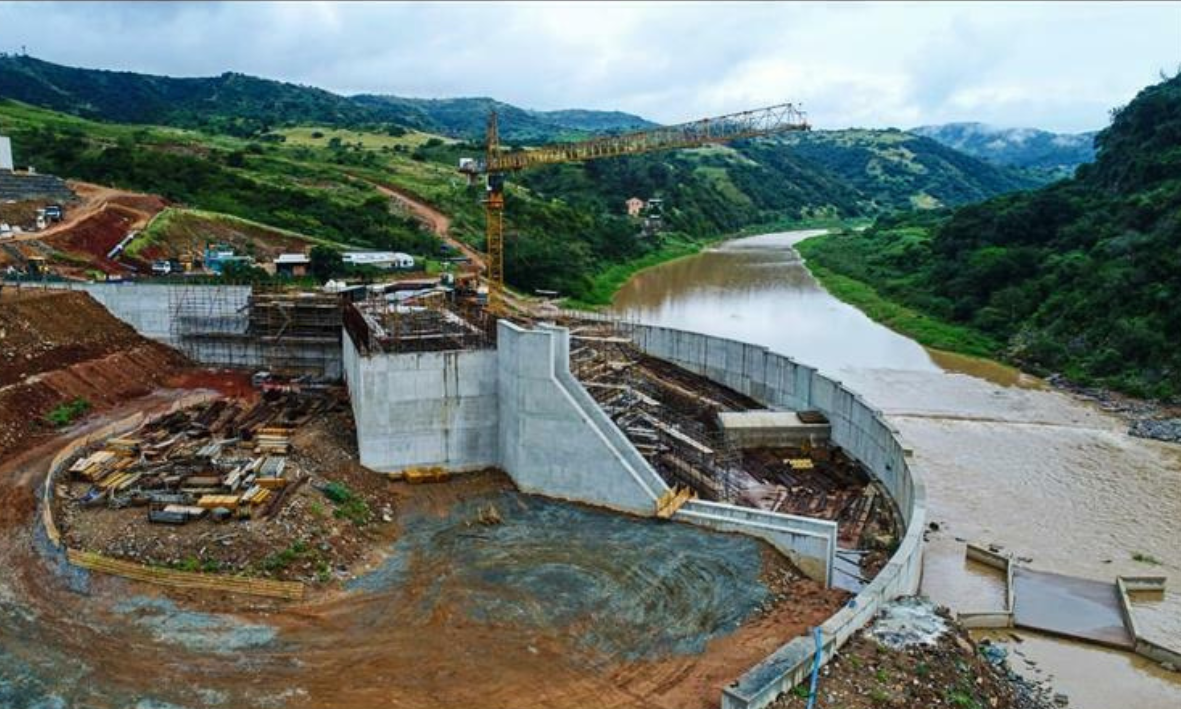
Statement by Thandi Nontenja, MP, UDM Member of the Standing Committee on Public Accounts LISTEN: Ms Nontenja on the subject of the uMkhomazi projects The United Democratic Movement (UDM) is gravely concerned about the continuing delays and disputes in the Upper and Lower uMkhomazi Water Projects, which have left communities without water despite billions of rands being committed. The Upper and Lower uMkhomazi Water Projects were meant to secure supply for both inland and coastal communities. The Upper scheme, centred on the Smithfield Dam and transfer tunnel, was designed to boost the uMngeni system and bring long-awaited relief to Durban and surrounding areas. The Lower scheme, with its storage dam and treatment works, was intended to serve southern eThekwini and the Ugu District, benefiting an estimated 50,000 households in towns like Amanzimtoti, Umkomaas, Scottburgh and Hibberdene. The Upper uMkhomazi scheme was originally projected to be completed in 2018. Instead, it has been dogged by funding shortfalls, procurement disputes and legal wrangles. Its completion date has now been pushed to 2032. This means that communities such as Tafelkop, west of Durban, have lived with dry taps for over 15 years and will wait another generation for what their constitutional right is. The UDM is disturbed that public money continues to flow, but public benefit does not. Government admitted as far back as 2015 that affordability concerns had stalled the project. In 2025, a R7 billion tender for the Lower uMkhomazi scheme was interdicted in court over disputes about the adjudication process. These are not small technical glitches — they are signs of systemic weaknesses in financial governance and procurement. The promises made to resuscitate and fast-track the project, including those by Senzo Mchunu during his tenure as Minister of Water and Sanitation, have not been honoured. Now the urgent question is what the incumbent Minister, Pemmy Majodina, and Deputy President Paul Mashatile, who oversees infrastructure coordination in the Government of National Unity, are doing to prevent billions more from being wasted while people still fetch water from streams. It is unacceptable that a R26 billion investment can be committed to schemes that deliver ribbon cuttings, contracts and disputes, but not water. The UDM therefore demands: 1. A full Standing Committee on Public Accounts (SCOPA) inquiry into the expenditure on the uMkhomazi projects to date, with disclosure of every contract and payment. The UDM will formally write to SCOPA to request that such an inquiry be initiated as a matter of urgency. 2. A halt to further waste until there is assurance that the money is translating into water for households. 3. Quarterly reporting to the Portfolio Committee on Water and Sanitation on progress, costs and delays. 4. Accountability from both current leaders and former ministers who presided over these failures, including appearances before Parliament and referrals to law enforcement where misconduct is proven. 5. Transparency and expedited resolution of procurement disputes that have landed in court, so that communities are not held hostage to years of litigation, with interim measures put in place to ensure access to water in the meantime. The UDM is serious about infrastructure development as the backbone of service delivery and economic growth. We have long argued for investment in dams and water storage schemes to secure supply for households, agriculture and industry. Projects like the uMkhomazi Water Scheme are urgently needed and should be welcomed, but they must be delivered on time, on budget and free of corruption. South Africans cannot drink blueprints and promises - they need functioning infrastructure that works Water is life, and public money is sacred. It is SCOPA’s duty to ensure that every rand spent on infrastructure, including water, translates into services that work, not empty promises and endless delays.