
Admin

14 Oct, 2025
The fire next door: South Africa’s neglected settlements
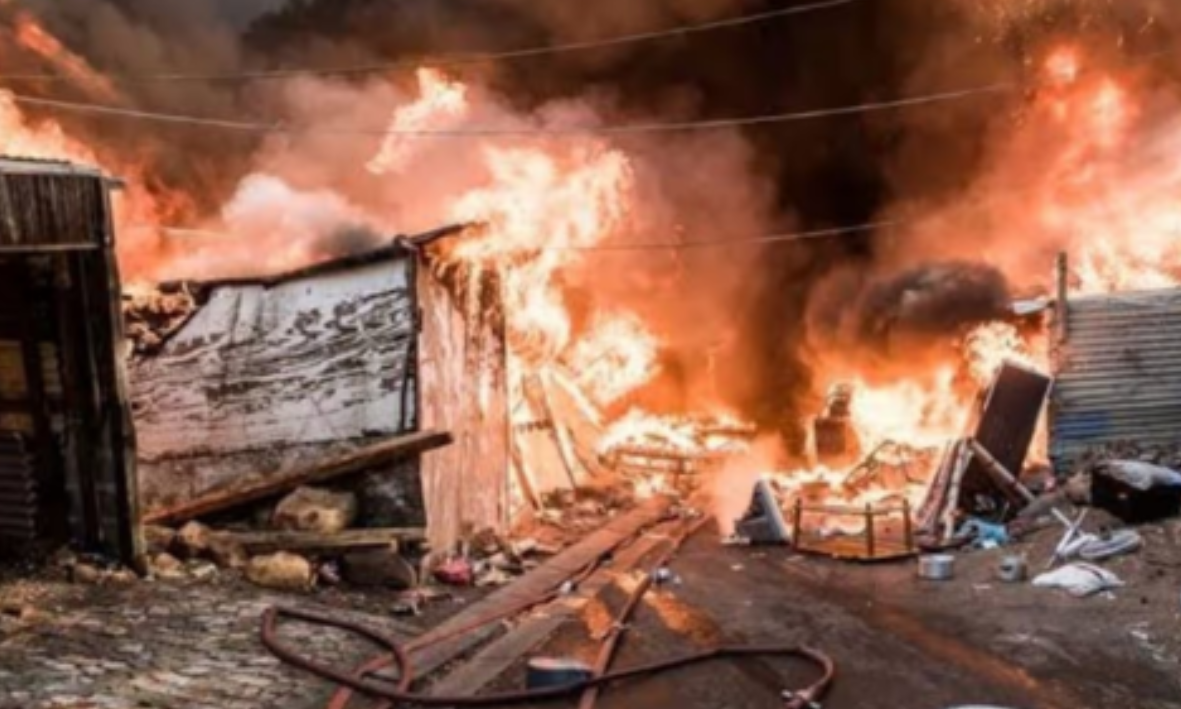
Statement by Zandile Phiri, Acting Secretary General of the United Democratic Movement Each shack fire leaves behind not only ash but a reminder of South Africa’s unfinished promise of dignity for all. The United Democratic Movement (UDM) calls attention to the growing pattern of fires in informal settlements as a crisis of governance and human rights that demands immediate national intervention. In recent weeks, blazes in Masiphumelele, Umbilo and Sivilcon have claimed lives, displaced hundreds of families and destroyed thousands of homes. These tragedies expose a deep failure of planning, service provision and accountability in the management of urban and peri-urban settlements. In Masiphumelele, Cape Town, one person died, and 80 residents were left homeless after 20 informal dwellings were reduced to ash. In Umbilo, Durban, more than 170 structures were lost in a single blaze. In Sivilcon, Pretoria, 70 shacks burned within minutes, displacing over 150 residents. Between September 2024 and February 2025, 2 860 informal structures burned down nationwide. The Western Cape was the hardest hit, with 2 088 structures destroyed during this period, about 73% of the national total. The pattern is the same across our cities: crowded conditions, flammable materials, unsafe wiring, lack of access roads and the absence of formal infrastructure turn every spark into catastrophe. Recent research confirms that a single blaze can consume twenty shacks within five minutes under mild wind conditions. Behind these numbers are human beings who lose homes, possessions, documents and loved ones. Entire communities are forced to start again from nothing. Relief agencies such as Gift of the Givers and local NGOs step in to provide blankets and meals, but the cycle repeats because prevention has never been institutionalised. Shack fires are not accidents of poverty. They are the direct outcome of policy neglect and institutional failure. For years, government authorities have treated informal settlements as temporary spaces rather than permanent communities deserving of basic services. By withholding electricity, water, roads and fire hydrants, municipalities have entrenched conditions that make these areas unsafe and unliveable. This denial of infrastructure is not accidental. It is a consequence of choices that have left millions of South Africans exposed to preventable tragedy. Studies in South Africa and internationally have shown that electrified settlements experience far fewer fires than those relying on candles, paraffin or illegal connections. The solution, therefore, is not endless training and disaster relief, but systematic electrification and incremental upgrading. South Africa cannot continue to treat shack dwellers as people who must live and die by candlelight. Urban design interventions must start from the reality that most informal settlements are already densely built and cannot simply be redesigned. Safety improvements must therefore be achievable within existing layouts. Many settlements still rely on a handful of communal taps or irregular water supply, leaving residents defenceless during fires. Government must prioritise the installation of reliable communal taps within reasonable distance, ensure maintenance of pressure and supply, and coordinate with emergency services to provide mobile water tanks in high-risk areas. These practical measures, developed together with residents, can save lives without uprooting communities. The United Nations Office for Disaster Risk Reduction recognises uncontrolled informal-dwelling fires as a significant global threat to life and well-being. South Africa’s own disaster management frameworks must therefore include fire prevention in informal settlements as a priority hazard category. Prevention, preparedness and risk reduction must take precedence over reactive relief. The UDM calls for the following actions: 1. The Department of Electricity and Energy must fast-track a national audit and phased electrification programme for all informal settlements, prioritising high-density areas most at risk of fire. 2. The Department of Cooperative Governance and Traditional Affairs must ensure that every municipality integrates shack-fire risk reduction into its Disaster Management Plan and allocates ring-fenced funding for prevention, not only emergency relief. 3. The Department of Human Settlements must improve basic infrastructure within informal settlements by creating safe access routes for emergency vehicles and expanding water access points to support firefighting efforts. 4. The Department of Statistics South Africa must strengthen data collection, research and analysis on shack fires to capture their human, technical and environmental causes, and ensure that findings are publicly reported to guide prevention strategies. 5. The Department of Local Government must work with communities to establish fire-safety units trained and equipped to serve as first responders using extinguishers, alarms and communication tools. 6. The Department of Trade, Industry and Competition must promote partnerships with innovators developing technologies such as heat-based early-warning systems and community micro-insurance models that reduce losses, enable faster recovery and strengthen resilience. 7. The Government of National Unity must end the policy of classifying informal settlements as “temporary” to justify the denial of basic services. Safety, dignity and equal access to infrastructure are constitutional rights, not privileges. Every shack fire is a mirror of our national priorities. It reflects the unfinished business of spatial justice and the failure to treat poor communities as full citizens. Lives continue to be lost because authorities have normalised living without infrastructure. The UDM urges the Government of National Unity to make the prevention of shack fires a national governance priority. South Africa must replace fragmented relief efforts with a long-term programme for electrification, upgrading and safer living conditions. Words of sympathy will not rebuild what negligence destroys.