
Admin

16 Mar, 2026
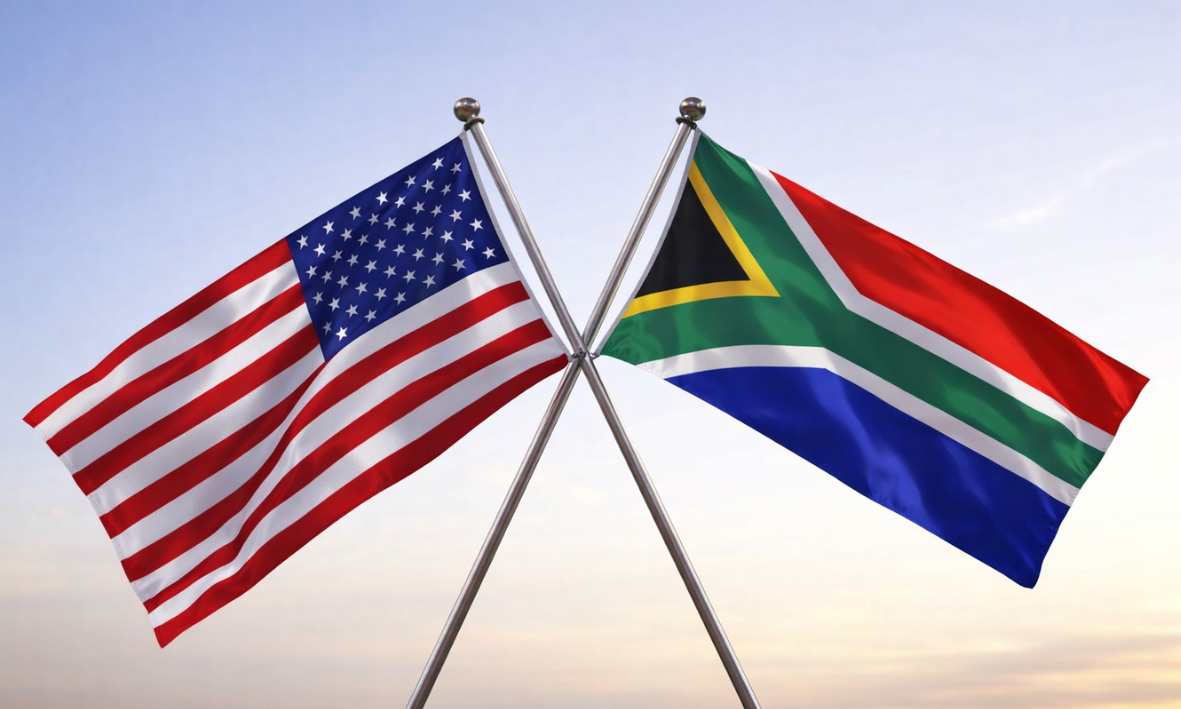
Remarks by the President of the United Democratic Movement and Deputy Minister of Defence and Military Veterans, Maj. Gen. (Ret.) Bantu Holomisa at the Courtesy Meeting with USA Ambassador to South Africa, H.E. L Brent Bozell III
Check against delivery Remarks by the President of the United Democratic Movement and Deputy Minister of Defence and Military Veterans, Maj. Gen. (Ret.) Bantu Holomisa at the Courtesy Meeting with USA Ambassador to South Africa, H.E. L Brent Bozell III Your Excellency, On behalf of the United Democratic Movement, allow me to begin by expressing our sincere appreciation for the invitation to this engagement. We have also taken note of the consultations you have been undertaking with a range of stakeholders across South Africa, including political parties and civil society. These engagements are important in developing a deeper understanding of the lay of the land in our country, and we commend you for taking the time to listen and engage broadly. You arrive in South Africa at a time when relations between our two countries are experiencing a measure of strain. Yet it is precisely during such moments that dialogue becomes even more important. South Africans were taken aback by accusations of genocide and uncompensated land grabs, all purportedly carried out by our government, which spread widely within the international community. As you embark on this programme of engaging with South Africans, you have the advantage of directly verifying the authenticity of these allegations. In that regard, we wish to acknowledge and thank the South African delegation that continues to engage constructively with the United States on key matters of mutual interest, particularly the discussions around the African Growth and Opportunity Act. These engagements, led by our Minister of Trade, Industry and Competition, the Honourable Parks Tau, are vital for maintaining strong economic cooperation between our nations. The United Democratic Movement encourages such bilateral discussions and constructive dialogue. The relationship between the United States and South Africa has historically been a strong one, grounded in shared values and mutual respect. Indeed, the United States played an important role in the global effort to bring an end to apartheid. Through sanctions and engagement in international forums, including the United Nations, the international community, with the United States as a key actor, stood alongside the people of South Africa in the struggle for freedom. In 1994, South Africa emerged from a painful history marked by racism and division. Yet, through the leadership of figures such as President Nelson Mandela and Oliver Tambo, and through negotiations with the then National Party government, our country chose a peaceful resolution to conflict. That decision spared our nation and many others the tragedy of further bloodshed. On a personal note, I had the opportunity to witness the role played by lawmakers in the United States during the late 1980’s. In 1988, I visited the Transkei Government offices on Eye Street, where arrangements were made for engagements with American lawmakers and institutions. I had the privilege of addressing several institutions and meeting with senators and members of Congress. These engagements helped to build bridges of understanding at a critical time in our history. Later, in 1992, I accompanied President Mandela when we addressed the United Nations Security Council on the need to send violence monitors to South Africa, and again in 1993 when discussions were underway regarding the lifting of sanctions against South Africa. Following these developments, the United States quickly became one of South Africa’s major trading partners, opening many opportunities for cooperation, particularly in areas such as education, environmental management, and technology. It is therefore our sincere wish that these relations continue to be strengthened. Where there may be challenges or misunderstandings between our countries, we believe they should be addressed frankly and without delay. One possible way to strengthen relations could be to revive or reimagine structured bilateral mechanisms of a scale and depth in a similar scale to the Al-Gore–Mbeki Binational Commission. I had the privilege of participating in that process, and it proved highly effective in addressing outstanding issues between our countries. Through its various subcommittees, matters could be thoroughly examined and resolved, while both Presidents and their respective cabinets remained fully informed of progress. Turning briefly to international developments, the ongoing conflict in the Middle East remains a matter of deep concern. The UDM does not see a sustainable solution to the conflict between Israel and Palestine other than through dialogue and negotiations around the table. In this regard, we believe that countries such as South Africa and the United States can play an important role in encouraging peaceful engagement between the leadership of Israel, Palestine, and the broader Middle East. The UDM believes that the way people from conflict-affected nations live together in South Africa and the United States offers a compelling lesson for the world: despite coming from countries at war, roughly 4% of South Africa’s population are migrants from dozens of regions, who coexist peacefully, trade, and engage in shared economic activity. This daily interaction in markets, businesses, and communities demonstrates that with dignity, dialogue, and opportunity, peaceful coexistence is achievable, providing a practical example that could guide international efforts to broker peace and foster dialogue between parties in conflict. South Africa’s own experience demonstrates that people with deep historical divisions can find ways to coexist peacefully and work together as economic partners. This is a model that can offer hope to many parts of the world. President Mandela once initiated efforts to bring Jewish and Palestinian leaders together for dialogue, and although those efforts were not sustained, the principle behind them remains valuable. Any agreements that emerge from sincere dialogue can serve as examples for the broader international community. The continuation of the conflict in the Middle East has far-reaching consequences beyond the region itself. Its economic and humanitarian impacts are being felt globally, particularly by developing economies such as ours. The reality is that many of our citizens are still striving to achieve full economic empowerment. For this reason, we believe there are also opportunities for deeper cooperation between the United States and South Africa in supporting inclusive economic growth. We would encourage further partnerships between American and South African businesses as we collectively pursue the vision articulated by President Mandela, a world that is more equal, more just, and more free. All parties engaged in the current conflict must commit decisively to a ceasefire and pursue a durable, negotiated solution that safeguards civilian lives, restores peace, and lays the foundation for lasting stability and reconciliation. Ambassador, we thank you once again for this engagement and look forward to a constructive and fruitful discussion. I thank you.