
Admin

17 Feb, 2026
State of the Nation Address 2026 debate by Bantu Holomisa
Speech for Deputy Minister Bantu Holomisa, MP and President of the United Democratic Movement at the State of the Nation Address 2026 debate CHECK AGAINST DELIVERY Honourable Speaker Honourable Members The Government of National Unity (GNU) will not be judged by the promises tabled during the opening of Parliament, but by whether that skeletal plan is implemented with urgency, discipline and measurable results. South Africans have heard plans before. What they demand now is execution. 1. Security is the foundation of development The State of the Nation Address (SONA) emphasised economic recovery and energy stability, but sustainable growth also depends on protecting our environment and critical infrastructure from vandalism, illegal mining and sabotage that damage ecosystems and investor confidence. We are strengthening enforcement, deploying coordinated security and accelerating prosecutions because environmental protection, stability and growth are inseparable. The GNU further recognises that development cannot flourish without security. We therefore welcome: • The deployment of the South African National Defence Force (SANDF) in support of South African Police Service (SAPS) in crime epicentres such as the Cape Flats and the broader Western Cape, and areas such as Randfontein in Gauteng. • The elevation of the security cluster as a national priority. • The use of Artificial Intelligence-driven systems for predictive policing and intelligence coordination. In line with the orders issued by the Commander-in-Chief, President Ramaphosa, I confirm that the Department of Defence is seized with operational requirements to support stabilisation interventions in consultation with the security cluster. This is just phase one of restoring normality. 2. Crime and consequences: the era of impunity is over Mqwathi, mandikuqinisekise amasela ixesha lawo liphelile. Yekani ii Law Enforcement Agencies zenze umsebenzi wazo, singaphazanyiswa. The honeymoon is over. Corruption and maladministration have not merely touched the state, they have engulfed it, reaching even into our law enforcement agencies. The rot did not spare the Department of Defence either. That is why we acknowledge the President’s decision to sign the proclamation authorising the Special Investigating Unit (SIU) to investigate these matters and more. Accountability cannot be selective. It must be decisive and it must reach everywhere. At a briefing to the Portfolio Committee and Joint Standing Committee on Defence, the SIU, the Military Police, and the Hawks assured us that we have recovered over R1.6 billion linked to corruption and mismanagement within Defence. This is just a start of restoring the image of our defence force. That is consequence management in action. If Special Courts could be established by the Department of Justice in partnership with the National Prosecuting Authority (NPA), this will assist to accelerate the resolution of all pending military cases. Crime and corruption embarrass this country. They damage investor confidence. They weaken sovereignty. We have no choice but to confronting them head-on. 3. No country survives without law No country can function if its laws are optional, and anyone who comes to this country legally must be prepared to abide by the law or they will be shipped out. Fellow South Africans, you deserve a state that works, systems that speak to each other, and early warning mechanisms that stop crime before it spreads. Without accurate Financial Intelligence Centre Act (FICA) registration, South African Revenue Service (SARS) cannot collect revenue from all traders operating in our economy. Furthermore, law enforcement cannot properly trace or dismantle criminal syndicates operating in the underworld. South Africa urgently needs a coordinated security response plan with time frames and the strengthening of the NPA as to be functional. South Africa’s liberation history teaches us solidarity. But protection must be credible and enforceable. If a person is granted asylum yet voluntarily returns to the very country they claim to be fleeing during holiday season, that status must be reviewed. You cannot be in danger today and on holiday tomorrow. Accountability is not hostility. It is fairness. It is security. It is sovereignty. 4. The Public Investment Corporation Mr President, in 2023 you called on the Minister of Finance to address the pension queries of former civil servants. The affected community is still waiting for feedback and progress reports. People are dying while the system drags its feet, and each day of delay is a day of injustice. It is even more painful to see that the funds meant to secure these pensions are being looted by the elite through the Isibaya Fund at the Public Investment Corporation. Resources meant for ordinary South Africa are being diverted to enrich a few, deepening inequality and betraying public trust. How we wish that money could instead be invested in South Africa’s infrastructure, generating real returns for the country and creating jobs. This is a guaranteed investment in the nation, not in private greed. The people deserve accountability and action, not corruption. 5. Skills development: from training to productivity We welcome the review of the Sector Education and Training Authorities (SETAs) as a corrective measure to ensure that skills funding delivers measurable results. Within Defence, the South African National Service Institute (SANSI) recently passed out over 500 young people. Mr President, do consider ring-fencing and redirecting SETA funding towards: • Funding into structured, outcome-based programmes such as SANSI. • Standardised study guides in mathematics, languages, accounting and entrepreneurship. • Mandatory practical and technical skill components. In 2001, Matt Matthys, Chantal Mulder, the President South African Institute of Chartered Accountants (SAICA), Ignatius Sehoole, and I spearheaded the Thuthuka Project, providing English, Mathematics, and Accounting study guides for Grades 9 to 12. Today, that project has produced over 2,000 Black Chartered Accountants. We may need to have a tailor-made, or similar setup into skills development. 6. Prevention of Hate Crimes and Combating of Hate Speech Act The Prevention of Hate Crimes and Combating of Hate Speech Act, though intended to protect dignity and equality, goes beyond what our Constitution permits and places freedom of religion at risk. It criminalises expression using vague and undefined concepts and expands protected grounds without legal certainty. In a constitutional democracy, believers must be free to express their faith without fear of prosecution. Equality must never be advanced by eroding religious freedom. We therefore urge that the Act be constitutionally aligned through appropriate amendments before it comes into operation. 7. Conclusion: restoring dignity, restoring the state No country survives without law. No economy grows without stability. No democracy thrives without accountability. South Africans want safety, fairness, opportunity and a state that works. Through decisive, coordinated action on security reform, border integrity, infrastructure protection, skills development and consequence management, we will deliver. Judge us not by our words, but by the order we restore, the stability we secure and the future we build together. I thank you.

Admin
17 Oct, 2025
Restoring trust in law enforcement: new national crime prevention framework is needed
Statement by Nqabayomzi Kwankwa, MP, UDM Deputy President and Leader in Parliament Only 22 percent of South Africans still trust the police. That figure, revealed by the Human Sciences Research Council, is not a statistic; it is a national alarm bell. A country without faith in its police cannot guarantee justice or safety. In recent weeks, incidents of citizens burning police vehicles and attacking officers have become a tragic symptom of how deeply fractured the relationship between law enforcement and communities has become. These acts cannot be condoned, yet they reveal the frustration and despair of people who feel abandoned and unprotected. The United Democratic Movement (UDM) has long warned that the erosion of trust in the police is not accidental. It stems from years of poor leadership, internal misconduct, and weak accountability. As a political party that has consistently championed ethical governance and professional policing, the UDM has repeatedly called on the South African Police Services (SAPS) to clean up its act, restore command integrity, strengthen internal discipline, and rebuild the professional standards expected of a constitutional democracy. When police officers act without consequence, ordinary South Africans lose hope, and criminal networks thrive. The ongoing Madlanga Commission continues to shed light on the seriousness of the challenges facing the police service. Allegations raised during these hearings have underscored the need for the SAPS to confront corruption and mismanagement head on, to ensure that law enforcement serves the public interest and not private agendas. The UDM believes the Commission provides an important opportunity for the police to reflect, reform, and rebuild credibility through transparency and truth. The Ad Hoc Committee in Parliament has become an important platform for uncovering the depth of dysfunction within the SAPS and its oversight structures. While the UDM is not represented on this committee, we will continue to follow its work closely and insist that it leads to concrete reforms, not political theatre. Oversight must be used to restore the integrity of policing, not to manage scandal. The South African public is watching, and it deserves a process that results in accountability, not performance. The UDM condemns the failure of Acting Police Minister Firoz Cachalia and National Commissioner Fannie Masemola to appear before the Portfolio Committee on Police on 15 October 2025. Their absence forced the committee to defer the meeting without hearing from key entities, including the Auditor General. This disregard for Parliament’s oversight at a time of crisis undermines accountability and sends the wrong message to the public. South Africa cannot afford another cycle of delays, denials, or political protection. The UDM calls for a complete overhaul of South Africa’s approach to crime prevention and policing, anchored in the following principles: 1. The SAPS must be depoliticised and led by skilled, ethical professionals who are committed to service, accountability, and the rule of law. 2. Government must coordinate policing, social development, and education programmes to address the root causes of crime, including poverty, youth unemployment, and substance abuse. 3. Law enforcement visibility must be increased through better resourced police stations, functional patrol units, and active Community Policing Forums that work in partnership with residents. 4. The SAPS must modernise its operations by investing in technology, digital forensics, and intelligence-led policing to stay ahead of organised crime. 5. Independent oversight bodies such as the Independent Police Investigative Directorate and parliamentary committees must be strengthened to ensure transparency, swift investigation of misconduct, and regular public reporting. 6. The criminal justice system must focus not only on punishment but also on prevention, rehabilitation, and social reintegration, so that cycles of violence are broken and communities are rebuilt. The UDM further urges the Government of National Unity to establish a National Crime Prevention Council that brings together national, provincial, and local law enforcement agencies with civil society, the private sector, and research institutions. Such a structure must coordinate intelligence, align policing priorities, and measure progress on crime reduction across the country. South Africa needs a whole of government response that unites every sphere of the state in restoring safety and public trust. Safety is a constitutional right, not a privilege. Weak leadership weakens justice. The UDM calls on the Government of National Unity to treat crime prevention and police reform as an urgent national priority, not another task for committees and talk shops. The GNU must move beyond rhetoric and deliver a coordinated, well resourced, and accountable plan to rebuild trust between citizens and the state. South Africans deserve a police service that protects them, not one they fear, and a government that acts, not one that explains.
Admin
12 Oct, 2025
South Africa’s kidnapping epidemic: it can happen to anyone
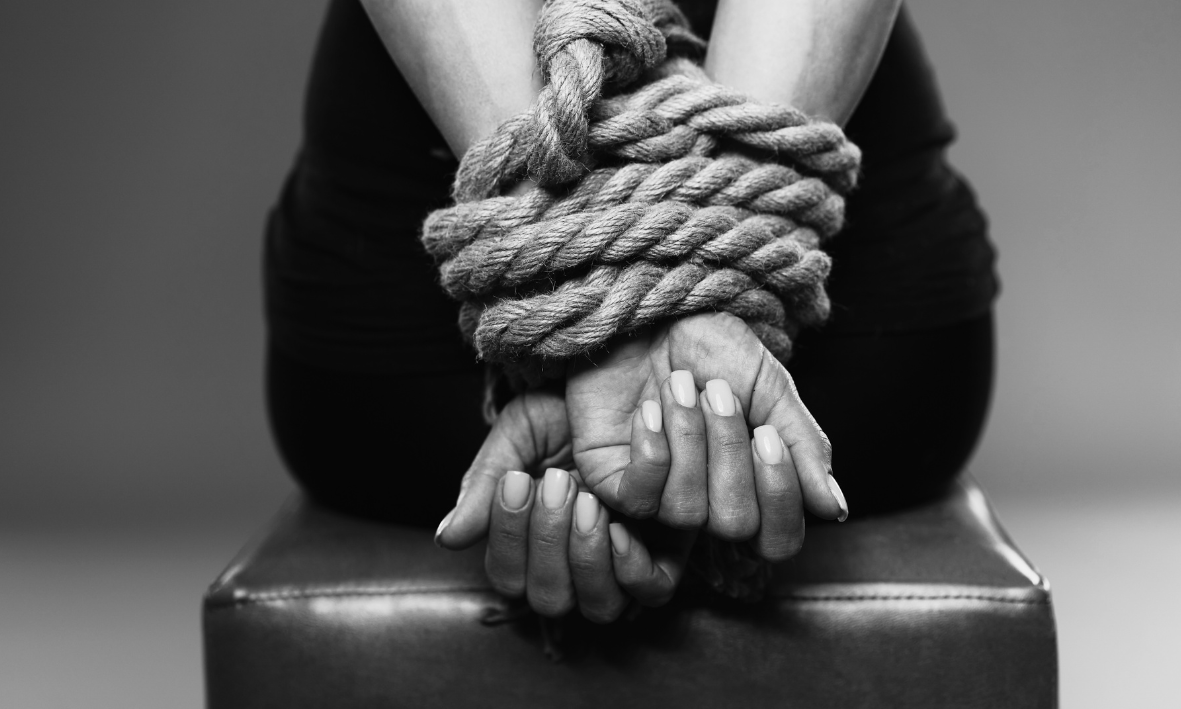
Statement by Zandile Phiri, Acting Secretary General of the United Democratic Movement The United Democratic Movement (UDM) is deeply disturbed by the growing wave of kidnappings that continues to grip our country. In the most recent case, a man was rescued on the R80 highway in Tshwane from a vehicle whose occupants were found with blue lights, firearms, and clothing marked with police insignia. This shocking incident shows how criminals now exploit public trust in law enforcement to entrap and terrorise innocent citizens. For the UDM, this crisis is not an abstract statistic. In June last year, our Deputy President, Nqabayomzi Kwankwa, was abducted in Driftsands while on his way to Cape Town. He was tied up, robbed, and released only after a ransom was paid. That experience reminded us that in today’s South Africa, it truly can happen to anyone, public figures and ordinary people alike. Research and police data confirm that only a small fraction of kidnappings involve long-term ransom demands. The overwhelming majority occur during hijackings and armed robberies where victims are restrained, forced to withdraw money, or used to access bank accounts. These short, opportunistic abductions, known as express kidnappings, are now among the most common forms of the crime. It is reported that on average, two such incidents take place in South Africa every day. A particularly cruel development is the growing use of forced ransom calls. Victims are often made at gunpoint to phone their families or employers and demand payment for their own release. What begins as a robbery or hijacking quickly turns into extortion, as kidnappers blend methods to maximise profit and fear. Families are thrown into panic, transferring whatever funds they can while the perpetrators vanish before police can respond. This shows how organised and ruthless these syndicates have become. Women and girls are among the most frequent and vulnerable victims of these crimes. Many are abducted while commuting, working, or attending school, and face the added dangers of sexual assault, trafficking, and gender-based violence. The trauma inflicted on women and children extends beyond the individual, leaving entire families and communities living in fear. Addressing kidnapping therefore also means confronting the broader crisis of violence against women and girls in our society. The rise of blue-light gangs, fake police operations, and express kidnappings paints a grim picture of a country where safety can no longer be taken for granted. This crisis demands urgent and coordinated action. If criminals can so easily impersonate law enforcement, how are South Africans supposed to know who to trust on the road? Citizens should never have to fear that stopping for a flashing light could cost them their lives. Government must urgently review the visibility, identification, and conduct of genuine police officers, including clear roadside verification systems, properly marked vehicles, and public education on how to confirm an officer’s identity without putting oneself in danger. The UDM calls for: 1. A national crackdown on blue-light gangs and police impersonation, with full accountability for anyone found complicit or negligent and stricter control over the sale and use of sirens, uniforms, and police-branded apparel. 2. The strengthening of anti-kidnapping and crime-intelligence task teams in every province, with specialised capacity to respond to express and ransom kidnappings. 3. Comprehensive protection and psychosocial support for victims, especially women and girls, including trauma counselling, safe-house access, and integration with gender-based violence services. 4. Public education and safety-awareness campaigns to inform citizens about express kidnappings, blue-light stops, and what to do if a loved one is abducted or forced to make ransom calls. 5. Partnerships between law-enforcement agencies, banks, and mobile-payment platforms to detect suspicious withdrawals and transfers made under duress, supported by real-time alert systems and panic PIN technology. 6. Faster prosecution and harsher sentencing for kidnapping, extortion, and police impersonation, with dedicated prosecutors and priority dockets in the courts. 7. A national task force on kidnapping and organised crime, coordinated through Parliament and the Justice, Crime Prevention and Security Cluster, to drive reforms in intelligence, data sharing, and victim support. Kidnapping has become a daily threat to South Africans. It is no longer a crime of the few against the wealthy but a reflection of our broader failure to protect citizens and uphold the rule of law. The UDM calls on the Government of National Unity (GNU) to treat crime and public safety as a true national-security emergency. The GNU must show unity in action, not only in words, by restoring faith in policing, strengthening intelligence, and ensuring that every South African can live, work, and travel without fear. Our people deserve a government that makes their safety one of its primary priorities.

Admin
11 Oct, 2025
From protectors to perpetrators: robbery of foreign illicit cigarette traders
Statement by Stanley Manaka, Provincial Chairperson of the United Democratic Movement in Limpopo The United Democratic Movement (UDM) in Limpopo adds its voice to our national leadership’s growing alarm over the spread of illicit trade and criminal collusion within the state. The recent arrest of four police officers and a civilian for allegedly robbing an Ethiopian family in Mashishing (Lydenburg) of almost R1 million in cash and illicit cigarettes worth R1.5 million further illustrates the depth of this crisis. Limpopo shares multiple border gates with neighbouring countries, including Beitbridge, Groblersbrug, and Pontdrift; all of which remain vulnerable to cross-border smuggling, corruption, and organised criminal activity. The involvement of police officers in this crime shows how these syndicates are being enabled from within, eroding public trust and compromising national security. Reports confirm that the suspects used both marked and private vehicles, including a South African Police Service (SAPS) Flying Squad VW Golf, during the robbery. Investigators later recovered SAPS-issued firearms, ammunition, and a bulletproof vest, as well as tampered vehicle number plates and hidden cash. Such conduct by officers sworn to protect the public represents a grave betrayal of duty and a reflection of systemic failure in law enforcement oversight. At the same time, the incident exposes how South Africans and foreign nationals have become intertwined in criminal networks trading in illicit cigarettes, alcohol, and other contraband. While foreign nationals are often visible in these operations, local enablers, including corrupt officials, play an equally destructive role in sustaining this criminal economy. The UDM in Limpopo calls for urgent action. 1. The Department of Home Affairs and the Border Management Authority, under Minister Leon Schreiber, must reinforce all border points in Limpopo with well-trained and properly resourced border management units. 2. The Ministry of Defence and Military Veterans and the Ministry of Police must root out corruption within the ranks of the South African National Defence Force and the SAPS through transparent investigations, swift prosecutions, and the dismissal of all those found guilty of collusion or criminality. 3. The Directorate for Priority Crime Investigation (the Hawks), the South African Police Service, the South African National Defence Force, and the South African Revenue Service must coordinate operations under the oversight of the Ministry of Justice and Correctional Services to effectively dismantle cross-border criminal networks. 4. Parliament’s Portfolio Committees on Defence, Police, Home Affairs, and Finance, together with the Limpopo Provincial Legislature, must intensify oversight of border management and defence operations to ensure transparency and accountability. 5. The Department of Communications and Digital Technologies, in partnership with local municipalities and civil society organisations, must launch community vigilance and awareness campaigns to expose smuggling networks and promote lawful, safe economic activity. This incident is not isolated. It forms part of a wider pattern that undermines the rule of law and endangers honest officers who continue to serve with integrity. Limpopo’s strategic position at the country’s northern gateway demands decisive action and visible leadership to restore order and credibility. The UDM in Limpopo aligns itself with the call made by the UDM at national level for stronger border control, anti-corruption reforms, and a coordinated fight against the criminal syndicates weakening South Africa’s governance and economy.

Admin
04 Oct, 2025
Reform parole, protect victims: UDEMWO’s call for action
Media Statement by Thandi Nontenja, MP and UDEMWO Secretary General The United Democratic Movement Women’s Organisation (UDEMWO) has consistently raised the alarm about South Africa’s broken parole system. Time and again, we have argued that the safety of women, children, and communities cannot be compromised by releasing offenders who remain a clear danger to society. Recent figures provided in Parliament are nothing short of devastating. In just three years, 18 052 parolees reoffended including 493 murders and 624 rapes. The most common crimes committed while on parole were theft and housebreaking, compounding the daily fear ordinary families already live with. Between 2022 and 2025, a staggering 46 627 inmates were released on parole, yet parole violations reached over 28 000 in five years, mostly due to reoffending. These are not just numbers, they represent destroyed lives, families left in pain, and communities stripped of their sense of safety. We note that Correctional Services Minister Pieter Groenewald convened the National Parole Review Summit in September 2025, where he committed to reforms that place public safety and victim justice at the centre of parole decisions. He acknowledged the shocking reality that parole must never be used as a tool simply to ease overcrowding in prisons, and that only those genuinely rehabilitated and posing no risk to the public should be considered. UDEMWO welcomes this shift in tone, but we stress that words and summits are not enough. What is needed is decisive, transparent reform that prioritises: 1. The Department of Correctional Services and parole boards must ensure that the voices and safety of victims and their families weigh heavily in all parole decisions. 2. Parliament and the Ministry of Justice must hold parole boards accountable when offenders they release commit violent crimes. 3. Offenders must demonstrate readiness for parole through meaningful participation in skills training, education, and reintegration programmes under the supervision of the Department of Correctional Services. 4. The Department of Correctional Services must publish regular reports on parole approvals, reoffending, and violations, and these reports must be tabled before Parliament for public scrutiny. The South African public is tired of empty promises. Every rape, every murder committed by someone released too soon, is a failure of the system and an insult to victims. UDEMWO will continue to speak out until a parole system exists that truly protects the living while respecting the memory of those we have lost. Communities must also take responsibility by reporting such crimes, rather than concealing them due to stigma, fear, or misplaced loyalty.

Admin
29 Apr, 2025
UDM Nelson Mandela Bay condemns the brazen theft of municipal property in Deal Party
Statement by Luxolo Namette, UDM councillor in the Nelson Mandela Bay Metropolitan Municipality and Deputy Chairperson of the UDM in the Eastern Cape The United Democratic Movement (UDM) Nelson Mandela Bay Metropolitan Municipality condemns the shocking robbery that took place at a municipal depot in Deal Party, where armed criminals stole a truckload of tyres intended for public service vehicles. This audacious act of criminality, which occurred on Sunday night, is a clear sign of the growing lawlessness and the alarming deterioration of security measures at municipal facilities. It is unacceptable that public assets, which are meant to serve our communities, can be so easily stolen while the authorities fail to ensure their protection. The UDM wishes to commend the security guards who, despite being held at gunpoint, managed to promptly report the incident. However, this robbery raises serious questions about the effectiveness of the security arrangements at the depot. The municipality must explain what preventative measures were in place to protect these valuable assets, how armed criminals were able to access the premises so easily, and what immediate steps are being taken to recover the stolen goods and apprehend the perpetrators. We further demand that a full audit of municipal assets across all storage facilities be conducted to determine whether there have been other unreported incidents of theft. The public has a right to know the full extent of the losses and what actions are being taken to prevent any further incidents. The UDM calls on the Nelson Mandela Bay Municipality to urgently review and strengthen its security protocols across all its facilities. Stronger safeguards must be implemented without delay to protect public property. We also call on the police to prioritise this investigation and bring the culprits to justice swiftly. The theft of public resources cannot become the norm. Municipal leaders must act decisively to restore public confidence and to ensure that the facilities and resources meant for the service of the people are not turned into easy targets for criminal elements.