
Admin

17 Jul, 2026
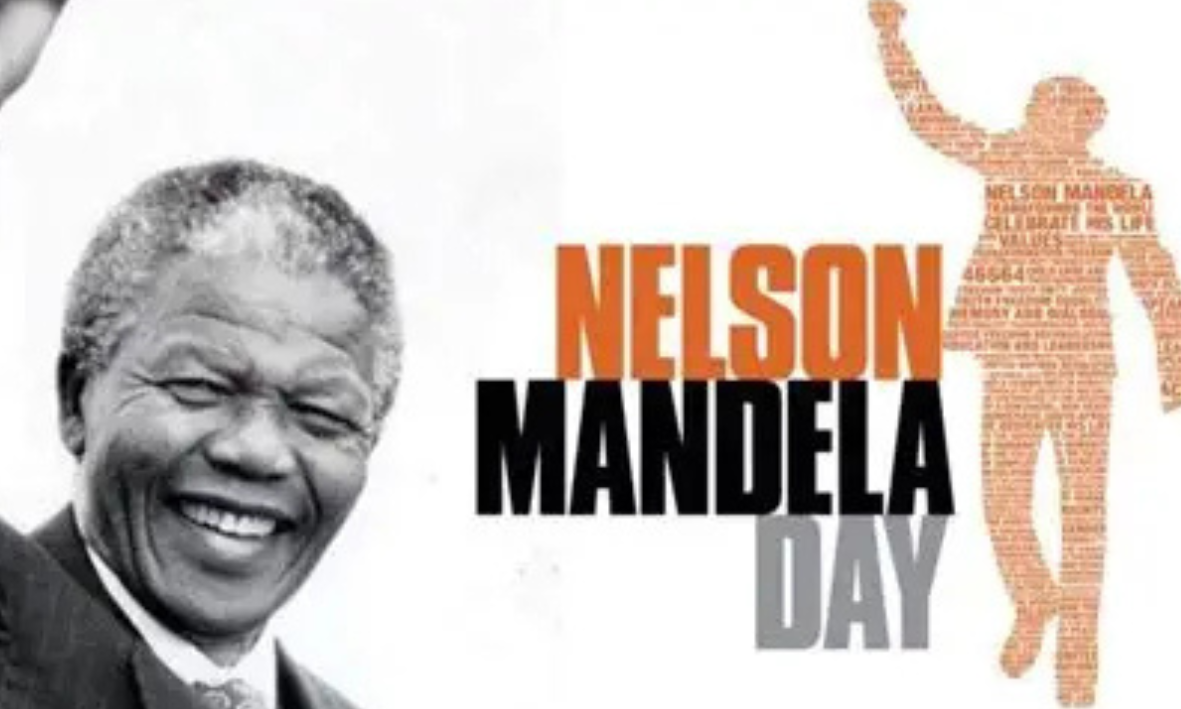
Nelson Mandela Day must be a call to service, honesty and responsibility
Statement by Nqabayomzi Kwankwa, MP, UDM Deputy President and Leader in Parliament As South Africa observes Nelson Mandela International Day on 18 July 2026, we remember former President Nelson Rolihlahla Mandela with the respect due to a departed elder and former Head of State. Nelson Mandela Day should, however, be more than an annual exercise in praise or symbolism. It should be a call to service, reflection and honest engagement with the condition of our country. President Mandela’s legacy remains the subject of two broad schools of thought. Many South Africans regard him as a central figure in the struggle against apartheid, a leader who helped guide the country through a dangerous political transition and who contributed to the establishment of a democratic constitutional order. Others believe that the political settlement reached during that period did not sufficiently transform the economic structure of the country, and that too many of the inequalities created under apartheid were allowed to continue. For many black South Africans who remain landless, unemployed, poor and excluded from economic opportunity, these concerns are neither abstract nor disrespectful. They arise from the realities of their daily lives. A mature democracy must be able to acknowledge both perspectives. We should neither dismiss President Mandela’s contribution nor pretend that the democratic transition resolved the structural injustices that continue to confront our people. United Democratic Movement (UDM) President Bantu Holomisa shared a deep relationship of trust with President Mandela. That relationship was built during a difficult period in our country’s history and was founded on frank engagement, mutual respect and a shared concern for South Africa’s future. Respect for President Mandela’s memory must therefore include the honesty that characterised relationships of that nature, rather than reducing his life and legacy to empty ceremony. Nelson Mandela Day should remind those who hold public office that leadership is not about personal enrichment, privilege or public performance. It is about service, integrity and responsibility to the people. South Africa continues to face deep poverty, unemployment, inequality, failing public services, crime and widespread disillusionment with political leadership. These conditions cannot be addressed through 67 minutes of activity once a year. They require sustained work, accountable government and the courage to confront the unfinished business of our democracy. The UDM calls upon South Africans to use this day to serve their communities, assist the vulnerable, care for the elderly, support young people and contribute to the restoration of dignity in the places where they live. As we remember President Mandela, may we do so respectfully, honestly and without mythmaking. May his soul continue to rest in peace, and may Nelson Mandela Day inspire a renewed commitment to building a just, equal and accountable South Africa.
Admin
18 Feb, 2026
A call for constitutional refinement of the Hate Speech Act prior to commencement
Mr MC Ramaphosa President of the Republic of South Africa Private Bag X1000 Pretoria 0001 Dear Mister President A call for constitutional refinement of the Hate Speech Act prior to commencement 1. The United Democratic Movement (UDM) writes to you with deep respect for the constitutional office you hold, and with equal seriousness regarding the constitutional implications of the Prevention ofa Hate Crimes and Combating of Hate Speech Act, 2023 (‘the Act’). 2. We had intended to address this matter more fully during the SONA 2026 debate yesterday. However, due to the limited time allocated in the House, the UDM was unable to place our detailed constitutional concerns on record. 3. Given the significance of this legislation and its far-reaching implications, we believe the matter warrants fuller public and parliamentary engagement. It is for this reason that we now write to you directly, to place these concerns before the Head of State and to respectfully seek your consideration. 4. The UDM supports without reservation the protection of human dignity and equality, and a firm response to genuine hatred, incitement to violence, and discrimination. South Africa’s painful history demands vigilance against racism, xenophobia, and all forms of dehumanisation. However, in seeking to protect dignity, the State must take equal care not to erode the foundational freedoms that define our constitutional democracy. 5. It is our considered view that the Act, in its current form, goes beyond what section 16(2)(c) of the Constitution permits. South Africa already possesses effective legal mechanisms to address genuine hate speech and incitement, including common law offences and civil remedies under the Promotion of Equality and Prevention of Unfair Discrimination Act (PEPUDA), as affirmed and clarified by the Constitutional Court. The introduction of broad criminal sanctions, including imprisonment, therefore represents a significant and unnecessary expansion of state power over expression. 6. Of particular concern is the reliance on concepts that are either undefined or insufficiently defined in a criminal statute. The Act refers to hatred, emotional harm, social harm described as undermining social cohesion, and economic harm without providing the precision required for criminal liability. It further expands protected grounds to include gender identity, gender expression, and sex characteristics without statutory definitions, despite these being contested and evolving concepts in public discourse. In criminal law, vagueness is not a minor technical flaw. Citizens must be able to know clearly and predictably where the line between lawful expression and criminal conduct is drawn. 7. The implications for freedom of religion are especially serious. Faith-based organisations across the country have expressed anxiety that sincerely held religious beliefs, particularly on contested moral and social questions, may expose religious leaders and communities to prosecution or vexatious complaints. Religious freedom is not merely the freedom to believe privately. It includes the freedom to teach, preach, and publicly articulate doctrine without fear of criminal sanction. The current religious exemption clause is widely regarded within civil society as weak and circular, offering little practical protection against overreach. 8. Civil society organisations, including faith-based bodies representing diverse traditions, have consistently emphasised that international law does not require automatic criminalisation of hate speech in the expansive form adopted by the Act. The United Nations Rabat Plan of Action underscores that criminal sanctions should be a measure of last resort and subject to a high threshold. Many within civil society believe the present Act lowers that threshold in a manner that risks a chilling effect on lawful religious, moral, and public discourse. 9. The UDM does not seek to weaken protections against genuine hatred or incitement. Rather, we seek to ensure that dignity and equality are defended in a manner that is constitutionally sound, proportionate, and precise. Equality cannot be advanced by eroding freedom of expression and freedom of religion. Our constitutional order requires that these rights exist in principled balance. 10. We therefore respectfully urge that the Act be subjected to urgent constitutional review and aligned appropriately before it is brought into operation. While the Act has been assented to and promulgated, it has not yet been brought into operation, and this presents a narrow but important window of opportunity for corrective legislative alignment before constitutional uncertainty hardens into litigation. 11. Specifically, we call for alignment of the definition of hate speech with section 16(2)(c) of the Constitution, the provision of clear statutory definitions of hatred and harm with an appropriately high criminal threshold, the removal or tightening of vague and undefined concepts, and the strengthening of the religious exemption clause to ensure meaningful protection for bona fide religious expression. 12. In the spirit of cooperative governance and constructive constitutionalism, the UDM is also preparing a Private Member’s Bill to assist Parliament in addressing the identified defects. Our intention is not to dilute protections against genuine hatred or incitement, but to ensure that the legislation reflects a principled and constitutionally sound balance between dignity, equality, freedom of expression and freedom of religion. 13. Your Excellency, South Africa’s democracy was built on the protection of both dignity and liberty. We trust that under your leadership, legislation that touches so directly on the freedoms of conscience, religion, belief, and expression will be carefully refined to withstand constitutional scrutiny and to preserve the delicate equilibrium upon which our democratic order rests. 14. We remain committed to constructive engagement in this regard. Yours sincerely Deputy Minister Bantu Holomisa, MP President of the United Democratic Movement Copied to: • Mr Nqabayomzi Kwankwa, MP, UDM Deputy President and Leader in Parliament • Freedom of Religion South Africa (FOR SA)