Bantu Holomisa's keynote address at the Defence Industry Lekgotla
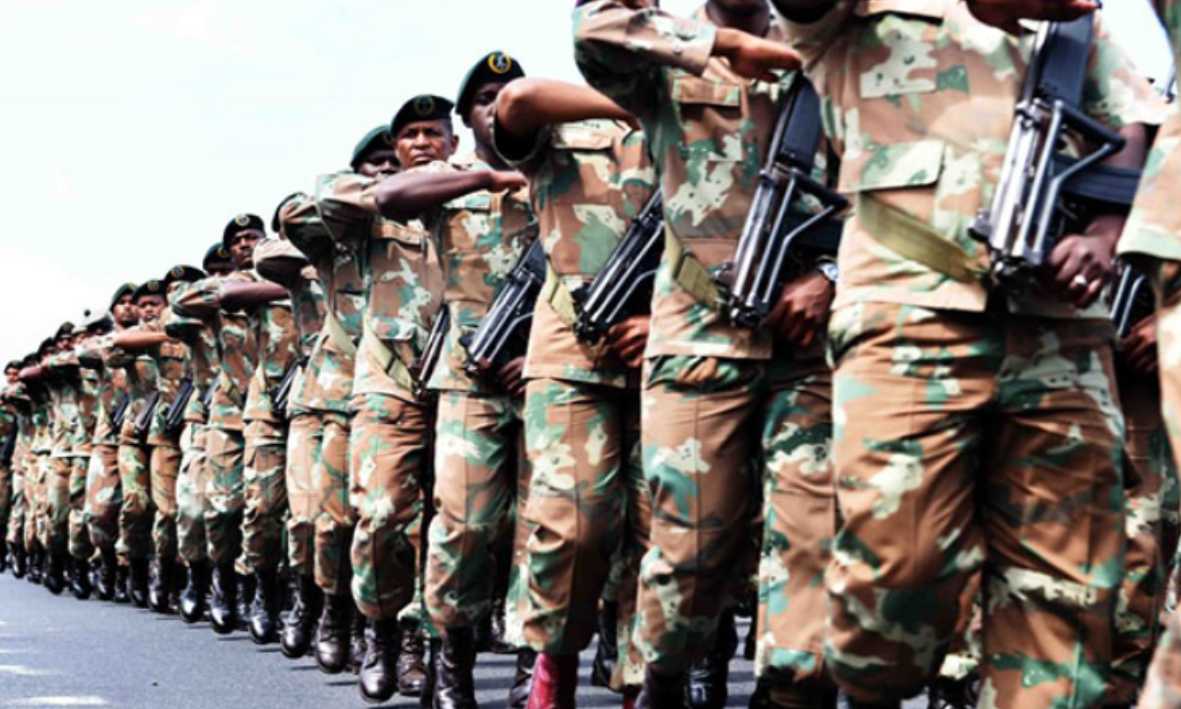
Keynote address by Deputy Minister of Defence and Military Veterans, Maj. Gen. (Ret) Bantu Holomisa, MP at the Defence Industry Lekgotla – 21 July 2026
Ministry of Defence and Military Veterans of the Republic of South Africa
Programme Director;
Honourable Minister of Defence and Military Veterans;
Members of the Executive;
Members of Parliament;
Chief of the South African National Defence Force;
Chiefs of Service and Divisions;
Representatives of the defence industry;
Representatives of Armscor, Denel, the CSIR and other research and development institutions;
Representatives of the private sector, organised business, academia and labour;
Distinguished guests;
Ladies and gentlemen;
Good morning.
The purpose of this session of the Defence Industry Lekgotla is not simply to speak about the defence industry.
It is to ask a more fundamental question:
What must we do, together, to ensure that South Africa retains a capable, sustainable and sovereign defence capability in an environment of limited public resources and rapidly changing security threats?
My assignment today is simple, but the consequences of how we approach it are significant:
I have been tasked with speaking about Public-Private Partnerships and, more importantly, how we can move from discussion to practical implementation.
Let us begin with honesty.
We know many of the challenges confronting the Department of Defence and the defence industry.
We know that there are significant infrastructure backlogs.
We know that many military facilities require rehabilitation, modernisation and maintenance.
We know that the Department has significant requirements in relation to prime mission equipment and the sustainability of existing capabilities.
We know that there are challenges relating to military housing, health facilities, logistics infrastructure and other support systems.
We know that our defence industry faces challenges relating to demand, funding, skills, research and development, industrial sustainability and access to markets.
These challenges are not new.
We have spoken about them for many years.
The 2015 Defence Review already warned that inadequate levels of defence spending had placed the defence force and the local defence industry under severe pressure.
More recently, Parliament has again highlighted the serious funding constraints facing the Department of Defence.
For the 2026/27 financial year, the Department has been allocated approximately R57.6 billion, while Parliament has continued to emphasise the need for a sustainable funding model for defence.
The reality is that the Department has substantial responsibilities, but the resources available to meet all those responsibilities are limited.
We cannot pretend otherwise.
The question before us is therefore not whether the problems exist.
The Department cannot simply assume that every infrastructure backlog, every equipment requirement and every modernisation project will be fully funded through additional allocations from the National Treasury.
That is not a realistic assumption.
At the same time, we cannot accept the gradual deterioration of strategic defence capabilities as inevitable.
We cannot allow our military bases to deteriorate indefinitely.
We cannot allow our personnel to live in conditions that undermine their dignity and morale.
We cannot allow critical infrastructure and equipment to reach a point where the cost of replacement becomes greater than the cost of timely intervention.
We must therefore consider additional and innovative ways of mobilising capital and expertise.
The timing of this conference is great because Cabinet has approved the Journey to Greatness, meaning the Defence Budget will look different and be in line with the instruction of the President that the Defence defunding must be arrested and the defence budget should grow to a favourable 1.5% of the GDP.
This is where I believe the discussion on Public-Private Partnerships becomes important.
1. PPPs as a strategic instrument
Let me be clear.
When I speak about Public-Private Partnerships, I am not speaking about selling off the assets of the Department of Defence.
I am not speaking about selling military land to the highest bidder.
I am not speaking about compromising national security.
I am speaking about using a lawful, transparent and carefully structured instrument to mobilise private capital and expertise in areas where this can assist the State to deliver infrastructure and services more efficiently.
South Africa's PPP framework exists precisely because government recognises that the private sector can, under appropriate conditions, contribute capital, expertise, innovation and long-term operational capacity to public infrastructure projects.
2. Defence land as a strategic asset
One of the important advantages of the defence portfolio is that the State possesses significant land and other strategic assets.
The National Defence White Paper has previously recorded that the SANDF controls approximately 500 000 hectares of state-owned land, while also emphasising the need for the cost-effective utilisation and rationalisation of military land.
This land is not simply a commercial asset.
It is a strategic national asset.
There may be opportunities for carefully structured partnerships in which the State retains ownership and control while private partners provide capital, construction expertise, technology or operational capacity.
This could include, subject to proper feasibility studies and all applicable legal and security requirements:
• Military housing;
• Health and hospital infrastructure;
• Logistics and maintenance facilities;
• Training and support infrastructure;
• Modernisation of selected military bases; and
• Other infrastructure required to support the SANDF.
The question is not whether we should commercialise the defence estate.
The question is whether we can use our existing assets more intelligently to support the defence mission.
3. Military housing and the dignity of the soldier
Let us consider the question of military housing.
A soldier who serves the Republic should not be expected to live indefinitely in conditions that undermine his or her dignity.
In some instances, military personnel live far from their formations or in informal settlements because suitable accommodation is not available.
This is not only a housing issue.
It is a military readiness issue.
It affects morale, discipline, operational availability and the relationship between a soldier and the institution they serve.
We must therefore explore whether partnerships with credible property developers, financial institutions and institutional investors can assist in addressing the military housing backlog.
The model could be structured in such a way that the State provides access to appropriate land, while a private or institutional partner provides capital and development capacity.
The State could then make structured payments over an agreed period, subject to a properly designed contract and demonstrated value for money.
This is not a proposal to give away defence land.
It is a proposal to investigate whether the land already owned by the State can help us secure the infrastructure required by the defence force.
4. A military city for the future
We must also think beyond individual projects.
In Pretoria, for example, various defence-related functions and institutions are spread across different locations, while the State incurs substantial expenditure on rented office accommodation.
We should ask ourselves whether there is a better long-term model.
Can we consolidate appropriate defence functions?
Can we make better use of defence-owned land?
Can we create a modern, integrated military precinct that brings together appropriate military, administrative, training, housing and support functions?
I am not suggesting that every military function should be placed in one location.
Nor am I suggesting that security considerations can be ignored.
But we should at least investigate the feasibility of a modern military city or integrated defence precinct where appropriate.
Such a project could be designed around modern principles of planning, sustainability, technology and efficiency.
We now have access to advanced design technologies, including artificial intelligence-enabled tools, that can assist with planning and modelling.
The objective should be to develop infrastructure that is fit for purpose, cost-effective and appropriate for the needs of a modern defence force.
5. The role of institutional investors
We should also engage seriously with institutional investors.
The Public Investment Corporation, for example, manages substantial institutional capital and has established experience in property and unlisted investments.
However, it has also suffered significant losses in the past on certain unlisted investments involving billions of rands in pensioners’ money.
Its property investment activities include development and investment in sectors such as office, industrial, specialised property and student accommodation.
This raises an important question.
Can the Department of Defence, together with the relevant government departments and agencies, engage institutional investors to explore carefully structured, long-term infrastructure investment opportunities?
The principle is straightforward.
A credible investor provides capital for a project.
The project is constructed and maintained according to agreed standards.
The State obtains the required infrastructure and service.
The investor receives an agreed return over an agreed period.
At the end of the agreed arrangement, the asset may return to the State in accordance with the terms of the contract.
But let me emphasise:
No such arrangement should be entered into merely because money is available.
Every proposal must be tested against:
• National security requirements;
• Value for money;
• Affordability;
• Long-term fiscal implications;
• Ownership and control;
• Procurement law;
• Security legislation;
• Risk allocation;
• Local industrial participation; and
• The broader national interest.
6. Border security
Where border infrastructure requires substantial investment in fencing, surveillance, sensors, communications and other capabilities, can we identify innovative models that allow the State to obtain the required capability more quickly and cost-effectively?
7. The navy and the defence industry
The South African Navy requires a sustainable maritime infrastructure and industrial ecosystem.
Where facilities require modernisation, including naval support infrastructure, we must ask whether there are credible partners who can bring capital, technical expertise and industrial capability into the equation.
Such partnerships must, of course, protect the strategic interests of the Republic.
8. Prime mission equipment
The discussion must also extend to prime mission equipment.
The defence force cannot be effective without sustainable and modern capabilities across the land, air, maritime and other domains.
But the acquisition of equipment cannot be separated from questions of affordability, maintenance, life-cycle costs, technology transfer and local industrial capability.
One gets worried that should the SANDF get a deployment outside of our borders after our SAMIDRC withdrawal, would we have equipment that is in line with the mission requirements?
The role of the defence industry must therefore extend beyond simply supplying equipment.
We need to ask:
• Can we improve maintenance, repair and overhaul capability?
• Can we extend the life of existing platforms where appropriate?
• Can we develop local manufacturing and technology capabilities?
• Can we improve the sustainability of equipment already in service?
• Can we use partnerships to develop new capabilities where this is strategically and economically viable?
The role of institutions such as Armscor, the CSIR, Denel and the broader defence industry is critical in this regard.
The CSIR already has capabilities across aerospace, landward sciences, command and control, cybersecurity, integrated security, radar, electronic warfare and other areas of defence research and technology.
That is how we build a sustainable defence industrial ecosystem.
9. Youth, skills and technology
I agree with the previous speakers, the future of defence is increasingly shaped by artificial intelligence, cybersecurity, autonomous systems, advanced manufacturing, robotics and other emerging technologies.
These are already transforming military capability, and South Africa must ensure that it does not fall behind.
We must therefore invest in our young people and create pathways from schools and universities into research, industry and the defence sector.
My engagements with countries including Pakistan, India, Türkiye, the United Kingdom, France and Ethiopia have reinforced one lesson: countries that take defence seriously invest in their youth, technology and research.
Institutions such as the CSIR, universities, Armscor, Denel and industry must work together to develop the skills, research and innovation required to build a sustainable and competitive South African defence industry.
10. International partnerships
International partnerships must also be used to advance South Africa’s transformation objectives, particularly through meaningful Broad-Based Black Economic Empowerment.
We must ensure that partnerships create opportunities for South African companies, especially emerging black-owned enterprises and young entrepreneurs, to gain access to markets, technology, mentorship, skills development and practical experience in the defence industry.
Our young people must not remain spectators while major international companies participate in South Africa’s defence economy.
Through properly structured partnerships and BBBEE commitments, young South Africans must be given opportunities to enter the defence value chain, develop their businesses, gain exposure to international standards and build the experience required to become future manufacturers, innovators and exporters.
11. A new approach to partnership
I believe we need a new approach.
We must move away from thinking about the defence industry only in terms of annual procurement.
We must think in terms of long-term capability.
We must move away from isolated projects.
We must think in terms of integrated systems.
We must move away from the assumption that every challenge can only be solved through a larger allocation from the fiscus.
We must ask what can be achieved through better planning, better partnerships, better use of existing assets and more innovative financing models.
But I must also emphasise that partnerships must not become an excuse for the State to abdicate its responsibilities.
12. The way forward
I would therefore like to propose that this Lekgotla should not end with a list of challenges.
We already know many of the challenges.
South Africa already has a policy framework for Public-Private Partnerships, including the framework issued by National Treasury.
The Department of Defence also has a dedicated team which has been familiarising themselves with the National Treasury’s PPP Policies, comprised of Mr Lebelo of the Defence Secretariat and the incoming Chief of Staff, General Xundu, which will engage the various formations of the SANDF, including the Army, Air Force, Navy and SAMHS, to identify priority areas requiring partnership.
We must develop a clear menu of these requirements, aligned with the National Treasury framework, and present it to the defence industry so that potential investors can identify where they can contribute.
The objective is to move from broad discussions to specific, structured and implementable opportunities.
The Honourable Minister has made it clear that we must move with urgency and ensure that this Lekgotla does not become another talk shop.
Following this engagement, the defence leadership must convene a focused roundtable to finalise priority areas so that, when industry approaches us, we are ready to direct them towards clear and well-defined opportunities.
That said, it would be in our best interests for us to develop a practical partnership roadmap.
This roadmap should identify:
First, the major infrastructure and capability backlogs that require urgent attention.
Second, which of these areas are suitable for PPP or other partnership models.
Third, what role should be played by the Department of Defence, the Department of Public Works and Infrastructure, Armscor, Denel, the defence industry, institutional investors, research institutions and other stakeholders.
Fourth, what regulatory and policy interventions may be required.
Fifth, how we protect national security and sovereign capabilities.
Sixth, how we ensure local industrial participation, skills development, youth opportunities and technology transfer.
And finally:
What can be implemented, and by when?
I would like to see the development of a practical PPP Action Plan that moves beyond general statements and identifies actual projects, potential partners, funding models, risks, responsibilities and timelines.
The Department of Defence is not going anywhere.
The SANDF is not going anywhere.
As long as South Africa exists as a sovereign state, it will require a defence capability.
This means that defence is, by its very nature, a long-term investment.
The question is whether we will continue to respond to our needs only when the crisis has already emerged, or whether we will develop a long-term model that allows us to plan, invest, modernise and sustain our defence capabilities.
To avoid this from being a talk shop, I am requesting that my Colleagues in Parliament, the Portfolio Committee and the Joint Standing Committee on Defence to ensure that this PPP discussion becomes a standing agenda in all their meetings.
This will help monitor implementation.
I thank you.