
Admin

17 Feb, 2026
State of the Nation Address 2026 debate by Bantu Holomisa
Speech for Deputy Minister Bantu Holomisa, MP and President of the United Democratic Movement at the State of the Nation Address 2026 debate CHECK AGAINST DELIVERY Honourable Speaker Honourable Members The Government of National Unity (GNU) will not be judged by the promises tabled during the opening of Parliament, but by whether that skeletal plan is implemented with urgency, discipline and measurable results. South Africans have heard plans before. What they demand now is execution. 1. Security is the foundation of development The State of the Nation Address (SONA) emphasised economic recovery and energy stability, but sustainable growth also depends on protecting our environment and critical infrastructure from vandalism, illegal mining and sabotage that damage ecosystems and investor confidence. We are strengthening enforcement, deploying coordinated security and accelerating prosecutions because environmental protection, stability and growth are inseparable. The GNU further recognises that development cannot flourish without security. We therefore welcome: • The deployment of the South African National Defence Force (SANDF) in support of South African Police Service (SAPS) in crime epicentres such as the Cape Flats and the broader Western Cape, and areas such as Randfontein in Gauteng. • The elevation of the security cluster as a national priority. • The use of Artificial Intelligence-driven systems for predictive policing and intelligence coordination. In line with the orders issued by the Commander-in-Chief, President Ramaphosa, I confirm that the Department of Defence is seized with operational requirements to support stabilisation interventions in consultation with the security cluster. This is just phase one of restoring normality. 2. Crime and consequences: the era of impunity is over Mqwathi, mandikuqinisekise amasela ixesha lawo liphelile. Yekani ii Law Enforcement Agencies zenze umsebenzi wazo, singaphazanyiswa. The honeymoon is over. Corruption and maladministration have not merely touched the state, they have engulfed it, reaching even into our law enforcement agencies. The rot did not spare the Department of Defence either. That is why we acknowledge the President’s decision to sign the proclamation authorising the Special Investigating Unit (SIU) to investigate these matters and more. Accountability cannot be selective. It must be decisive and it must reach everywhere. At a briefing to the Portfolio Committee and Joint Standing Committee on Defence, the SIU, the Military Police, and the Hawks assured us that we have recovered over R1.6 billion linked to corruption and mismanagement within Defence. This is just a start of restoring the image of our defence force. That is consequence management in action. If Special Courts could be established by the Department of Justice in partnership with the National Prosecuting Authority (NPA), this will assist to accelerate the resolution of all pending military cases. Crime and corruption embarrass this country. They damage investor confidence. They weaken sovereignty. We have no choice but to confronting them head-on. 3. No country survives without law No country can function if its laws are optional, and anyone who comes to this country legally must be prepared to abide by the law or they will be shipped out. Fellow South Africans, you deserve a state that works, systems that speak to each other, and early warning mechanisms that stop crime before it spreads. Without accurate Financial Intelligence Centre Act (FICA) registration, South African Revenue Service (SARS) cannot collect revenue from all traders operating in our economy. Furthermore, law enforcement cannot properly trace or dismantle criminal syndicates operating in the underworld. South Africa urgently needs a coordinated security response plan with time frames and the strengthening of the NPA as to be functional. South Africa’s liberation history teaches us solidarity. But protection must be credible and enforceable. If a person is granted asylum yet voluntarily returns to the very country they claim to be fleeing during holiday season, that status must be reviewed. You cannot be in danger today and on holiday tomorrow. Accountability is not hostility. It is fairness. It is security. It is sovereignty. 4. The Public Investment Corporation Mr President, in 2023 you called on the Minister of Finance to address the pension queries of former civil servants. The affected community is still waiting for feedback and progress reports. People are dying while the system drags its feet, and each day of delay is a day of injustice. It is even more painful to see that the funds meant to secure these pensions are being looted by the elite through the Isibaya Fund at the Public Investment Corporation. Resources meant for ordinary South Africa are being diverted to enrich a few, deepening inequality and betraying public trust. How we wish that money could instead be invested in South Africa’s infrastructure, generating real returns for the country and creating jobs. This is a guaranteed investment in the nation, not in private greed. The people deserve accountability and action, not corruption. 5. Skills development: from training to productivity We welcome the review of the Sector Education and Training Authorities (SETAs) as a corrective measure to ensure that skills funding delivers measurable results. Within Defence, the South African National Service Institute (SANSI) recently passed out over 500 young people. Mr President, do consider ring-fencing and redirecting SETA funding towards: • Funding into structured, outcome-based programmes such as SANSI. • Standardised study guides in mathematics, languages, accounting and entrepreneurship. • Mandatory practical and technical skill components. In 2001, Matt Matthys, Chantal Mulder, the President South African Institute of Chartered Accountants (SAICA), Ignatius Sehoole, and I spearheaded the Thuthuka Project, providing English, Mathematics, and Accounting study guides for Grades 9 to 12. Today, that project has produced over 2,000 Black Chartered Accountants. We may need to have a tailor-made, or similar setup into skills development. 6. Prevention of Hate Crimes and Combating of Hate Speech Act The Prevention of Hate Crimes and Combating of Hate Speech Act, though intended to protect dignity and equality, goes beyond what our Constitution permits and places freedom of religion at risk. It criminalises expression using vague and undefined concepts and expands protected grounds without legal certainty. In a constitutional democracy, believers must be free to express their faith without fear of prosecution. Equality must never be advanced by eroding religious freedom. We therefore urge that the Act be constitutionally aligned through appropriate amendments before it comes into operation. 7. Conclusion: restoring dignity, restoring the state No country survives without law. No economy grows without stability. No democracy thrives without accountability. South Africans want safety, fairness, opportunity and a state that works. Through decisive, coordinated action on security reform, border integrity, infrastructure protection, skills development and consequence management, we will deliver. Judge us not by our words, but by the order we restore, the stability we secure and the future we build together. I thank you.

Admin
10 Nov, 2025
From job offer to captivity: how human traffickers prey on South Africa’s desperate
Statement by Zandile Phiri, Acting Secretary General of the United Democratic Movement Human trafficking in South Africa has become a national emergency hiding in plain sight. It is destroying lives through sexual exploitation, forced labour, and debt bondage, and it thrives on poverty, desperation, and the failures of the state to coordinate an effective response. Recent reports have exposed the scale of this crisis. Three young women from Botswana were rescued at OR Tambo International Airport after being lured through social media with false promises of lucrative jobs in Sierra Leone. A 22-year-old woman from Bonteheuwel was tricked into travelling to Thailand, later trafficked to Cambodia, and forced into work after her passport was confiscated. In Johannesburg, seven Chinese nationals were convicted earlier this year of human trafficking after exploiting more than ninety Malawian workers, including thirty-three minors, in a garment factory where they were kept under guard and paid R65 a day. In the past year, investigations have revealed houses in Sandton, Johannesburg, and Durban where dozens of foreign nationals were held captive by trafficking syndicates. In one incident in March 2025, more than 50 people escaped from a house in Lombardy East, and in May 2025, 44 victims were rescued from a locked property in Parkmore, Sandton. Similar discoveries have been made in Durban, exposing a network that uses residential properties as holding sites for victims awaiting transport across borders. It is reported that less than one percent of victims is ever rescued. At the centre of this tragedy are employment scams that promise opportunity but deliver slavery. These operations exploit South Africa’s severe unemployment, preying on people desperate for income or a chance to work abroad. Our joblessness has become a recruitment tool for traffickers, and the state has done too little to close that door. The problem is compounded by weak coordination among law-enforcement agencies, poor data collection, and a lack of capacity in social services. Police, immigration, labour inspectors, and welfare officials often work in isolation, while traffickers move people freely across borders and provinces. Corruption and bureaucracy slow down victim identification, shelter placements, and prosecutions. South Africa’s porous borders worsen the crisis. Traffickers exploit weak controls and under-resourced posts to move victims alongside migrants and contraband. Until border management is tightened, corruption addressed, and regional intelligence improved, the country will remain a key corridor for trafficking across southern Africa. The United States Trafficking in Persons Report has again warned that South Africa is failing to identify victims, prosecute offenders, or coordinate a national response. The country’s placement on the Tier 2 Watchlist signals growing international concern over its weak efforts to combat trafficking. Unless coordination and enforcement improve, South Africa risks further sanctions and the erosion of its global credibility on human rights. The UDM calls for decisive action to break this cycle of exploitation and neglect: 1. A national anti-trafficking strategy led by the Department of Justice and Constitutional Development, bringing together the South African Police Service (SAPS), Department of Home Affairs, Department of Employment and Labour, Department of Social Development, and reputable civil society organisations under one command structure with measurable targets and real accountability. 2. Public awareness and prevention campaigns coordinated by the Department of Communications and Digital Technologies, in partnership with Basic and Higher Education, to educate communities about fake job offers, social-media recruitment, and passport confiscation; especially in provinces with high unemployment such as Mpumalanga, Limpopo, and the Eastern Cape. 3. Protection and reintegration services for victims managed by the Department of Social Development and provincial governments, with the support of accredited NGOs, to ensure safe shelters, counselling, and job placement programmes so survivors can rebuild their lives without fear or stigma. 4. Enforcement of labour laws and regulation of recruiters overseen by the Department of Employment and Labour and the SAPS, with heavy penalties for those who exploit undocumented workers, confiscate passports, or deceive jobseekers. Inspections must be routine and unannounced, and corrupt officials must be prosecuted. 5. Investment in youth employment and skills development driven by the Departments of Employment and Labour, Trade, Industry and Competition, and Higher Education and Training, working alongside the National Youth Development Agency and private sector partners. Preventing trafficking begins with creating real, sustainable opportunities at home through job creation, apprenticeships, and skills programmes that give young people viable alternatives to risky job offers and exploitation. 6. Strengthened cross-border cooperation spearheaded by the Department of International Relations and Cooperation and the Border Management Authority, working with SADC partners to dismantle trafficking networks, share intelligence, and ensure the safe repatriation of victims. Human trafficking is not only a criminal enterprise but a profound moral failure that strikes at the heart of our nation’s values. South Africa cannot claim to be a democracy that protects human rights while allowing syndicates to trade in human lives with impunity. The UDM calls on government to act with urgency, unity, and compassion to protect the vulnerable, prosecute the guilty, and restore integrity to our borders and institutions. Every victim rescued is a life reclaimed, but true victory will come only when no person in South Africa can be bought, sold, or enslaved.

Admin
22 Oct, 2025
Johannesburg cannot live under the gun: UDM demands urgent action on gang violence
Statement by Yongama Zigebe, Councillor in the City of Johannesburg for the United Democratic Movement and Chairperson of the S79 Committee on Gender, Youth and People with Disabilities The United Democratic Movement in the City Johannesburg is outraged by the surge of gun violence that continues to claim innocent lives and sow fear in our communities. Over the past three months, Johannesburg has been gripped by a wave of shootings that have turned our townships and suburbs into war zones. Families are burying loved ones, children are dying in crossfire, and the sound of gunfire has become an unbearable soundtrack of daily life. The latest tragedy in Westbury, where two teenagers were killed and four others injured in a suspected gang related shooting, exposes the depth of our crisis. In Alexandra, a community that already bears the scars of poverty and inequality, gunfire has become routine. From the brutal killing of community leader and businessman Vincent Ndima to the shooting of community guardian Zandile Mojapelo and the murder of patrollers who volunteered to protect their neighbours, Alexandra has become a mirror reflecting the broader decay of safety across Johannesburg. These are not isolated incidents. They are the visible wounds of a system that has lost control over illegal firearms, failed to dismantle gangs, and neglected to restore community confidence in law enforcement. Johannesburg residents are living in fear because the state has failed to protect them. This must end now. The UDM in the City Johannesburg also notes with grave concern the National Police Commissioner General Fannie Masemola’s admission that police have been attacked by the very communities they are meant to protect. This breakdown of trust between law enforcement and residents reveals a deeper crisis of legitimacy and accountability. When communities no longer believe that reporting criminals will lead to justice, criminal syndicates gain strength while honest citizens retreat in fear. It is clear that policing alone cannot solve this epidemic. Without trust, intelligence sharing and visible integrity from officers on the ground, enforcement efforts will continue to fall short. The fight against guns and gangs must therefore begin with rebuilding confidence between the police and the people. Recent remarks by National Police Commissioner have confirmed what communities have long feared, that Johannesburg’s gang crisis now involves the recruitment of children as young as thirteen. This revelation is horrifying and underscores the complete collapse of prevention and early warning systems that should protect young people from being drawn into crime. It is unacceptable that our schools have become recruiting grounds and our streets a battlefield for minors doing the bidding of adult gangsters. The UDM in the City Johannesburg calls for urgent intervention from the Departments of Basic Education, Social Development and Police to disrupt this pipeline of child recruitment and to introduce community-based rehabilitation programmes that can save these children from a lifetime of violence and incarceration. The UDM in the City Johannesburg calls upon the Acting Minister of Police to treat Johannesburg’s gun violence epidemic as a national emergency. The time for excuses has passed. We expect an intensified anti-gang and firearm recovery operation that focuses on hotspots such as Westbury, Alexandra, Eldorado Park and Hillbrow. Police visibility must increase, community policing must be revived, and coordination between SAPS, Metro Police and Crime Intelligence must be restored. The City of Johannesburg’s Public Safety Department must strengthen patrols, fix broken streetlights and install CCTV cameras in high-risk areas. Law enforcement cannot win this war alone. The Department of Social Development must mobilise youth rehabilitation and anti-substance abuse programmes that steer young people away from criminal networks. Parliament and the Gauteng Provincial Legislature must hold law enforcement agencies accountable for their failure to regulate firearms and combat gun trafficking. The UDM in the City Johannesburg calls on the people of our city to rise together. Our safety is our collective responsibility. We cannot be silent while criminals dictate how we live. Communities must reclaim their streets, report criminals and stand united against fear. The time has come to restore dignity, to protect our children and to defend the right to life that our Constitution guarantees. This is not just about policing, it is about leadership, justice and the soul of our city. The UDM in the City Johannesburg will not look away while our city bleeds. We will hold those in power accountable, insist on real policing reform and work tirelessly to rebuild a city where safety and dignity belong to every resident.

Admin
21 Oct, 2025
Lawlessness endangers South Africa’s public servants and essential workers
Statement by Zandile Phiri, Acting Secretary General of the United Democratic Movement Across South Africa, the safety of government employees and frontline workers has become a matter of grave concern. In Nelson Mandela Bay in the Eastern Cape, municipal staff have been repeatedly targeted while performing their duties. Workers were robbed at gunpoint in municipal offices, and others have refused to return to the field after experiencing violent attacks. The situation in the city mirrors a wider climate of fear in which public servants are exposed to criminality with little protection, even as they try to deliver essential services under difficult conditions. In Soweto, Johannesburg firefighters came under attack this week while responding to a shack fire in the Elias Motswaledi Informal Settlement. Residents stoned the fire truck, damaging a brand-new emergency vehicle that had only recently been added to the city’s fleet. This shocking incident reflects a deeper anger and frustration in communities facing poverty, overcrowding and slow service delivery. But it also shows a collapse in respect for those who come to protect life and property. Elsewhere in the country, we understand that authorities have been forced to declare certain areas as high-risk zones where emergency personnel may not enter without a police escort. These so-called Red Zones illustrate just how dangerous the working environment has become for public servants. The arrangement is inconsistent and often delays help to communities that are already in crisis. It stands as a stark reminder that lawlessness now dictates the limits of service delivery, and that frontline workers must depend on armed protection simply to do their jobs. The threat to safety does not stop with municipal or emergency workers. The crisis extends to the police themselves. In Kimberley, a female police officer was violently assaulted in full uniform while performing her duties in the city centre. The incident, which was captured on video and circulated on social media, shocked the nation and exposed the growing hostility faced by law enforcement officers. In Khayelitsha, protesters recently torched police vehicles during demonstrations over electricity and service delivery grievances. These events reveal a dangerous collapse of respect for the rule of law and for those tasked with upholding it. When officers are attacked and their vehicles set alight, it sends a clear message that criminals and opportunists no longer fear accountability. Such lawlessness not only threatens the lives of police officers but also undermines the very foundations of public safety and community trust. The UDM calls for decisive and coordinated action: 1. National and provincial governments must prioritise staff safety by conducting urgent risk assessments across municipalities, especially in high-risk zones, and by ensuring that field workers and emergency responders have the protection and support they need. 2. Law enforcement agencies must act swiftly and visibly against perpetrators of violence directed at public service employees. Impunity feeds chaos and without justice, respect for public authority will continue to erode. 3. Government and communities must rebuild trust. Many of these attacks stem from frustration over failed services, but nothing justifies violence. Dialogue, transparency and accountability must replace confrontation and destruction. 4. All public institutions must invest in trauma counselling and staff wellbeing. Psychological harm cannot be ignored. It affects morale, performance and service continuity. The UDM reiterates that South Africa cannot claim to value public service while allowing its servants to become victims. Respect for those who dedicate their lives to helping others is the foundation of a lawful, caring and functional state. Until law and order are restored and the dignity of public service reclaimed, the dream of a safe and working South Africa will remain out of reach.

Admin
18 Oct, 2025
Minister Cachalia and MEC Marais: the Cape Flats needs leadership, not lip service
Statement by Bongani Maqungwana, UDM Councillor in the City of Cape Town The United Democratic Movement (UDM) in the City of Cape Town condemns the violent attack on police officers and the torching of a Nyala in Khayelitsha. Such acts of lawlessness have no place in a democratic society and must be met with justice. However, government cannot pretend that these incidents happen in a vacuum. They are a symptom of a policing crisis that has festered for years. The truth is that many South Africans have lost faith in the South African Police Service (SAPS). Communities on the Cape Flats, in particular, have watched gang violence claim lives week after week while police stand by, under resourced, disorganised, or indifferent. When a police service fails to protect, frustration turns to anger, and anger eventually turns to revolt. Even the Acting Minister of Police Firoz Cachalia has publicly acknowledged that there is still no comprehensive operational or intelligence plan in place to combat gang violence in the Western Cape. That admission is as alarming as it is revealing. It confirms what residents already know: there is no coherent national strategy to deal with one of South Africa’s most persistent and deadly security crises. The UDM notes the reaction of Western Cape MEC for Police Oversight and Community Safety, Anroux Marais, who condemned the torching of the police vehicle. While her outrage is understandable, mere condemnation does little to comfort families who live in daily fear or to fix a broken policing system. Leadership requires more than press statements. It demands a coordinated, results-driven approach that matches provincial safety initiatives with national operational capacity. Until that happens, the cycle of violence and blame will continue. There is a serious disconnect between national and provincial levels of government. While the Western Cape government develops safety plans and deploys local resources, national SAPS leadership moves at a different pace. This lack of alignment has left frontline officers confused, communities unprotected, and criminals emboldened. South Africa cannot afford turf wars and political posturing when lives are at stake. The UDM in the City of Cape Town calls for: 1. A clear and funded operational plan to stabilise gang affected communities, with measurable outcomes and timelines. 2. The reestablishment of specialised anti-gang units with proper intelligence capacity and oversight. 3. A public audit of all policing resources in the Western Cape to expose where the gaps lie. 4. The rebuilding of trust through genuine community policing, not staged engagements or political photo opportunities. 5. A permanent coordination mechanism between national and provincial security structures to ensure that plans, funding, and accountability are aligned. South Africans deserve a police service that is trusted, competent, and visible. Until SAPS regains credibility, both criminals and desperate citizens will continue to act outside the law. Our message is simple: safety cannot exist without trust, and trust cannot exist without results.

Admin
17 Oct, 2025
Restoring trust in law enforcement: new national crime prevention framework is needed
Statement by Nqabayomzi Kwankwa, MP, UDM Deputy President and Leader in Parliament Only 22 percent of South Africans still trust the police. That figure, revealed by the Human Sciences Research Council, is not a statistic; it is a national alarm bell. A country without faith in its police cannot guarantee justice or safety. In recent weeks, incidents of citizens burning police vehicles and attacking officers have become a tragic symptom of how deeply fractured the relationship between law enforcement and communities has become. These acts cannot be condoned, yet they reveal the frustration and despair of people who feel abandoned and unprotected. The United Democratic Movement (UDM) has long warned that the erosion of trust in the police is not accidental. It stems from years of poor leadership, internal misconduct, and weak accountability. As a political party that has consistently championed ethical governance and professional policing, the UDM has repeatedly called on the South African Police Services (SAPS) to clean up its act, restore command integrity, strengthen internal discipline, and rebuild the professional standards expected of a constitutional democracy. When police officers act without consequence, ordinary South Africans lose hope, and criminal networks thrive. The ongoing Madlanga Commission continues to shed light on the seriousness of the challenges facing the police service. Allegations raised during these hearings have underscored the need for the SAPS to confront corruption and mismanagement head on, to ensure that law enforcement serves the public interest and not private agendas. The UDM believes the Commission provides an important opportunity for the police to reflect, reform, and rebuild credibility through transparency and truth. The Ad Hoc Committee in Parliament has become an important platform for uncovering the depth of dysfunction within the SAPS and its oversight structures. While the UDM is not represented on this committee, we will continue to follow its work closely and insist that it leads to concrete reforms, not political theatre. Oversight must be used to restore the integrity of policing, not to manage scandal. The South African public is watching, and it deserves a process that results in accountability, not performance. The UDM condemns the failure of Acting Police Minister Firoz Cachalia and National Commissioner Fannie Masemola to appear before the Portfolio Committee on Police on 15 October 2025. Their absence forced the committee to defer the meeting without hearing from key entities, including the Auditor General. This disregard for Parliament’s oversight at a time of crisis undermines accountability and sends the wrong message to the public. South Africa cannot afford another cycle of delays, denials, or political protection. The UDM calls for a complete overhaul of South Africa’s approach to crime prevention and policing, anchored in the following principles: 1. The SAPS must be depoliticised and led by skilled, ethical professionals who are committed to service, accountability, and the rule of law. 2. Government must coordinate policing, social development, and education programmes to address the root causes of crime, including poverty, youth unemployment, and substance abuse. 3. Law enforcement visibility must be increased through better resourced police stations, functional patrol units, and active Community Policing Forums that work in partnership with residents. 4. The SAPS must modernise its operations by investing in technology, digital forensics, and intelligence-led policing to stay ahead of organised crime. 5. Independent oversight bodies such as the Independent Police Investigative Directorate and parliamentary committees must be strengthened to ensure transparency, swift investigation of misconduct, and regular public reporting. 6. The criminal justice system must focus not only on punishment but also on prevention, rehabilitation, and social reintegration, so that cycles of violence are broken and communities are rebuilt. The UDM further urges the Government of National Unity to establish a National Crime Prevention Council that brings together national, provincial, and local law enforcement agencies with civil society, the private sector, and research institutions. Such a structure must coordinate intelligence, align policing priorities, and measure progress on crime reduction across the country. South Africa needs a whole of government response that unites every sphere of the state in restoring safety and public trust. Safety is a constitutional right, not a privilege. Weak leadership weakens justice. The UDM calls on the Government of National Unity to treat crime prevention and police reform as an urgent national priority, not another task for committees and talk shops. The GNU must move beyond rhetoric and deliver a coordinated, well resourced, and accountable plan to rebuild trust between citizens and the state. South Africans deserve a police service that protects them, not one they fear, and a government that acts, not one that explains.

Admin
17 Oct, 2025
A teacher’s betrayal: UDMYV demands justice for exploited young women
Statement by Zintombi Sododile, Chairperson of United Democratic Movement Youth Vanguard in the Eastern Cape The United Democratic Movement Youth Vanguard (UDM Youth Vanguard) expresses its deep outrage at revelations that a teacher from the Eastern Cape stands accused of preying on young women through a trafficking and sexual exploitation ring. It is alleged that this educator targeted women from rural towns such as Qumbu, Mthatha and Ngqeleni, transported them to East London, and exploited their vulnerability for profit under the pretence of offering accommodation and opportunity. Although the investigation reportedly began in September 2023, it has taken more than a year for the matter to reach court. It remains unclear whether the delay lies with the police, the prosecution, or both, but it reflects a wider concern about how cases involving the exploitation of women and children are handled. The slow pace of justice deepens the trauma of survivors and weakens public confidence in law enforcement. The UDM Youth Vanguard calls for clarity and accountability from all institutions involved in the handling of this case. This case exposes a shocking abuse of authority and a moral collapse within an institution meant to nurture and protect the youth. When a teacher, entrusted with guiding the next generation, becomes a perpetrator of such heinous crimes, it betrays the trust of families, communities, and the education system itself. The UDM Youth Vanguard condemns this reprehensible conduct in the strongest terms and demands: 1. The swift and uncompromising prosecution of all those implicated in this trafficking network. 2. An immediate internal investigation by the Department of Education to determine how this went undetected. 3. Comprehensive psychosocial support and protection for all affected survivors. 4. The introduction of stricter vetting and ethics oversight for educators and school staff. 5. A national awareness campaign on human trafficking and sexual exploitation targeting schools and communities. We call on the Minister of Basic Education and the Minister of Police to treat this case as a wake-up call. South Africa cannot allow those entrusted with public service to use their positions to exploit the poor and the powerless. We cannot build a just society while predators hide behind positions of trust. The UDMYV pledges to raise awareness among young people about their rights, to support survivors in seeking justice, and to continue speaking out against abuse wherever it occurs. Every child deserves safety, respect, and a future free from exploitation.
Admin
09 Sep, 2025
JMPD recruitment fatalities are unacceptable
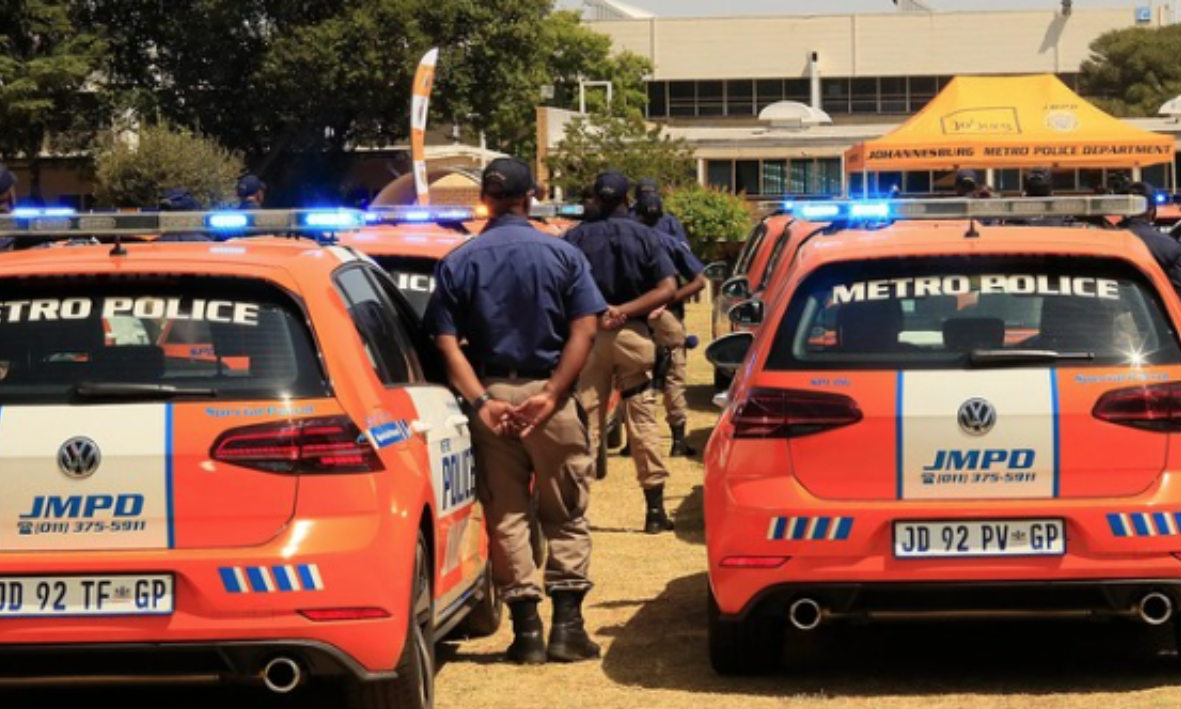
Statement by Yongama Zigebe, Councillor in the City of Johannesburg for the United Democratic Movement and Chairperson of the S79 Committee on Gender, Youth and People with Disabilities The United Democratic Movement (UDM) in the City of Johannesburg notes with deep shock and sadness the tragic deaths of two young South Africans, Mr Marvellous Michael Nyambi and Mr Zwelethu Tekete, during the recent Johannesburg Metropolitan Police Department (JMPD) recruitment programme at Ruimsig Stadium. These deaths are not only heartbreaking for their families and communities, but they also raise serious concerns about the safety, fairness, and integrity of the City’s recruitment processes. The youth of our country continue to struggle with unemployment and limited opportunities. For many, the chance to serve as JMPD officers represented hope and dignity. To have such hope end in tragedy is devastating and unacceptable. The UDM in the City of Johannesburg is further disturbed by allegations that hundreds of young applicants were turned away on the basis of proof of residence letters allegedly sourced only through councillors. If true, this points to unacceptable gatekeeping practices that undermine fairness, transparency, and equitable access to opportunities. As a Councillor in the City of Johannesburg and Chairperson of the Section 79 Oversight Committee on Gender, Youth, and People with Disabilities (GEYODI), I have formally written to the Member of the Mayoral Committee (MMC) for Public Safety, Cllr M Tshwaku, requesting a comprehensive report on the circumstances surrounding these deaths, the absence of medical and emergency readiness on site, the suitability of instructors, risk management protocols, and the measures being taken to prevent such tragedies from recurring. The Speaker of Council, Cllr M Arnolds, has also been copied in this correspondence. The UDM in the City of Johannesburg calls for: 1. Immediate transparency from the City of Johannesburg on the events that led to these fatalities. 2. Accountability for the failures in planning, oversight, and risk management. 3. Fair and inclusive recruitment practices that do not discriminate or impose unfair barriers on applicants. 4. Support and compensation for the families of the deceased candidates. The lives of young people cannot be treated carelessly in the pursuit of building law enforcement capacity. These incidents must serve as a turning point for how the City approaches youth recruitment, safety standards, and public trust. The UDM in the City of Johannesburg will continue to raise these matters until satisfactory answers and corrective measures are put in place.

Admin
17 Apr, 2025
US pastor saved by SAPS; now save our children
Media Statement by Thandi Nontenja, MP and UDEMWO Secretary General The United Democratic Women’s Organisation (UDEMWO) notes the successful rescue of the American pastor who was kidnapped in Gqeberha. We commend the swift and coordinated response by the South African Police Service’s (SAPS) multidisciplinary units, which led to the neutralisation of the suspects and the safe recovery of the victim. This operation demonstrates what can be achieved when our law enforcement agencies act decisively and collaboratively. Too often, kidnappings in South Africa are driven by ransom demands a terrifying reality for victims and their families. The pastor’s case, although foreign in nationality, highlights a problem that affects our own people daily. We must now turn the same urgency and coordination toward the heartbreaking epidemic of missing South Africans, particularly children. According to recent reports, over 600 children have been reported missing in 2024 alone, with dozens still unaccounted for. Among these tragic cases is that of Joshlin Smith, whose disappearance from Saldanha Bay shocked the nation and remains unresolved. The lack of closure in such cases is devastating to families and communities alike. We urge SAPS to apply the same multidisciplinary expertise and urgency shown in the Gqeberha rescue to the ongoing crisis of missing persons across South Africa. Every missing child, woman, or man deserves the same energy, resources, and attention. It is time that we stop treating these disappearances as isolated incidents and recognise them as a national emergency that demands immediate and consistent action. The UDEMWO stands in solidarity with the families of the missing. We will continue to push for accountability, effective investigations, and real outcomes. We call on government to prioritise the safety of our people; all of them. We furthermore urge the families and caregivers of missing children to report such incidents to the SAPS immediately; do not delay, even by a few hours. The 24-hour waiting period is a myth. Time is of the essence when a child goes missing, and swift reporting significantly increases the chances of a safe recovery.

Admin
29 Mar, 2025
UDM Eastern Cape calls for justice for Cwecwe and accountability in schools
Statement by Bulelani Bobotyane, Provincial Secretary of the UDM in the Eastern Cape The United Democratic Movement (UDM) in the Eastern Cape is outraged by the tragic case of Cwecwe, a seven-year-old child from Matatiele, who was allegedly raped while under the care of Bergview College. It is deeply concerning that, despite medical confirmation of the assault, no arrests have been made. We extend our full support to Cwecwe and her family during this traumatic time. We commend the Department of Education for its decision to deregister Bergview College, but this is only the first step. The failure to protect a child within an educational institution reflects a deeper crisis in our schools. We demand urgent action from the South African Police Service (SAPS) to expedite the investigation and ensure that justice is served. Law enforcement agencies cannot continue to fail victims, especially vulnerable children. We also call on Basic Education Minister Siviwe Gwarube to strengthen safety measures in schools to prevent such incidents from ever happening again. Furthermore, the UDM in the Eastern Cape urges government to: 1. Fast-track the arrest and prosecute those responsible for this heinous crime. 2. Review safety policies in schools to ensure that all children are protected while in the care of educational institutions. 3. Provide psychological and social support to Cwecwe and her family to help them recover from this traumatic ordeal. We will not stand by while the most vulnerable in our society suffer due to negligence and lack of accountability. The UDM will closely monitor this case and push for justice to prevail. #JusticeForCwecwe
Admin
15 Nov, 2019
KwaZulu-Natal precarious weather
The United Democratic Movement would like to extend its heartfelt condolences to the families who had lost their loved ones in the past 3 days, due to the severe and dreich weather in the Province of KwaZulu-Natal. The Party also sympathises with the members of different communities that their properties were destroyed by adverse weather. Some of the havoc that has been witnessed like the over flooding along the N2 near the old International Airport can be blamed to the poor performance and negligence of the Department of Transport or SANRAL and eThekwini Municipality for failing to curb this from happening. This has been a problem from time immemorial whenever there are heavy rains. One does not need to be an engineer to realize that the drainage system that is there is not working The UDM calls on the Minister of Human Settlements, Lindiwe Sisulu and the KZN Provincial Government to give this matter an urgent attention and do whatever in their power to provide shelter and basic necessities to the communities that are affected by these hazardous weather conditions. All the victims that deserve to be helped must be assisted irrespective of their political affiliations as it has been happening in the past. A special plea is also made to all the motorists to be extra cautious on the roads by not putting their lives and of the passengers on danger, as seen on the videos that are circulating on Social Media. They must not dare the over flooded low bridges. It is dangerous. Lastly, the UDM proposes that the President of the Republic of South Africa, Mr Cyril Ramaphosa to declare State of Emergency to the ravaged districts in the Province. — end — Issued by: Mr Bongani Msomi UDM Secretary General
Admin
18 Sep, 2019
Violence against women and children, and crime in South Africa
Honourable Speaker, Mr President and Deputy President, Honourable Ministers and Deputy Ministers, Honourable Members. 1. Introduction The United Democratic Movement (UDM) commends the fact that Parliament is debating solutions to gender-based violence, child abuse, rampant crime in general, as well as lawlessness. We are here today in response to the brave women of this country who said: “No more!”. This House and the Executive must prioritize finding solutions, even if it means that we must reconsider budget allocations as the President has already indicated. 2. Safety and security: a constitutional mandate Everyone living in this country must, at all times, be protected and should feel safe in their homes and on our streets. For the Executive to act decisively and to make manifest the constitutional mandate of safety and security for the people, it might mean that our civil liberties could be affected. 3. Proposed SADC accord One other matter which I would like to raise is that of striking an accord between SADC countries to address security and home affairs issues. Cross-border crime, moving stolen vehicles and livestock, as well as the burning of trade-goods, should be a thing of the past. Our economies must be protected, for if one country is unstable, all are affected. 4. Xenophobia Regarding the recent xenophobic attacks, we condemn it in the strongest terms. I however wish to mention that South Africa is the only country that does not have refugee camps, with non-South Africans being integrated into our society since 1994. We indeed have people from the rest of the continent, Europe, America and the Far East who live peacefully, and prosper in South Africa. 5. Closing Mr President, if one looks at the vast amounts of money that is syphoned away through corruption, our obsolete military equipment, poor training and equipping of our security services and the criminal justice system, it is clear that we still have much work to do. I thank you.

Admin
05 Jun, 2019
UDESMO: Violence at schools and universities must stop
It is with deep despondency that the United Democratic Students’ Movement (UDESMO) heard of yet another act of serious violence at one of our institutions of learning, this time at Forest High School in Johannesburg. There were also reports of two Walter Sisulu University students who were killed at the weekend, at what is known as a “Freshers’ Braai”. South Africans have been bombarded with stories of severe bullying, sexual predation, violence and murder at our schools and universities just within the past year. It is a sign that something is drastically wrong at our institutions of learning. We need to understand that institutions of learning are microcosms of the communities in which they are geographically located. If drugs, alcoholism, gangsterism and violence are prevalent in the community, one can be sure that these social ills and criminal elements will reflect in the school environment. At our universities in particular, excessive alcohol abuse at what is colloquially know as “bashes” is rife. Taking a long-term view, the underlying socio-economic factors that negatively impact on our society should be addressed, which will in turn mirror in our institutions of learning. To address the immediate crisis, we need an urgent multi-stakeholder engagement to come up with practical solutions on how to keep our young people and teachers safe in our schools and universities. UDESMO believes that there should be closer cooperation between government, communities, institutions of learning and the police services. Moral decay is really threatening the velocity of our democracy and If nothing happens now, we are running a risk off a lawless nation. Issued by: Mr Akhona Bavu UDESMO Eastern Cape Chairperson
Admin
12 Apr, 2019
Bantu Holomisa speaks at a Unisa panel discussion on the 2019 general elections
• Our hosts today • Dr Somadoda Fikeni, our moderator • Those who represent the various departments that sponsored this panel discussion • My colleagues from other political parties • Academics and students • Ladies and gentlemen Thank you for affording me the opportunity to have a chat with you today. 1. The UDM’s road of success The United Democratic Movement (UDM) has since its inception batted on the wicket of the ethics of good governance. In fact, the UDM in part owes its beginning to that principled stance. My testimony at the Truth and Reconciliation Commission, about corruption in the former Transkei, got me unceremoniously kicked out of the African National Congress, because I refused to recant. Soon after that, the UDM was born and we have not stopped fighting for what is good and right in this world: • We opposed the immoral floor-crossing legislation that was eventually scrapped. • We succeeded in having the Independent Electoral Commission’s former Chief Electoral Officer, Pansy Tlakula, resign because of an irregular lease agreement she organised. • We were part of the legal action taken to preserve and protect the former Public Protector Thuli Madonsela’s report on state capture. • The UDM was the catalyst that saw coalitions form after the 2016 elections. • We did our part in forcing the former president to vacate his office, specifically taking the matter of the secret ballot to the Constitutional Court and organising one of the biggest marches to the Union Buildings. • The UDM were there with our colleagues from other opposition parties when we asked the Constitutional Court to order parliament to consider the former president’s conduct and whether he is impeachable. • We have asked President Ramaphosa to intervene in the malfunctioning and corruption-ridden SETAs. Nothing has yet been done about it, but we won’t give up. • Various communities will attest to the fact that the UDM has intervened on their behalf to have government, at municipal, provincial and national levels, attend to their service delivery complaints. • Most recently, the UDM exposed alleged corruption at the Public Investment Corporation amounting to billions of rands. This directly led to the establishment of the Mpati Commission of Inquiry at which I am sure you saw me testify. Once again at our post guarding against corruption. These are the actions of a party that is opposed to pervasive corruption, maladministration and malfeasance in government. 2. Fighting government corruption It is a sad reality that South Africans have become jaded when they talk about government corruption. There is too much of it and it’s demoralising our nation. They only sit up and listen when “things get serious”, as we see with the current commissions of inquiry. Things are indeed very serious with billions of Rands at play. For the UDM, integrity, commitment and hard work are required from everyone in government, as well as those in the private sector. No quarter shall be given to those who fail. Rewarding party loyalty is an evil, that should become a thing of the past. The best quality must be ensured in all appointments, so that merit, responsibility and integrity is guaranteed, and excellence is rewarded. Specifically, the UDM believes that special courts must be established to investigate and prosecute the corrupt in the public and private sector. Also, each province must have an independent anti-corruption task team to determine the depth of corruption and to immediately act. 3. Safety and security For the UDM, the long-term solution to crime and violence lies in our people committing to a concerted effort to reform our society, so that we do not simply address the symptoms, but also the root causes. Although there are a number of initiatives that the UDM would introduce to bring about safety and security, I wish to highlight two specific strategies for the purpose of today’s discussion. a) As far as we are concerned, the recruitment processes of the police, defence and intelligence services must be revamped. The aim of such a programme will be to allow communities to participate in keeping their environments safe and secure. Individuals who are interested in a career in law enforcement will be trained and assigned to serve their communities. This will allow for the monitoring of crime, the gathering of intelligence and combating lawlessness, whilst also creating much needed jobs. b) The coordination between the ministries of justice, police services, correctional services, defence and national intelligence must be stepped up. The UDM proposes that a crime prevention ministry be established to coordinate the work of these departments. Specific objectives and deadlines must be set for the departments to achieve their goals. 4. Free education • The UDM supports fee-free tertiary education for students from poor and working-class families. Such an expanded programme can be justified economically as free education is a strategic economic driver, because it is an investment by the state in the creation of a larger tax base in the long run. However, once implemented under a UDM government, students’ progress shall be monitored and managed as an investment. • We also think that the National Student Financial Aid Scheme (NFSAS) is a big flop. It is hamstrung by chronic maladministration, corruption and a jobs-for-pals leadership scheme. In addition, the way in which NSFAS is structured produces graduates who end up mired in debt. Because of our under-performing job market, they will remain indebted with no hope of repaying their loans. Of course, the biggest challenge at the other end of this education process is making sure that our graduates have jobs. 5. Job creation The UDM has always said that a massive initiative focussing on job creation through infrastructure maintenance and development is one of the routes to go. This planned sustainable development project must be driven through the department of public works, in collaboration with all other departments. Furthermore, the UDM’s response to the challenge of unemployment includes: • Identifying markets for small firms, through promoting domestic and foreign connections to adequately address both the supply and demand side of the economy. • Developing capacity in the areas of improved business and entrepreneurial skills. • Identifying loan and capital sources, as well as facilitating loans and investments in community businesses. • Investing in sector-based planning and implementation, including the creation of sector-specific banks to provide financial assistance to historically disadvantaged groups and individuals. 6. Xenophobia Xenophobia in South Africa is not a new thing and, as a matter of fact, it is getting worse by the day. There are multiple causes of xenophobia, but at the risk of over-simplifying the matter, the UDM is of the view that the root cause lies in the unregulated and unfair competition for the poor’s meagre resources. The dearth of jobs is, for instance, part of this dynamic and complex situation. On the one hand, undocumented immigrants are exploited, because they are desperate enough to work for low wages. And, on the other, there are no job opportunities for South Africans that pay a decent wage. To add to the complexity of the matter we have the issue of undocumented foreigners illegally occupying dwellings. The owners of such buildings, should be brought to book as they exploit undocumented immigrants and, by default, also deprive South Africans of safe havens. Like it or not, much of the blame is to be laid at government’s feet as the impact of its inadequate control over the arrival of illegal immigrants, and lack of resettlement mechanisms, are not addressed. A UDM government will handle illegal immigration in a humane and holistic manner, in line with our continental and international obligations. We also make a call on undocumented immigrants to come forward and be registered. Finally, we recognise that legal immigrants contribute immensely to our society and our economy. We are home to, for instance, some of the best educators and academics who impart knowledge and do important research and development. The UDM believes that xenophobia has no place in our society, but we must also be cognisant of our responsibilities to our own people. It is entirely possible for both these ambitions to work harmoniously. 7. An Economic Indaba with land at the apex of its work As we worked on establishing a new South Africa, land was placed on the backburner. Political emancipation was our primary goal at that time. Land, as a tool to achieve economic emancipation and make reparation, should have been addressed straight after liberation. Matters would look very different if the land issue had been addressed timeously. We certainly would have avoided the destructive tug-and-pull we now witness. When the National Assembly took a resolution on the expropriation of land without compensation, the UDM voted in favour of this resolution after it was amended. The UDM certainly did not vote for free-for-all land grabs and evictions. In this regard, the UDM has long promoted the view that the matter can only be effectively resolved at our proposed Economic Indaba, where all stakeholders can congregate to discuss South Africa’s macro economy, with land at the apex of the debate. There are a number of pertinent questions that should be answered before we make any rash decisions. Those are, amongst others, the following: • Who exactly (individuals, companies and/or government) will be affected and how? • How does food security and economic stability impact implementation i.e. does it prevent expropriation in specific circumstances, and what those would be? • How will government handle rapid urbanisation and an ever-increasing need to make land available in cities and the concomitant denuding of rural communities and local economies? • How will traditional leaders and rural communities be affected? • How will entities such as the Ingonyama Trust be impacted? 8. Closing With these few words I leave you and invite you to ask me any questions you wish me to answer. Thank you
Admin
06 Apr, 2019
#ShutAlexandraDown civil protests is the ANC’s legacy
The United Democratic Movement (UDM) has noted the volatile situation in Alexandra, Johannesburg. Much of this unhappiness stems from the African National Congress’ (ANC) misuse of billions of Rands allocated to the Alexandra renewal project during the era of former President Thabo Mbeki. RDP houses in Alexandra Extension 7, were apparently sold to non-South Africans and this explosive situation has the potential to spill over to xenophobic attacks. In addition, the ANC had relegated hundreds of families to live in shacks in the informal settlements, depriving them from living a life of dignity and prosperity. The irony is that the ANC is leading this protest, using it for electioneering at the expense of the poor residents. The ruling party has done this country immeasurable damage with its don’t care attitude. Come 8 May 2019, the electorate must make an enlightened decision and should not vote for it. Issued by: Cllr Thandi Nontenja UDM Councillor in the City of Johannesburg
Admin
21 Nov, 2018
UDM on NMU student involved in fatal stabbing
We are shocked at reports of the arrest of a 23-year-old Nelson Mandela University student, Athenkosi Zenani, who allegedly stabbed a man to death in self-defence after two Tanzanian men tried to apparently rob him and his friends. We have noted that he has since been released on bail. We too frequently see our justice system fail and leave those who are the victims of crime to their own devises. It is unfortunate that we live in a society where citizens in a desperate situation defend their lives to the point where they are vulnerable to prosecution. We do not necessarily condone the action of this young man or encourage vigilantism but, if it is true that the aim of the men that accosted them was to murder the student and his friends, it harks back to the “Lion Mama” case. Once the police have established the facts and there is enough evidence that the student might have had no other choice but to act as he did, we hope that the National Prosecuting Authority will do the right thing and drop the charges against him. The United Democratic Movement encourages the police to swiftly get to the bottom of this case so that justice can take its course.

Admin
05 Sep, 2018
UDEMWO calls for police visibility in rural areas to fight crime against women, children
The United Democratic Movement Women’s Organisation (UDEMWO) is distraught by the rape and murder of a female student in Engcobo in the Eastern Cape. This time the victim was young Zikho Cabeni, who was also an active member of the United Democratic Students’ Movement. This horrifying incident comes just after the country “celebrated women” in the month of August. We have learnt that nothing much has been done in terms of investigation and apprehending any suspects. This is heart-breaking and frustrating. We also call upon those who may have any leads to solve this case to come forward. The police must stop dragging their feet and do an urgent but thorough investigation so that the culprit/s can be brought to book. As UDEMWO, we stand for the rights of women and children and we feel that femicide and child homicide continues unabated and UDEMWO reiterates its call for greater police visibility and mobile police stations in the rural areas. We wish to extend a message of condolence to Zikho’s family and friends. May they find comfort in this time of pain. Issued by: Ms Thandi Nontenja UDEMWO Secretary General
Admin
26 Apr, 2018
#UDEMWO on Freedom Day 2018: what are we celebrating?
Although some changes for the better have taken place since 1994, there are far too many areas that require vast improvement; especially when it comes to women and children; their needs and the protection of their rights. 1) Economic inequality, crushing poverty and gender discrimination are still the order of the day and most women (especially the elderly and the young) are worse off in this patriarchal and misogynist world of ours. When it comes to women’s development and their access to economic opportunities there is a vast gap between them and their male counterparts. 2) Young women are attacked at their places of learning by unscrupulous vultures who leave them hurt and often pregnant with no hope of adequately rearing their babies without accessing child grants – even if these babies are loved and nurtured instead of being discarded as the product of rape. 3) Women, young and old alike, have increasingly become more vulnerable to abuse and are not safe even in their own homes, never mind on the street and footpaths of our cities, towns and villages! The United Democratic Movement Women’s Organisation (UDEMWO) therefore have only one question to ask on 27 April 2018: what are we celebrating? One of the glaring problems is that there is absolutely no synergy within the government departments, which leaves the victims of abuse and crime high and dry, only to again face their tormentors at home after the justice system, has spewed them out. The litany is that, for instance, if the police catches a rapist or a woman-beater (and if the docket does not magically disappear), the suspect is quickly released on bail (for a couple of hundred rands). Then the courts fail women when they give those found guilty, a slap on the wrist or sends them to jail with a meagre sentence (as per the maximum which the law allows). And then, correctional services release these monsters on parole so that they can walk freely in society to further intimidate or abuse their existing victims; or simply become serial offenders as they take their violent, criminal, immoral selves off to other places. After this hot mess, talking about justice, and the support and restoration of the dignity to victims, is a useless exercise. For years, the ministers of women in the presidency have been filled with women, just for the sake of their gender and not because they were capable women. The inaugural holder, Ms Susan Shabangu was a roaring failure. The current incumbent Minister Bathabile Dlamini, is merely a political stop-gap. Without a capable person in this post, the plight of women and children will remain an unfulfilled dream, because no-one is able to crack the whip. Simply using public money to organise an undercover Women’s League gathering to celebrate Women’s Day should be lowest on the agenda. UDEMWO calls on: 1) Parliament to review the relevant legislation that almost seems to contradict the constitution when it comes to the protection of women and children’s rights. UDEMWO believes that a zero-tolerance system should be implemented to deter, punish and rehabilitate offenders, whilst supporting the victims and their families; making sure that justice is served, and their dignity restored. 2) President Ramaphosa to ensure greater synergy between the relevant ministries in the justice cluster. 3) President Ramaphosa to simply fire Minister Dlamini and appoint a capable person in that post. Issued by: Ms Thandi Nontenja UDEMWO Secretary General

Admin
23 Nov, 2017
UDM welcomes the appointment of our new National Police Commissioner
The United Democratic Movement (UDM) welcomes the appointment of General KJ Sitole as our new National Police Commissioner. It is good that he comes from inside the ranks of the South African Police Services (SAPS). This means that he is a career professional and would therefore have a sound understanding of the challenges that face our police personnel; unlike his predecessors who were just parachuted in. Commissioner Sitole should be keenly aware that South Africa is in turmoil where safety and security, and civil disobedience, are concerned. The country has become a playground for thugs, hijackers, thieves, rapists, murderers and drug dealers. To compound the situation, police brutality, as well as inefficient service, bungling administration and corruptible personnel, have resulted in a loss of confidence in SAPS. This is must to stop. The law-abiding citizens must feel safe in their homes and when walking on the streets in our towns and villages. The country expects him to make a tangible difference in SAPS and we urge him to guard against becoming a puppet of those who might be pushing political agendas. Commissioner Sitole and his team must only serve in the name of restoring order, safety and security in our communities. He must be firm in executing his duties and he must not tolerate corrupt police officers who collude with criminals and/or succumb to bribery and/or extortion. We ask that Commissioner Sitole should come up with practical strategies to permanently curb continued crime that is holding our beautiful country, and her people, at ransom. The UDM hopes that Commissioner Sitole will, as soon as possible, set the ball in motion to restore the dignity and image of the police services and we wish him good luck. We will be watching his progress to see what positive, sustainable changes he brings about at SAPS. Statement by Mr Bongani Msomi, UDM Secretary General
Admin
20 Oct, 2017
Danny Jordaan: rape accused
The United Democratic Movement Women’s Organisation (UDEMWO) notes with shock, the rape allegations levelled against Mr Danny Jordaan. Since Ms Jennifer Ferguson’s allegations have become public, the South African Football Association (SAFA) boss has not uttered a word… to us it seems that, if there is smoke, there is fire? For someone in Jordaan’s position to even have a whiff of women abuse associated with him, is an indication of the male dominated thinking in South Africa. His name now joins an ever-lengthening list of powerful men accused of women abuse such as: President Jacob Zuma; former Deputy Minister of Higher Education and Training Mduduzi Manana; Sipho ‘Brickz’ Ndlovu (who has been found guilty); Molemo ‘Jub Jub’ Maarohanye and DJ Khombela “DJ Khomza” Nthleko. It shows that we live in a country subjugated by hypocritical misogynists, who continue taking advantage of women. All the aforementioned men, are role models to boys and other men, who emulate their every move. If these men in positions of public trust and power, display bad behaviour, boys will think that cruelty towards women is acceptable and normal. UDEMWO calls on SAFA to act; the Association cannot let this one pass, unless they support such seemingly dubious characters? We commend Jennifer Ferguson for her boldness in standing up and exposing the treatment she alleges to have endured at the hands of Mr Jordaan. It is clear that there is much happening in the halls of power that the Nation is unaware of. To all women (those who have suffered abuse and those who have not) continue being the Imbokodos that you are! Let us expose these jackals for what they are.
Admin
06 Oct, 2017
#NMURape: security on our university campuses needs urgent attention
Statement issued by Thandi Nontenja – UDEMWO Secretary General The United Democratic Movement Women’s Organisation (UDEMWO) welcomes the arrest of a man suspected of having raped a female student, stabbing another and robbing them at the Nelson Mandela University (NMU) in the Eastern Cape. It is clear that campus security was compromised with the students being accosted in a lab at the NMU Second Avenue Campus. What is of great concern is that this horrendous incident happened hot on the heels of a hijacking, armed robbery, rape and murder of two NMU students in August 2017. Earlier this year, fellow students killed a Walter Sisulu University (WSU) final-year medical student. In other incidents, also at WSU, a student stabbed his roommate with a bread-knife (August), while a female student was gang-raped whilst a fellow student stripped of his clothes and robbed of his bank card on the premises (in September). Also in early 2017, the University of Zululand abandoned an internal investigation into two senior staff members implicated in the alleged rapes of a student, in three separate incidents. And these are just a few examples of campus crime in 2017 alone. Our institutions of learning have become a playground for rapists, murderers and criminals. There must be a better way of tightening security at our universities and other institutions of learning. It is the responsibility of university managements to ensure that our students are safe in their own spaces; in class, in-between classes and at residences. The Department of Higher Education, together with those in authority positions, must come clean and let parents and students know how they plan to address the scourge of rape and murder on our campuses. End