
Admin

16 Oct, 2025
Three decades later, the ANC still fails Eastern Cape learners
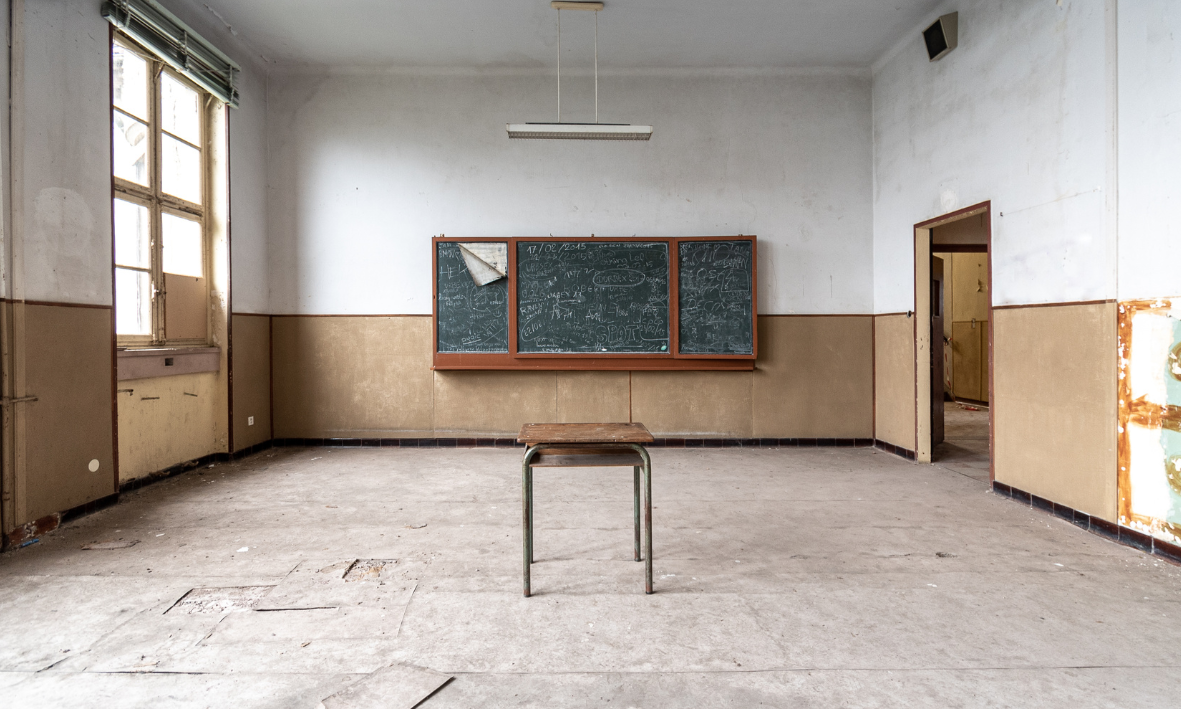
Statement by Bulelani Bobotyane, Provincial Secretary of the UDM in the Eastern Cape The United Democratic Movement (UDM) in the Eastern Cape condemns the ongoing decay and abandonment of school infrastructure across the province. What we see today is not a sudden crisis but the direct outcome of three decades of neglect under the African National Congress (ANC) government. The ruling party’s failures in planning, oversight and accountability have left thousands of learners without safe and functional schools, while its officials hide behind bureaucracy and empty promises. No one takes responsibility for the hundreds of closed school buildings scattered across the province. Public infrastructure is collapsing while officials pass blame from one department to another. More than a thousand schools have been shut down, many left vandalised and stripped of value, while children in other communities are still learning in structures that are unsafe, overcrowded or falling apart. The tragedy of the Ginsberg Crèche in Qonce, formerly known as King William’s Town, founded by Steve Biko as a living symbol of self-reliance and community dignity, captures the depth of this failure. To allow such a historic and visionary space to decay is an act of utter disrespect, not only to Biko’s legacy but to the children it was meant to serve. A place once built to nurture young minds now lies in ruins, overrun by weeds and indifference. It stands as a monument to how far this province has drifted from its moral duty to protect and educate its children. The UDM in the Eastern Cape calls for the following urgent actions: 1. Eastern Cape Department of Education to conduct a full audit of all closed, abandoned and collapsing schools, publish the findings, and present an infrastructure recovery plan with clear deadlines for refurbishment, reconstruction and security. 2. Provincial Department of Public Works and Infrastructure to take responsibility for maintaining and securing all disused school properties to prevent vandalism, theft and further deterioration. 3. Provincial Treasury to ensure that funds allocated for education infrastructure are ring-fenced and fully spent within the financial year, with public quarterly reports on expenditure and progress. 4. National Department of Basic Education to intervene where provincial capacity has failed through targeted support, technical expertise and oversight to fast-track safe and dignified learning facilities. 5. Parliament’s Portfolio Committee on Basic Education to institute a formal inquiry into the collapse and abandonment of public-school infrastructure in the Eastern Cape and demand accountability for wasted funds and stalled projects. 6. Communities and School Governing Bodies to guard against vandalism and theft and insist that local schools and historic educational sites such as the Ginsberg Crèche are restored and protected for future generations. The UDM in the Eastern Cape echoes the call to find constructive and community-driven alternative uses for mothballed school buildings so that these spaces can once again serve public good rather than fall into ruin. No province with such deep educational need can afford to lose even a single classroom to incompetence.
Admin
21 Aug, 2020
UDM helps 72 tenants threatened with legal action by Eastern Cape Public Works
Honourable Premier Mabuyane IMMORAL EVICTIONS: MISTREATMENT OF ORDINARY SOUTH AFRICANS BY THE EASTERN CAPE DEPARTMENT OF PUBLIC WORKS WHICH ADMINISTERS PROPERTIES IN WHICH THEY RESIDE (MTHATHA) 1. I was recently approached by a anxious group of persons who have organised themselves under the banner of the Democratic Housing Tenants Association (DHTA) which consists of 72 tenants, all of whom reside in properties, in Mthatha, administered by the Eastern Cape Department of Public Works and Infrastructure (DPWI) and the Eastern Cape Development Corporation (ECDC). 2. I understand that many of the aforementioned tenants have occupied these properties for a minimum of ten years, and up to 35 years in some cases. It is alleged that, since 1994, these buildings have not been maintained by the DPWI/ECDC, aside from the repairs the tenants had done at their own expense. By all accounts this seems to be true. 3. Numerous meetings with the DPWI, as far back as 2001, have apparently taken place where discussions were held regarding the opportunity for the tenants to purchase the houses they have been occupying (and paying rent for) for so many years. Seemingly, despite various DPWI commitments, none of the problems were addressed. 4. I have been informed that discussions around the purchasing of these properties with your special advisor, Mr Zandisile Qupe, on 30 June 2019, who undertook to find speedy resolution to the matter, was for naught as these tenants out of the blue received notices of motion of eviction proceedings in early July 2020. Worse still is that this unnecessary and unconscionable legal action is happening at a time of so much insecurity and fear due to the Coronavirus pandemic. 5. DHTA requested a meeting with your Public Works MEC, Mr Babalo Madikizela, which took place on 25 June 2020. Apparently, although departmental officials had rightfully been present, for some inexplicable reason, the African National Congress (ANC) OR Tambo Regional Secretary and members of the ANC Youth League, were also in attendance and the objections to their presence were ignored. Apparently, no resolution had been found at the end of that meeting and Public Works MEC Madikizela had also instructed the departmental officials to engage with DHTA within two weeks of that meeting, which has to date not occurred. 6. This story is rife with allegations of years’ long mistreatment of South Africans at the hand of the Eastern Cape government, whilst this community did their utmost to find a mutually beneficial recourse in the matter. The fact that it now also seems to be laced with politics is totally unacceptable and should be investigated. 7. I therefore now propose that you immediately involve the national Department of Public Works in the matter to assure some degree of impartiality and lack of prejudice towards ordinary South Africans in a time where their lives are already adversely impacted by the Covid-19 pandemic. 8. I attach the letter I received from the complainants for your assistance and I look forward to your speedy response, as this is an urgent matter due to the threat of legal action. Yours sincerely Mr Bantu Holomisa, MP President of the United Democratic Movement Copied to: Minister of Public Works and Infrastructure, Ms P De Lille The Democratic Housing Tenants Association
Admin
20 Aug, 2019
Eastern Cape Legislature: Mr Bongani Mahlati, MPL’s contribution the Vote on Public Works
Honourable Speaker and Deputy Speaker Honourable Premier and members of the executive Honourable Members of the Legislature Officials present here Distinguish Guests And visitors at the gallery be greeted in Jesus naame Madam Speaker the United Democratic Movement (UDM) welcomes the report, however Honourable Speaker, government must find a comprehensive approach on how to improve and monitor the irregular expenditure that has been increasing over the past years in this department. I am concerned about how this has happened whereas there is a committee that was monitoring the work of the department. Why this matter had been escalated for a long time, and nothing drastically has happened. We are convinced, as the UDM, that something drastically must happen, and government must take steps against those people affected and come up with a clear plan and strategies of how to curb this challenge. “Noko, noko, ingathi kukhona okutshaya amanzi la” Madam Speaker, the speech of the MEC mentions of the recruitment and training of only a hundred learners in National Youth Service. Taking the level of unemployment, the shortage of skilled youth in the Eastern Cape, I think this is a drop in the ocean. I am of the view that it also needs monitoring since the African National Congress has the history of employing their card carrier members. I don’t think this hundred will be even enough for my ward, let alone a region. Remember our youth is our future, we need to invest more to them. The UDM condemns the neglect of government properties. Most government buildings are dilapidated, unsafe and unfit for use thus putting our people at risk. The department must come up with the plan and strategies of how are they will maintain the standard of our buildings. The department must decrease in utilising private companies and nayo leyo inento eshaya amanzi apha kubasebenzi bedepartment. The UDM supports the budget. I thank you
Admin
12 Apr, 2019
Bantu Holomisa speaks at a Unisa panel discussion on the 2019 general elections
• Our hosts today • Dr Somadoda Fikeni, our moderator • Those who represent the various departments that sponsored this panel discussion • My colleagues from other political parties • Academics and students • Ladies and gentlemen Thank you for affording me the opportunity to have a chat with you today. 1. The UDM’s road of success The United Democratic Movement (UDM) has since its inception batted on the wicket of the ethics of good governance. In fact, the UDM in part owes its beginning to that principled stance. My testimony at the Truth and Reconciliation Commission, about corruption in the former Transkei, got me unceremoniously kicked out of the African National Congress, because I refused to recant. Soon after that, the UDM was born and we have not stopped fighting for what is good and right in this world: • We opposed the immoral floor-crossing legislation that was eventually scrapped. • We succeeded in having the Independent Electoral Commission’s former Chief Electoral Officer, Pansy Tlakula, resign because of an irregular lease agreement she organised. • We were part of the legal action taken to preserve and protect the former Public Protector Thuli Madonsela’s report on state capture. • The UDM was the catalyst that saw coalitions form after the 2016 elections. • We did our part in forcing the former president to vacate his office, specifically taking the matter of the secret ballot to the Constitutional Court and organising one of the biggest marches to the Union Buildings. • The UDM were there with our colleagues from other opposition parties when we asked the Constitutional Court to order parliament to consider the former president’s conduct and whether he is impeachable. • We have asked President Ramaphosa to intervene in the malfunctioning and corruption-ridden SETAs. Nothing has yet been done about it, but we won’t give up. • Various communities will attest to the fact that the UDM has intervened on their behalf to have government, at municipal, provincial and national levels, attend to their service delivery complaints. • Most recently, the UDM exposed alleged corruption at the Public Investment Corporation amounting to billions of rands. This directly led to the establishment of the Mpati Commission of Inquiry at which I am sure you saw me testify. Once again at our post guarding against corruption. These are the actions of a party that is opposed to pervasive corruption, maladministration and malfeasance in government. 2. Fighting government corruption It is a sad reality that South Africans have become jaded when they talk about government corruption. There is too much of it and it’s demoralising our nation. They only sit up and listen when “things get serious”, as we see with the current commissions of inquiry. Things are indeed very serious with billions of Rands at play. For the UDM, integrity, commitment and hard work are required from everyone in government, as well as those in the private sector. No quarter shall be given to those who fail. Rewarding party loyalty is an evil, that should become a thing of the past. The best quality must be ensured in all appointments, so that merit, responsibility and integrity is guaranteed, and excellence is rewarded. Specifically, the UDM believes that special courts must be established to investigate and prosecute the corrupt in the public and private sector. Also, each province must have an independent anti-corruption task team to determine the depth of corruption and to immediately act. 3. Safety and security For the UDM, the long-term solution to crime and violence lies in our people committing to a concerted effort to reform our society, so that we do not simply address the symptoms, but also the root causes. Although there are a number of initiatives that the UDM would introduce to bring about safety and security, I wish to highlight two specific strategies for the purpose of today’s discussion. a) As far as we are concerned, the recruitment processes of the police, defence and intelligence services must be revamped. The aim of such a programme will be to allow communities to participate in keeping their environments safe and secure. Individuals who are interested in a career in law enforcement will be trained and assigned to serve their communities. This will allow for the monitoring of crime, the gathering of intelligence and combating lawlessness, whilst also creating much needed jobs. b) The coordination between the ministries of justice, police services, correctional services, defence and national intelligence must be stepped up. The UDM proposes that a crime prevention ministry be established to coordinate the work of these departments. Specific objectives and deadlines must be set for the departments to achieve their goals. 4. Free education • The UDM supports fee-free tertiary education for students from poor and working-class families. Such an expanded programme can be justified economically as free education is a strategic economic driver, because it is an investment by the state in the creation of a larger tax base in the long run. However, once implemented under a UDM government, students’ progress shall be monitored and managed as an investment. • We also think that the National Student Financial Aid Scheme (NFSAS) is a big flop. It is hamstrung by chronic maladministration, corruption and a jobs-for-pals leadership scheme. In addition, the way in which NSFAS is structured produces graduates who end up mired in debt. Because of our under-performing job market, they will remain indebted with no hope of repaying their loans. Of course, the biggest challenge at the other end of this education process is making sure that our graduates have jobs. 5. Job creation The UDM has always said that a massive initiative focussing on job creation through infrastructure maintenance and development is one of the routes to go. This planned sustainable development project must be driven through the department of public works, in collaboration with all other departments. Furthermore, the UDM’s response to the challenge of unemployment includes: • Identifying markets for small firms, through promoting domestic and foreign connections to adequately address both the supply and demand side of the economy. • Developing capacity in the areas of improved business and entrepreneurial skills. • Identifying loan and capital sources, as well as facilitating loans and investments in community businesses. • Investing in sector-based planning and implementation, including the creation of sector-specific banks to provide financial assistance to historically disadvantaged groups and individuals. 6. Xenophobia Xenophobia in South Africa is not a new thing and, as a matter of fact, it is getting worse by the day. There are multiple causes of xenophobia, but at the risk of over-simplifying the matter, the UDM is of the view that the root cause lies in the unregulated and unfair competition for the poor’s meagre resources. The dearth of jobs is, for instance, part of this dynamic and complex situation. On the one hand, undocumented immigrants are exploited, because they are desperate enough to work for low wages. And, on the other, there are no job opportunities for South Africans that pay a decent wage. To add to the complexity of the matter we have the issue of undocumented foreigners illegally occupying dwellings. The owners of such buildings, should be brought to book as they exploit undocumented immigrants and, by default, also deprive South Africans of safe havens. Like it or not, much of the blame is to be laid at government’s feet as the impact of its inadequate control over the arrival of illegal immigrants, and lack of resettlement mechanisms, are not addressed. A UDM government will handle illegal immigration in a humane and holistic manner, in line with our continental and international obligations. We also make a call on undocumented immigrants to come forward and be registered. Finally, we recognise that legal immigrants contribute immensely to our society and our economy. We are home to, for instance, some of the best educators and academics who impart knowledge and do important research and development. The UDM believes that xenophobia has no place in our society, but we must also be cognisant of our responsibilities to our own people. It is entirely possible for both these ambitions to work harmoniously. 7. An Economic Indaba with land at the apex of its work As we worked on establishing a new South Africa, land was placed on the backburner. Political emancipation was our primary goal at that time. Land, as a tool to achieve economic emancipation and make reparation, should have been addressed straight after liberation. Matters would look very different if the land issue had been addressed timeously. We certainly would have avoided the destructive tug-and-pull we now witness. When the National Assembly took a resolution on the expropriation of land without compensation, the UDM voted in favour of this resolution after it was amended. The UDM certainly did not vote for free-for-all land grabs and evictions. In this regard, the UDM has long promoted the view that the matter can only be effectively resolved at our proposed Economic Indaba, where all stakeholders can congregate to discuss South Africa’s macro economy, with land at the apex of the debate. There are a number of pertinent questions that should be answered before we make any rash decisions. Those are, amongst others, the following: • Who exactly (individuals, companies and/or government) will be affected and how? • How does food security and economic stability impact implementation i.e. does it prevent expropriation in specific circumstances, and what those would be? • How will government handle rapid urbanisation and an ever-increasing need to make land available in cities and the concomitant denuding of rural communities and local economies? • How will traditional leaders and rural communities be affected? • How will entities such as the Ingonyama Trust be impacted? 8. Closing With these few words I leave you and invite you to ask me any questions you wish me to answer. Thank you
Admin
12 May, 2017
ANC hypocrisy too thick to swallow; Molefe “re-redeployment”
If it was not for the serious implications of the ruling party deployment agency; one might be tempted to laugh at the situation around the reinstatement of Mr Brian Molefe as the Eskom Chief Executive (CE). Exasperated opinions by, or on, Mr Molefe, Public Enterprises Minister Lynne Browne, the ruling party and the Eskom Board falls from the sky like hail stones on a tin roof. According to the ruling party, Mr Molefe’s reinstatement “…is reckless and feeds into the perception that the government is lacklustre in dealing with corruption…”. What a loaded phrase and how ironic from whence it came given the South Africa post-cabinet reshuffle. The ruling party, in an official statement, said that it “… will seek an engagement with Comrade Lynne Browne, the Minister of Public Enterprises, under whose authority Eskom…”. Read between the lines that the Minister is no longer accountable to Cabinet and Parliament, but directly to the Comrades in Luthuli House. President Zuma’s foible of blurring the lines between State and Party is seemingly contagious. We also hope that it is not lost on South Africans that today the ruling party has big issues with Brian Molefe as Eskom CE, but it’s fine for him to represent it (and the people) as a Member of Parliament. Funny logic this, or is there something we are not being told? President Zuma’s midnight shuffle was the tip of the iceberg of ruling party infighting spilling over onto an unsuspecting populace. Corruption, and inefficiency has become the hallmarks of the Zuma administration. These are the facts; like it or not. Those voters who have not yet done so, it is time to open your eyes and see what is straight in front of you; Captain Zuma will doggedly salute the status quo and remain at the helm of the sinking ship of South Africa, whilst listening to the dying band as it is submersed with the rest of us. Statement issued by: Mr Bantu Holomisa, MP UDM President
Admin
29 Apr, 2016
Debate on Budget Vote 11 – Public Works
ADDRESS BY Mr ML Filtane MP in Parliament Honourable Speaker and members The United Democratic Movement (UDM), support the budget vote with the following important comments. The most common problems with this programme are: · Insufficient support by the department with no collaterals from any other source, including the beneficiaries themselves. This makes the beneficiaries to be almost totally dependent on the department; a rather too heavy a burden to bear. · Lack of Project Management skills on the part of the senior management of the department its glaring. This puts the beneficiaries, and therefore, the department in an invidious position where there is so much reliance on the Director General department as stated above. Hence the Minister recently directed that from downwards, staff members should attend a project management course. · The department is caught up in a situation where the Community Property Associations (CPAs) become a law unto themselves thus failing to maximise the opportunities presented to them by the department. In some cases courts are brought in to resolve internal issues. · Kwa Zulu Natal was beginning to see the unfortunate, but unavoidable effects of the drought that has devastated crops and livestock in most provinces of South Africa. · Most beneficiaries of the restitution programme prefer cash to land. This is a political scenario brought about by severe levels of poverty, both of the ability to develop land and make it productive, as well as lack of foresight in so far as the long term benefits of owning land are some people do not understand that land appreciates in value because of external factors not necessarily influenced by its owner. More advocacy is needed as a critical component of the restitution programme. Accordingly; we strongly suggest that this political challenge should no longer just be addressed through a simple mechanical process of qualifying people for restitution but rather that people must be offered land only. I cannot find anything contrary to the Bill of Rights therein and therefore such a policy would withstand a constitutional test. The slow pace of restitution is actually a contravention of section 25 (6) of the constitution. Government just cannot deliver on its promises of the promised land. Thank you
Admin
04 Apr, 2016
Bantu Holomisa writes to Thuli Mandonsela with request for an addendum of costs for Nkandla
Dear Advocate Madonsela REQUEST FOR AN ADDENDUM TO THE COSTS OF NKANDLA New details have emerged of how state funds were used to buy fittings, fixtures and building materials for private residence of the President. I am aware that your office was not granted access to this information, however, it is now in the public domain. The former Deputy Director General of the Department of Public Works, Rachard Samuel, is reported to have compiled a dossier revealing the following as costs that were paid by the department towards the private renovations of the private residence of the President. According to the Sunday Times report of the 27 March 2016, Rachard Samuel listed costs, totalling to a whopping R4, 6 million which is broken down as follows: 1. R1.5-million for air-conditioning at two private houses, a guesthouse and a guardhouse. This is apart from the R5-million for air-conditioning detailed in your report and that of the Special Investigating Unit (SIU); 2. R311, 932 for covered walkways between private residences; 3. R54,721.20 for six meranti doors and 26 meranti window frames; 4. R11,850 for hinges and bolts, doorstops, stainless steel hat-and-coat hooks, and six doormats that cost R1500 each; 5. R34,834.80 for aluminium sliding doors – without bulletproof glass – and other aluminium installations; 6. R38,517 for bulletproof sliding doors; 7. R63,215 for plastering materials, R23,300 for tiling and R41,406 for painting internal and external walls; 8. R271, 796 for carpentry and joinery, including roof construction; and 9. R2.4 million for “extras”. I believe, that your office has the authority to summon this information, and approach the Office of the Chief Justice for a proper guidance on how to deal with the new exposé. If this information is true as I believe, then it should help the National Treasury in making a proper determination of the costs to be personally paid by the President. I look forward to a favourable consideration of this request. Kind regards, Mr Bantu Holomisa, MP President of the United Democratic Movement
Admin
24 Feb, 2016
Consideration of report of PC on Public Works on Expropriation Bill – Address by Mr ML Filtane, MP in Parliament
Honourable Speaker and members Chapter 2, section 9 and subsection 3 of the Constitution provides, “The state may not unfairly discriminate directly or indirectly against anyone on one or more grounds, including race…”. Most relevant to the debate this afternoon is section 25 of the constitution. Subsection 7 provides, “A person or community dispossessed of property after 19 June 1913 as a result of past racially discriminatory laws or practices is entitled, to the extent provided by an Act of Parliament, either to restitution of that property or to equitable redress”. I may as well, and of importance, refer to subsection 8 which provides, “No provision of this section may impede the state from taking legislative and other measures to achieve land, water and related reforms, in order to redress the results of past racial discrimination, provided that any departure from provisions of this section is in accordance with the provisions of section 36(1)”. The balance of the bill currently debated, seems to lean more towards the provisions of section 25 (7) to an extent that it may, by default, border on not satisfying the provisions of section 9 (3) read together with section 25 (8). This being the case, we argue that the bill requires to be balanced such that it does not exclude such people whose property was dispossessed before the set date. This may be contrary to the provisions of section 9 (2). In any event, as it may be, a substantial amount of property was dispossessed before 19th of June 1913 and the bill will exclude such. . It should be remembered though, that the dispossession of properly was already moving towards the 3rd century of its existence. Many wars of resistance were fought to resist this cruelty. It is our submission that for our eye to be able to serve justice and achieve the objectives of this bill, it must be stretched to the point of beginning. By accepting the bill as it is, government would unintentionally and unavoidably exclude all ownership of unregistered rights prior 1913 and also permanently protect the registered ownership rights prior 1913 from this bill. One would never be able to expropriate the latter properties. This consequence is diametrically opposed to the very purpose of this bill, which is to address land reform needs and speed socio-economic transformation. The second important matter, is that there has been no report confirming the state’s financial viability to be able to buy out the intended expropriates, in accordance with Regulatory Impact Assessment (RIA). One only needs to look at the extremely slow pace of current Land Restitution process under the Department of Land Reform and Rural Development. So passing the bill will be tantamount to an exercise in futility. Thirdly, whereas the state would have authority to immediately take possession of property in the case of Urgent Expropriation, on the other hand, an expropriatee under normal circumstances, who may have an urgent need to vacate the property, and thus avoid further maintenance expenses, has to give the state a notice of no less than 20 days to vacate the property. This treatment of an expropriatee is out of balance with that of government faced with similar circumstances. This is a form of unjust treatment by government. Our Bill of Rights is against this imbalance. Accordingly, the UDM does not support the Bill in its current form and suggests that it be reconsidered to, take care of the issues raised above. In fact, the issue of land should be high in the agenda of the Economic Transformation Indaba we proposed during the debate on SONA. Thank you
Admin
15 Jul, 2015
Bantu Holomisa writes to President Zuma re sorry state of Moretele Local Municipality in urgent need of Government’s attention
Dear Honourable President, RE: SORRY STATE OF MORETELE LOCAL MUNICIPALITY IN URGENT NEED OF GOVERNMENT’S ATTENTION The above mentioned matter has reference. A few weeks ago, I was invited to a community meeting by the Concerned Residents of Moretele Local Municipality in North West Province. The purpose of the meeting was to discuss and find solutions to the challenges facing their Municipality. In addition to the meeting, the Community had also planned a march on 26 June 2015 to the Municipal Offices to deliver a Memorandum of Complaints to the Mayor. Both events took place, and were a huge success. However, due to circumstances beyond my control, I could not attend these events. Mrs Thandi Nontenja, our National Treasurer, represented the UDM at these events. After receiving a Report from Mrs Nontenja about her visit to Moretele Local Municipality, I felt obligated to write you this letter in order to bring to your attention the challenges besetting Moretele Local Municipality. Below is a summary of the residents’ complaints. For more details, please consult the attached Memorandum. 1. Poor Leadership and Corruption The residents complained about poor leadership and bad management at the Municipality. They accused the leadership of failing to attend meetings and of failing to fulfil their service delivery promises and mandates. They also alleged that some of the senior leaders of the Municipality are involved in corrupt activities. For details, please see attached Memorandum. 2. Water and Sanitation It was with a great deal of shock to hear that about 56 Moretele villages have no access to clean running water and sanitation. These villagers still use pit toilets and have to walk long distances to fetch water from nearby rivers. It beggars belief that more than 20 years into our democracy there are still people, who live in such conditions. This is a serious violation of our people’s basic human rights, as access to clean water and sanitation are fundamental human rights that are essential for life and human dignity. We call on your Government to urgently look into this matter. In so doing, kindly also look into the millions of Rands that the residents claim were spent on the water reservoirs that were either never used or have never worked. 3. Public Works Programmes and Road Infrastructure The residents complained bitterly about the poor management of the Public Works Programmes in North West. They have apparently made numerous requests to the Provincial PWP leadership to discuss the poor state of their road infrastructure, but all their efforts have come to naught. Their roads infrastructure is so poor to the point where most of their roads are impassable. This, needless to say, disconnects these communities from important economic hubs in the Province. As already indicated above, this is a summary of some of the key issues that were raised by the residents of Moretele during their engagements with Mrs Nontenja. For more details, please see attached Memorandum of Complaints. Feel to contact person Thubakgalo at 072 832 0233 should you require more information. We call on your Office to urgently look into the sorry state of this Municipality. I look forward to hearing from you. Kind regards, Bantu Holomisa, MP UDM President