
Admin

09 Sep, 2025
The role, performance, and appointment of the next National Director of Public Prosecutions
Statement by Zandile Phiri, Acting Secretary General of the United Democratic Movement The National Director of Public Prosecutions (NDPP) holds one of the most vital positions in South Africa’s constitutional democracy. As the head of the National Prosecuting Authority (NPA), the NDPP is tasked with ensuring that criminal prosecutions are conducted without fear, favour, or prejudice; regardless of status, wealth, or political affiliation. This position demands more than just legal expertise. It requires a leader of the highest ethical standards, uncompromising independence, and a proven commitment to justice and constitutional values. The NDPP must possess the strength and courage to act decisively in the public interest, even when powerful forces seek to undermine the rule of law. Advocate Shamila Batohi had been appointed during a period of national crisis, following the devastating effects of state capture. She brought credibility, international experience, and a clear commitment to restoring institutional integrity. During her tenure, notable improvements were made in rebuilding internal governance structures and reinforcing the independence of the NPA. However, the pace and visibility of high-profile prosecutions have not met public expectations. The prosecution of key figures implicated in state capture has been inconsistent and often delayed, and internal divisions and morale issues within the NPA continue to hamper its effectiveness. The structural constraints of the institution, including chronic underfunding, political interference, and capacity gaps, have further limited the NDPP’s ability to deliver meaningful results. In this context, the United Democratic Movement (UDM) reaffirms its long-standing position that South Africa cannot afford another misstep in appointing the next NDPP. The credibility of the criminal justice system, and indeed the integrity of the state, hinges on this decision. The UDM believes that: 1. The appointment of the next NDPP must be a public, open, and participatory process. This must include public nominations, shortlisting by an independent panel of respected legal experts and civil society leaders, and public interviews, in a process similar to that of the Judicial Service Commission. 2. The final recommendation to the President should be subject to meaningful Parliamentary oversight. The UDM calls for the establishment of an ad hoc multi-party committee to review the shortlisted candidates and endorse the final appointment. 3. The incoming NDPP must demonstrate an unwavering commitment to independence from political or corporate influence. The UDM will oppose any appointment that reflects political patronage or serves factional interests. 4. The next NDPP prioritise the prosecution of those implicated in state capture, including former Cabinet ministers, senior officials, and private sector enablers. The era of impunity must end. 5. The capacitation and resourcing of the NPA, including the establishment of a permanent, independent anti-corruption prosecutorial unit are paramount. The NDPP must be empowered to lead a well-funded, fully functional prosecuting authority. South Africans deserve a criminal justice system that is fearless, functional, and free from interference. The appointment of the next NDPP must reflect these values and mark a decisive break from the failures of the past. Anything less will be a betrayal of the Constitution and the aspirations of the people.
Admin
03 Apr, 2025
Omotoso case: prosecution failed the victims
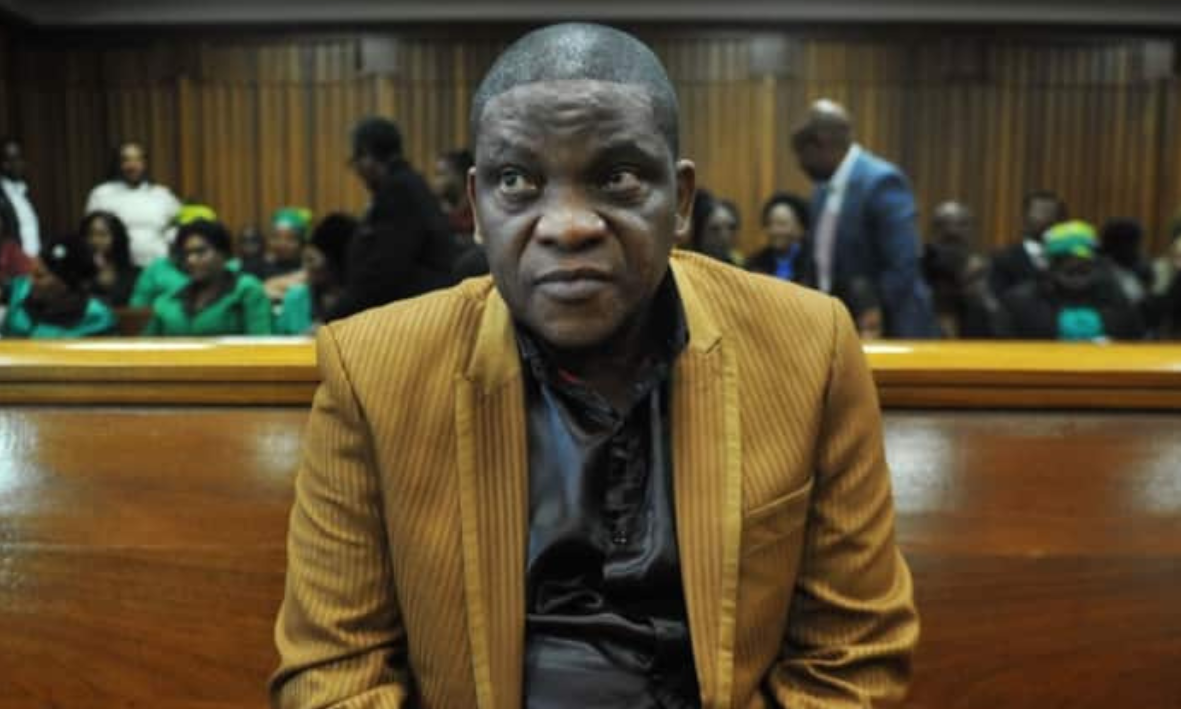
Media Statement by Thandi Nontenja, MP and UDEMWO Secretary General The United Democratic Women’s Organisation (UDEMWO) expresses deep concern over the handling of the case against Nigerian televangelist Timothy Omotoso and his co-accused, Lusanda Sulani and Zikiswa Sitho. After nearly eight years of legal proceedings, the High Court in Gqeberha has acquitted all three accused due to shortcomings in the prosecution's case. This outcome raises serious questions about the efficiency of our justice system and the rights of victims seeking justice. Justice delayed is justice denied. For almost a decade, the complainants in this case have been waiting for a fair and decisive resolution. The prolonged delays, inadequate cross-examination and mishandling of evidence have ultimately resulted in a failure to secure a conviction. This is a devastating setback not only for the complainants but for all South Africans who rely on the courts to uphold justice and protect victims of crime. The court acknowledged that while there were inconsistencies in the complainants' testimonies, the evidence presented by the defence was not properly tested due to prosecution failures. This highlights the urgent need for reforms in how complex criminal cases, especially those involving gender-based violence (GBV) and human trafficking, are handled. UDEMWO calls on the National Prosecuting Authority to urgently review this case and ensure that such procedural failures do not happen again. Victims of serious crimes must not be subjected to drawn-out trials that end in technical acquittals due to prosecutorial weaknesses. We also urge government and legal authorities to strengthen investigative and prosecutorial processes to prevent similar injustices in future. South Africa cannot afford a justice system that fails victims due to inefficiency and unnecessary delays and criminals being set free to perpetrate further crimes against hapless victims; especially GBV victims. UDEMWO will continue to advocate for a legal system that delivers timely and effective justice for all.
Admin
17 Jul, 2020
Complaints of alleged racism, nepotism and corruption at the NPA, Bantu Holomisa writes to Shamila Batohi
Advocate Shamila Batohi National Director of Public Prosecutions Private Bag X752 Pretoria 0001 Dear Advocate Batohi Being sent from pillar to post: serious staff frustrations within the National Prosecuting Authority of South Africa in the Eastern Cape, Kwazulu-Natal, and Western Cape offices in particular 1. I was recently approached by a group of concerned prosecutors who work mainly in the Eastern Cape, KwaZulu-Natal and Western Cape offices of the National Prosecuting Authority of South Africa (NPA), though I understand the frustrations they brought to my attention prevail in other provinces. They have petitioned my assistance in their plight to be heard as their frustrations are festering into resentment and anger. 2. I read with interest your comments during your “listening tour/staff engagement” at the start of this year and in particular the results of a staff survey where you listed, lack of promotion, no career growth, high staff vacancies, low staff morale, and budgetary constraints as some of the complaints that staff had registered. The complaints now on my desk echo this list to a great extent. 3. From my reading of the group of concerned prosecutors’ complaints, the aforementioned matters are particularly true for prosecutors who work in rural South Africa and who depend on greater resources to get about and do their jobs. 4. However, the group of concerned prosecutors have additional complaints to those already mentioned and have made allegations of nepotism and racism. The persistence of claims of racism in the NPA over the years is worrying and clearly the solution has not yet been found. 5. I have been made to understand that the NPA has appointed a person to investigate the allegations of racism and nepotism within the organisation, but that this investigator is either too busy to attend to new complaints and/or refuses to accept such. I am interested to know what this investigator’s scope of operation is and whether it is true that some complaints are not being accepted and/or attended to and if so, why. 6. Amongst the worst of the claims made by the group of concerned prosecutors are that there are several people in senior positions within the NPA’s provincial structures who have been tainted by allegations of corruption and, whilst complaints have been lodged against them, nothing has seemingly been done to address those complaints. 7. I also refer you to your memo dated 13 December 2019, but signed on 6 January 2020, wherein the group of concerned prosecutors’ appeals for intervention was shot down, as their union had not yet been recognised by the Public Sector Coordinating Bargaining Council to represent employees in the public service. Even though this might be technically and legally correct, I find it disconcerting that you would rely on a pure technicality to, for all intents and purposes, seemingly ignore what might be serious problems within your organisation. 8. I believe what frustrates this group of concerned prosecutors the most is their feeling that their emails and letters to you, as well as meetings with you, have been for naught. They feel that they have not been properly heard nor have any of their complaints been addressed, for whatever reason, and that they are now being victimised by NPA middle management for speaking out. 9. I have also noted that your office had, in the media in late January 2020, indicated that you would be looking into the concerned prosecutors’ complaints, but judging from their contact with me, you have not yet done so. 10. I would be grateful if you would take me into your confidence regarding your views on the matters I have raised above, the plans you have made and actions you have taken to address the complaints on your desk and the progress, if any, that you have made thus far. 11. I hope to hear from you soon. Yours sincerely Mr Bantu Holomisa, MP UDM President
Admin
06 Jul, 2020
UDM calls for referendum on the death penalty
Considering the calls from various sectors of our society for the death penalty to be reintroduced, especially in terms of gender-based violence (GBV), femicide, as well as child abuse and murder, the United Democratic Movement (UDM) reiterates its longstanding call that the government must allow for the voice of the people to be heard; it is time to have a referendum on the death penalty. The existing punishments for the guilty, are not a deterrent. Protection orders have become mere pieces of paper and ink and the perpetrators do not take them seriously, and the police fail to enforce them. The UDM calls upon the government of the day to take GBV seriously and to stop paying lip service as it makes no difference to the lives of those who live with daily abuse. Governmental leaders cannot take decisions alone behind closed doors, excluding the people who face these disastrous situations in our society. Let the people speak. Issued by: Mr Bongani Msomi UDM Secretary General

Admin
31 Jan, 2020
Postponement of lower data prices is a justice denied
The UDM Youth Vanguard is in awe at the extension of the deadline that was initially two months for network operators to reduce data costs. If these network operators were interested in reducing data, they could have done so within the timeframe the Competition Commission had set. Calls for reduction of data prices were not a new thing when the Commission tabled their report in December,2019. This clarion call has been around for years. In the previous State of the Nation Address, President Cyril Ramaphosa promised that data will fall, yet it remained relatively high as network operators did not take him seriously. The Competition Commission should have strengthened their hand instead of eating from the palm of the corporations and enforced them to adhere to the deadlines, failing to do so harsh punishments should be instituted instead the Commission has extended the deadline by a month. This is unacceptable as South Africans have waited for far too long. Actions should have been taken long-time ago to enforce these so-called giants network operators to drop these high data prices. The UDMYV is not happy at all. This is yet another failed promise to desperate people who rely on usage of data. Affordable data prices are not negotiable but a must! Issued by: Masonwabe Nqawe UDM YOUTH VANGUARD WESTERN CAPE
Admin
04 Dec, 2019
Gender-based violence: enough is enough!
The United Democratic Movement Women’s Organisation is disheartened about how these brutal killings are becoming a norm in our communities. Another young life lost, another bright future deprived. We cannot afford to have yet another hashtag with no action taken by the Police and other relevant departments including the Presidency. It is sad that women cannot live freely within our communities throughout South Africa, every day we read/hear of women being killed because men see women as sex objects. This behaviour is utterly disgusting. The UDEMWO calls on President Ramaphosa to take its call seriously by calling referendum on death penalty. Clearly the life sentences that being handed by the Courts, are not deterrent to these heinous crimes. Gomolemo Legae killed on the 1st of December, 2019 was just a young, innocent girl, a bright future awaited her, and right now she is no more. Kgaugelo Tshawe was also brutally killed few days just before the so-called 16 days of activism. Being a woman at this point in time in South Africa, you are just waiting to be a next victim. Why can’t we have 365 days of activism against women and children? What will it take for Government to act? How many more women must die before the government can act? Enough is Enough! The UDEMWO has written an open letter to President Ramaphosa on the 09-September-2019. We were hoping Mr President would speedily act on this, as women are under attack, the time for speeches and dialogues around this issue is over. We would like to see a government that implements change and not just talk about it. -end- Issued by: Ms Thandi Nontenja UDEMWO Secretary General
Admin
10 Sep, 2019
Open Letter to President Ramaphosa: gender-based violence
Dear Mr President Recently, the country has been ravaged by news of gender based violence, women being abducted, raped and murdered. This is an everyday life for women in this country hence now we have the #AmInext movement, because honestly we are constantly stressing about who is going to be a victim of these atrocities ravaging our communities. The United Democratic Movement Women’s Organisation call on you Mr President, to speedily act on this, as women are under attack, the time for speeches and dialogues around these issues is over. We would like to see a government that implements change and not just talk about it. One of the things we would like to see is co-operation between the Departments or Ministries that fall under the cluster of peace and security. There seems to be no synergy and this is a contributing factor to the rise in violence in this country. If the SAPS manage to arrest the criminal; Justice will release him either on bail or on lack of evidence; if Justice sentence the criminal, Correctional Services will release him on parole. The UDEMWO call upon the government either amend the laws of this country as the law is currently favouring the criminals at the expense of the victims, or bring back the death penalty. Had it not been for Luyanda Botha, the late Uyinene Mrhwetyana’s murderer being released on parole from his previous convictions, the young girl would be still alive, pursuing her dreams. The question still remains, how did Luyanda end up working for a state owned enterprise with criminal records? Mr President, The Government continues to fail us! The Department of Women’s voice is not being heard, Minister Maite-Nkoana Mashabane is not vocal and not seen taking part in bringing about solution in the threatening situation, which is claiming lives of women especially in the past week. UDEMWO believes that when one tramples the other person’s rights, he must forfeit his rights. Enough with the lip service, Action must be taken NOW! Issued by Thandi Nontenja UDEMWO Secretary
Admin
05 Dec, 2018
UDEMWO welcomes appointment of new NDPP boss
The United Democratic Movement Women’s Organisation (UDEMWO) welcomes the appointment of Advocate Shamila Batohi as the new National Director of Public Prosecutions (NDPP). We strongly believe that her appointment is based on merit, as well as her hard work and dedication she has shown in the justice field. Her track record speaks for itself. The NDPP desperately needed a person of such calibre to head the unit and we hope that Advocate Batohi will do well in the duty conferred to her. We are very pleased that, for a change, a woman has been appointed into a high position. This position comes with great responsibility and needs a disciplined person at the helm. We hope that she will perform her duties to the best of her abilities. Her acceptance speech restored our hope. Women have lost faith in the justice system, because when it comes to women and children abuse and other crimes against women, it favours the perpetrator and not the victim. We hope that Advocate Batohi’s appointment will restore our faith that women and children’s rights will no longer be trampled on. We wish Advocate Batohi all the best once she has taken over the NDPP reins in February. Issued by: Thandi Nontenja UDEMWO Secretary General

Admin
05 Dec, 2017
#RememberingMandela, Bantu Holomisa’s keynote address on the the Fourth anniversary since Madiba’s passing
• Chairperson and Chief Executive Officer of the Nelson Mandela Foundation, • Mrs Graça Machel and Members of the Mandela Family, • Honoured Guests, • Ladies and Gentlemen. 1. Meeting Nelson Mandela When Madiba passed away, four years ago, a great sense of loss filled the Nation and a resounding note of sadness reverberated across the Globe. Today we remember his departure, reflect on his life, as well as the contribution he made to South Africa and the World. Thank you for inviting me to participate. The World had lost one of the great icons of the last century. The Country had lost its guiding light; its moral beacon. For me, it was the loss of a mentor and friend. I first met Madiba after his release in 1990. During my visit to his Soweto home, Mrs Winnie Madikizela-Mandela expressed legitimate concerns about Madiba’s safety. For obvious reasons it would not have been proper to ask Mr FW De Klerk’s government to provide for his security. She thought that I might be able to assist, and I was honoured to do so. I immediately contacted the then Transkei Defence Force Commander, Lieutenant General TT Matanzima. He arranged that two trusted officers would – at all times – be at Madiba’s side, until the personnel of the African National Congress (ANC) armed wing, MK (uMkhonto we Sizwe), returned from exile. During those early years, he frequently invited me to travel with him locally and internationally. He had introduced himself to star-struck world leaders and simultaneously sought to raise funds for the ANC. On our local trips, we met with the Kings, Amakhosi and religious groupings to brief them about the pending negotiations to free South Africans. Our first stop, soon after his release in February 1990, was in Namibia to celebrate its independence. We went to the United Nations (UN) in 1992 and 1993. We also paid visits to countries like the United Kingdom and the Republic of Ireland, the Netherlands, France, as well as Norway (where Madiba and Mr De Klerk received their Nobel Peace Prizes). Although he had not yet won any election, Madiba was treated like a president elect and was afforded the high-level protocol associated with this status. The reason why I am sharing a little of this history is because I soon realised that Madiba had an impressive, magnetic personality, as well as a commanding presence. He was also a consummate master of the art of persuasion. But, he was not schooled in some of the aspects of being a statesman and I helped him navigate numerous protocol issues. For example, one of the duties we asked him to dispense of, had been to inspect military guards of honour (once at the Transkei Military Base and another at the Independence Stadium in Umtata). I explained to him: “Tata, when you perform this duty, it is not necessary to shake each soldier’s hand”. As we are all aware, Madiba habitually greeted everyone he met and asked: “How are you?” in that most recognisable voice of his. 2. Madiba: defusing a ticking time bomb South Africa had entered an extraordinary period; with the eyes of the World upon us. We were in the middle of doing something exceptional i.e. the process of ending a vicious, racist, authoritarian regime. We achieved this relatively peacefully, through a carefully orchestrated transition to democracy. Regarding this history, there are two instances that come to mind where Madiba’s exceptional leadership defused potentially explosive situations. The first was when we went to New York, where Madiba, the late Mr Mlami Makwetu (then President of the Pan Africanist Congress of Azania, Prince Mahlangu (a Minister and brother of Prince James Mahlangu of KwaNdebele) and I addressed the UN Security Council and asked for intervention and monitoring during the period where the so-called black-on-black violence was at a peak. The second was when Chris Hani was assassinated by a far-right, anti-communist. On that day Madiba asked me to accompany him from Umtata to Johannesburg, where we were received by the South African Communist Party’s (SACP) General Secretary Joe Slovo, Mr Cyril Ramaphosa and Ms Jill Marcus. From there Madiba went on to address the Nation, live on the public broadcaster. This atrocity had brought the ‘left’ and the ‘right’ to a head-on confrontation. If Madiba had not practiced sensible, responsible leadership, you might agree that South Africa would have been dumped into civil war. It was at this stage that Joe Slovo proposed the so-called “sunset-clauses”. The ANC, and its allies, interrogated this proposal and the implications thereof. Chris’ assassination, brought home the stark reality that violent conflict was imminent, and it therefore made sense that the only peaceable solution was to apply “principled compromise”. Once that concession was made, Madiba however demanded a date for elections. This left no-body in any doubt that he meant business. He was also not shy to explain to South Africans, and the World, that there was still a tremendous amount of work to be done in fulfilling the objective of freeing South Africans. Indeed, Madiba was aware that, in the conflict between black and white in South Africa, there were no winners. But, the Country was victorious in the end. 3. What happened to the tone and example Madiba set? I would like to move to the question of: “What happened to the tone and example Madiba set?”. After these volatile years, a golden period followed. Madiba had the wisdom and presence of mind to surround himself with capable individuals. The calibre of the people in his cabinet was just at a higher level than what we have today. He, almost uncannily, managed to unite a deeply divided Nation. At the time, there had also been a deep scepticism – from both black and white quarters – that the “new South Africa project” would fail. Yet, he inspired everyone to trust in his leadership. Under his administration, Government managed to make tremendous strides in bettering the lives of the formerly disadvantaged. There was, for instance, a remarkable improvement in the provision of electricity, water and housing to previously disadvantaged communities; especially in the rural areas. We used to sit together and make phone calls to many big business leaders. With his considerable powers of persuasion, he coaxed them to partner in building schools, clinics, hospitals, etc. Who would ever forget his dream of a hospital dedicated to kids? Indeed, his influence on international celebrities, most notably Ms Oprah Winfrey – who built a school for girls in Henley on Klip near Meyerton – made tangible differences to many South African’s lives. The other project, I remind you of, was the annual Christmas gathering at Qunu where, at one stage, no less than 75 000 children received their gifts from Madiba and Ms Winfrey. Now, just over two decades later, despite considerable changes for the better, there is a sour taste in our mouths; don’t you agree? At the moment, there is a universal sense of bitter frustration and disillusionment amongst South Africans across the board. In the context of the values Madiba stood for, we have a sense of collective shame that we are compelled to ask ourselves an uncomfortable question: “How did we let the great promise of the Mandela-years slip away, unfulfilled?” So, on the fourth anniversary of his passing, we should find answers to the following questions: 1) How can we reclaim the lost ground and live up to the standards that Madiba set? and, 2) Which lessons, from his life, can we apply to assist us in this endeavour? The year, that would have seen his hundredth (100th) birthday, presents a vital opportunity to do what we perhaps did not do four years ago i.e. to properly reflect on Madiba’s legacy and genuinely take stock of the man’s life. Mandla Langa’s skilfully written book ‘I dare not linger’ shows that there were many aspects of Madiba’s leadership that deserve our attention and deep reflection. For one thing, Madiba was not the ‘reconciliation junkie’ he is often portrayed as. He definitely was a ‘one nation’-president, who extended the hand of friendship in quite extraordinary ways. His visits to “Die Groot Krokodil” and Orania were remarkable gestures; not to mention the famous donning of the Springbok jersey in front of a packed Ellis Park crowd and captive world audience. But, he was far more than that! He was a stern taskmaster. He could sometimes be harsh and over-bearing. Even as I experienced this, FW De Klerk also had (several times) been confronted with this aspect of Madiba’s manner. He was also a mischievous fellow. He sometimes tasked me to welcome former President Thabo Mbeki, his Deputy-President then, Mr Zuma, as well as the entire ANC National Executive Committee, to his home. This was quite ironic since I was the leader of another political party. When I asked him, why he did this, he said that the politics of the ANC and those of the “United Party” must be left outside his yard. I tried to correct him, saying that my party was called the United Democratic Movement and he said to me: “Whatever, Bantu”. There were also definite limits to Madiba’s reconciliatory style; if you crossed a certain line he would hit you like a ton of bricks. Equally so, Madiba could display tremendous patience. Quite often he would carefully listen to anyone who had the guts to candidly differ with him. Madiba would then, almost verbatim, repeat that person’s arguments to illustrate that he had understood and appreciated his/her point of view. Yet, once he used the words “however” or “but”, you knew that you were about to lose the argument. 4. Unthreading Madiba I am very glad to learn that the Nelson Mandela Foundation proposed using the concept of ‘unthreading’ Madiba’s life, as the guiding theme for the anniversary of his hundredth (100th) birth year. This is a worthy idea, ladies and gentlemen. Madiba’s life must not be reduced to a one-dimensional rendition, based only on his role as a reconciler. If we do this, we will allow mythology to trump reality, and we will miss out on the many other threads of his character and leadership. Therefore, unthreading his life and legacy is a vital project and I am grateful to the Foundation for its stellar work in honouring Madiba’s legacy and to find practical ways to do so. How befitting that the Foundation’s project follows in the footsteps of the commemoration of OR Tambo’s Centenary Year. Oliver Tambo had been Madiba’s friend, and compatriot, who had entrusted him with the ANC’s presidency. Just as we celebrated the hundredth (100th) anniversary of OR Tambo’s birthday this year; we will pay the same tribute to Nelson Mandela in 2018. In this regard, I acknowledge the leadership of Mr Sello Hatang, the Nelson Mandela Foundation’s Chief Executive, who is of course assisted by the Foundation’s partners and patrons. I have great admiration for how the Foundation engages with the critical issues of constitutional democracy and ethical leadership in the face of the South Africa’s current crisis. Particularly in the days and weeks that followed Comrade Kathy’s death in March this year, which happened to coincide – arguably – with the lowest point in President Zuma’s rule. I just also wish to mention that, having kept the Foundation’s work in mind, I thought that there is a venture that would fit nicely in your stable. It relates to two matters which were very close to Madiba’s heart: 1) deforestation and 2) the maintenance of environmental standards; especially in rural areas. Yes, it is true that electrification has positively impacted people’s lives, but in the bitter winter-cold, fire remains the main source of heat and therefore, survival. Gathering firewood has become an onerous task, as more landscapes are denuded, and people must walk great distances to find wood. There is an identifiable gap between people’s understanding of the impact of their practices on, for instance, the soil and indigenous vegetation. The message of the long-term benefits of sustainably living in concert with nature must be brought home. Perhaps the Foundation could start an afforestation project that inculcates respect and appreciation of environmental preservation, especially in the light of the escalating effects of climate change in South Africa. And this afforestation project could possibly be called: “The Nelson Mandela Forests” which would inspire people to become environmental activists in their own communities. 5. The health of our democracy and the impact of corruption Part of my sense of deep nostalgia of the nineties (‘90s), is that it was also a golden period of reform and institution-building. Madiba understood the need to build strong, independent institutions that would endure and serve the people, regardless of who would be in power. The travesty of the so-called state capture, has hollowed out many of these state institutions. This is an insult to Madiba’s legacy. In the same vein, it is difficult to comprehend how some people stooped so low by stealing funds allocated to give Madiba a dignified farewell, as the Public Protector recently found. This goes beyond commonplace-corruption. It is not only immoral, but evil. Former ANC leader in Nelson Mandela Bay, Crispian Olver, wrote a book called ‘How to Steal a City’. This book is a salutary read, which portrays (in graphic and shocking detail) how quickly a group of dishonest individuals can betray the trust of the people. Thinking of the nauseating “Gupta Leaks”, I am sure you will agree, that we now have a new book on the shelves and it is called: “How to Steal a Country”. You still remember that, as far back as 2001, Madiba said: “Little did we suspect that our own people, when they got a chance, would be as corrupt as the apartheid regime.” Madiba must have already, sixteen years ago, felt that corruption would destroy the gains of our freedom. As we speak, pervasive corruption – even at the highest level – is scaring off protentional investors and capital outflow is at an all-time high. To top it all off, the ratings agencies downgraded South Africa to ‘junk status’. As a result, jobs are shed at an alarming rate, which leaves an economically and socially depressed Nation. This situation is undoing the progress we had made in 1993, when I accompanied Madiba to address the UN General Assembly to ask for the reversal of sanctions against South Africa. Instead of continuing the unfinished business of fulfilling the dream of a new South Africa, the last few ANC-led administrations have certainly dropped the ball. They did not find sustainable solutions to ensure economic freedom, quality education, good health care, as well as safety and security for our people. The land issue remains a perennial thorn in our Nation’s side. Institutionalised corruption, and the looting of state resources with impunity, are the order of the day. We could say that this has become the “new normal”. Considering that one political party has caused so much damage, we cannot afford to put all our future eggs in one basket. Trusting in the so-called self-correcting nature of the ruling party is living in a fool’s paradise. To find lasting solutions to the Country’s problems, we need to cast a wider net; like we did with the Convention for a Democratic South Africa (Codesa). We have taken note of the Nelson Mandela Foundation’s recent dialogues, but, has the time not come for it to collect all the parallel-running dialogues of other organisations under one umbrella? If all stakeholders (including government, civil society and political parties) could participate in a concerted effort, we would be able to generate a unified blue-print for solutions to our Country’s problems. Any resolutions of such a convention could be referred to Parliament for ratification; just like when FW De Klerk’s government were tasked to implement Codesa’s resolutions. This would neutralise the dominance of one party which ignores the people and does as it pleases. We can no longer delay such a convention given unashamed trampling of the values of people like: Steve Biko, Ahmed Kathrada, Albert Luthuli, Nelson Mandela, Lilian Ngoyi, Joe Slovo, Robert Sobukwe, Oliver Tambo, and many others who fought for this Country. 6. Towards a Winning Nation South Africa is entering an exciting era of truly competitive multi-party democracy and we need to ask: “What can we learn from Madiba’s life and his leadership?”. Firstly, there is the spirit of what I would call “principled compromise”. Madiba has been described as an extreme pragmatist. Certainly, his approach to power-sharing and the transfer of power from the apartheid regime, was pragmatic in the sense that – tactically and strategically – it was as much about negotiating freedom, as it was about fighting for it. None of us should however forget that the negotiations were always conducted with one eye on the window, looking at the resistance that was taking place throughout the Land. The Nationalists knew that if the negotiations broke down, there would be a high price to pay on the streets as the mass democratic movement would not hesitate to make the Country ungovernable. Madiba had always been quick to remind them of this fact. That is why I prefer to think of his approach as: “principled compromise”. In other words, one makes concessions, but one does so conscious of the ‘red lines’ i.e. the non-negotiables. I witnessed this when FW De Klerk’s government withdrew indemnity for Chris Hani and we had to house him in the Transkei. Madiba stamped his authority and demanded the withdrawal of the warrant for Chris’ arrest. As Madiba put it, quite strongly at the time, Mr De Klerk had been negotiating in bad faith. Madiba was willing to share power and not dominate. He recognised that the advantages, which come with forging consensus and building a social compact, comprises of the support of not just your side, but also that of your opponent’s. The lesson we should learn, when it comes to possible future coalitions, is that we need to develop the practice thereof, which is fundamentally about sharing power; not power mongering. This will take real skill and level-headed leadership. Considering the possibility of a new “Government of National Unity” in 2019, future coalition partners will have to practise “principled compromise” as per Madiba’s example. There can be no space for a “big brother” mentality. 7. Madiba’s respect for Rule of Law and Constitutionalism Another aspect of Madiba’s life, that I would like to discuss, relates to his commitment to constitutionalism and the rule of law. In this respect, we currently have a country that has not only lost its way, but has tarnished Madiba’s institutional bequeathal. On the one side of the coin, we should be ashamed of the way in which powerful people, both in the public and private sectors, have taken advantage of gaps in institutional arrangements. Or those, who have done so, by exploiting the personal weaknesses of some of our leaders to enrich themselves at the expense of the majority of our people. But, on the flipside of the coin, we should be proud of the way in which our courts have withstood pressures. Where would we be without an independent judiciary? Certainly, opposition parties, civil society organisations and the media, have claimed their rights and used the Constitution to hold those in power to account. To illustrate what a respectful interaction with the courts is, is how Madiba conducted himself in the infamous Louis Luyt case. He not only submitted to the subpoena to appear before an “old-guard” High Court judge, but he willingly subjected himself to long and gruelling cross-examination. When the High Court ruled against him, he accepted the outcome without complaint. He then appealed the decision at the Constitutional Court and prevailed. By so doing, he set the standard of respect for our court system. 8. Madiba’s lessons of resilience A very important thread in Madiba’s life was his resilience. He suffered, and he endured; through his strength he inspired millions in this Country and throughout the World. South Africa is a resilient country. Look at the way in which we fought back against state capture and the racism fanned on by Bell Pottinger. Our important institutions, civil society and media, which are resisting capture, are holding the front line. And, despite the inherent pressures of poverty and unemployment, our people also remain resilient. They make sacrifices every day. So, in return, they have every right to expect a lot more from their leaders. We each have a responsibility to respect the rule of law, defend the Constitution and insist that those with power go about their business honestly, transparently and accountably. We must return all state institutions to full working order. State capture must not only be pushed into retreat, but must be defeated once and for all. Those who were ‘captured’ should be charged, prosecuted and convicted. Frankly speaking, until we do so, Madiba’s legacy will be in jeopardy. A large part of Madiba’s strength as a leader came from his unrelenting high standards and his lack of tolerance for shoddy work and incompetence. He did not suffer fools easily; nor should we. 9. Conclusion Pulling Madiba’s threads together, his legacy entails: 1. Reconciliation based on principled compromise, 2. A real commitment to the rule of law and constitutionalism, and 3. Resilience. Investing in these threads is not only a worthwhile exercise for the Country as a collective, but also for each individual. I therefore wish the Nelson Mandela Foundation well in your project of “unthreading” uTata. Good luck with celebrating this milestone next year! Once again, thank you for inviting me today and bestowing on me the honour of sharing some of my thoughts with you. May Madiba rest in peace.