
Admin

16 Mar, 2026
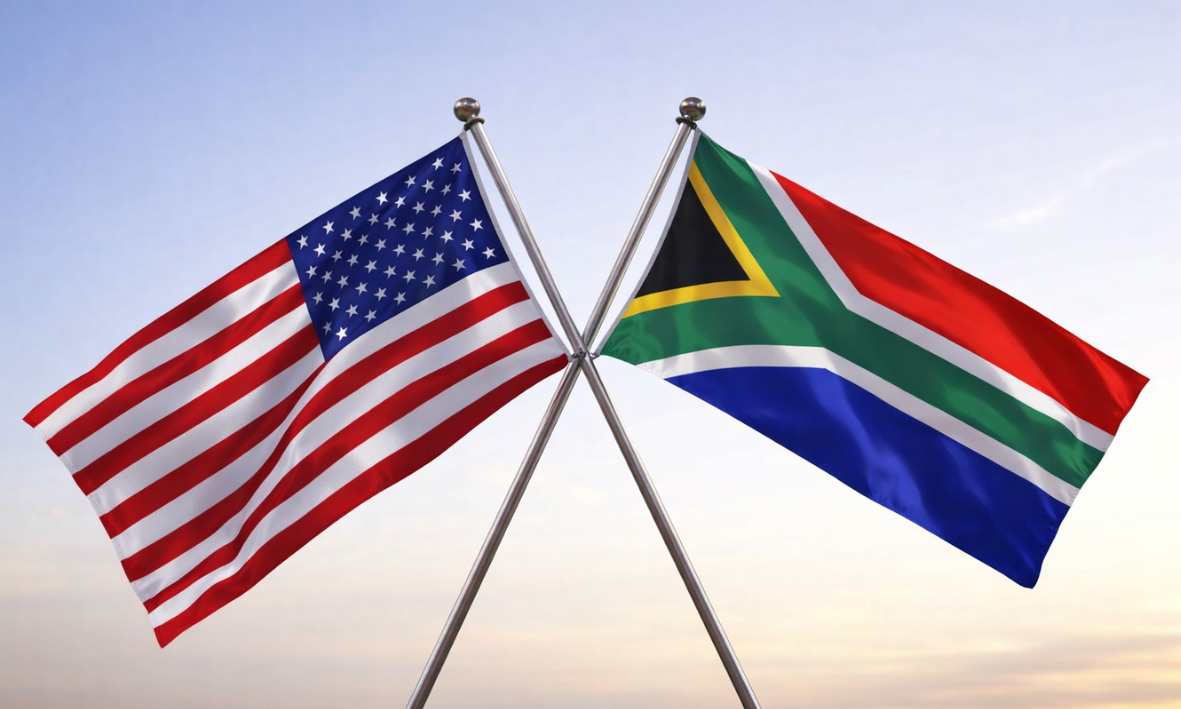
Remarks by the President of the United Democratic Movement and Deputy Minister of Defence and Military Veterans, Maj. Gen. (Ret.) Bantu Holomisa at the Courtesy Meeting with USA Ambassador to South Africa, H.E. L Brent Bozell III
Check against delivery Remarks by the President of the United Democratic Movement and Deputy Minister of Defence and Military Veterans, Maj. Gen. (Ret.) Bantu Holomisa at the Courtesy Meeting with USA Ambassador to South Africa, H.E. L Brent Bozell III Your Excellency, On behalf of the United Democratic Movement, allow me to begin by expressing our sincere appreciation for the invitation to this engagement. We have also taken note of the consultations you have been undertaking with a range of stakeholders across South Africa, including political parties and civil society. These engagements are important in developing a deeper understanding of the lay of the land in our country, and we commend you for taking the time to listen and engage broadly. You arrive in South Africa at a time when relations between our two countries are experiencing a measure of strain. Yet it is precisely during such moments that dialogue becomes even more important. South Africans were taken aback by accusations of genocide and uncompensated land grabs, all purportedly carried out by our government, which spread widely within the international community. As you embark on this programme of engaging with South Africans, you have the advantage of directly verifying the authenticity of these allegations. In that regard, we wish to acknowledge and thank the South African delegation that continues to engage constructively with the United States on key matters of mutual interest, particularly the discussions around the African Growth and Opportunity Act. These engagements, led by our Minister of Trade, Industry and Competition, the Honourable Parks Tau, are vital for maintaining strong economic cooperation between our nations. The United Democratic Movement encourages such bilateral discussions and constructive dialogue. The relationship between the United States and South Africa has historically been a strong one, grounded in shared values and mutual respect. Indeed, the United States played an important role in the global effort to bring an end to apartheid. Through sanctions and engagement in international forums, including the United Nations, the international community, with the United States as a key actor, stood alongside the people of South Africa in the struggle for freedom. In 1994, South Africa emerged from a painful history marked by racism and division. Yet, through the leadership of figures such as President Nelson Mandela and Oliver Tambo, and through negotiations with the then National Party government, our country chose a peaceful resolution to conflict. That decision spared our nation and many others the tragedy of further bloodshed. On a personal note, I had the opportunity to witness the role played by lawmakers in the United States during the late 1980’s. In 1988, I visited the Transkei Government offices on Eye Street, where arrangements were made for engagements with American lawmakers and institutions. I had the privilege of addressing several institutions and meeting with senators and members of Congress. These engagements helped to build bridges of understanding at a critical time in our history. Later, in 1992, I accompanied President Mandela when we addressed the United Nations Security Council on the need to send violence monitors to South Africa, and again in 1993 when discussions were underway regarding the lifting of sanctions against South Africa. Following these developments, the United States quickly became one of South Africa’s major trading partners, opening many opportunities for cooperation, particularly in areas such as education, environmental management, and technology. It is therefore our sincere wish that these relations continue to be strengthened. Where there may be challenges or misunderstandings between our countries, we believe they should be addressed frankly and without delay. One possible way to strengthen relations could be to revive or reimagine structured bilateral mechanisms of a scale and depth in a similar scale to the Al-Gore–Mbeki Binational Commission. I had the privilege of participating in that process, and it proved highly effective in addressing outstanding issues between our countries. Through its various subcommittees, matters could be thoroughly examined and resolved, while both Presidents and their respective cabinets remained fully informed of progress. Turning briefly to international developments, the ongoing conflict in the Middle East remains a matter of deep concern. The UDM does not see a sustainable solution to the conflict between Israel and Palestine other than through dialogue and negotiations around the table. In this regard, we believe that countries such as South Africa and the United States can play an important role in encouraging peaceful engagement between the leadership of Israel, Palestine, and the broader Middle East. The UDM believes that the way people from conflict-affected nations live together in South Africa and the United States offers a compelling lesson for the world: despite coming from countries at war, roughly 4% of South Africa’s population are migrants from dozens of regions, who coexist peacefully, trade, and engage in shared economic activity. This daily interaction in markets, businesses, and communities demonstrates that with dignity, dialogue, and opportunity, peaceful coexistence is achievable, providing a practical example that could guide international efforts to broker peace and foster dialogue between parties in conflict. South Africa’s own experience demonstrates that people with deep historical divisions can find ways to coexist peacefully and work together as economic partners. This is a model that can offer hope to many parts of the world. President Mandela once initiated efforts to bring Jewish and Palestinian leaders together for dialogue, and although those efforts were not sustained, the principle behind them remains valuable. Any agreements that emerge from sincere dialogue can serve as examples for the broader international community. The continuation of the conflict in the Middle East has far-reaching consequences beyond the region itself. Its economic and humanitarian impacts are being felt globally, particularly by developing economies such as ours. The reality is that many of our citizens are still striving to achieve full economic empowerment. For this reason, we believe there are also opportunities for deeper cooperation between the United States and South Africa in supporting inclusive economic growth. We would encourage further partnerships between American and South African businesses as we collectively pursue the vision articulated by President Mandela, a world that is more equal, more just, and more free. All parties engaged in the current conflict must commit decisively to a ceasefire and pursue a durable, negotiated solution that safeguards civilian lives, restores peace, and lays the foundation for lasting stability and reconciliation. Ambassador, we thank you once again for this engagement and look forward to a constructive and fruitful discussion. I thank you.

Admin
23 Oct, 2025
On the eve of United Nations Day, UDM urges Israel and Palestine to return to the path of peace
Statement by Nqabayomzi Kwankwa, MP, UDM Deputy President and Leader in Parliament As the world prepares to mark United Nations Day tomorrow, the United Democratic Movement (UDM) reflects on the founding vision of the United Nations: a world governed by peace, justice and respect for human dignity. The UN was established in 1945 to prevent the horrors of war and to create a framework for collective security, equality and cooperation among nations. This year’s observance comes at a time when the principles on which the UN was built are being tested. The International Court of Justice (ICJ) reaffirmed that Israel, as an occupying power, has a binding legal duty to protect the rights of the Palestinian people and to allow humanitarian aid to reach civilians in need. The Court found that Israel has failed to meet these obligations and ordered it to facilitate the work of UN agencies and other impartial organisations providing relief in Gaza. For South Africa, this judgment carries deep significance. It was our nation that brought the case before the ICJ, guided by the belief that the rule of law must apply equally to all nations. In doing so, South Africa demonstrated that moral leadership and courage are not measured by power, but by principle. The United Nations’ Independent International Commission of Inquiry on the Occupied Palestinian Territory, including East Jerusalem, and Israel has confirmed that acts committed in Gaza amount to genocide as defined under the 1948 Convention on the Prevention and Punishment of the Crime of Genocide. The Commission found evidence of systematic attacks on civilians, the destruction of essential infrastructure, the denial of humanitarian access and the expression of genocidal intent by state officials. These are not political claims; they are the findings of a UN mandated body, and they demand accountability. At the same time, the UDM believes that accountability must be matched by diplomacy. The tragedy in Gaza will not end through arms alone. The UDM calls on Israel and Palestine to find each other at the negotiation table, to engage sincerely and inclusively under international mediation, and to pursue a permanent peace that recognises the rights, security and dignity of both peoples. Peace without justice cannot last, but justice without dialogue cannot begin. The UDM believes that these developments renew the global relevance of the United Nations and the urgent need for multilateral cooperation. The UN remains the only legitimate forum where justice can be pursued collectively and where the weak can stand equal before the law with the powerful. However, the credibility of this system depends on the willingness of member states to respect its institutions and to implement its rulings in good faith. On the eve of United Nations Day, South Africa must reaffirm its commitment to the ideals that inspired our own liberation. Our nation must continue to champion human rights, international justice and solidarity with oppressed peoples everywhere. The promise of the United Nations will only be fulfilled when the world measures peace not by silence between wars, but by justice among nations.
Admin
10 Oct, 2025
Justice must prevail: UDM applauds flotilla mission and reaffirms support for ICJ process
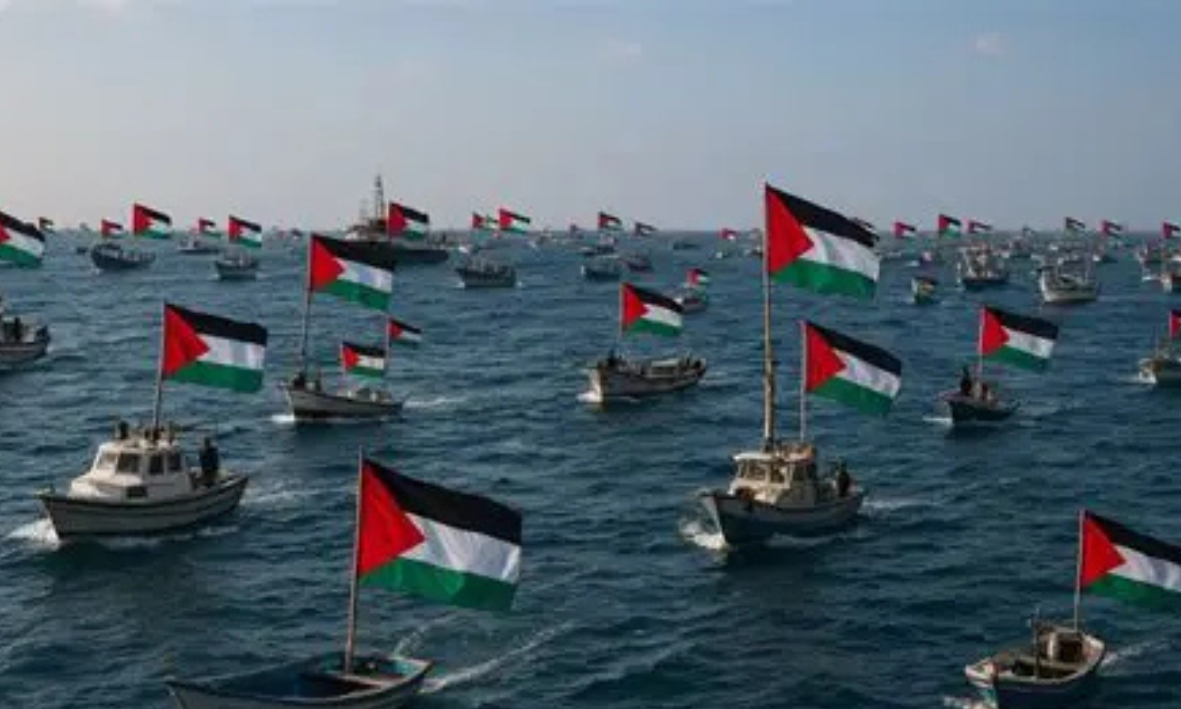
Statement by Nqabayomzi Kwankwa, MP, UDM Deputy President and Leader in Parliament The United Democratic Movement (UDM) welcomes home the six South African activists who were detained after joining the Global Sumud Flotilla on its humanitarian mission to Gaza. The Party salutes Nkosi Mandla Mandela, Zukiswa Wanner, Carolyn Shelver, Zaheera Soomar, Dr Fatima Hendricks and Reaz Moola for their courage and solidarity with the people of Palestine. Their safe return to South African soil is a relief to their families and to all who value human rights and compassion. Yet their ordeal should trouble every conscience. The activists have spoken of terrifying experiences at the hands of Israeli forces. They described rifles being pointed at their heads, religious garments being torn off, humiliation, intimidation and degrading treatment. Dr Hendricks, a cancer survivor, recounted being stripped of her hijab and mocked by soldiers while in detention. These are not acts of security enforcement but violations of human dignity. The UDM condemns the abuse of humanitarian workers in the strongest possible terms. Those who deliver food, medicine and hope must never be treated as enemies. Their testimonies must be documented and investigated by international human rights bodies. The state of Israel must be held fully accountable for its actions and must respect international humanitarian law. This incident also comes at a time when the International Court of Justice (ICJ) is preparing to rule on Israel’s obligations in the occupied Palestinian territories. The world awaits this ruling with great anticipation. It was South Africa that brought this matter before the Court, arguing that Israel’s actions in Gaza and the West Bank amount to violations of the Genocide Convention and other fundamental principles of international law. In its earlier provisional orders, the ICJ directed Israel to prevent acts that could constitute genocide and to allow unimpeded humanitarian access. The forthcoming advisory opinion is therefore not an abstract legal exercise, but a continuation of a process initiated by South Africa in defence of international justice and human rights. Our country must continue to play a leading role in ensuring that these legal processes are respected and that the authority of the ICJ is upheld. This is both a legal duty and a moral obligation rooted in our own struggle for freedom, equality and dignity. The return of our compatriots should not mark the end of our concern but the strengthening of our resolve. Their courage reminds us that solidarity with the oppressed is not an act of charity but of justice. The UDM reaffirms that peace in the Middle East will only be achieved through justice and respect for human rights. The protection of civilians, the integrity of international law, and the equal dignity of all people must guide every nation’s actions.
Admin
03 Oct, 2025
Set humanitarian activists free; let aid reach Gaza
Statement by Nqabayomzi Kwankwa, MP, UDM Deputy President and Leader in Parliament The United Democratic Movement (UDM) joins the global outcry over the abduction of the Global Sumud Flotilla activists, including South Africans who were on a humanitarian mission to deliver aid and solidarity to the people of Gaza. We demand their immediate and unconditional release. These South Africans, alongside others from around the world, embarked on a mission of compassion. Their detention is not only a violation of their rights, but also an attack on the principle of humanitarian action itself. No one should be punished for carrying food, medicine, and hope to people in desperate need. The International Court of Justice ordered Israel to halt military operations in Rafah, to allow unimpeded humanitarian access, to prevent acts that could constitute genocide, and to preserve evidence of violations. Israel’s failure to comply with these binding measures defies international law, undermines the authority of the world’s highest court, and pushes the prospects of peace even further out of reach. The UDM has consistently called for peace in the Middle East. But peace cannot exist while humanitarian aid is blocked, and human rights are trampled underfoot. South Africa, given our own history of apartheid and liberation, has a moral responsibility to stand with the oppressed and to advocate for peaceful resolution. Our position is clear: the killing of civilians, the destruction of communities, and the obstruction of humanitarian aid are indefensible. The UDM reiterates its view that the long-term solution to this conflict lies not in violence or exclusion, but in inclusive dialogue and a just peace that upholds the rights and dignity of both Palestinians and Israelis. We reaffirm our support for Palestinian statehood and peaceful coexistence in the region. The abduction of humanitarian activists must be a wake-up call to the international community: inaction emboldens lawlessness.

Admin
19 Sep, 2025
Porous borders fuel illicit trade: time to act
Statement by Zandile Phiri, Acting Secretary General of the United Democratic Movement The United Democratic Movement is alarmed by the rise in illicit cigarettes and alcohol in South Africa. These crimes rob the state of revenue, endanger public health, and weaken confidence in law enforcement. Recent cases show how criminal syndicates exploit porous borders, weak controls, and the complicity of some South Africans. Recently, in Musina, Limpopo, five SANDF members and two undocumented Zimbabwean nationals were arrested after illicit cigarettes worth R300,000 were found hidden at the Artonvilla military base. In the Cape Winelands, seven Somali nationals were detained at a Klapmuts facility where thousands of litres of ethanol and alcohol production equipment were seized. In Phoenix, Durban, police confiscated 1,500 bottles of illicit alcohol valued at R468,000 and arrested undocumented migrants working as delivery riders. These examples illustrate a pattern. While foreign nationals are often visible in these crimes, South Africans, including officials in uniform, play a central role in enabling and profiting from them. The South African Revenue Service has estimated that illicit alcohol cost the state R16.5 billion in lost tax revenue in 2024. It is reported that nearly one in five drinks consumed is illegal. Communities are exposed to unsafe products, while legitimate businesses lose jobs and investment. The UDM calls for urgent action. Border security and immigration enforcement must be strengthened. Corruption within security forces must be rooted out. Ethanol and alcohol production must be tightly regulated. Law enforcement agencies must coordinate to dismantle syndicates. Public awareness campaigns are needed to highlight the dangers of counterfeit goods. This is not a call to stigmatise foreign nationals, but to recognise that organised crime flourishes through cross-border networks, local collusion and weak enforcement. South Africa cannot afford to lose billions of rand and sacrifice lives to criminal profiteering.

Admin
14 Sep, 2025
Modernisation of the Global South, Building Global Partnerships for Joint Advancement of Common and Sustainable Development
Speech Delivered by for Hon N Kwankwa on the Occasion of the Programme for 2025 Legislative Forum for Friendly Exchanges: (Theme) Modernisation of the Global South, Building Global Partnerships for Joint Advancement of Common and Sustainable Development Check against delivery Programme Director Heads of Parliaments from the Global South Members of the Diplomatic Core Distinguished delegates and Parliamentarians from the Global South Ladies and Gentlemen I take this opportunity on behalf of the leaders of the Parliament of South Africa and her people to convey our warm and fraternal greetings to the hosting country convening this “Legislative Forum for Friendly Exchanges” the People’s Republic of China, delegates from all the countries of the Global South. This occasion once again has come at an opportune moment to converge us in the quest of renewing the bonds of historical friendship amongst our nations, which dates back during the time of colonialism as we were engaged in the struggle for liberation. Today we convene under different conditions to respond to an array of challenges which continue to confront our countries and their people within a global climate and political landscape characterised by tectonic shifts and geopolitical tensions in different regions of the globe. The Republic of South Africa and the People’s Republic of China (PRC) enjoy historic bonds of solidarity and friendship, forged during the African liberation struggle and nurtured through decades of cooperation. The roots of this relationship can be traced back to the 1955 Bandung Conference, where China stood alongside African nations in their quest for independence. What began with solidarity in the struggle against colonialism has matured into a comprehensive partnership that continues to go from strength to strength. Our two nations have established structured bilateral mechanisms that ensure regular dialogue and practical cooperation across political, economic, social, technical, and cultural spheres. These mechanisms have delivered tangible outcomes in development, trade, infrastructure, and people-to-people exchanges, strengthening mutual trust and respect. Today, South Africa and China stand as strategic partners, not only bilaterally but also in multilateral forums such as BRICS, working together for peace, sustainable development, and a fairer global order. Distinguished Delegates Perhaps it could be argued that this occasion presents more of an inclusive forum by affording legislatures to exchange experiences as people’s representatives that carry the aspirations and act as tribunes of social transformation to many challenges confronting our people. Legislature in nature is an embodiment of democracy. Therefore, in an age where the line between domestic and the international is becoming blurred and where there is a globalisation of problems, democracy ought to be promoted at various levels of governance which include national, regional and international. Historically, parliaments had scant involvement in international relations. The role of parliaments in the area of international relations has always been confined to ratifying international agreements adopted by the executive. However, the advent of a participatory democratic order in the world, globalisation and developments in global governance structures has resulted in a dual process of internationalisation of domestic relations and domestication of international relations. Therefore, parliaments have a historic obligation to ensure that the people they represent at national level are also represented in the global arena and are not left behind as a result of the new global developments. Programme Director The overarching theme of our deliberations is premised on the question of building “Global Partnerships for Joint Advancement of Common and Sustainable Development”. The world, today, is confronted with unprecedented and accelerated changes. An important feature of the changes is that the collective rise of developing countries is gaining momentum. The rise of developing countries as a whole is based on and reinforced by their collective modernisation and reconstruction in different aspects. Thus, an in-depth discussion on the modernisation of the Global South is urgently needed, not only in response to the call of developing countries for peace, development and progress, but also to meet the aspirations of the people of all countries for modernisation and human advancement. The Global South symbolises a prominent worldwide trend of the collective rise of developing countries and reflects their strong wish for solidarity and self-reliance. The countries of the Global South once suffered from aggression, colonisation, suppression and plunder. It is through years of struggle and hard work, along with the evolving changes in this century, that the Global South has gradually become an important force driving the reforms in the world order and seeking political independence, national rejuvenation and international justice. To this end, the Global South is the source of strength for global multi-polarity. Since the end of the Cold War, the trend of global multi-polarity has evolved amid twists and turns. Along with the unfolding of profound changes across the global economic and political landscape and the collective rise of developing countries, the Global South has got an important opportunity to play a greater role on the world stage. Programme Director It is an accurate assertion that Global South needs to achieve greater collective strength. In this regard, working together to advance modernisation is what the Global South must do to achieve greater collective strength through unity. Realising modernisation is a shared pursuit of all countries of the Global South. To build a better world, the Global South must work together to pursue and realise modernisation. Their aim should be to build a strong and modern Global South, to propel the progress of civilisation and develop a human community with a shared future. Certainly, global development challenges — such as climate change, inequality, pandemics, and resource depletion — have become increasingly cross-cutting and transnational in nature. They transcend national borders and demand coordinated strategies. Our parliaments through their mandate of law-making, oversight and public participation have an obligation to monitor and ensure the implementation of the commitments our governments have committed at both domestic and international level. Equally, this Legislative Forum affords parliamentarians a space to exchange experiences on best models relating to their mandate and learn from each other’s best practises to strengthen the agenda of the Global South from the parliamentary diplomacy point of view. At different multilateral fora such as the inter-parliamentary level, parliamentarians continue to utilise the soft power of parliamentary diplomacy to complement the efforts of our governments in many areas such as conflict, trade disputes, climate change related challenges, human rights and advancement of economic diplomacy and sustainable development. Honourable Delegates South Africa, in adapting to the changes in the global system; has been faced with different challenges which in some cases have inspired rigorous debate. Faced with the need to tackle a range of domestic issues these debates will continue, but South Africa like many nations around the globe must engage with the international system in a way that encourages economic growth and development. The advancement of South-South cooperation is of strategic importance in the pursuit of the country’s foreign policy objectives to address the challenges of economic and political marginalisation that emanates from the process of globalisation. The unequal distribution of the benefits of globalisation, the imbalance of power between the countries of the global North and the countries of the global South and the lack of sustainable development has necessitated countries of the Global South to formulate strategies that would help them to level the playing field. South Africa's initial approach to promoting the Global South vision involved engaging with the Non-Aligned Movement. The goal was to foster a multi-polar world and create more cooperation opportunities for Southern countries without succumbing to bloc logic. Aligning with a single bloc would have limited many Global South countries' options. Furthermore, South Africa's foreign policy has emphasised economic diplomacy and trade relations. By establishing strategic trade partnerships with other Global South nations, South Africa seeks to diversify its economic ties and decrease dependence on traditional Western markets. The India-Brazil-South Africa (IBSA) Dialogue Forum exemplifies South Africa's commitment to building strong economic networks that support mutual growth and development. South Africa has taken several political stances in favour of the Global South. The country recognised the necessity of South-South dialogue on various issues such as economic development, cultural diplomacy, migrations, and international affairs. For instance, South Africa advocated for reforms in international financial institutions, seeking to make them more inclusive and responsive to the needs of developing countries. Additionally, South Africa oriented its foreign policy toward the challenges posed by climate change and actively worked toward sustainable development and climate justice. Acknowledging that developing countries are disproportionately affected by climate change, South Africa launched initiatives for technology transfer, capacity building, and financial support for adaptation and mitigation efforts in the Global South. South African leadership in the Global South is evident through its participation in alternative international organisations, forums, and groupings. The BRICS alliance stands out as a prime example. Initiated in 2006 in Saint Petersburg on the sidelines of the G8 by the leaders of Brazil, Russia, India, and China, the group was initially known as BRIC. Formalisation occurred a year later with the first BRIC Foreign Ministers' Meeting. South Africa formally joined in September 2010, adding the "S" to create BRICS. More recently, South Africa's position toward the Israeli/Palestinian conflict has perfectly illustrated the more assertive role the country is now endorsing. On December 29, 2023, following the Israeli offensive that destroyed large parts of Gaza, killed thousands of civilians, and led to massive population displacements, South Africa filed a case at the International Court of Justice against Israel. The country alleged that Israel was breaching the Convention on the Prevention and Punishment of the Crime of Genocide in its military assault. While South African support for Palestine is not new, the current method of support is. The particularity lies in South Africa's utilisation of existing international institutions to promote its values and defend its objectives. Until now, the Global South has mainly advocated for a New World Order based on new international institutions, as the current ones such as the UN, IMF, World Bank, and others are perceived as dominated and instrumentalised by Western powers. In different parliamentary for such as the Inter-parliamentary Union, South Africa and European Joint Parliamentary Meetings our parliamentary has echoed and complemented the efforts of government in condemning the genocide perpetrated by the government of Israel against the Palestinians, including the violation of their right to self-determination. On Building Partnerships for Global South Initiatives According to the UN perspective, ‘global partnerships represent the collaborative efforts of nations, organisations, and various stakeholders, aimed at addressing multifaceted challenges that transcend national boundaries. As such, centrally to the ambitions of the UN's 2030 Global Agenda for Sustainable Development, the 17th Sustainable Development Goal (SDG 17) specifically emphasises the role of partnerships. This is so because ‘it acknowledges that isolated efforts are insufficient when combatting complex, intertwined global issues such as poverty, hunger, education disparities, and climate change’. To be sure, SDG 17, aptly titled "Partnership for the Goals", underlines the symbiotic relationship between partnerships and the other SDGs and underscores the fact that without effective global cooperation, the realisation of the remaining 16 SDGs remains elusive. Therefore, building and strengthening partnerships becomes paramount for optimising resources, sharing best practices, and fostering innovation. As correctly pointed out by the UN, ‘the nature of global challenges, such as the urgent threat of climate change, compels nations to collectively address these issues, integrating their unique resources and perspectives’. A point in case was the global response to the COVID-19 pandemic, which demonstrated that without international cooperation, resource sharing, and mutual support, managing the pandemic's impacts would have been significantly more challenging. By pooling scientific research, sharing vaccine development insights, and assisting vulnerable nations, the world demonstrated the indispensability of global partnerships. In view of the above, legislatures of the Global South have a responsibility to define the agenda of placing parliamentary diplomacy at the heart of the development to respond to the crisis of poverty, inequality and unemployment, transformation and diversifying of economic markets in the day of the trade wars and unilateral tariffs imposed by the countries of the global north. Conclusion South Africa embraces the opportunity accorded through the Legislative Forum for friendly exchanges and looks forward to share experiences and learn from other best practices to sharpen its weapon of parliamentary diplomacy at global level and exercise her mandate of law-making, oversight and public participation. Equally, we look forward to strengthening the face of global to meet the demands of the changing global political dynamics and the geopolitical complexities that define global pollical landscape. I thank you!
Admin
16 May, 2025
Statement by Bantu Holomisa on President Ramaphosa’s visit to the United States
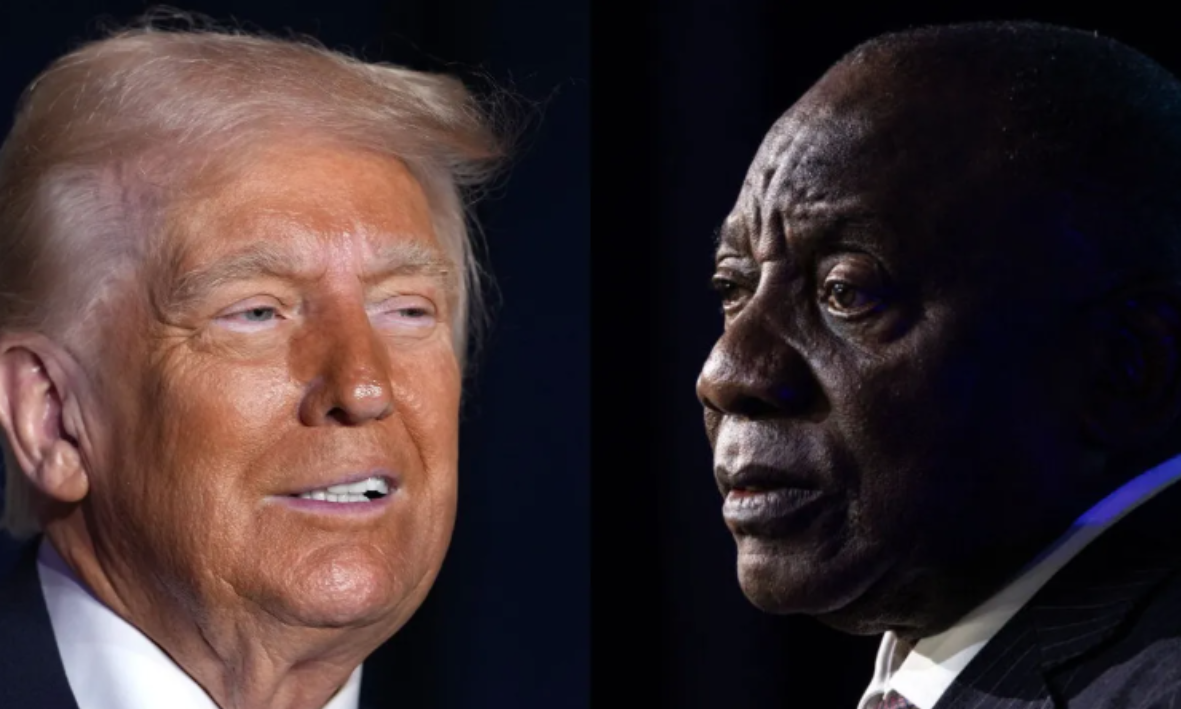
Statement by Deputy Minister Bantu Holomisa, MP President of the United Democratic Movement As President Cyril Ramaphosa prepares for an important diplomatic engagement with the leadership of the United States, we take this opportunity to reflect on the recent tensions that have emerged between our two nations. These tensions have largely been attributed to unsubstantiated allegations of genocide and land being taken without compensation, among others, against certain communities within South Africa. I remember it as though it was just yesterday when I accompanied President Mandela and President Thabo Mbeki to the United States in October 1993, where President Mandela made a powerful appeal to the international community during his address to the United Nations General Assembly, calling for the lifting of sanctions against South Africa. That call was heeded by the global community, opening the door for South Africa’s reintegration into the global economy. Today, countries like China and the United States stand as South Africa’s largest trading partners. This economic relationship was significantly facilitated by the work of the Binational Commission, which enabled many companies and institutions to strengthen trade and cooperation between the two nations. To ensure a credible and forward-looking path, we call for the resumption of a Binational Commission on the same scale and structure as the historic Al Gore/Thabo Mbeki Binational Commission. This mechanism played a significant role in enhancing mutual trust, policy alignment and coordinated development efforts. A renewed Binational Commission can serve as a meaningful platform to address the current misunderstandings and to create space for practical cooperation. It is in the interest of both countries, and indeed the international community, that these concerns be approached in a constructive and solution-oriented manner. This meeting should not become an arena for blame or division. Rather, it should serve as a platform for shared understanding and cooperative action. Such a commission should include dedicated sub-committees on the Economy, Security, Education and Environment, where both governments can regularly engage on key strategic priorities. This structure would also allow for in-depth discussions on areas of concern and opportunities for collaboration, ensuring that all sectors of society benefit from the outcomes. Importantly, the work of this commission should not occur in isolation. Both Parliaments must be kept informed of its progress, ensuring transparency, accountability and alignment with national interests. Parliamentary oversight will also help institutionalise the work of the commission beyond political cycles. In addition to this, the departments responsible for trade and economic development, namely the South African Department of Trade, Industry and Competition and the United States Department of Commerce, should work closely to identify high-potential sectors and unlock investment opportunities in areas such as energy, agriculture, technology and manufacturing. We must remain conscious that unresolved tensions and negative narratives, if left unaddressed, can erode investor confidence and economic stability. It is therefore essential that diplomacy, cooperation and mutual respect guide our engagements. The weather predictions are promising, setting the stage for what is expected to be a remarkable day on the course. We trust that these two esteemed golfers, each distinguished in their own right and united by a deep love for the sport, will tee off with great enthusiasm and sportsmanship. As they take their first swings, the world watches with keen anticipation, hoping not only for a day of excellent golf, but also for a celebration of talent, passion, and the enduring spirit of the game as well as mutual national interests. Once again, this reminds me of the day when President Mandela, President Thabo Mbeki, Mr Mahlangu of KwaNdebele and I travelled to the United Nations Security Council to make a compelling case for the endorsement of the Organisation of African Unity (OAU), now the African Union, to send monitors to observe and help manage the escalating violence in South Africa. In his characteristic foresight and diplomacy, President Mandela engaged then-President George HW Bush even before the meeting to secure the support of the United States. That request was accepted, and as a result, the lives of many black South Africans were saved through timely intervention. These moments in history remind us of the enduring importance of leadership, partnership, and unity of purpose. This visit carries with it that same spirit of global engagement, shared values, and a collective hope for a more just and peaceful future.
Admin
21 Mar, 2025
Congratulations to Namibian's first female President on historic victory
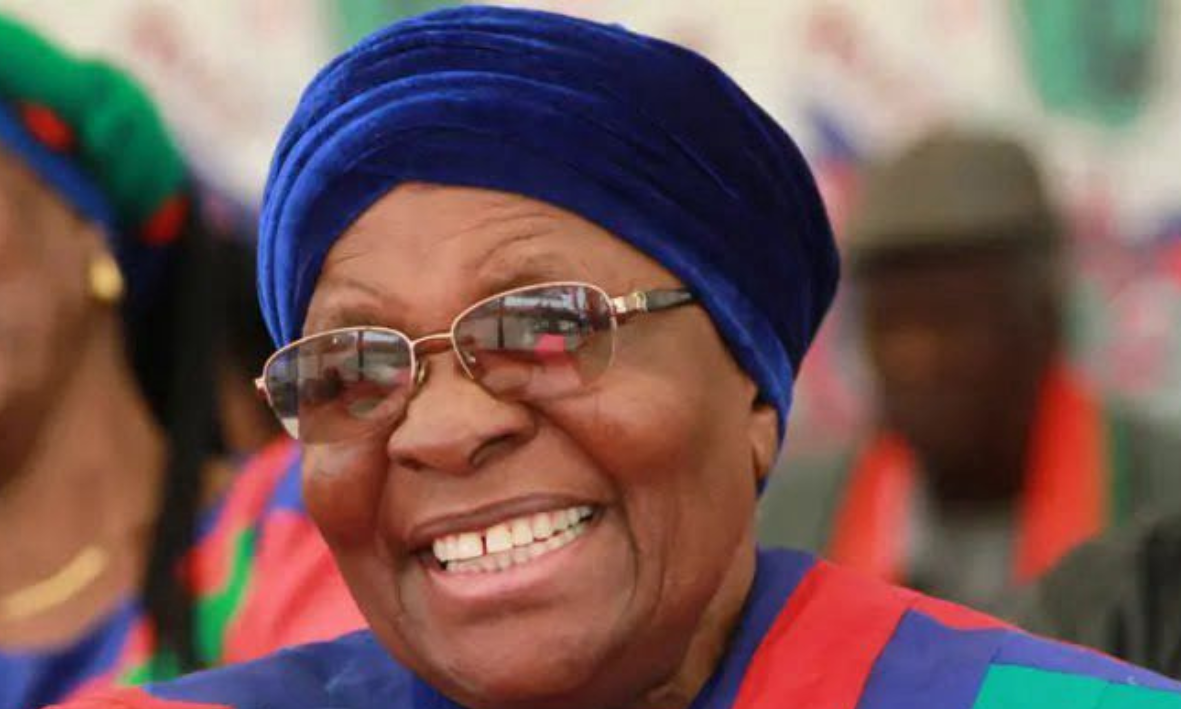
Statement by Nqabayomzi Kwankwa, UDM Deputy President and Leader in Parliament The United Democratic Movement (UDM) extend its congratulations to President Netumbo Nandi-Ndaitwah on her historic election as the first female President of Namibia. This is a momentous occasion not only for Namibia but for the entire African continent, as it marks a significant step forward in the advancement of women in leadership. Her election is a testament to the strength of democracy in Namibia and the growing recognition of the vital role women play in shaping the future of our nations. We commend the people of Namibia for their commitment to progress, equality and good governance. As she takes on this important responsibility, we wish President Nandi-Ndaitwah strength, wisdom and success in leading Namibia towards greater economic growth, social justice and unity. We look forward to fostering strong relations between Namibia and South Africa as we work together for the development of our region. May her leadership inspire many more women across Africa to rise, lead and break barriers for generations to come.
Admin
07 Aug, 2020
SADC must intervene in Zimbabwe
Part of the Southern African Development Community’s (SADC) common agenda is the consolidation and maintenance of democracy, peace and security in the region. The protests, abductions of government critics and the prevailing rhetoric are exacerbating instability in Zimbabwe and its neighbouring countries continue to be affected as Zimbabweans keep on fleeing their country in search of safety and relief from their economic circumstances. As matters stand, the United Democratic Movement (UDM) calls on SADC to intervene and assist Zimbabweans to find a solution to the crisis that is intensifying in their country. In addition, we call on all political leaders in Zimbabwe, who have a responsibility to deescalate the tensions before matters go beyond finding a peaceable solution, to act in a sober manner. There is also no place for intractable stances, and they must be willing to find solutions amongst them all and to act in the best interest of their country and her people. There have also been continued reports of attacks on Zimbabweans, who have fled to neighbouring countries as tensions caused by the scarcity of resources in those countries escalate. The UDM calls for tolerance amongst Africans, especially in these challenging times where we all face the Coronavirus pandemic. Issued by: Mr Bantu Holomisa, MP UDM President
Admin
01 Jul, 2020
Donald Trump’s so-called Israeli-Palestinian peace plan is a recipe for disaster
The long-standing Israeli-Palestinian conflict is well documented, but United States President Donald Trump’s “peace plan” might put peace between Israel and the Palestinians even further out of reach. It is an extreme pity that former President Nelson Mandela’s efforts to end their struggle was left to peter out. However, history has taught us that, whenever the United States attempts to solve problems in the region it always appears to be that they support one faction or country against another, instead of following an inclusive approach. The United Democratic Movement believes that a deeply conceited United States is abusing its influence and power, to “give us an idea of what the world should look like according to Trump” (and therefore America). This style of diplomacy will surely not bring lasting peace to the region. South Africa, as a member of the United Nations Security Council, has a responsibility to oppose any act that might escalate an already untenable situation to full-blown war. We also call on the United States and her president to act soberly and to not abuse their might as their current pro-Israel stance is not conducive to finding a solution that will work for both sides.