
Admin

18 Feb, 2026
A call for constitutional refinement of the Hate Speech Act prior to commencement
Mr MC Ramaphosa President of the Republic of South Africa Private Bag X1000 Pretoria 0001 Dear Mister President A call for constitutional refinement of the Hate Speech Act prior to commencement 1. The United Democratic Movement (UDM) writes to you with deep respect for the constitutional office you hold, and with equal seriousness regarding the constitutional implications of the Prevention ofa Hate Crimes and Combating of Hate Speech Act, 2023 (‘the Act’). 2. We had intended to address this matter more fully during the SONA 2026 debate yesterday. However, due to the limited time allocated in the House, the UDM was unable to place our detailed constitutional concerns on record. 3. Given the significance of this legislation and its far-reaching implications, we believe the matter warrants fuller public and parliamentary engagement. It is for this reason that we now write to you directly, to place these concerns before the Head of State and to respectfully seek your consideration. 4. The UDM supports without reservation the protection of human dignity and equality, and a firm response to genuine hatred, incitement to violence, and discrimination. South Africa’s painful history demands vigilance against racism, xenophobia, and all forms of dehumanisation. However, in seeking to protect dignity, the State must take equal care not to erode the foundational freedoms that define our constitutional democracy. 5. It is our considered view that the Act, in its current form, goes beyond what section 16(2)(c) of the Constitution permits. South Africa already possesses effective legal mechanisms to address genuine hate speech and incitement, including common law offences and civil remedies under the Promotion of Equality and Prevention of Unfair Discrimination Act (PEPUDA), as affirmed and clarified by the Constitutional Court. The introduction of broad criminal sanctions, including imprisonment, therefore represents a significant and unnecessary expansion of state power over expression. 6. Of particular concern is the reliance on concepts that are either undefined or insufficiently defined in a criminal statute. The Act refers to hatred, emotional harm, social harm described as undermining social cohesion, and economic harm without providing the precision required for criminal liability. It further expands protected grounds to include gender identity, gender expression, and sex characteristics without statutory definitions, despite these being contested and evolving concepts in public discourse. In criminal law, vagueness is not a minor technical flaw. Citizens must be able to know clearly and predictably where the line between lawful expression and criminal conduct is drawn. 7. The implications for freedom of religion are especially serious. Faith-based organisations across the country have expressed anxiety that sincerely held religious beliefs, particularly on contested moral and social questions, may expose religious leaders and communities to prosecution or vexatious complaints. Religious freedom is not merely the freedom to believe privately. It includes the freedom to teach, preach, and publicly articulate doctrine without fear of criminal sanction. The current religious exemption clause is widely regarded within civil society as weak and circular, offering little practical protection against overreach. 8. Civil society organisations, including faith-based bodies representing diverse traditions, have consistently emphasised that international law does not require automatic criminalisation of hate speech in the expansive form adopted by the Act. The United Nations Rabat Plan of Action underscores that criminal sanctions should be a measure of last resort and subject to a high threshold. Many within civil society believe the present Act lowers that threshold in a manner that risks a chilling effect on lawful religious, moral, and public discourse. 9. The UDM does not seek to weaken protections against genuine hatred or incitement. Rather, we seek to ensure that dignity and equality are defended in a manner that is constitutionally sound, proportionate, and precise. Equality cannot be advanced by eroding freedom of expression and freedom of religion. Our constitutional order requires that these rights exist in principled balance. 10. We therefore respectfully urge that the Act be subjected to urgent constitutional review and aligned appropriately before it is brought into operation. While the Act has been assented to and promulgated, it has not yet been brought into operation, and this presents a narrow but important window of opportunity for corrective legislative alignment before constitutional uncertainty hardens into litigation. 11. Specifically, we call for alignment of the definition of hate speech with section 16(2)(c) of the Constitution, the provision of clear statutory definitions of hatred and harm with an appropriately high criminal threshold, the removal or tightening of vague and undefined concepts, and the strengthening of the religious exemption clause to ensure meaningful protection for bona fide religious expression. 12. In the spirit of cooperative governance and constructive constitutionalism, the UDM is also preparing a Private Member’s Bill to assist Parliament in addressing the identified defects. Our intention is not to dilute protections against genuine hatred or incitement, but to ensure that the legislation reflects a principled and constitutionally sound balance between dignity, equality, freedom of expression and freedom of religion. 13. Your Excellency, South Africa’s democracy was built on the protection of both dignity and liberty. We trust that under your leadership, legislation that touches so directly on the freedoms of conscience, religion, belief, and expression will be carefully refined to withstand constitutional scrutiny and to preserve the delicate equilibrium upon which our democratic order rests. 14. We remain committed to constructive engagement in this regard. Yours sincerely Deputy Minister Bantu Holomisa, MP President of the United Democratic Movement Copied to: • Mr Nqabayomzi Kwankwa, MP, UDM Deputy President and Leader in Parliament • Freedom of Religion South Africa (FOR SA)
Admin
14 Mar, 2018
“The State of Peace in Africa – advancing the legal framework for a conflict-free Africa”
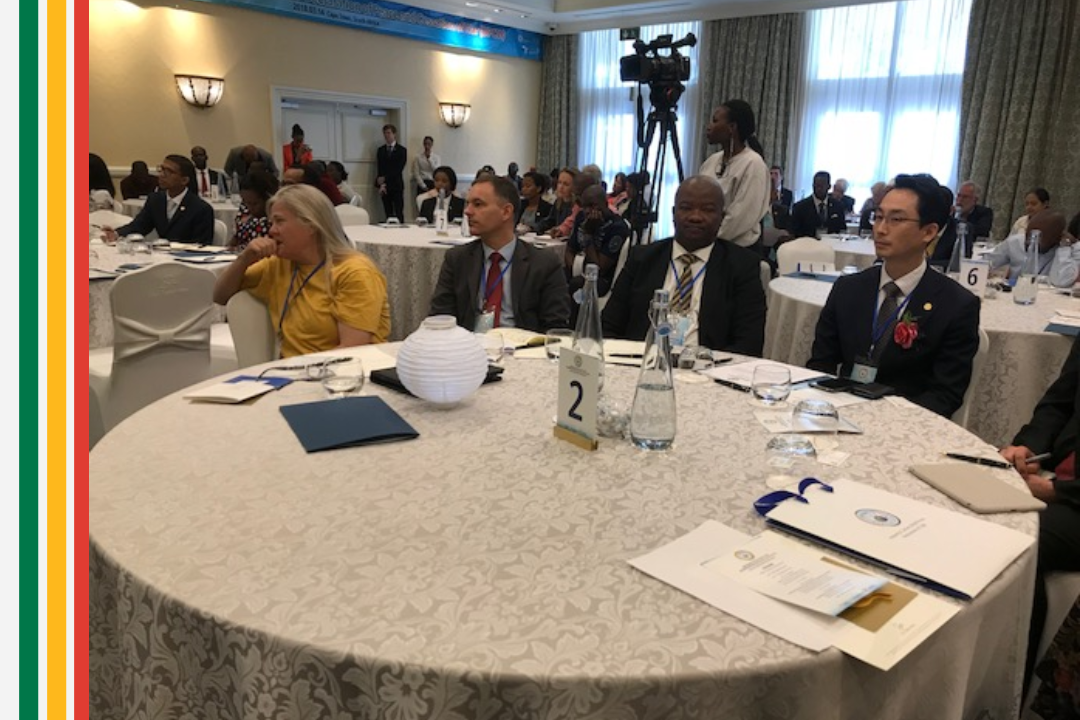
Bantu Holomisa, MP and UDM President’s contribution to the debate “The State of Peace in Africa” – advancing the legal framework for a conflict-free Africa” at the 2nd Annual Commemoration of the Proclamation of the Declaration of Peace and Cessation of War • Our hosts, • Colleagues, • Distinguished guests and participants, • Ladies and gentlemen 1. Introduction Let me start by saying that the United Democratic Movement (UDM) believes in the noble idea of the Declaration of Peace and Cessation of War (DPCW); especially in its uniqueness to end all war. Yet, as we are all aware, this is the proverbial “tall order”, which is ironic when one considers that most countries proclaim that peace is high on their national agendas. Let me also admit the following. In pondering this dilemma, and the virtuous intent of the DPCW, I am left with more questions than answers. 2. Religious persecution in Africa It is a sad fact that religious persecution is on the rise in Africa and the Middle East. It is said that the oppression of different religions in Africa dwarfs that of what is referred to as the world’s “most intractable conflict” i.e. the Israel/Palestine scenario. The world does not often enough talk about religious persecution in Africa, and the other “less important” parts of the world, as evidenced by President Donald Trump’s recent comment about Africa being a… I am not going to say the word. 3. Ethnic persecution in the name of religion To exacerbate matters, the line between ethnic and religious violence is often blurred. Differences in religion is used to “justify” ethnic cleansing or to assert dominance. The “us-and-them” mentality. Arguably the most stupefying example of this was the anti-Semitism in the Hitler-era. On a side note, with the acknowledgement of the suffering of Jews in Europe at that time, I wonder how those atrocities would compare to the religious persecution on the African continent over the last fifty years or so? However, in this regard, the DPCW is crafted broadly enough to say that war, no matter in which way it is justified, is wrong. Full-stop. 4. Religious persecution perpetrated by entire countries and how to make international law and concords stick? Naturally, to say that conflict in the name of religion, is only perpetuated by so-called radicals or fundamentalists, is simplistic. Persecution may be triggered by religious bigotry by a state when it views a particular religious group as a threat to its interests and/or security. Therein lies much of the rub for the DPCW. Even with internationally accepted definitions, many nations have a different interpretation of what constitutes “national interest” and “national security”. This is also not static, depending on which party, or dictator, governs a particular nation. There must be a universal agreement on what national interest, security and religious tolerance means; whether one talks about North Korea, Egypt, China or Nigeria. To use the analogy of alcoholism… admitting that there’s a serious problem is the first step. The next question would be, how does one treat countries where, at the most, they can be “punished” by using sanctions; which (more often than not), adversely affects the very people who needs protection from their governments. 5. Sovereignty of nations and their ability to defend themselves against aggressors Firstly, quite often the very countries where religious intolerance occurs, operate outside multi-national treaties and United Nations’ accords. One also has to be careful about the sovereignty of countries and even if this initiative gets billions of signatures to support it, how could this initiative, for example, stop China from considering the Dalai Lama a “dangerous separatist”. Secondly, as we have seen with the stand-off between North Korea and the United States, where does one draw the line between being able to defend one’s country against aggression versus demilitarising the entire world? Unfortunately (even though the world’s countries more or less have established boundaries) where humans are involved, conflict will ensue. That is why this initiative makes so much sense i.e. to have international understanding about achieving a warless society, that is legislated in some form. 6. Return of world-wide conservatism and refugees Terrorist attacks, sometimes in the name of religion, have contributed to an up-rise of world-wide conservatism, which has an element of intolerance. The issue of refugees, in the so-called developed countries, also contributes to this global “right swing”. It is clear that not enough is being done to resolve conflict in affected countries, especially in terms of our discussion today, on the African continent. 7. Conclusion The work of the United Nations, and international NGOs and bodies, is critical in bringing stability to many situations where religious persecution is rife; especially where it has escalated to war. The role of the media, as acknowledge in the DPCW, is an important piece of the puzzle, which is to shine a spotlight on the trouble-ridden parts of the world. However, the potentially biased interference by the world’s so-called super-powers, should be curbed. Even should their actions be well-intended, the world must understand that Africans will, because of our history, remain doubtful of our former colonisers. On a more positive note, the UDM has consistently advocated for constructive engagement between people with opposing views. Let the people with the problem, talk to each other (possibly with the assistance of a mediating body) or it should be considered to host a national gathering, where issues can be brought to the fore. In such a forum tolerance should be advocated and solutions found that suit all stakeholders; acknowledging and protecting religious (and other) minorities. Thank you Event hosted by: Heavenly Culture, World Peace, Restoration of Light in collaboration with the International Peace Youth Group and Junior Chambers International and Africa Unite