
Admin

02 Mar, 2026
Parliamentary submission on Mtentu River Bridge procurement irregularities
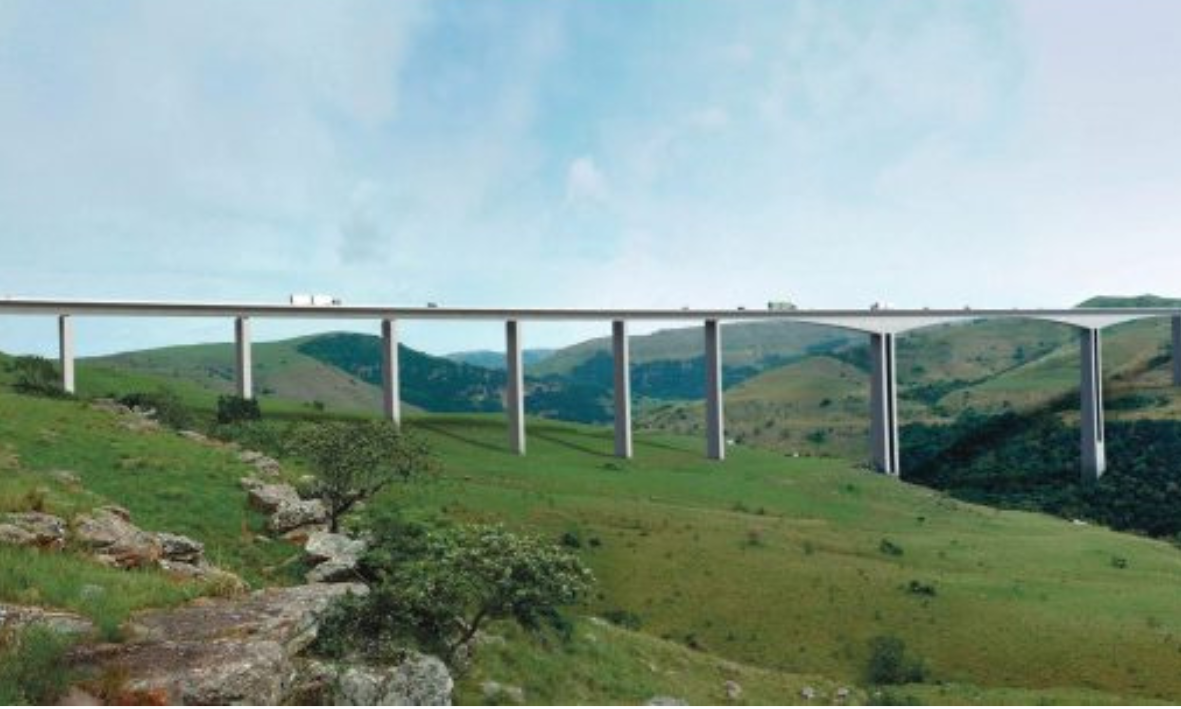
Mr Songezo Zibi, MP Chairperson: Standing Committee on Public Accounts Parliament of the Republic of South Africa Cape Town 8000 Mr Chairperson Formal Parliamentary submission on identified procurement, governance and contractual irregularities relating to subcontract adjudication and awards under the Mtentu River Bridge project (N2 Wild Coast Toll Road) 1. Introduction 1.1. I address this correspondence in the broader interest of constitutional governance, public financial accountability, and the protection of public resources. 1.2. This letter constitutes a formal parliamentary submission to the Standing Committee on Public Accounts (SCOPA), placing on record a series of material, systemic and recurring irregularities identified in the adjudication and award of subcontract packages under the Mtentu River Bridge Project, forming part of the N2 Wild Coast Toll Road Programme. 1.3. The purpose of this submission is not merely to catalogue administrative shortcomings, but to alert Parliament to substantive deviations from lawful procurement practice, which, if left unexamined, may give rise to irregular expenditure, contractual disputes, audit qualifications, and erosion of public trust in State-funded infrastructure delivery. 2. Strategic and policy context of the project 2.1. The Mtentu River Bridge Project is one of the most significant infrastructure investments undertaken by the State in the Eastern Cape, both in scale and symbolic importance. It is intended not only to enhance national logistics connectivity, but also to stimulate inclusive economic development, local enterprise participation, and community empowerment in historically marginalised areas. 2.2. The project is implemented under South African National Roads Agency SOC Limited (SANRAL) Contract No. N.002-201-2023/1C through a Main Contractor Joint Venture. As such, all procurement activities associated with the project are conducted within the public finance environment, notwithstanding subcontracting arrangements. 2.3. Accordingly, the entire procurement chain is governed by: 2.3.1. Section 217 of the Constitution of the Republic of South Africa. 2.3.2. The Public Finance Management Act, 1999 (PFMA). 2.3.3. Treasury Regulations issued in terms of the PFMA. 2.3.4. National Treasury Supply Chain Management prescripts. 2.3.5. Auditor-General of South Africa (AGSA) audit standards relating to irregular, fruitless and wasteful expenditure. 2.4. It is against this framework that the matters raised herein must be assessed. 3. Basis and methodology of review 3.1. This submission arises from a careful, document-by-document scrutiny of official procurement records generated by the implementing agents. The review focused on: 3.1.1. Consistency of application of mandatory requirements. 3.1.2. Alignment between advertised evaluation criteria and final decisions. 3.1.3. Integrity of price, preference and scoring processes. 3.1.4. Contractual certainty and enforceability. 3.1.5. Internal controls relating to bid submission, correction and acceptance. 3.2. The following documents form the factual foundation of this submission and are attached as annexures: 3.2.1. Adjudication Report: Subcontract Package 2 - Bulala Access Road. 3.2.2. Adjudication Report: Subcontract Package 5 - Crushing and Screening of Aggregates. 3.2.3. Appointment Letter: Subcontract Package 5 - Sourcing of Wearing Course Materials from State-Owned Borrow Pits. 4. Detailed account of identified irregularities 4.1. Selective and inconsistent enforcement of mandatory requirements: 4.1.1. A central and recurring concern across the reviewed packages is the uneven application of mandatory compliance requirements. 4.1.2. In Subcontract Package 2, a bidder was disqualified on the basis of a procedural defect relating to clarification briefing attendance documentation, which was characterised in the adjudication report as fraudulent. The disqualification was immediate and final. 4.1.3. By contrast, in Subcontract Package 5, a bidder who failed to submit a mandatory statutory requirement, specifically a valid Department of Mineral Resources (DMR) mining permit, was nonetheless deemed compliant and recommended for award. 4.1.4. Mandatory requirements, by definition, are not discretionary. Their selective enforcement constitutes a breach of the principles of fairness, equity, transparency and competitiveness, and is inconsistent with Treasury Regulations governing supply chain management. 4.2. Deviation from advertised evaluation criteria after final scoring: 4.2.1. In Subcontract Package 5 (crushing and screening), the adjudication process applied a 90/10 price and preference scoring system, as prescribed in the tender documentation. 4.2.2. The highest-scoring bidder under this system was subsequently excluded after completion of the scoring process, based on concerns relating to operational capacity and prior performance on other projects. 4.2.3. While capacity and performance considerations may be relevant, they were not disclosed as pre-qualification criteria or evaluation factors in the Request for Quotation. Their introduction after scoring constitutes a material deviation from the rules of the competition as advertised to bidders. 4.2.4. This practice undermines the legality and defensibility of the adjudication outcome and exposes the process to review under administrative law principles. 4.3. Post-adjudication negotiation of prices 4.3.1. The adjudication documentation further records an explicit intention by the main contractor to negotiate further rate reductions with the recommended bidder after the adjudication process had concluded. 4.3.2. Post-adjudication price negotiations compromise the integrity of competitive procurement. They alter outcomes outside the transparent scoring framework, disadvantage other bidders, and undermine price certainty. 4.3.3. Such practices are incompatible with PFMA requirements and raise the risk of irregular expenditure. 4.4. Conditional appointment presented as a concluded award 4.4.1. The appointment letter issued in respect of Subcontract Package 5 records a stated contract value and anticipates immediate commencement of works. However, it simultaneously makes the appointment subject to multiple unresolved conditions, including: 4.4.1.1. Agreement on rates. 4.4.1.2. Finalisation of borrow pit locations. 4.4.1.3. Laboratory testing and approvals. 4.4.1.4. Engineer’s instructions. 4.4.1.5. Execution of a formal subcontract agreement. 4.4.2. This creates a situation where a document styled as an appointment lacks the legal certainty of a concluded contract yet purports to trigger performance obligations. 4.4.3. Such ambiguity exposes the State to contractual disputes, audit findings, and the risk that expenditure incurred may later be classified as irregular. 4.5. Internal contradictions regarding commencement of works 4.5.1. The same appointment letter states that commencement shall be immediate upon signature, while also indicating that commencement is contingent upon technical approvals and preparatory works. 4.5.2. These positions are mutually inconsistent and render the commencement provisions legally unclear and operationally impractical. 4.6. Weaknesses in bid control and arithmetic governance 4.6.1. Across the reviewed packages, several control deficiencies are evident: 4.6.1.1. Significant arithmetic corrections applied to bids without documented bidder acceptance. 4.6.1.2. Submission of outdated, duplicate or incomplete bills of quantities by multiple bidders. 4.6.1.3. Lack of evidence of robust bid submission screening prior to opening 4.6.1.4. These weaknesses point to systemic deficiencies in bid management and internal control, increasing the risk of dispute, error, and audit qualification. 5. Cumulative PFMA and AGSA risk implications 5.1. Individually, each of the issues outlined above raises concern. Taken cumulatively, they point to systemic governance weaknesses that fall squarely within the oversight mandate of SCOPA. 5.2. The risks include: 5.2.1. Non-compliance with the PFMA and Treasury Regulations, 5.2.2. Exposure to irregular, fruitless and wasteful expenditure, 5.2.3. Breakdown of internal control and accountability mechanisms, 5.2.4. Legal vulnerability of adjudication and award decisions, 5.2.5. Undermining of developmental and community-based procurement objectives, 5.2.6. These are precisely the categories of risk that Parliament and the AGSA are constitutionally mandated to interrogate. 6. Request for parliamentary oversight intervention 6.1. In light of the seriousness, scale and systemic nature of the concerns raised, I respectfully request that SCOPA: 6.1.1. Calls upon SANRAL and the relevant implementing agents to account in detail for the adjudication and award processes. 6.1.2. Examines whether the identified practices comply with PFMA, Treasury Regulations and supply chain management prescripts. 6.1.3. Considers referral of the matter to the AGSA for further investigation or special audit attention. 6.1.4. Recommends appropriate corrective, remedial and consequence-management measures. 7. Annexure index 7.1. The following annexures accompany this submission: 7.1.1. Annexure A: Adjudication Report - Subcontract Package 2 (Bulala Access Road). 7.1.2. Annexure B: Adjudication Report - Subcontract Package 5 (Crushing and Screening of Aggregates). 7.1.3. Annexure C: Appointment Letter - Subcontract Package 5 (Wearing Course Materials / Borrow Pits). 8. Conclusion 8.1. The matters raised in this submission are substantive, factual, and grounded in official documentation. They are not advanced lightly, nor for any purpose other than to uphold constitutional governance, lawful procurement, and responsible stewardship of public funds. 8.2. I trust that SCOPA will give this submission the thorough and deliberate consideration it warrants in the execution of its oversight mandate. Yours sincerely Maj Gen (Ret) BH Holomisa President of the United Democratic Movement Deputy Minister of Defence and Military Veterans For information: Office of the SANRAL CEO Chief Executive Officer Information Officer
Admin
06 Sep, 2018
Parliamentary debate on UDM motion: working towards an integrated and comprehensive infrastructure development strategy to fight poverty, inequality, unemployment and underdevelopment
1. Introduction South Africa (SA), like many other so-called developing nations, faces challenges of chronic underdevelopment and/or development skewed towards urban areas, albeit in an unequal manner. Even urban development is fraught with inequality, as some provinces are in a position to deliver better infrastructure, while others trail behind owing to fiscal constraints determined by the income levels of their households. Yes, some progress has been made since 1994 to provide services and infrastructure in areas where it was taboo to do so in the apartheid years. However, it is simply not sufficient or sustainable, and some of it not built well enough and is out of date with modern innovations. SA has been in economic stagnation for more than a decade now, but mostly due to sluggish investment, poor governance and chronic corruption. We have experienced two quarters of negative growth this year, thus the current technical recession. Mister Deputy Speaker, if we were to unite around this new approach on infrastructure development in our country, we shall be in practice, marching united towards drastically reducing inequality, the eradication of poverty and unemployment. 2. The UDM’s approach to Infrastructure Development The UDM believes in a policy of intervention by the state in the economy through planned sustainable development programmes, which create jobs on a large scale whilst developing and maintaining infrastructure. There is, however, a serious lack of capacity, uniformity in spatial planning and infrastructure development between municipal, provincial and national governments. The introduction of mega infrastructure should not be done at the expense of the development of rural areas, townships and informal settlements. Mega infrastructure must be linked and inclusive of these areas for their benefit. In this regard, the United Democratic Movement (UDM), with its integrated policy approach, proposes that the work of the Presidential Infrastructure Co-ordinating Commission (PICC), must be locally driven from grassroots level. For instance, we need to have a comprehensive ward / municipal / district and provincial based infrastructure plan that will be coordinated at a central level by the PICC. We need to build internal capacity to restrict unnecessary dependence on outsourcing. The PICC must be able to ensure that the state has the necessary capacity at local levels. Government needs to plan infrastructure beforehand and ensure that their investment in education aligns with the infrastructure development goals to avoid having this sector being dominated by foreign experts. The PICC could also be tasked to ensure uniformity of infrastructure development across provinces; as guided by their individual needs. In so doing one province will not be favoured over another. For instance, primary schools across all provinces must have equal access to computer and science laboratories. Each worker should have the same access to transport to get them to and from work. Each citizen living in a rural area should have the same opportunity to benefit from the infrastructure and public services made available in urban hubs, as far as reasonably possible. South Africa is currently engaged in the land debate and the PICC could play a pivotal role in the implementation and monitoring of a future land dispensation, which includes the necessary infrastructure development. We cannot offer citizens access to the land that they desperately need and deserve, without in turn providing them with the infrastructure that they need to maximise that potential. For the PICC to succeed, the UDM suggests that we draw on the invaluable expertise that South Africans possess in all sectors. 3. Investment on Social Transport Infrastructure Our public transport system leaves much to be desired and an over-reliance coupled with lack of maintenance on our road infrastructure has led to its rapid decay. Government must do more and the UDM wishes to propose intercity high-speed rail. This is possible via the refurbishment and adaptation of existing railway lines and building additional capacity where needed. It is said that all roads lead to the proverbial Rome. But in South Africa maybe all roads and rails should lead to Gauteng and other hubs, to provide an alternative for South Africans, from the four corners of our country, to travel to and from our economic centres in a safe, affordable and speedy way. A high-speed railway system would, amongst others, have the following advantages: a) The reduction of people dying in road accidents at a high rate. This is unacceptable, and a high-speed rail system would reduce accidents and fatalities on our roads. b) Greater access to specialised services, for example courts, legislatures, hospitals with medical specialists and universities etc., will be more accessible. c) Our roads will be taxed less by heavy vehicles that damage road surfaces. d) Most importantly, the reduced dependence on road transport will have the spin-off of speeding up our economy, for example: • Businesses could be located anywhere and transport their goods with ease and at a relatively low cost. Our citizens will not have to face a choice between pursuing their careers and moving away from their families and loved-ones; • Businesses could employ people from far reaching places, thus spreading wealth to rural areas. • New business opportunities can be identified where it was previously deemed too remote. • Our lucrative tourism industry could be further unlocked, not only for international tourism, but also local tourism. Of course, such development costs money. However, in our case, it is not necessarily a lack of money, private sector has the resources we need but are reluctant to invest in corruption. Even public sector, for instance, the pension funds, can be best used to fund this new approach to infrastructure development. 4. Infrastructure development as an investment in our environment It would be irrational to disagree that, a new approach to infrastructure development must place a high value in our environment. This is especially applicable when considering our pristine natural resources. Furthermore, any infrastructure development must be done in consultation with affected communities. For instance, as part of a rural infrastructure development programme, communities should identify which areas should be used for grazing and planting, and which should be left fallow. Government must then take responsibility for fencing off land which will in turn generate local jobs. Lastly, 28% of Southern Africa’s water flows unused through the Eastern Cape rivers. Using this water effectively and responsibly could generate jobs in the short and long term. Also, some of the richest agricultural soil in the country lies uncultivated in this province. The refurbishment and establishment of irrigation schemes will not only create jobs and wealth, but it will also contribute to food security in the area and the country at large. 5. Conclusion We need to ensure that our infrastructure is advancing industrialisation, environmental preservation and social cohesion. In more ways than one, we need to ensure that South Africa and South Africans are no longer left behind but at the helm of their developmental trajectory. Thank you