
Admin

04 Jul, 2026
Boipatong neglect exposes national failure to protect South Africa’s heritage
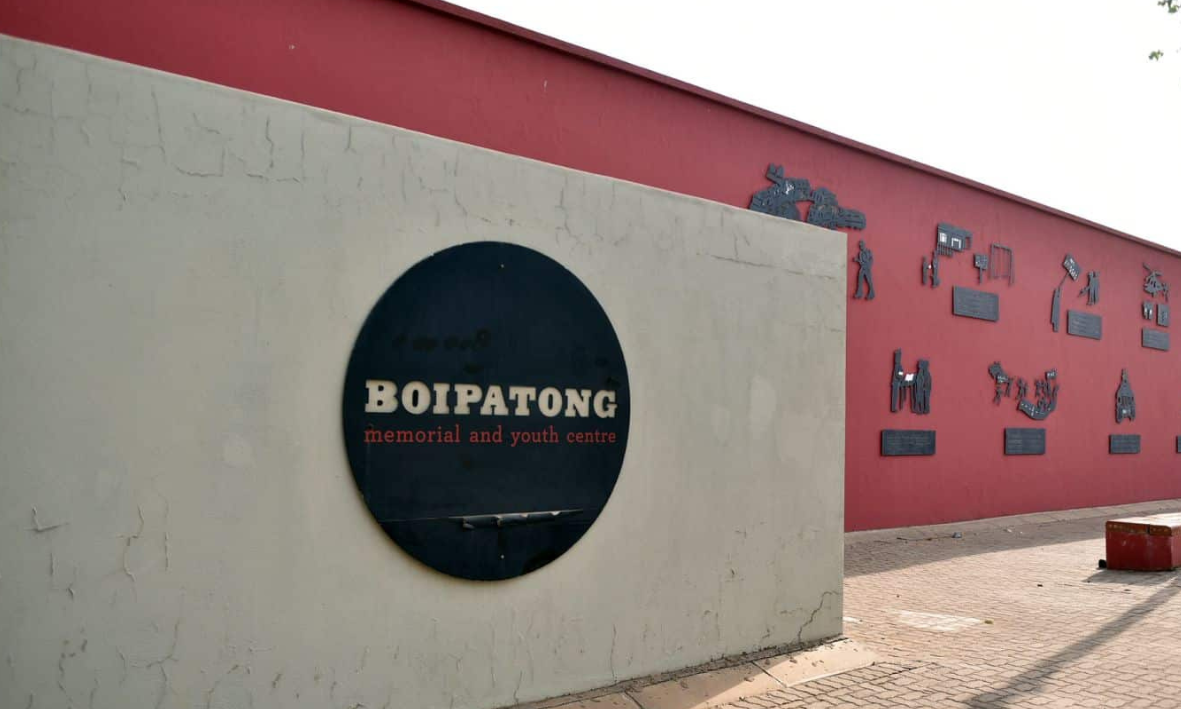
Statement by Bulelani Bobotyane, Secretary General of the United Democratic Movement The United Democratic Movement (UDM) notes with concern reports that the Boipatong Monument and Youth Heritage Centre in Vanderbijlpark has been neglected, despite public funding reportedly having been allocated for its upkeep and operation. This matter is not only about the reported R2.3 million. It points to a wider failure to maintain historical sites, museums, monuments, archives and community heritage facilities across South Africa. The Boipatong Monument honours the victims of the Boipatong Massacre of 17 June 1992, when 45 people were killed in one of the most painful events of the final years of apartheid. A site of this nature must not be allowed to decay because officials failed to maintain it, account for funds or manage its operations properly. However, this national problem is not limited to Struggle history. South Africa’s history is broad, layered and shared. It includes indigenous, cultural, colonial, military, labour, religious, scientific, artistic, community and liberation history. It also includes archaeological sites, museums, historic buildings, battlefields, graves, archives, libraries, memorials and places of community memory. When these places are neglected, the country loses more than buildings. It loses evidence, records, artefacts, oral histories, research material, local identity and opportunities for public education. This pattern can be seen in poorly maintained heritage sites, closed or underused museums, deteriorating historic buildings and community heritage centres that exist on paper but do not function properly. These are not isolated administrative problems. They point to a national failure of heritage governance. Museums and heritage sites are public institutions of memory, education and identity. They support research, tourism, local economic activity and cultural work, and give communities a place to record their own experiences. The UDM is disturbed by allegations that families of victims and survivors have had to clean and maintain the Boipatong site themselves. The reported failure to pay local artists and performers involved in heritage events also requires answers. Victims’ families and cultural workers should not be used to cover government failure. The UDM calls on the Department of Sport, Arts and Culture, provincial departments, municipalities and heritage agencies to provide a national account of publicly funded heritage sites that are closed, derelict, underused or without proper maintenance plans. This must include the condition of each site, the money allocated and spent, the responsible authority, the operational status, and the steps being taken to restore public access. The UDM further calls for consequence management where heritage funds have been wasted, misdirected or left without visible results. Heritage budgets cannot become another channel for failed projects, inflated contracts and ceremonial spending without proper maintenance. South Africa cannot speak about nation-building while allowing museums, archives, monuments, historic buildings and community heritage centres to deteriorate. The preservation of history is a public duty requiring maintenance, staffing, security, conservation, record-keeping, community involvement and honest reporting. This failure also reflects an imbalance in the Department of Sport, Arts and Culture. Sport is important and deserves support, but it cannot be elevated to near-sacred status while arts, culture, heritage, museums, archives and community history are left to decay. A country’s identity is not built on stadiums and tournaments alone. It is also built through language, memory, artefacts, performances, historic buildings, artists, cultural workers and the places that tell communities who they are. Boipatong must be treated as part of a national problem. South Africa needs a clear heritage infrastructure recovery plan that covers all forms of heritage and restores public access to sites that have been allowed to fail.
Admin
08 May, 2015
Subject for dicussion: The relevance of symbols in building a new democratic heritage – addresss by Mr ML Filtane, MP in the National Assembly
Hon Speaker and members Steve Biko once said, “As long as blacks are suffering from inferiority complex as a result of 300 years of deliberate oppression, denigration and division, they will be useless as co-architects of a normal society where man has nothing else but man for his own sake”. In this regard, he called for a liberation from mental enslavement. The historical and heritage symbols play an important part in defining our present, the past, and are a reality, upon which a discourse on defining the future or explaining the past can be located. However, the debate about symbols and building a democratic heritage cannot be an isolated one but an integral part of the broad socio economic transformation of our society. The building of a democratic heritage requires a substantial focus on a thorough understanding of how the social, political and economic structure, and relations, both theoretical and programmatic, are shaped. The narrow focus on symbolic representation of the legacy of colonialism, apartheid and separate development will result in mere ceremonial and symbolic engagement with the continuity of the same but under a post-colonial and apartheid era. The product will be artificial interventions devoid of substance, beyond the symbolic and a feel good vibes. The radical engagement with the more complicated challenges of how to bring about total de-colonialisation aimed at genuine physical and psychological liberation of the people must not be limited to politically correct rhetoric that cushions the interest and agenda of the ruling elite. However, and in the same vein, the importance of symbols as a means to restore dignity and pride of a people cannot be relegated to the periphery. We emphasise that it must not be divorced from the overall programme of building a new united South Africa that take cognisance of the histories, heritage and collective memories of all its people. The dictate of the Constitution, that South African belong to all who live in it, demands that we collectively, as a people, define our legacy, history and heritage and dictate how we want to celebrate these. The real debate should indeed be about what place do the colonial symbols occupy and how they can be used to educate future generations about the atrocities of colonialism and apartheid. Simply destroying parts of this reality of history will distort our collective history and deny future generations the chance of knowing our past. National unity and eradication of all socio economic ills of the past will be achieved through tangible institutional, systematic and structural pattern of development. Borrowing from Frantz Fanon, the struggle of the people of South Africa is concern as much with freedom from colonialism as with liberation from the suffocating embrace of the past and the pretention of its civilisation should be a universal destiny of all its citizens. I thank you