
Admin

02 Mar, 2026
Parliamentary submission on Mtentu River Bridge procurement irregularities
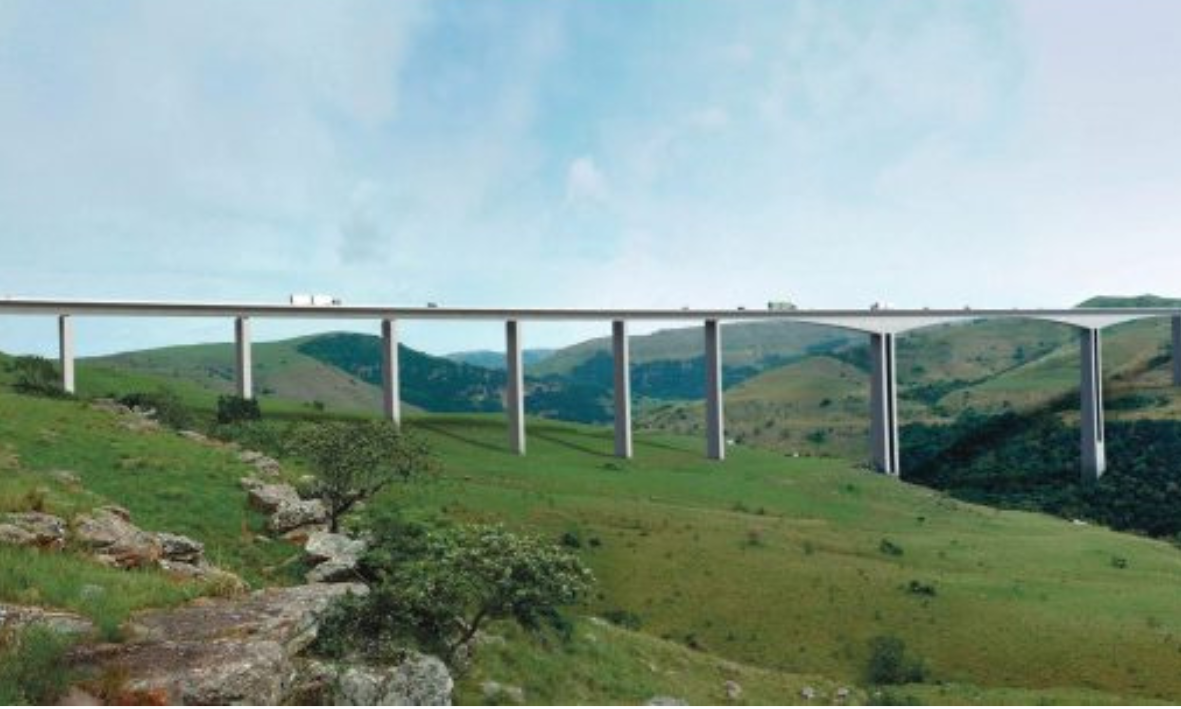
Mr Songezo Zibi, MP Chairperson: Standing Committee on Public Accounts Parliament of the Republic of South Africa Cape Town 8000 Mr Chairperson Formal Parliamentary submission on identified procurement, governance and contractual irregularities relating to subcontract adjudication and awards under the Mtentu River Bridge project (N2 Wild Coast Toll Road) 1. Introduction 1.1. I address this correspondence in the broader interest of constitutional governance, public financial accountability, and the protection of public resources. 1.2. This letter constitutes a formal parliamentary submission to the Standing Committee on Public Accounts (SCOPA), placing on record a series of material, systemic and recurring irregularities identified in the adjudication and award of subcontract packages under the Mtentu River Bridge Project, forming part of the N2 Wild Coast Toll Road Programme. 1.3. The purpose of this submission is not merely to catalogue administrative shortcomings, but to alert Parliament to substantive deviations from lawful procurement practice, which, if left unexamined, may give rise to irregular expenditure, contractual disputes, audit qualifications, and erosion of public trust in State-funded infrastructure delivery. 2. Strategic and policy context of the project 2.1. The Mtentu River Bridge Project is one of the most significant infrastructure investments undertaken by the State in the Eastern Cape, both in scale and symbolic importance. It is intended not only to enhance national logistics connectivity, but also to stimulate inclusive economic development, local enterprise participation, and community empowerment in historically marginalised areas. 2.2. The project is implemented under South African National Roads Agency SOC Limited (SANRAL) Contract No. N.002-201-2023/1C through a Main Contractor Joint Venture. As such, all procurement activities associated with the project are conducted within the public finance environment, notwithstanding subcontracting arrangements. 2.3. Accordingly, the entire procurement chain is governed by: 2.3.1. Section 217 of the Constitution of the Republic of South Africa. 2.3.2. The Public Finance Management Act, 1999 (PFMA). 2.3.3. Treasury Regulations issued in terms of the PFMA. 2.3.4. National Treasury Supply Chain Management prescripts. 2.3.5. Auditor-General of South Africa (AGSA) audit standards relating to irregular, fruitless and wasteful expenditure. 2.4. It is against this framework that the matters raised herein must be assessed. 3. Basis and methodology of review 3.1. This submission arises from a careful, document-by-document scrutiny of official procurement records generated by the implementing agents. The review focused on: 3.1.1. Consistency of application of mandatory requirements. 3.1.2. Alignment between advertised evaluation criteria and final decisions. 3.1.3. Integrity of price, preference and scoring processes. 3.1.4. Contractual certainty and enforceability. 3.1.5. Internal controls relating to bid submission, correction and acceptance. 3.2. The following documents form the factual foundation of this submission and are attached as annexures: 3.2.1. Adjudication Report: Subcontract Package 2 - Bulala Access Road. 3.2.2. Adjudication Report: Subcontract Package 5 - Crushing and Screening of Aggregates. 3.2.3. Appointment Letter: Subcontract Package 5 - Sourcing of Wearing Course Materials from State-Owned Borrow Pits. 4. Detailed account of identified irregularities 4.1. Selective and inconsistent enforcement of mandatory requirements: 4.1.1. A central and recurring concern across the reviewed packages is the uneven application of mandatory compliance requirements. 4.1.2. In Subcontract Package 2, a bidder was disqualified on the basis of a procedural defect relating to clarification briefing attendance documentation, which was characterised in the adjudication report as fraudulent. The disqualification was immediate and final. 4.1.3. By contrast, in Subcontract Package 5, a bidder who failed to submit a mandatory statutory requirement, specifically a valid Department of Mineral Resources (DMR) mining permit, was nonetheless deemed compliant and recommended for award. 4.1.4. Mandatory requirements, by definition, are not discretionary. Their selective enforcement constitutes a breach of the principles of fairness, equity, transparency and competitiveness, and is inconsistent with Treasury Regulations governing supply chain management. 4.2. Deviation from advertised evaluation criteria after final scoring: 4.2.1. In Subcontract Package 5 (crushing and screening), the adjudication process applied a 90/10 price and preference scoring system, as prescribed in the tender documentation. 4.2.2. The highest-scoring bidder under this system was subsequently excluded after completion of the scoring process, based on concerns relating to operational capacity and prior performance on other projects. 4.2.3. While capacity and performance considerations may be relevant, they were not disclosed as pre-qualification criteria or evaluation factors in the Request for Quotation. Their introduction after scoring constitutes a material deviation from the rules of the competition as advertised to bidders. 4.2.4. This practice undermines the legality and defensibility of the adjudication outcome and exposes the process to review under administrative law principles. 4.3. Post-adjudication negotiation of prices 4.3.1. The adjudication documentation further records an explicit intention by the main contractor to negotiate further rate reductions with the recommended bidder after the adjudication process had concluded. 4.3.2. Post-adjudication price negotiations compromise the integrity of competitive procurement. They alter outcomes outside the transparent scoring framework, disadvantage other bidders, and undermine price certainty. 4.3.3. Such practices are incompatible with PFMA requirements and raise the risk of irregular expenditure. 4.4. Conditional appointment presented as a concluded award 4.4.1. The appointment letter issued in respect of Subcontract Package 5 records a stated contract value and anticipates immediate commencement of works. However, it simultaneously makes the appointment subject to multiple unresolved conditions, including: 4.4.1.1. Agreement on rates. 4.4.1.2. Finalisation of borrow pit locations. 4.4.1.3. Laboratory testing and approvals. 4.4.1.4. Engineer’s instructions. 4.4.1.5. Execution of a formal subcontract agreement. 4.4.2. This creates a situation where a document styled as an appointment lacks the legal certainty of a concluded contract yet purports to trigger performance obligations. 4.4.3. Such ambiguity exposes the State to contractual disputes, audit findings, and the risk that expenditure incurred may later be classified as irregular. 4.5. Internal contradictions regarding commencement of works 4.5.1. The same appointment letter states that commencement shall be immediate upon signature, while also indicating that commencement is contingent upon technical approvals and preparatory works. 4.5.2. These positions are mutually inconsistent and render the commencement provisions legally unclear and operationally impractical. 4.6. Weaknesses in bid control and arithmetic governance 4.6.1. Across the reviewed packages, several control deficiencies are evident: 4.6.1.1. Significant arithmetic corrections applied to bids without documented bidder acceptance. 4.6.1.2. Submission of outdated, duplicate or incomplete bills of quantities by multiple bidders. 4.6.1.3. Lack of evidence of robust bid submission screening prior to opening 4.6.1.4. These weaknesses point to systemic deficiencies in bid management and internal control, increasing the risk of dispute, error, and audit qualification. 5. Cumulative PFMA and AGSA risk implications 5.1. Individually, each of the issues outlined above raises concern. Taken cumulatively, they point to systemic governance weaknesses that fall squarely within the oversight mandate of SCOPA. 5.2. The risks include: 5.2.1. Non-compliance with the PFMA and Treasury Regulations, 5.2.2. Exposure to irregular, fruitless and wasteful expenditure, 5.2.3. Breakdown of internal control and accountability mechanisms, 5.2.4. Legal vulnerability of adjudication and award decisions, 5.2.5. Undermining of developmental and community-based procurement objectives, 5.2.6. These are precisely the categories of risk that Parliament and the AGSA are constitutionally mandated to interrogate. 6. Request for parliamentary oversight intervention 6.1. In light of the seriousness, scale and systemic nature of the concerns raised, I respectfully request that SCOPA: 6.1.1. Calls upon SANRAL and the relevant implementing agents to account in detail for the adjudication and award processes. 6.1.2. Examines whether the identified practices comply with PFMA, Treasury Regulations and supply chain management prescripts. 6.1.3. Considers referral of the matter to the AGSA for further investigation or special audit attention. 6.1.4. Recommends appropriate corrective, remedial and consequence-management measures. 7. Annexure index 7.1. The following annexures accompany this submission: 7.1.1. Annexure A: Adjudication Report - Subcontract Package 2 (Bulala Access Road). 7.1.2. Annexure B: Adjudication Report - Subcontract Package 5 (Crushing and Screening of Aggregates). 7.1.3. Annexure C: Appointment Letter - Subcontract Package 5 (Wearing Course Materials / Borrow Pits). 8. Conclusion 8.1. The matters raised in this submission are substantive, factual, and grounded in official documentation. They are not advanced lightly, nor for any purpose other than to uphold constitutional governance, lawful procurement, and responsible stewardship of public funds. 8.2. I trust that SCOPA will give this submission the thorough and deliberate consideration it warrants in the execution of its oversight mandate. Yours sincerely Maj Gen (Ret) BH Holomisa President of the United Democratic Movement Deputy Minister of Defence and Military Veterans For information: Office of the SANRAL CEO Chief Executive Officer Information Officer
Admin
10 Oct, 2025
31 years later: ANC has bankrupted the Eastern Cape municipalities
Statement by Bulelani Bobotyane, Provincial Secretary of the UDM in the Eastern Cape The United Democratic Movement (UDM) in the Eastern Cape is deeply disturbed by revelations that seven municipalities in the Eastern Cape are on the verge of financial collapse. This is not an isolated administrative failure. It is the product of decades of African National Congress (ANC) misrule that has left local government structures hollow, indebted, and incapable of delivering even the most basic services. The Provincial Treasury’s presentation to Parliament revealed that Makana, Sundays River Valley, Amathole, Raymond Mhlaba, Amahlathi, Walter Sisulu and King Sabata Dalindyebo municipalities will not survive beyond a month without intervention. Only Koukamma has slightly more cash reserves, barely enough for three months. Under ANC governance, 33 out of 39 municipalities are distressed, with only six receiving clean audits in the 2023/24 financial year. The scale of financial recklessness is staggering. Nelson Mandela Bay Metro recorded R22 billion in unauthorised, irregular, fruitless and wasteful expenditure. Buffalo City Metro recorded R11.6 billion. Amathole District recorded R1.3 billion, OR Tambo District R1.1 billion, and Inxuba Yethemba R910 million. Despite this, more than R300 million in unspent infrastructure funds was returned to the National Treasury. This is an unforgivable betrayal of the people. A province drowning in unemployment and poverty is being robbed not only by corruption but by chronic incompetence. The UDM in the Eastern Cape holds Premier Oscar Mabuyane and Cooperative Governance and Traditional Affairs (CoGTA) MEC Zolile Williams politically responsible for the collapse of governance in the province. For years they have been warned about the dire state of municipalities but responded with empty plans and recycled rhetoric. MEC Williams himself has acknowledged that Nelson Mandela Bay accounts for over seventy percent of the province’s R30 billion in irregular expenditure, driven by evergreen contracts that he admits are criminal. Yet there is no visible action, no prosecutions, and no accountability. The rot runs deep. A captured CFO in Sundays River Valley inflated consultancy contracts from R4 million to R38 million. Evergreen contracts in Nelson Mandela Bay have become the feeding trough for politically connected service providers. State departments owe municipalities such as Nelson Mandela Bay more than R208 million in unpaid rates and service charges, proof that even government does not respect local government. It is shocking and unacceptable that national and provincial government departments owe municipalities more than R208 million in unpaid rates and service charges. These are not private companies or delinquent ratepayers. They are organs of the same state that lectures ordinary citizens about paying their municipal accounts. This failure by the state to pay what it owes is an act of internal sabotage. It cripples the very municipalities tasked with delivering water, electricity, sanitation and waste removal to communities. When government departments do not honour their obligations, they drain the lifeblood of local government, its revenue base, and accelerate the collapse of essential services. The UDM in the Eastern Cape finds this behaviour reprehensible and hypocritical. It exposes a culture of impunity within the ANC government where accountability is applied selectively. Citizens are threatened with disconnection for non-payment, while government institutions continue to consume services without consequence. This situation also shows the utter breakdown of intergovernmental cooperation in the Eastern Cape. The Premier and his MECs have allowed a crisis where the left hand of government starves the right. How can municipalities be expected to survive when the very departments that fund them are also their biggest debtors? The UDM in the Eastern Cape is deeply concerned by the recent remarks of Buffalo City Mayor Princess Faku, who told Parliament that her municipality is “neither dysfunctional nor cash-strapped.” This statement is misleading and irresponsible. Both the Provincial Treasury and the Auditor-General have confirmed that Buffalo City incurred R11.6 billion in irregular, fruitless and wasteful expenditure, and returned unspent infrastructure funds while residents continue to endure failing services. For a mayor to deny this reality shows disregard for the truth and for the daily struggles of the people she serves. It reflects the ANC’s entrenched culture of denial, where leaders protect their image instead of fixing what is broken. The UDM calls on Premier Mabuyane to act against Mayor Faku for misleading Parliament and the public. The people of Buffalo City deserve honesty, accountability and real solutions, not empty political theatre. As a partner in the Government of National Unity (GNU), the UDM in the Eastern Cape believes this crisis demands direct intervention by the National CoGTA Minister Velenkosini Hlabisa. The Minister must immediately: 1. Deploy a national intervention team to the seven municipalities on the brink of collapse, with powers to stabilise finances, strengthen governance, and halt corruption. 2. Oversee forensic investigations into the misuse of funds, fraudulent consultancy contracts, and the R30 billion evergreen contract scandal in Nelson Mandela Bay. 3. Ensure strict consequence management, including suspension and prosecution of accounting officers, councillors and mayors who enabled this rot. 4. Coordinate intergovernmental debt recovery, compelling all government departments to pay what they owe to municipalities. 5. Enforce public transparency and reporting, ensuring that all municipal recovery reports demanded by Parliament are made public within thirty days. 6. Work with National Treasury and the Department of Water and Sanitation to restore critical infrastructure and basic service delivery in the affected municipalities. 7. Hold Premier Mabuyane and MEC Williams politically accountable for years of failed oversight and negligence under their leadership. The UDM in the Eastern Cape also reminds the ANC, as a partner in the GNU, that it carries the greatest responsibility for this crisis. Its national leadership must urgently call its counterparts in the province and municipalities to order. The continued collapse of governance in the Eastern Cape is not just a local embarrassment; it undermines the credibility of the GNU’s commitment to clean, accountable and effective government. If the ANC is sincere about renewal, it must start by cleaning its own house in this province. For thirty-one years, the ANC has turned the Eastern Cape into a case study of corruption and decay. The people deserve better. They deserve leaders who act, not talk, who serve, not steal. The UDM in the Eastern Cape calls on all honest public servants, civil society and communities to rally behind the call for accountability and renewal.

Admin
02 May, 2025
UDM Eastern Cape calls for accountability, equity, and safety in response to Eastern Cape developments
Statement by Bulelani Bobotyane, Provincial Secretary of the UDM in the Eastern Cape The United Democratic Movement (UDM) in the Eastern Cape is deeply concerned by recent developments across the province, particularly in the education, economic, and energy sectors. While we welcome progressive initiatives that promise growth and transformation, we will not be silent when the vulnerable are forgotten or exploited. 1. The #JusticeForCwecwe campaign has laid bare the failure of our education system to protect our children. The UDM in the Eastern Cape demands that the provincial government not only close non-compliant schools but urgently implement structural safeguards, including a Provincial School Safety Oversight Task Team and school-based trauma units. Child safety is not negotiable. 2. We note the Premier Oscar Mabuyane’s international investment drive to boost the oceans economy. Mabuyane announced that the province would soon visit countries such as Italy and Greece, with the intention to attract investors who could partner with the province “to unlock jobs in our oceans economy”. Mabuyane stated that the oceans economy represents a new growth frontier that, when combined with meaningful transformation, can unlock new economic value chains and opportunities for the people of the Eastern Cape. He also announced that the national government has started the process of officially gazetting small harbours in Hamburg, within the Ngqushwa Municipality, and in Mbizana. While the potential is undeniable, the UDM insists on transparency in all agreements, enforceable 30% local ownership, and the publication of all memoranda of understanding (MOUs). Our coastal communities must not be spectators in an economy built on their heritage. 3. Regarding the R105 billion Hive Green Ammonia Project at Coega (the project by Hive Energy UK at the Coega Special Economic Zone (SEZ) outside Gqeberha is the biggest investment of its kind in the world), the UDM in the Eastern Cape welcomes the shift toward sustainable energy. However, we demand full disclosure of the project’s local employment commitments, environmental compliance, and community development plans. The green economy must not become another exclusionary space. As the voice of reason and accountability, the UDM in the Eastern Cape will continue to fight for an inclusive Eastern Cape - one that places people before profits, safety before slogans, and transparency above all.
Admin
21 Aug, 2020
UDM helps 72 tenants threatened with legal action by Eastern Cape Public Works
Honourable Premier Mabuyane IMMORAL EVICTIONS: MISTREATMENT OF ORDINARY SOUTH AFRICANS BY THE EASTERN CAPE DEPARTMENT OF PUBLIC WORKS WHICH ADMINISTERS PROPERTIES IN WHICH THEY RESIDE (MTHATHA) 1. I was recently approached by a anxious group of persons who have organised themselves under the banner of the Democratic Housing Tenants Association (DHTA) which consists of 72 tenants, all of whom reside in properties, in Mthatha, administered by the Eastern Cape Department of Public Works and Infrastructure (DPWI) and the Eastern Cape Development Corporation (ECDC). 2. I understand that many of the aforementioned tenants have occupied these properties for a minimum of ten years, and up to 35 years in some cases. It is alleged that, since 1994, these buildings have not been maintained by the DPWI/ECDC, aside from the repairs the tenants had done at their own expense. By all accounts this seems to be true. 3. Numerous meetings with the DPWI, as far back as 2001, have apparently taken place where discussions were held regarding the opportunity for the tenants to purchase the houses they have been occupying (and paying rent for) for so many years. Seemingly, despite various DPWI commitments, none of the problems were addressed. 4. I have been informed that discussions around the purchasing of these properties with your special advisor, Mr Zandisile Qupe, on 30 June 2019, who undertook to find speedy resolution to the matter, was for naught as these tenants out of the blue received notices of motion of eviction proceedings in early July 2020. Worse still is that this unnecessary and unconscionable legal action is happening at a time of so much insecurity and fear due to the Coronavirus pandemic. 5. DHTA requested a meeting with your Public Works MEC, Mr Babalo Madikizela, which took place on 25 June 2020. Apparently, although departmental officials had rightfully been present, for some inexplicable reason, the African National Congress (ANC) OR Tambo Regional Secretary and members of the ANC Youth League, were also in attendance and the objections to their presence were ignored. Apparently, no resolution had been found at the end of that meeting and Public Works MEC Madikizela had also instructed the departmental officials to engage with DHTA within two weeks of that meeting, which has to date not occurred. 6. This story is rife with allegations of years’ long mistreatment of South Africans at the hand of the Eastern Cape government, whilst this community did their utmost to find a mutually beneficial recourse in the matter. The fact that it now also seems to be laced with politics is totally unacceptable and should be investigated. 7. I therefore now propose that you immediately involve the national Department of Public Works in the matter to assure some degree of impartiality and lack of prejudice towards ordinary South Africans in a time where their lives are already adversely impacted by the Covid-19 pandemic. 8. I attach the letter I received from the complainants for your assistance and I look forward to your speedy response, as this is an urgent matter due to the threat of legal action. Yours sincerely Mr Bantu Holomisa, MP President of the United Democratic Movement Copied to: Minister of Public Works and Infrastructure, Ms P De Lille The Democratic Housing Tenants Association
Admin
20 Aug, 2019
Eastern Cape Legislature: Mr Bongani Mahlati, MPL’s contribution the Vote on Public Works
Honourable Speaker and Deputy Speaker Honourable Premier and members of the executive Honourable Members of the Legislature Officials present here Distinguish Guests And visitors at the gallery be greeted in Jesus naame Madam Speaker the United Democratic Movement (UDM) welcomes the report, however Honourable Speaker, government must find a comprehensive approach on how to improve and monitor the irregular expenditure that has been increasing over the past years in this department. I am concerned about how this has happened whereas there is a committee that was monitoring the work of the department. Why this matter had been escalated for a long time, and nothing drastically has happened. We are convinced, as the UDM, that something drastically must happen, and government must take steps against those people affected and come up with a clear plan and strategies of how to curb this challenge. “Noko, noko, ingathi kukhona okutshaya amanzi la” Madam Speaker, the speech of the MEC mentions of the recruitment and training of only a hundred learners in National Youth Service. Taking the level of unemployment, the shortage of skilled youth in the Eastern Cape, I think this is a drop in the ocean. I am of the view that it also needs monitoring since the African National Congress has the history of employing their card carrier members. I don’t think this hundred will be even enough for my ward, let alone a region. Remember our youth is our future, we need to invest more to them. The UDM condemns the neglect of government properties. Most government buildings are dilapidated, unsafe and unfit for use thus putting our people at risk. The department must come up with the plan and strategies of how are they will maintain the standard of our buildings. The department must decrease in utilising private companies and nayo leyo inento eshaya amanzi apha kubasebenzi bedepartment. The UDM supports the budget. I thank you
Admin
16 Aug, 2019
Eastern Cape Legislature: Mr Mncedisi Filtane, MPL’s contribution to the debate on violence against women and femicide
Eastern Cape Legislature: Mr Mncedisi Filtane, MPL’s contribution to the debate on violence against women and femicide on 16 August 2019 A very emotional issue indeed. The United Democratic Movement supports the support given by this House to fighting violence against women. Accordingly, we propose that the Zizipho Apleni be invited to come and address this house. We shall have made a powerful statement to our women that we are wholly against their abuse women by men. Not all men ill-treat woman, but men need to get together and maybe form a men’s parliament where they can freely deliberate on issues of this nature and others. The idea is to adopt a holistic approach to all issues. I had the opportunity to see and experience first-hand, the power and brilliance of women in my very first five years of work. My attitude about the digits and intelligence of women has never changed. Women should be encouraged to just walk away from a relationship if it goes to sour. The justice system alone won’t help as it is just too soft. Rather a social change is needed.
Admin
15 Aug, 2019
Eastern Cape Legislature: Mr Mncedisi Filtane, MPL’s contribution Vote: transport
1. Transportation plays a very critical role in the economy and livelihoods in our province. It’s all about moving goods and passengers. 2. The hot and cold relationship that this department has with the taxi industry remains, not just a matter of ongoing concern, but a risk to the above-mentioned scenario. Finally, a lasting solution needs to be found. 3. The atrocious conditions of the majority of road networks, mainly in the rural areas, makes it least interesting and attractive to venture out there for any purpose at all. Yet we are in a predominately rural province. This inhibits the development and growth of the rural economies. These conditions have a direct and significant impact on the drive towards urbanisation. The consequence of which is the burdening of local government with early arrivals of urban dwellers. 4. As a member of the economic cluster, the department is expected to play a significant role in the creation of both work and business opportunities. However, the MEC sends contradicting messages in her policy speech. On page 4, she starts off by pencilling: “We will implement a procurement strategy that seeks to contribute to SMME and Local Economic Development”. Then four paragraphs further down, she laments the fact that road infrastructure is driven, in the main, by external service providers instead of the department’s internal teams. “We want to ensure that external service providers complement our internal teams instead of the current scenario where they do the bulk of our work”. Asazi ke ukuba masise eyiphi Komkhulu. Then she goes on to pain the Eastern Cape economy by telling us that she has splurged R252 million on one or a same suppliers of plant items. Had that budget been spent on actual operations, so many of local entrepreneurs would have benefited. As a result, so much of our taxes are going to be tied up in depreciating machinery which must be maintained. whereas this would have been the responsibility of the private sector. 5. The much-anticipated roads masterplan has yet to be presented to the committee. Consequently, there is just no indication of the direction which this department is going. No details are being availed at all about the roads which are going to be improved. This feud situation lends itself very much vulnerable for the mishandling of funds. 6. There are no new road-making methodologies being explored yet some have been available from as far back as 2006. 7. Further signs of a confused department are in programme for transport regulation. A whopping R2,5 million has been set aside for road safety prayers, but the budget for the Law Enforcement function has been reduced by 9.2%. It looks like this department is more ready for prayers, which lend no technical expertise on traffic management. To put an icing on the ongoing confusion there is a budget of R50 m for no specific activity. Cash is just being splashed about. Hayi kumnandi Kwa Transport VHAA!!!
Admin
15 Aug, 2019
Eastern Cape Legislature: Mr Bongani Mahlati, MPL’s contribution the budget debate on Cogta
Honourable Speaker Honourable Premier Honourable Members of the Executive Council Honourable Members of the Legislature Government officials Distinguished guests Ladies and gentleman I greet you all in the name of the Mighty Lord Jesus Christ (i) Honourable MEC you said that your priorities have been embedded into the B2B programme that your government adopted in the 5th term to consolidate support to municipalities and traditional institutions. It is only municipalities benefiting; neglecting traditional leaders, because ward committees and councillors are African National Congress (ANC) children. These must not be separated, because chiefs are to be informed of everything happening in their areas. (ii) People had to voice out their grievances because they belong to the municipalities which is ruled by the ANC. The reason why the people are protesting is because you don’t fulfil your promises; you only need them during the election period; making too many promises because you need their votes. (iii) ANC ward committees and ward councillors must not favour their ANC party members. They must service everybody in the community irrespective of party affiliation. (iv) The service delivery is the main concern because of the challenges ranging from water and sanitation to electricity. Some of the municipalities are still using bucket system or have no sanitation at all. (v) Madam Speaker, the MEC is talking about free FBG which consists of provision of free water, sanitation, electricity and refuse removal to indigent households, while our people are crying over paying high rates, access to clean water. Government does not care about rate payers, they are only interested in their taxes. (vi) This “we will” recitation is not nice to our ears; you were singing this recitation since 1994. And I understand the house resolutions and findings are not being implemented. Next year you will be talking the same thing. Your government is government of many dreams yet can’t accomplish any of them. Please don’t dream whilst our country is drowning in the sea. The government needs to prioritise implementation, rather than these empty promises in order to stop these occurring service delivery protests (vii) The Central Supplier Database (CDS) of the Eastern Cape shows an increased number of government officials who are doing business with government, yet the MEC is talking about good governance and says that the Department of Cooperative Governance and Traditional Affairs is at work to fight corruption and maladministration. As the UDM we want see the suspension and dismissal of those corrupt officials found abusing government resources and they must not be paid during their suspension and their case must be finished within four months. And pre-screening is a must, because this will lead to the collapse of our government. The UDM supports the budget. I thank you
Admin
15 Aug, 2019
Eastern Cape Legislature: Mr Bongani Mahlati, MPL’s contribution the budget debate on Health
Honourable Speaker, Honourable Premier and Honourable Members of the Executive, Honourable members and government officials, the United Democratic Movement (UDM) is of the view that the budget of R25,189 billion allocated to the department of Health, if it is utilised effectively and efficiently, can go a long way in improving the quality of health services to the people of the Eastern Cape. There is an alarming increase in the number of legal claims against this department as a result of failures to comply with certain procedures laid down in the treatment of patients. This is consuming millions of rands and this department has now become a lucrative business centre of the legal profession. Honourable Speaker, the department cites a 13 % vacancy rate. This unemployment rate is affecting this department because our youth gets frustrated and become the victims of substance abuse and harmful use of alcohol, thus putting strain on the budget of this department. The shortage of medical doctors, nurses and staff general is core problem in this department. Shortage of human resource is the results of working long hours and non-payment of their over time, this will affect the morale of the staff and that will lead to unnecessary protests. The UDM calls the government for the training of more nurses and medical doctors, as well as the provision of porters in hospitals should be addressed as matter of extreme urgency in those hospitals which lack the services of these officers. The Honourable MEC talks of infrastructure backlog dating back to the times of homelands; what have you done over this democracy when you failed to maintain the hospitals built in the homelands. Our hospitals and clinics are dilapidated and we believe it is not because there is no money for maintenance of these properties. What delays the progress is the implication of management and officials in epidemic corruption and maladministration. The UDM is of the view that the department must tighten the security system in our hospitals. Our doctors, nurses and patients are being the victims of rape and robbery.
Admin
13 Aug, 2019
Eastern Cape Legislature: Mr Mncedisi Filtane, MPL’s contribution to the budget debate on economic development
1. Having tried to juxtapose the MEC‘s policy speech with his department’s operational plan driven by such a minute budget, I could only conclude that the Eastern Cape government is going nowhere. When you reduce, by as much as 25%, the budget of Treasury, what do you expect to achieve in the sickly fiscal environment? If the whole province projects a revenue of R6 billion but commits to just R1, 4 billion then psychologically, those tasked during operations with collecting the dream R6bn, will immediately drop their efforts by whopping 80%. Ndokhe ndibone xa kusenzeka umlingo. Poor fiscal management continues to kill our provinces political, social and economic dreams. One suspects that political instability within the ruling party plays a big role in the mismanagement of allocated funds, hence the recurrence of irregular wasteful and non- expenditure of budgets. 2. Treasury should incentivise and reward departments that show great strides in tight fiscal control. Not only had that but even challenge departments in the economic cluster to produce an X number of jobs for every X R3 spent. Treasury should actually have a special internal unit that focuses on two things: ? The constant link between departmental expenditure and jobs created and sustained. ? Fiscus spent which results in enterprise ownership by Eastern Cape citizens. The fiscus continues to be plundered by the people from outside the province. Our fiscus should be used to create equity for the citizens of this province. The development of the invoice-tracking mechanism is much appreciated. It cannot be that it is practically impossible to simply put a stop to civil servants who do business with the state. As things stand there are officials who make sure that their invoices are fast tracked for payment? Surely this can be stopped. We implore Treasury to ensure that there is consequence management for those who plunder state resources. The additional powers conferred on the Auditor General should be utilised not only to deter potential thieves but severely punish the devilish beneficiaries. 3. Despite the policy position declared by the National Minister of Finance that tax collection has to be increased, yet in the Eastern Cape the source and base of an increased tax revenue seems to have be given very shy attention. There are no bold steps within the Economic Cluster to increase the tax base. This assertion is based on the type of projected jobs. Labourers earn low wages; it is the middle and upper class as well as businesses that form a solid tax revenue base. The MEC for Finance in his budget speech puts that emphasis on infrastructure development and agricultural economy. We know the bulk of the infrastructure budget goes to contractors and the goods they procure. Less than 25% goes to professionals. So, we would need to make sure that both the supplies and contractors are locally based in order to drive that budget to local suppliers. Agriculture we all know that this sector contributes just around 2% to the GDP consequently its contribution to our tax base is understandably low. In order for it to improve its contribution to our tax base, the export market would need to be tapped into in, a big way at that. There you talking billions. Another potential revenue base is by creating, at municipal level, to an environment in which professionals like doctors’ consultants, teachers etc. would feel comfortable to live and work. But alas the conditions are just too atrocious in most of these municipalities. Hence the brain and fiscal emigration to other provinces, where there are better living conditions. 4. Did it occur to the executive of the Eastern Cape that you are sending a very negative message to investors, when you reduce the budget of such a strategic department by whole 25%? The UDM takes this opportunity to implore the powers that be to review this situation. Add to that the small change allocated to the department of economic development, then potential investors get a clear message of just, how not serious you are on the economy.
Admin
13 Aug, 2019
Eastern Cape Legislature: Mr Mncedisi Filtane, MPL’s contribution Vote 12: Treasury
1. Having tried to juxtapose the MEC‘s policy speech with his department’s operational plan driven by such a minute budget, I could only conclude that the Eastern Cape government is going nowhere. When you reduce, by as much as 25%, the budget of Treasury, what do you expect to achieve in the sickly fiscal environment? If the whole province projects a revenue of R6 billion but commits to just R1, 4 billion then psychologically, those tasked during operations with collecting the dream R6bn, will immediately drop their efforts by whopping 80%. Ndokhe ndibone xa kusenzeka umlingo. Poor fiscal management continues to kill our provinces political, social and economic dreams. One suspects that political instability within the ruling party plays a big role in the mismanagement of allocated funds, hence the recurrence of irregular wasteful and non- expenditure of budgets. 2. Treasury should incentivise and reward departments that show great strides in tight fiscal control. Not only had that but even challenge departments in the economic cluster to produce an X number of jobs for every X R3 spent. Treasury should actually have a special internal unit that focuses on two things: ? The constant link between departmental expenditure and jobs created and sustained. ? Fiscus spent which results in enterprise ownership by Eastern Cape citizens. The fiscus continues to be plundered by the people from outside the province. Our fiscus should be used to create equity for the citizens of this province. The development of the invoice-tracking mechanism is much appreciated. It cannot be that it is practically impossible to simply put a stop to civil servants who do business with the state. As things stand there are officials who make sure that their invoices are fast tracked for payment? Surely this can be stopped. We implore Treasury to ensure that there is consequence management for those who plunder state resources. The additional powers conferred on the Auditor General should be utilised not only to deter potential thieves but severely punish the devilish beneficiaries. 3. Despite the policy position declared by the National Minister of Finance that tax collection has to be increased, yet in the Eastern Cape the source and base of an increased tax revenue seems to have be given very shy attention. There are no bold steps within the Economic Cluster to increase the tax base. This assertion is based on the type of projected jobs. Labourers earn low wages; it is the middle and upper class as well as businesses that form a solid tax revenue base. The MEC for Finance in his budget speech puts that emphasis on infrastructure development and agricultural economy. We know the bulk of the infrastructure budget goes to contractors and the goods they procure. Less than 25% goes to professionals. So, we would need to make sure that both the supplies and contractors are locally based in order to drive that budget to local suppliers. Agriculture we all know that this sector contributes just around 2% to the GDP consequently its contribution to our tax base is understandably low. In order for it to improve its contribution to our tax base, the export market would need to be tapped into in, a big way at that. There you talking billions. Another potential revenue base is by creating, at municipal level, to an environment in which professionals like doctors’ consultants, teachers etc. would feel comfortable to live and work. But alas the conditions are just too atrocious in most of these municipalities. Hence the brain and fiscal emigration to other provinces, where there are better living conditions. 4. Did it occur to the executive of the Eastern Cape that you are sending a very negative message to investors, when you reduce the budget of such a strategic department by whole 25%? The UDM takes this opportunity to implore the powers that be to review this situation. Add to that the small change allocated to the department of economic development, then potential investors get a clear message of just, how not serious you are on the economy.
Admin
28 Jun, 2019
Response to the premier’s Eastern Cape SOPA on the 28th June 2019 delivered by the Honourable Mncedisi Filtane, UDM Member of the Eastern Cape Legislature
1. We would like to take this opportunity as the United Democratic Movement and formally congratulate you on your crowning as the Premier. However, William Shakespeare once scribed in Julius Caesar, if my memory serves me well: “Uneasy lies the head that wears the crown’’. You will be no exception to this notion. Let us dissect the beast you presented to us. 2. The route to solving most social challenges lies in an inclusive economy in which the majority of the Eastern Cape citizens wholesomely participate. There is a whole mile to meander in order to get there. Your speech hardly sounded like a starter’s gun. Consequently, we remain with more questions than answers, the reason being that you indicated the pointers but fell short of: • Telling us how to get there and, more importantly, • Exactly what fruits we shall harvest for our efforts, and when. No short-term, medium-term or long-term projections. You were generous with generality. Because of the dire situation engulfing the state of our economy, we expected a more radical approach to tackling the economic woes of the province. 3. Today’s policy buzzword in government corridors is a ‘’ transformed economy’’. Part of your preamble states that: “…we are here to outline our programme of action in the next five years’’. ‘That is why we expected more detail. 4. Some of the questions that arise are: (i) How much will preferred areas of investment contribute to the GDP of the province? (ii) How much ownership stake will be allocated to the previously disadvantaged to advance the cause of ownership? (iii) How much raw material, including for infrastructure development, will come from the Eastern Cape? Are you setting up factories for the manufacture of those materials? Here we wait to see an extension of the value chain, both vertically and horizontally. (iv) Exactly at what rate will your administration produce food within the province so that we greatly reduce the unhealthy importation of food? This is very sore point, Honourable Premier, when one considers the amount of land the Eastern Cape has. A lot of which is suitable for agricultural produce. How many will feed from 50,000 hectares? (v) You have listed tourism as one of your administration’s priorities, yet you have spent less than half a page talking about this sector. As a result, you have not addressed the very fundamentals of any economy, which is product development, referring only to the second last value step which is selling. “What will be sold, and produced by whom with what and where? The exception here is the waterfront in Port Elizabeth. (vi) Sport attracts lots of consumers yet you have said zero on it. Knowing that sport offers itself as a very viable option to intelligence driven economic opportunities, then we have to ask you why you did so much injustice to sport? Knowing that sport is also a catalyst for social cohesion, then why did you leave it out? This would have given the Eastern Cape citizens an opportunity to feel that those that want to make a living out of sport are foregrounded by the Mabuyane administration. You have missed out on a golden opportunity. The Eastern Cape has produced a number of rugby springboks, but the current administration has sent out a loud message saying “we care less about the legacy you have left behind. Mara why, why, why Honourable Premier. (vii) You painfully complain that it was the deliberate act of the apartheid regime not to invest in the economic infrastructure of our province to make us the labour basket of the country. But alas, all the proposed construction projects were neither for of specific employment numbers nor level of local ownership once in operation. If the focus of government remains anchored just on skills development only, then your administration will have created a perfect platform for prolonging the very apartheid strategy you rightly bemoaned, we want change. Change is what we want. Are you able to deliver drastic change? Siphendule Mhlekazi. (viii) So, you are planning to build a Smart City. Hmmm? Where are you going to get smart administrators and mayors from? When you allowed yourself to day-dream about a smart city, had you so soon forgotten about Mthatha’s rolling collapse with filthy streets, no water, no power and a recently sacked mayor of the ANC? Had you forgotten about the fact that most villages in Mnquma are accustomed to live without water, or were you actually dreaming about a “dark city” but because it was during the day you actually thought there was light in that city? (ix) Kha uqale ulungise I gravel road ezi zibulala imoto ezithutha abantu. (x) We welcome your admission of fifteen years of failure by three administrations, but now you want to pass the buck to civilians by establishing a Khawuleza Project Management Office within your office. Thereby sending a clear message to the current public servants to say ‘’I have no confidence in you’’, look I am superimposing another structure on you. Are these members any better qualified than your current staff compliment? (xi) One of the best ways if preparing a country for economic revival is to re-organise the fundamentals in the education sector. I just would not believe my own ears to hear you say that you want to equip children with skills that would make them highly competitive in the labour market. A flood of questions gushed to my mind as a seasoned development practitioner. (a) In whose forms will they be working? (b) Why not prepare them to be creators of wealth instead hewers of wood? (c) Why not prepare them to be knowledge producers, inventors, researchers, product creators in their own right? The list is long, but time is limited for me. (d) Why leave out men on projects? (e) The effect of climate change in development. (f) The fourth industrial revolution to be embraced with caution, there are too many unskilled citizens who must earn an income. It is already beginning to bite, estimated to take six million out of work. (g) Prevalent fraud in department like education. (h) Will you ensure the implementation of the amended Audit Act? (i) How many job submits must your administration organise in order for jobs to be actualised. Since 2005, this province has been holding these fruitless summits very regularly, but jobs dololo. Instead, more jobs were being shed by the previous economy. We suggest a different approach in fighting joblessness. (j) Your administration has virtually no local government as if the Auditor General’s report is anything to go by. I thank you
Admin
28 Jun, 2019
Response to the premier’s Eastern Cape SOPA delivered by the Honourable FG Mahlati, UDM Member of the Eastern Cape Legislature
Honourable Speaker and Deputy Speaker Honourable Premier and Members of the Executive Honourable Members of the Legislature Officials present here Distinguished guests and visitors at the gallery Be greeted in Jesus’ name. Let me take this opportunity to congratulate you, we wish you all of the best and happiness in your new venture, may this journey take you to the way of success. The Eastern Cape is faced with many challenges, like poor housing development and houses that were built without proper infrastructure. The lack of proper planning of housing projects results in delays in the timeous implementation of a number of projects. The government must strive to improve planning for housing projects to prevent unnecessary time wasting which results in serious cost implications. The United Democratic Movement (UDM) also commends the Honourable Premier for the rollout package of basic services such as electricity, water, sewage, sanitation to 700,000 indigent household in our province, but the government has allowed corruption to flourish for a long time, which is a very serious concern. This has spread like cancer cells throughout the public service. We support the strategies that are in place to fight this fiscus gobbler that has caused so much damage and hurt to the people of this province. The UDM is more concerned about the shortage of educators, and non-teaching staff such as administrators as well as securities. There is also a shortage of water and sanitation facilities in most rural schools. The Honourable Premier must ensure that this is also addressed. Our children are faced with societal challenges such as crime, teenage pregnancy and substance abuse. The educators always fear for their lives because they might not know what a child is going to do. We want the government to place more focus on these problems. The Honourable Premier must put in place a monitoring mechanism and proper plans on how it intends to deal with the shortage of qualified mathematics and science educators in our public schools. There is also the need for food security for our disadvantaged people because the absence of proper food is a serious main contribution to chronic diseases. Such intervention can help to alleviate hunger, poverty and disease in our society. There is still a need for government to focus on educating nurses on how to treat their patients considering the Batho Pele principles; there are many people that still complain about the conduct of our nurses. We do not know if the complaints by the public are ever taken into consideration by government. There are serious challenges of medico-legal claims which leads to unexpected serious and unnecessary expenditure by the government. We appreciate the effectiveness of education and advocacy on HIV/AIDS and tuberculosis, but the growth rate of these diseases is still alarming. The bulk of the budget of the province is spent on the department of health, but there is still more to be improved. The current socio-economic situation in the Eastern Cape requires that a greater effect is made to address job creation so that fewer and fewer people need to depend on social grants. Poverty has reached inter-generational levels. The condition of the roads, especially in rural areas, leaves much to be desired. One hopes that the budget of relevant department will cater for this painful need. Public Works needs to embark on a programme of regularly attending to public buildings; especially hospitals. There cannot be unhealthy people in unhealthy buildings. The officials of the department of social development often find their buildings uninhabitable resulting in the loss of productive time. Your address shied away from these issues, yet they cry for the attention of a caring government. I thank you.
Admin
31 Mar, 2019
Various community concerns: Eastern Cape and Kwazulu-Natal
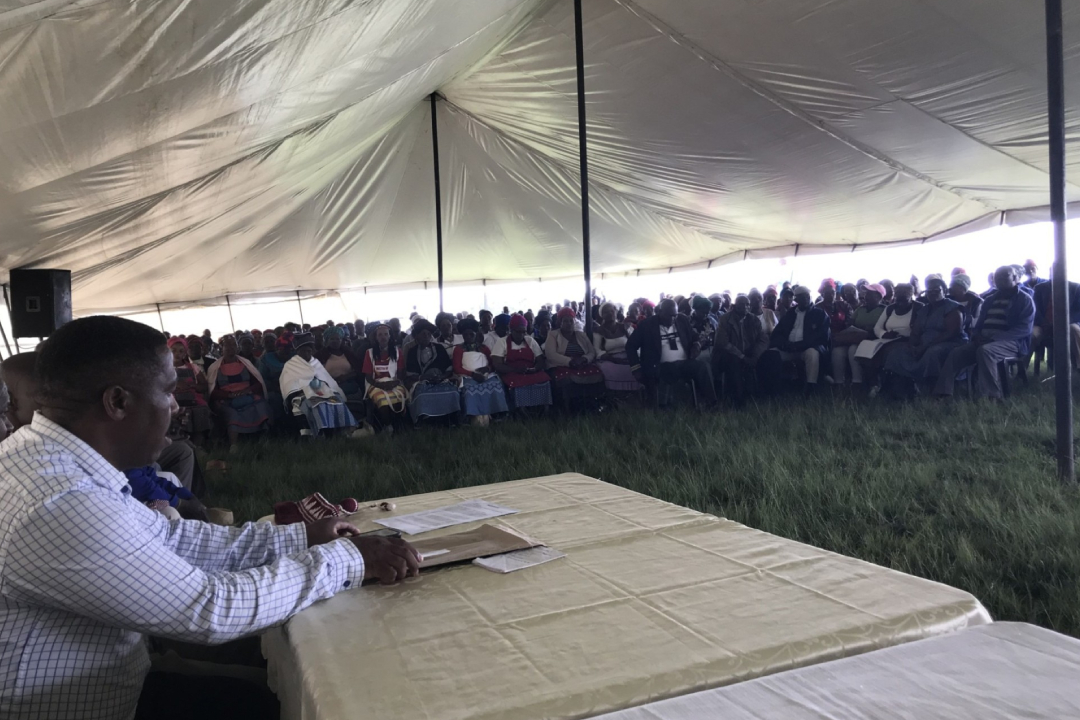
Mr CM Ramaphosa President of the Republic of South Africa Union Buildings Private Bag X1000 Pretoria 0001 Mr PG Masualle Premier of the Eastern Cape Private Bag X0047 Bisho 5605 Mr TW Mchunu Premiere of KwaZulu-Natal Private Bag X9037 Pietermaritzburg, 3200 Dear Sirs Various community concerns: Eastern Cape and Kwazulu-Natal From the beginning of March 2019, I had the privilege to visit various communities in the Eastern Cape and KwaZulu-Natal. From my interaction with them, it is clear that there is a desperate cry for attention and service delivery. Hereunder are the concerns and requests raised by the various communities 1. KwaZulu-Natal, Zululand District Municipality 1.1. Ukhukho village in Ulundi under Nkosi Zungu, The following requests and concerns were raised: • Discrimination on employment and youth unemployment. • RDP housing is needed. • Lack of water supply. • The coal mine in the area should give bursaries for the community’s children. • A lot of water is consumed by the coal mine, which deprives the surrounding communities. • A new crèche is needed after Ozweleni one was destroyed in a storm. • They are requesting for an ITC centre to help the community in their basic needs, this facility could also be used as a call-centre to communicate with government and the mining houses. The same centre could be used to run workshops and develop skills for the community e.g. agricultural training. 1.2. Msinga Municipality under Nkosi Mthembu, he following requests and concerns were raised • Lack of water. • No jobs. • Ngubo Dam in the Thugela River is close to this community and they request engines to pump water to their areas, as well as that they be supplied with tractors. • Fencing for mealie and grazing fields is needed. • Educated children are being exploited by being continuously called upon to do government work as volunteers without getting permanent employment with little or no stipends at all. 1.3. Msinga at Gordons Stars Village, the following requests and concerns were raised • The main complaint is access to water. • No roads. • Unemployment. • Local people are not employed at Pomeroy hospital. • Qualified teachers cannot find employment. 2. Eastern Cape 2.1. Dangwane A/A, Mount Frerre, the following requests and concerns were raised • Water and access roads • High stock theft and owners do not get police protection after they have located their stolen animals. • Drugs peddlers must be arrested, • The ANC discriminates against communities who do not belong to the party when RDP houses are issued. • High crime rates. • Speed humps are needed on the N2 which passes through their area. • Electricity is needed in some newly built villages. • Unfair discrimination when jib is allocated. • No medication and service at the local clinic. • Criminals use underaged children to commit crime, then these children are released by police without charging them. • Clinic at Empindweni not in use, it is standing there as a white elephant. • The community of KwaBhaca, in general, is complaining about stock theft. They claim that these stock thieves are known but there are not caught and prosecuted. They kindly request police to assist them, although they allege that some police are part of the problem. • Demarcation board does not consult communities. 2.2. Ward 24, Mount Frere, a. All the villages of Ward 24 request a shopping mall as they are far away from town. b. Sivumela A/A The following requests and concerns were raised: • Access roads • Water • Unemployment is too high; young people do not have work. • Bursaries for children. • Need for recreational and sport grounds • Nepotism is the order of the day when people are employed when projects are introduced in their areas. • Seeds for mealies and vegetables. • Assistance for the destitute children. • RDP houses. c. Magontsini A/A The following requests and concerns were raised: • Electrification • Roads are impassable • RDP houses • Toilets d. Mnyamana A/A The following requests and concerns were raised: • Electrification in the area • RDP houses with water tanks • Crèche • Agricultural projects e. Luyengweni A/A. The following requests and concerns were raised: • Roads • Water tanks • Agricultural seeds f. Chwebeni A/A area The following requests and concerns were raised: • Water tanks • RDP houses • Doing away with nepotism when people are employed in a projects. g. Ezigadini A/A area The following requests and concerns were raised: • MTN reception pole. • Water. • A pre-school. • Sport grounds. • Roads. 2.3. Bizana Local Municipality, Eastern Cape a. Nkantolo A/A . The following requests and concerns were raised: • Demarcation board is deviding communities. • They were promised 2000 houses many years ago, but only 500 were built. What happened to the money which was earmarked for this project? • Mr Gugile Nkwinti, whilst MEC, gave them two tractors and these tractors have not been functioning for years yet we are told that there was a R3m allocated budget for these tractors to function. • They claim that the home of OR Tambo do not deserve the so called R25m spent in building it. They request that there be an investigation as they suspect corruption. • The multipurpose centre has been dogged by controversy where millions of rand are reported to have been stolen. As a result, contractors are being changed on a daily basis. • At OR Tambo Tech High there are no practicals for students because there are no provision for a workshop with required tools. • The road T112 from Magelaan to Ludeke must be fixed • At St Patricks Hospital there are no doctors • The roads to Green Ville hospital are impassable • They need proper writing pads for their children • They ask for the driving schoo,l which was removed from their area, to be returned. • The municipality is undermining the chief and headmen in their area • They want old age pension fund for elders to be raised to R5000 and R3000 for child grant per month. • At Ludeke Dam the community claims that there were not compensated properly when that dam was built. b. Dindini A/A The following requests and concerns were raised: • The people who are suspected of having killed a local chief have been detained without trial. The case has been postponed on several occasion. The community is requesting for the finalisation of the case. • Roads • Toilets • RDP houses • Niko Village, foreigners are being accused of taking local jobs • Mrs Gladys Mampofana complained that her house was destroyed by tornado and she has not been responded to get assistance from the state to build a new home. • Demarcation are creating confusion • Sport grounds • Old water pipes • Employment, graduated children are not getting jobs • Business tender system is full if bribery and corruption • Stock theft, they request special crime unit to assist them • Access roads • The companies that employed people are not paying UIF and provident funds to their ex-employees, especially the ex-mine workers. • They request micro chips animals, to for tracking purposes. • They produce a lot of mealies in their area, they are asking for assistance for marketing to sell their mealies. • The area of Mbizana is full of agricultural potential and they want assistance from the state. • They request school buses as their kids are travelling long distances. • They need clinics. • They request that retirement must be lowered to 55 so that they can have access to the state grant. • They are complaining that they do not see their future in terms of getting employment for disabled people • They say this RDP houses were intended for the poor people, but they notice that the mayor and some selected communities got two houses. • They request that Decree 11 of the then Transkei Military Government be effected. This decree was used to encourage other people to voluntary retire from government service in 1993, however some of the people who took early retirement were never paid their monies. The list included teachers, nurses, soldiers etc. There are asking government to pay the money due to them. c. Sea view –KwaMadiba A/A The following requests and concerns were raised: • Drugs are killing their children • No services • R111m at wards 23 was approved for RDP housing project but nothing has been done. • Access road are in bad conditions • The toilets need maintenance as some of them are full already • They request street light in order to combat crime • They complain about police brutality especially when people are protesting such as recent women march. • Mzamba police man are not listening to their needs • They need medication and proper services at Madiba clinic. • They need ambulance in the area from Mobeni to Sea View there’s no clinic in between. Yours sincerely Mr Bantu Holomisa, MP UDM President
Admin
26 Feb, 2019
UDM writes to the President regarding stock theft in the Eastern Cape specifically affecting small farmers
Honourable Mr Matamela Cyril Ramaphosa Tuynhuys Building Parliament Street CAPE TOWN 8000 Dear Honourable, Ramaphosa REQUEST FOR YOUR URGENT INTERVENTION: EASTERN CAPE RURAL SMALL FARMERS’ STOCK THEFT Responding to an official invitation by Masifunisane Community Organisation, which is a voluntary association of small-scale rural livestock farmers, to meet with their leaders and members on Sunday, the 24th of February 2019, in Elliotdale. Present in the meeting were rural livestock farmers from Elliotdale, Libode, Mthatha, Willowvale, Idutywa, and Mqanduli. Masifunisane was established as a response to, a rampant scourge of stock theft in the affected areas. Working with local authorities, they are trying their best to track and ensure the return of all the livestock that has been stolen or gone missing. Unfortunately, their experience of success is rather disappointing for the following key reasons, amongst others: • Some of the Mqa nduli police and stock theft unit, are allegedly working with the suspects of stock theft. For instance, the organisation claims to have met with the Deputy Commissioner, Captain Swarts, Captain Monwabisi Mtirara and Captain Mchamba – the head of the Mqanduli Police Station Stock Theft Unit. In which they have yet to constructively receive required cooperation. If this is true, then it is impeding and frustrating any attempts by the farmers to achieve the desired objectives of their organisation. To this end, further details on these allegations are with the leadership of Masifunisane. • The Provincial Authorities were alerted to this challenge but up to date they have dismally failed to make the required intervention and resolve the situation. It is common cause, that, given the astronomically high levels of unemployment and poverty, rural farmers rely on t heir livestock to feed their families, educate their children and in general improve their livelihood. The unabated continuation of the stock theft in these rural areas, threatens the very possibility of rural development and enjoyment of decent livelihood by the rural people. In this regard, I propose that the Honourable President makes an urgent intervention on behalf of the vulnerable rural farmers who have been dismally failed by the provincial authorities, from the highest office in the land. This intervention may include, but not limited to, the deployment of a team of senior police officers to the affected areas of the Eastern Cape, in order to: • Listen to the affected farmers; • Assess with their provincial counter-parts on the scale and scourge of this challenge; • Investigate for themselves on the scale of the problems in these affected areas in particular and the Eastern Cape province in general; • Investigate the role of the police services as well as the veracity of the allegations referred to above; and • Ensure the effectiveness of the Eastern Cape stock theft unit. For further information with regard to the specifics of the incidents of stock theft as well as the allegations against the Mqanduli police, kindly contact the leader of Masifunisane, Mr Zingisa Kula. I will be pleased to be advised on the developments in this matter. Yours in service of the people. Mr Bantu Holomisa, MP President of the United Democratic Movement
Admin
09 Oct, 2017
#LionMama: UDEMWO welcomes decision to drop charges against Komani mother
Statement issued by Thandi Nontenja – UDEMWO Secretaty General The United Democratic Movement Women’s Organisation (UDEMWO) applauds the justice system for dropping the charges against the woman accused of fatally stabbing a man and wounding two others after finding them allegedly raping her daughter in Komani, Eastern Cape. UDEMWO has been vocal in its support for this family, but in particular in support of a woman who the law intended to punish for protecting her daughter. No mother would have been able to fold arms while a horrible act was taking place in their presence. We have stood in support of this courageous woman and we will continue supporting her. Our support is not in promotion of committing crime, but we believe that her and her daughter’s lives were under threat. UDEMWO does not condone any actions of individuals or community’s taking the law into their own hands, but we understand and know that women are under siege from those familiar to them and that desperation can sometimes bring extreme protective instincts to the fore. This mother and the daughter’s lives will never be the same after the horror and as UDEMWO, we will continue to be the voice of the voiceless. End
Admin
26 Apr, 2017
ANC must stop looting state resources
Statement issued by UDM Secretary General, Mr Bongani Msomi Eastern Cape is one of the worst struggling provinces with severe challenges such as poor infrastructure. It is with great sadness that we observe those who are in power abusing resources meant for uplifting the poor. The United Democratic Movement (UDM) is however happy to note that action has been taken against those who allegedly stole from the state purse. The recent court appearance of the former Amathole district municipality mayor Nomasikizi Konza, as well as Buffalo City Metro mayor Zukiswa Ncitha with their co-accused, bodes well. It gives us hope as a country that the Hawks have finally woken up to smell the coffee and are doing their job. We hope to see a maximum punishment being meted out to all found guilty. The leadership of the ruling party seems to be in denial while the state is being looted. It is high time that they own up to the widespread corruption within the ranks of their political deployees and officials.
Admin
29 Aug, 2014
Eastern Cape: Education budget vote – Speech by the Honourable Mpulu in the Eastern Cape Legislature
• Honourable Speaker and Deputy Speaker • Honourable Premier and the Executive • Honourable members of the legislature • Officials present here • Guests, Ladies and Gentlemen Honourable Speaker I wish to indicate that I have observed a defeatist image in the Department of Education, but when you come close you can see that there are greater strides achieved both politically and administratively. We were at time of celebrating stability and progress in this department until we were informed that the head of department was suspended. There are four institutions in South Africa that you always avoid if you still love your career; it is SAFA, SABC, department education and department of health in the Eastern Cape. Honourable speaker it is a known fact that every effective and performing organisation needs permanency, those who are charged by acting responsibility have no full mandate because they themselves operate under as induced cloud, first they must prove to their predecessors that they have not always being eyeing their jobs so they would not want to make drastic action to tamper with their legacy lest they come become with venom. But the dichotomy is that they don’t want to rock the boat for the incumbent and that creates a state of vacillation. We are particularly not please by the lack permanency in the department, we wish to appeal to the MEC that post needs to filled with speed notwithstanding the pending matters in terms of labour relations. Honourable Speaker the second issue that we are keen to raise is that this department must be given space to focus on its core business, it is not pleasing to discover that some of the problems are logistically problems that relates to education such as the construction of schools. The non-payment of teachers remain to be sour point in this department, we are projecting the people in government yet our people are suffering under their watch and the sad part about the whole situation is the fact this perennial issues are issues that we have control over but teachers who have served with their sweat can look back and enjoy their retirement and the department put on the health and some might die if before they see their monies. What is more frustrating Honourable speaker is the non-payment of teachers in budgeted post, where get employed and months pass without remuneration. This cannot accepted at all. Honourable Speaker I might have missed this issue of rural allowance and I notice there little mention if any. The UDM is particular interest in whether this issues do have a positive impact in attracting good teachers in the rural areas. The UDM welcomes the EPWP programme that is geared towards ensuring that the education sector contributes to job creation, however Honourable Speaker we think that a more comprehensive approach could be implemented to make sure that these opportunities can be sustained even when the EPWP coffers dries up. We wish to call upon the department to rethink the strategic intervention of these jobs. They cannot be left in the manner where the department has allocated because have a potential to be a sour point in the school.
Admin
23 Jul, 2014
Eastern Cape Health budget
Address by Mr M Mhlati in the Eastern Cape Legislature Honourable Speaker, Honourable Premier and members of the executive and Honourable Members the report of the Committee of the budget of the department of health of which I am part of is fully exhaustive of the issues canvassed with the Department and I fully support findings and recommendations thereof. I would like to implore the department to plan and negotiate timeously with treasury for the absorption of the student nurses into the vacant positions once they complete their training. We have been complaining as Eastern Cape about the shortage of nurses but when we train them we fail to appoint them thus allowing them to seek work in other Provinces who are committed to address the shortages in the nursing profession. The non-filling of senior management positions in the Supply Chain Management Unit is unacceptable as this opens a gap for fraud and corruption to manifest itself unchecked. With regard to the matter of de-complexing it is clear that the resolutions of this Legislature are not taken seriously by the department. This Legislature resolved during the year 2012 on de-complexing but even today, they are still dragging their feet on this matter. We want clear time frames now. The strides made by the department in addressing the accruals is greatly appreciated, treasury must show consistency in what they are promoting. They request Departments to encourage officers to take early pension but on the other side they do not provide funds to Departments to pay out exit benefits. It is scandalous for people who have spent their lives working for government but when they leave they are reduced into beggars. We still have a long way to go to reach the desired level of health care service we aspire for due to the shortage of the Professional Personnel. Even though the envisaged decentralization of powers is supported I would like to warn the Department to take precautions of ensuring that the officers delegated the duties have the necessary capacity to perform the functions. The Accounting Officer should bear in mind the provisions of Section 44(2)(d) of the PFMA which states that, “ a delegation does not divest the accounting officer of the responsibility concerning the exercise of the delegated power or the performance of the assigned duty.” The budget is supported by the UDM I thank you
Admin
16 Apr, 2014
Holomisa contributes to The Daily Dispatch – Great Election Debate
• Moderator/Programme Director • The leaders of other political parties • Members of the audience • My fellow South Africans INTRODUCTION Thank you to the Daily Dispatch for giving the United Democratic Movement (UDM) the opportunity to discuss our points of view regarding our plans to transform South Africa into a Winning Nation. CORRUPTION FROM TOP TO BOTTOM Although some progress has been made over the past five years, corruption sticks out like a sore thumb. It is undeniable that South Africa finds itself on the slippery slope of more regular incidents of serious corruption. We have become a jaded nation where we only notice the misappropriation of funds if there are billions of Rands involved. We are witnessing a government that more and more resembles the dreaded apartheid regime. Here we think of the dissolution of the Scorpions, the introduction of the Information Bill, undermining press freedom, attacking Chapter 9 institutions and abuse of State Owned Enterprises (such as the SABC). The other alarming reality is that we have a president that does not know how state moneys were used to build his private residence… also, what happened to the so-called “spy tapes”? We are talking about a government that does not have the word “accountability” in their vocabulary. AN UNHEALTHY DEMOCRACY IN ACTION Our democratic constitution seeks to guarantee our freedom, but this can only be achieved if the socio-economic environment allows the Bill of Rights to be manifested i.e. a return to the original agenda to better the lives of all South Africans. As a result of the high rate of unemployment and poverty, our people have taken to the streets to voice their dissatisfaction. Sadly, government does not even bother to listen to their desperate plight and instead dispatches the police to silence them. IS THE PICTURE SO BLEAK THAT WE MIGHT AS WELL THROW IN THE TOWEL? The main question that a voter should ask of him/herself is this: “Do I want to suffer another five years at the hand of a party that loots state resources and celebrates corruption?”. The UDM believes the answer should be “no” and that we can still salvage the situation. WHAT WILL THE UDM DO IF GIVEN THE MANDATED TO GOVERN The UDM fundamentally believes that job creation is the ultimate weapon to combat poverty, but that the economy must be managed properly to achieve this goal. Strong government intervention is required to ensure that we have, amongst others, functioning roads, electrification, water irrigation and reticulation, and an efficient rail network, which are required to ensure economic growth. There are more details on what the UDM offers the nation in our 2014 Election manifesto, which is available on www.udm.org.za, but I would like to raise some salient points: A UDM government commits, amongst others, to: Good governance: a) Restore respect for the rule of law. b) Put in place the necessary checks and balances to ensure that government money is not wasted. c) Instil respect for the separation of powers of government, legislatures and the judiciary. d) Introduce courts dedicated to handle cases of corruption; to swiftly eradicate corruption. The economy and job creation: e) Remove the red-tape that prevent small businesses from flourishing so that our citizens become wealth creators rather than employment seekers. f) Invest in the economy with a properly planned “map of infrastructure development” with emphasis on transparency and cooperation between government and the people. g) To defuse the tensions between the government, labour and the private sector in an effort to harmonise relationships in an open and transparent manner. h) Treat all provinces the same way, instead of the current tendency where budget allocations are biased towards provinces from where powerful individuals hail. Feeding SA – food security and rural development i) Use agriculture as a tool to expand our economy, create jobs and generate wealth, especially in rural areas. j) Prioritise the needs of our commercial and emerging farmers by developing policies that will enable them to fairly compete against their international counterparts. k) Restore the respect due to traditional leaders and create space for them to constructively interact with councillors and involve them in the decision-making processes, especially where development projects are concerned. Education: l) Involve all the relevant stakeholders in curriculum development. m) Translate the large education budget into quality education by developing and maintaining an education system that produces school-leavers and graduates that are equipped with job related and life skills. Health care: n) Bring health care infrastructure and services closer to the poor. o) Ensure that the budget allocation is spent on the services for which it is intended and no “savings” or rollovers will be tolerated. THE EASTERN CAPE IN PARTICULAR It is common knowledge that the Eastern Cape is heavily under budgeted given the two homelands and townships’ infrastructure that had to be integrated into in the developed infrastructure that was inherited in 1994. This has not happened. The UDM has identified the following key objectives for this province: a) Address the democracy dividend deficiency so that it becomes a model province in terms of all development goals. b) Make the Eastern Cape one of the key economic growth areas in the country, so that it becomes the 4th fastest growing economy in South Africa by 2019. c) Improve on the quality of life of the poorest in the province, by bringing essential public services closer to the people and increase the capacity of the institutions that provide those services e.g. healthcare, education, food security and local employment opportunities. d) In particular, turn around the performance of the departments of health and education. e) Provide effective local governance through appropriate personnel employment, proper planning and utilisation of resources as well as performance management. f) Restore the correct relationships between politicians and officials. g) This province is endowed with the most spectacular and under-utilised resource in the form of our environment. Our environment is a priceless asset; and yes, development is necessary, but not at the expense of our natural heritage. Our environment can be preserved and also be used as a tool to create jobs through tourism. CONCLUSION We cannot afford to sit with our arms folded whilst the majority of our people live in abject poverty – future generations will judge us harshly, because we let things slide on our watch. The UDM election campaign is inspired by hope, and the certainty, that this nation can overcome its challenges and deliver a better future for all South Africans. 7 May is around the corner! Make your vote count! Vote UDM Thank you

Admin
12 Apr, 2014
Holomisa speaks at UDM Rally at Gompo Community Hall, Duncan Village, East London
• Leaders of the UDM in the Eastern Cape • UDM public representatives • My fellow South Africans WELCOME The 2014 elections campaign of the United Democratic Movement (UDM) is gaining momentum. Just this morning I addressed a full-hall in Khayelitsha. Tomorrow Mhbazima Shilowa and I will be in Kroonstad in the Free State. I want to take this opportunity to thank you for making the time to listen to what the UDM would do if it was given the opportunity to govern the Eastern Cape. STATE THE NATION Let’s however discuss the state of the nation first. Every five years, South Africans brave the long queues at voting stations to exercise their right to choose the political party which they think will best govern their province and this country. Although some progress has been made over the past five years, corruption sticks out like a sore thumb. It of course has many negative implications for our citizens, but it also results in the South Africa’s downgrading on international ratings indexes and this in turn negatively impacts on direct foreign investment. The main question that voters should ask themselves is this: “Do I want to suffer for another five years at the hand of a party that loots state resources and celebrate corruption?”. It is astounding that the African National Congress (ANC) had the audacity to “reroute” millions of taxpayers’ money into building a lodge for President Zuma; and they go into defence-mode and try to justify ridiculous things, such as the need to have a swimming pool, just in case one of the thatched roofs catches fire. Who are they kidding? President Zuma, is an ANC deployee; in other words the citizen of South Africa did not elect him to power. The next question that springs to mind is: “Why are they treating him differently?” – especially given how they unceremoniously got rid of President Mbeki, albeit for different reasons. Many South Africans are sickened by the flagrant arrogance of the president and his party. They hold the Public Protector in blatant contempt and, without any shame, hurl personal insults at Advocate Madonsela. Seven (7) May is around the corner, and voters should take a critical look at the way the ANC has left our people in the dirt and dust of an inequitable society. We will probably also be in agreement that the various provinces are not treated equally. If you doubt this statement, just compare the budget allocations and distribution of resources in the nine provinces. STATE OF THE EASTERN CAPE It is common knowledge that this province is heavily under budgeted given the two homelands and townships’ infrastructure that had to be integrated into in the developed infrastructure that was passed on in 1994. This has not happened. To mention but a few of the problems: the roads in the Eastern Cape are impassable; there is a shortage of water; no fencing of graze lands and mealie fields, etc. The infrastructure of the former homelands and in townships are in a shocking state of disrepair. When you travel the Transkei, the Ciskei and places like here in Duncan Village, Mdantsane and the townships of Port Elizabeth you might think you have entered a 3rd world country. It boggles the mind that the very organisation that purports to have the best interest of our people at heart, has failed them so spectacularly – it has almost leaves you with the perception that our people are worse off than when they were under the apartheid government. This is a travesty, and the voters should punish the ANC for putting the future of the poor masses on the back burner or they simply stick their heads in the ground and practice ostrich politics. Only the few have struck it lucky sit in the pound seats when it comes dishing out money. It is very ironic that the Comrades in Corruption in government have to hire consultants to do their jobs… and of course many of those consultants are linked in the chain of corruption in that spills over into the private sector. BUT WHAT WILL THE UDM DO DIFFERENTLY? A UDM government shall take the necessary steps to ensure that the following six, critical objectives should be met to turn this province around, they are to: 1. Address the democracy dividend deficiency in the Eastern Cape, so that it becomes a model province in terms of all development goals. 2. Make the Eastern Cape one of the key economic growth areas in the country, so that it becomes the 4th fastest growing economy in South Africa by 2019. 3. Improve the quality of life of the poorest in the province, by bringing essential public services closer to the people and; Also to increase the capacity of all institutions that provide those services, such as healthcare, educational opportunities, food production and security and local employment opportunities. 4. Turn around the performance of provincial government, but in particular the departments of health and education. 5. Provide effective local governance by employing qualified people, with the right skills-sets, in the right places. Proper planning, the appropriate use of resources and performance management and monitoring are key issues. 6. The celebration of corruption, which has somehow developed in a competition to see who outsmarts whom, must be brought to an end. We will therefore implement policies that ensure that the best talented, properly trained and competent persons are appointed; in other words, political deployment will become a thing of the past. Should you be interested, we will make the detailed information on how we will go about reaching these six goals. CONCLUSION We cannot afford to sit with our arms folded whilst the majority of our people live in abject poverty – future generations will judge us harshly, because we let things slide on our watch. The UDM members and supporters must hit the ground running. Go out there, paint the Eastern Cape in UDM yellow! Speak to the people and spread the gospel of the UDM. To all of the leaders, party members and people who form part of our campaign teams across the length and breadth of the Eastern Cape, thank you for your commitment thus far. We must now change gears because time is running out! 7 May is around the corner! Good luck in your campaigning. Thank you