
Admin

09 Mar, 2026
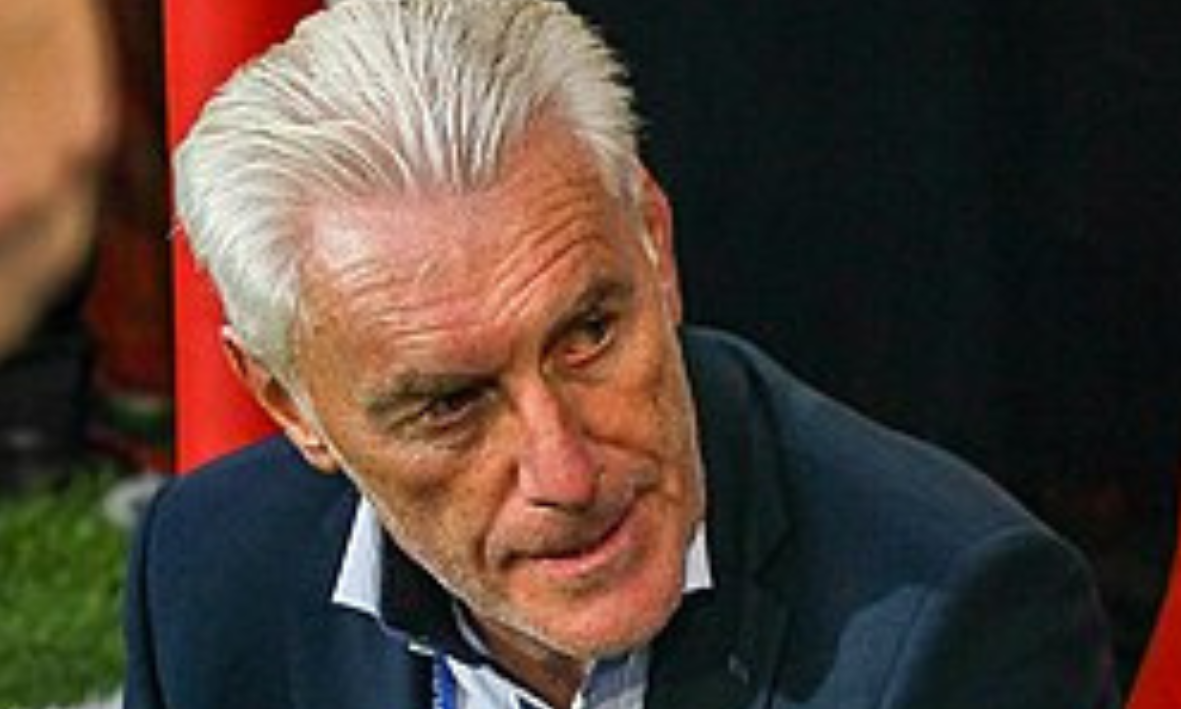
Request for parliamentary oversight regarding the handling of the UDM complaint to the SAHRC concerning SAFA and Coach Hugo Broos
Ms Thokozile Didiza, MP Speaker of the National Assembly Parliament of the Republic of South Africa PO Box 15 Cape Town 8000 Dear Madam Speaker Request for parliamentary oversight regarding the handling of the UDM complaint to the SAHRC concerning SAFA and Coach Hugo Broos 1. I write to bring to your attention a matter that the United Democratic Movement (UDM) has formally referred to the South African Human Rights Commission (SAHRC), and which has subsequently involved the Commission for Gender Equality (CGE). The matter raises issues that fall within Parliament’s oversight responsibilities. 2. In December 2025, the UDM lodged a complaint with the SAHRC concerning public utterances made by the Bafana Bafana coach, Mr Hugo Broos, as well as the institutional response of the South African Football Association (SAFA). The complaint concerns statements that raise allegations of racial and gender discrimination and therefore implicates constitutional rights protected under the Promotion of Equality and Prevention of Unfair Discrimination Act (PEPUDA). 3. On or about 10 or 11 December 2025, during a media engagement ahead of the 2025 Africa Cup of Nations tournament, Mr Broos made remarks which were widely interpreted as racially and sexually insensitive. The comments prompted significant public concern and raised questions about equality, dignity and representation in South African sport. On 11 December 2025, the UDM formally lodged a complaint with the SAHRC citing both Mr Broos and SAFA as respondents. 4. Subsequent to the public controversy, Mr Broos issued an apology on 15 December 2025, which the UDM accepted in good faith. However, the complaint lodged with the SAHRC was never confined to the conduct of one individual. It also raised broader concerns regarding the institutional response of SAFA and the absence of clear safeguards within sporting structures to address racism and sexism. The acceptance of an apology cannot substitute for institutional accountability where constitutional rights and systemic safeguards are concerned. For that reason, the UDM has consistently maintained that the matter requires consideration of systemic and policy reforms rather than being treated merely as an isolated incident. 5. The complaint was initially raised by UDM Councillor Yongama Zigebe and was formally processed through the Office of the Acting Secretary General (ASG) of the UDM. During engagements in January 2026, the SAHRC informed the UDM that the CGE had also received related complaints and that the two institutions would coordinate their handling of the matter and pursue an independent mediation process as contemplated in PEPUDA. 6. During that engagement and in subsequent written correspondence, the UDM requested clarity on several procedural issues, including whether a prima facie determination had been made that the conduct complained of falls within the ambit of PEPUDA, the anticipated timeline for the proposed mediation process, and the investigative steps undertaken by the SAHRC and CGE. 7. Regrettably, follow up correspondence addressed to the SAHRC and CGE has not received any response. The continued absence of even a basic procedural update or acknowledgement is deeply concerning in a matter involving alleged violations of constitutional rights by a prominent national figure and questions of institutional accountability by a national sporting body. 8. The UDM recognises that Chapter Nine institutions operate under significant resource and budgetary constraints. It is precisely because we respect their constitutional mandates and the important role they play in protecting fundamental rights that we have sought to allow the matter to proceed through the processes contemplated under PEPUDA. 9. However, continued procedural uncertainty cannot be allowed to persist indefinitely. Where a complaint of this nature remains without visible procedural advancement or communication from the responsible institutions, it raises serious concerns regarding the responsiveness of the processes intended to safeguard constitutional rights. 10. Should the situation remain unresolved, the UDM will have no option but to consider appropriate legal avenues to secure procedural clarity and advancement. Such a course would impose additional legal and financial burdens on all parties involved, including the SAHRC and CGE themselves. It is our sincere preference to avoid such an outcome and to allow the matter to be resolved within the existing constitutional framework. 11. It has been suggested in some quarters that the UDM’s complaint was misplaced, that it risked undermining team morale, or that matters of equality should not be raised in the context of national sport. The UDM rejects this characterisation. The complaint was never directed at the Bafana Bafana team or its performance. It concerns statements made in a public capacity and the institutional response to those statements. Issues of equality, dignity and non-discrimination apply across all spheres of public life, including sport. Upholding these principles strengthens the integrity of our institutions and ensures that national teams represent the values of the Constitution as well as the pride of the country. 12. In light of the procedural concerns outlined above, the UDM believes that parliamentary oversight is now both necessary and appropriate. 13. Given the nature of the issues raised, the mandates of several parliamentary committees are directly engaged, namely: 13.1. the Portfolio Committee on Justice and Constitutional Development, which exercises oversight over the SAHRC; 13.2. the Portfolio Committee on Sport, Arts and Culture, which exercises oversight over SAFA; 13.3. the Portfolio Committee on Women, Youth and Persons with Disabilities which exercises oversight over the CGE. 14. The issues raised concern, among others, the protection of equality and dignity in public life, the responsiveness and functioning of Chapter Nine institutions tasked with safeguarding constitutional rights, and the governance and accountability standards expected of national sporting bodies that represent the country internationally. 15. In the ordinary course of parliamentary oversight, the aforementioned committees may wish to satisfy themselves that the relevant constitutional institutions and entities have acted with the necessary responsiveness and procedural clarity in matters implicating equality, dignity and non-discrimination. 16. In light of the above, we respectfully request that your Office take the following steps so that Parliament may exercise its oversight responsibilities: 16.1. refer this matter to the Portfolio Committee on Justice and Constitutional Development for consideration of the procedural handling of the complaint by the SAHRC; 16.2. refer the matter to the Portfolio Committee on Sport, Arts and Culture for consideration of governance and accountability issues relating to the response of the SAFA; and 16.3. refer the matter to the Portfolio Committee on Women, Youth and Persons with Disabilities for consideration of the gender equality dimensions raised in the complaint and the role of the Commission for Gender Equality (CGE). Given the seriousness of the issues involved and the continuing absence of procedural clarity from the SAHRC and the CGE, we urge that this matter be treated with the urgency it warrants. 17. The UDM stands ready to cooperate fully with your Office and with the relevant portfolio committees should Parliament consider it appropriate to engage further on this matter. Upon request, we would be willing to make available the correspondence exchanged with the SAHRC and the CGE, as well as any related documentation, so that the committees may be fully apprised of the procedural history of the complaint. 18. The UDM remains committed to resolving this matter through lawful and constructive processes that uphold the Constitution and protect the dignity and equality of all South Africans. We are equally committed to the preservation and strengthening of our sporting codes and to the national pride that South Africans across race and gender place in our national teams. These are not competing ideals, but complementary ones that should guide the institutions entrusted with representing the nation. Yours sincerely Mr NLS Kwankwa, MP Deputy President of the United Democratic Movement Party Leader in Parliament Copied to: • Mr Xola Nqola, Chairperson of the Portfolio Committee on Justice and Constitutional Development • Mr Joseph McGluwa, Chairperson of the Portfolio Committee on Sport, Arts and Culture • Ms Liezl van der Merwe, Chairperson of the Portfolio Committee on Women, Youth and Persons with Disabilities • Mr Tsietsi Shuping, Head of Department: Legal Services, Commission of Gender Equality • Ms Zamantungwa Mbeki, Provincial Manager, South African Human Rights Commission • Deputy Minister Bantu Holomisa, MP and UDM President • Ms Zandile Phiri, UDM Acting Secretary General • Ms Thandi Nontenja, MP, UDM National Treasurer and Chief Whip in the National Assembly • Cllr Yongama Zigebe, originator of the HSRC complaint • Ms Khazimla Ngalwa, Parliamentary Assistant to Mr Nqabayomzi Kwankwa, MP

Admin
05 Dec, 2017
#RememberingMandela, Bantu Holomisa’s keynote address on the the Fourth anniversary since Madiba’s passing
• Chairperson and Chief Executive Officer of the Nelson Mandela Foundation, • Mrs Graça Machel and Members of the Mandela Family, • Honoured Guests, • Ladies and Gentlemen. 1. Meeting Nelson Mandela When Madiba passed away, four years ago, a great sense of loss filled the Nation and a resounding note of sadness reverberated across the Globe. Today we remember his departure, reflect on his life, as well as the contribution he made to South Africa and the World. Thank you for inviting me to participate. The World had lost one of the great icons of the last century. The Country had lost its guiding light; its moral beacon. For me, it was the loss of a mentor and friend. I first met Madiba after his release in 1990. During my visit to his Soweto home, Mrs Winnie Madikizela-Mandela expressed legitimate concerns about Madiba’s safety. For obvious reasons it would not have been proper to ask Mr FW De Klerk’s government to provide for his security. She thought that I might be able to assist, and I was honoured to do so. I immediately contacted the then Transkei Defence Force Commander, Lieutenant General TT Matanzima. He arranged that two trusted officers would – at all times – be at Madiba’s side, until the personnel of the African National Congress (ANC) armed wing, MK (uMkhonto we Sizwe), returned from exile. During those early years, he frequently invited me to travel with him locally and internationally. He had introduced himself to star-struck world leaders and simultaneously sought to raise funds for the ANC. On our local trips, we met with the Kings, Amakhosi and religious groupings to brief them about the pending negotiations to free South Africans. Our first stop, soon after his release in February 1990, was in Namibia to celebrate its independence. We went to the United Nations (UN) in 1992 and 1993. We also paid visits to countries like the United Kingdom and the Republic of Ireland, the Netherlands, France, as well as Norway (where Madiba and Mr De Klerk received their Nobel Peace Prizes). Although he had not yet won any election, Madiba was treated like a president elect and was afforded the high-level protocol associated with this status. The reason why I am sharing a little of this history is because I soon realised that Madiba had an impressive, magnetic personality, as well as a commanding presence. He was also a consummate master of the art of persuasion. But, he was not schooled in some of the aspects of being a statesman and I helped him navigate numerous protocol issues. For example, one of the duties we asked him to dispense of, had been to inspect military guards of honour (once at the Transkei Military Base and another at the Independence Stadium in Umtata). I explained to him: “Tata, when you perform this duty, it is not necessary to shake each soldier’s hand”. As we are all aware, Madiba habitually greeted everyone he met and asked: “How are you?” in that most recognisable voice of his. 2. Madiba: defusing a ticking time bomb South Africa had entered an extraordinary period; with the eyes of the World upon us. We were in the middle of doing something exceptional i.e. the process of ending a vicious, racist, authoritarian regime. We achieved this relatively peacefully, through a carefully orchestrated transition to democracy. Regarding this history, there are two instances that come to mind where Madiba’s exceptional leadership defused potentially explosive situations. The first was when we went to New York, where Madiba, the late Mr Mlami Makwetu (then President of the Pan Africanist Congress of Azania, Prince Mahlangu (a Minister and brother of Prince James Mahlangu of KwaNdebele) and I addressed the UN Security Council and asked for intervention and monitoring during the period where the so-called black-on-black violence was at a peak. The second was when Chris Hani was assassinated by a far-right, anti-communist. On that day Madiba asked me to accompany him from Umtata to Johannesburg, where we were received by the South African Communist Party’s (SACP) General Secretary Joe Slovo, Mr Cyril Ramaphosa and Ms Jill Marcus. From there Madiba went on to address the Nation, live on the public broadcaster. This atrocity had brought the ‘left’ and the ‘right’ to a head-on confrontation. If Madiba had not practiced sensible, responsible leadership, you might agree that South Africa would have been dumped into civil war. It was at this stage that Joe Slovo proposed the so-called “sunset-clauses”. The ANC, and its allies, interrogated this proposal and the implications thereof. Chris’ assassination, brought home the stark reality that violent conflict was imminent, and it therefore made sense that the only peaceable solution was to apply “principled compromise”. Once that concession was made, Madiba however demanded a date for elections. This left no-body in any doubt that he meant business. He was also not shy to explain to South Africans, and the World, that there was still a tremendous amount of work to be done in fulfilling the objective of freeing South Africans. Indeed, Madiba was aware that, in the conflict between black and white in South Africa, there were no winners. But, the Country was victorious in the end. 3. What happened to the tone and example Madiba set? I would like to move to the question of: “What happened to the tone and example Madiba set?”. After these volatile years, a golden period followed. Madiba had the wisdom and presence of mind to surround himself with capable individuals. The calibre of the people in his cabinet was just at a higher level than what we have today. He, almost uncannily, managed to unite a deeply divided Nation. At the time, there had also been a deep scepticism – from both black and white quarters – that the “new South Africa project” would fail. Yet, he inspired everyone to trust in his leadership. Under his administration, Government managed to make tremendous strides in bettering the lives of the formerly disadvantaged. There was, for instance, a remarkable improvement in the provision of electricity, water and housing to previously disadvantaged communities; especially in the rural areas. We used to sit together and make phone calls to many big business leaders. With his considerable powers of persuasion, he coaxed them to partner in building schools, clinics, hospitals, etc. Who would ever forget his dream of a hospital dedicated to kids? Indeed, his influence on international celebrities, most notably Ms Oprah Winfrey – who built a school for girls in Henley on Klip near Meyerton – made tangible differences to many South African’s lives. The other project, I remind you of, was the annual Christmas gathering at Qunu where, at one stage, no less than 75 000 children received their gifts from Madiba and Ms Winfrey. Now, just over two decades later, despite considerable changes for the better, there is a sour taste in our mouths; don’t you agree? At the moment, there is a universal sense of bitter frustration and disillusionment amongst South Africans across the board. In the context of the values Madiba stood for, we have a sense of collective shame that we are compelled to ask ourselves an uncomfortable question: “How did we let the great promise of the Mandela-years slip away, unfulfilled?” So, on the fourth anniversary of his passing, we should find answers to the following questions: 1) How can we reclaim the lost ground and live up to the standards that Madiba set? and, 2) Which lessons, from his life, can we apply to assist us in this endeavour? The year, that would have seen his hundredth (100th) birthday, presents a vital opportunity to do what we perhaps did not do four years ago i.e. to properly reflect on Madiba’s legacy and genuinely take stock of the man’s life. Mandla Langa’s skilfully written book ‘I dare not linger’ shows that there were many aspects of Madiba’s leadership that deserve our attention and deep reflection. For one thing, Madiba was not the ‘reconciliation junkie’ he is often portrayed as. He definitely was a ‘one nation’-president, who extended the hand of friendship in quite extraordinary ways. His visits to “Die Groot Krokodil” and Orania were remarkable gestures; not to mention the famous donning of the Springbok jersey in front of a packed Ellis Park crowd and captive world audience. But, he was far more than that! He was a stern taskmaster. He could sometimes be harsh and over-bearing. Even as I experienced this, FW De Klerk also had (several times) been confronted with this aspect of Madiba’s manner. He was also a mischievous fellow. He sometimes tasked me to welcome former President Thabo Mbeki, his Deputy-President then, Mr Zuma, as well as the entire ANC National Executive Committee, to his home. This was quite ironic since I was the leader of another political party. When I asked him, why he did this, he said that the politics of the ANC and those of the “United Party” must be left outside his yard. I tried to correct him, saying that my party was called the United Democratic Movement and he said to me: “Whatever, Bantu”. There were also definite limits to Madiba’s reconciliatory style; if you crossed a certain line he would hit you like a ton of bricks. Equally so, Madiba could display tremendous patience. Quite often he would carefully listen to anyone who had the guts to candidly differ with him. Madiba would then, almost verbatim, repeat that person’s arguments to illustrate that he had understood and appreciated his/her point of view. Yet, once he used the words “however” or “but”, you knew that you were about to lose the argument. 4. Unthreading Madiba I am very glad to learn that the Nelson Mandela Foundation proposed using the concept of ‘unthreading’ Madiba’s life, as the guiding theme for the anniversary of his hundredth (100th) birth year. This is a worthy idea, ladies and gentlemen. Madiba’s life must not be reduced to a one-dimensional rendition, based only on his role as a reconciler. If we do this, we will allow mythology to trump reality, and we will miss out on the many other threads of his character and leadership. Therefore, unthreading his life and legacy is a vital project and I am grateful to the Foundation for its stellar work in honouring Madiba’s legacy and to find practical ways to do so. How befitting that the Foundation’s project follows in the footsteps of the commemoration of OR Tambo’s Centenary Year. Oliver Tambo had been Madiba’s friend, and compatriot, who had entrusted him with the ANC’s presidency. Just as we celebrated the hundredth (100th) anniversary of OR Tambo’s birthday this year; we will pay the same tribute to Nelson Mandela in 2018. In this regard, I acknowledge the leadership of Mr Sello Hatang, the Nelson Mandela Foundation’s Chief Executive, who is of course assisted by the Foundation’s partners and patrons. I have great admiration for how the Foundation engages with the critical issues of constitutional democracy and ethical leadership in the face of the South Africa’s current crisis. Particularly in the days and weeks that followed Comrade Kathy’s death in March this year, which happened to coincide – arguably – with the lowest point in President Zuma’s rule. I just also wish to mention that, having kept the Foundation’s work in mind, I thought that there is a venture that would fit nicely in your stable. It relates to two matters which were very close to Madiba’s heart: 1) deforestation and 2) the maintenance of environmental standards; especially in rural areas. Yes, it is true that electrification has positively impacted people’s lives, but in the bitter winter-cold, fire remains the main source of heat and therefore, survival. Gathering firewood has become an onerous task, as more landscapes are denuded, and people must walk great distances to find wood. There is an identifiable gap between people’s understanding of the impact of their practices on, for instance, the soil and indigenous vegetation. The message of the long-term benefits of sustainably living in concert with nature must be brought home. Perhaps the Foundation could start an afforestation project that inculcates respect and appreciation of environmental preservation, especially in the light of the escalating effects of climate change in South Africa. And this afforestation project could possibly be called: “The Nelson Mandela Forests” which would inspire people to become environmental activists in their own communities. 5. The health of our democracy and the impact of corruption Part of my sense of deep nostalgia of the nineties (‘90s), is that it was also a golden period of reform and institution-building. Madiba understood the need to build strong, independent institutions that would endure and serve the people, regardless of who would be in power. The travesty of the so-called state capture, has hollowed out many of these state institutions. This is an insult to Madiba’s legacy. In the same vein, it is difficult to comprehend how some people stooped so low by stealing funds allocated to give Madiba a dignified farewell, as the Public Protector recently found. This goes beyond commonplace-corruption. It is not only immoral, but evil. Former ANC leader in Nelson Mandela Bay, Crispian Olver, wrote a book called ‘How to Steal a City’. This book is a salutary read, which portrays (in graphic and shocking detail) how quickly a group of dishonest individuals can betray the trust of the people. Thinking of the nauseating “Gupta Leaks”, I am sure you will agree, that we now have a new book on the shelves and it is called: “How to Steal a Country”. You still remember that, as far back as 2001, Madiba said: “Little did we suspect that our own people, when they got a chance, would be as corrupt as the apartheid regime.” Madiba must have already, sixteen years ago, felt that corruption would destroy the gains of our freedom. As we speak, pervasive corruption – even at the highest level – is scaring off protentional investors and capital outflow is at an all-time high. To top it all off, the ratings agencies downgraded South Africa to ‘junk status’. As a result, jobs are shed at an alarming rate, which leaves an economically and socially depressed Nation. This situation is undoing the progress we had made in 1993, when I accompanied Madiba to address the UN General Assembly to ask for the reversal of sanctions against South Africa. Instead of continuing the unfinished business of fulfilling the dream of a new South Africa, the last few ANC-led administrations have certainly dropped the ball. They did not find sustainable solutions to ensure economic freedom, quality education, good health care, as well as safety and security for our people. The land issue remains a perennial thorn in our Nation’s side. Institutionalised corruption, and the looting of state resources with impunity, are the order of the day. We could say that this has become the “new normal”. Considering that one political party has caused so much damage, we cannot afford to put all our future eggs in one basket. Trusting in the so-called self-correcting nature of the ruling party is living in a fool’s paradise. To find lasting solutions to the Country’s problems, we need to cast a wider net; like we did with the Convention for a Democratic South Africa (Codesa). We have taken note of the Nelson Mandela Foundation’s recent dialogues, but, has the time not come for it to collect all the parallel-running dialogues of other organisations under one umbrella? If all stakeholders (including government, civil society and political parties) could participate in a concerted effort, we would be able to generate a unified blue-print for solutions to our Country’s problems. Any resolutions of such a convention could be referred to Parliament for ratification; just like when FW De Klerk’s government were tasked to implement Codesa’s resolutions. This would neutralise the dominance of one party which ignores the people and does as it pleases. We can no longer delay such a convention given unashamed trampling of the values of people like: Steve Biko, Ahmed Kathrada, Albert Luthuli, Nelson Mandela, Lilian Ngoyi, Joe Slovo, Robert Sobukwe, Oliver Tambo, and many others who fought for this Country. 6. Towards a Winning Nation South Africa is entering an exciting era of truly competitive multi-party democracy and we need to ask: “What can we learn from Madiba’s life and his leadership?”. Firstly, there is the spirit of what I would call “principled compromise”. Madiba has been described as an extreme pragmatist. Certainly, his approach to power-sharing and the transfer of power from the apartheid regime, was pragmatic in the sense that – tactically and strategically – it was as much about negotiating freedom, as it was about fighting for it. None of us should however forget that the negotiations were always conducted with one eye on the window, looking at the resistance that was taking place throughout the Land. The Nationalists knew that if the negotiations broke down, there would be a high price to pay on the streets as the mass democratic movement would not hesitate to make the Country ungovernable. Madiba had always been quick to remind them of this fact. That is why I prefer to think of his approach as: “principled compromise”. In other words, one makes concessions, but one does so conscious of the ‘red lines’ i.e. the non-negotiables. I witnessed this when FW De Klerk’s government withdrew indemnity for Chris Hani and we had to house him in the Transkei. Madiba stamped his authority and demanded the withdrawal of the warrant for Chris’ arrest. As Madiba put it, quite strongly at the time, Mr De Klerk had been negotiating in bad faith. Madiba was willing to share power and not dominate. He recognised that the advantages, which come with forging consensus and building a social compact, comprises of the support of not just your side, but also that of your opponent’s. The lesson we should learn, when it comes to possible future coalitions, is that we need to develop the practice thereof, which is fundamentally about sharing power; not power mongering. This will take real skill and level-headed leadership. Considering the possibility of a new “Government of National Unity” in 2019, future coalition partners will have to practise “principled compromise” as per Madiba’s example. There can be no space for a “big brother” mentality. 7. Madiba’s respect for Rule of Law and Constitutionalism Another aspect of Madiba’s life, that I would like to discuss, relates to his commitment to constitutionalism and the rule of law. In this respect, we currently have a country that has not only lost its way, but has tarnished Madiba’s institutional bequeathal. On the one side of the coin, we should be ashamed of the way in which powerful people, both in the public and private sectors, have taken advantage of gaps in institutional arrangements. Or those, who have done so, by exploiting the personal weaknesses of some of our leaders to enrich themselves at the expense of the majority of our people. But, on the flipside of the coin, we should be proud of the way in which our courts have withstood pressures. Where would we be without an independent judiciary? Certainly, opposition parties, civil society organisations and the media, have claimed their rights and used the Constitution to hold those in power to account. To illustrate what a respectful interaction with the courts is, is how Madiba conducted himself in the infamous Louis Luyt case. He not only submitted to the subpoena to appear before an “old-guard” High Court judge, but he willingly subjected himself to long and gruelling cross-examination. When the High Court ruled against him, he accepted the outcome without complaint. He then appealed the decision at the Constitutional Court and prevailed. By so doing, he set the standard of respect for our court system. 8. Madiba’s lessons of resilience A very important thread in Madiba’s life was his resilience. He suffered, and he endured; through his strength he inspired millions in this Country and throughout the World. South Africa is a resilient country. Look at the way in which we fought back against state capture and the racism fanned on by Bell Pottinger. Our important institutions, civil society and media, which are resisting capture, are holding the front line. And, despite the inherent pressures of poverty and unemployment, our people also remain resilient. They make sacrifices every day. So, in return, they have every right to expect a lot more from their leaders. We each have a responsibility to respect the rule of law, defend the Constitution and insist that those with power go about their business honestly, transparently and accountably. We must return all state institutions to full working order. State capture must not only be pushed into retreat, but must be defeated once and for all. Those who were ‘captured’ should be charged, prosecuted and convicted. Frankly speaking, until we do so, Madiba’s legacy will be in jeopardy. A large part of Madiba’s strength as a leader came from his unrelenting high standards and his lack of tolerance for shoddy work and incompetence. He did not suffer fools easily; nor should we. 9. Conclusion Pulling Madiba’s threads together, his legacy entails: 1. Reconciliation based on principled compromise, 2. A real commitment to the rule of law and constitutionalism, and 3. Resilience. Investing in these threads is not only a worthwhile exercise for the Country as a collective, but also for each individual. I therefore wish the Nelson Mandela Foundation well in your project of “unthreading” uTata. Good luck with celebrating this milestone next year! Once again, thank you for inviting me today and bestowing on me the honour of sharing some of my thoughts with you. May Madiba rest in peace.
Admin
26 Sep, 2016
Bantu Holomisa requests meeting of political leaders and IEC regarding ANC leadership’s criticism of Mr Terry Tselane
Dear Mr Mashinini REQUEST FOR AN URGENT MEETING OF THE LEADERS OF ALL POLITICAL PARTIES REPRESENTED IN PARLIAMENT The above matter has reference. It has come to my attention that the African National Congress (ANC) has declared the Deputy Chairperson of the Independent Electoral Commission of South Africa (IEC), Mr Terry Tselane, an enemy. It is alleged that, at the IEC National Results Centre (in Pretoria) for the 2016 Municipal Elections, the Secretary General of the ANC, Mr Gwede Mantashe and his deputy Ms Jessie Duarte, in the presence of the State President (who is also the ANC’s President) caused a stir by confronting Mr Tselane and, amongst others, alleging that he: Was an enemy of the ANC; Was conniving with the opposition parties against the ANC; Had single-handedly removed teachers as IEC electoral officers during the 2016 Municipal Elections in order to benefit opposition parties; and that His behaviour has benefitted the opposition parties. These are serious allegations, considering that it was made against a member of the Electoral Commission. It is interesting to note that Mr Mantashe seems to be confirming that the appointment of teachers as electoral officers, is designed to disadvantage opposition parties and unduly benefit the ANC. Such an admission vindicates the view always held by opposition parties with regard to the ‘exclusive’ appointment of teachers as electoral officers. Many of these teachers, if not all, are members of a Cosatu affiliated teachers’ union, Sadtu. Cosatu is in alliance with the ANC and has always taken a firm decision to support the ANC in every election that has taken place since the advent of democracy in South Africa; its decisions binds Sadtu and its members. These allegations place a grey cloud over other Electoral Commissioners. It will not be far-fetched to question whether their loyalties are with the country, its citizens and the Constitution or with the ANC. This is important, because from these allegations, it is clear, that any Electoral Commissioner who does not sweeten the ANC will be regarded as an enemy and will be dealt with accordingly. These developments may necessitate that the current composition of the Electoral Commission be urgently scrutinised to ascertain whether they are all in the service of the nation or in the service of a political party. I am also made to believe that the ANC has begun to question Accenture, a company that has been contracted and worked with IEC to provide technical solutions for a stable technical environment to support elections processes. In my recollection, the credibility of this company has never been questioned by the ANC and it is interesting that it is only now emerging after the elections results that have shocked the ruling party. It begs a serious question; why does the ruling party now have an issue with Accenture and why was this matter never tabled at the appropriate body i.e. the National Party Liaison Committee. I am also aware that the ANC is allegedly considering to alter the current party representation on the IEC’s Party Liaison Committees in favour of proportional representation. We wish to obtain a detailed understanding of this development and its rationale. The alleged meeting that took place on Monday, 19 September 2016, at Luthuli House, which was attended by some of the ANC ‘top six’ and Electoral Commissioner, is of serious concern. It is further disturbing that it is alleged that some of the issues raised above were discussed in the said clandestine meeting. Accordingly, I request that you convene an urgent meeting of all the leaders of parties represented in the South African Parliament to consider, amongst others, the matters raised above. I hope this will be attended to urgently. Mr Bantu Holomisa, MP President of the United Democratic Movement
Admin
04 Apr, 2016
Bantu Holomisa writes to Thuli Mandonsela with request for an addendum of costs for Nkandla
Dear Advocate Madonsela REQUEST FOR AN ADDENDUM TO THE COSTS OF NKANDLA New details have emerged of how state funds were used to buy fittings, fixtures and building materials for private residence of the President. I am aware that your office was not granted access to this information, however, it is now in the public domain. The former Deputy Director General of the Department of Public Works, Rachard Samuel, is reported to have compiled a dossier revealing the following as costs that were paid by the department towards the private renovations of the private residence of the President. According to the Sunday Times report of the 27 March 2016, Rachard Samuel listed costs, totalling to a whopping R4, 6 million which is broken down as follows: 1. R1.5-million for air-conditioning at two private houses, a guesthouse and a guardhouse. This is apart from the R5-million for air-conditioning detailed in your report and that of the Special Investigating Unit (SIU); 2. R311, 932 for covered walkways between private residences; 3. R54,721.20 for six meranti doors and 26 meranti window frames; 4. R11,850 for hinges and bolts, doorstops, stainless steel hat-and-coat hooks, and six doormats that cost R1500 each; 5. R34,834.80 for aluminium sliding doors – without bulletproof glass – and other aluminium installations; 6. R38,517 for bulletproof sliding doors; 7. R63,215 for plastering materials, R23,300 for tiling and R41,406 for painting internal and external walls; 8. R271, 796 for carpentry and joinery, including roof construction; and 9. R2.4 million for “extras”. I believe, that your office has the authority to summon this information, and approach the Office of the Chief Justice for a proper guidance on how to deal with the new exposé. If this information is true as I believe, then it should help the National Treasury in making a proper determination of the costs to be personally paid by the President. I look forward to a favourable consideration of this request. Kind regards, Mr Bantu Holomisa, MP President of the United Democratic Movement
Admin
20 Jan, 2016
Public Protector must investigate Public Investment Corporation (PIC)
Dear Advocate Madonsela REQUEST FOR AN URGENT INVESTIGATION: Public Investment Corporation (PIC). I take this opportunity to welcome and wish you and your office, a very successful year in the service of the nation, in 2016. In this regard, I wish to table the following matter with you, so that you may investigate it appropriately for the benefit of the South African public. I have anonymously received serious allegations with regard to the possible corruption in the Public Investment Corporation (PIC) fund. It looks like the institutionalised corruption, which has resulted to South Africa being downgraded by various global grading bodies, has extended its vicious arm to the pensions of government employees, Judges, Members of Parliament and others who are paid from the public purse. It is alleged that, during the second week of December 2015, an amount of R40m was transferred from the PIC account to a company whose name is attached herein. This company is known for handling the PIC and government transactions. It is further alleged that this R40m was meant to fund salaries of the ANC staff members and its Birthday Anniversary Celebrations held on the 8th of January 2016. Another allegation is that, in January 2016, an amount of R2m was transferred from the PIC account to a company whose name is also attached, for the benefit of the ruling party. You are further requested to investigate another allegation that the PIC is about to fund a company whose name is attached herein, with an amount of R1.5bn, in order for this company to purchase a 25% stake from another person who holds this stake with TOTAL Oil Company. I request you to investigate whether due diligence of this transaction was conducted and whether it is in accordance with the relevant laws governing the PIC. Given the specific allegations above, it is clear that there is a need for a thorough and comprehensive investigation of how the PIC is managing all the monies entrusted with them. A judicial commission of enquiry may be relevant in order to ensure that these monies are not vulnerable to the whims of the political elite. I look forward to your excellent investigative work on this matter. Kind regards Bantu Holomisa President of the United Democratic Movement
Admin
09 Oct, 2015
UDM reacts to SCA decision on SABC coup
Statement issued by President Bantu Holomisa, MP Statement on the Supreme Court of Appeal Judgement delivered on the 8th of October 2015 on a matter between SABC, Minister of Communication, Chief Operations Officer of the SABC and the Democratic Alliance The United Democratic Movement (UDM) welcomes the judgement delivered by the Supreme Court of Appeal (SCA) on the 8th of October 2015. This judgement vindicates what we have always understood to be the powers of the Office of the Public Protector. When everybody was shouting in Parliament about Nkandla, UDM soberly advised the President to take the report, findings and remedial actions of the Public Protector for judicial review. Yesterday’s SCA judgement has boxed the President into that corner in vindication of sober analysis and advice by the UDM. The SCA said amongst others…”an affected person” or institution aggrieved by a Public Protector’s findings could, in “appropriate circumstances” challenge it by way of review application. It further said “moreover, an individual or body affected by any finding, decision or remedial action taken by the Public Protector is not entitled to embark on a parallel investigation process to that of the Public Protector, and adopt the position that the outcome of that parallel process trumps the findings, decision or remedial actions taken by the Public Protector…” On the 20th of March 2015, I personally and as the Leader of the UDM in Parliament, penned a letter to the Speaker of the National Assembly, amongst others, highlighting to her the process that the NA was about to embark on, of referring the report of the Public Protector to the Minister of Police was flawed and that UDM shall not be part of undermining a Chapter Nine Institution and breaking the law. We were ignored. On the 6th of August 2015, during the question and answer session to the President, I asked the President: “Mr. President, The Public Protector investigated your private property, made findings and took appropriate remedial actions against you Not the cabinet nor this parliament, don’t you consider to save this House and the nation, by simply applying for a Judicial Review given that you have challenged her findings and this House cannot act as an appeal authority on a matter that DOES NOT BELONG HERE”. I see now other parties who were so keen in participating in a parallel process that seek to undermine a Chapter Nine Institution, have also came to this conclusion, and in the usual manner, act as if this has always been their stance. They can have their stolen thunder for the good of the nation. In light of all this, the UDM supports the call to establish a review board to find ways to strengthen Chapter Nine Institutions, such as the Public Protector’s Office and others. Clarification about legal powers of these institutions needs to be made if they are to play a complimentary oversight, assisting Parliament to do its work. Chapter Nine Institutions are there to help Parliament with oversight issues, and not merely act as watchdogs. Parliament needs to work in support of these institutions not to assist the axe against them.
Admin
06 Aug, 2015
UDM Parliamentary Caucus denounces the Ad-hoc Committee on Nkandla as flawed and against the law
Statement by UDM President Bantu Holomisa After deliberations this morning the Caucus resolved as follows regarding the Nkandla Ad Hoc committee: 1. The new Ad-hoc committee process has not changed the original position of the UDM that the President must not use the Executive and Parliament to undermine the report of the Public Protector, but should in line with legal prescripts; approach the appropriate court for a judicial review. 2. Irrespective of the findings and recommendations of the Ad-hoc committee given the fact that the ANC bulldozed parliament on this matter, the fact does not change that, this matter is not for parliament but between the President and the Public Protector. Anything to the contrary borders on the conflation of the doctrine of the separation of powers, between the legislature, the judiciary and the executive. UDM will always and in the interest of Constitutional Democracy, refuse to break this fundamental principle. 3. We reaffirm our unwavering commitment to the independence of Chapter 9 Institutions as they strengthen our democracy. To this end, we support the report of the Public Protector on Nkandla and firmly believe that, only the court of law can review its findings and remedial actions. 4. Consistent with the Executive Members Ethics Act and the Constitution of the Republic, it is the President who can make a legally valid decision not to comply with the remedial actions made by the Public Protector, only if such is based on rationality and cogent reasoning, as the Cape Town High Court determined. 5. This matter must not only be a private property of political parties as it affects all citizens. As a result, we call on all organs of civil society to join the campaign to save this country and its resources for the benefit of the poor. 6. We call on organs of civil society to approach the courts of law to challenge this abuse of power in Parliament by using the institution to protect the President. Thank you