Admin

09 Feb, 2026
More electricity tariff hikes, same failures
Statement by Zandile Phiri, Acting Secretary General of the United Democratic Movement The United Democratic Movement (UDM) notes the recent decision arising from the re determination of Eskom’s electricity tariffs, following a court ordered correction of regulatory calculations, which will result in further increases in electricity prices over the next two financial years. South Africans are once again being asked to pay more for electricity not because the system has improved, but because years of poor management, governance failures, and operational decay at Eskom continue to be shifted onto the public. The approval of further tariff increases confirms a painful truth. Ordinary households, small businesses, and municipalities are paying for Eskom’s mistakes. Cost overruns, delayed maintenance, mismanaged capital projects, and leadership instability have not been absorbed by Eskom as an institution, but are repeatedly recovered through higher tariffs, turning mismanagement into a permanent burden on the people. While Eskom and regulators point to technical processes and financial corrections, the lived reality is simple. Electricity is becoming more expensive without becoming more reliable, eroding public trust and undermining the social contract that underpins any functional public utility. At the same time, the UDM is clear that the growing culture of non-payment of electricity bills cannot be ignored or excused. Non-payment deepens Eskom’s financial crisis, destabilises municipalities, and shifts greater costs onto compliant consumers. A sustainable electricity system requires both competent governance at Eskom and responsible conduct by consumers. Non-payment is often a symptom of deeper failures, including unaffordable tariffs, collapsing municipal billing systems, unemployment, and the erosion of trust caused by load shedding and poor service delivery. Addressing non-payment therefore requires more than enforcement alone. It requires credible billing, protection for indigent households, and restored confidence that payment leads to reliable and fair service. Regarding the court ruling, it must be stated honestly that the judgment did not endorse Eskom’s performance or absolve it of failure. The court found that the National Energy Regulator of South Africa erred in its earlier regulatory calculations and directed a lawful re determination. This was a legal correction, not a validation of Eskom’s governance record. The UDM is further concerned that these tariff increases arise from fundamental regulatory error. When regulators fail, the consequences are not technical. They are felt directly by households and businesses through higher prices. This undermines confidence in regulation and reinforces the perception that the public is routinely asked to absorb the cost of institutional failure. The court ruling does not change the underlying reality. South Africans are paying today for failures that should have been prevented years ago. Regulatory processes may smooth tariffs, but they cannot erase the damage caused by mismanagement, weak accountability, and delayed reform. The UDM maintains that meaningful relief will only come when failure carries consequences. Eskom cannot be allowed to operate in a system where mistakes are socialised while accountability is endlessly deferred. Consumers must not be treated as the insurer of last resort. South Africa needs a power utility that is competently managed, transparently governed, and accountable, alongside a payment culture that is fair, realistic, and rooted in trust. Without both, tariff increases will continue and public anger will deepen. The UDM will continue to press for accountability at Eskom, stronger regulatory oversight, protection for vulnerable households, and decisive action to restore a fair and functional electricity system. The people cannot be asked to pay indefinitely for failures they did not cause.
Admin
14 Oct, 2025
The fire next door: South Africa’s neglected settlements
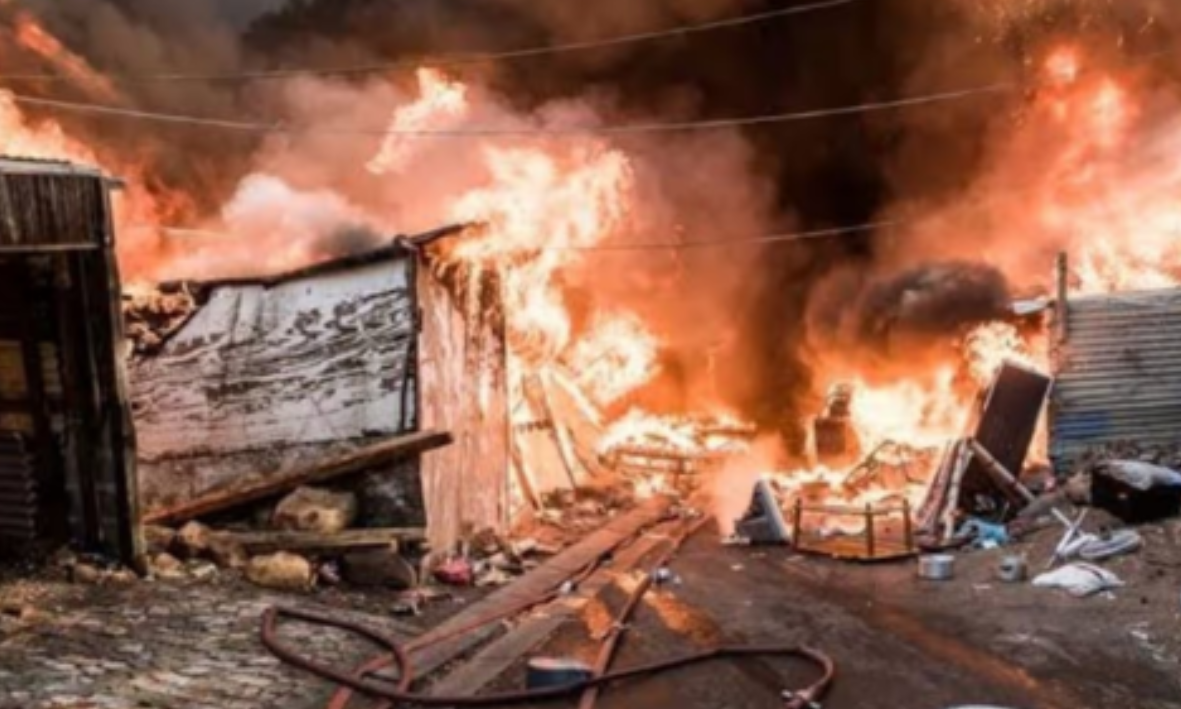
Statement by Zandile Phiri, Acting Secretary General of the United Democratic Movement Each shack fire leaves behind not only ash but a reminder of South Africa’s unfinished promise of dignity for all. The United Democratic Movement (UDM) calls attention to the growing pattern of fires in informal settlements as a crisis of governance and human rights that demands immediate national intervention. In recent weeks, blazes in Masiphumelele, Umbilo and Sivilcon have claimed lives, displaced hundreds of families and destroyed thousands of homes. These tragedies expose a deep failure of planning, service provision and accountability in the management of urban and peri-urban settlements. In Masiphumelele, Cape Town, one person died, and 80 residents were left homeless after 20 informal dwellings were reduced to ash. In Umbilo, Durban, more than 170 structures were lost in a single blaze. In Sivilcon, Pretoria, 70 shacks burned within minutes, displacing over 150 residents. Between September 2024 and February 2025, 2 860 informal structures burned down nationwide. The Western Cape was the hardest hit, with 2 088 structures destroyed during this period, about 73% of the national total. The pattern is the same across our cities: crowded conditions, flammable materials, unsafe wiring, lack of access roads and the absence of formal infrastructure turn every spark into catastrophe. Recent research confirms that a single blaze can consume twenty shacks within five minutes under mild wind conditions. Behind these numbers are human beings who lose homes, possessions, documents and loved ones. Entire communities are forced to start again from nothing. Relief agencies such as Gift of the Givers and local NGOs step in to provide blankets and meals, but the cycle repeats because prevention has never been institutionalised. Shack fires are not accidents of poverty. They are the direct outcome of policy neglect and institutional failure. For years, government authorities have treated informal settlements as temporary spaces rather than permanent communities deserving of basic services. By withholding electricity, water, roads and fire hydrants, municipalities have entrenched conditions that make these areas unsafe and unliveable. This denial of infrastructure is not accidental. It is a consequence of choices that have left millions of South Africans exposed to preventable tragedy. Studies in South Africa and internationally have shown that electrified settlements experience far fewer fires than those relying on candles, paraffin or illegal connections. The solution, therefore, is not endless training and disaster relief, but systematic electrification and incremental upgrading. South Africa cannot continue to treat shack dwellers as people who must live and die by candlelight. Urban design interventions must start from the reality that most informal settlements are already densely built and cannot simply be redesigned. Safety improvements must therefore be achievable within existing layouts. Many settlements still rely on a handful of communal taps or irregular water supply, leaving residents defenceless during fires. Government must prioritise the installation of reliable communal taps within reasonable distance, ensure maintenance of pressure and supply, and coordinate with emergency services to provide mobile water tanks in high-risk areas. These practical measures, developed together with residents, can save lives without uprooting communities. The United Nations Office for Disaster Risk Reduction recognises uncontrolled informal-dwelling fires as a significant global threat to life and well-being. South Africa’s own disaster management frameworks must therefore include fire prevention in informal settlements as a priority hazard category. Prevention, preparedness and risk reduction must take precedence over reactive relief. The UDM calls for the following actions: 1. The Department of Electricity and Energy must fast-track a national audit and phased electrification programme for all informal settlements, prioritising high-density areas most at risk of fire. 2. The Department of Cooperative Governance and Traditional Affairs must ensure that every municipality integrates shack-fire risk reduction into its Disaster Management Plan and allocates ring-fenced funding for prevention, not only emergency relief. 3. The Department of Human Settlements must improve basic infrastructure within informal settlements by creating safe access routes for emergency vehicles and expanding water access points to support firefighting efforts. 4. The Department of Statistics South Africa must strengthen data collection, research and analysis on shack fires to capture their human, technical and environmental causes, and ensure that findings are publicly reported to guide prevention strategies. 5. The Department of Local Government must work with communities to establish fire-safety units trained and equipped to serve as first responders using extinguishers, alarms and communication tools. 6. The Department of Trade, Industry and Competition must promote partnerships with innovators developing technologies such as heat-based early-warning systems and community micro-insurance models that reduce losses, enable faster recovery and strengthen resilience. 7. The Government of National Unity must end the policy of classifying informal settlements as “temporary” to justify the denial of basic services. Safety, dignity and equal access to infrastructure are constitutional rights, not privileges. Every shack fire is a mirror of our national priorities. It reflects the unfinished business of spatial justice and the failure to treat poor communities as full citizens. Lives continue to be lost because authorities have normalised living without infrastructure. The UDM urges the Government of National Unity to make the prevention of shack fires a national governance priority. South Africa must replace fragmented relief efforts with a long-term programme for electrification, upgrading and safer living conditions. Words of sympathy will not rebuild what negligence destroys.
Admin
12 Sep, 2025
Lawlessness, violent protests, and broken governance: South Africa needs urgent reform
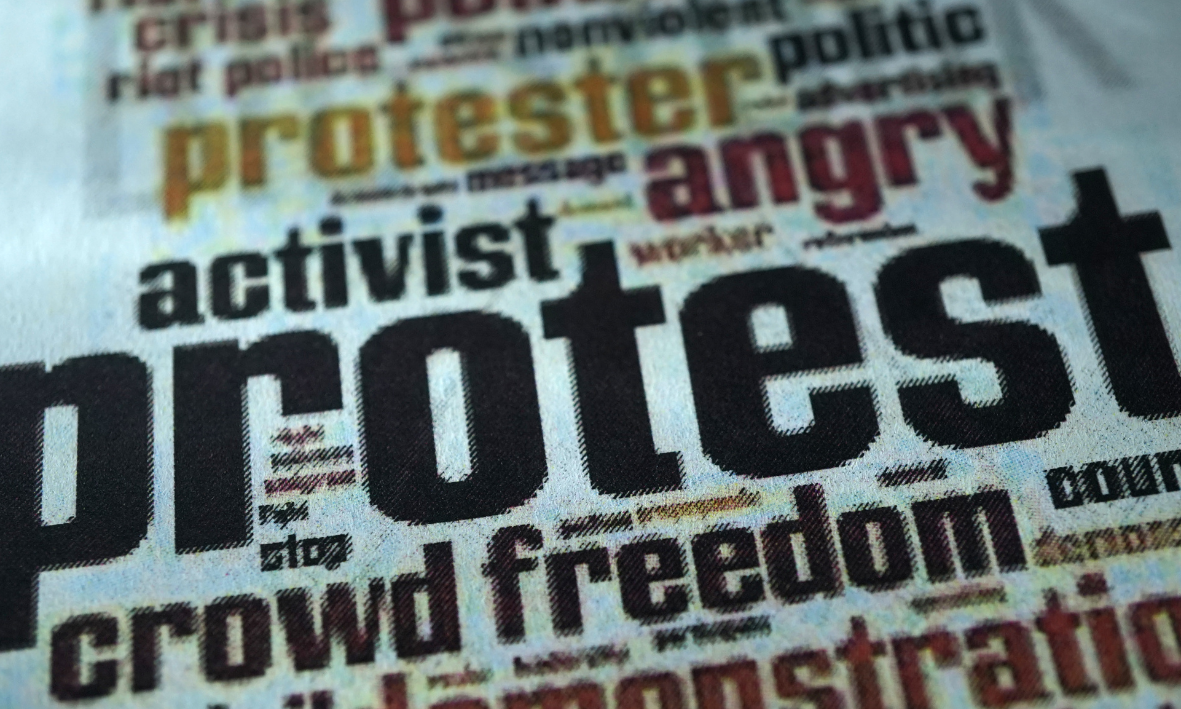
Statement by Nqabayomzi Kwankwa, MP, UDM Deputy President and Leader in Parliament The United Democratic Movement (UDM) notes with concern the violent turn taken by community protests in Mondlo township, KwaZulu-Natal, where municipal buildings and vehicles were torched in the wake of anger over load reduction, poor services, and a lack of municipal accountability. Similar scenes unfolded in Coronationville in Westbury and Ivory Park in Tembisa, where residents clashed with police over prolonged water cuts, leaving community members injured. These incidents are neither isolated nor unprecedented. They form part of a deepening national crisis of lawlessness, in which citizens increasingly turn to destruction, arson, and violent attacks to express their grievances. This alarming trend reflects both a collapse of governance and the erosion of trust in peaceful engagement with authorities. International examples provide a stark warning for the powers that be. In Nepal, widespread protests by young citizens over corruption, nepotism, and mismanaged policy escalated into the burning of parliament and the homes of prominent politicians, forcing the army to airlift government ministers to safety. South African politicians must take heed: ignoring the cries of communities for basic services risks a similar escalation, where frustration could spill over into chaos and threaten social stability. Experts have already warned that South Africa’s legacy of socio-economic neglect, political disillusionment, and an ineffective justice system has created an environment where violence is seen as the only language government listens to. Communities often exhaust every formal avenue, writing memoranda, petitioning councillors, and pleading with municipal officials, only to be ignored until protests erupt. While the frustration of citizens who live without water, electricity, and safe infrastructure is understandable, the UDM strongly condemns the destruction of property and the loss of life that follow such unrest. Burning municipal buildings, petrol-bombing government offices, and attacking fellow citizens only deepen the crisis, disrupt service delivery further, and strip communities of the very resources they need. Equally, the UDM abhors the excessive and sometimes indiscriminate use of force by the South African Police Service (SAPS), including reports of rubber bullets fired at elderly people and children during recent protests. Heavy-handed policing only hardens anger and deepens mistrust. The UDM calls for: • A comprehensive reform of local governance to restore accountability, transparency, and service delivery. • Stronger and fairer enforcement of the law, so that criminal acts of arson and violence do not go unpunished, while ensuring that policing respects human rights and protects vulnerable community members. • Genuine dialogue between government (especially at local level) and communities before frustrations boil over into unrest. Engagement must be consistent, respectful, and solutions-driven. • National government to urgently intervene in municipalities crippled by corruption, maladministration, and financial collapse, to prevent further violent flashpoints. Many communities exhaust formal channels, such as petitioning ward councillors, municipal officials, and provincial leaders, before resorting to violence. The UDM therefore calls for the agenda of the National Dialogue to address these repeated frustrations. Service delivery challenges, local governance failures, and mechanisms for meaningful citizen participation must be central, with clear commitments and accountability measures to ensure that public grievances do not escalate into unrest. South Africa cannot build a future by burning the present. Violence and destruction must never become acceptable or normalised as a way of forcing government action. At the same time, government must demonstrate through action, not words, that it listens to peaceful demands, honours commitments, and delivers the basic services enshrined in our Constitution. The cycle of neglect, protest, violence, and suppression must be broken. What is at stake is not only community stability but the very fabric of our democracy.

Admin
12 Mar, 2025
Mismanagement of City Power: R4.9 billion in irregular expenditure
Statement by Andile Jabavu, Gauteng Provincial Secretary of the United Democratic Movement The United Democratic Movement (UDM) in Gauteng is deeply concerned about the Auditor-General’s (AG) shocking findings on the City of Johannesburg's City Power, revealing a staggering loss of R2.8 billion in the 12 months ending 30 June 2024. Even more alarming, the entity incurred irregular expenditure exceeding R4.9 billion, raising serious questions about financial mismanagement, corruption and governance failures. City Power, a vital municipal entity responsible for electricity supply in Johannesburg, is teetering on the brink of collapse. The AG has warned of “material uncertainty” regarding its ability to continue operating, with its liabilities exceeding assets by R1.1 billion. These revelations come as residents endure frequent and prolonged power outages, exacerbating Johannesburg’s ongoing electricity crisis. Of particular concern is the R12 million advance payment allegedly made to a politically connected businessman, for a public lighting project, months before any work was done. Reports shows that internal City Power officials raised red flags, warning that this payment violated Treasury regulations under the Municipal Finance Management Act and the Public Finance Management Act. However, these concerns were allegedly overridden by a senior official who instructed subordinates to process the payment despite clear irregularities. Even more alarming, the businessman in question is allegedly linked to a known African National Congress benefactor, raising serious concerns about political interference. Transparency and accountability are non-negotiable, yet City Power’s response to these grave allegations have been vague, with promises of investigations that have so far produced no tangible results. Meanwhile, Johannesburg residents continue to endure worsening infrastructure and daily power failures. The UDM in Gauteng will not stand by while public funds are mismanaged at the expense of service delivery. We call on the City of Johannesburg and law enforcement authorities to act decisively in rooting out corruption and ensuring that those responsible for City Power’s financial collapse are held to account.